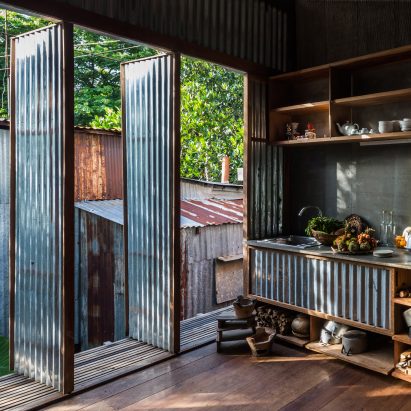
Chidori Studio draws on industrial references for home in Japan
Architecture practice Chidori Studio has completed Hokuriku Residence No. 3, a house in Hakusan that references traditional Japanese homes and industrial architecture.
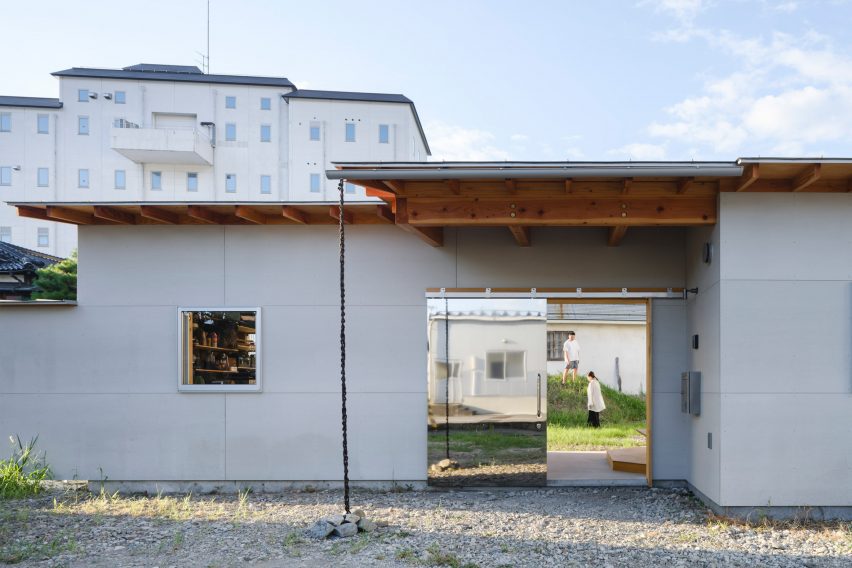
Located on the site of a former soy sauce factory, the open single-storey home was designed for a client who requested bright spaces with ample access to the outdoors.
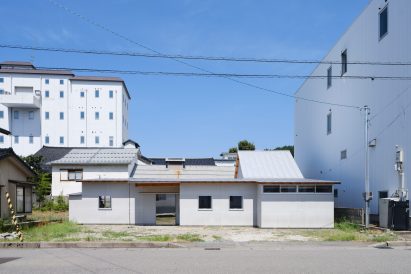
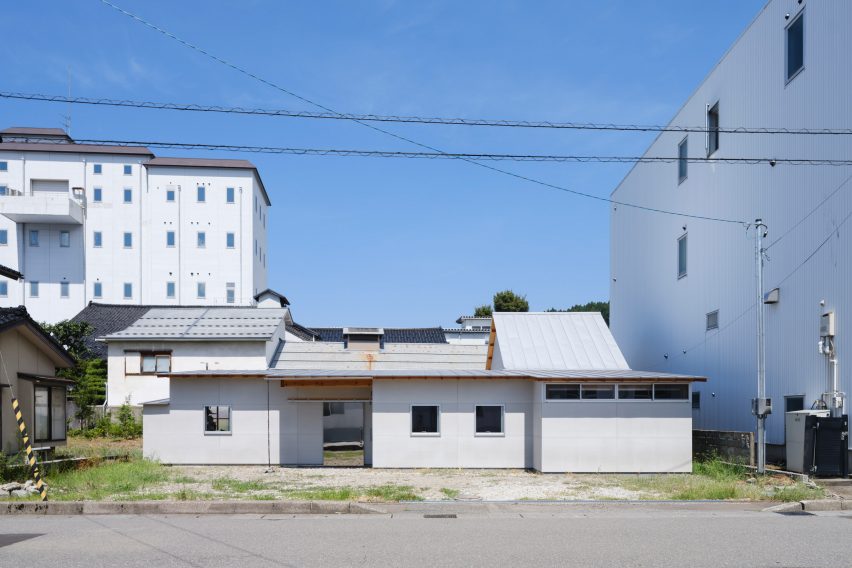
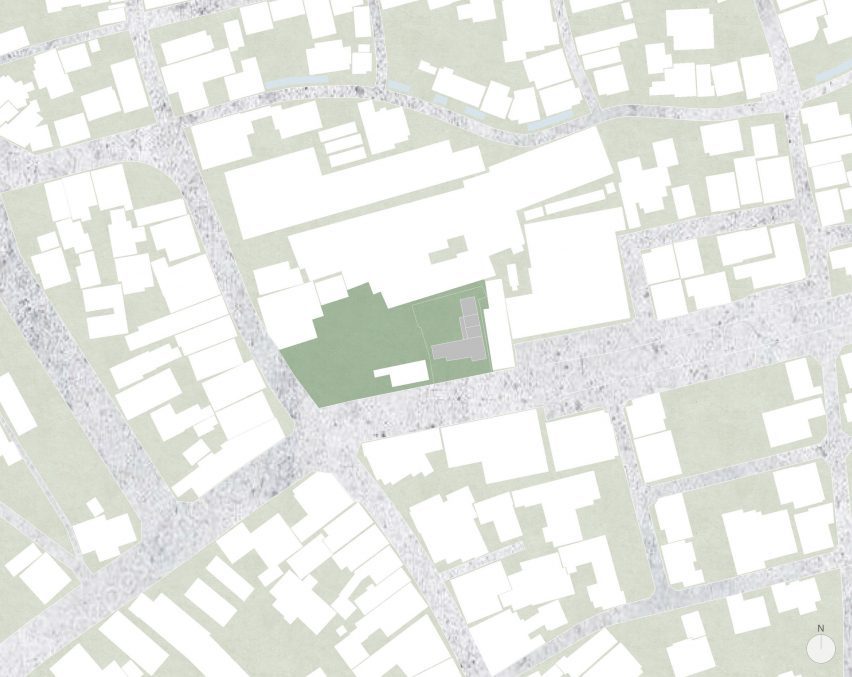
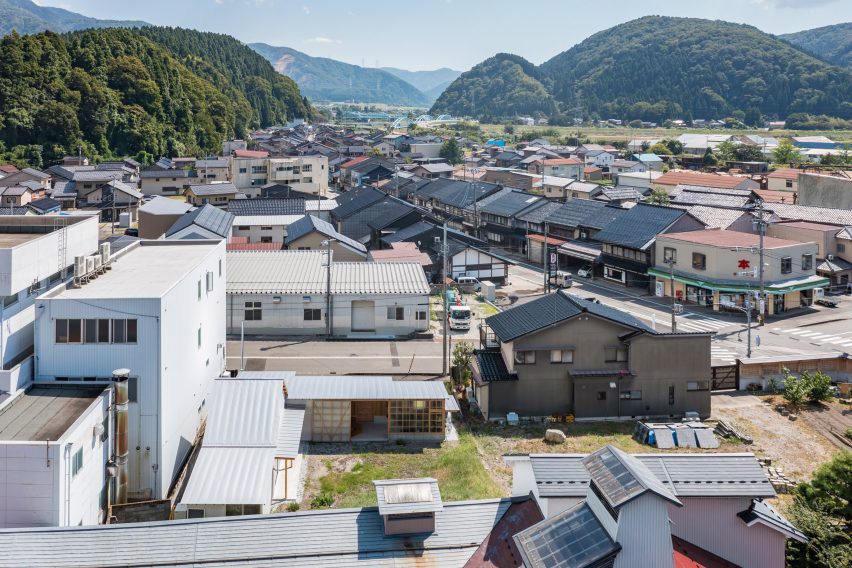
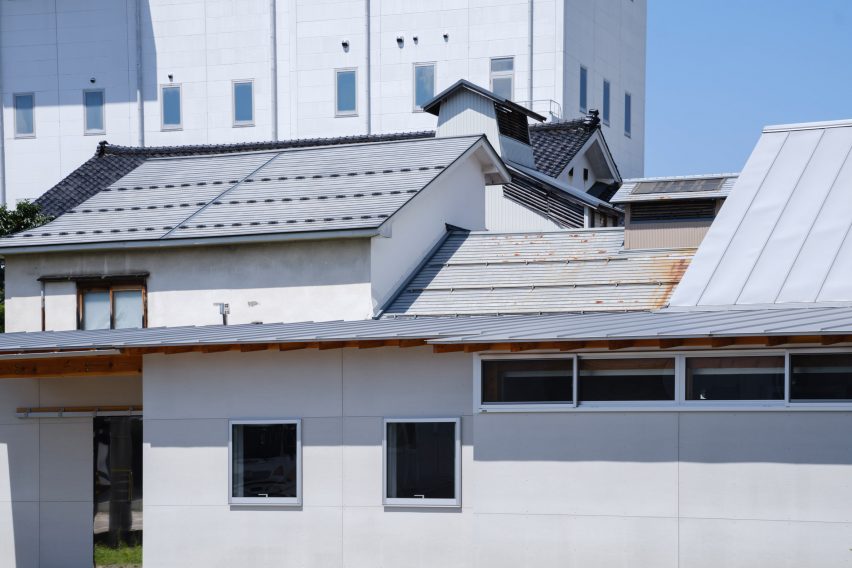
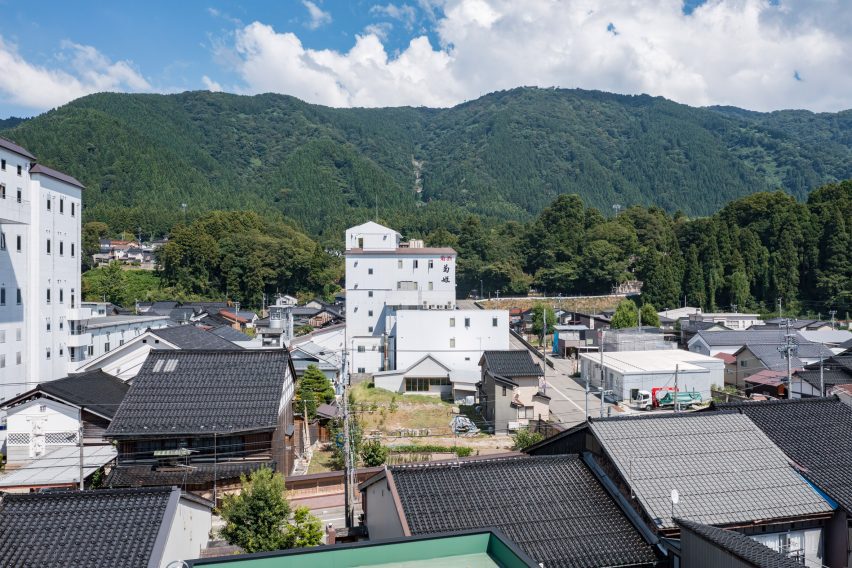
The site is situated at the foot of Mount Hakusan and is defined by a mixture of traditional townhouses and industrial buildings used for the production of sake, soy sauce and miso.
Inspired by this “multi-layered townscape”, Tokyo-based Chidori Studio designed Hokuriku Residence No. 3 as a blend of details, materials and forms drawn from surrounding buildings.
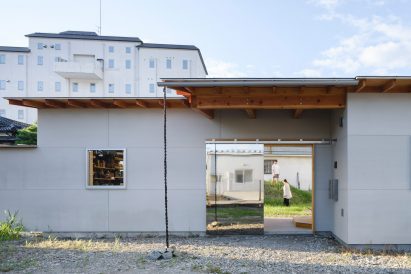
“Because of the old industries still remaining in the surrounding area, it was remarkable to see a mixture of various types of buildings,” architect Yusuke Oka told Dezeen.
“We attempted to design a new residence by incorporating details such as the shape of the roof, exterior walls, window openings, and the way fixtures are made that would allow these to blend together,” he added.
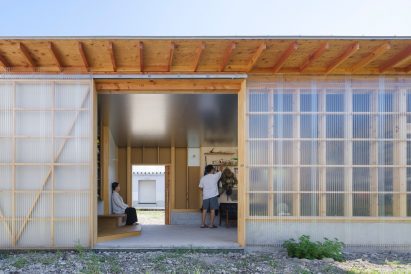
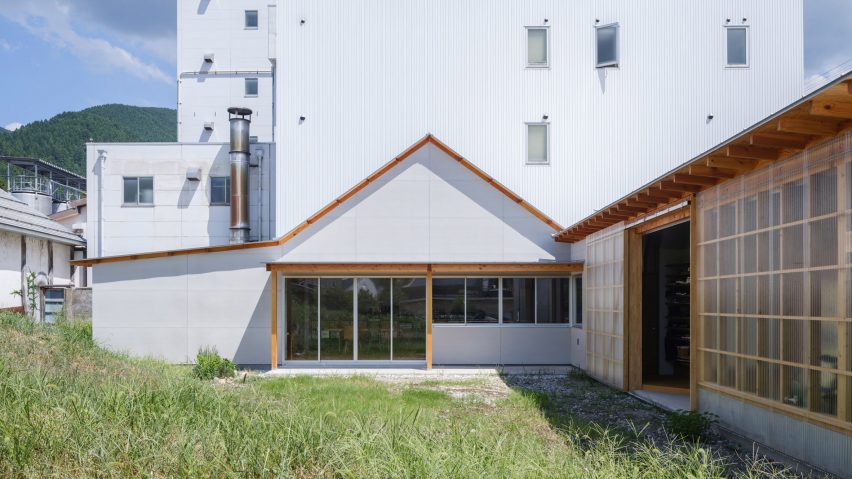
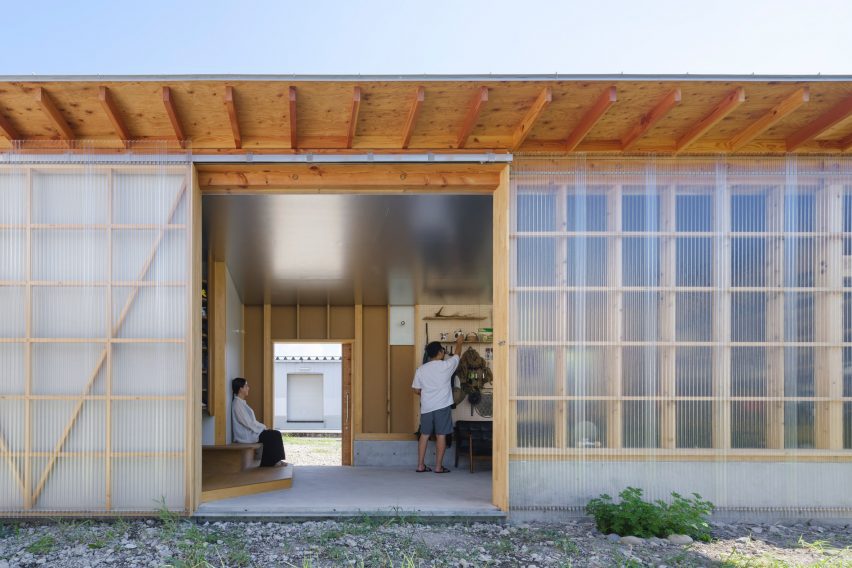
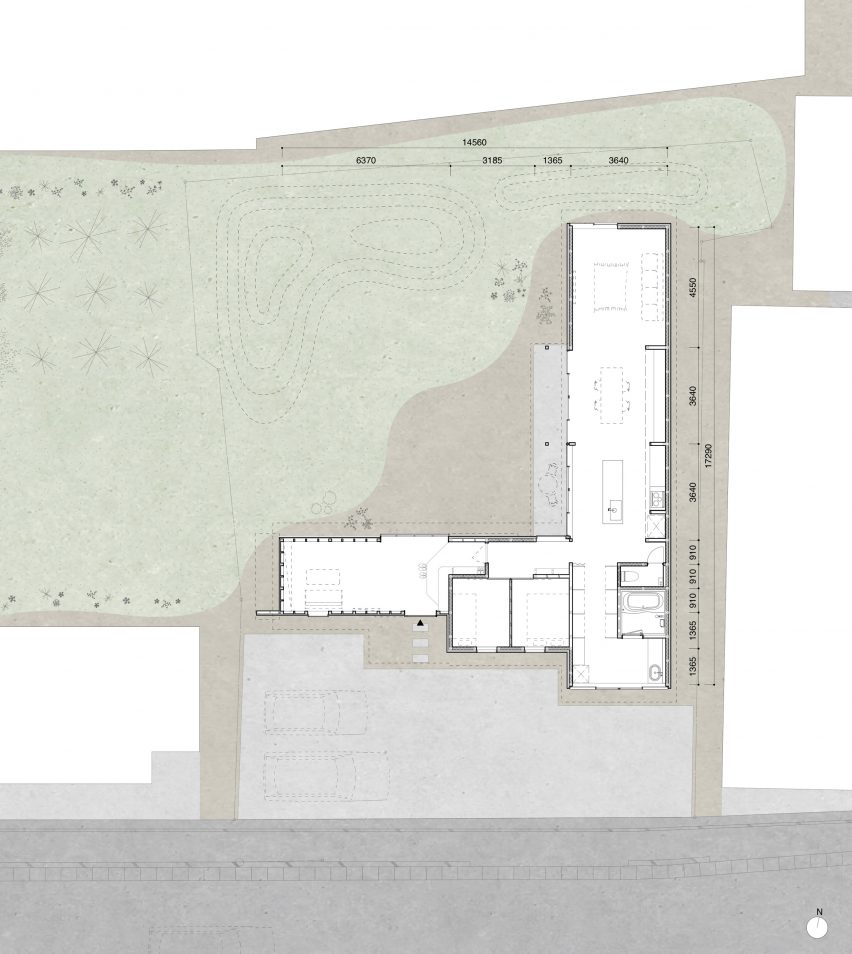
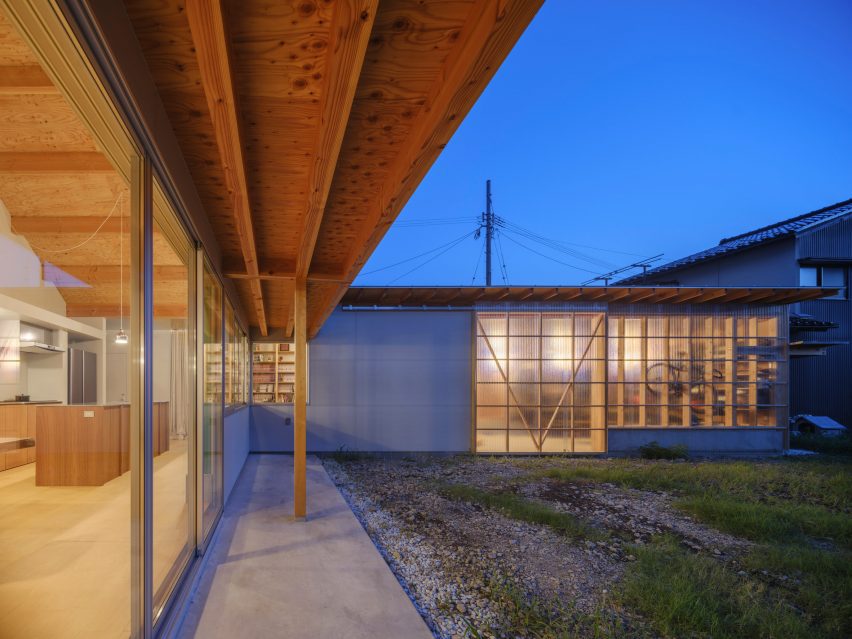
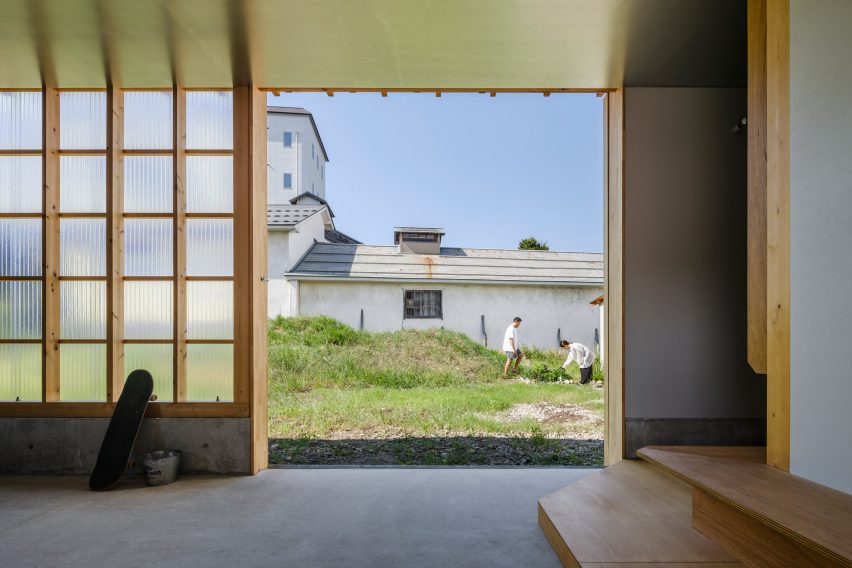
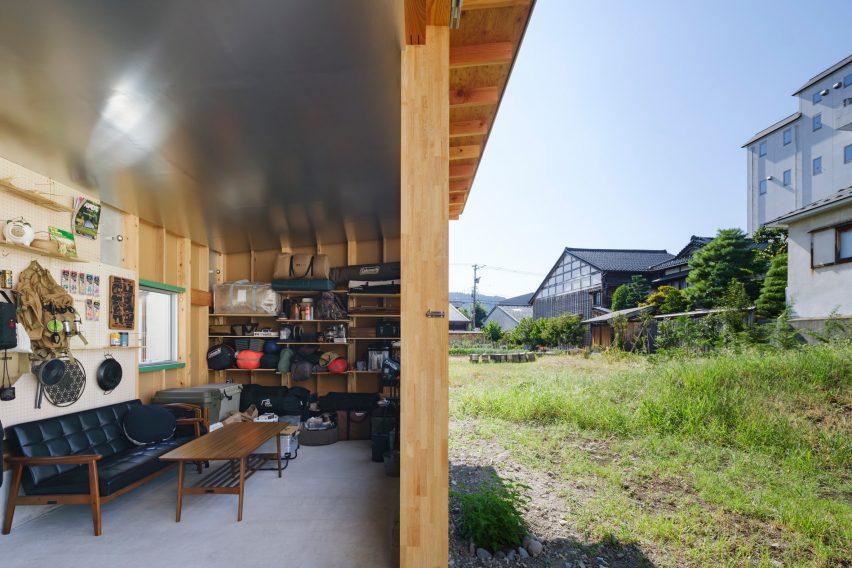
As a close connection to the outdoors was crucial for the client, Chidori Studio organised Hokuriku Residence No. 3 in an L-shape to hug a courtyard and overlook the “borrowed landscape” from a nearby vacant lot.
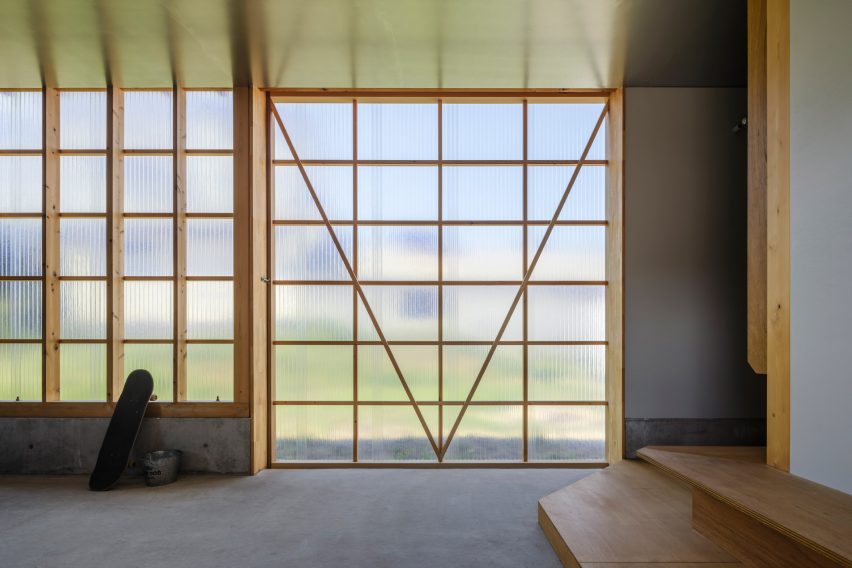
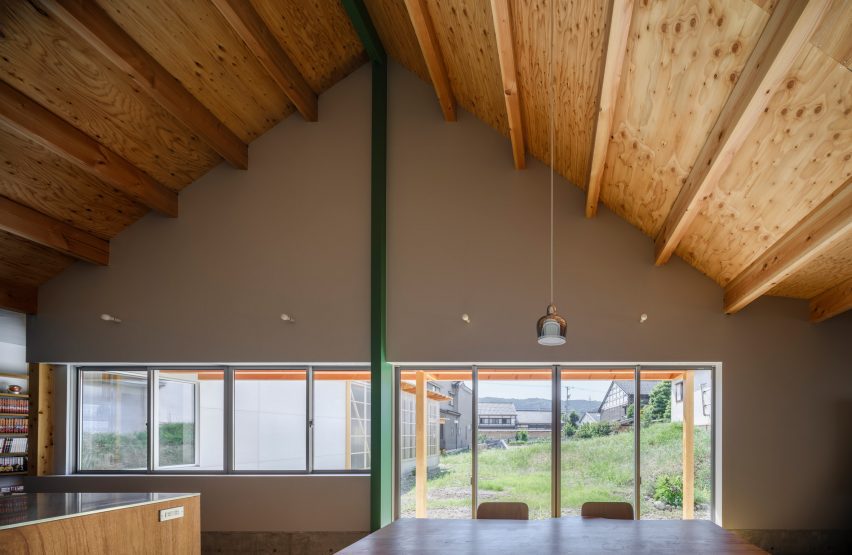
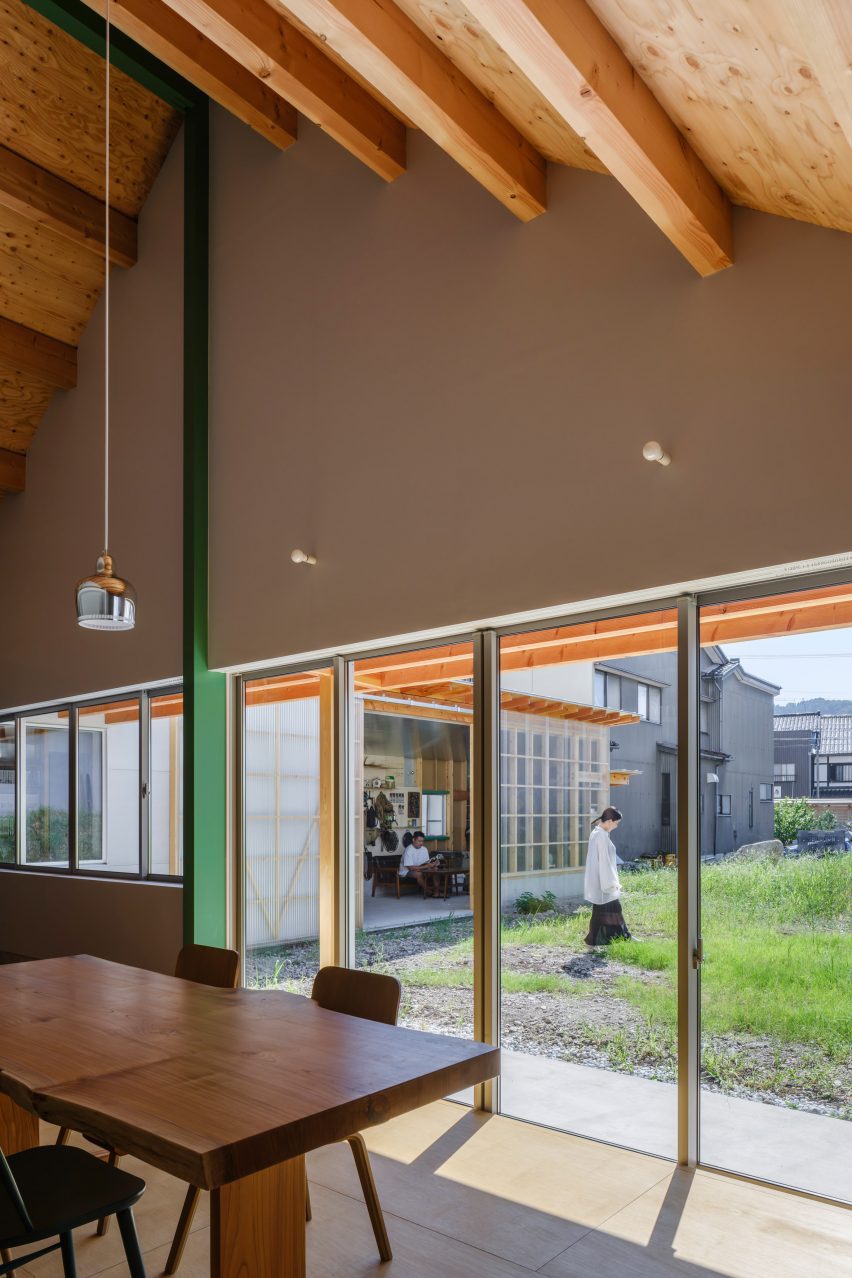
The home’s living spaces overlook these green spaces through openings and a sliding door that is reminiscent of traditional shoji screens but finished in timber and corrugated polycarbonate panels for a more industrial feel.
“Instead of creating a courtyard surrounded by buildings on all sides, we arranged the house in an L-shape to ensure minimum privacy against the road and to have a view of the borrowed landscape,” said Oka.
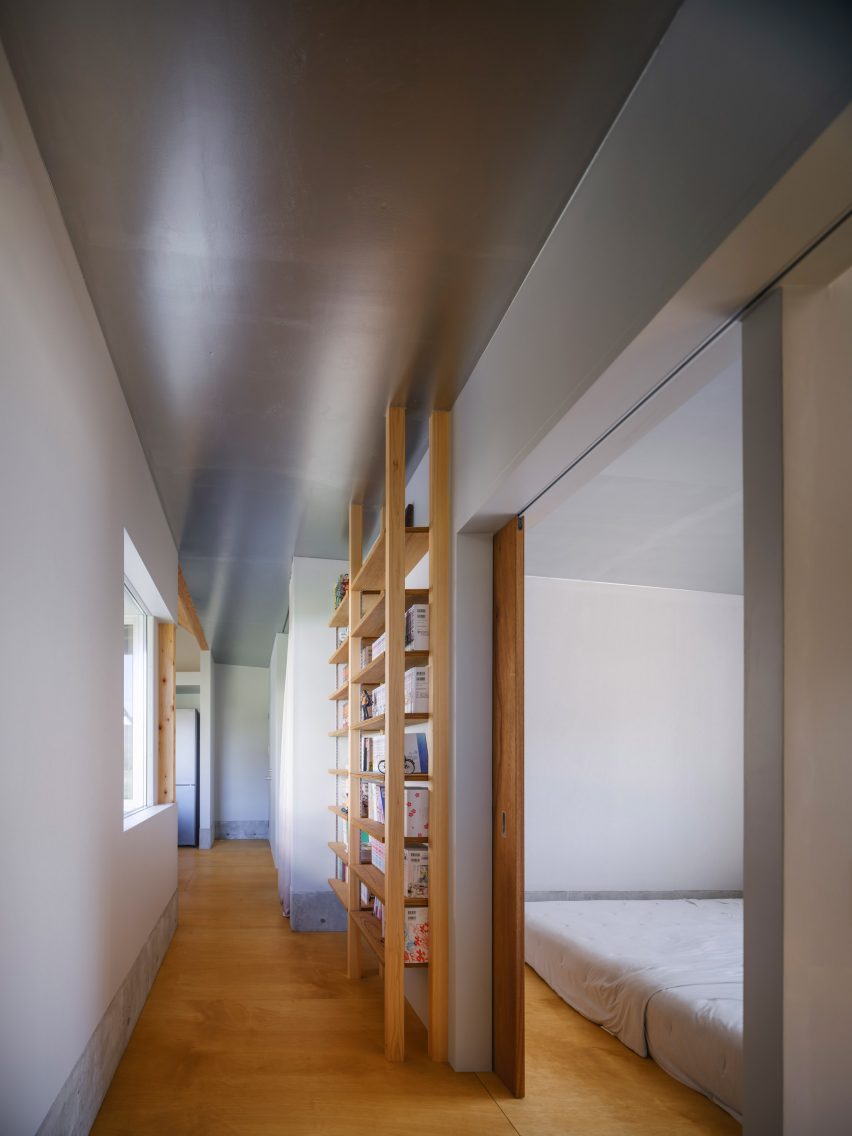
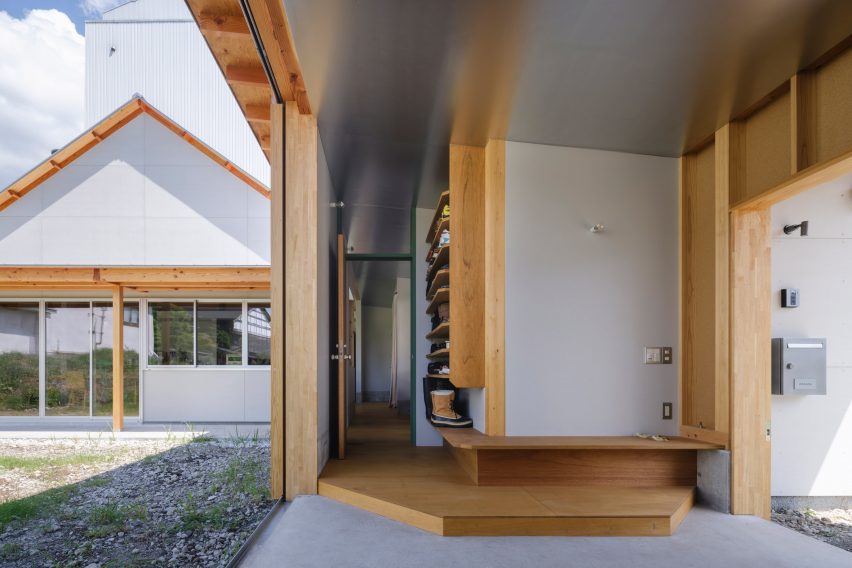
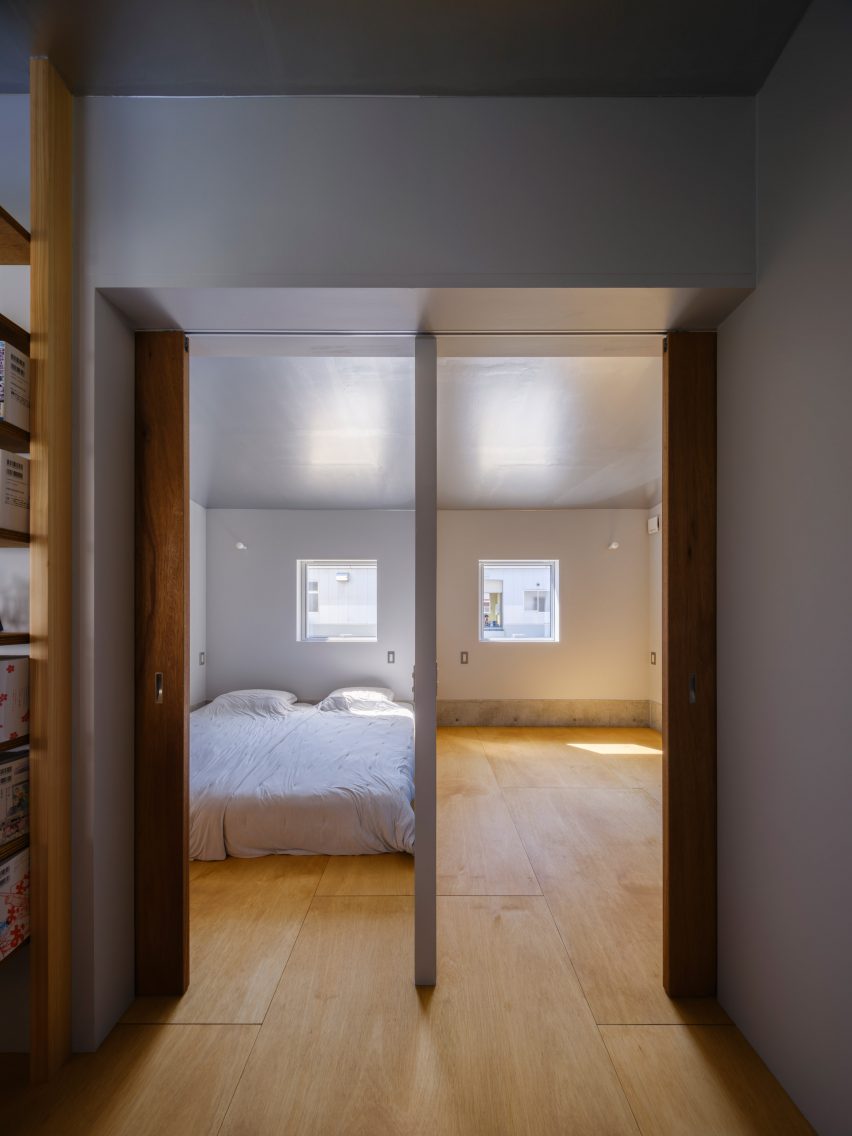
Bedrooms and utility spaces occupy the more enclosed southern end of the home, where the entrance sits behind a sliding door in mirrored metal.
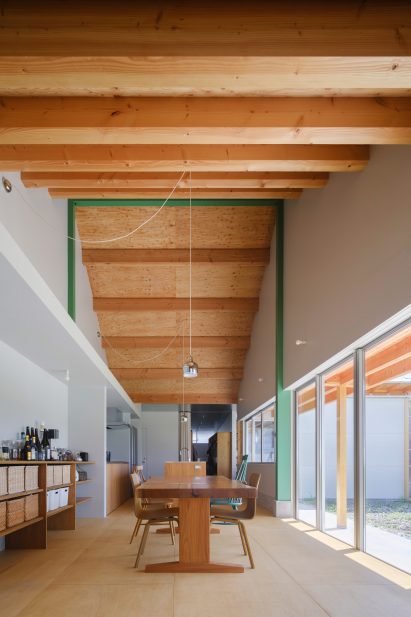
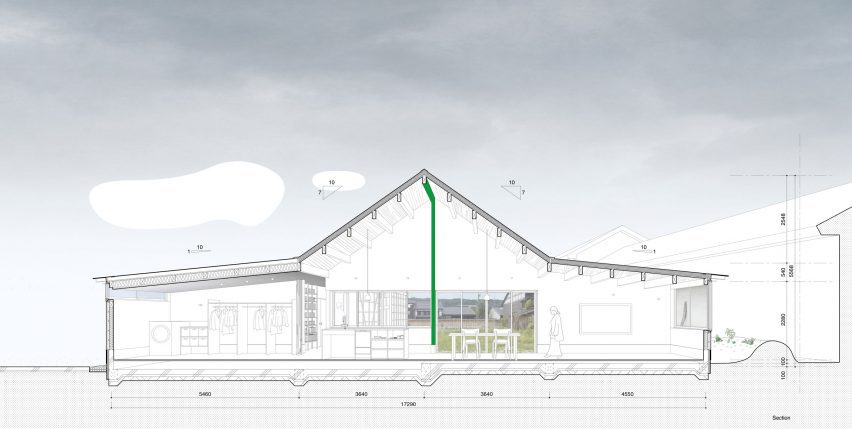
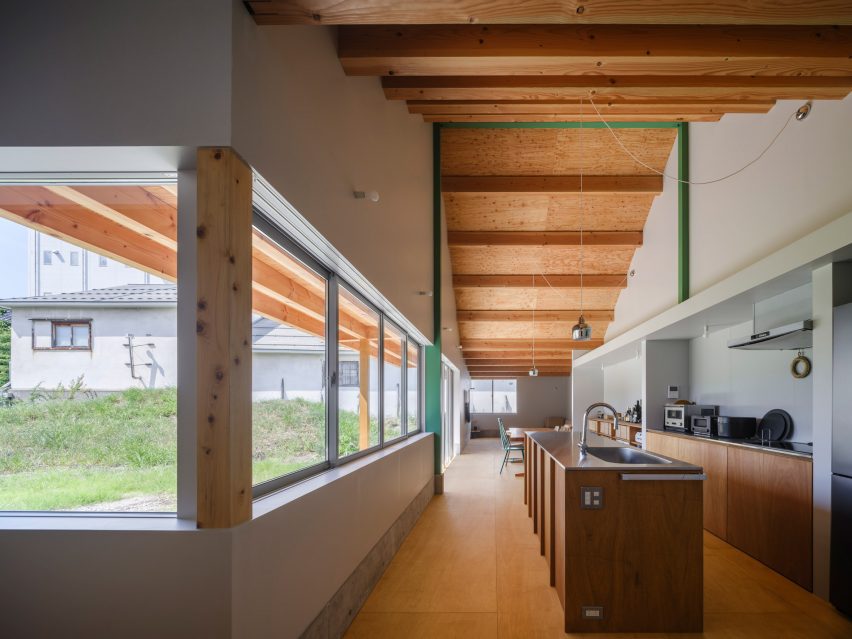
A timber-framed, angular roof with large overhanging eaves tops the home in a nod to the traditional Japanese townhouses found nearby.
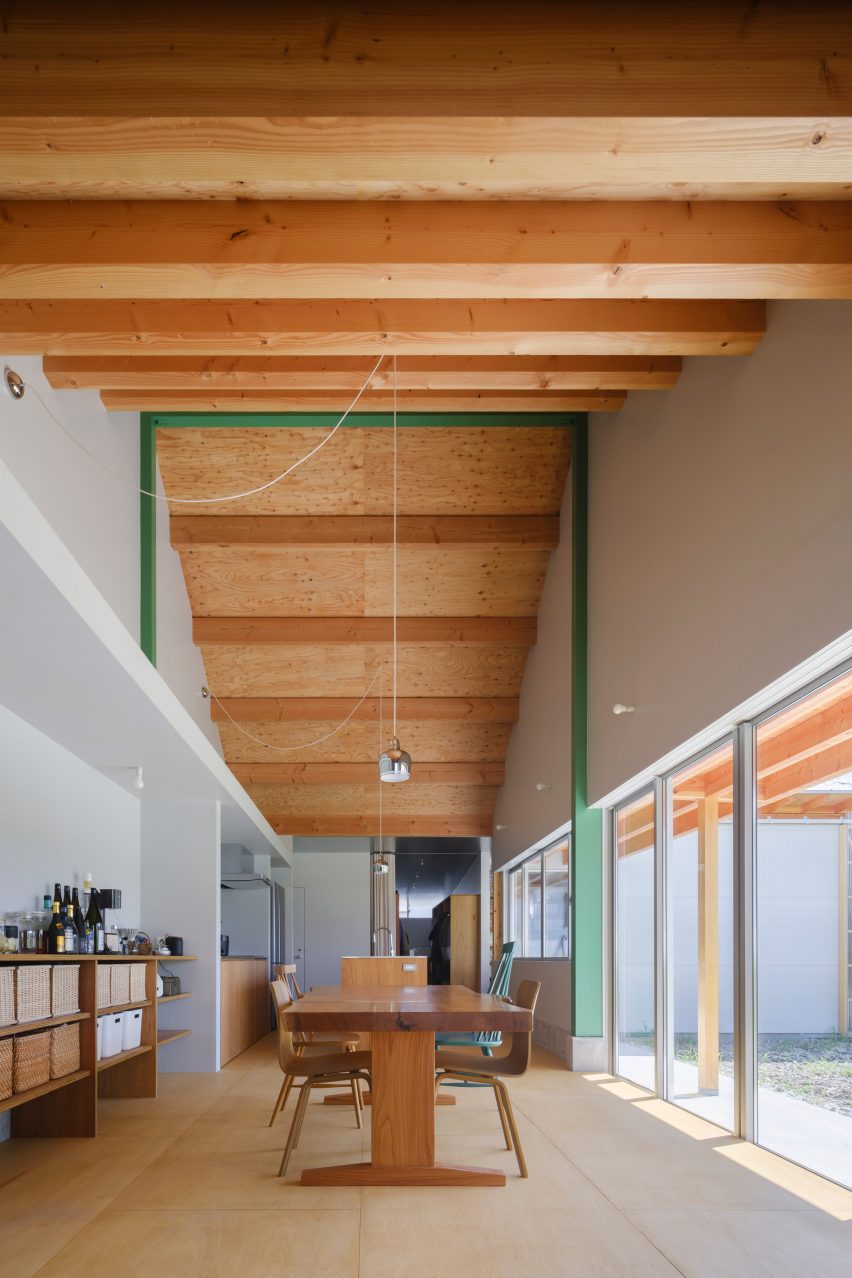
This is expressed internally with a large, sloping wooden ceiling over the living area. In the more private spaces, lower silver-lined ceilings are used to reflect light from the courtyard.
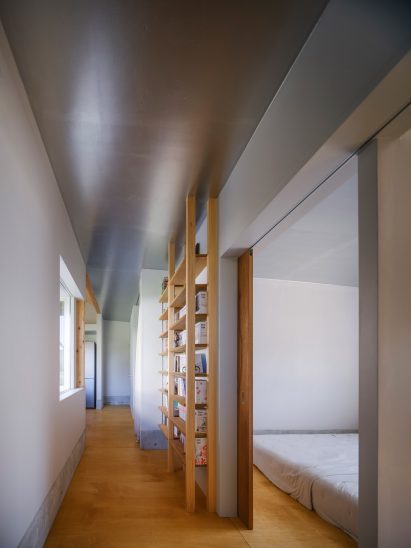
“In terms of materials and details, we wanted to incorporate interesting things that were naturally created by the streetscape, rather than those typically employed in houses,” said Oka.
“These include the wooden eaves of a traditional townhouse, the exterior walls of an office building, stainless steel fittings like those found in a factory, and large fittings that are beyond human scale,” he added.
Other homes in Japan recently featured on Dezeen include a 2.7-metre-wide residence in Saitama by IGArchitects and a traditional wooden home in Toyama renovated by NYAWA.
The photography is by Yasuhiro Nakayama.
Read more
Recommended stories
Curving metal terrace for potted plants fronts home in Tokyo by HOAA
Japanese garden design informs Tokyo real estate office by Flooat
House N by Tomohiro Hata is based on a traditional Japanese vernacular
Steel frame defines “truly ordinary” home in Vietnam by MIA Design Studio
Annie Barrett and Hye-Young Chung create a “home within a house” in Los Angeles
House in Chiharada by Studio Velocity
House in Kamihachiman by Horibe Associates