Offhand Practice creates glass-walled cafe in Shanghai park
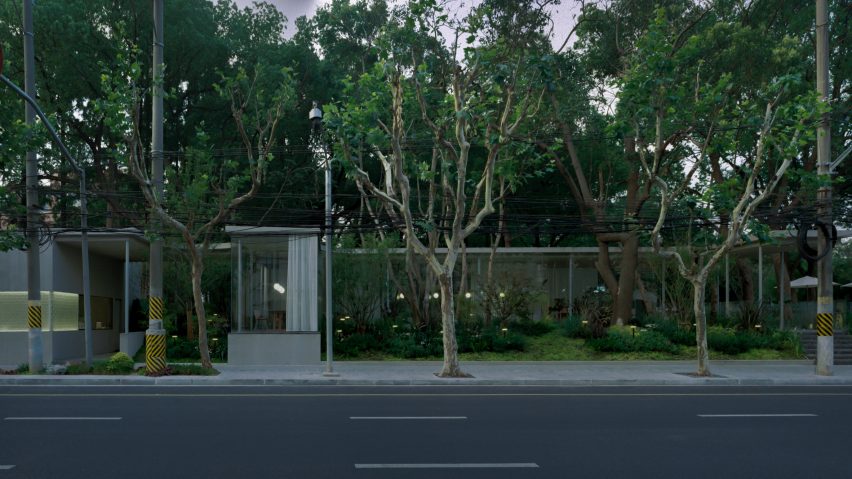
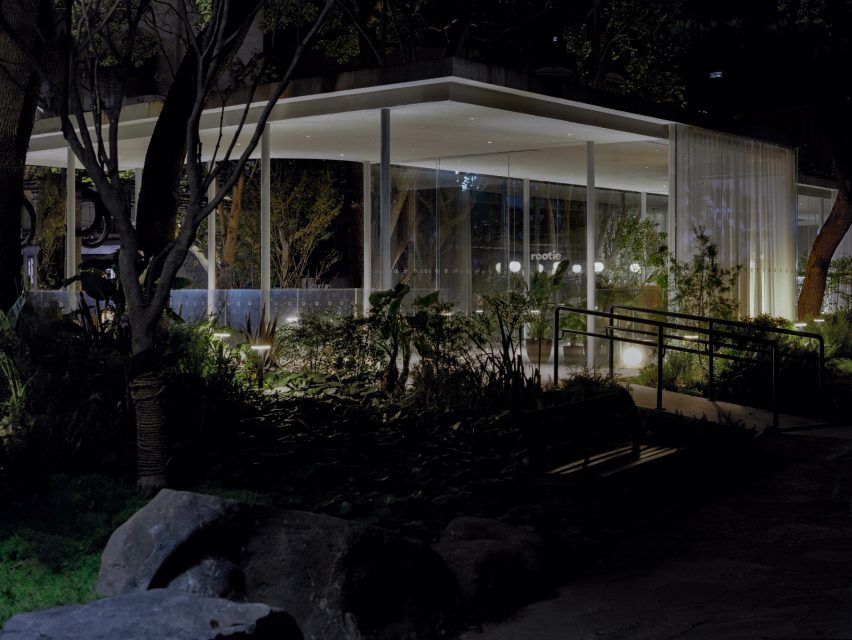
Chinese studio Offhand Practice has completed the Mei Yuan Cafe, a glass-walled pavilion in Shanghai that allows visitors to “immerse themselves” in the surrounding park.
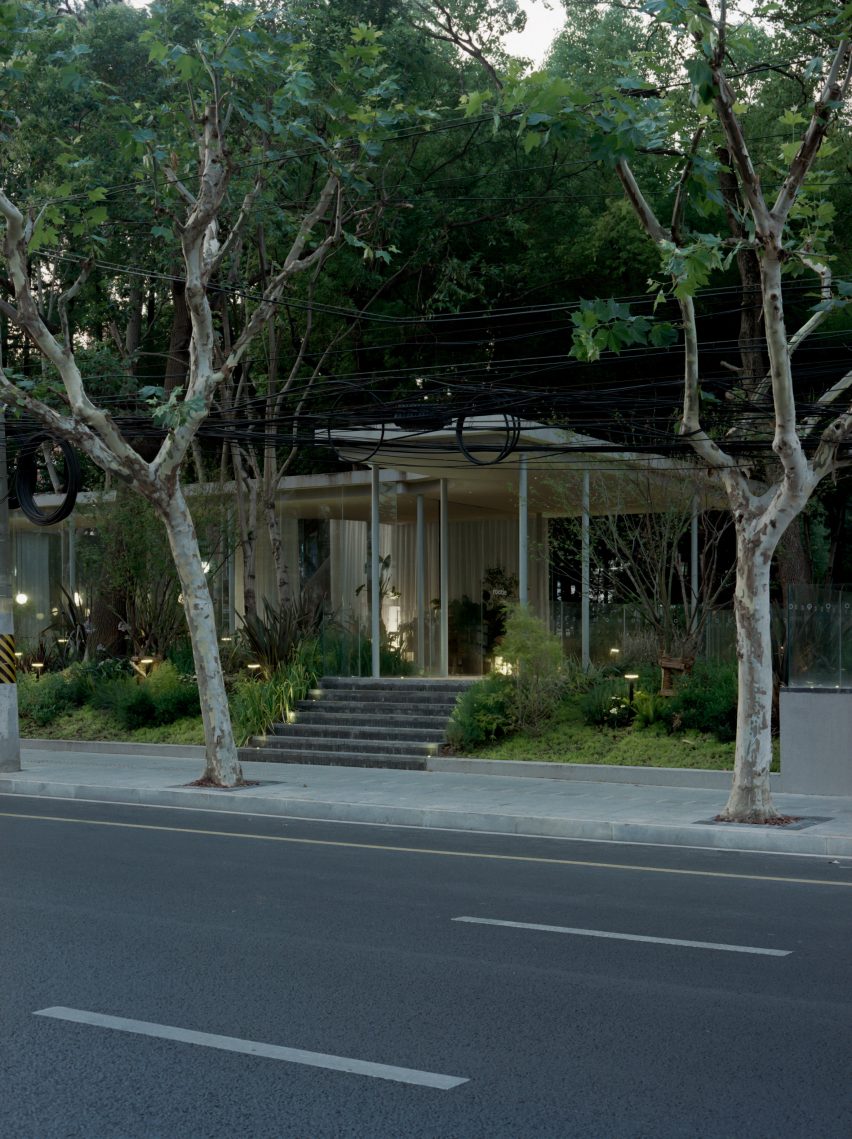
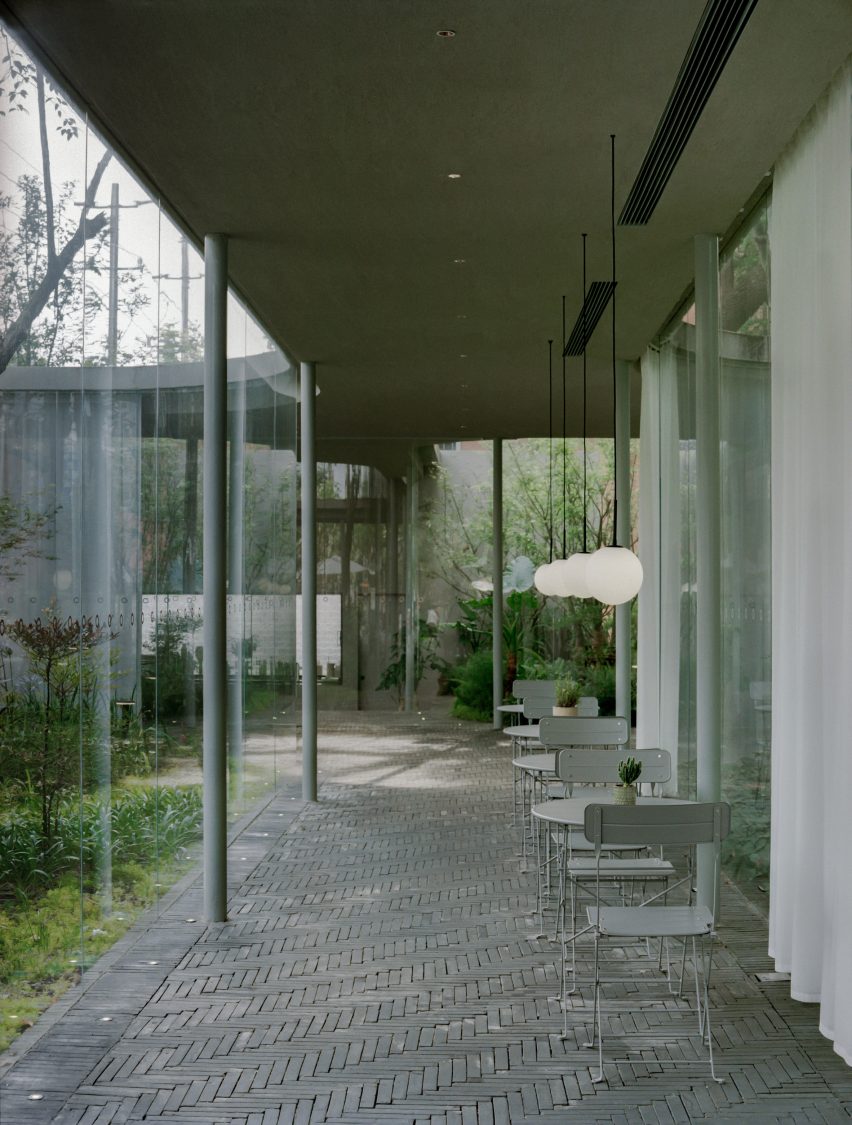
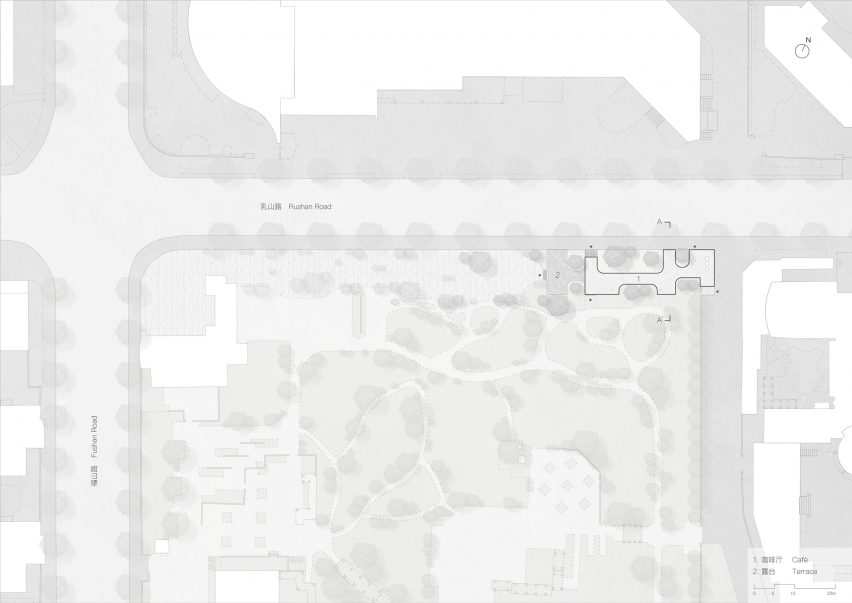
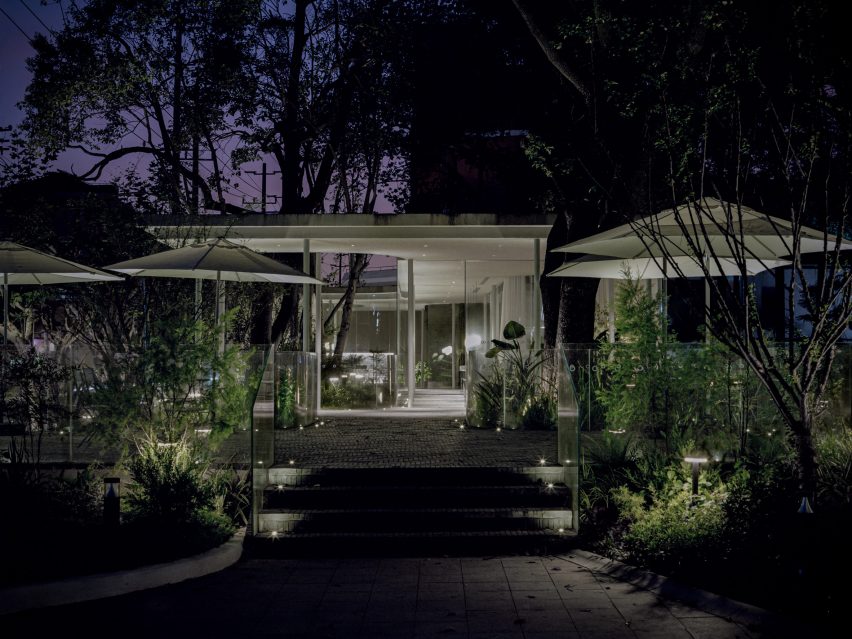
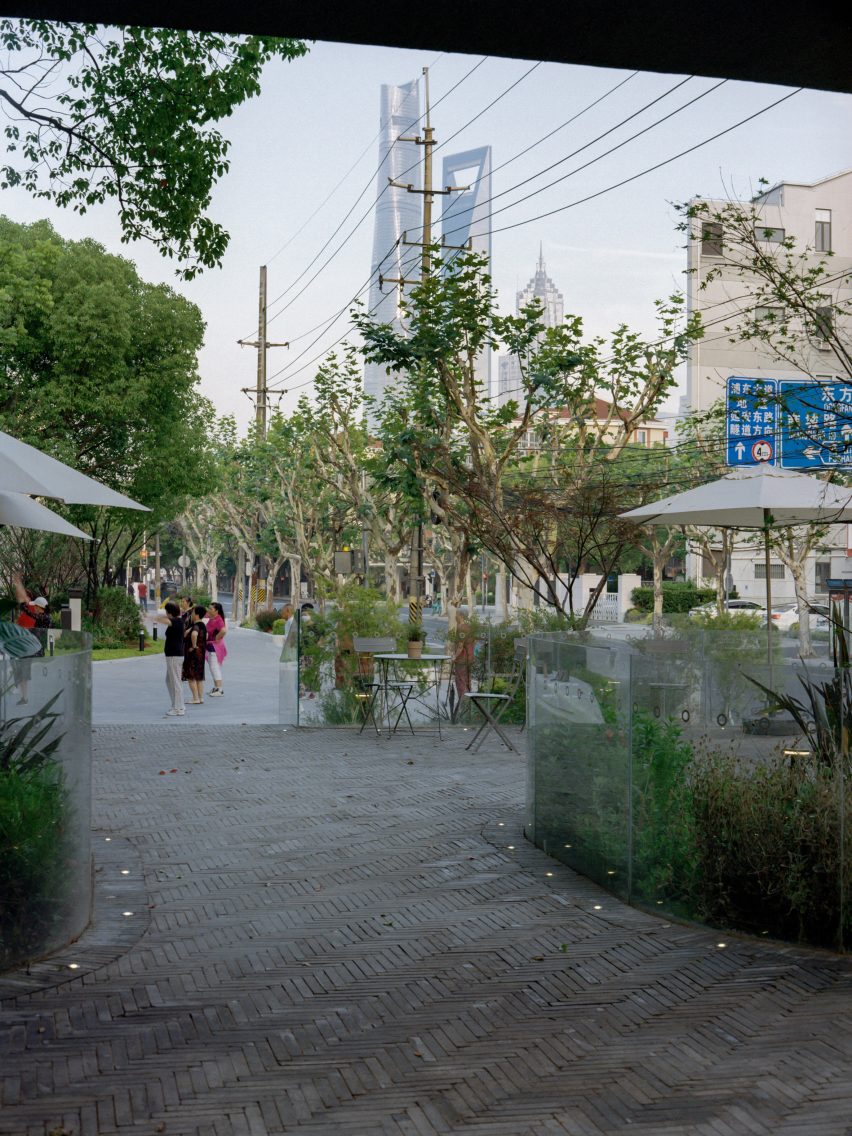
Located within the previously inaccessible Mei Yuan Park in the district of Pudong, the slender structure of white steel and glass is designed to have as minimal impact on the existing planting as possible.
“In Shanghai, a campaign to make parks green and open is quietly underway – Mei Yuan Park, originally surrounded by walls, also aims to become more accessible,” explained Offhand Practice.
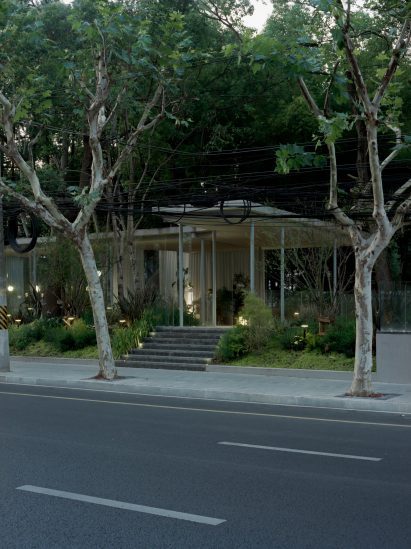
“We envisioned the cafe as a friendly interface connecting the community and the park, therefore we chose pavilion as the architectural form, hoping to achieve a delicate balance between permeability and shelter,” added the local studio.
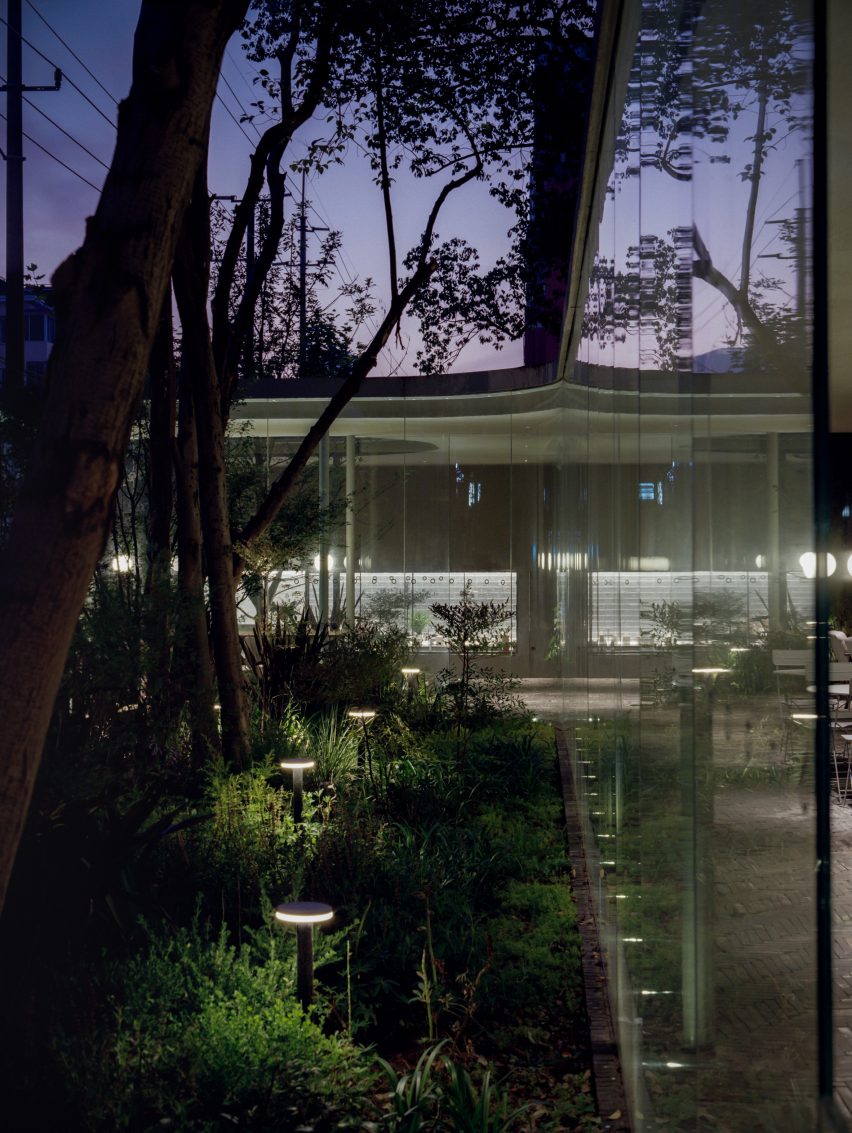
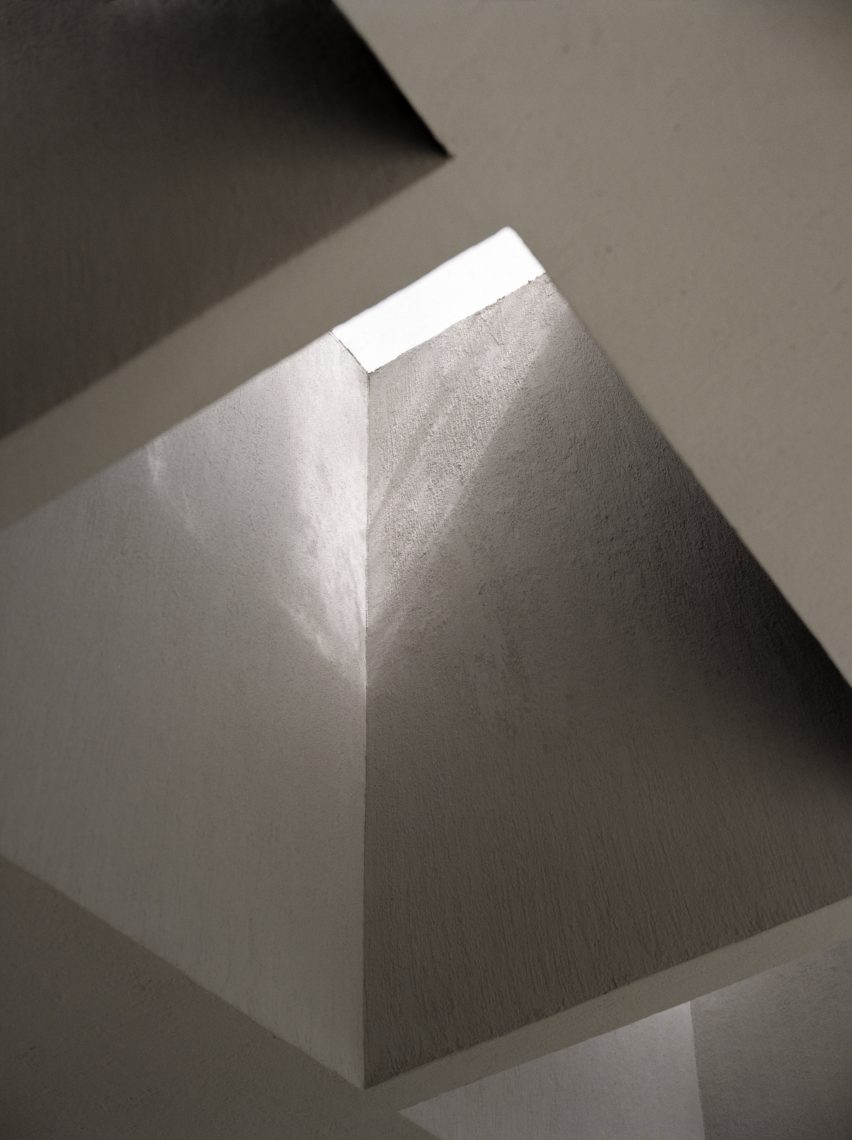
“The use of floor-to-ceiling glass, ubiquitous grey bricks, and understated textured paint clearly convey our original intention: to create a shelter where people can immerse themselves in nature,” it continued.
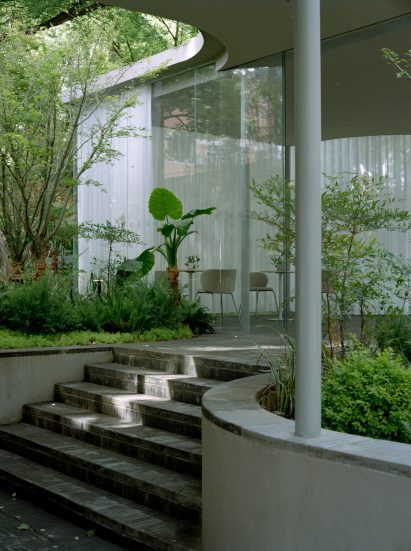
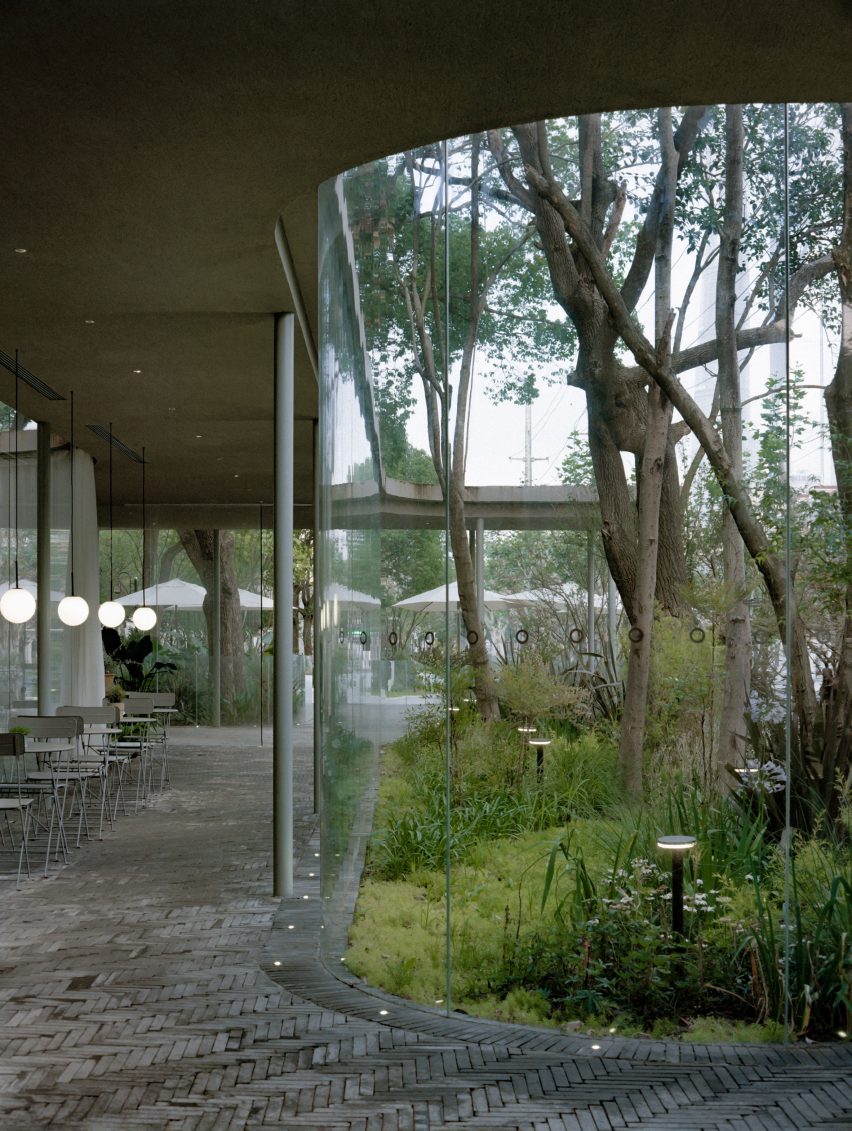
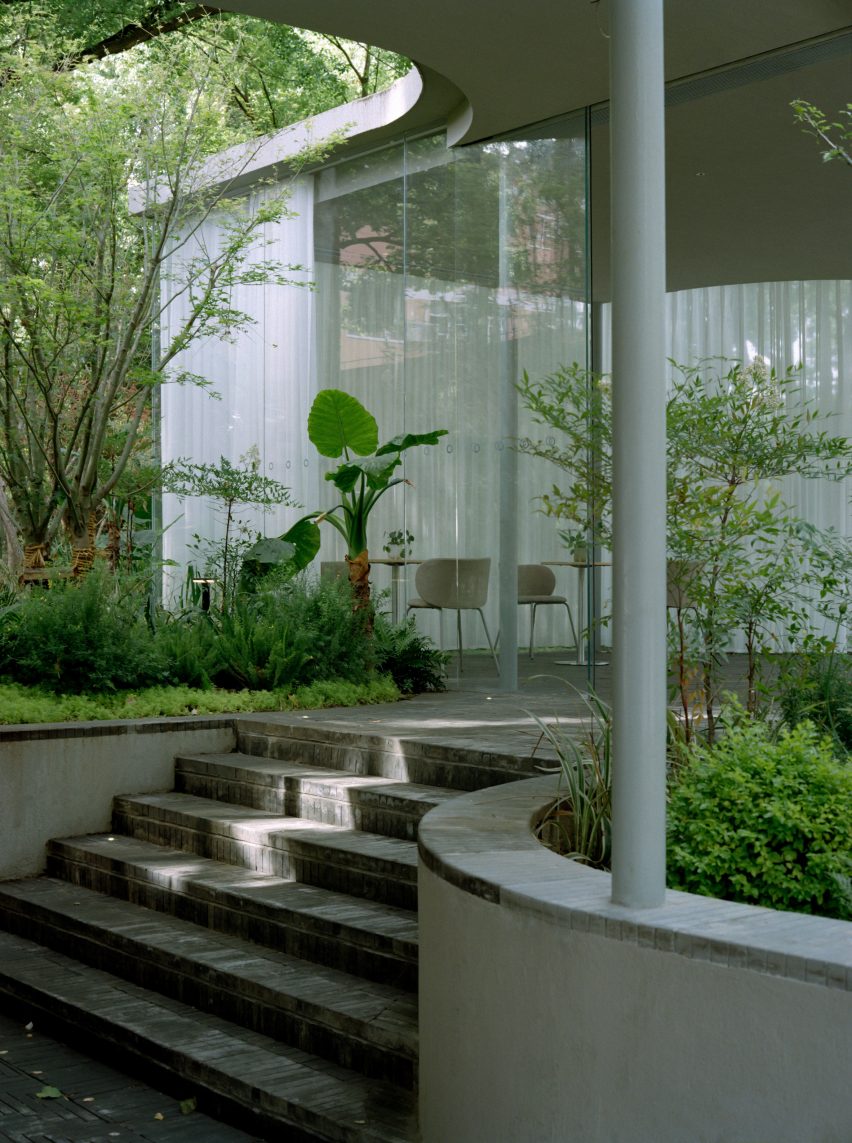
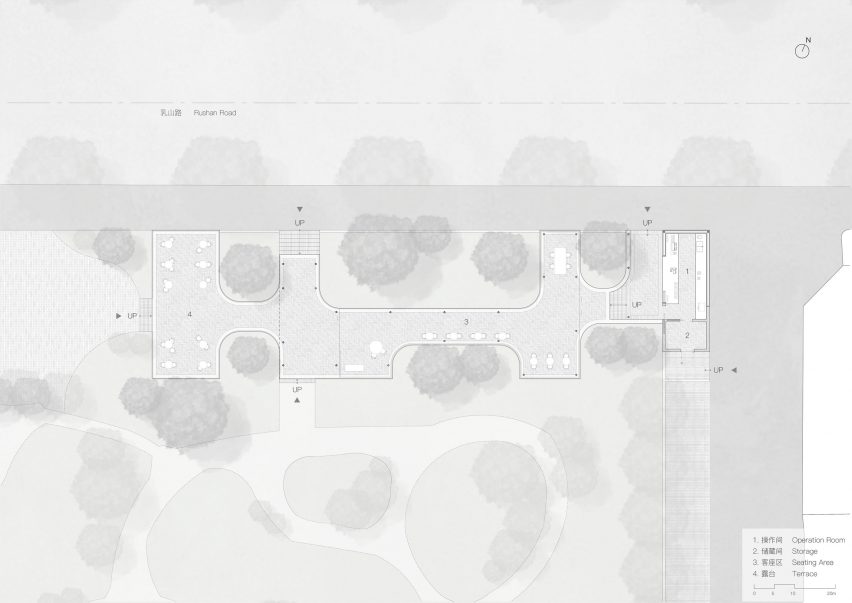
Mei Yuan Cafe’s long, narrow form occupies the northeastern corner of the park, with curved cut-outs around its edges creating space for the existing trees to grow.
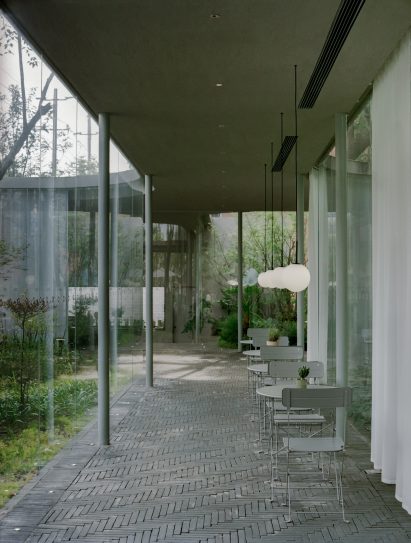
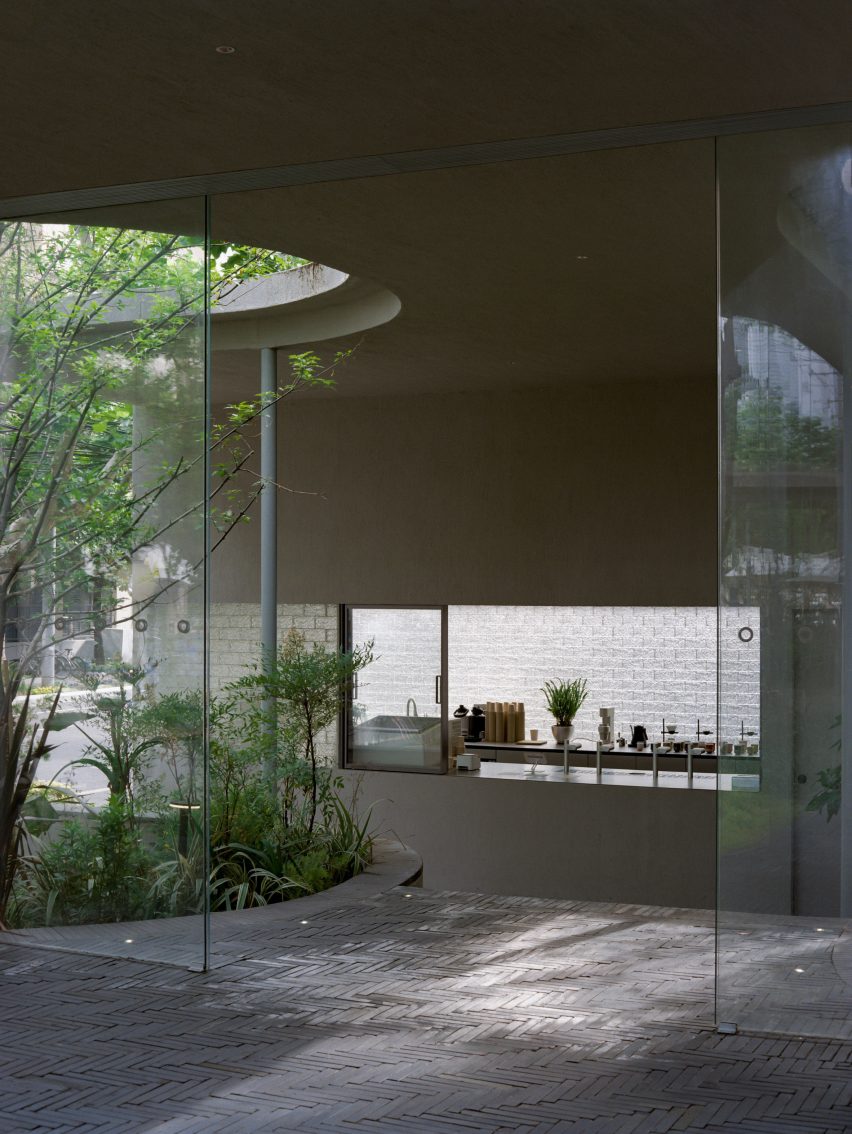
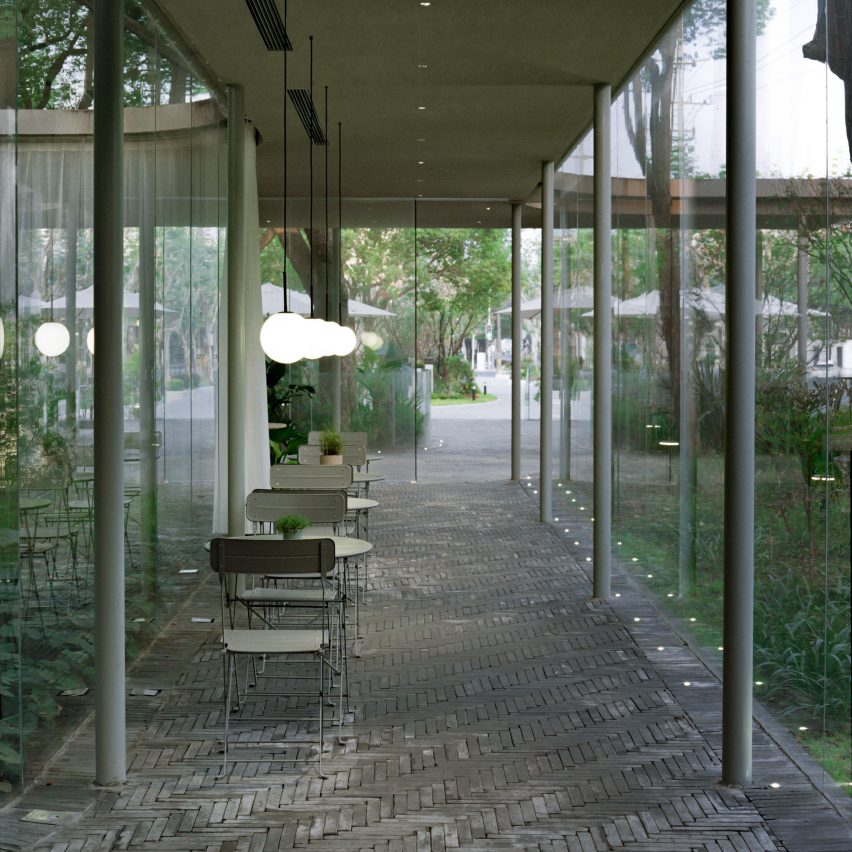
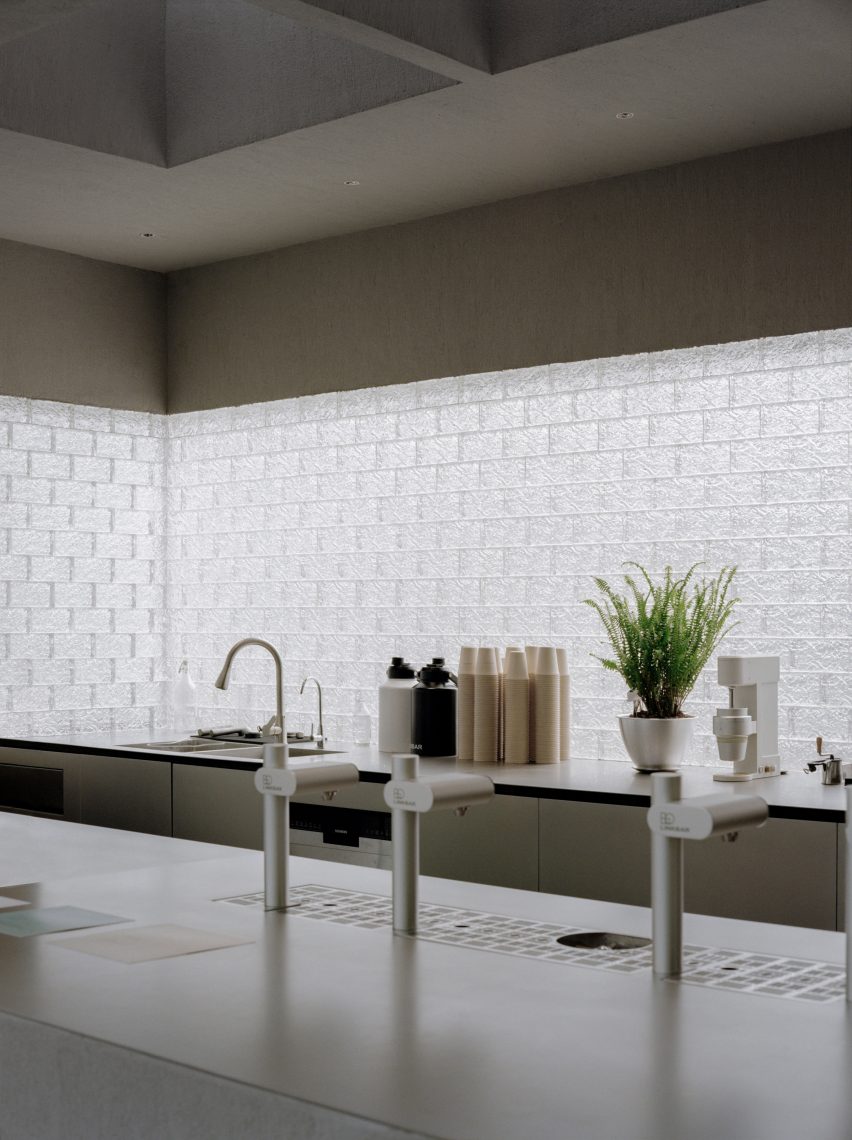
At its eastern end is the serving area, while the remainder of its site is occupied by sheltered seating areas that open out onto an external terrace to the west.
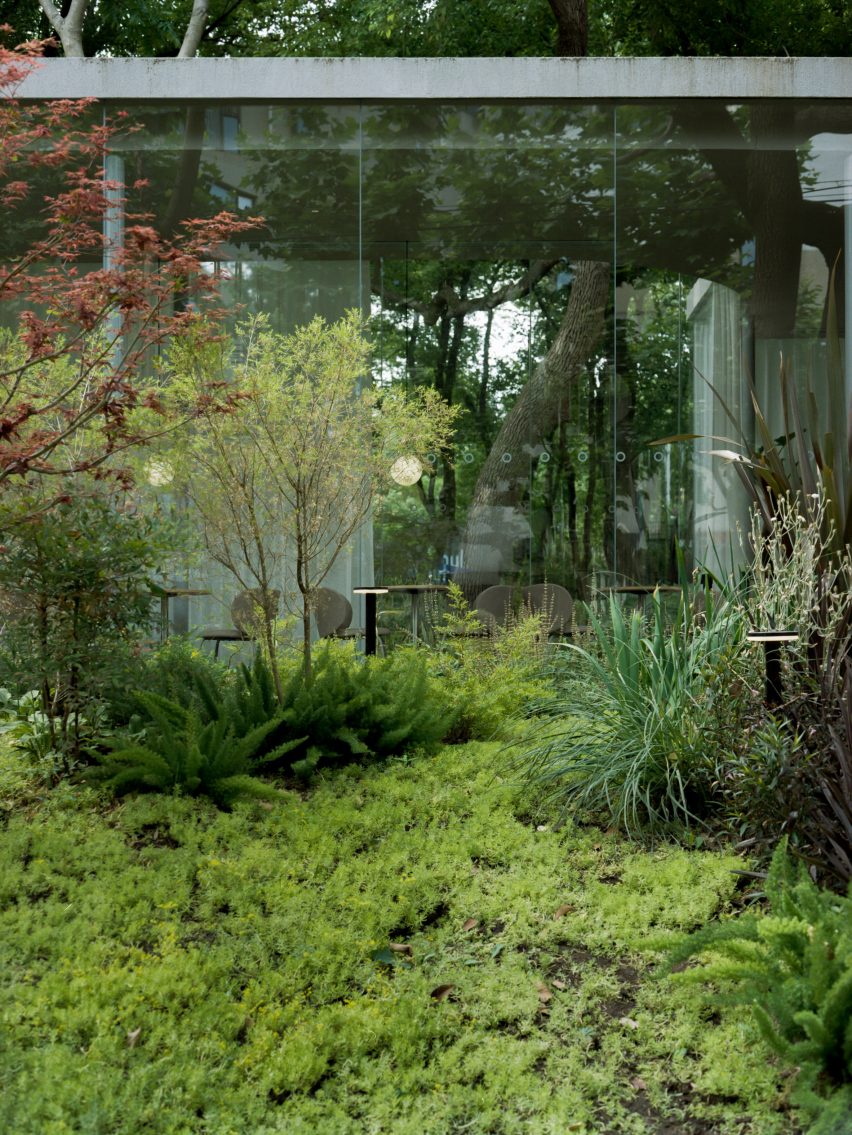
The frames for the large expanses of glazing have been concealed in both the slim concrete roof and the brick paving, intended to make the division between indoor and outdoor as seamless as possible.
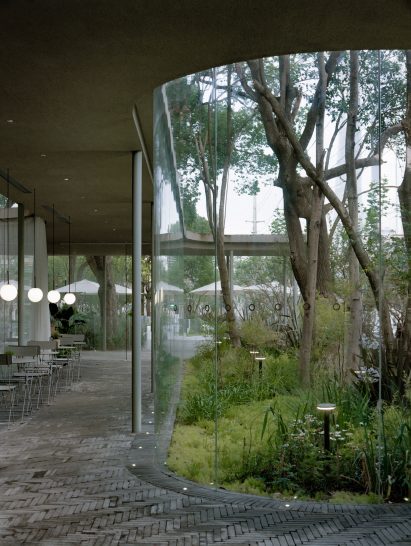
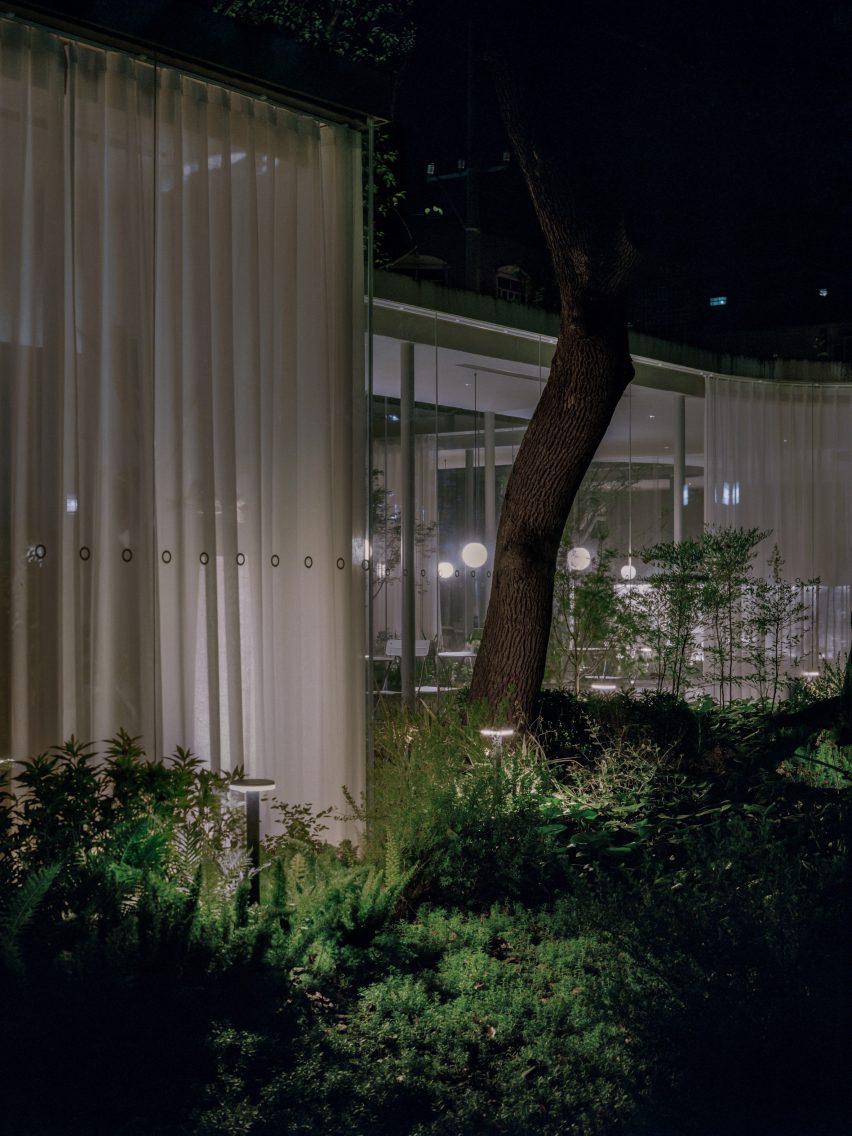
A curtain track has also been concealed in the ceilings and used to hang large white curtains that allow for greater control over interior shading and privacy.
“Both ends of the glazing are neatly hidden in the ceiling and the brick joints, maximising the field of vision and perception for its occupants,” explained the studio.
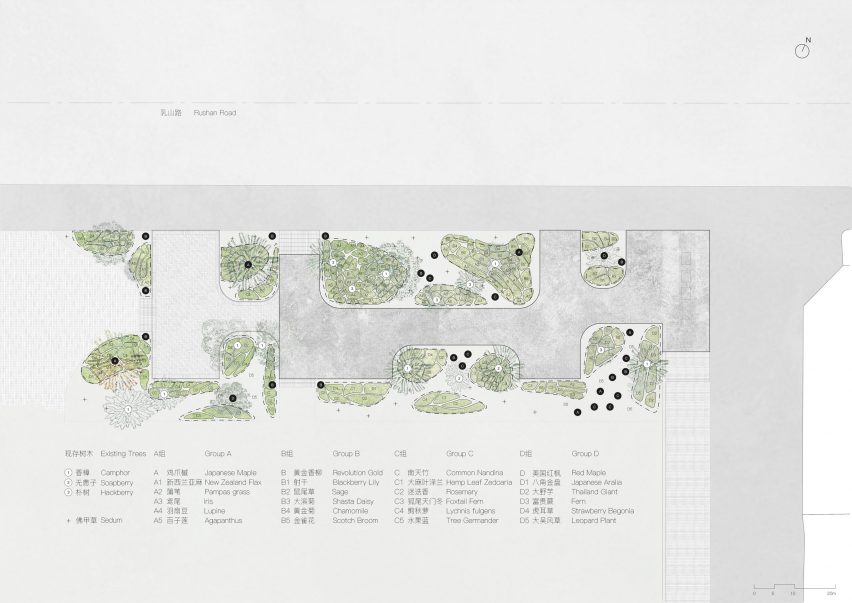
Complementing the park’s large trees, a variety of different planting was introduced to provide a backdrop that will change with the seasons.
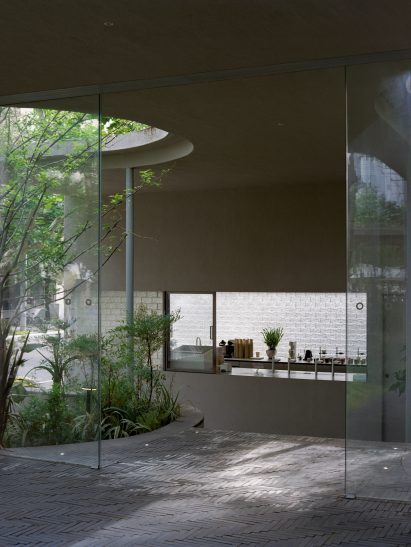
“Soapberries with jade leaves, lush camphor with incredible crowns, and upright clusters of hackberries – they are the true natives of the land,” explained the studio.
“Every cut and turn in the design is to leave space for them to grow freely, and therefore its final form is entirely determined by these trees,” it added.
Shanghai-based Offhand Practice was founded by Yuan Yuan and Nie Xuan in 2018. Previous projects by the studio include a second-hand bookshop in Shanghai that was designed to mimic a greengrocer with supermarket-style shelves and crates.
Other recently completed cafes in China include a pop-up structure in Hangzhou by FOG Architecture and a concrete volume perched on a cliff edge on Jiming Island by Trace Architecture Office.
The photography is by Hu Yanyun.
Read more
Recommended stories
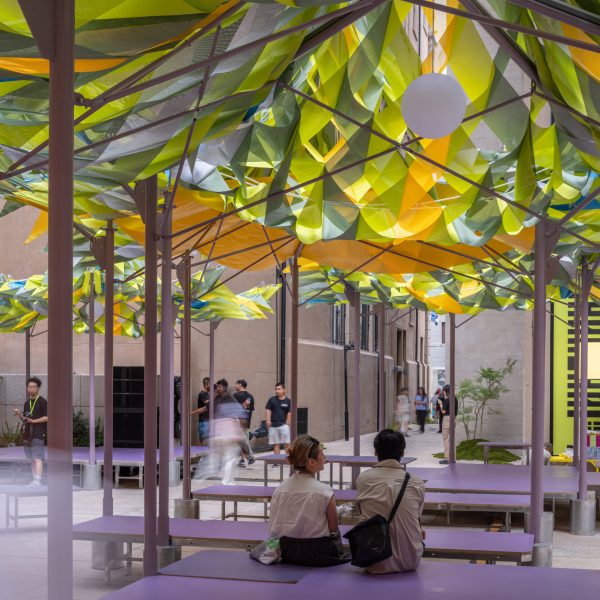
All(zone) creates fabric pavilions in Shanghai to turn the city into “a shared canvas”
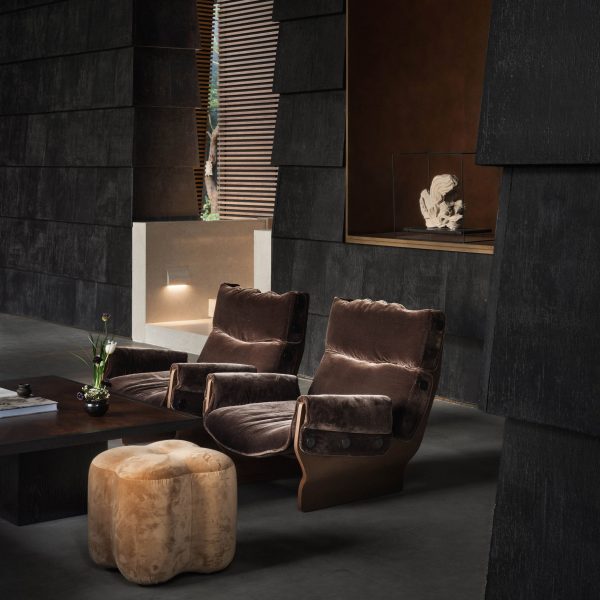
Six projects from Bin Wu that showcase design “articulated by the East itself”
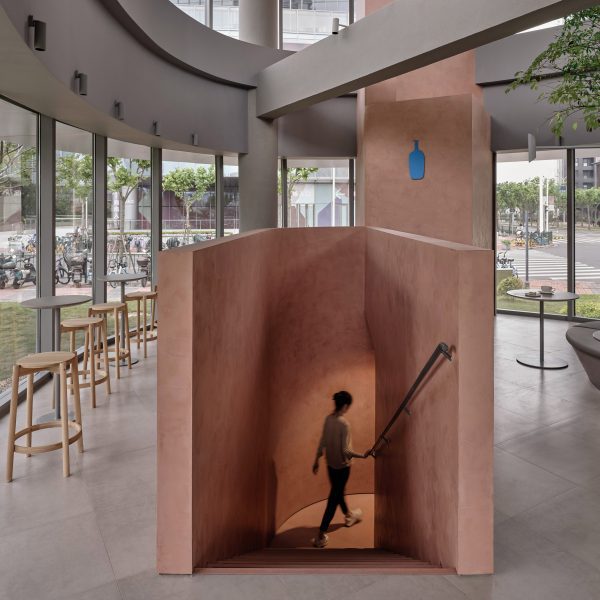
Blue Bottle Coffee Qiantan references greenhouses and Shanghai’s brick architecture
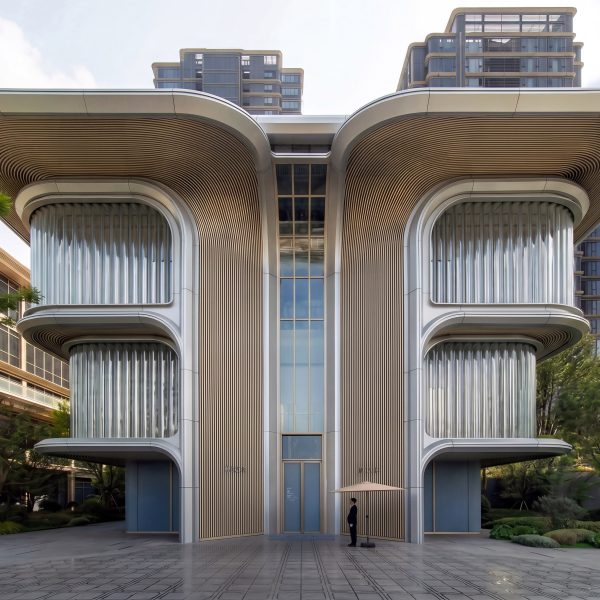
Foster + Partners lines Shanghai art gallery with tubular glass
Chinese library complex encourages “connections between people and the city”
Wong Kar Wai references own cinematic style for Prada restaurant in Shanghai
Seven civic projects celebrating China’s cultural heritage