


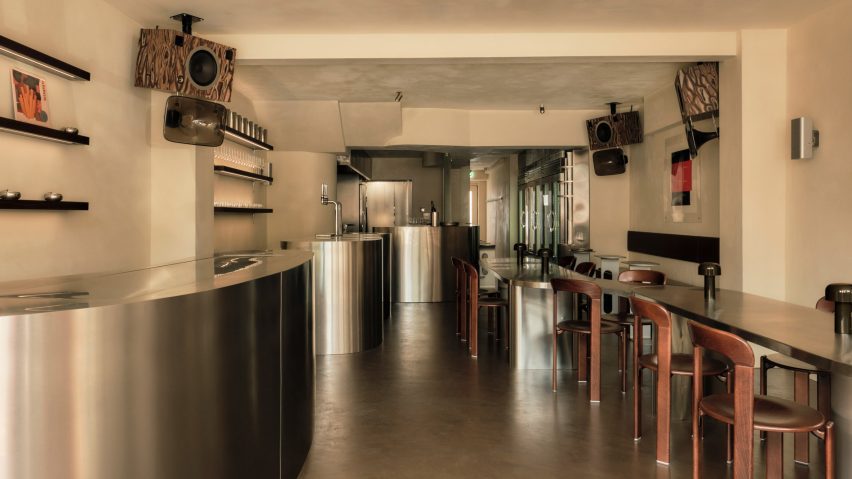
Designer Annabel Colterjohn and architecture office Red Deer used a palette of industrially inspired materials to evoke the gritty yet welcoming feel of Berlin kebab shops at this restaurant in west London.
Kiez Kebab was created by four friends based on a shared passion for restaurants, design and kebab. Colterjohn leads the design side of the business, which took over the site of a former Turkish restaurant on Golborne Road.
The interior design of Kiez Kebab was informed by the overall restaurant concept, which aims to elevate kebabs from a late-night staple to a high-quality culinary concept.

"We love the idea of the foodie friend bringing a sceptical newcomer along to our kebab shop, where they'll immediately realise they're in for much more than just a quick bite of street food," Colterjohn told Dezeen.
"We set out to create a space where people want to start the night and stay a while, not just end it with us."
Named after the Berlin word for neighbourhood, Kiez is designed as a no-reservation, 30-cover space with a local, familiar and welcoming atmosphere.

"We wanted to import the casual, convivial feel of Berlin, with its straight-talking yet surprisingly warm sensibility," Colterjohn explained.
"For us, the core of that is the 'kiez'. That's the feel we wanted to bring to our Notting Hill community through design – a bit cool on the surface, most friendly once in."
Colterjohn worked with Red Deer to create a layout that makes the most of the long, narrow space and ensures a natural flow of movement for guests and staff.
The architects also helped to develop bespoke elements, including an organically shaped communal table referred to as the "archipelago of steel" that creates a focal point within the space.
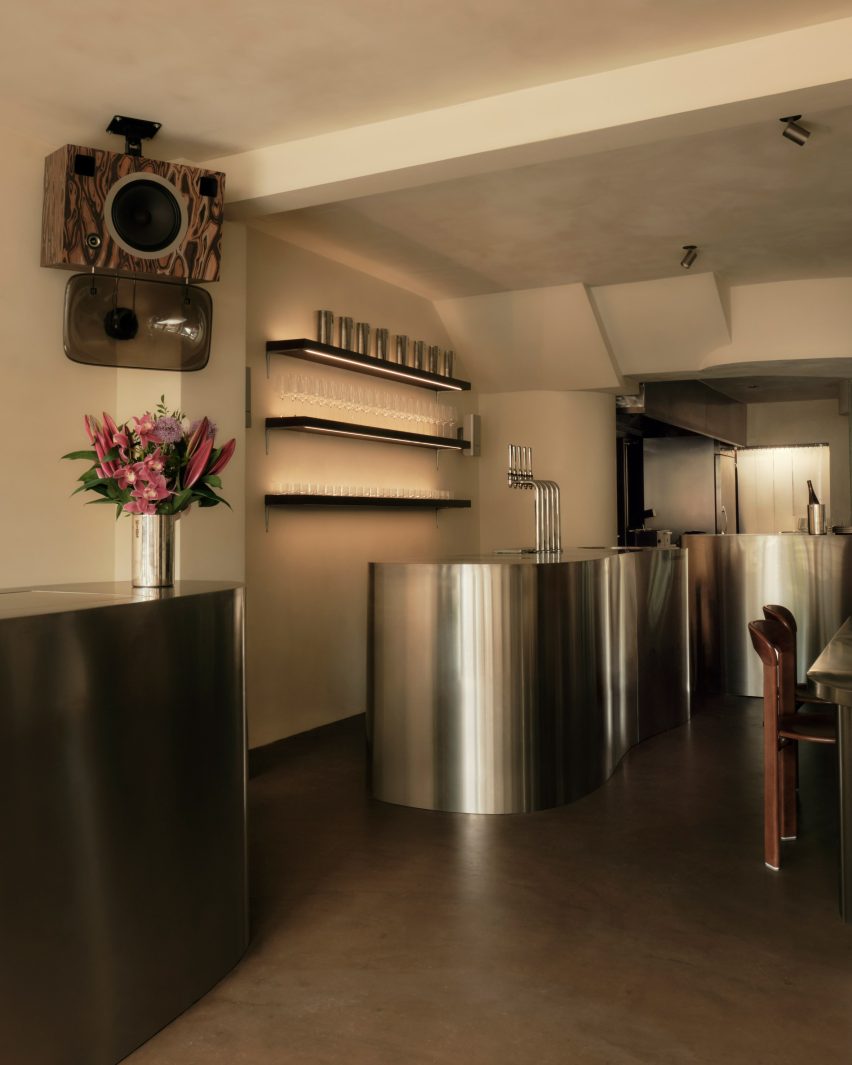
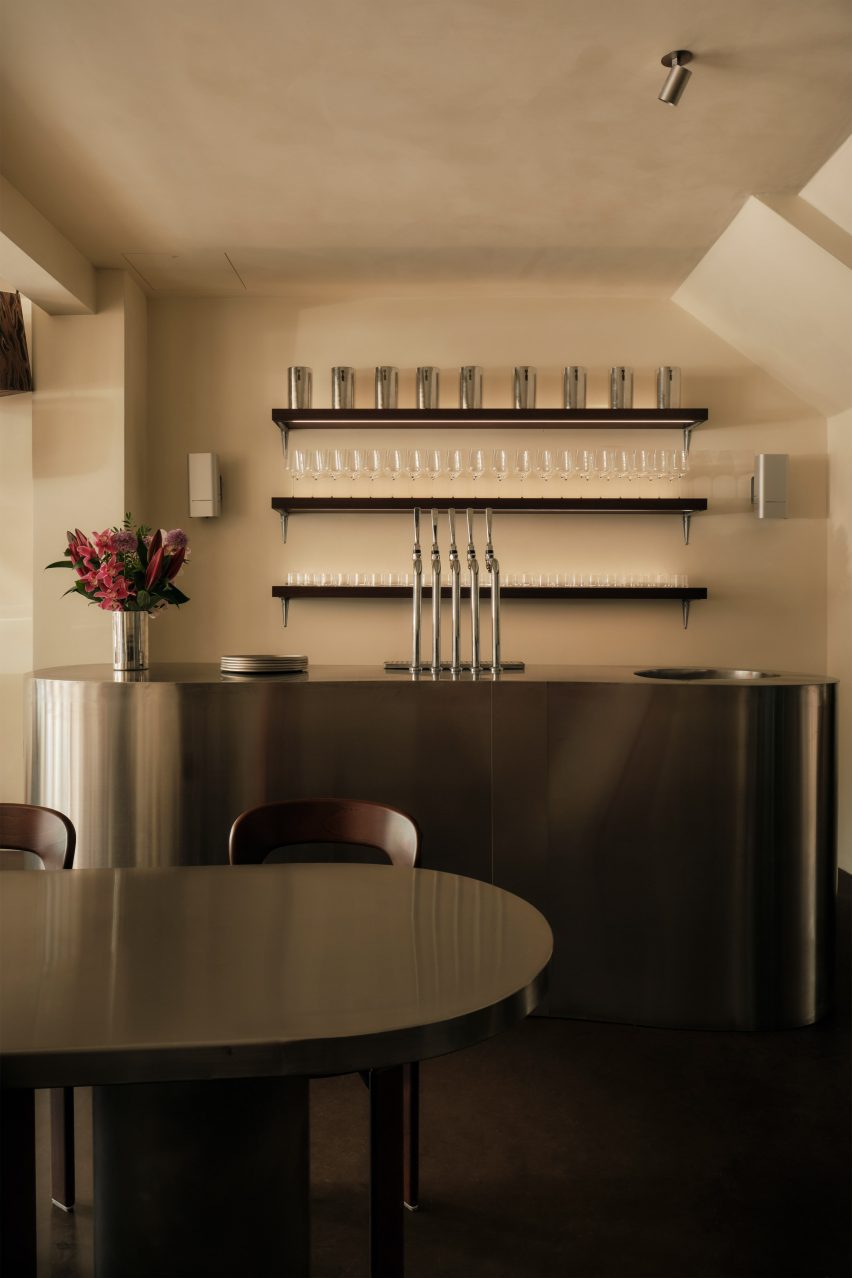
The table is accompanied by similarly shaped bar counters that were designed and crafted to challenge perceptions of steel as a material that only belongs in the kitchen.
"We took stainless steel – a material which might present as cold and unyielding – and adapted it to be fluid in form while reflecting warm, golden lighting," Colterjohn added.

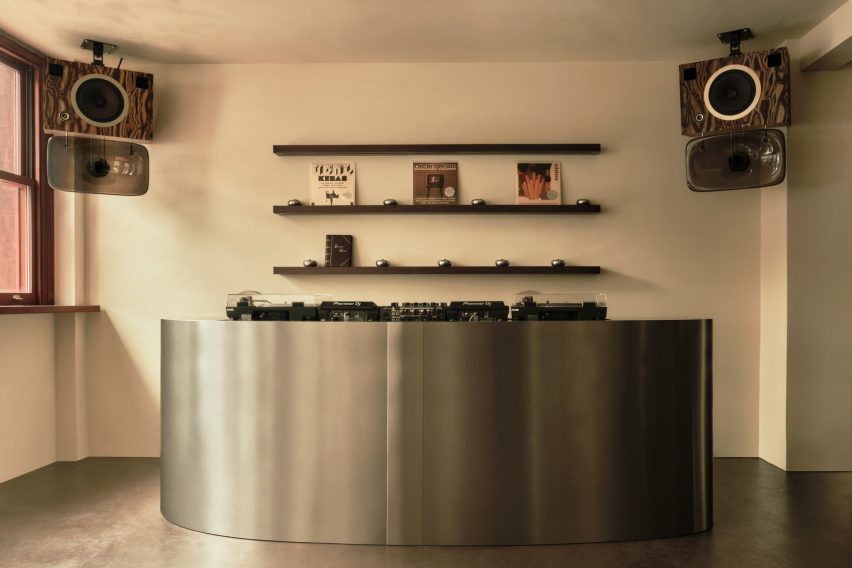
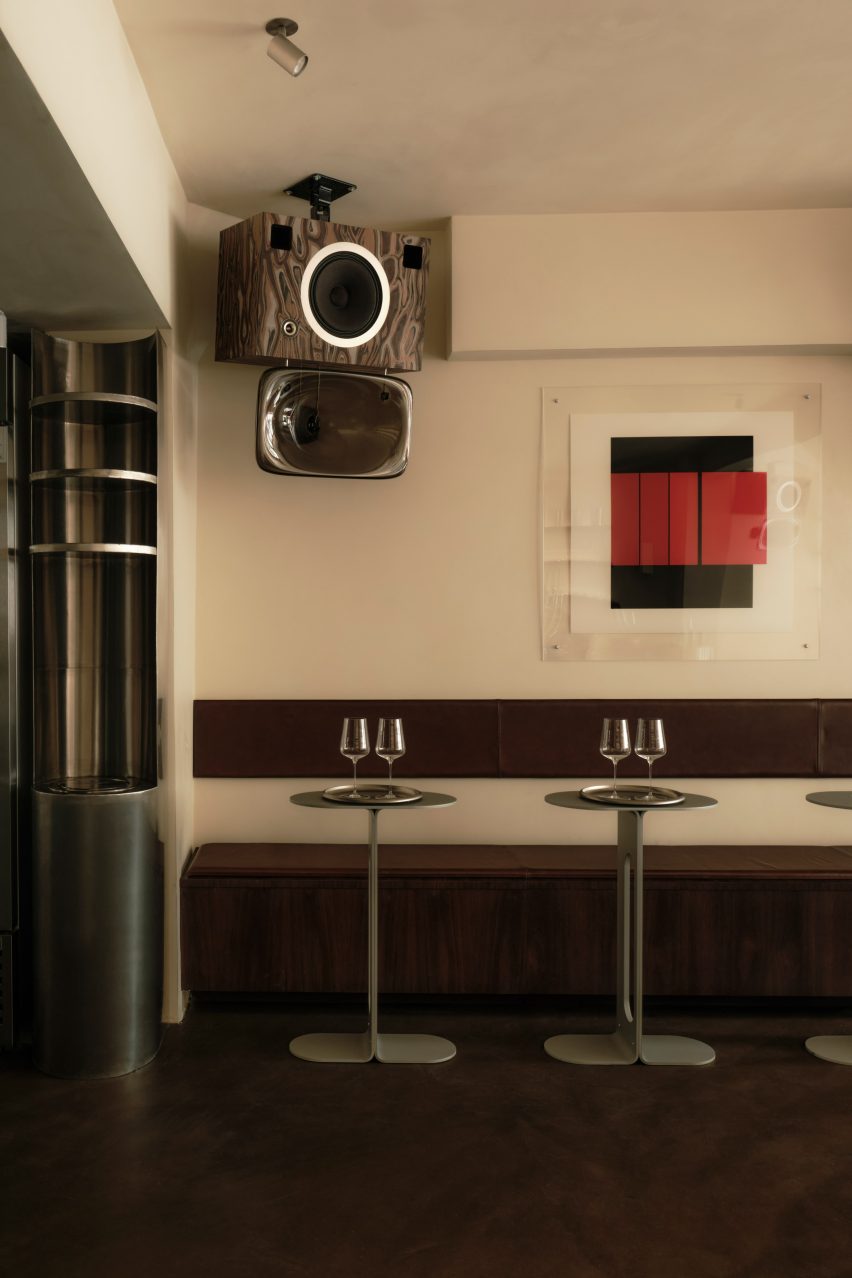
Alongside the steel, the designers selected materials that evoke the brutalist architecture of postwar Berlin. The use of microcement, plaster, aluminium and walnut wood in their raw state is also intended to reflect the restaurant's focus on classic, honest ingredients.
In a nod to Berlin's famous music scene, the space features a high-end sound system that was custom-built by London-based soundsystem studio Friendly Pressure.
One of the metal counters performs a dual function as a DJ booth, with a removable top panel allowing integrated decks to rise up from within, transforming the space into a listening bar.
The restaurant is set up to cater for quick stops or longer stays, with guests invited to dine in or pick up a kebab and cocktail from a hatch on one side of the bespoke-designed facade.
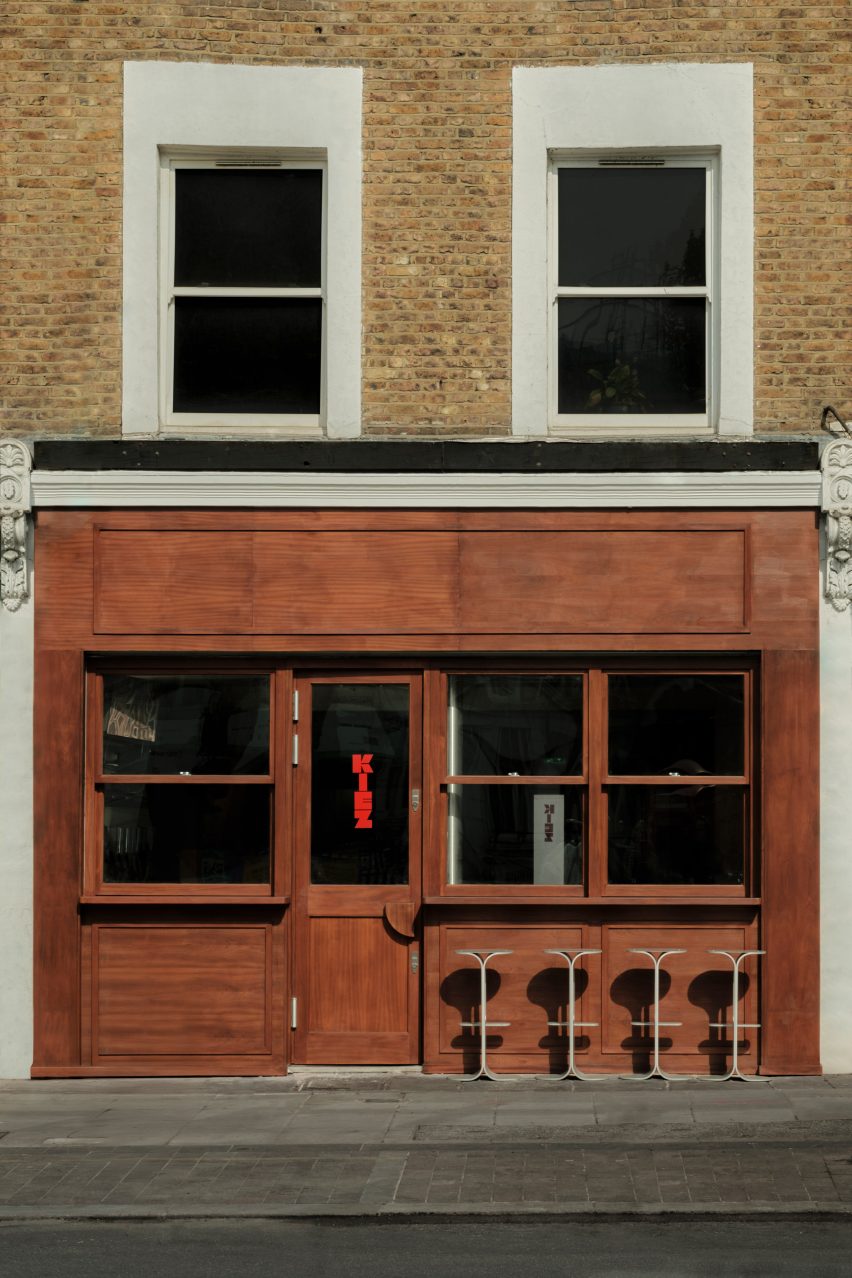
On the opposite side of the entrance, an extended window shelf forms an additional space that can be used by diners inside or outside on the pavement.
Much of the furniture was custom made to perform multiple functions, such as a counter containing a tap system for serving cocktails provided by east-London-based Bar with Shapes for a Name.
Storage is incorporated into furniture such as the bench seating, while some elements, including the communal table, can be disassembled if the space needs to be reconfigured.
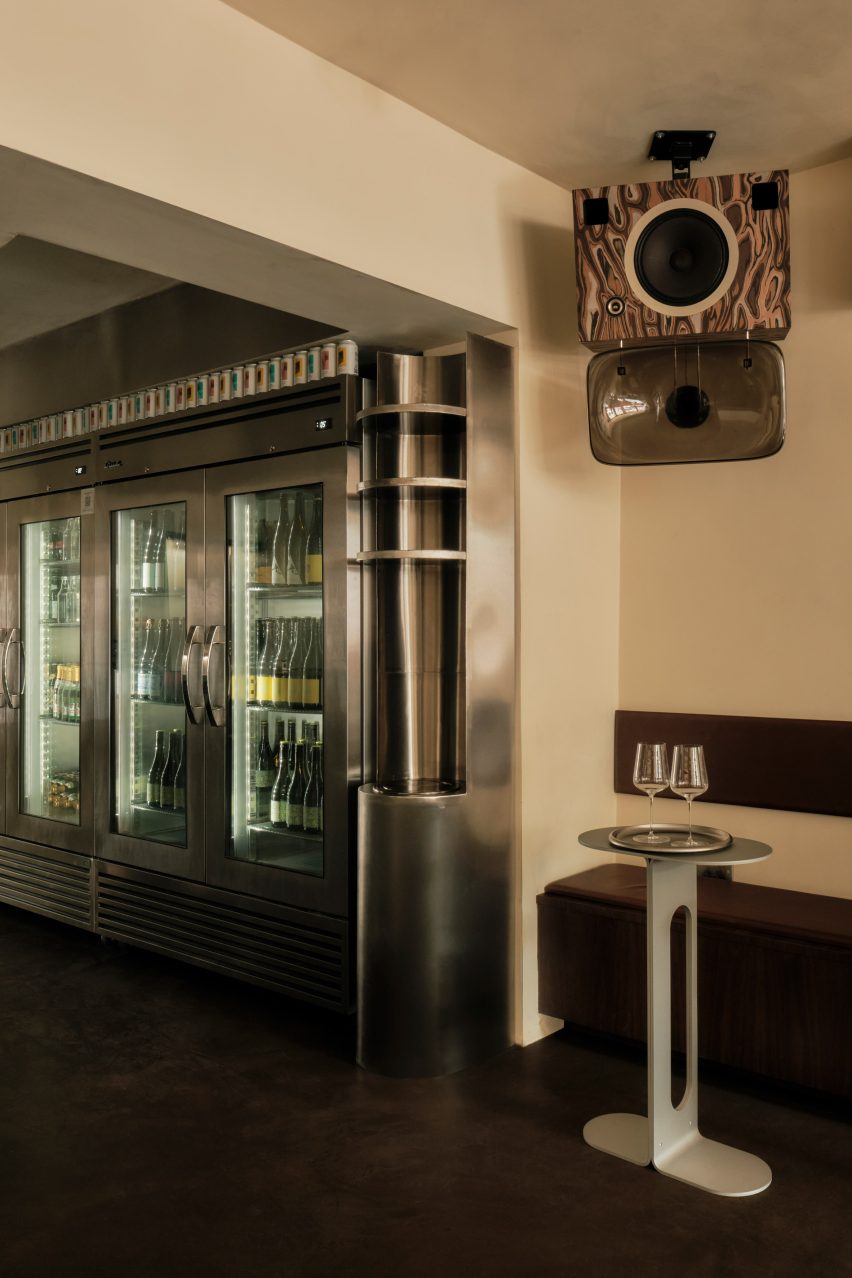
Colterjohn worked with a range of contractors to fabricate the furniture and joinery. Alan Mueller of Berlin-based metalworking studio Tebton created the bar stools, cocktail tables and lighting fixtures, which are adapted from his own original designs.
Playful details such as mirrored walls in the toilets and photographs depicting former German chancellor Angela Merkel enjoying kebabs add personality to a space that does not take itself too seriously.
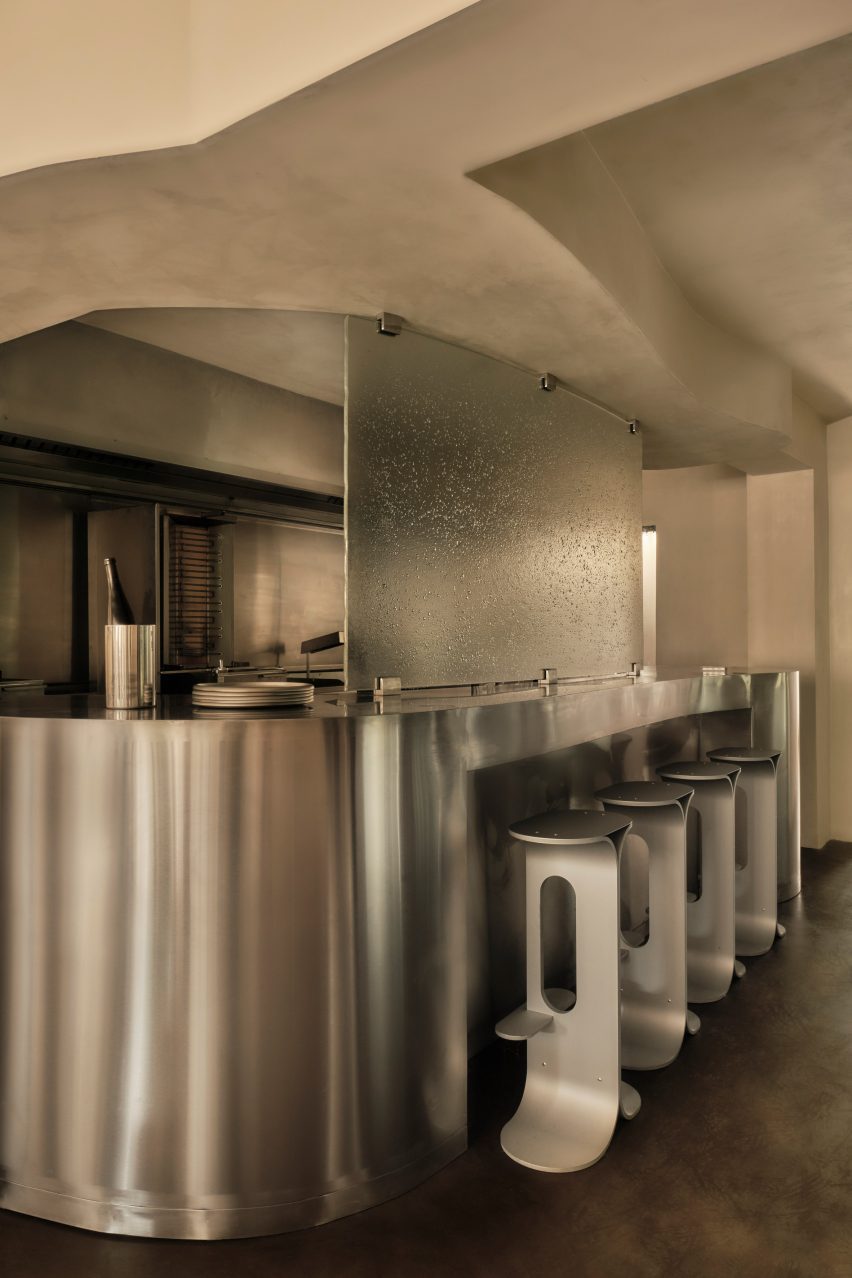
"There's a youthful, contemporary quality to Kiez, plus a casual, function-forward sensibility," Colterjohn pointed out.
"I was driven by was the idea of subverting expectations and playing on a sense of oxymoron. We're combining 'high' and 'low' in terms of the concept versus its execution and atmosphere."
Other examples of elevated fast food vendors featured on Dezeen include a burger restaurant in Houston featuring a modernist-style interior and a chicken shop in Calgary, Canada, that evokes the colourful style of the 1980s Memphis Group.
The photography is by James Duhan.