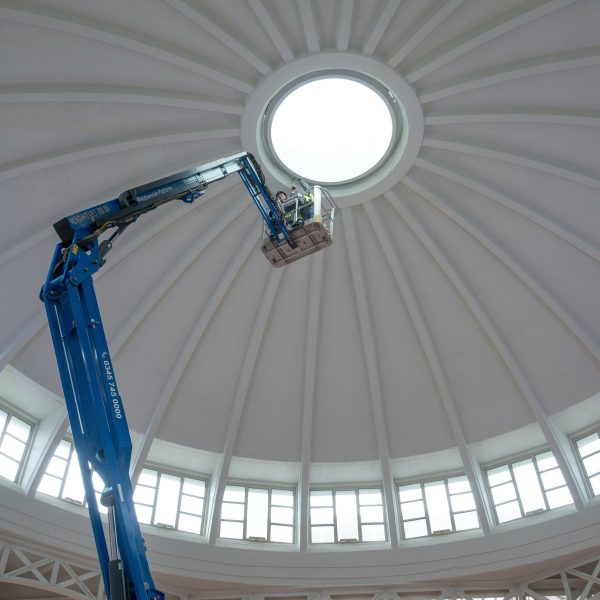
HTA Design restores Crystal Palace’s historic concrete dinosaurs

UK studio HTA Design and Donald Insall Associates have renovated a group of 19th-century dinosaur sculptures as part of a wider revamp of Crystal Palace Park in south London.
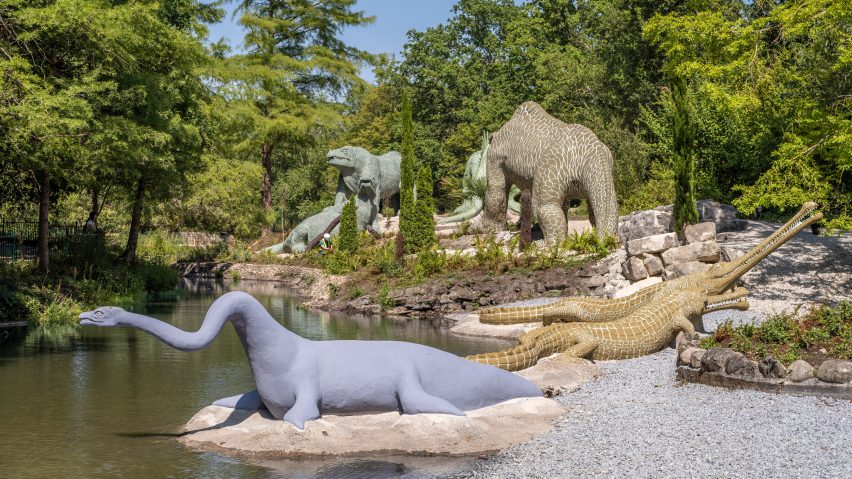
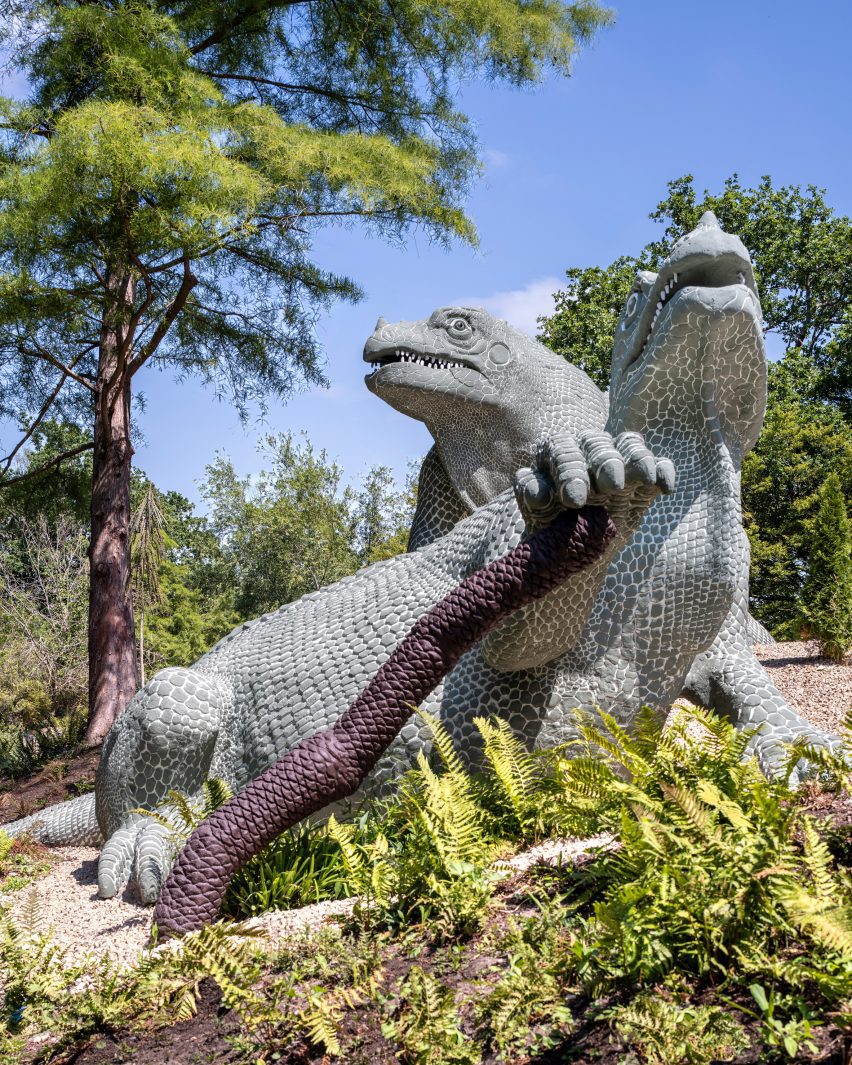
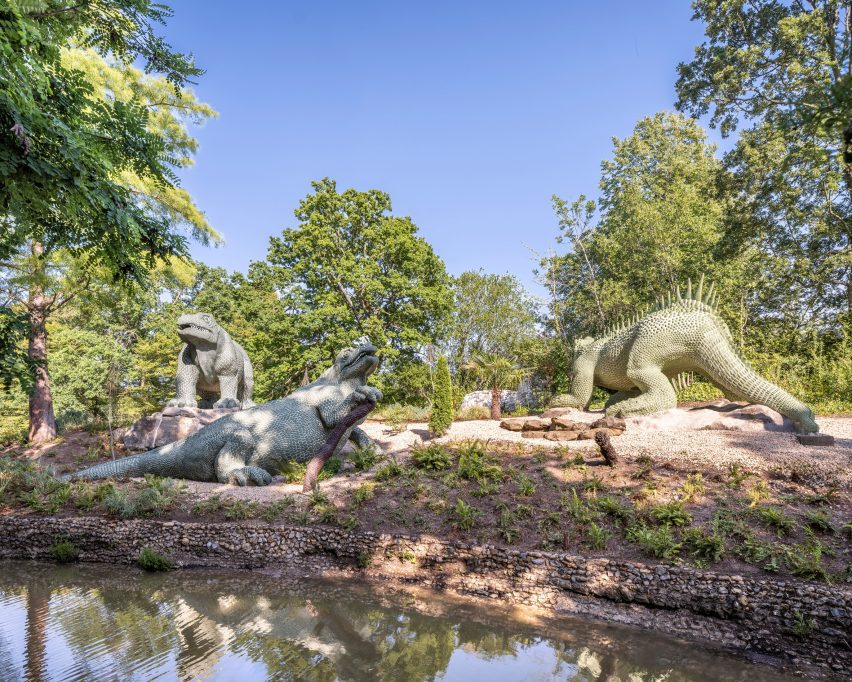
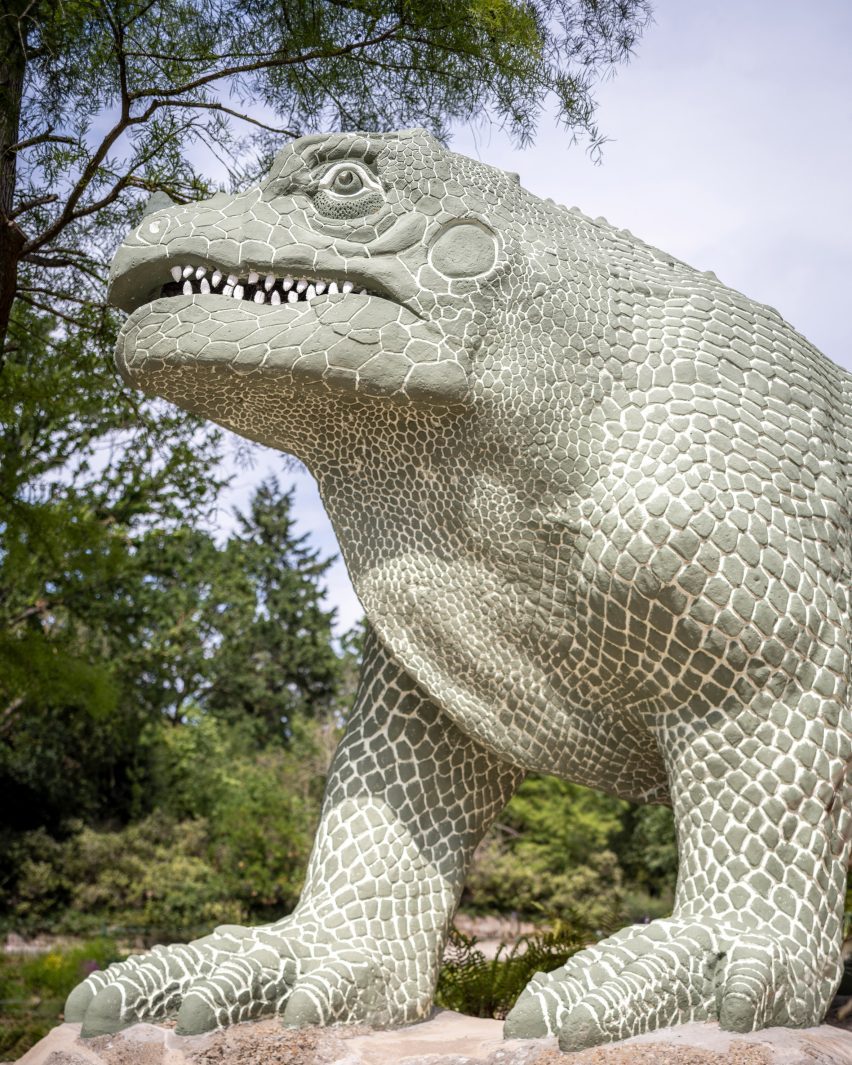
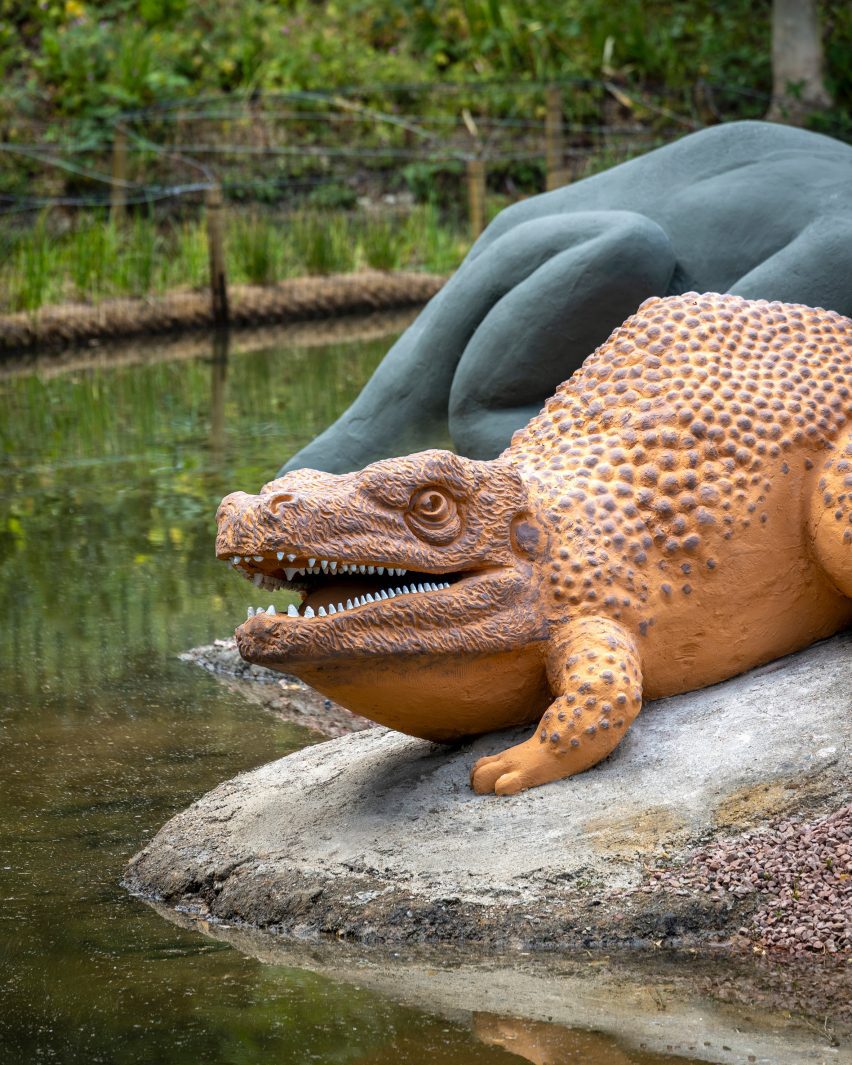
HTA Design, along with Donald Insall Associates, and Alan Baxter Associates, led the restoration of the 172-year-old artworks, believed to be the world’s first life-sized dinosaur models, which had fallen into a state of disrepair in recent years.
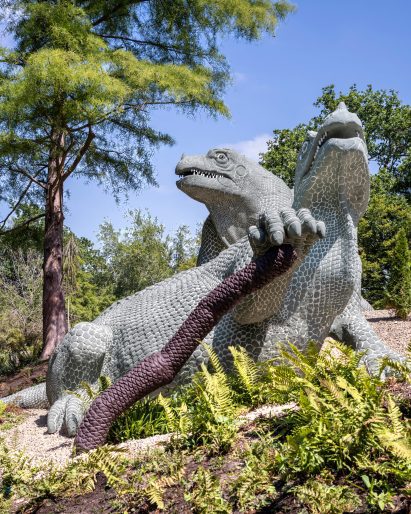
The culmination of the works has led to the models being removed from Historic England’s Heritage at Risk Register, which catalogues historic sites at risk of neglect, decay or inappropriate development.
“Seeing the Dinosaurs’ removal from the Heritage at Risk Register is a major achievement and marks the start of a new chapter for the park – the first time in its history that the park has a sustainable future,” HTA Design landscape design director Natalia Roussou told Dezeen.
“These are internationally significant heritage assets that capture how the Victorians understood and imagined the natural world, so protecting and celebrating their extraordinary story has been at the heart of the project.”
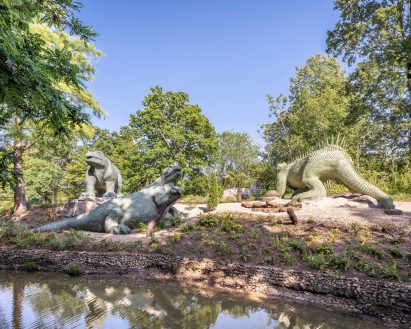
Set within a historic park in south London, the concrete dinosaurs were built in 1854 following the relocation of the Joseph Paxton-designed Crystal Palace to south London after the Great Exhibition.
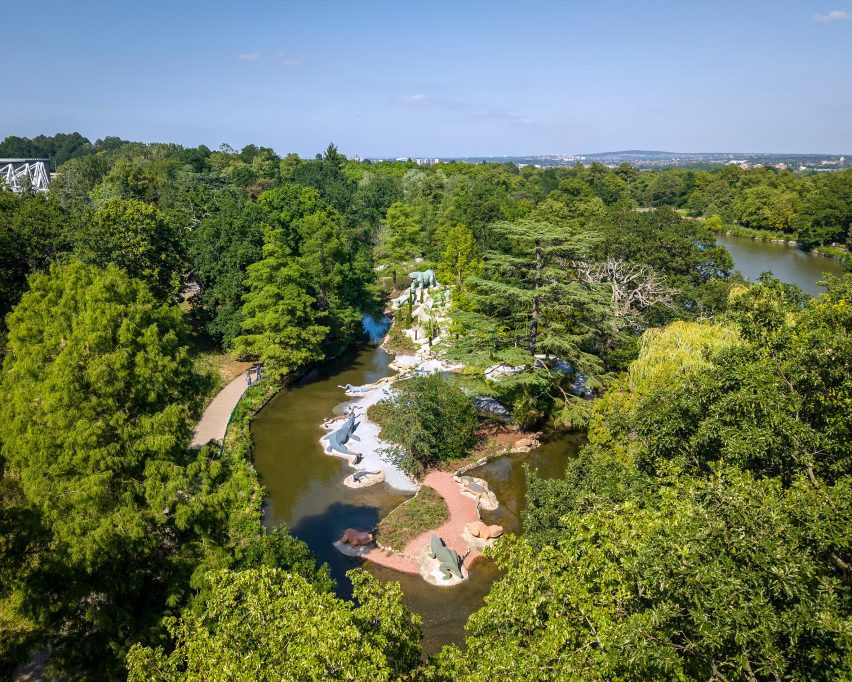
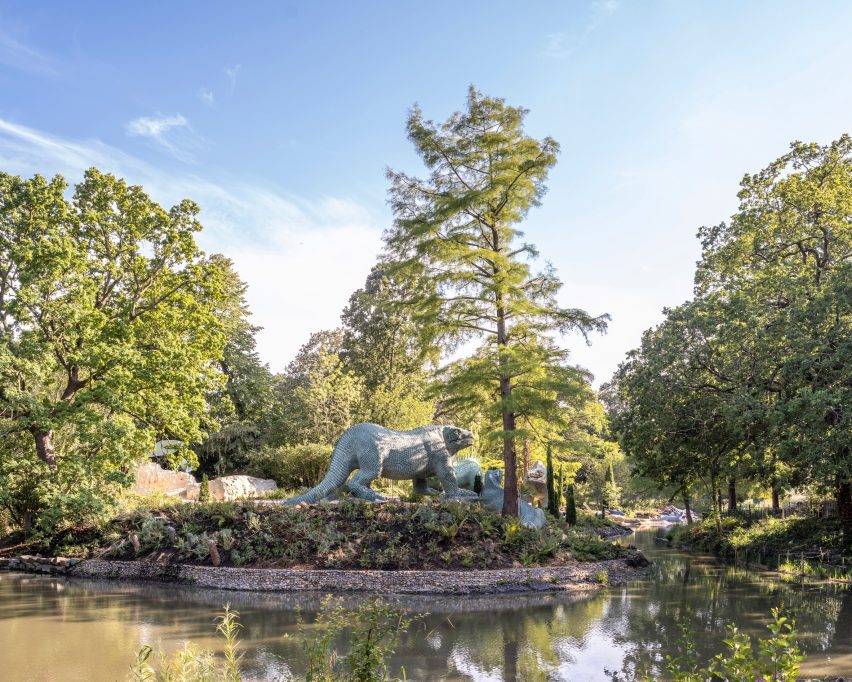
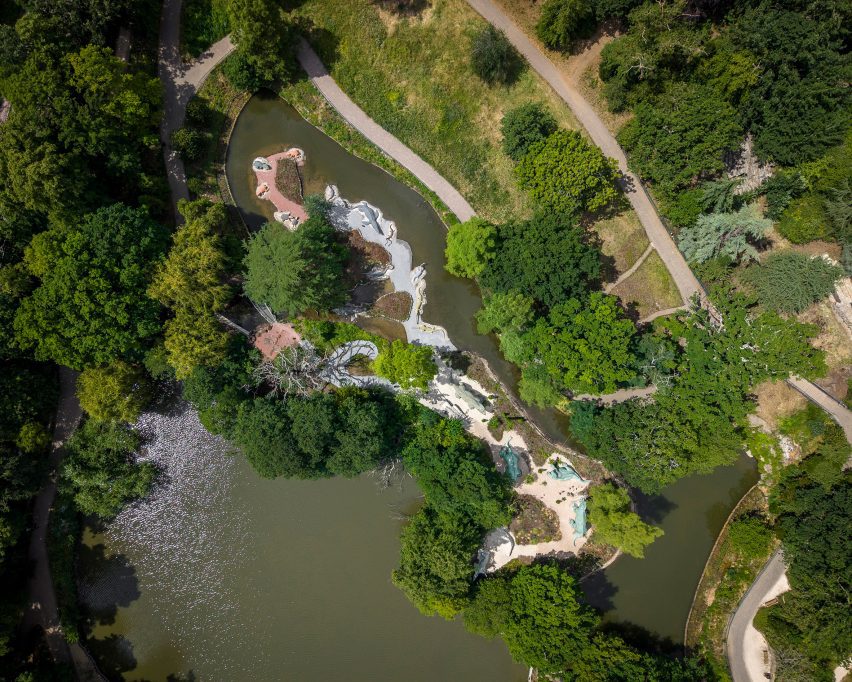
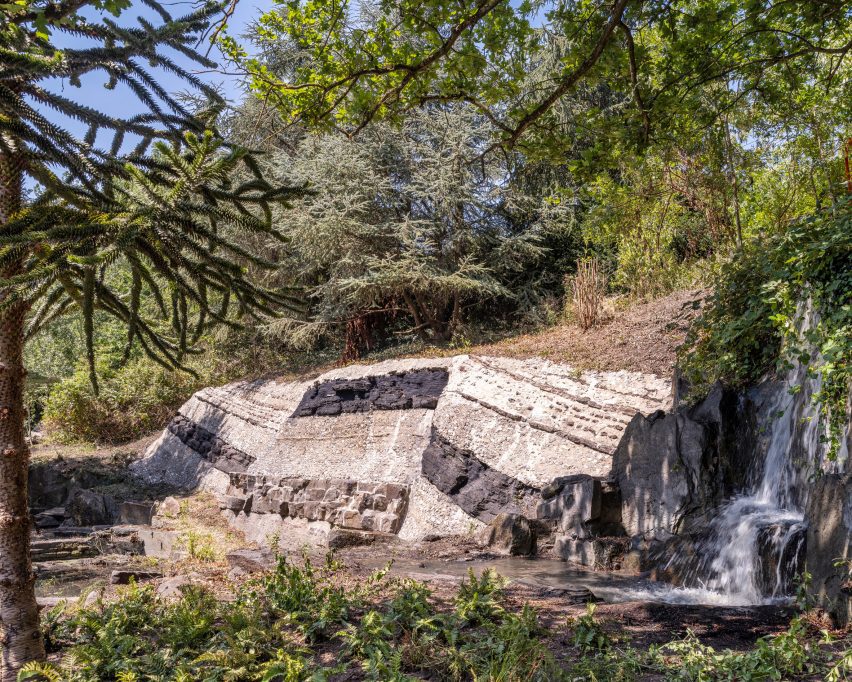
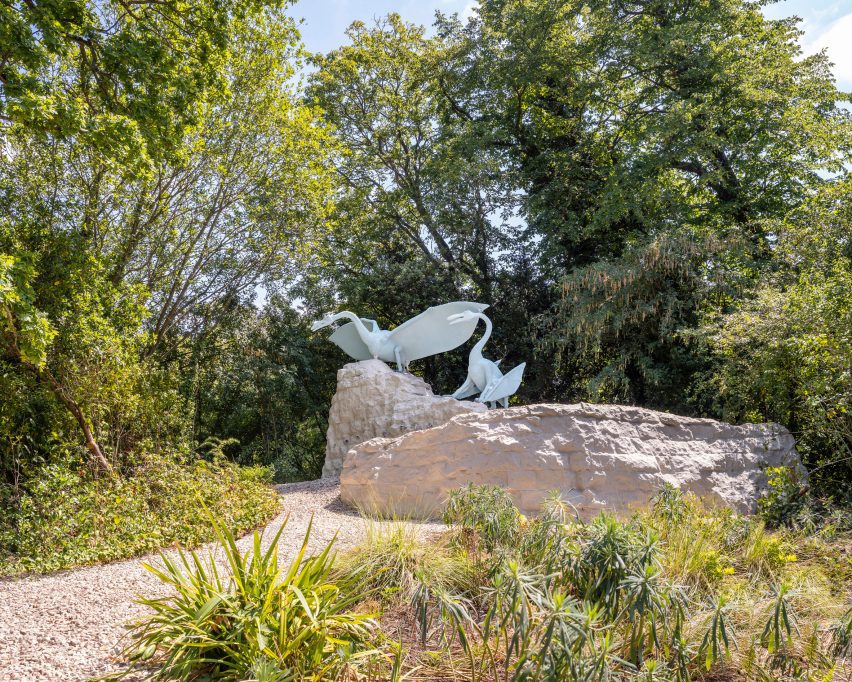
Each of the sculptures was restored, while the surrounding landscape – including the pathways, lakes, islands and a small waterfall – was refreshed, along with the neighbouring Geological Court.
“The dinosaurs themselves were carefully restored, but just as importantly, so too have the relationships between them and the landscape setting,” said Roussou.
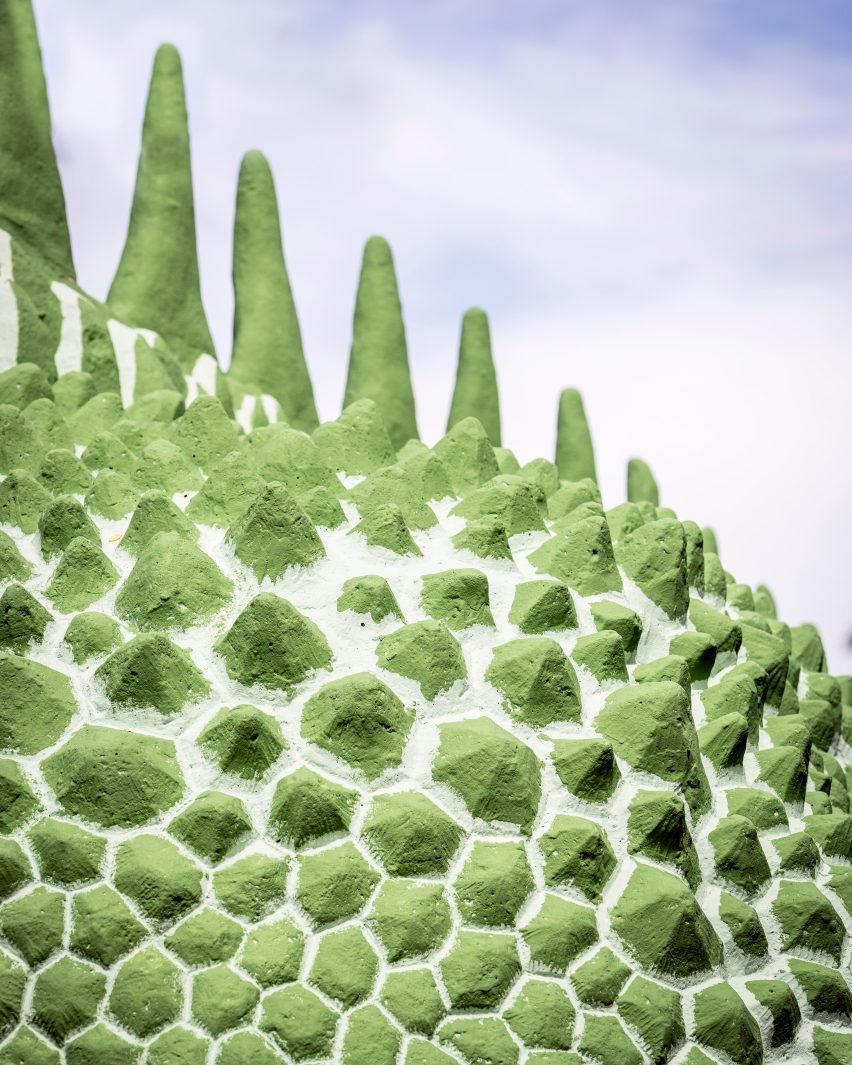
“Their historic fabric was repaired, missing elements were reinstated using 3D printing, and they were repainted in a colourful palette informed by historic analysis and artistic interpretation of their original 1850s appearance.”
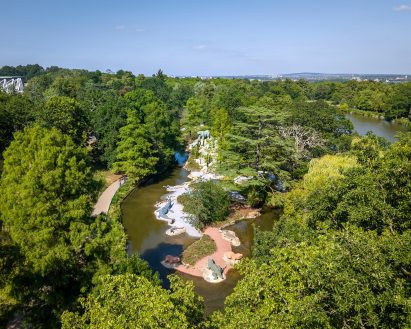
The renovation of the dinosaur sculptures forms part of a wider renovation of the historic park in south London, led by Bromley Council and Crystal Palace Park Trust, that has seen several other historic structures restored.
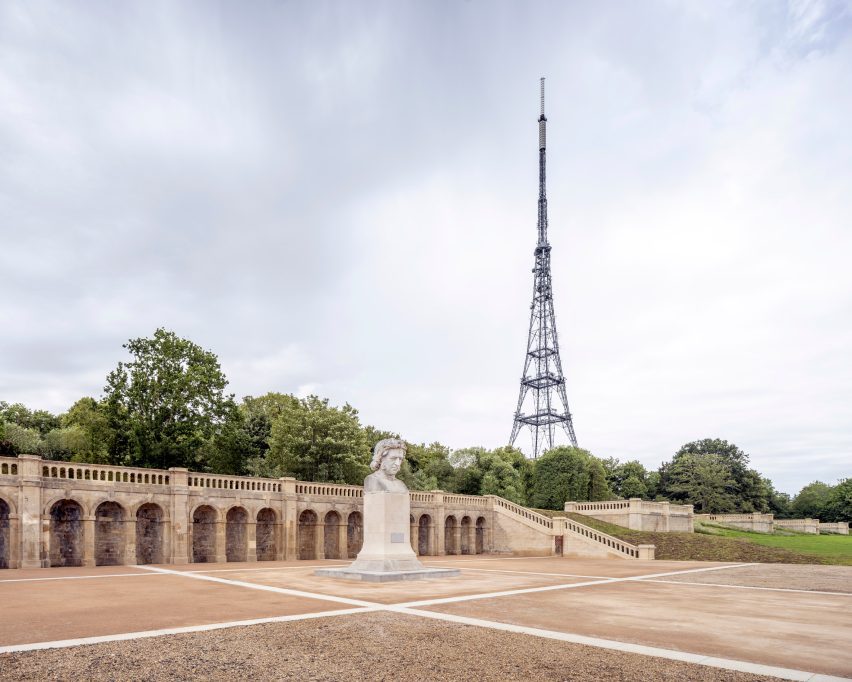
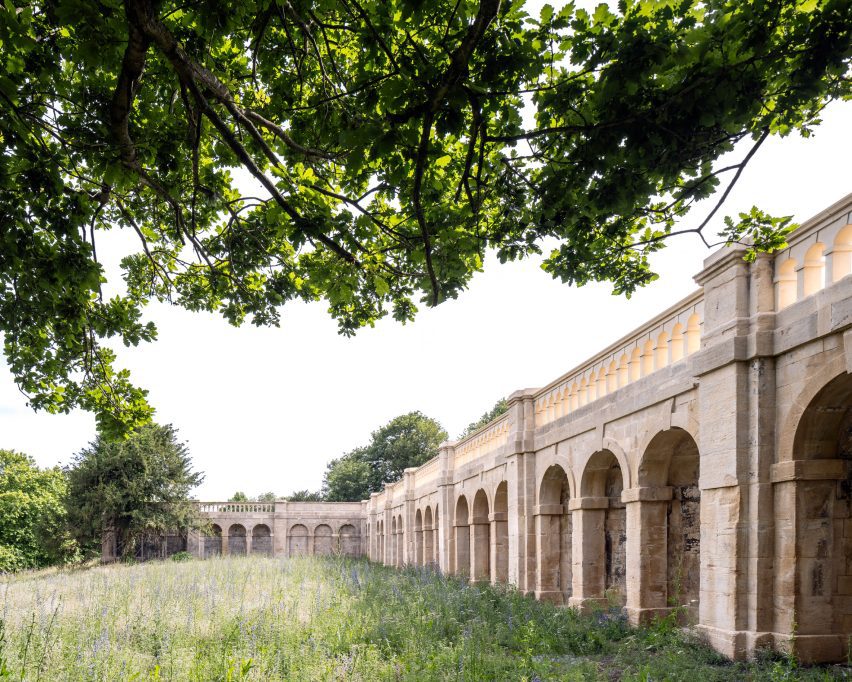
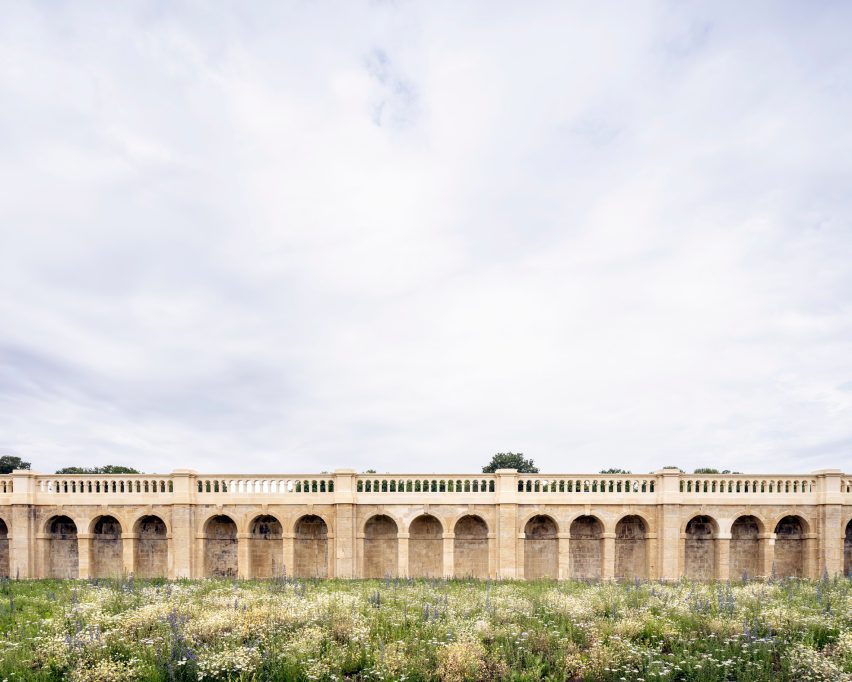
Both the Grade II-listed Italian Terraces, which stood in front of the Crystal Palace before it burnt down in 1936, and the original Grand Centre Walk through the park, have been restored.
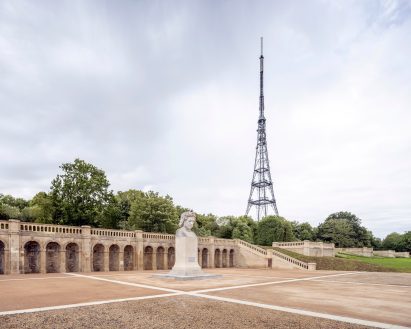
“Bromley Council and Crystal Palace Park Trust’s ambition was to bring back the sense of wonder that once made Crystal Palace Park one of the world’s most extraordinary destinations for education and entertainment, in line with Paxton’s original vision,” explained Roussou.
“This inspired our three-layer design approach: restore, revitalise and reimagine,” she continued.
“It was crucial to restore and celebrate its remarkable heritage assets while creating a resilient and sustainable future to ensure the investment in the park is maintained for future generations. The focus of the regeneration was to respond to the local community’s needs, ensuring the park is biodiverse, joyful and welcoming.”
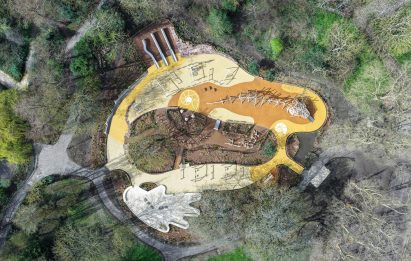
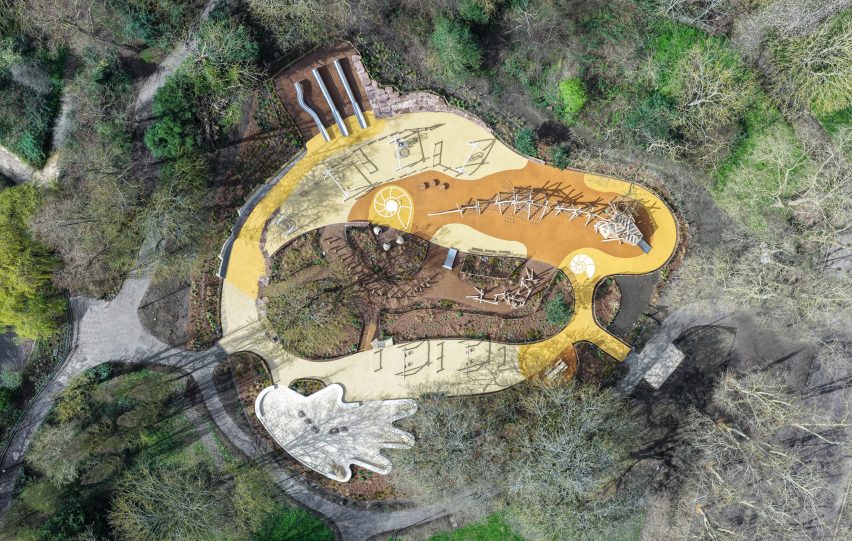
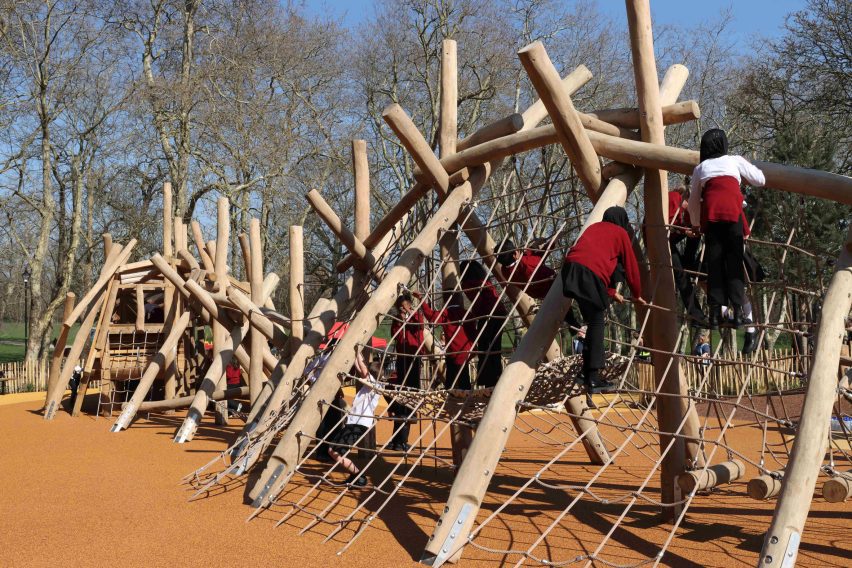
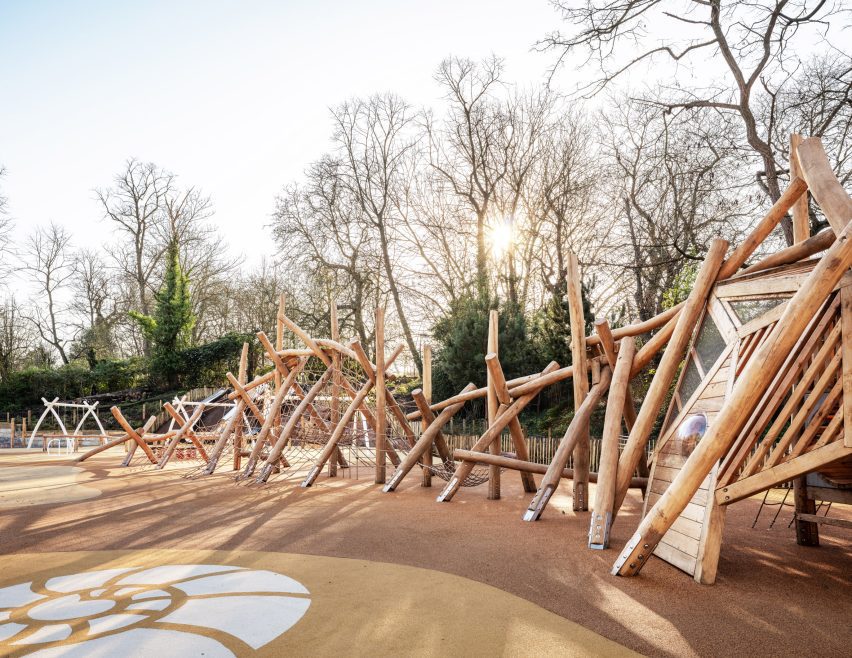
Other contemporary facilities, including a small visitor centre and a playground, were also added as part of the overhaul.
The playground was directly informed by the 19th-century dinosaurs, with the main climbing frames designed by PlayEquip to evoke huge skeletons.
“By restoring the dinosaurs and reinforcing their prehistoric story through landscape design, interpretation and play, we’ve brought them back to life and helped re-establish Crystal Palace Park as a destination for learning, discovery and enjoyment, while also supporting its long-term regeneration, including through tourism,” added Roussou.
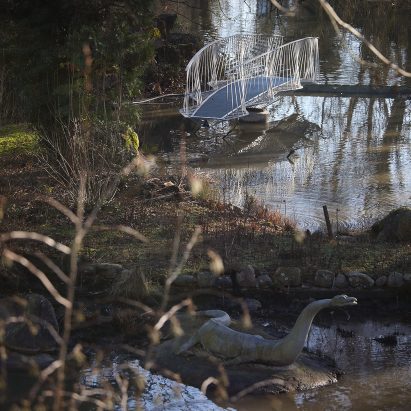
The dinosaurs are located on an island, to which architecture studio Tonkin Liu added a pivoting bridge ahead of their renovation to allow easy access to them.
The photography is by Kilian O’Sullivan, unless stated.
Project credits:
Client: London Borough of Bromley
Development partner: Crystal Palace Park Trust
Lead consultant and landscape architect: HTA Design
Planning consultant: HTA Design
Interpretation & wayfinding consultant: HTA Design
Energy & sustainability consultant: HTA Design
Principal designer: HTA Design
Project manager: Leadenhall
Contract administrator: Ian Sayer
Architect (heritage): Donald Insall Associates
Architect (new build): Tate + Co
Structural engineer: Alan Baxter
Heritage consultant: Alan Baxter
Lighting designer: Speirs Major
Civil engineer: Pell Frischmann
Transport consultant: Pell Frischmann
Ecology consultant: Pell Frischmann
M&E engineer: Desco
Soil consultant: Tim O Hare Associates
Arboriculture consultant: Aspect
Accessibility consultant: Lord Consulting
Building control: Stroma
Fire consultant: Semper
Play specialist: PlayEquip
Historic paint analysis: Hirst Conservation
Main contractor: Maylim
Conservation works contractor: Sally Strachey
Read more
Recommended stories
London council cans controversial Crystal Palace project
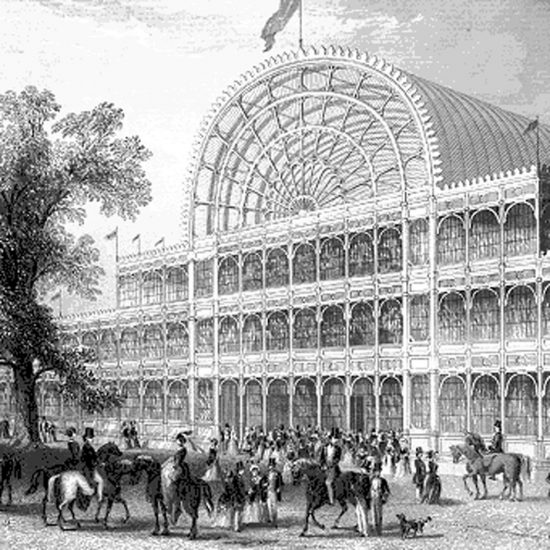
Crystal Palace was “birth of modern architecture” says Norman Foster
Nike and Palace Skateboards unveil transforming skatepark in Victorian public bathhouse
“We are surrounded by zombie architecture”
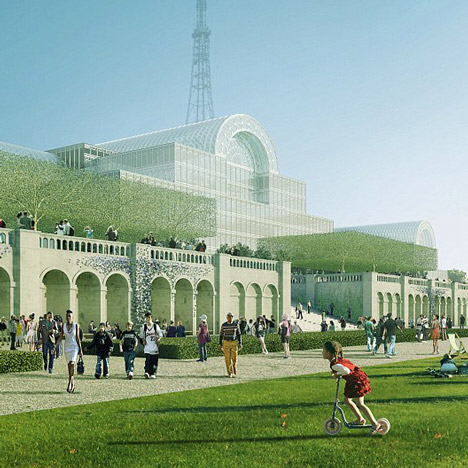
Zaha, Rogers and Chipperfield shortlisted for Crystal Palace rebuild
Tonkin Liu creates swing bridge to access Dinosaur Island in Crystal Palace Park
Skateparks are “one of the world’s great kinds of public space” says Iain Borden