Plant-covered Rio AI City set to be Latin America’s largest data centre

International architecture studio Hyphen has released plans for a data centre in Rio de Janeiro state with 10 plant-covered buildings and parkscapes and has claimed it will be “one of the world’s first sustainable AI districts”.
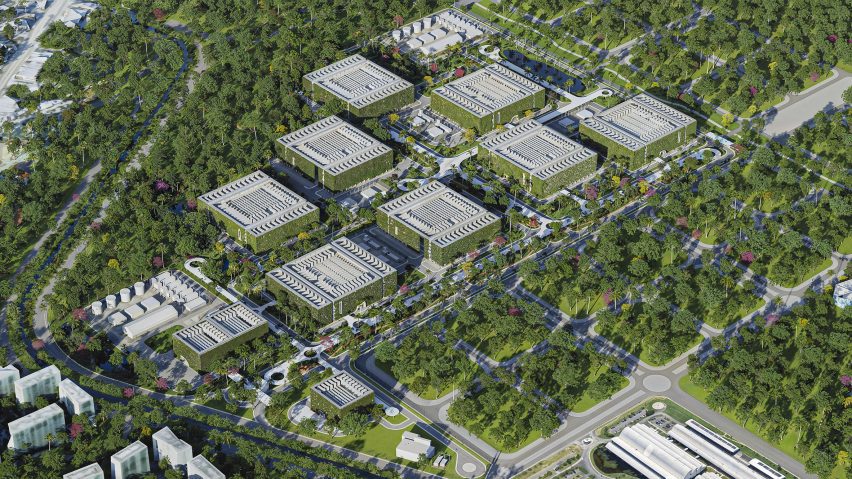
Developed by Brazilian company Elea Data Centres, plans for Rio AI City consist of 10 buildings spread out over a site in the rural Jacarepaguá area, with an energy usage of 1.5 gigawatts (GW) scalable to 3.5 GW. By comparison, the State of Rio de Janeiro has a capacity of about 8.5 GW.
It will be situated near the city’s Olympic Park, leveraging existing infrastructure, with Rio de Janeiro mayor Eduardo Paes claiming it will be “Latin America’s largest data hub”.
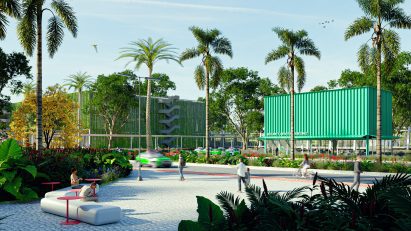
Elea Data Centres said that the project represents one of the “world’s first sustainable AI districts”.
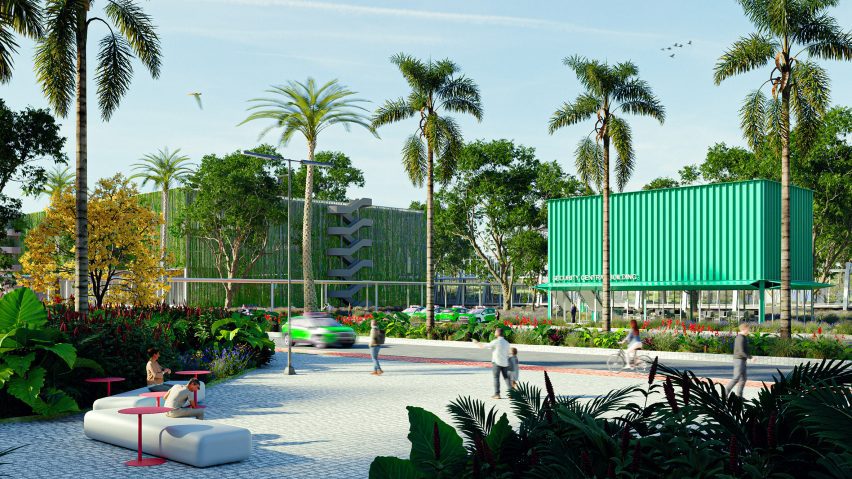
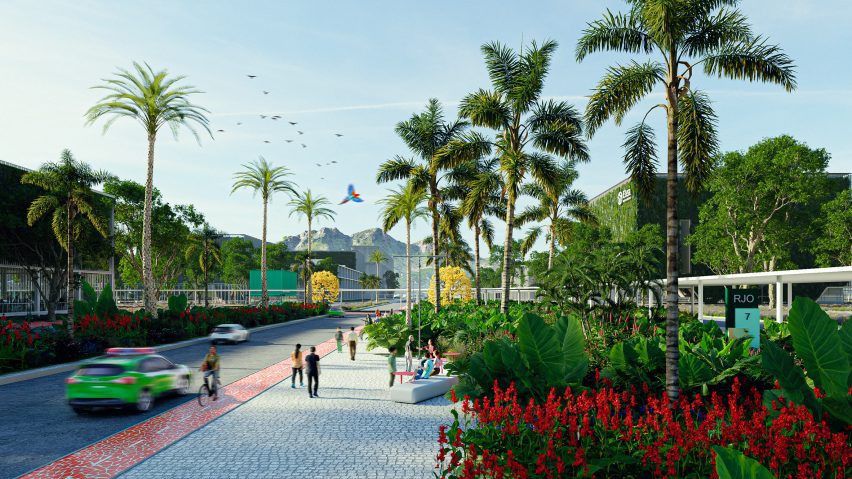
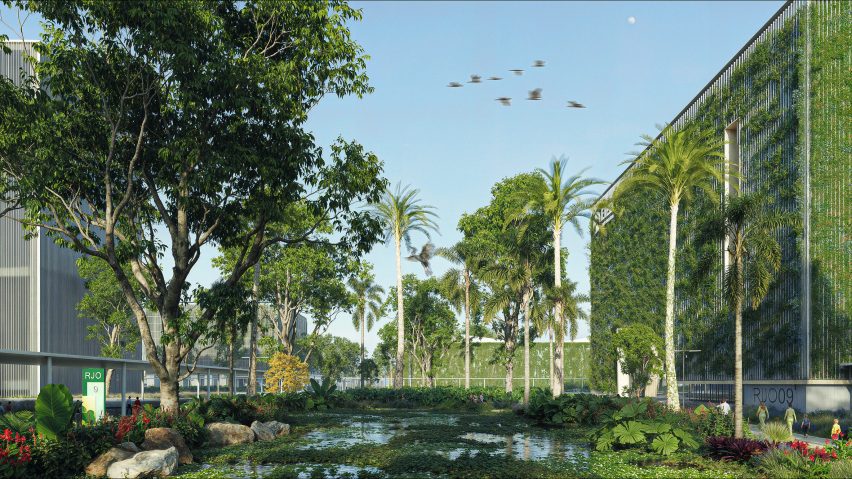
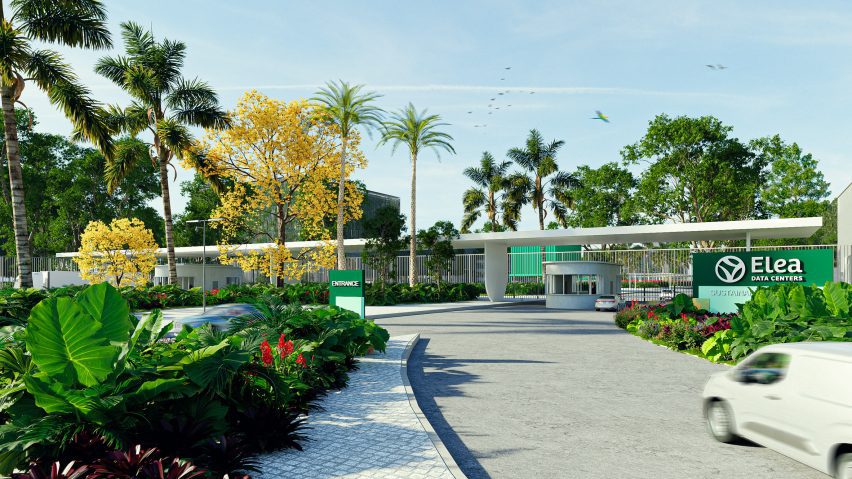
Renderings of the master plan show mostly rectilinear buildings set in a grid, interspersed with plazas and what appears to be wetland landscaping.
Responding to questions from Dezeen about the massive power usage associated with data centers and the AI boom more generally, Hyphen‘s Chile office said that Rio AI City will run on all renewable energy.
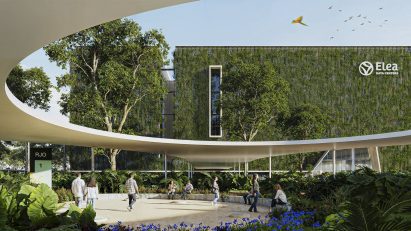
“Rio AI City addresses this challenge through a combination of renewable energy sourcing, zero water cooling systems, efficient infrastructure design, and landscape-led environmental strategies,” a Hyphen representative told Dezeen.
“The campus is planned to operate using 100 per cent renewable and certified energy,” they continued.
“The project also reuses existing infrastructure from the Rio 2016 Olympic legacy, reducing the environmental impact associated with new large-scale developments.”
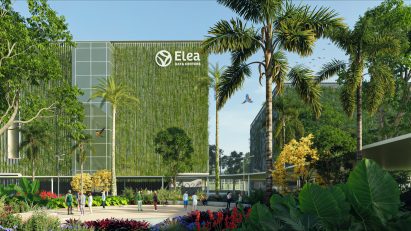
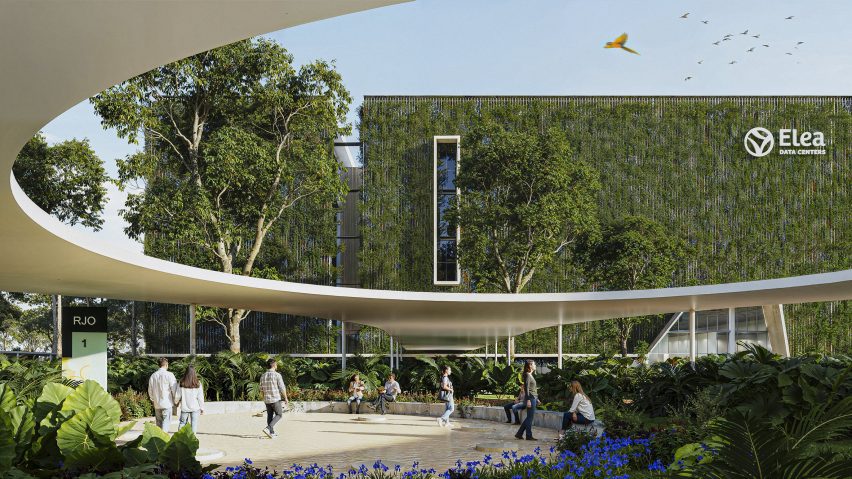
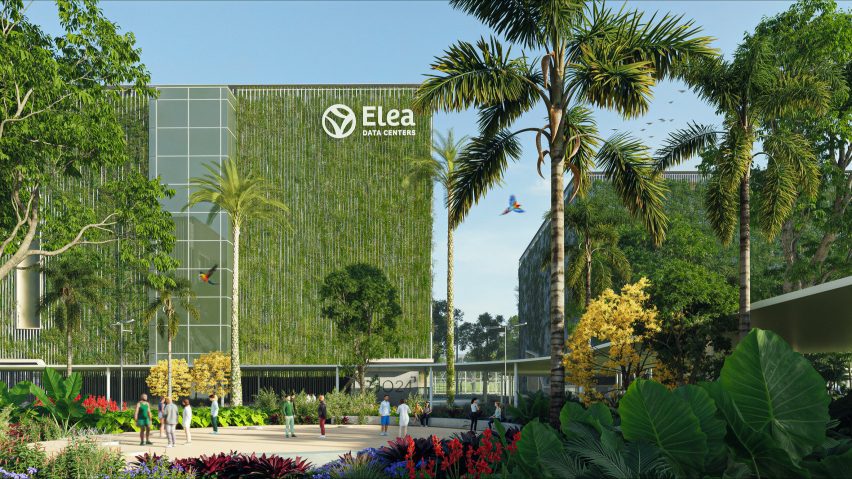
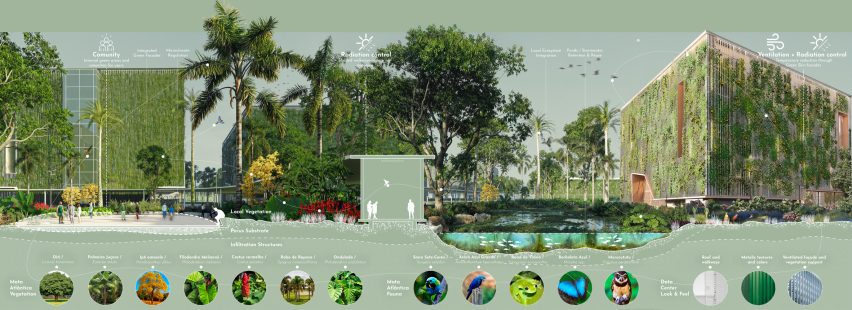
The buildings themselves feature greenery planted on latticed exteriors.
Hyphen claims the greenery will work to mitigate the “heat-island effect” that studies have linked with hyperscale data centres.
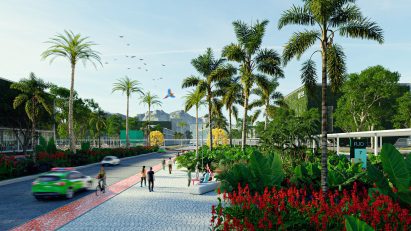
“The landscape strategy is directly linked to mitigating heat island effects,” said Hyphen.
“Rio AI City incorporates extensive green infrastructure, including native planting, green facades, biodiversity corridors, and water retention systems connected to the surrounding Mata Atlântica biome,” it continued.
“These landscape elements provide passive cooling, reduce surface temperatures, increase shading, improve microclimatic conditions, and help lower heat gain across the campus.”
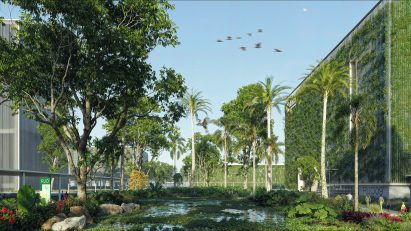
It’s unclear how the planting might react to the energy output of the data centres.
The studio said that aspects of the campus will be publicly accessible, and that it will draw on local culture in the orientation of the space.
Hyphen claimed it’s a “distinctly Latin American” response to the question of integrated data centre infrastructure.
“This grounded approach transforms the data centre into an open, multi-functional campus that reflects Brazil’s dynamic Carioca culture, strong local identity, and environmental richness,” said Hyphen.
“By rooting innovation in place, Rio AI City articulates a distinctly Latin American response to our shared global demands of the AI era. Phase one is now in development, with Hyphen continuing to advise on implementation and future expansion.”
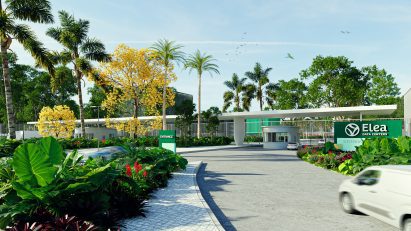
There are also suggestions that the campus may connect to the Porto Maravilha urban regeneration project.
Data centre development has been accelerating, with architecture studios presenting schemes that, on the surface, appear to address the major critiques of the mega-projects – energy and land usage.
In Utah, architecture studio Gensler has released designs for the controversial Stratos Hyperscale Data Center, with a 60-building campus.
Meanwhile, Canadian infrastructure firm AtkinsRéalis has floated an idea to build small nuclear reactors at data centre sites to accommodate the outsized energy usage.
The imagery is courtesy of Hyphen.
Read more
Recommended stories
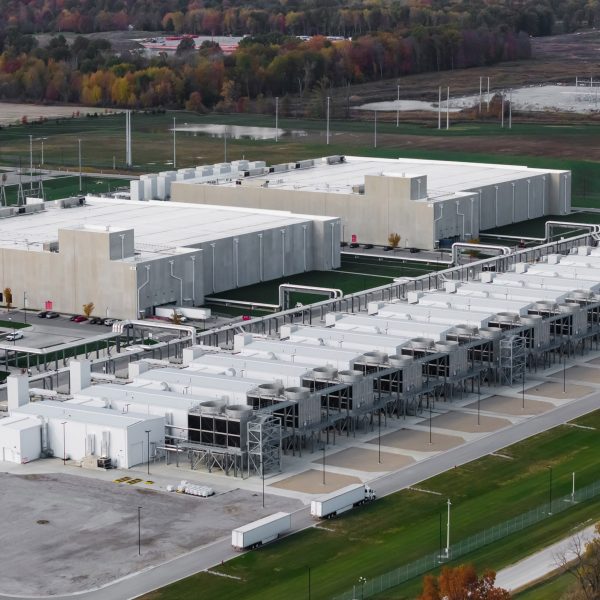
Study links data centres to heat island effects worldwide

AtkinsRéalis to partner with Nvidia on nuclear-powered data centre design
Brazil pavilion learns from Amazonian architectural practices
Can data centres ever be well-designed?
Seven of the best new buildings and interiors in Rio that have nothing to do with sports
Amazon River becomes permanent home for Carlo Ratti and Höweler + Yoon’s AquaPraça plaza
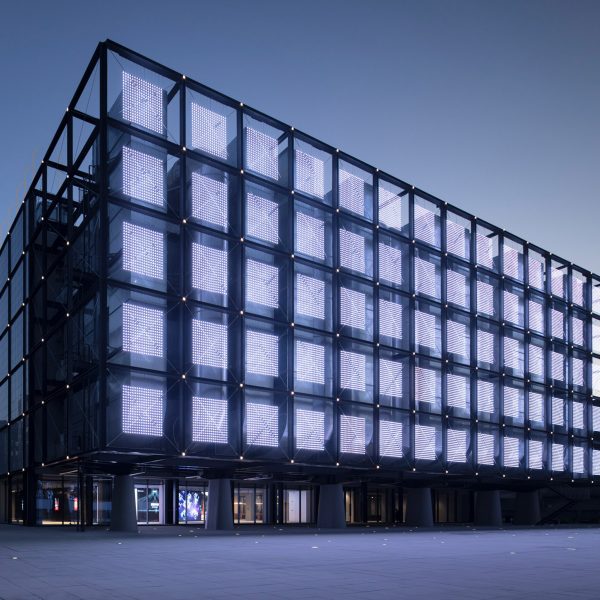
Exposed ducts and server rooms reveal the “heartbeat” of AI data centre in Beijing