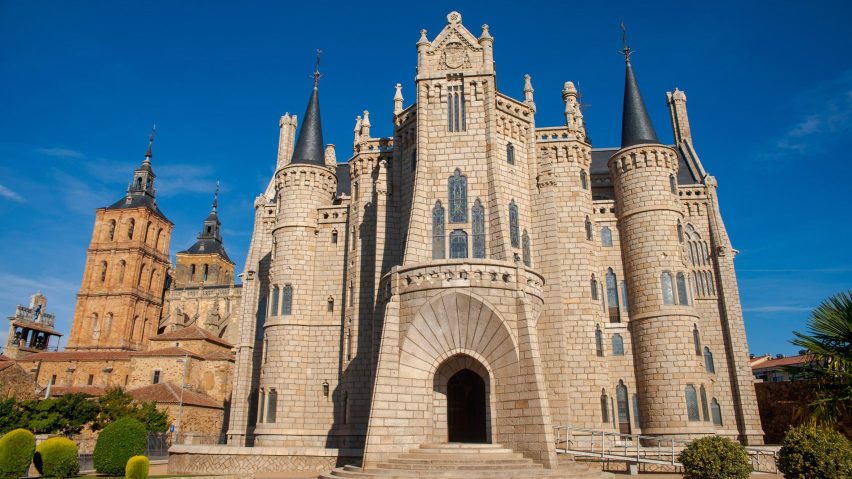
Gaudí's lesser-known gothic buildings
Antoni Gaudí is much-lauded for his tile-covered natural forms, but his castle-like, neo-gothic works get much less attention. Concluding our Gaudí Centenary series, we look at the five least Gaudí-esque Gaudí buildings.
Often defined by stone, rather than his signature colourful tiled finishes seen in his more prominent later works, Gaudí built a collection of neo-gothic buildings early in his career.
With these buildings, Gaudí aimed to build on and improve the ideals of gothic architecture, while also experimenting as he developed his own style.
Perhaps less well-known as they are located away from the centre of Barcelona, in the city's outskirts and outside of Catalonia, these buildings are some of the most interesting designed by the architect.
Clearly informed by the medieval era, they are finished in limestone, granite and slate, with one built on the site of a historic castle and another surrounded by a moat.
Read on to find out about five of Gaudí's least Gaudí-esque buildings:
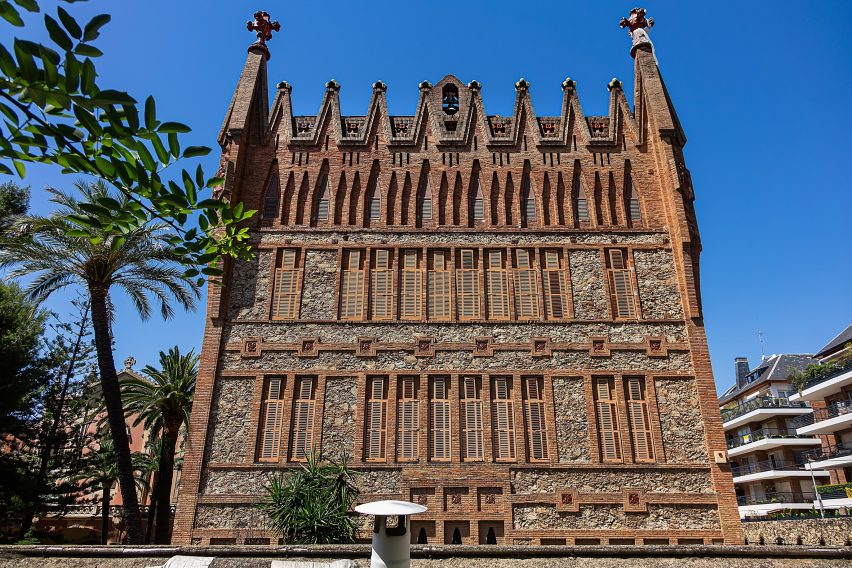
College of Saint Teresa-Ganduxer, Barcelona, 1889
Built in a northern district of Barcelona, this four-storey block has a distinctly medieval appearance for a reason – it was modelled on a castle.
Throughout the building, which Gaudí designed as a school and convent for a congregation of Teresian nuns, he drew on the ideas contained in Saint Teressa's The Interior Castle text.
The school was built in stone and brick, topped with stylised crenelations, and has corner towers finished with signature four-pointed crosses.
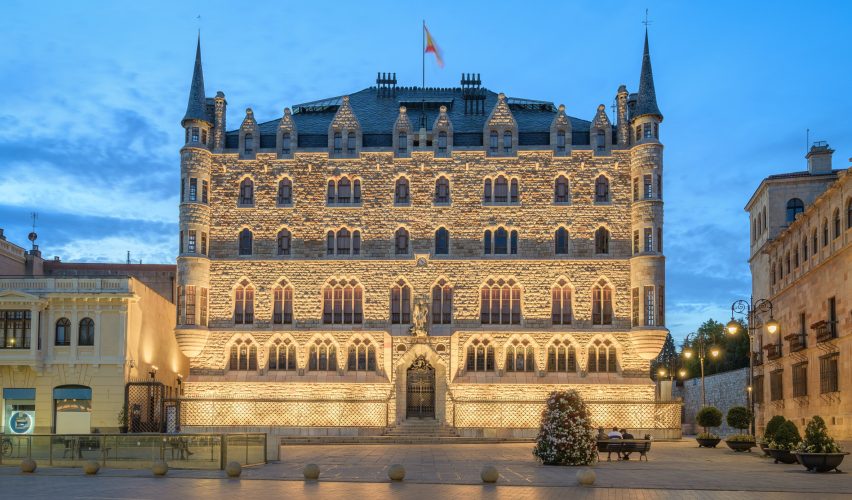
Casa Botines, León, 1892
Designed for a pair of merchants, Casa Botines was informed by León's historic, medieval architecture. The seven-storey building contained homes for the merchants along with a shop, warehouse and apartments for rent.
While the exterior, with its corner towers, partial moat and grey limestone finish, clearly evokes the medieval, the interiors show Gaudí's contemporary thinking. The building was constructed on a concrete base and its structure incorporates cast-iron columns and light wells that give natural light to the apartments.
Casa Botines is now open as a museum.
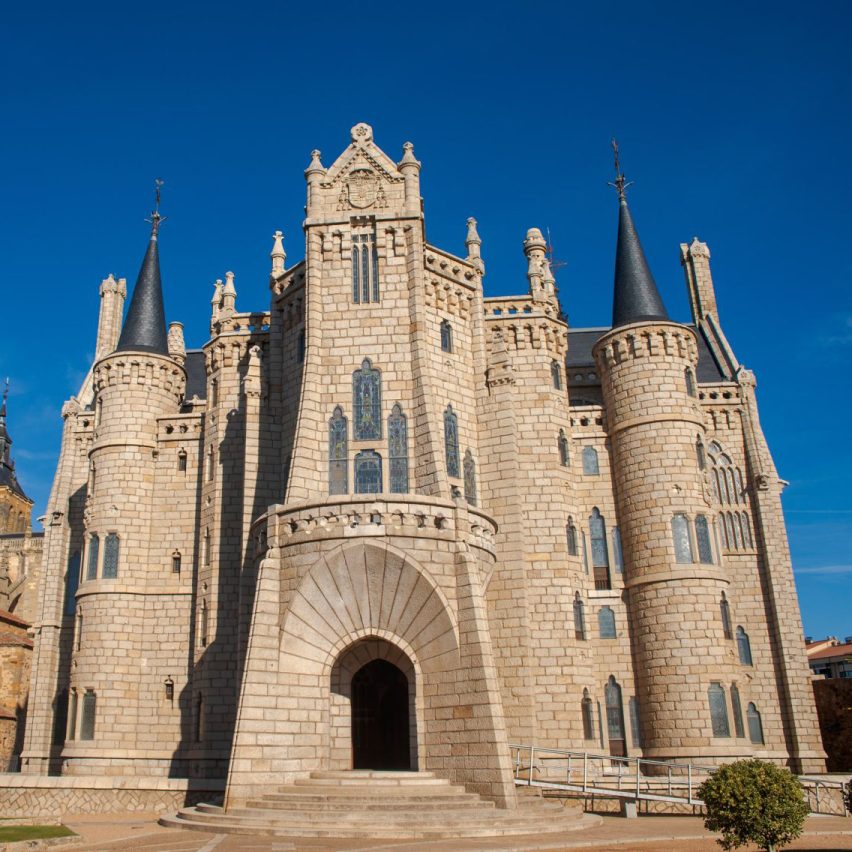
Episcopal Palace, Astorga, 1893
Surrounded by a moat and entirely built in grey granite, the Episcopal Palace in Astorga has clear medieval and castle influences.
One of only three Gaudí buildings outside Catalonia, the palace was designed for Bishop Juan Bautista Grau y Vallespinos – who had previously commissioned Gaudí to design an altar – to replace a building that had burned down.
While it is one of the architect's least Gaudí-esque looking buildings, it does incorporate several elements that would become part of his signature style, including the integrated buttresses and decorative chimneys.
Bodegas Güell, Sitges, 1897
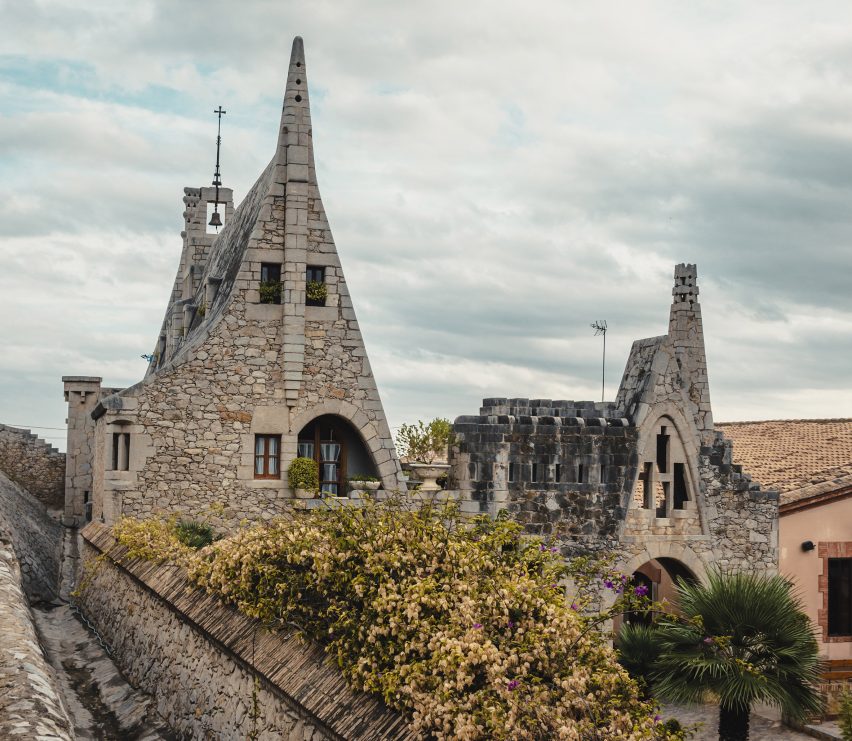
One of the many buildings that bear the name of Gaudí's principal patron, Eusebi Güell, the Bodegas Güell is a winery alongside the sea near Barcelona. It was designed in 1882 on an estate owned by Güell.
The triangular forms and limestone blockwork of the winery were designed to complement the rocky coastal location.
It was planned as the first stage of a wider plan for the site, which would have also contained a hunting lodge. Wine from the site was sold to a transatlantic shipping line and exported to Cuba. After Güell's death, the building became a restaurant, but it is now closed to the public.
Bellesguard, Barcelona, 1909
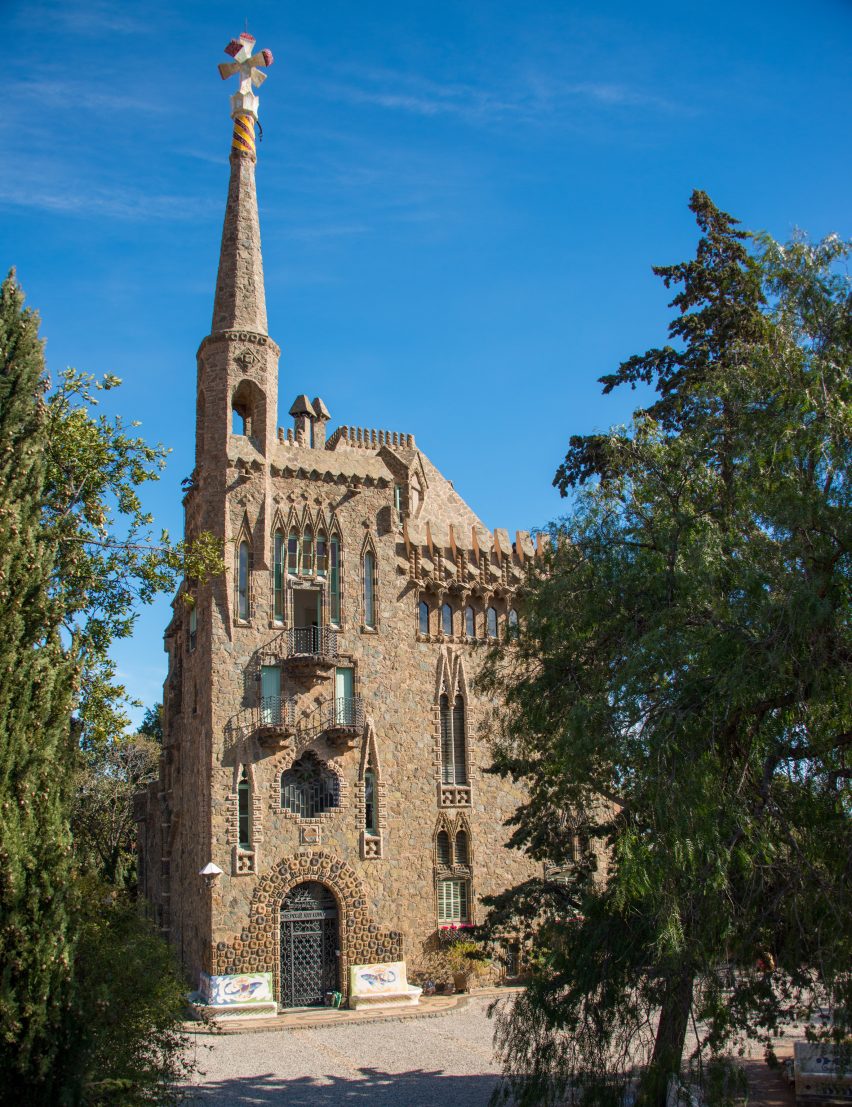
Also known as Casa Figueras, Bellesguard was built on the site of a medieval castle, which informed Gaudí's design for the house.
Designed in 1900 when Gaudí was still developing what would become his signature style, he was given free rein to create it.
Another mono-material building, almost devoid of colour, the home was made from stone slate. However, the house contains many mosaics, with the time and cost of creating these meaning that the clients never ended up moving into the house. Eventually, María Sagues Molíns had to sell the property to avoid bankruptcy.
Gaudí Centenary
This article is part of Gaudí Centenary, our editorial series profiling the Catalan architect and designer Antoni Gaudí, marking 100 years since his death.