


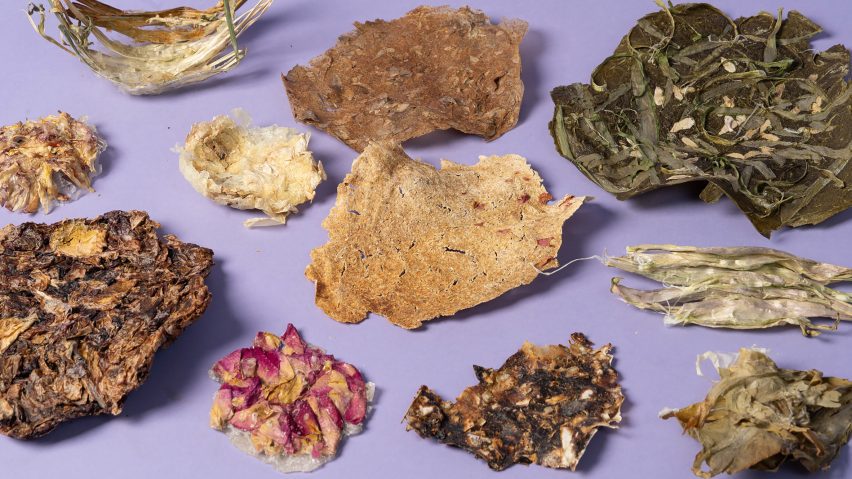
Dezeen School Shows: material made from florists' waste and floral remains from funeral services is among the projects from Lucerne School of Design, Film and Art.
Also featured is a tool for the de-escalation of sexualised and gender-specific violence and a sensory retreat for autistic children.
Lucerne University of Applied Sciences and Arts
School: Lucerne School of Design, Film and Art Lucerne
Course: Bachelor Object Design
Tutors: Thai Hua, Andreas Saxer, Christof Sigerist, Miriam Nietlispach, Mònica Gaspar, Vera Sacchetti, Michael Niederberger, Guy Meldem, Victoria Juretko, Guy Markowitsch and Silvana Emmenegger
School statement:
"Object designers design products, and thus shape the way we as consumers will perceive, select, use, value and reuse products in the future.
"We regard the heritage of industrialisation as an indispensable source of know-how in the use of materials, manufacturing technology, ergonomics and functionality.
"But we also recognise that the side effects of industrialisation stand in the way of a future worth living.
"This is a balancing act we face: material cycles and reuse, intelligent linking of digital technology with craftsmanship, regional production, commoning, transdisciplinary cooperation and, last but not least, responsible consumer behaviour.
"Object designers think and design for a future-proof society."

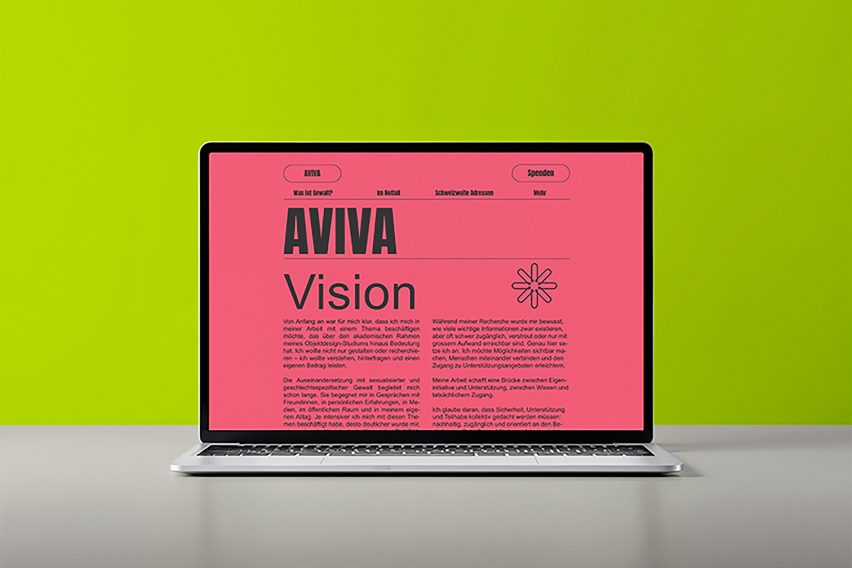
Designing Security for FLINTA* People by Chiara Aeschbacher
"Design as a tool for de-escalation, empowerment, community and prevention.
"Safety, respect and self-determination are fundamental needs shared by all. For FLINTA* people, however, these needs are often insufficiently met, socially and institutionally.
"Structural inequalities and a lack of sensitivity lead to mistrust and fear, and contribute to the fact that the number of unrecorded cases of sexualised and gender-specific violence continually remains so high.
"The design approach of the project is based on intersectional-feminist perspectives and focuses on four fields of action: empowerment, de-escalation, community and prevention, with the aim of rethinking security collectively, effectively and centred on those affected."
Student: Chiara Aeschbacher
Course: Bachelor Object Design
Tutors: Miriam Nietlispach and Vera Sacchetti
Email:chiara-aeschbacher[at]gmx.ch
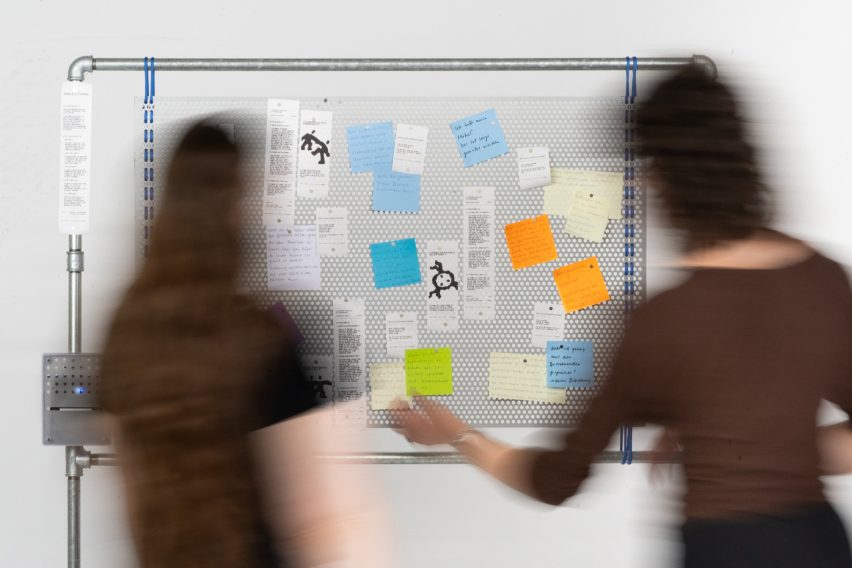
Die Quittung by Tiana Borcherding
"In a design world marked by profit and rapid output, our connections to the environment and to each other splinter.
"Die Quittung is an invitation to design students to break out of this formed mindset and to direct their attention to acting attentively within a network of interdependencies.
"The installative interaction interrupts the customary working process in the studio and confronts the students with provocative contemplative questions. Using analogous proofs and emblems, a growing collective archive of responsibility emerges.
"The goal is to reclaim design as shared caring practice. The project creates an awareness for systematic responsibility in design, and as such, ties in directly with SDG 4.7."
Student: Tiana Borcherding
Tutors: Miriam Nietlispach, Thomas Ness and Vera Sacchetti
Email: tiana[at]borcherding.ch

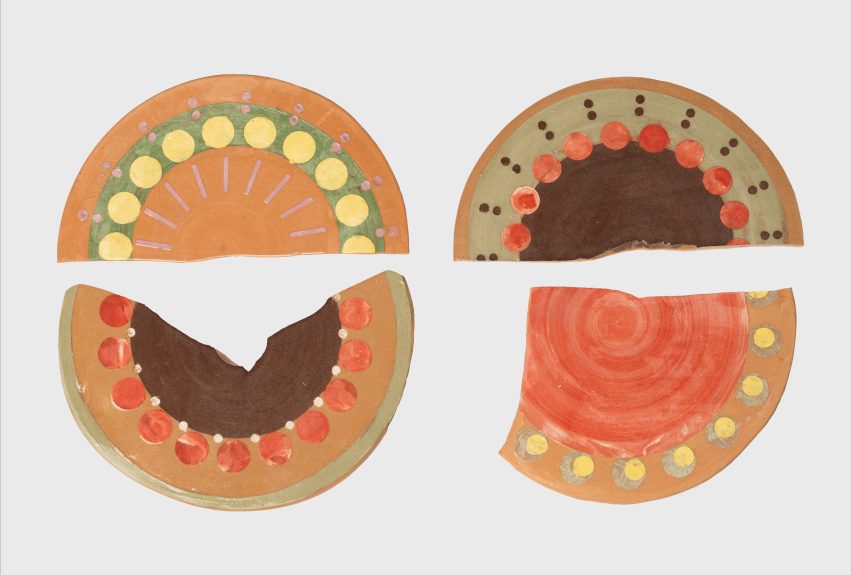
Rustic Bern Ceramics by Sabrina Brunner
"More and more traditional manual crafts in Switzerland are threatened with extinction or have already disappeared. What do crafts need to survive?
"Taking rustic Bern ceramics, I establish the core design principles of the craft. By reducing the design, I then give the craft a new accessibility.
"In doing so, I focus on the engobe painting, which is applied to the leather-hard clay.
"Using a stencilling that adopts traditional elements, the result is a reduced design idiom coupled with a tool for the inter-generational transfer of knowledge."
Student: Sabrina Brunner
Tutors: Miriam Nietlispach and Vera Sacchetti
Email: brunnersabrina[at]outlook.com

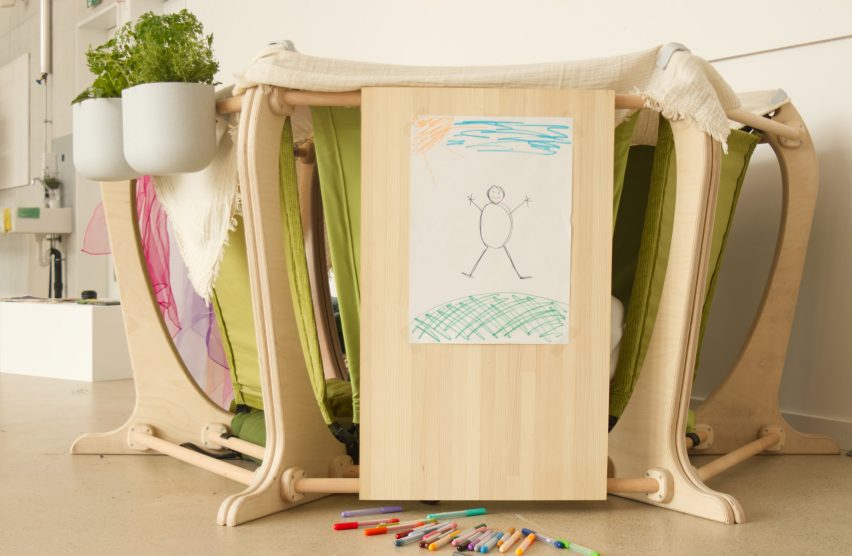
Eingenistet by Noah Bühler
"As an 'escape space', Eingenistet provides a sensory retreat for autistic children when overwhelmed. Based on sensory and biophilic design, the object mediates a feeling of security for 4 to 12-year-olds.
"Eingenistet promotes inclusion. Studies confirm the effect: 'Before implementation, the student with ASD often removed herself from the group… After the escape space was added… the student used the space less and less.'
"Knowing that, the retreat space is there reduces stress in the long term. The work crosses with SDGs 3 ('health and wellbeing'), 4 ('quality education') and 10 ('reduced inequalities')."
Student: Noah Bühler
Tutors: Andreas Saxer and Vera Sacchetti
Email: quaxly[at]gmail.com
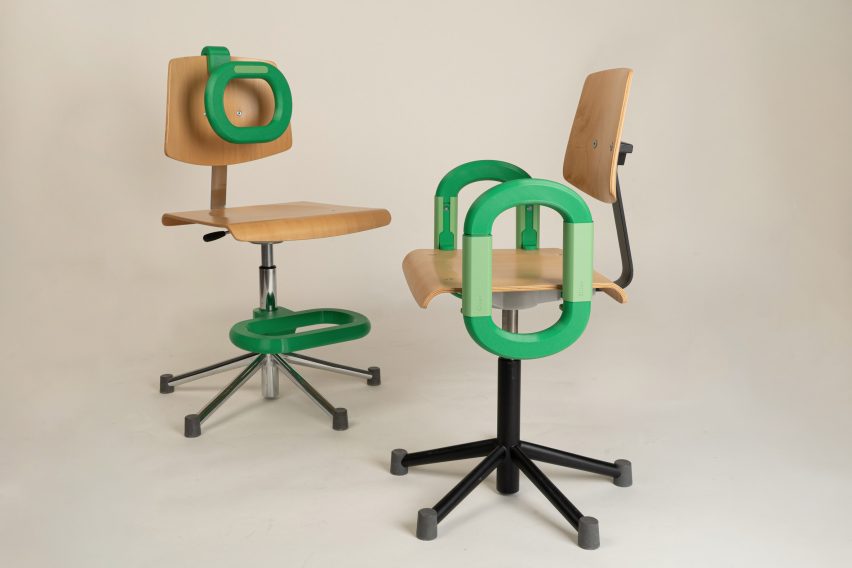
Sitta+ by Sherine Keller
"The typical school chair often fails to match the needs of children with short statures, meaning that a special model has to be sought.
"This can then lead to ostracism or stigmatisation, and always involves additional outlay. The project Sitta+ provides an adjustable system, produced using 3D printing, that can be mounted on the chair.
"The adjustability bridges the obstructive distance for children with small statures, or indeed children in different phases of growth. Like this, Sitta+ is suitable for whole classes.
"The project relates to SDG 4, 'quality education', and SDG 10, 'reduced inequalities'."
Student: Sherine Keller
Tutors: Thai Hua and Mònica Gaspar
Email: sherine.keller23[at]gmail.com
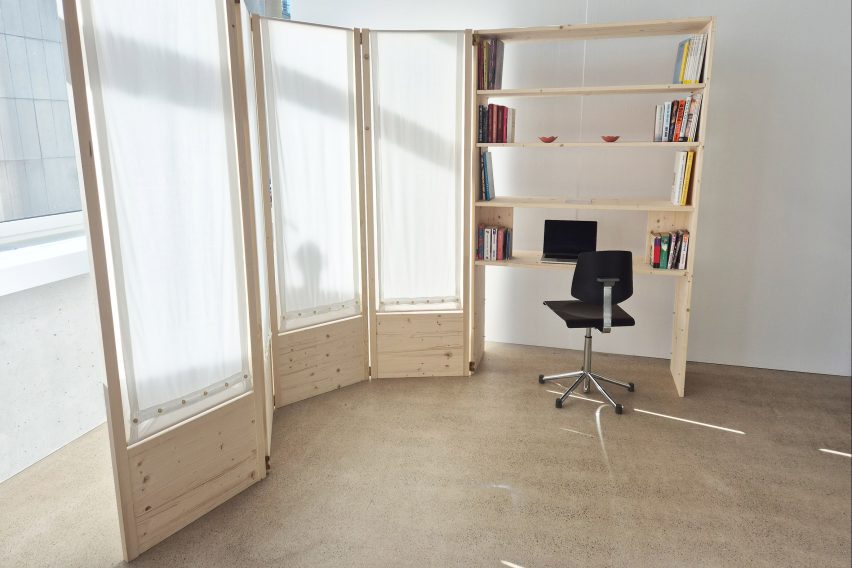
Modular Partition Wall for Rental Apartments by Nadja Knuchel
"In new apartments with open floor plans and few rooms, multiple living areas are combined in one space, often including bedrooms and studies.
"In order to guarantee more privacy or to separate living and working areas, partition walls are an ideal solution.
"The modular dividing walls can be disassembled into their individual elements after use. They are made of lightweight spruce wood and opaque, translucent cotton, and can be used as screen, with or without a frame.
"The project relates to SDG 12, 'responsible consumption and production'."
Student: Nadja Knuchel
Tutors: Andreas Saxer and Monica Gaspar
Email: knuchel.nadja[at]bluewin.ch
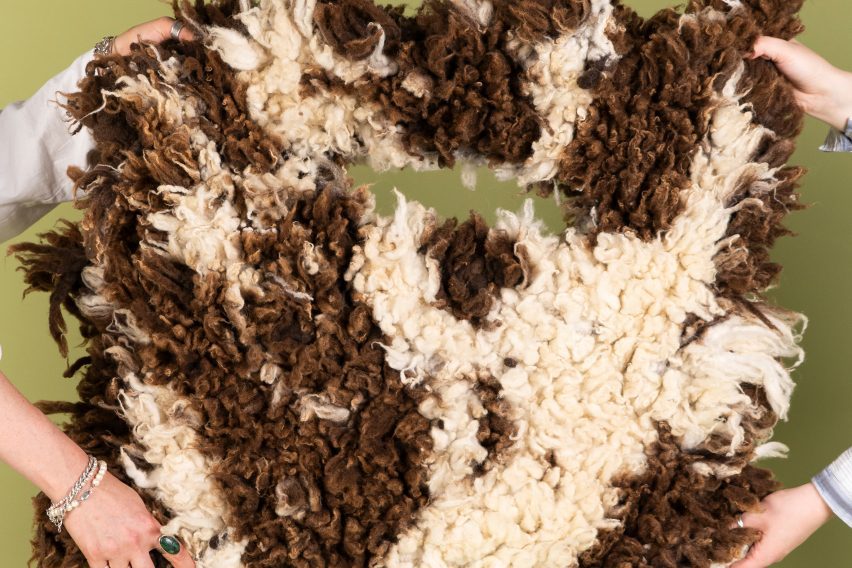
20944072 by Sinah-Moana Mainardi
"In my bachelor's design project, I explore whether a handbag can be entirely designed and produced locally.
"All of the materials are sourced from the region between Langenthal and Lucerne along my daily commuting route. As a self-experiment, the project reveals what lies behind a product: animals, people, time, manual work and resources.
"Using the seemingly simple handbag, I question global production chains and draw attention to what is often invisible labour. The bag consists mainly of sheep's wool, which has been washed, felted, carded, spun and plied.
"The project is oriented on SDG 12.2 in the sense of addressing local value creation, transparent processes and conscious resource management."
Student: Sinah-Moana Mainardi
Tutors: Thai Hua and Vera Sacchetti
Email: sinahmoana[at]gmail.com
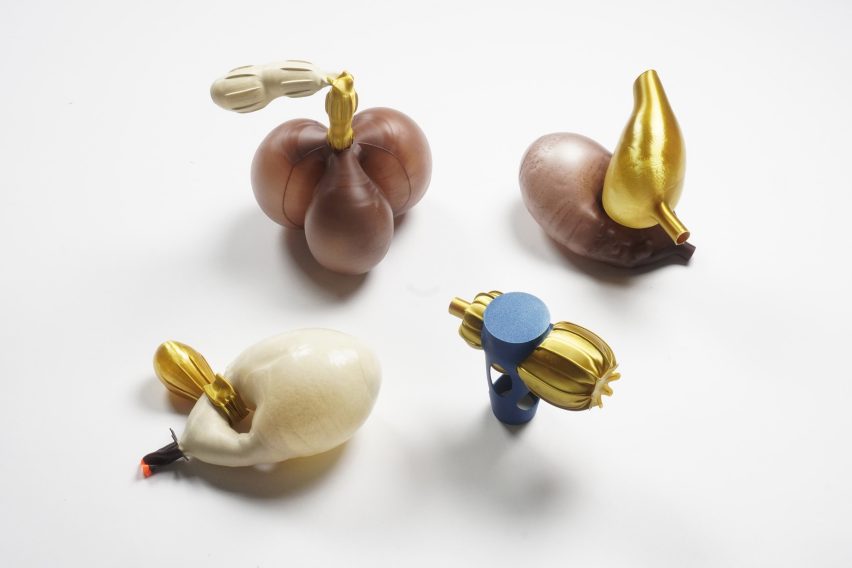
Untamed Objects by Bex Nitsch
"Everyday household items are tamed by functionalism, grids and control. With Untamed Objects, I explore how to shake off patriarchal structures.
"The goal is to show the scope and range of multi-gender and Queer design. The exploration was realised using 3D-printed bubbles, whereby the filament print is heated and inflated using air pressure."
Student: Bex Nitsch
Tutors: Miriam Nietlispach and Vera Sacchetti
Email: rebekka.nitsch[at]gmx.ch

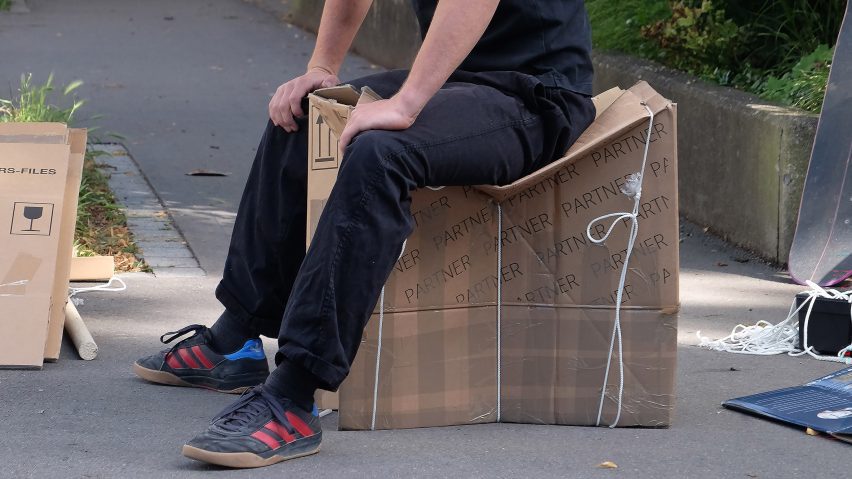
From Consumption by Nicolas Roseng
"The project is based on a critique of consumer behaviour, focusing on delivery costs as a visible outcome of online shopping.
"The cardboard serves as evidence of our consumer habits, as well as of social and technological developments.
"This points to the fact that economic production is organised according to efficiency and growth: market logic defines what is produced, while needs-oriented production is often ignored.
"The project draws attention to shipping cartons as a by-product of consumption. Recycled cardboard is used to make temporary seating possibilities in public spaces, intended to be used in a process of self-arrangement by the users."
Student: Nicolas Roseng
Tutors: Christof Sigerist and Mònica Gaspar
Email: nicolas.roseng[at]gmx.ch
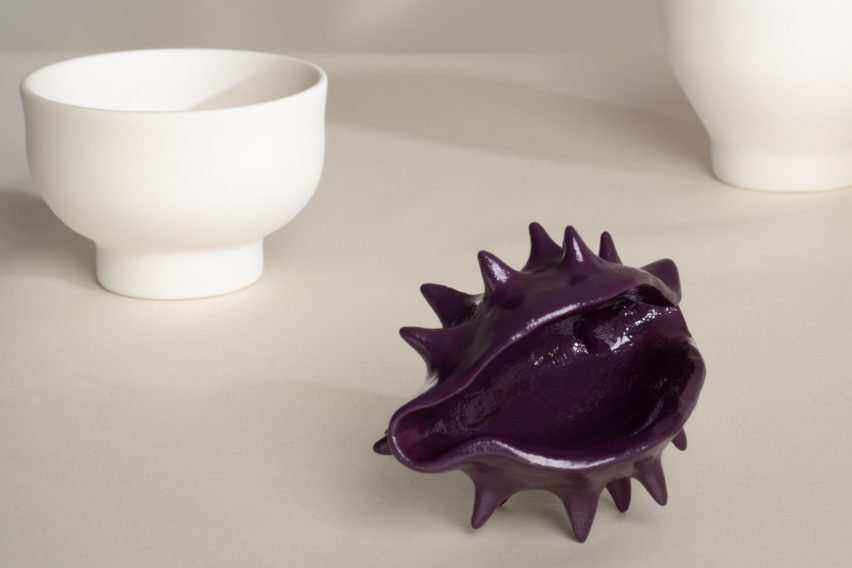
Share by Jana Berit Seregi
"Around 40 per cent of nursing specialists leave their jobs prematurely. Ideally, stressful situations should already be addressed during training.
"My objects provide scope for discussions: in four steps, Share uses sensory impressions to focus on the here and now and guide towards the topics that require addressing right away.
"Share criticises pro-forma meetings and instead initiates encounters to make stresses visible. In the interaction between teachers and students, the teacups and figures form an invitation to discover.
"They create new communicative levels within an institutional context. The project deals with SDG 3, 'good health and wellbeing'."
Student: Jana Berit Seregi
Tutors: Thai Hua and Vera Sacchetti
Email: jana.seregi[at]gmail.com
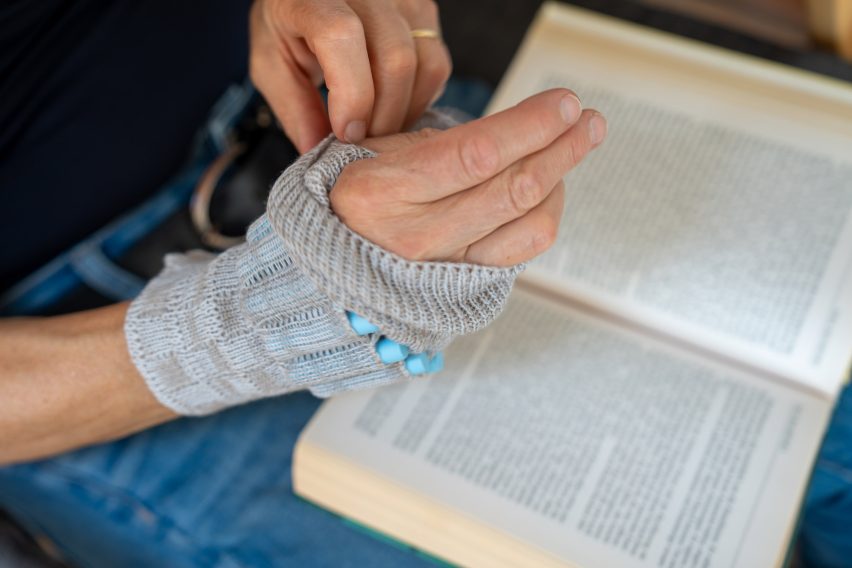
Self-helping Hands by Nicolas Zeller
"Self-sufficiency in old age is fundamental to quality of life and dignity. However, essential tremor – involuntary shaking with a frequency of 5 to 12 Hz – forces many people over 65 into social isolation.
"Everyday pleasures such as sewing, writing, making things, or cooking become a hurdle. This bachelor's project focuses exactly on this issue: the designed everyday objects deploy precisely added weights in order to gently but effectively stabilise the hand.
"They physically dampen the low-frequency tremors before they start. Like this, the designed objects give the affected person a degree of autonomy back, fully in line with SDG 3 on health and wellbeing at every stage of life."
Student: Nicolas Zeller
Tutors: Thai Hua and Mònica Gaspar
Email: nicolas.e.zeller[at]gmail.com
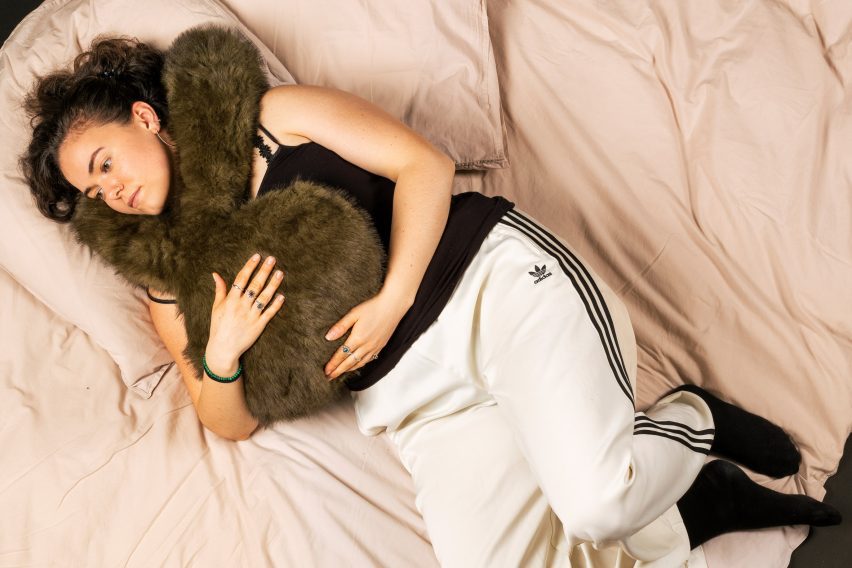
Sen by Jessica Zwahlen
"Loneliness is prevalent amongst young people, often coupled with a feeling of inner anxiety, a lack of attachment and emotional stress.
"The project sen examines how objects can provide emotional support at an everyday level. Based on conversations with affected people, a set of individual objects was created that react to personal needs and experiences in dealing with loneliness.
"Using weight, warmth, feel and close skin contact, the objects have a calming effect. The work relates to SDG 3, 'good health and wellbeing'."
Student: Jessica Zwahlen
Tutors: Christof Sigerist and Mònica Gaspar
Email: jessica.zwahlen[at]bluewin.ch
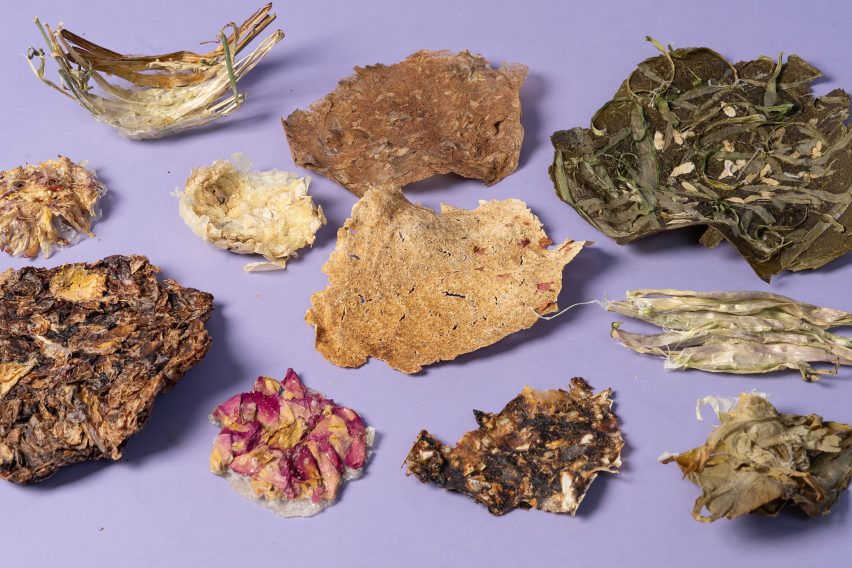
Kukka Urna by Noemi Curty
"The core of the work involves a critical confrontation with transience. The basic material consists of plant waste from florists and the floral remains from funeral services.
"In a series of material experiments, this was used to create a biologically degradable urn. The project breaks with the social taboos surrounding death.
"By transforming the original function of the flowers, they are invested with a new purpose. Like this, the circle is closed: out of transience emerges a dignified commemorative and parting object."
Student: Noemi Curty
Tutors: Christof Sigerist and Mònica Gaspar
Email: noemi[at]curty.org
Partnership content
This school show is a partnership between Dezeen and Lucerne School of Design, Film and Art Lucerne. Find out more about Dezeen partnership content here.