


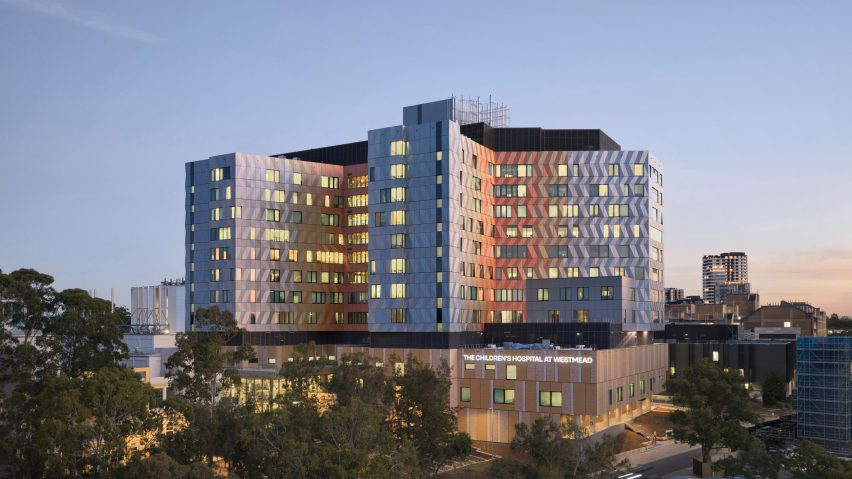
Australian architecture studio Billard Leece Partnership has created an aluminium-clad acute-care facility for The Children's Hospital Westmead in Sydney, drawing on its inland river setting.
Set within the existing Westmead health and education precinct, Billard Leece Partnership (BLP) designed the 57,000-square-metre Wattle Building with a child-centred plan that aims to boost paediatric wellbeing.

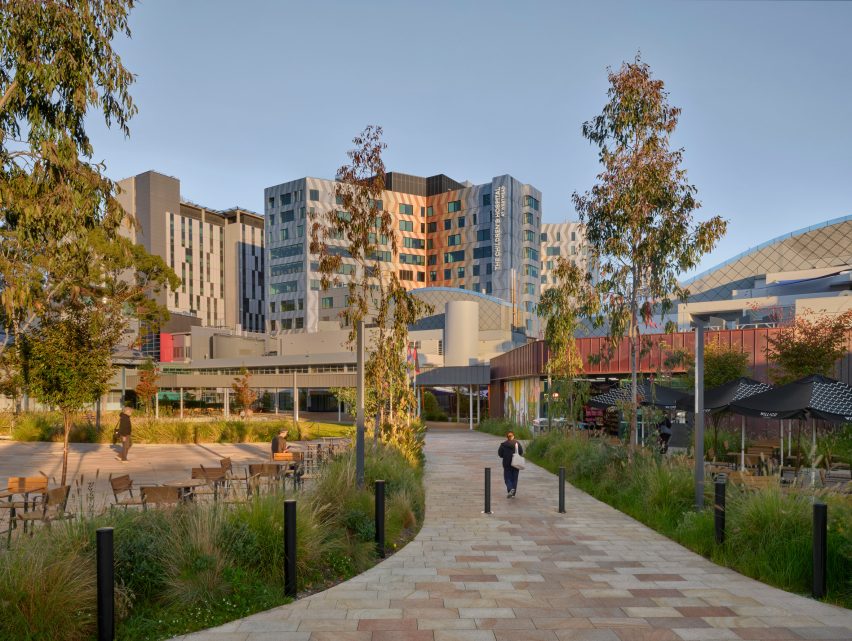
The studio set out to incorporate highly specialised acute-care facilities within a hospital environment that provides spaces for play, movement, family presence and connection to the surrounding landscape.
"The Children's Hospital at Westmead is part of a wider rethinking of paediatric environments in New South Wales, where design is understood as a critical contributor to wellbeing, dignity, family connection and quality of care," BLP managing director Tara Veldman told Dezeen.

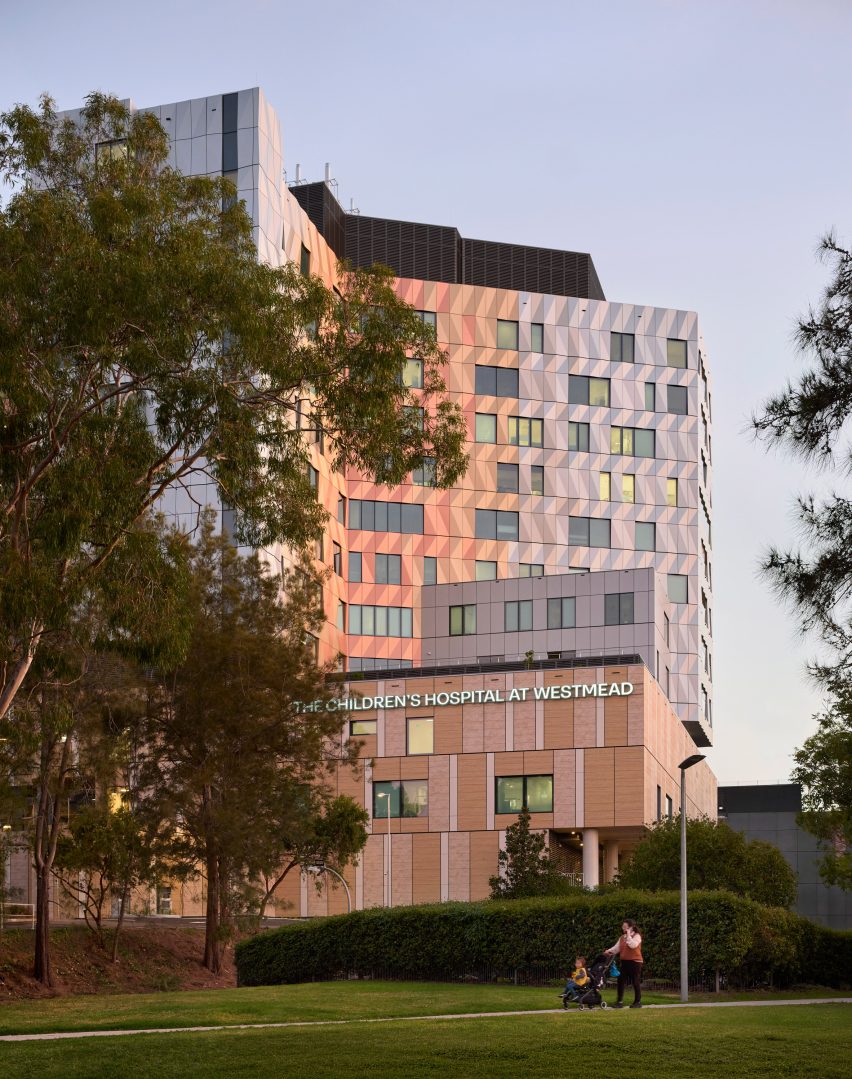
Custom aluminium and terracotta modular panels wrap around the building's concrete structure.
Folded geometric aluminium panels in orange and blue-grey tones were designed to catch the changing light and shadow throughout the day as a reference to the nearby waterways.
The studio also added high-performance glazing and insulation to enhance thermal performance, durability and occupant comfort.

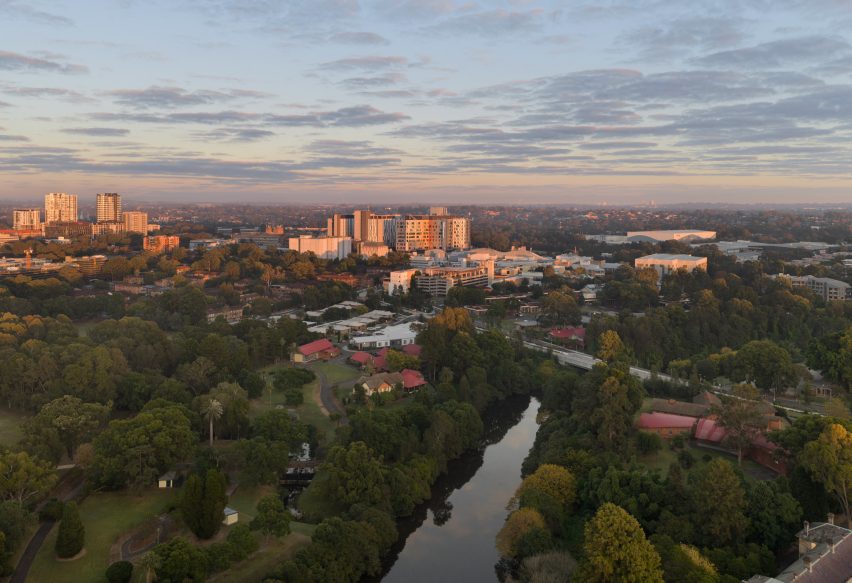
"The concept is grounded in the inland river landscape, organised around the idea of the convergence of three waterways – the Parramatta River, Toongabbie Creek and Darling Mills Creek," BLP architecture lead Ivan Turcinov said.
"This river narrative gave us a way to think spatially and atmospherically, integrating soft curving forms, layered colours and ecological references throughout."

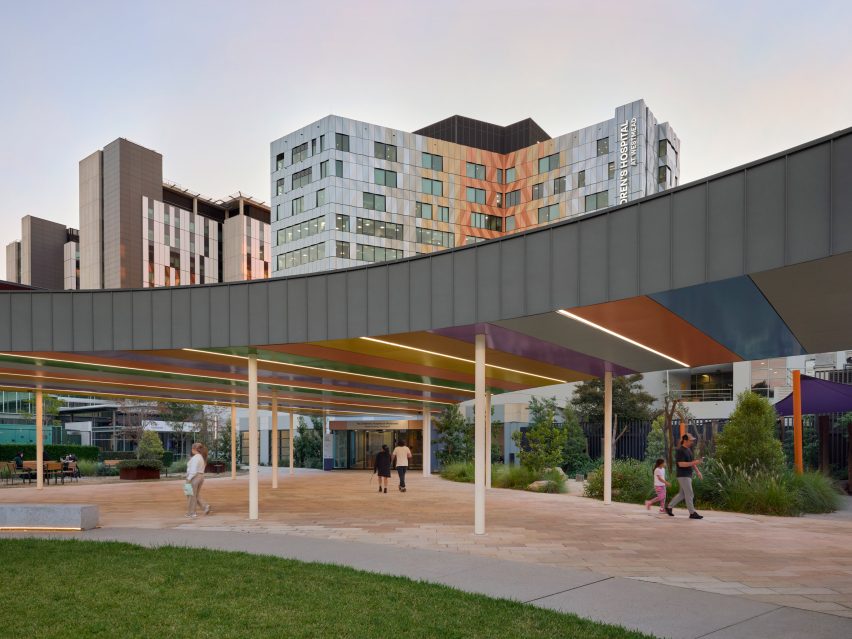
Visitors access the hospital via a landscaped forecourt, sheltered by a large colourful striped canopy that stretches across the entrance space, supported by slender columns.
Named KidsPark, the area provides opportunities for outdoor play and respite and forms part of the studio's aim to create a "deliberately deinstitutionalised" environment.

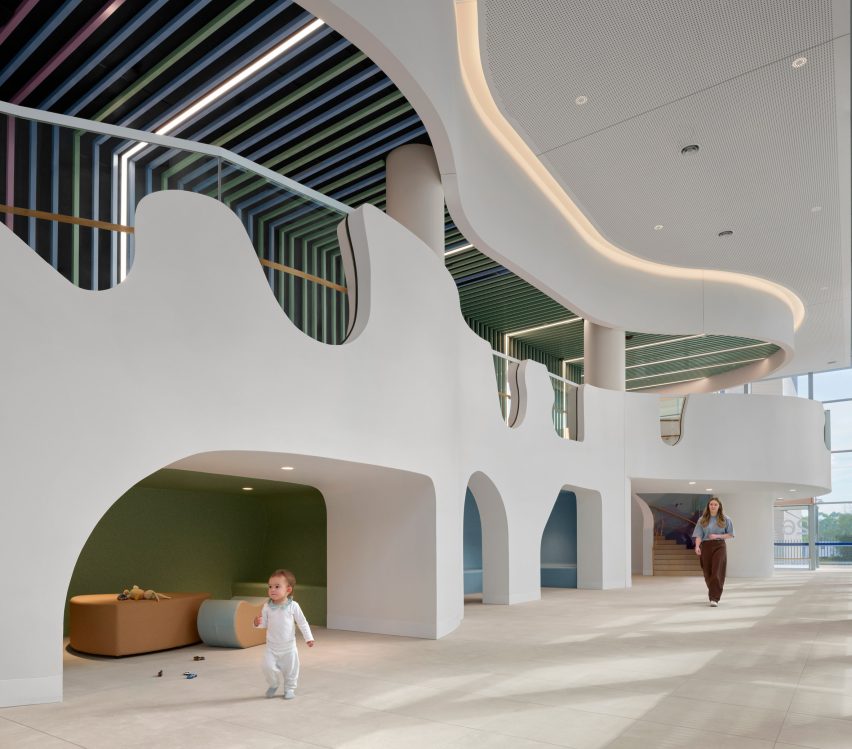
Inside, the entrance space was designed to be open and light-filled to create a calm environment for children and families.
Curved walls and rounded seating nooks were paired with a palette of blues and greens to evoke the site's river landscape.

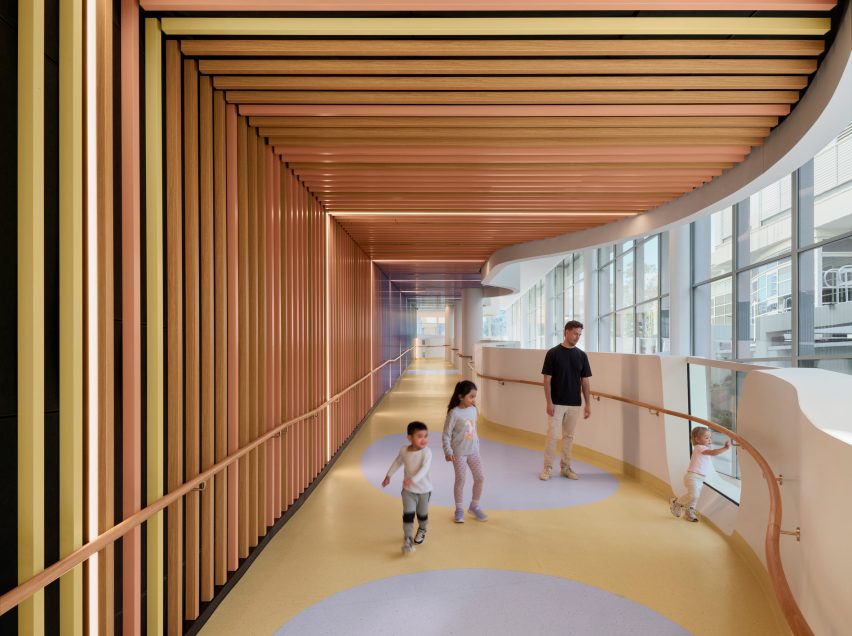
A long, elevated pathway named KidsWay winds through the building, characterised by its curvilinear form, aluminium battens and soft colour palette.
According to the studio, this was designed to transform the hospital's circulation spaces into an engaging experience or "journey", with the pathway broadening at key points to create places where visitors can pause and look out, rather than being an anonymous series of corridors.

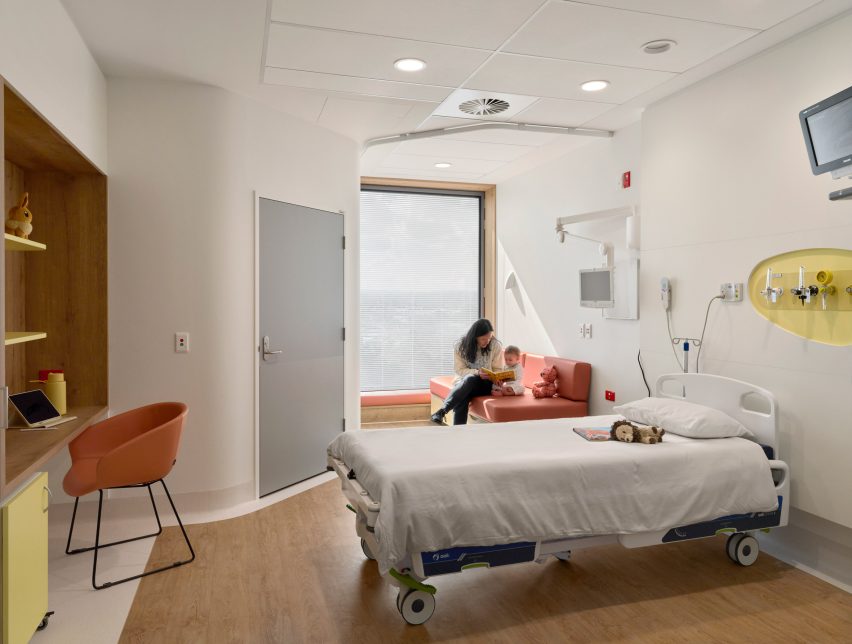
Organised as a series of "neighbourhoods" with 12 rooms per section, inpatient units were designed to feel "more like bedrooms than traditional hospital wards".
Each room is single-occupancy, containing a desk, sofa and bathroom, while providing space to accommodate family members or carers alongside patients.
Drawing upon research around biophilic design and improved patient wellbeing, the building was oriented to maximise views and natural light.
"Research consistently demonstrates the benefits of natural light, access to nature, positive distraction and family-centred care environments in reducing stress and improving wellbeing," Veldman said.

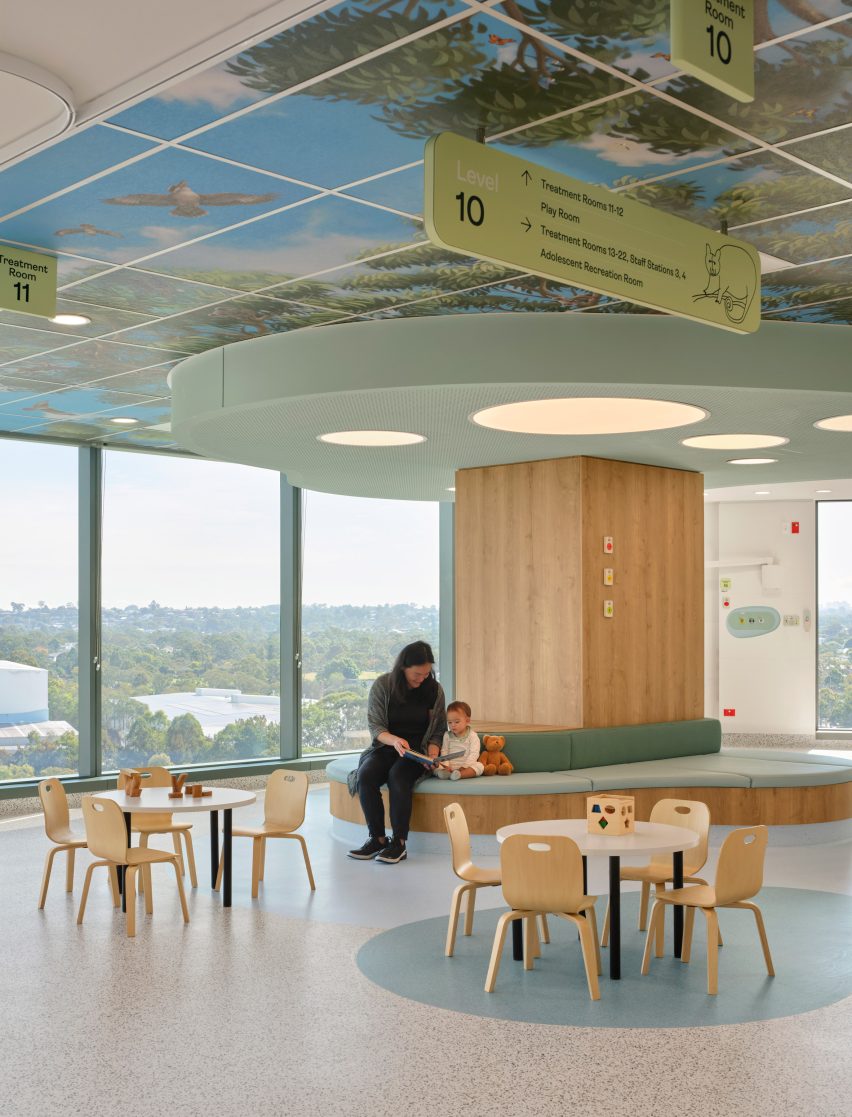
As part of the approach around positive distraction, the studio incorporated artwork installations with a focus on Indigenous art, as well as a pet visiting area.
Colourful, interactive play areas were included alongside multifunctional spaces for family use.

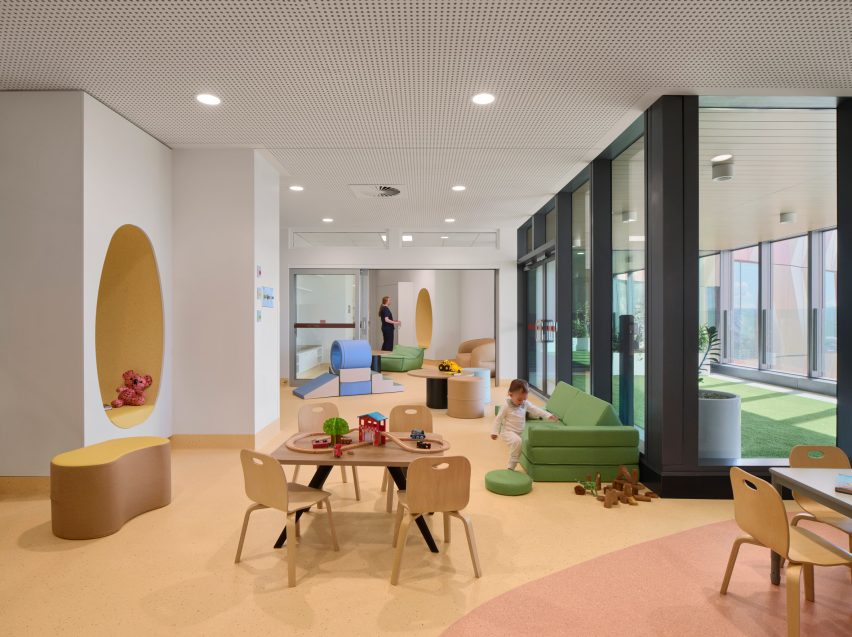
Ceilings are fitted with acoustic tiles while floor finishes are comprised of a mixture of stone, ceramic tiles and vinyl flooring, selected to suit the functional requirements of the different areas within the hospital.
Other stories about children's hospital design featured on Dezeen include an interactive forest display at California's children's hospital by NBBJ and a colourful pavilion by Morag Myerscough set within the Joy Garden at Sheffield's Children's Hospital.
The photography is by Tom Roe.
Project credits:
Architect: Billard Leece Partnership (BLP)
Landscape architect: McGregor Coxall
Builder: RobertsCo
Structural and civil engineer: Arup
Acoustics: Stantec