


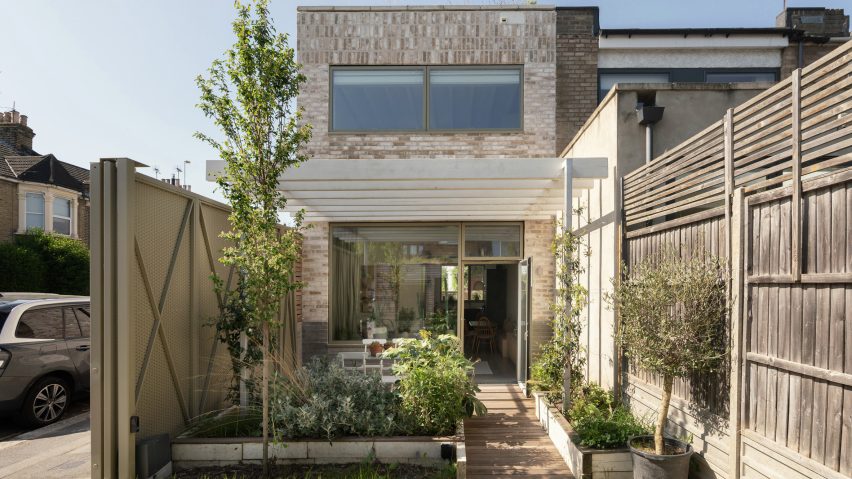
Architect Joe Burke has self-built Leyton House, a home that bookends a 1960s terrace in London, using rough, pale brickwork and a concrete plinth for tactility.
Having purchased the existing end-of-terrace unit in Leyton, east London, Burke used its overgrown, 4.5-metre-wide garden as the site of the rental home, for which he acted as client, developer, architect and contractor while living next door.

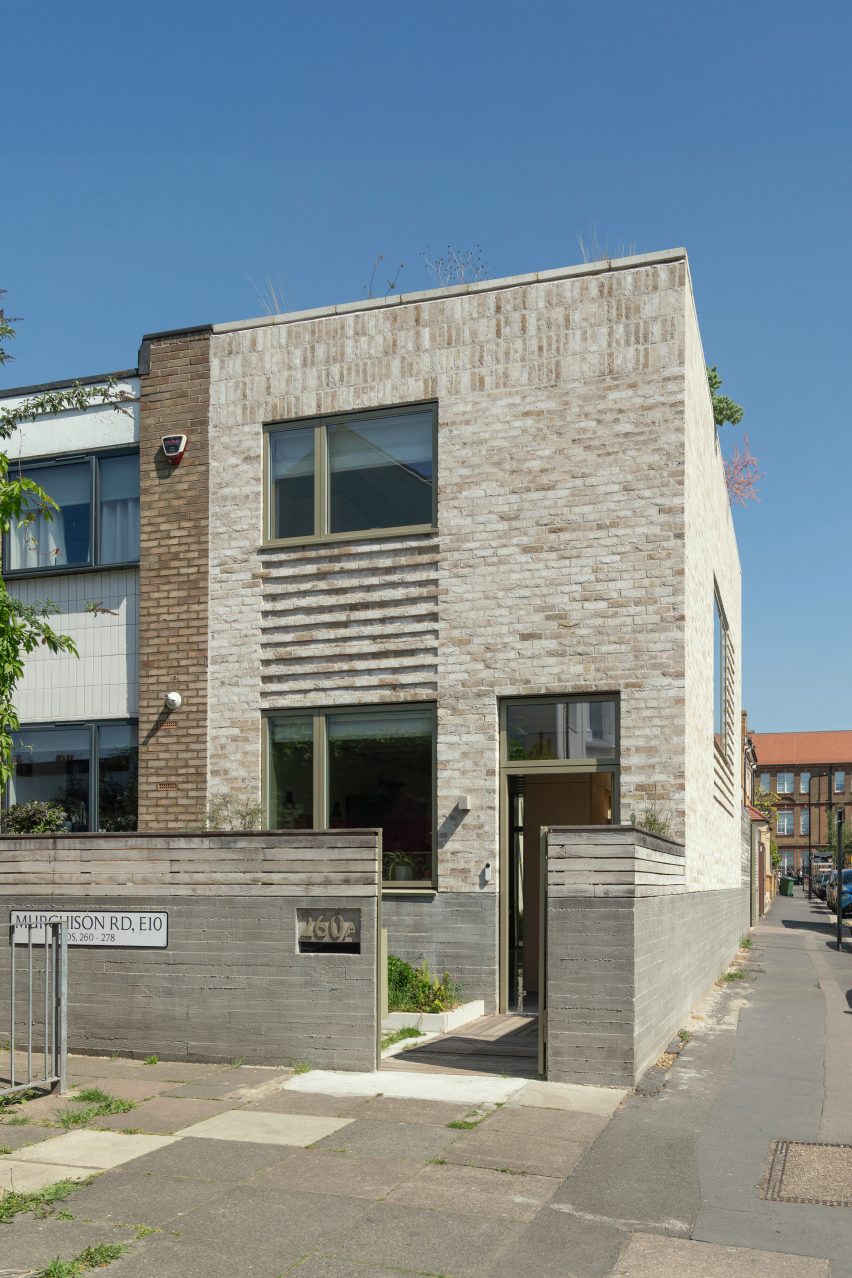
Leyton House creates a new street frontage for the terrace to the east, adopting the existing block's proportions and fenestration, while contrasting its finishes with a palette of boardmarked concrete and pale brick with textured window surrounds.
"The design looked to maximise the potential of a narrow end-of-terrace garden plot while creating a building that remained well-proportioned, generous and sensitive to its street context," Burke told Dezeen.

"We also knew we wouldn't live there forever, so one element of the brief was making it a high-quality rental property," Burke continued.
"Overall, we used standard materials but tried to elevate them," he added.

In order to free up as much space as possible, Burke organised the interior of Leyton House around a bespoke plywood staircase and storage wall, which contains a cloakroom, pantry and bookshelves.
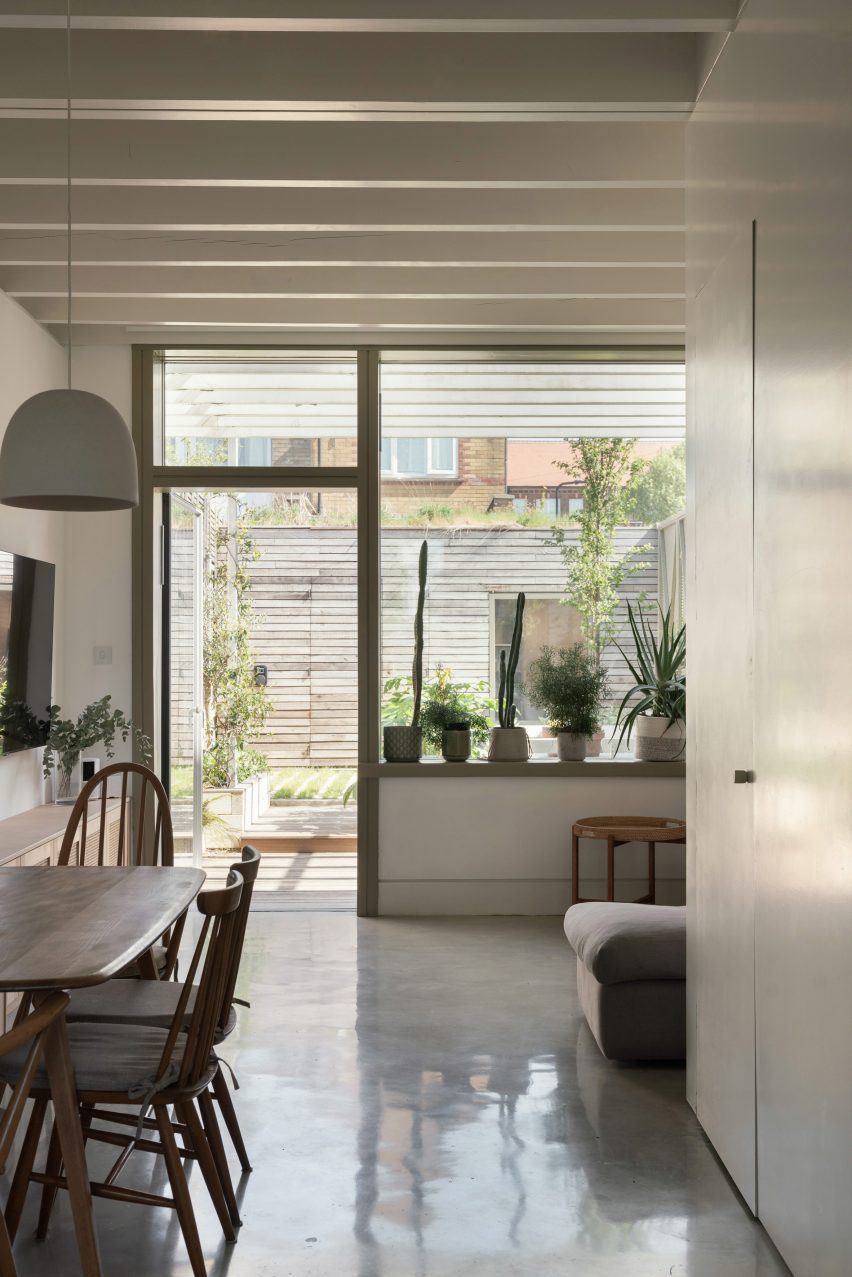
Opposite this unit is a central dining area flanked by an L-shaped plywood kitchen at the front of the home and a lounge area that opens into a rear garden.
The stair has been positioned on its eastern edge, with the void beneath it used as an extension of the central storage area. A high-level window pulls natural light into the staircase while avoiding overlooking from the street.
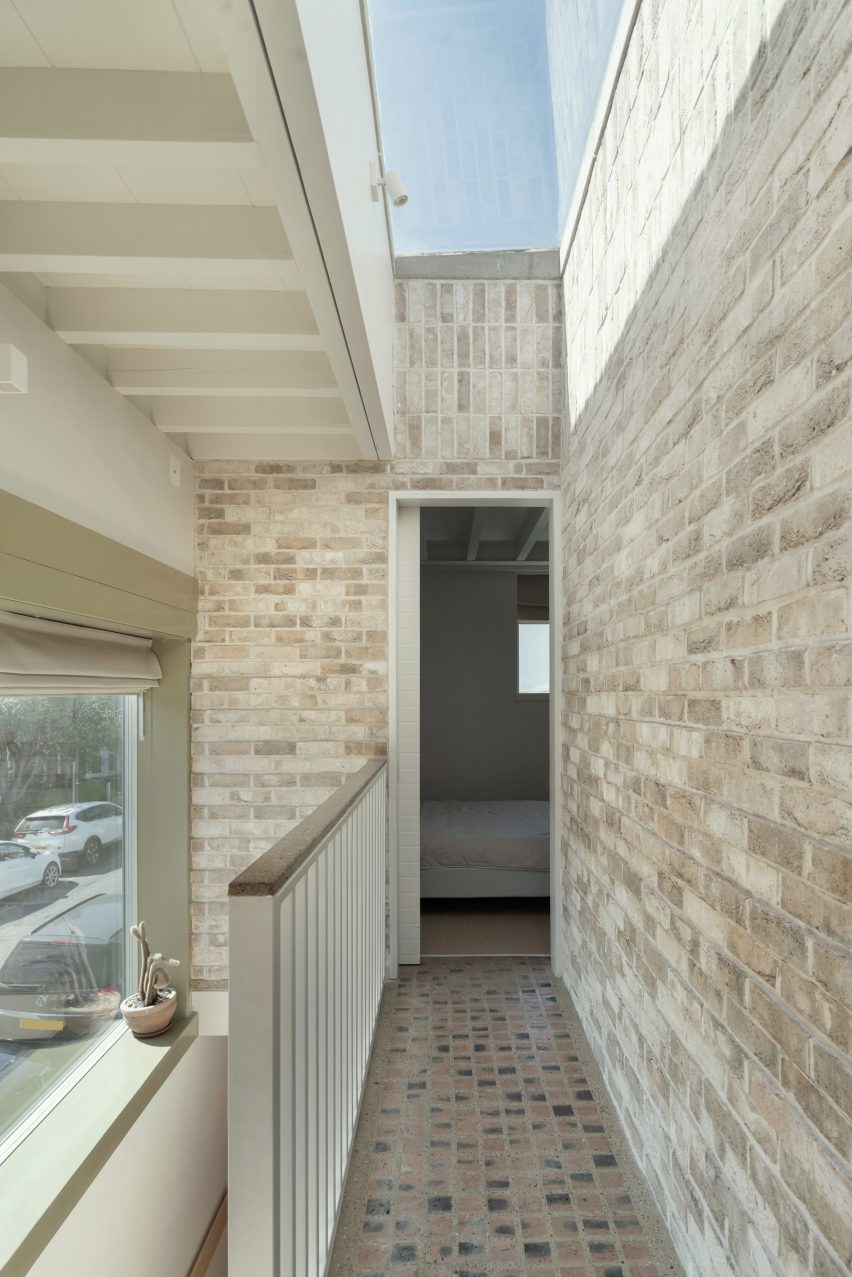
At the top of the staircase, the home's skylit landing is unexpectedly lined with the same pale brickwork as the home's facade, creating an almost external feeling space that links two ensuite bedrooms.
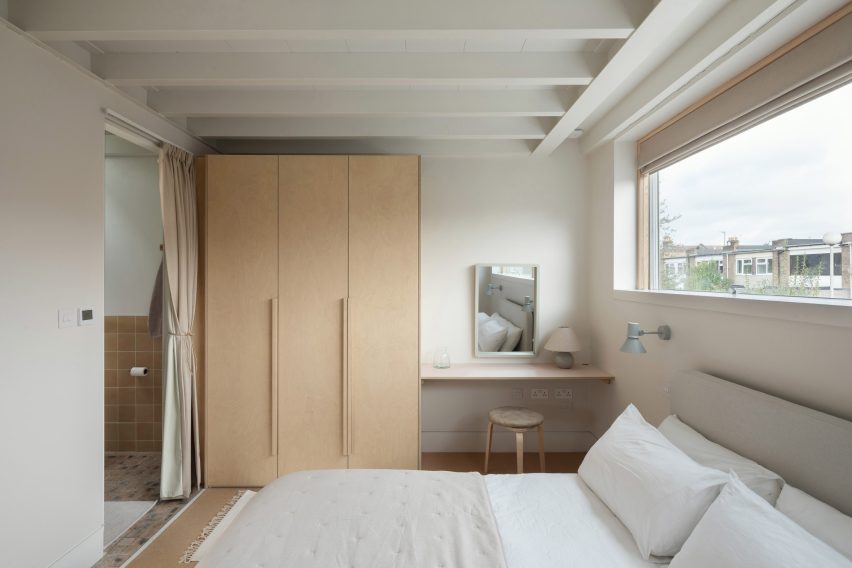
With the Leyton House's future as a rental property in mind, most of the internal finishes were kept deliberately simple and easy to maintain, with white-painted timber ceilings and walls, glossy concrete floors at ground level and terrazzo and tiles in the bathrooms.
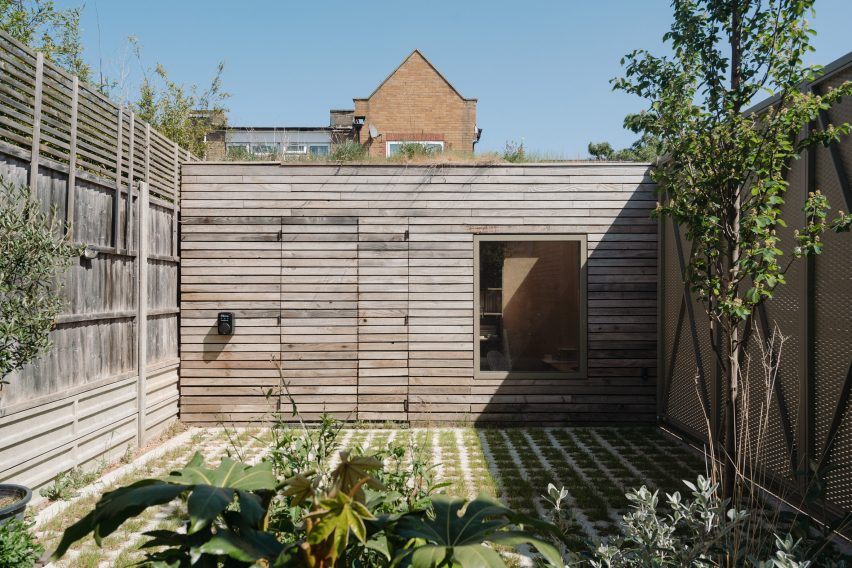
In the garden, a white-timber pergola looks across a small driveway to a standalone garden studio, with a pale green-metal gate providing access to the adjacent road.
Sheltering the garden from the street is a fence made by repurposing the concrete plinth's shuttering.

Elsewhere in London, architecture studio Nikjoo also bookended a 1960s terrace with a home for developer Flawk, creating a sculptural, curved brick form punctured by porthole windows.
Another self-build project in London recently featured on Dezeen is the "characterful family home" with three gardens created by the founders of Surman Weston.
The photography is by Rachel Ferriman.