


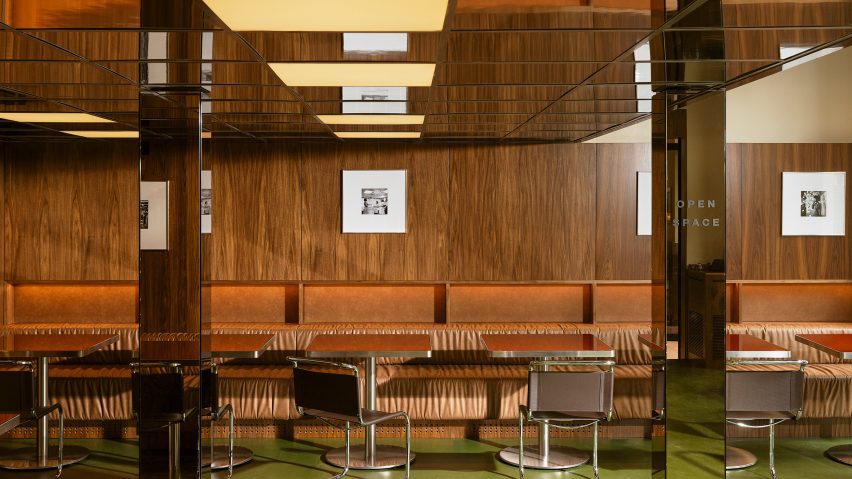
Cantilever chairs, wood panelling and mirror-clad surfaces meet in Lève Office Bar, a Space Age-informed bar in Turin by Italian architect Fabio Fantolino.
The venue is located in the centre of the Italian city and nods to the aesthetics and culture of workplaces built in post-war America.

The original building dates from the 1920s and before the intervention, it was divided into two distinct units: one contained a cafe, while the other housed a bookshop.
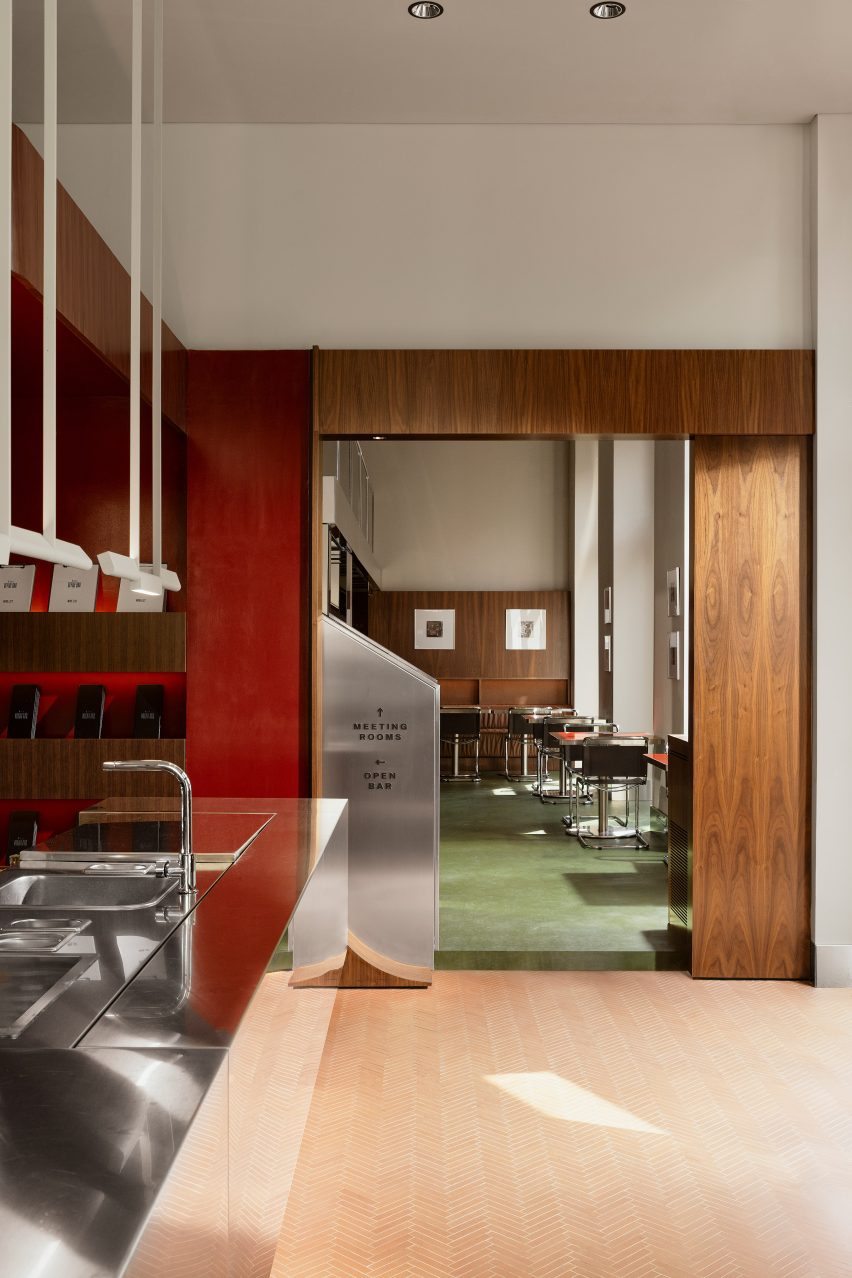
It now functions as one cohesive interior subdivided into three spaces, all of which reference retro workplaces.
The space aims to serve professionals working in the city centre over the course of a typical working day; hence the architect's decision to theme it around retro offices.
"The 1960s were chosen as the reference period because they marked a time when offices were regarded as prestigious and carefully designed workplaces – the 'office bar' concept, on the other hand, reflects the way we work today," Fantolino told Dezeen.
"It is conceived as a space that supports the everyday rhythm of contemporary office life, whether for breakfast, lunch, coffee breaks, or aperitivos, while also acknowledging that work can naturally extend into hospitality spaces."
"The three areas reinterpret the concept of an open-plan office, each through a distinct design language," Fantolino continued.
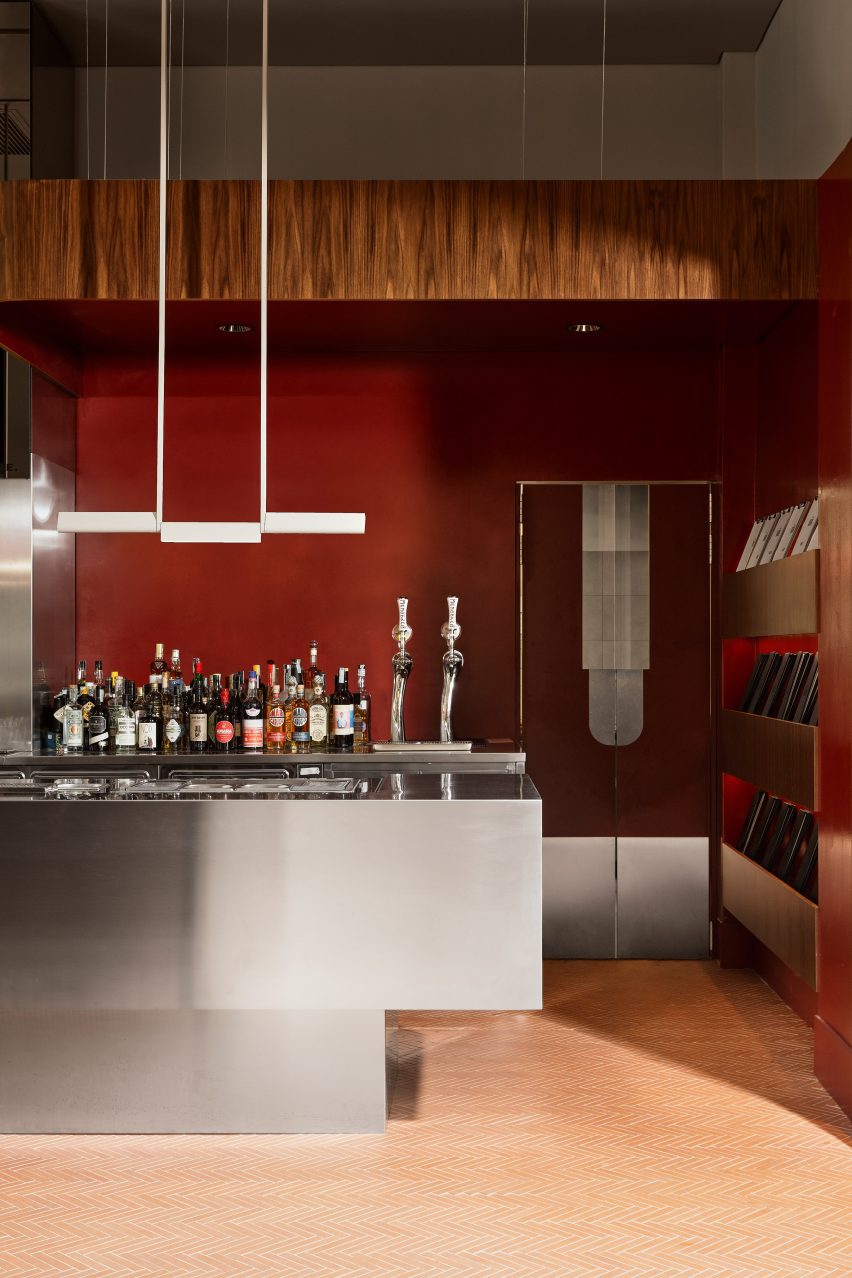
A monolithic stainless-steel bar dominates the initial interior upon entry. Its strong presence is bolstered by a red enamel wall panel mounted behind it.
The effect is softened by a herringbone floor made up of sandy-coloured bricks, which gives way to a green resin floor at the threshold of the second space.
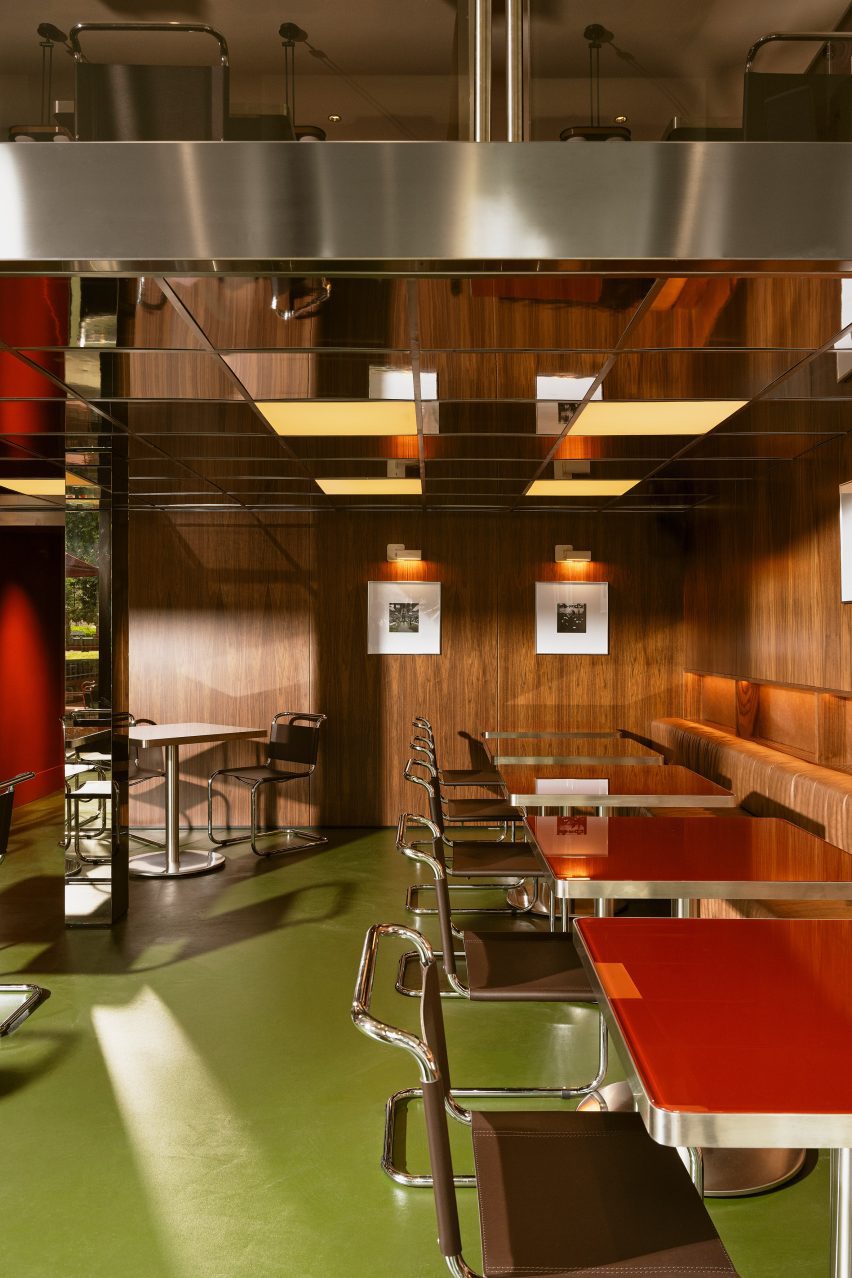
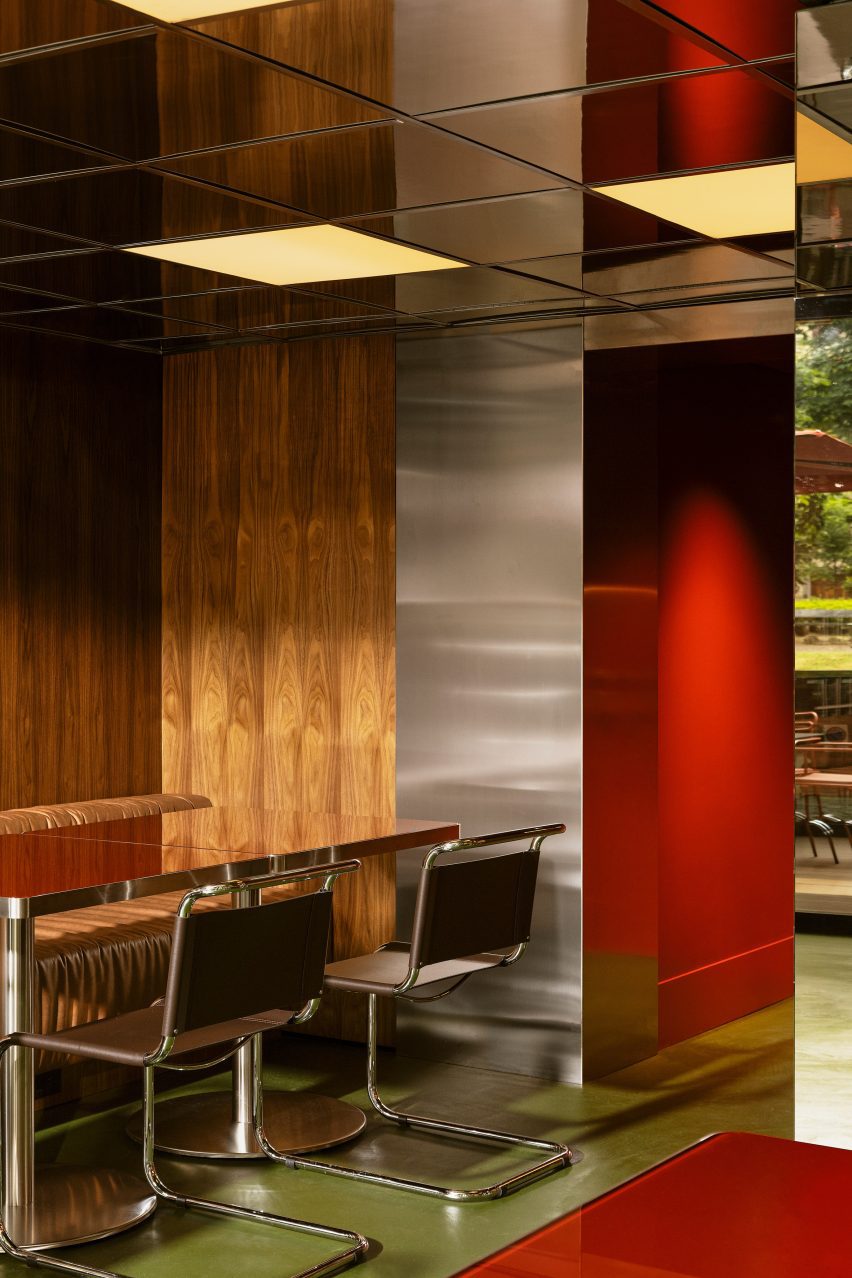
Banquette seating upholstered in fawn-coloured leather runs along the far wall, accompanied by red-topped cafe tables and brown-and-chrome cantilever chairs.
Seating for bar-goers sits within the double-height space, with more tucked beneath the mezzanine, where a lower ceiling clad in mirrored panels puts a chic spin on dropped ceilings common in offices.
The upstairs mezzanine is where the office spaces are most closely mimicked, with cubicle-like segments created by high-backed, boucle-upholstered sofas placed back-to-back.
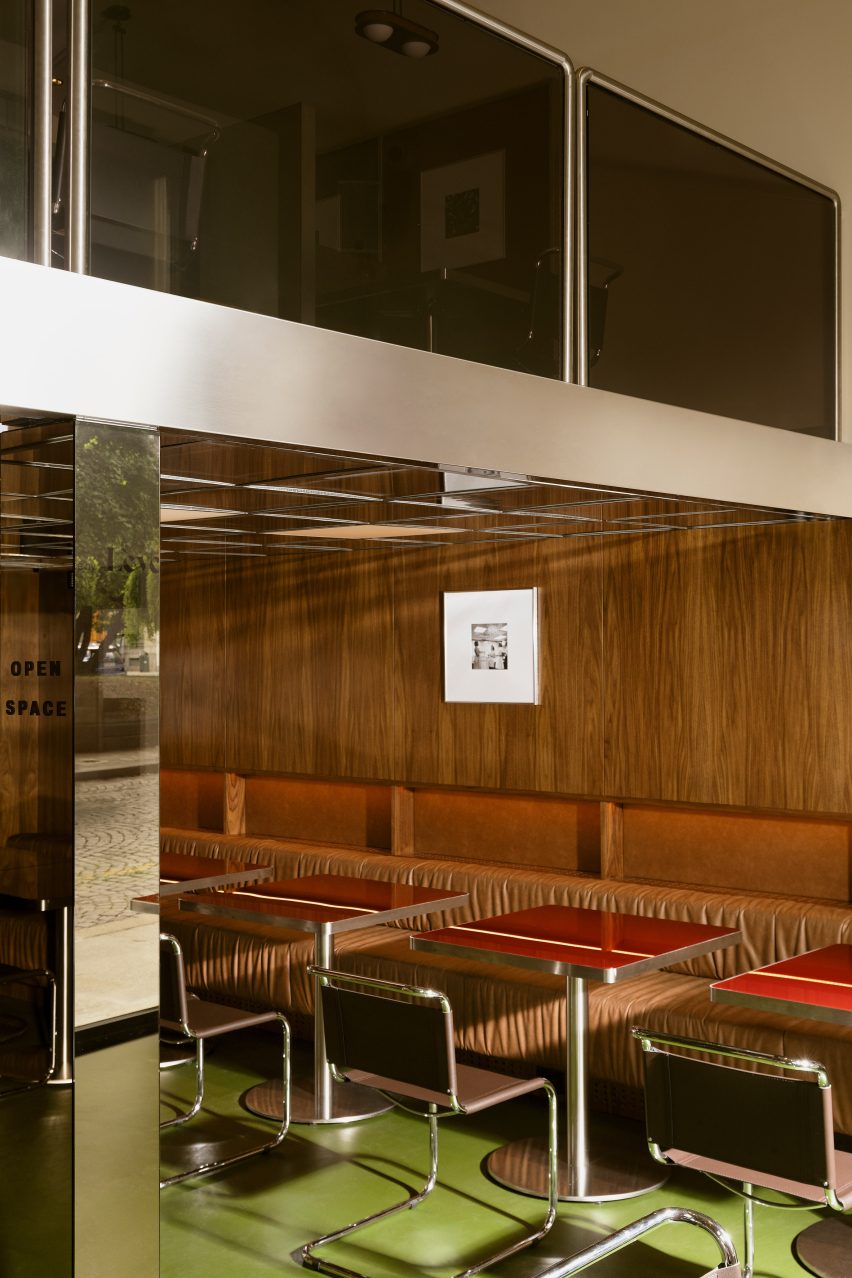
Partitions up here create intimacy for guests, rather than privacy for focused work, with the area making use of the preexisting mezzanine to create a cosy bolt-hole.
"The mezzanine introduces office-style partition elements to create a more intimate and structured atmosphere," said Fantolino.
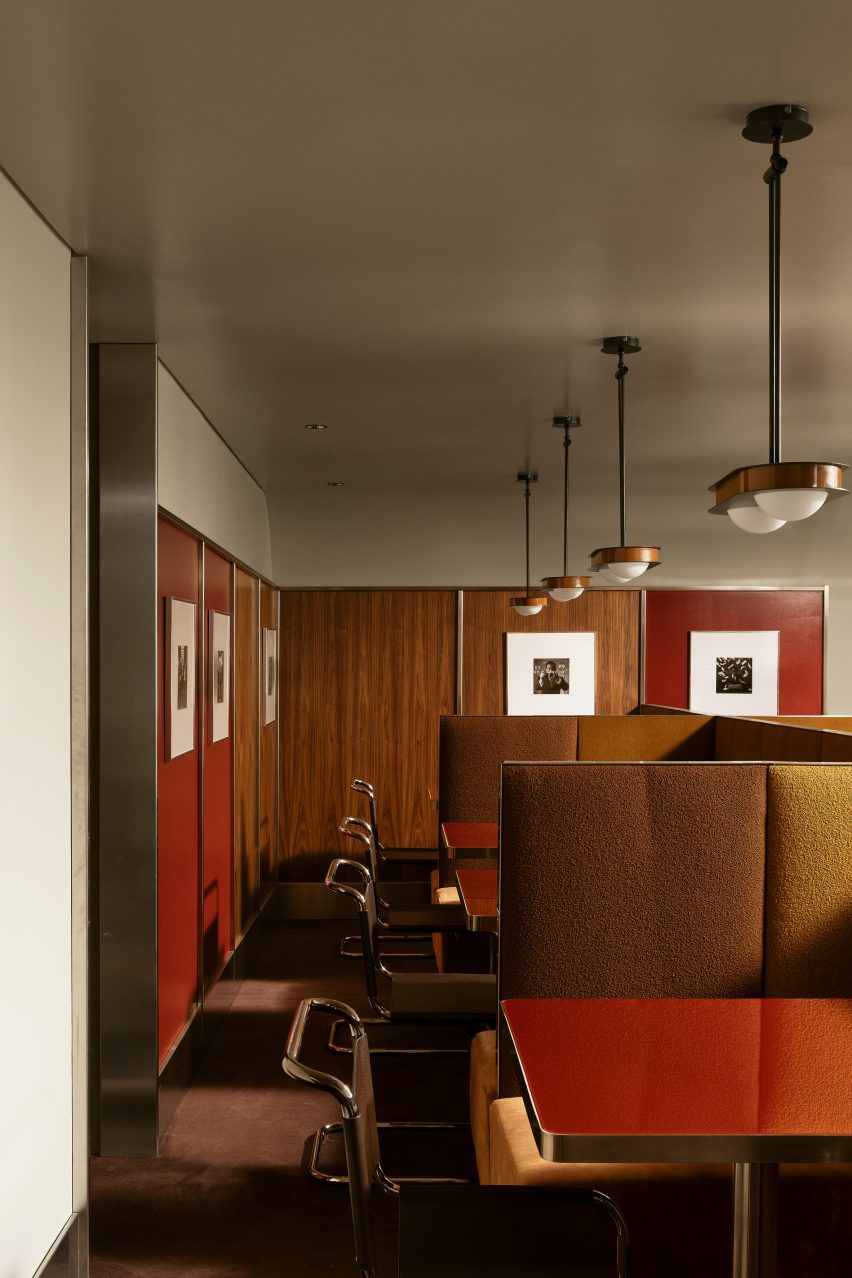
The pendant lights on the mezzanine, as well as the sconces attached to the walls beneath and the illuminated panels integrated into the dropped ceiling, reinforce the 1960s aesthetic.
The overall neutral colour palette is made more interesting by pops of green, red and mustard, as well as material contrast between flat enamel, shiny chrome and tactile leather.
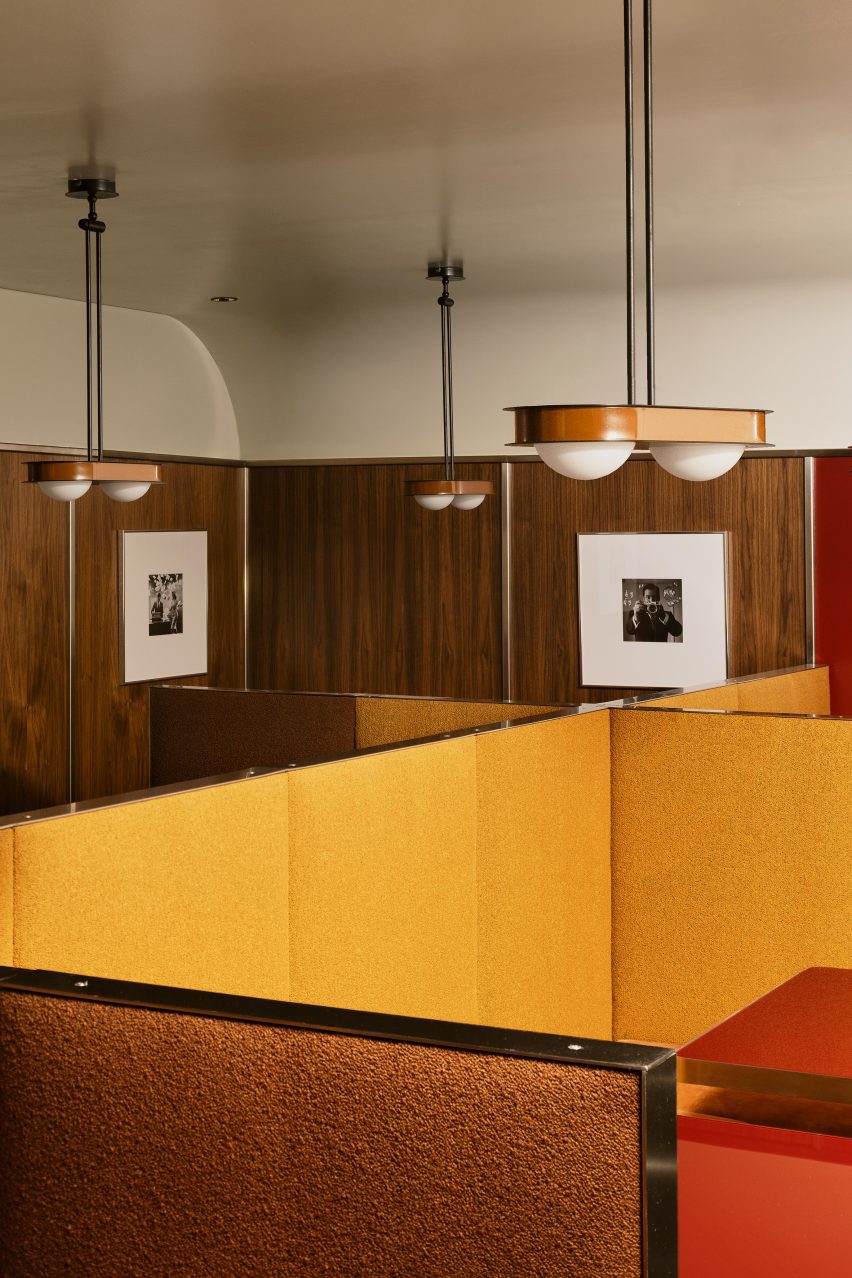
"The intention was to evoke the feeling of stepping back into the 1960s, creating an immersive atmosphere that feels almost like entering a time machine while remaining fresh and contemporary," Fantolino concluded.
Other distinctive bars published on Dezeen include a bar in Rome decorated with disembodied plaster limbs and a Hong Kong bar featuring a lime green interior studded with tiny lights.
The photography is by Luca Argenton.