


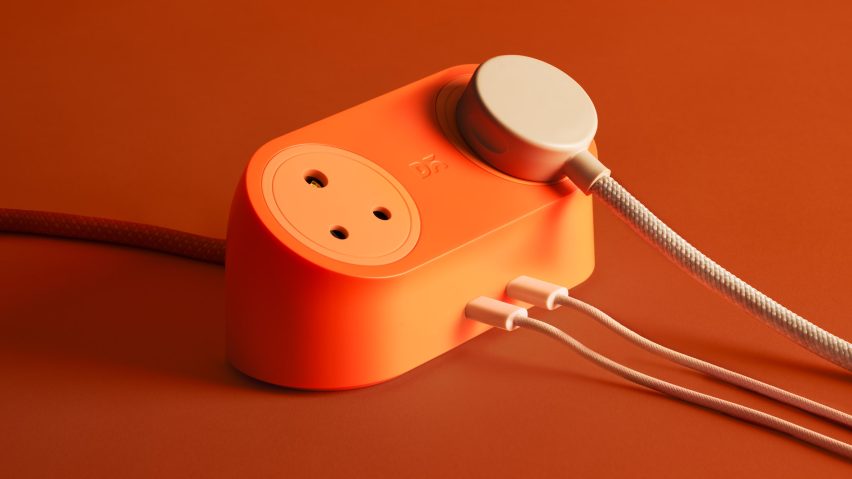
British design studio Layer has developed a family of charging products, including a dock with interchangeable modules that can be moved to wherever they are required around the house.
The studio headed by industrial designer Benjamin Hubert designed the Node and Loft devices for Indian accessories brand Daily Objects, which was keen to explore opportunities for innovative tech products.

Together, they identified multi-device charging solutions as a category that could be improved to meet the needs of users seeking a more playful and personal way to charge devices at home.
"Charging your tech is one of the most repeated interactions in daily life, yet the products that enable it are often treated as background objects," said Hubert.
"With Node and Loft, we wanted to bring clarity, flexibility and character to that experience and create a family of products to the fore, that work beautifully, feel intuitive to use, and establish a distinctive visual language for Daily Objects," Hubert said.
Having determined that most multi-device systems for charging phones, smartwatches and earbuds follow the same format of compact stands with a purely functional design language, the studio set out to develop a more personal and characterful solution.
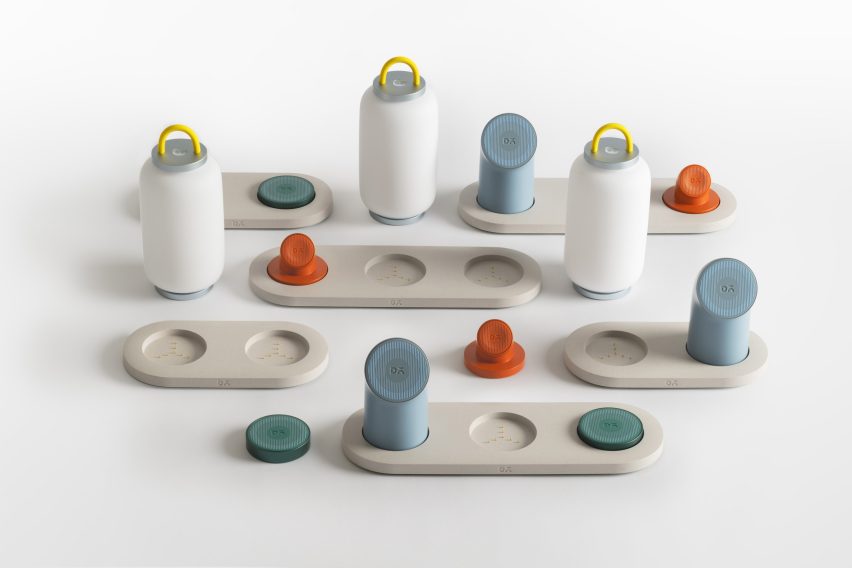
The Node charging ecosystem comprises a 2-in-1 or 3-in-1 dock that can combine with any of the four interchangeable modules: a wireless phone charger, a wireless charging disk, an Apple Watch stand and a portable lamp.
Each module can remain docked in the base or be used independently, allowing users to adapt and reposition their charging set-up by moving the modules from, for example, their desk to a nightstand or dining table.

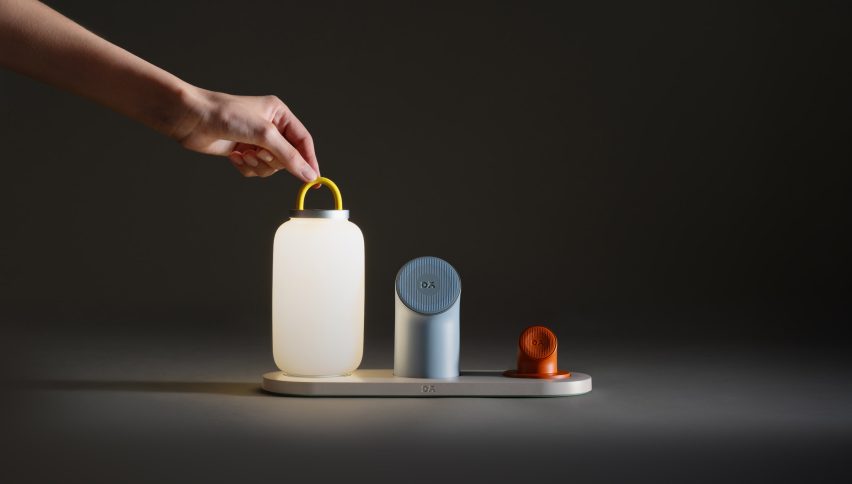
"Most multi-device charging products are built around a fixed assumption that everyone wants to charge the same three devices in the same configuration," Hubert told Dezeen.
"Node challenges this one-size-fits-all approach through a modular system that can be configured around individual needs."

The modules all contain batteries to allow for wireless use, with the phone stand and charging disk providing fast 25 Watt charging, while the Apple Watch charging stand delivers 5 Watts of wireless charging.
The portable lamp extends the ecosystem beyond charging, with its built-in battery providing up to eight hours of ambient illumination and three brightness settings.
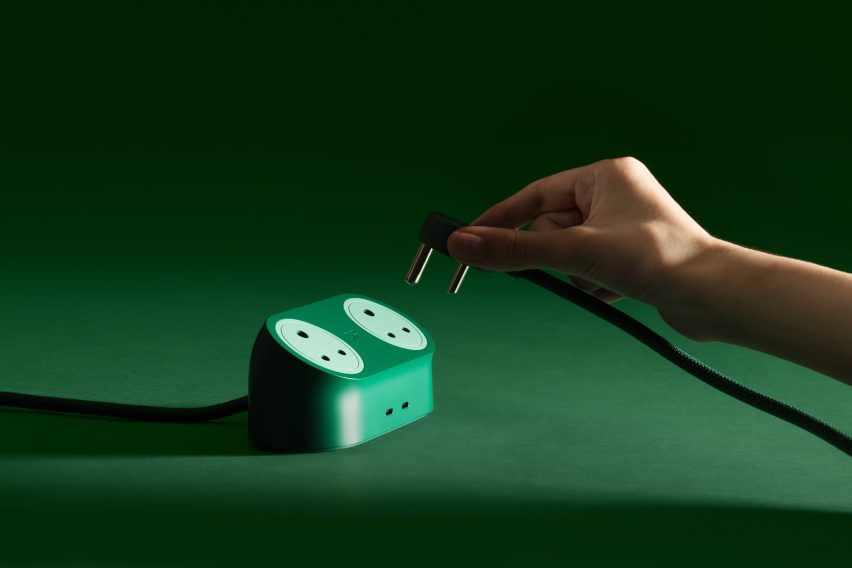
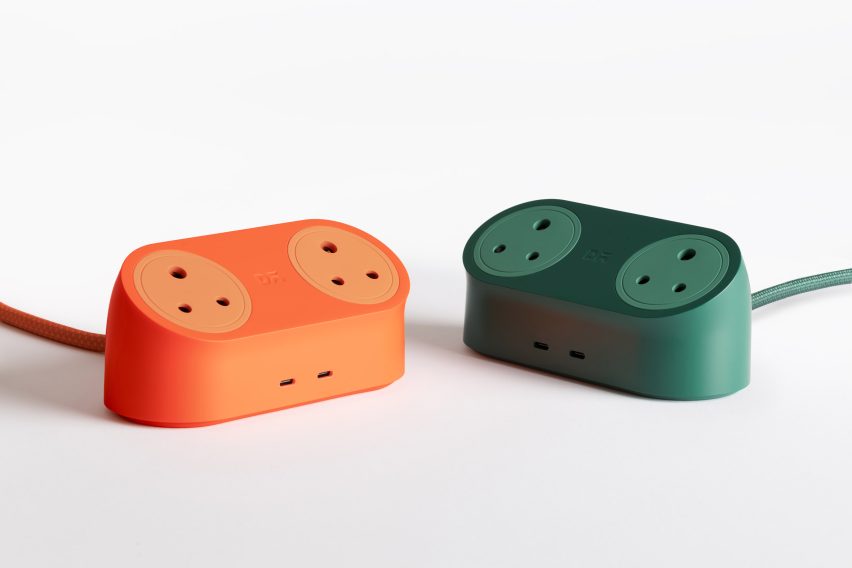
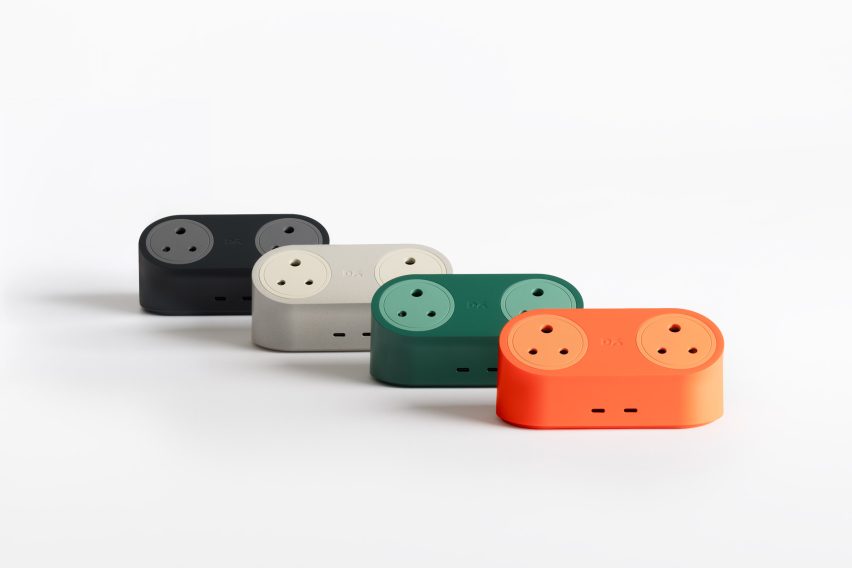
Layer also designed a charging station called Loft that provides mains power and fast USB-C charging for up to four devices at a time.
The studio opted for a sculptural aesthetic that unites the different objects and ensures they can be proudly displayed within the home or office.
Soft, playful forms, tactile materials and a considered use of colour lend the product family a more expressive and characterful aesthetic than is typically found in this category.
"Node is more playful and personal than other chargers," said Hubert, "transforming charging from a functional task into something that can be tailored to individual needs and spaces."

"We believe technology can be warm, approachable and playful," he added. "Charging is something people do every day, so those interactions should feel enjoyable and uplifting."
The collection of objects is unified by its rounded visual forms, including arched shapes that angle towards the user to present more inviting and accessible surfaces.
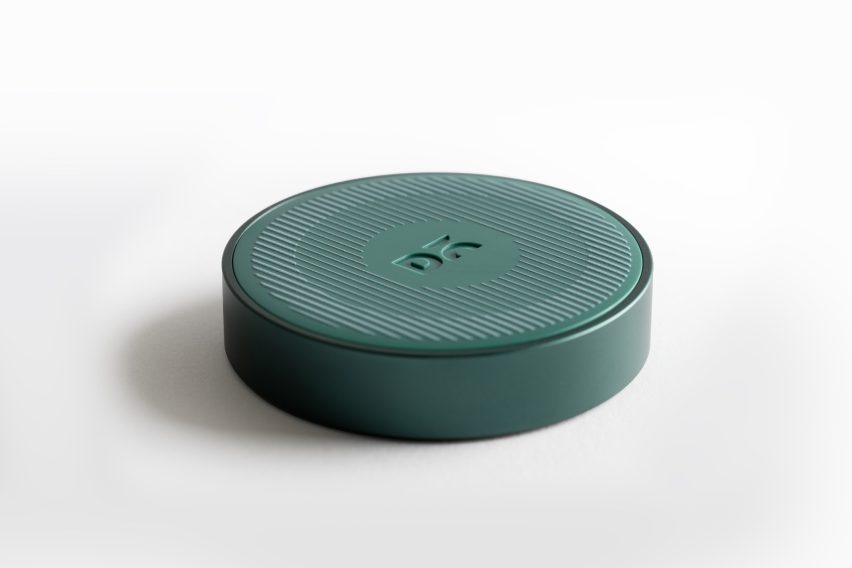
Hubert explained that the use of a circular motif to signal the charging point is rooted in the universal visual language of wireless charging and the iconography used in Apple's product ecosystem.
The docking surfaces are made from rubber with a custom-designed pattern that helps to indicate where devices should be placed while introducing a signature aesthetic detail.
The choice of soft-touch finishes and rubber in a range of versatile colours helps to distinguish Node and Loft as a friendlier and more personal alternative to typical consumer electronics.
"The matte surfaces are pleasant to handle, easy to grip and help soften reflections and highlights, creating a calmer and more tactile experience," claimed Hubert.
"Across the collection, the materials and finishes work together to create a softer, more human-centred relationship with technology."
The products were developed with battery management, thermal performance, charging efficiency and safety in mind, while ensuring a compact form factor that allows for easy portability.
The Loft charging station was designed specifically for the Indian market, but could be adapted in future for use in Europe and North America, while the Node system is universal and supports Apple devices regardless of location.
The project is typical of Layer's human-centred approach to technology and industrial design, which it applies to work for global brands such as Nike, Sony, Samsung and Pepsi.
The studio's previous projects include a series of futuristic internet routers for Deutsche Telekom, a hardware wallet for storing cryptocurrency and a pair of smart glasses that can be used to stream immersive video.
The photography is courtesy of Layer.