


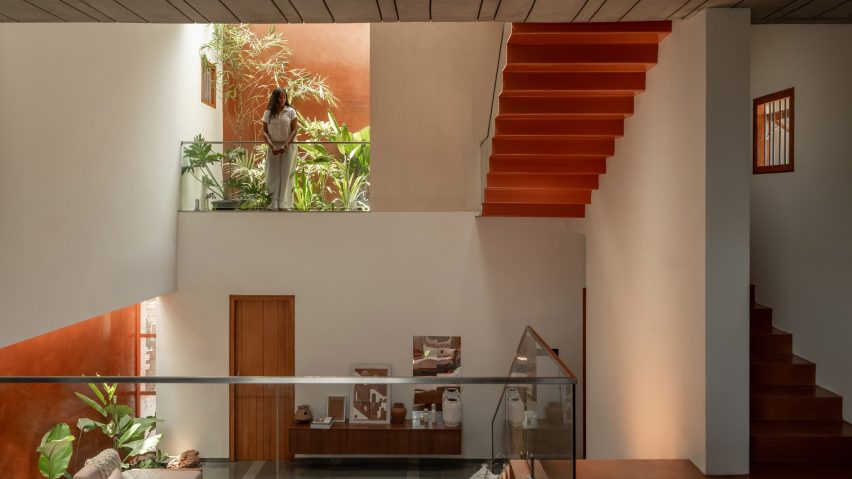
Perforated steel screens filter light into this multi-generational house in Coimbatore, India, which architecture studio SpaceDNA completed with an oxide-coated staircase that steps around a triple-height void.
Named Splitscape Residence, the house occupies a 113-square-metre site and is organised across split-level floors and mezzanines around a triple-height living space.

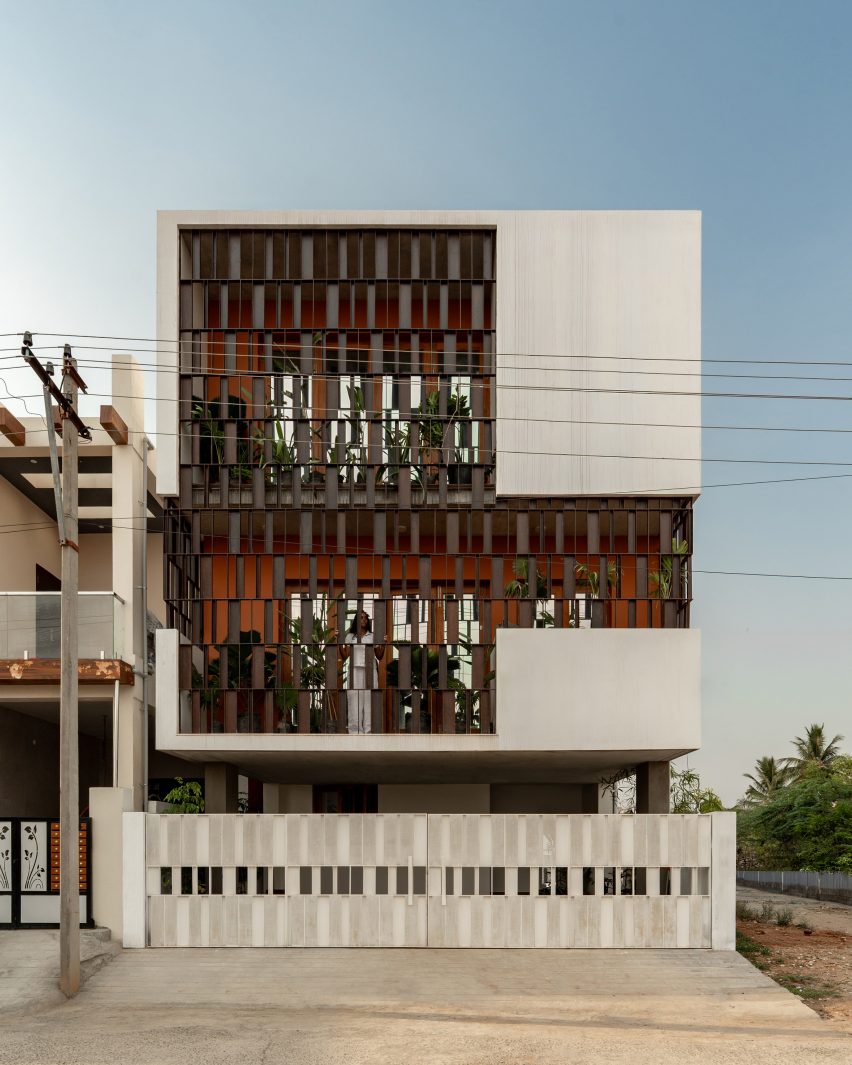
SpaceDNA designed the three-bedroom family home for the client, their two sons and elderly parents, whose brief called for an open, light-filled home with an accessible ground-floor bedroom and parking for cars and bikes.
According to the studio, the ground-floor grandparents' suite and parking space occupy almost 70 per cent of the footprint, requiring the expansion of the house vertically.
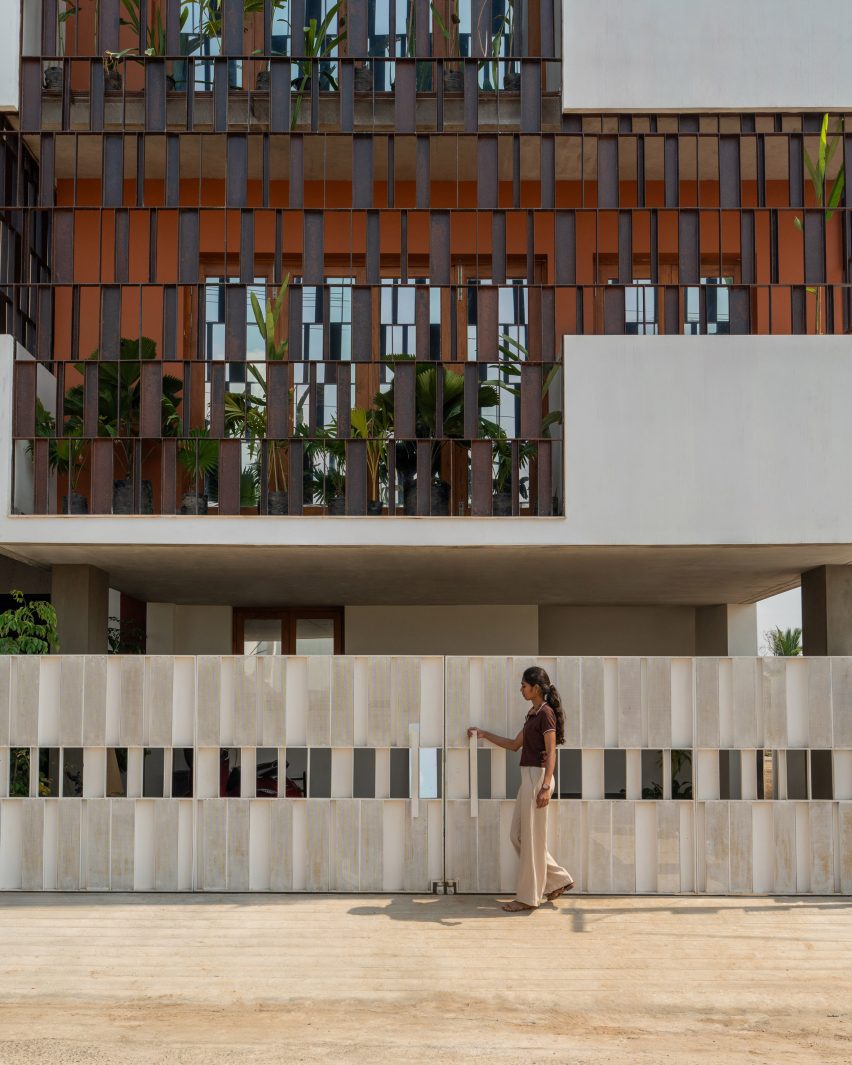
Splitscape Residence features a weathering-steel jaali that helps shade the south-facing building from direct sunlight while allowing for ventilation and a sense of openness.
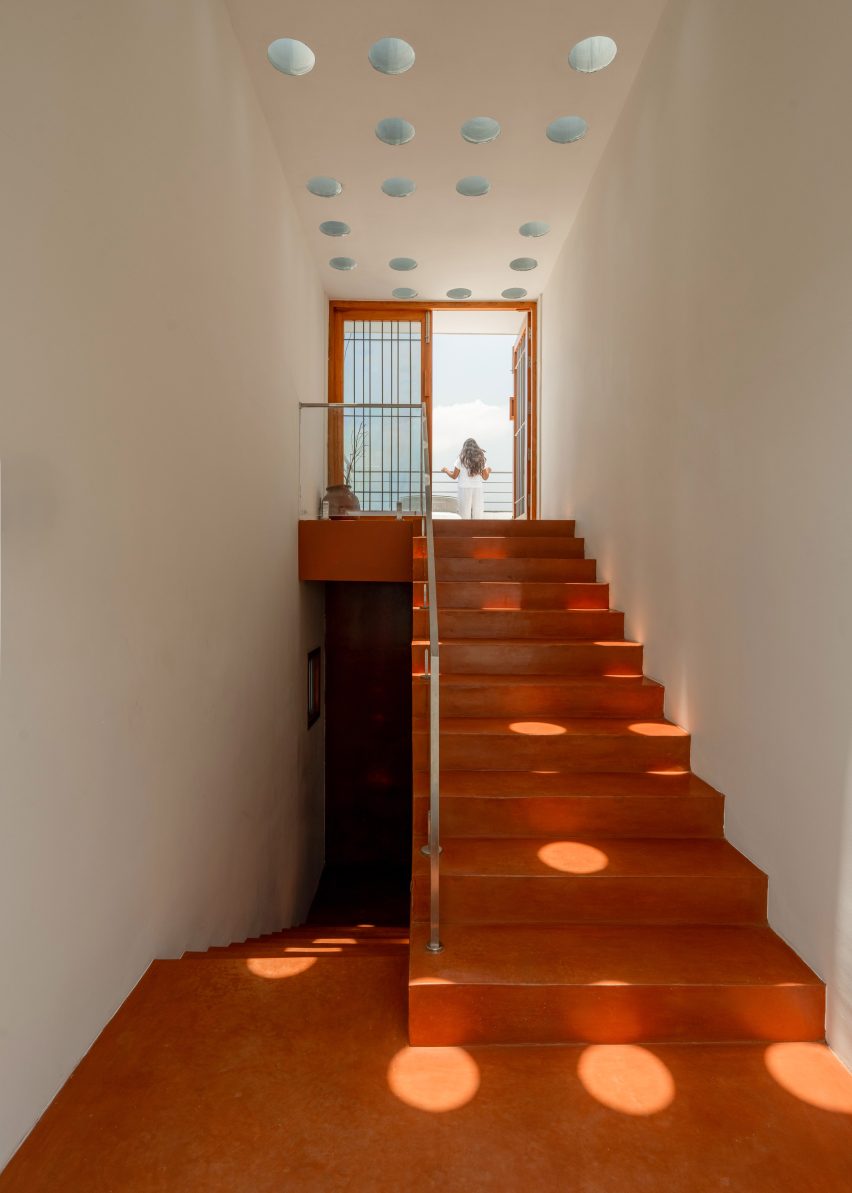
Chosen for its warm, earthy character, the perforated steel screen was designed to cast shifting patterns of light across the interior throughout the day.

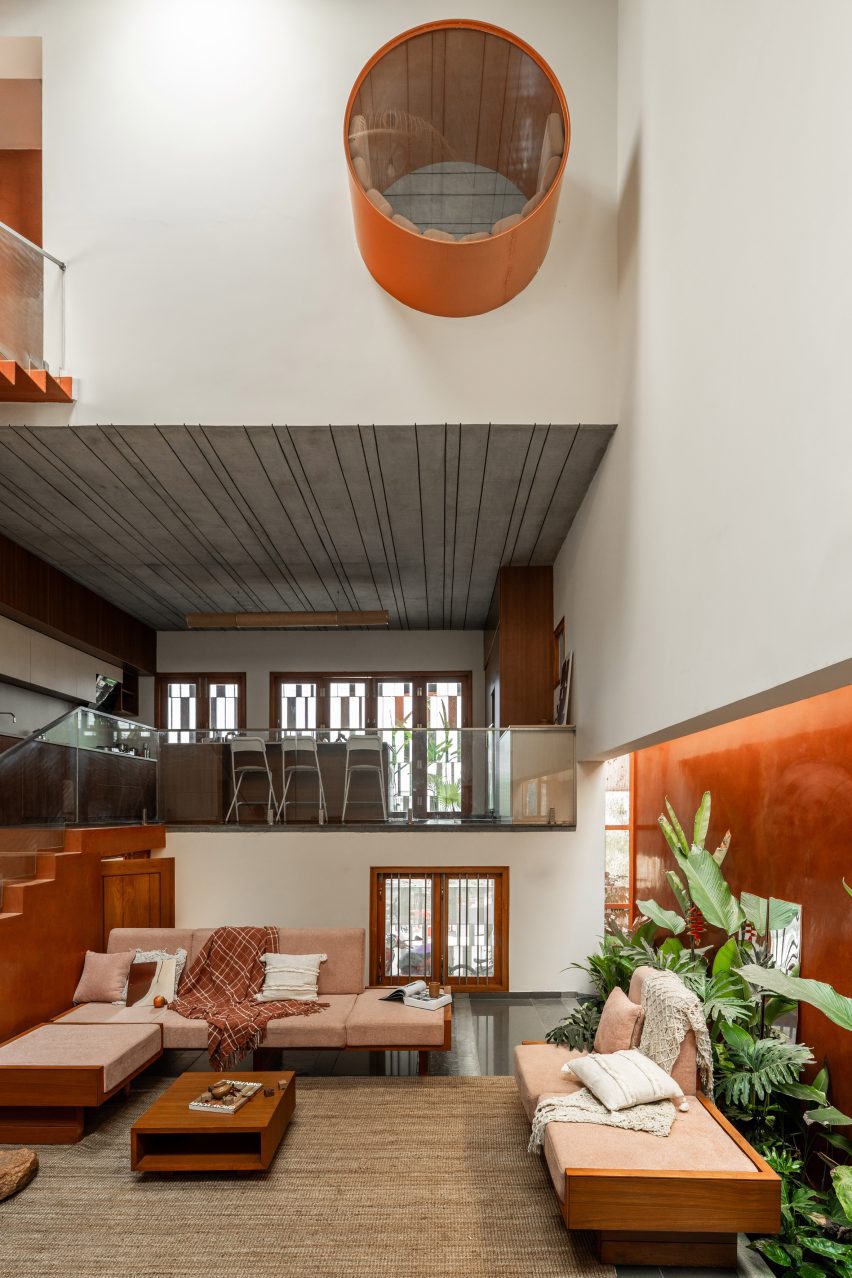
To maximise communal space and introduce volume, SpaceDNA placed a triple-height living room at the heart of the plan, with a narrow side courtyard bringing additional daylight and ventilation.
A geometric staircase connects the home's staggered levels, which are offset by 1.5 metres to maintain visual connections between spaces.

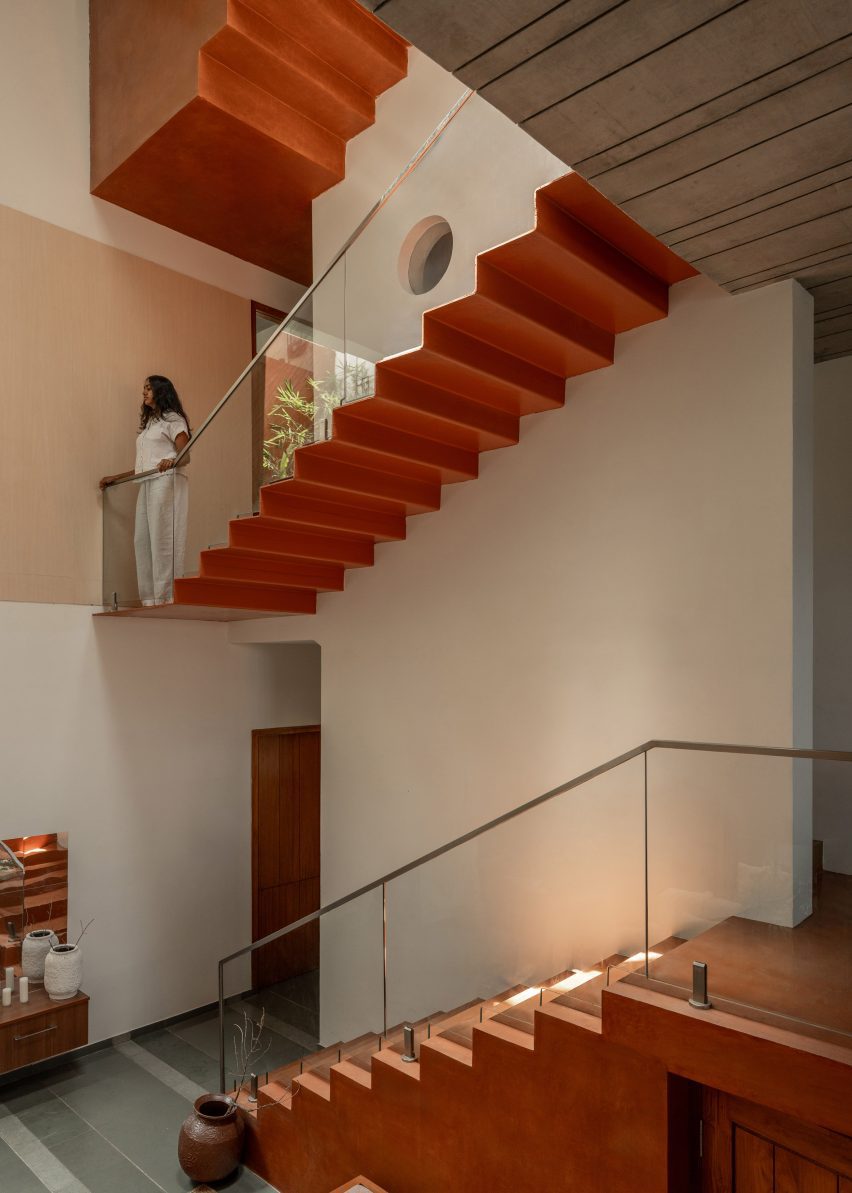
Finished with an oxide coating, the staircase's rust-orange tones bring warmth and contrast against the white-plaster walls and otherwise pared-back palette.
"We treated the staircase as a sculptural object and the organising device of the split-level house, rather than simply a means of circulation," SpaceDNA founder Gowtham Srinath told Dezeen.
"The upper and lower floors mirror one another, appearing as though one has been carved from the other, while the central flight is crafted from a folded eight-millimetre mild steel plate, lending it a light, almost floating presence," said Srinath.
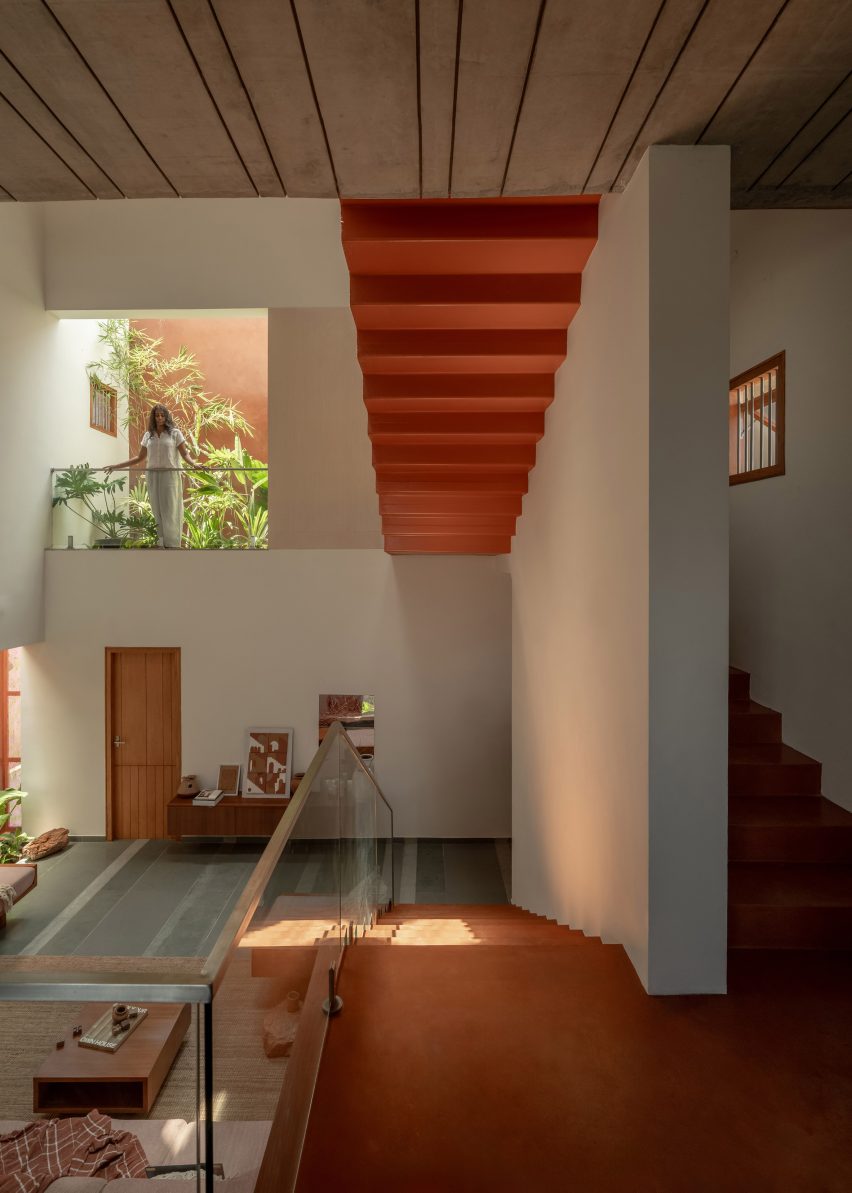
Opting for a restrained material palette, the studio combined Kota stone flooring with exposed concrete ceilings throughout the interior.
"The interior design was intentionally kept minimal so that spatial experience, light and materiality could take centre stage," said Srinath.
"Kota stone was used for the flooring in a pattern of single, double and triple modules. Each module is finished differently – polished, leathered and rough – to offer a distinct tactile experience."

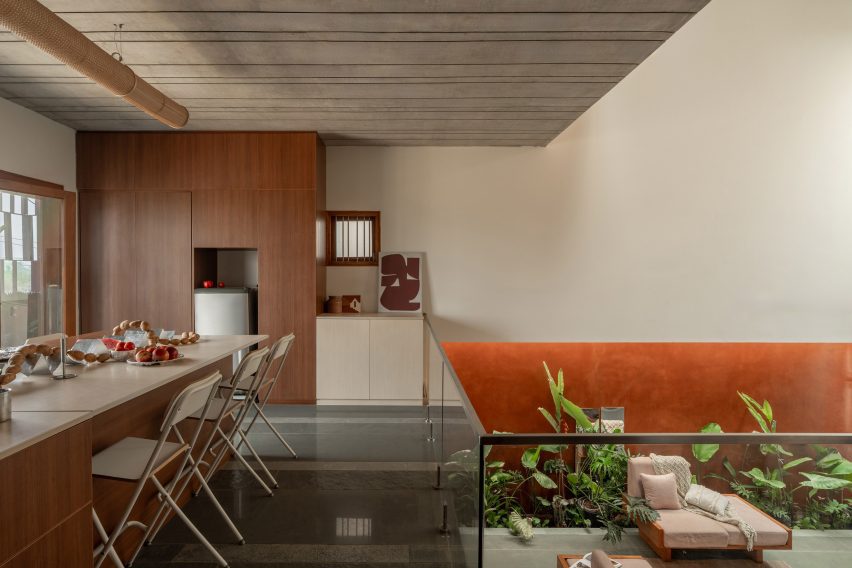
On the first mezzanine level, the kitchen-dining area overlooks the living room to one side and opens onto a balcony on the other.
The home's private spaces are located on the upper levels, including the children's bedroom and bathroom on the first floor.
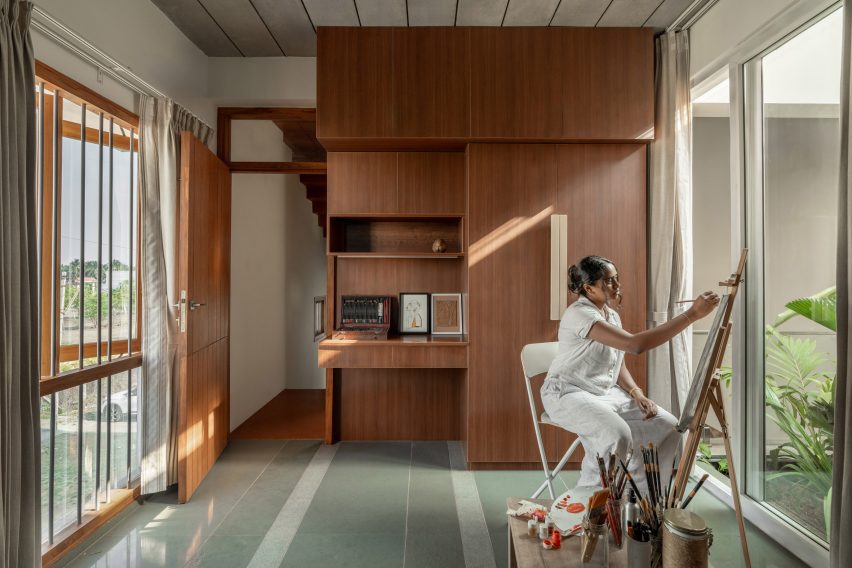
Internal courtyards and ventilated skylights draw daylight deep into the plan while supporting ventilation and passive cooling.
Traditional brick masonry walls were laid in a rat-trap bond to reduce material use and improve the building's thermal insulation.
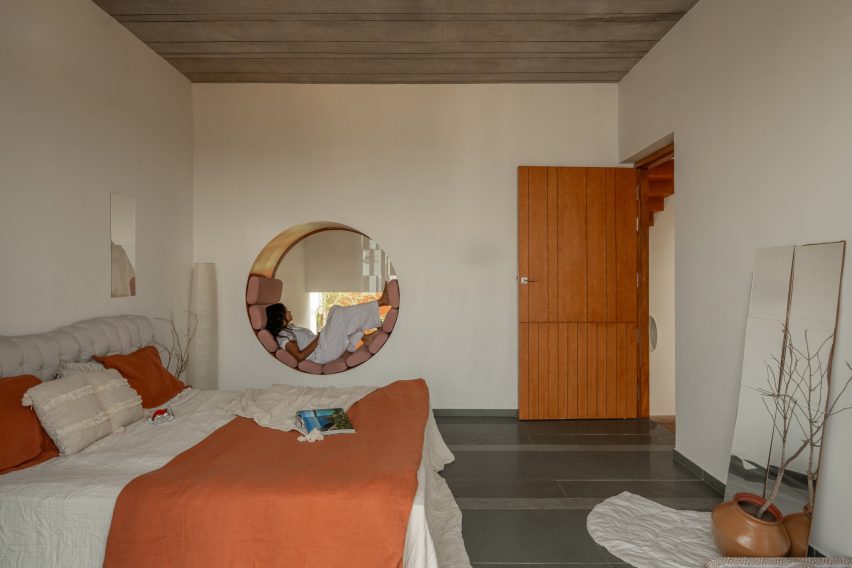
On the upper mezzanine level, the main bedroom is complete with a walk-in wardrobe, ensuite and balcony. It features a circular bay window overlooking the triple-height void.
Space for a future fourth bedroom was also incorporated on the second floor. The home's top level opens onto a roof terrace.
SpaceDNA is an architecture studio based in Bengaluru, founded by Gowtham Srinath in 2021.
Other houses in India recently featured on Dezeen include a home by Kaushal Tatiya Architects with curved brick balconies designed to resemble anthill chambers and a house with sliding glass doors overlooking a cardamon plantation in Kerala by Mindspark Architects.
The photography is by Studio f/8.