


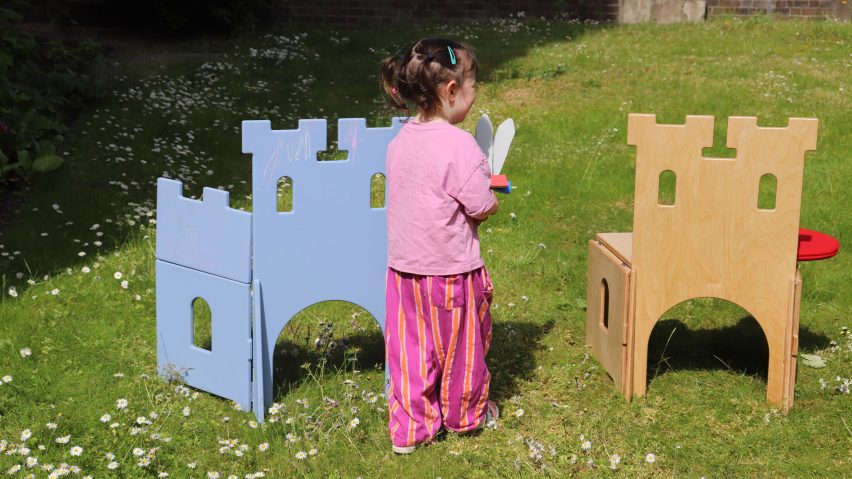
Only two moves are needed to transform this children's seat into a rudimentary castle, in a project that has earned Irish furniture designer James Murphy one of the top prizes at London's annual New Designers showcase.
In its most compact form, the Casul chair resembles a miniature throne rendered in plywood. But clever timber joints and kid-safe hinges allow the whole thing to unfold into an abstract impression of a castle, which children can use to construct different imaginary worlds.

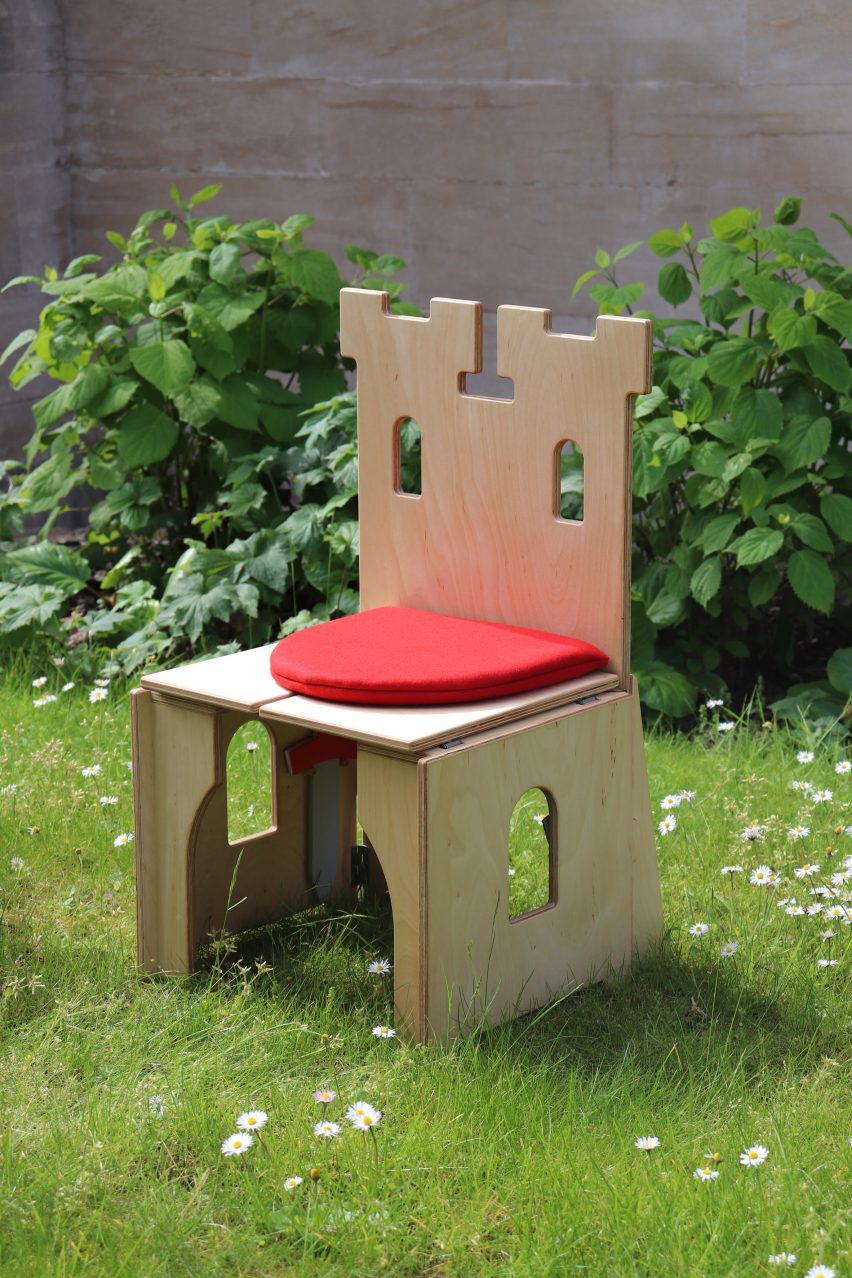
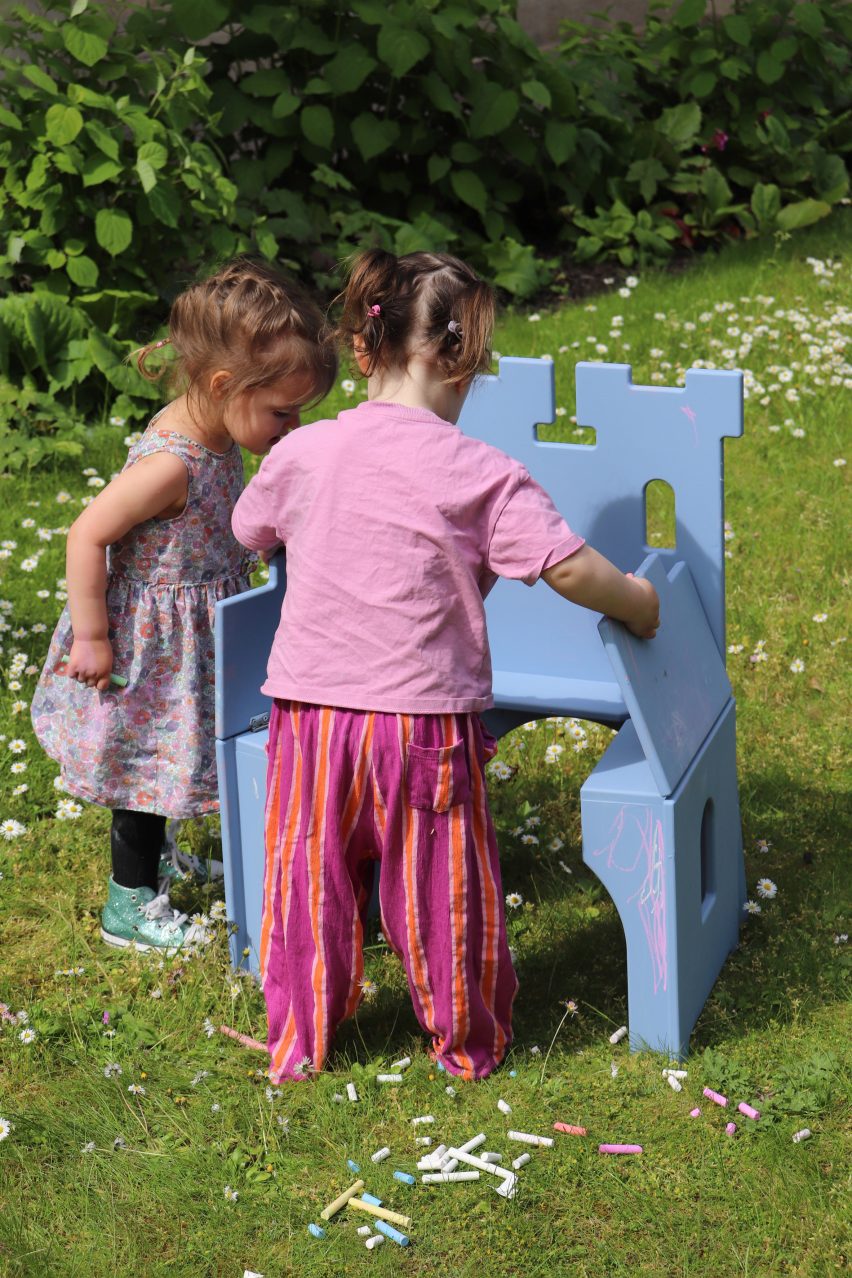
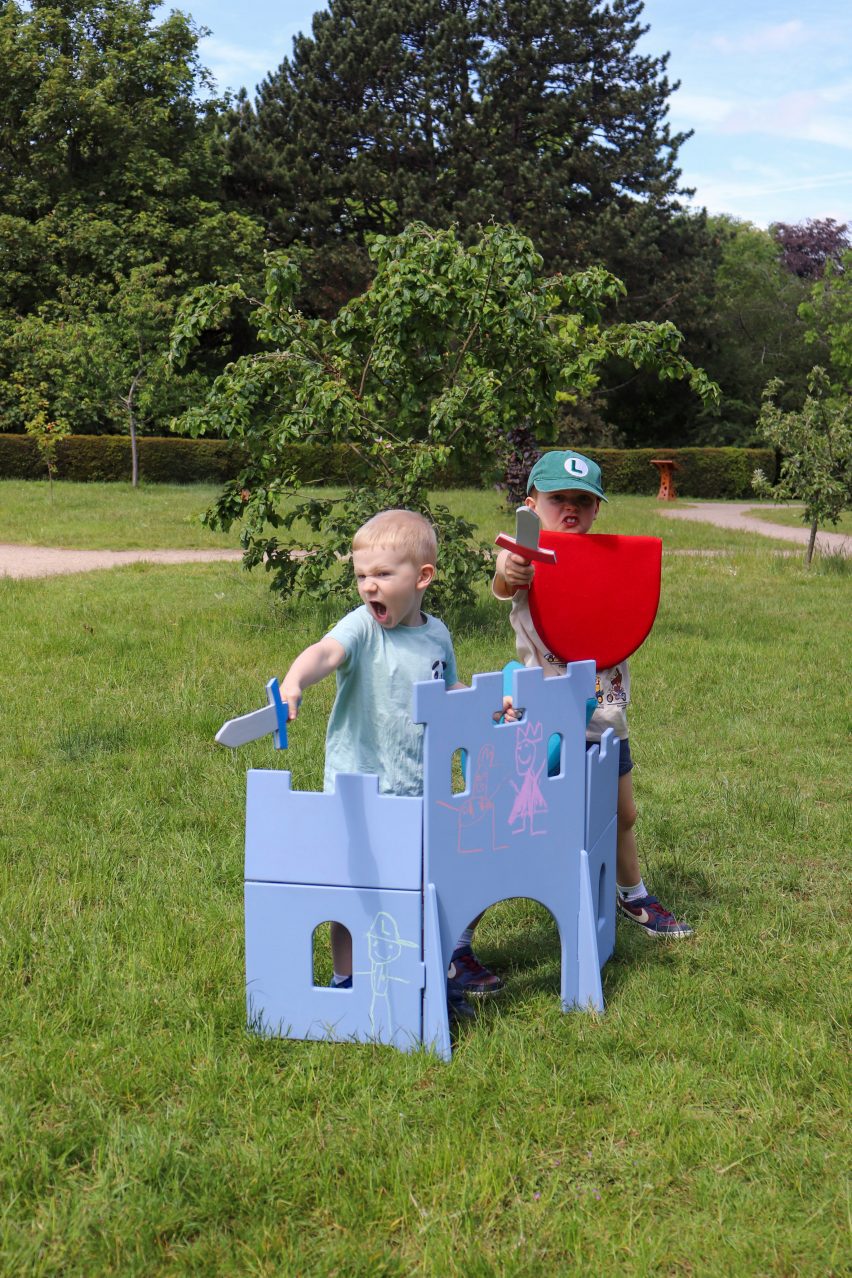
One version of the chair is finished in chalkboard paint so it can be redecorated at will. Another version allows kids to discover foam swords hidden under the seat and cushions that transform into handheld shields.
Murphy conceived the pared-back designs as part of his final-year project at Nottingham Trent University to encourage imaginative, analogue play that can happen completely without the help of parents.
"It's all designed to give kids the agency to use it completely unsupervised," he told Dezeen.
Having started out as a furniture designer, Murphy only became interested in children's design after completing a work placement at toymaker Lego while at university.
"Designing products for children is just really fun and rewarding," he explained. "And for my major project in my final year I wanted to marry my background in furniture with this newfound area of design."
Informed by the transformable children's furniture created in the post-war years, such as Hans Brockhage's Schaukelwagen, he set out to design a modern version that could help to lure children away from their screens.
While the 1950s Schaukelwagen turns from a moulded plywood rocking chair into a toy car, Murphy decided on the promisingly gender neutral setting of a castle that could serve a banquet of different functions.

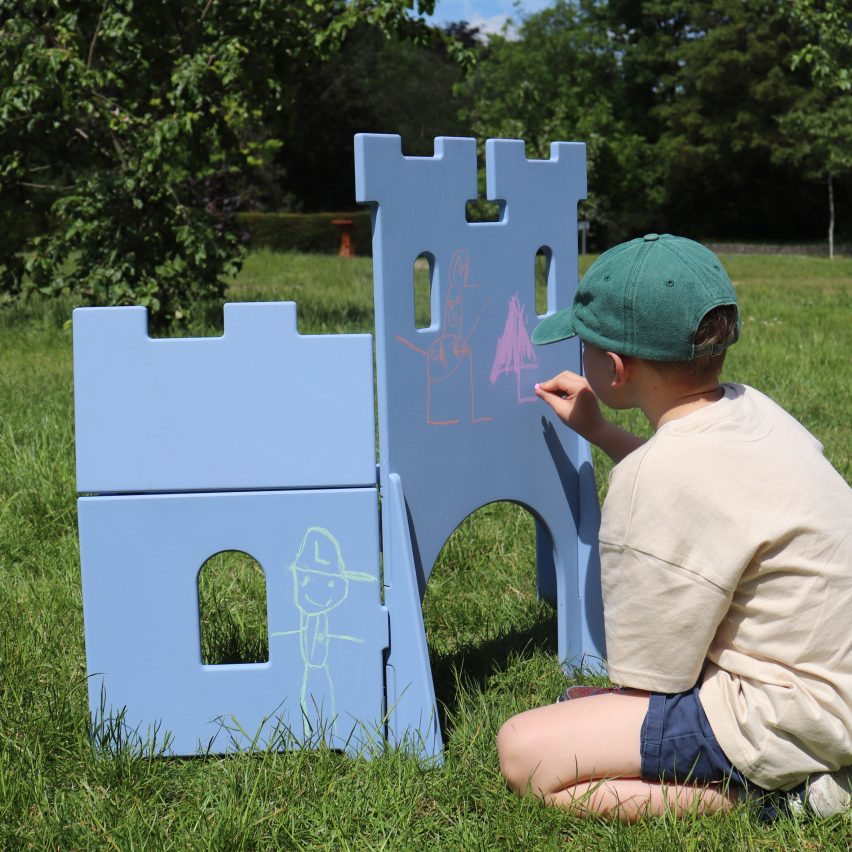
To play test the designs, Murphy roped in his tutors' children, both boys and girls, who variously imagined the castle as a unicorn cafe, besieged fort and Bowser's Castle from the Super Mario games.
The play tests also spawned crucial new features such as the chalkboard paint, after one girl wanted nothing more than to draw all over the clean plywood design.
"Kids are a really good user group because they will tell you exactly what they think," Murphy joked.
The trickiest part of the design proved to be the unfolding mechanism, which had to be both instinctive and safe to operate for kids as young as three.
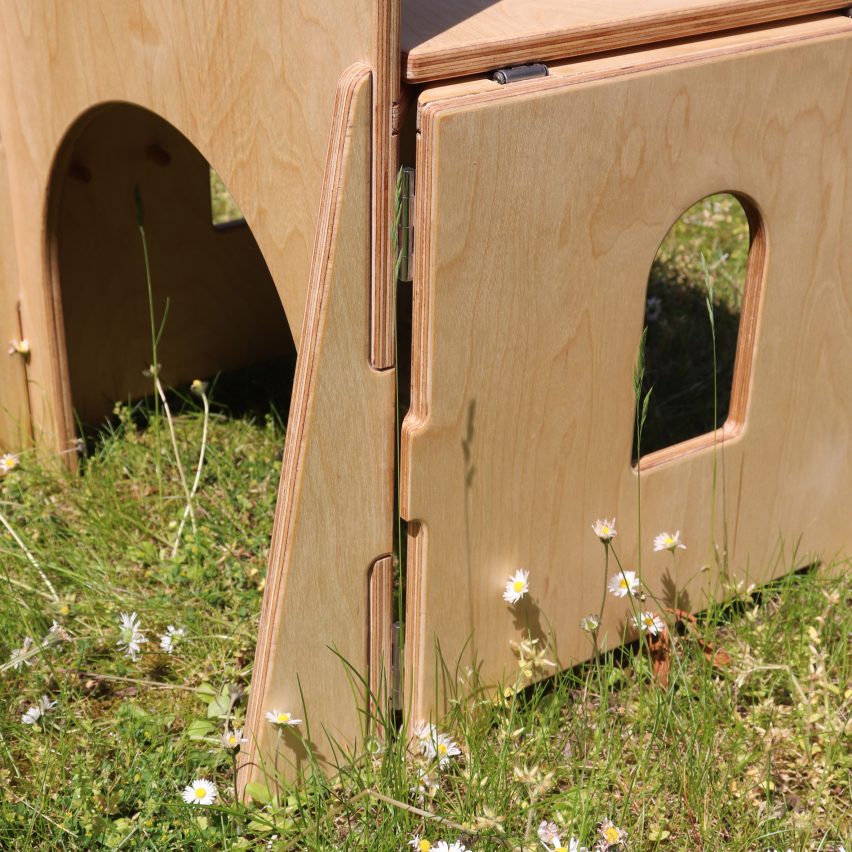
Key to this are the jigsaw joints cut into the wooden seat panel. These interlock to keep the chair together while in use but can be easily unfolded to serve as the castle's fortifications, lining up neatly with the windows cut out of the backrest.
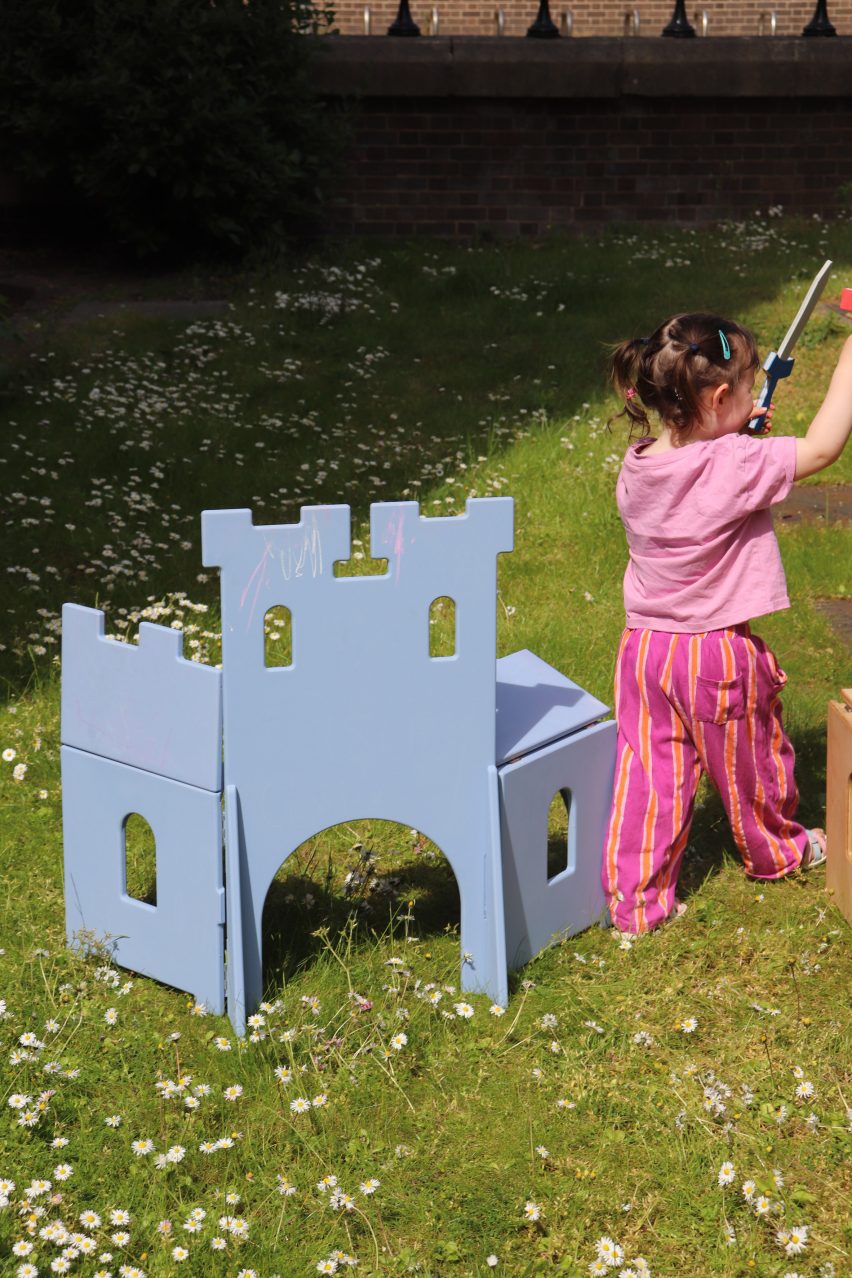
Specialised friction hinges hold the seat panels in the desired position and prevent them from trapping little fingers.
Another set of hinges allow the legs to fold out to the sides and open up the whole chair like a doll's house.
"The moving elements were a big focus," he said. "I tested lots of different hinges. I didn't even know there were that many types of hinges, but I tested them."
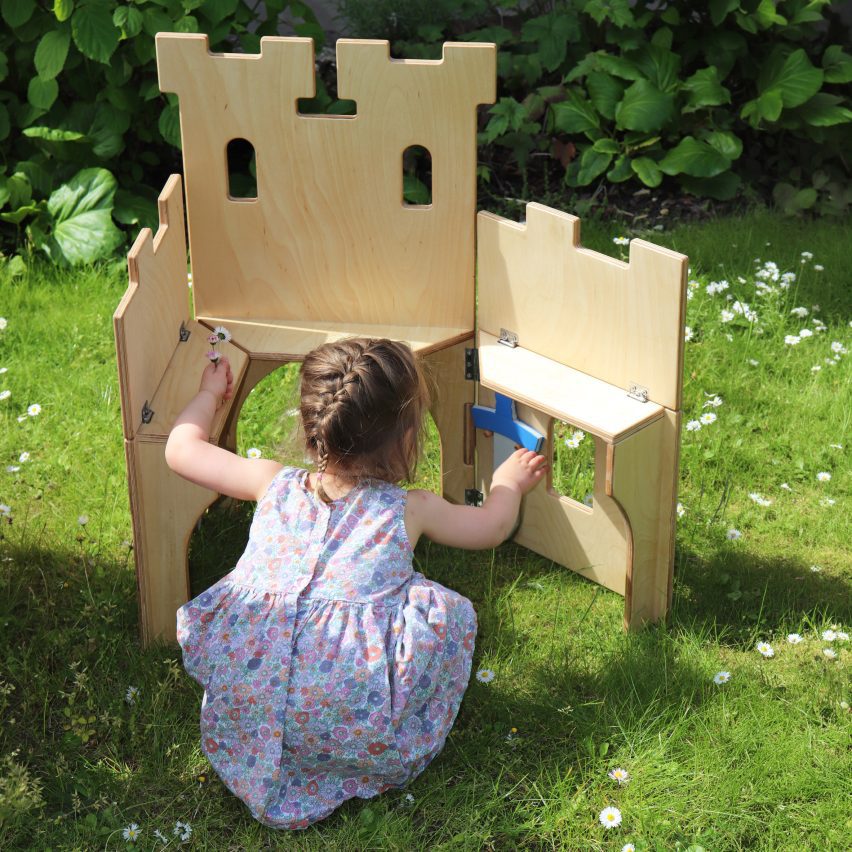
Once unfolded, the panels that support the seat can be repurposed as shelves, allowing kids to transplant their favourite dolls and figurines into whatever setting they have conjured up.
The set itself is too heavy for kids to move or topple on their own – especially supported by the two triangular buttresses at the back. But the larger window cut-outs in the legs double as conveniently parent-sized handles.
For the sake of affordability and commercial viability, all of the chair's components can be CNC machined out of a single 15-millimetre sheet of plywood, with one sheet yielding up to three chairs.
One furniture maker who is already convinced about the strength of the design is Habitat, which awarded Casul its Future Design Award at this year's New Designers – the UK's annual showcase for graduate design.
"James presented a thoroughly considered project that consistently put the end user first," said Habitat head of buying Georgina Dawson. "We were particularly impressed by the way he balanced playfulness with functionality."
Other playful children's furniture recently featured on Dezeen include Naoto Fukasawa's play sculptures and puzzle-style furniture that can be tailored to meet the diverse needs of autistic children.