


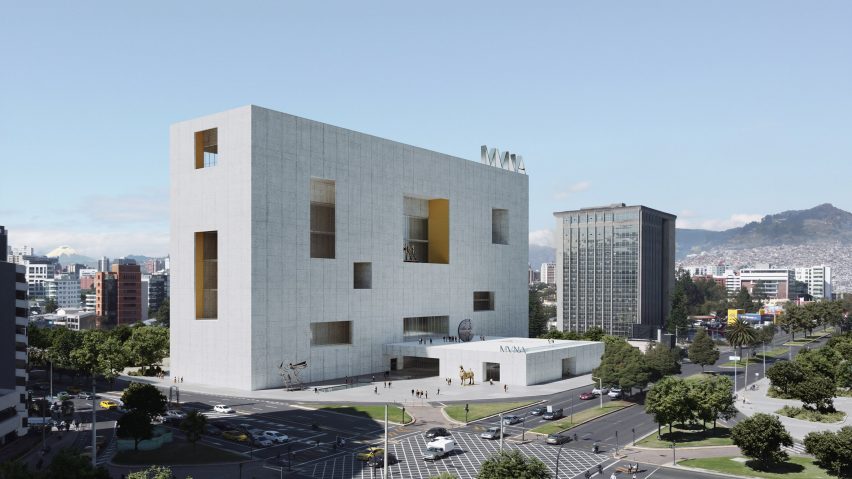
A winning design for a new National Museum of Ecuador building in Quito by Spanish outfit Studio Alberto Campo Baeza and local studio MAODA has been called back by the government, with the studios claiming the move "breaks the transparency and integrity of a public competition".
The swift change in direction on the part of the government stems from an online petition that generated 20,000 signatures. The proposal drew the ire of Ecuadorians who criticised the scheme's scale, block-like appearance, and an apparent incongruence with the country's "national identity".
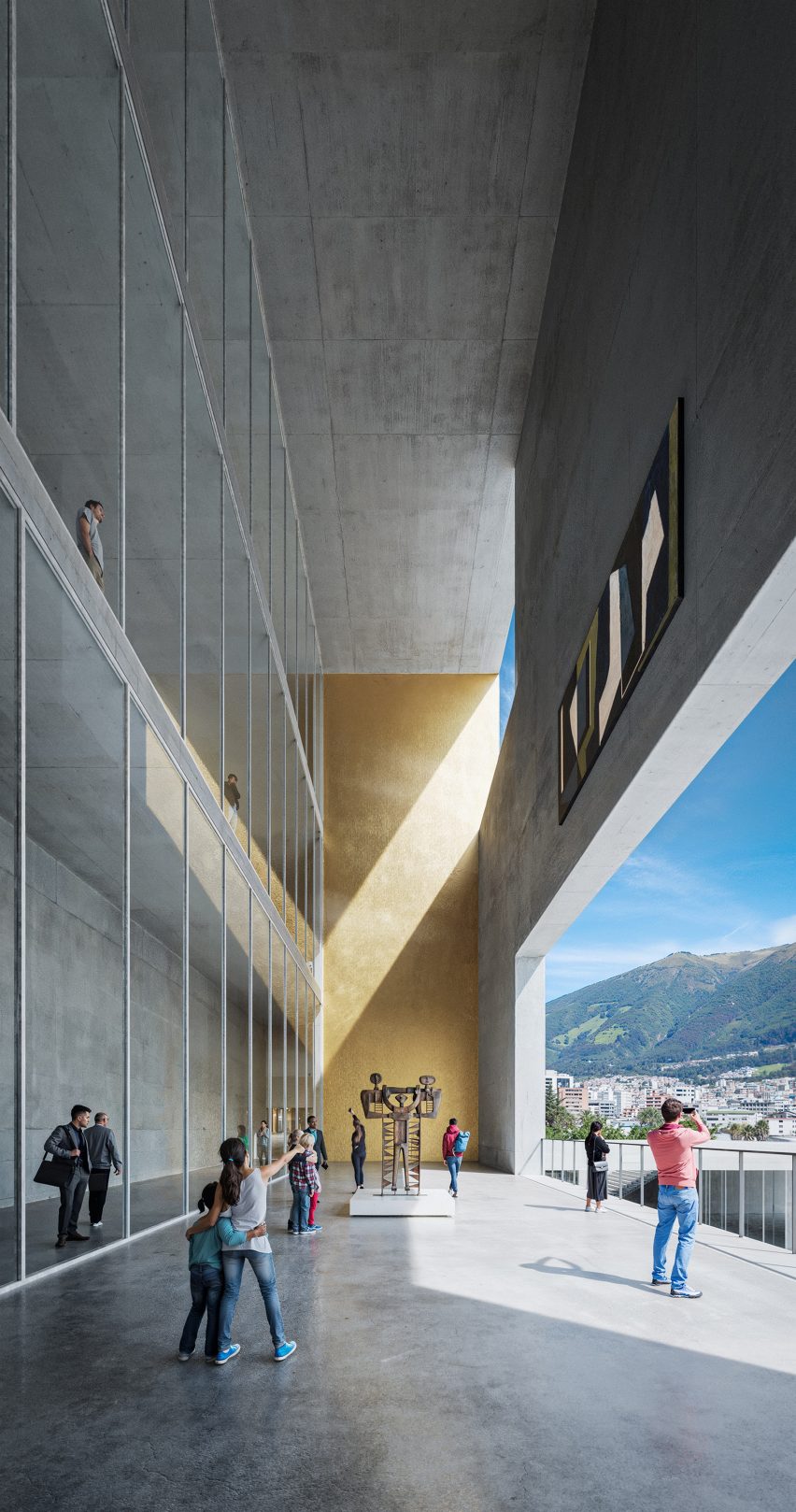
Studio Alberto Campo Baeza (Campo Baeza) and MOADA's concept established a relocated National Museum of Ecuador (MuNA) as an anchor to La Carolina Park with a cubic volume featuring seven vertically-arranged courtyards. Its programme was united under the theme Echoes of the Sun.

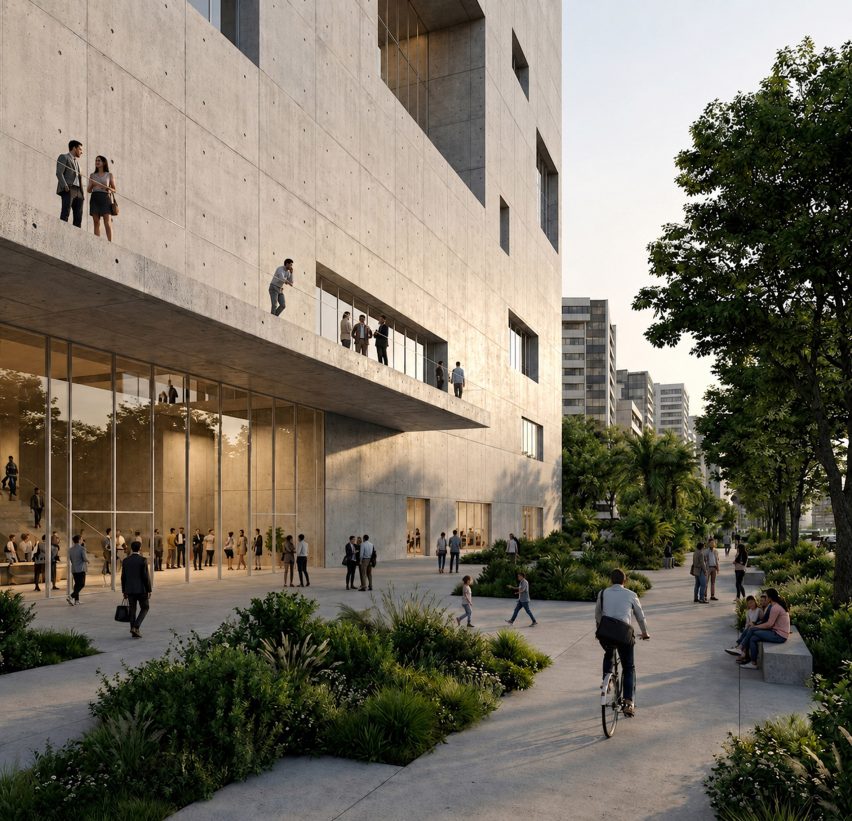
The design, which encompassed 36,000 square metres and was meant to house a total of 1.4 million heritage objects, was described by the team as a "vertical box where light and the sun take centre stage. A true box of light and shadow that opens out onto the city and the imposing Andean landscape".
Now, responding to the will of petitioners, the ministry has said all 17 of the original finalists will compete once again in a new process to be decided before the project's anticipated 2027 groundbreaking.
"Not what Ecuador needs"
"The proposed design for the National Museum is not what Ecuador needs, especially Quito. As minister, I fully support this decision, because I share the conviction that the project must respond to the sentiment of the city and be worthy of what Quito and the country deserve," Ecuador's Ministry of Transportation and Infrastructure Roberto Luque said in a statement posted to X, originally in Spanish.
"The Museum is a promise that we will not stop fulfilling. But we must fulfil it with empathy for the city and its needs. Quito and the country's culture deserve it."
In a joint response published on Instagram, Campo Baeza and MAODA advanced their own position under the title In Defence of Public, Free and Open Architectural Competitions. It argues against being locked out of a public debate, citing analogous cases in the development of the Sydney Opera House and Guggenheim Museum in Bilbao.
"[Those projects] were enriched by this debate and are today part of the landscape and the immemorial heritage of those cities," it reads.
"We have not been allowed to participate in the citizen debate"
"In the case at hand, this debate should have served to improve the project, and from Campo Baeza and Maoda, an attitude of open listening and dialogue has been shown from the very first moment. However, we have not been allowed to participate in the citizen debate, nor to implement the improvements proposed to us by the competition jury."
"This procedure breaks the transparency and integrity of a public competition process whose rules have been published and explicitly accepted by all participating teams."

The since-rescinded MuNA scheme had been selected ahead of an entry from the split Spanish-Ecuadorian team MCM+A, the second-place winner, and a design from the Japanese duo SANAA, Estudio A0, Taller Capital Landscape, Caá Porá Arquitectura and Jerome Haferd Studio, which came in third.
Finalist proposals from BIG, Rafael Moneo, Mario Cucinella, Rafael Viñoly, OMA, and SOM are among the others now vying to be considered as part of the new decision.
The original competition itself drew a total of 148 submissions. Former Princeton School of Architecture dean Alejandro Zaera-Polo was one of five architects who served on the eight-member jury.
Other recent news from Ecuador includes plans for a ceramics-inspired Kengo Kuma skyscraper design and a completed art school project from Studio Blur that was informed by Le Corbusier.
The imagery is courtesy of Studio Alberto Campo Baeza