


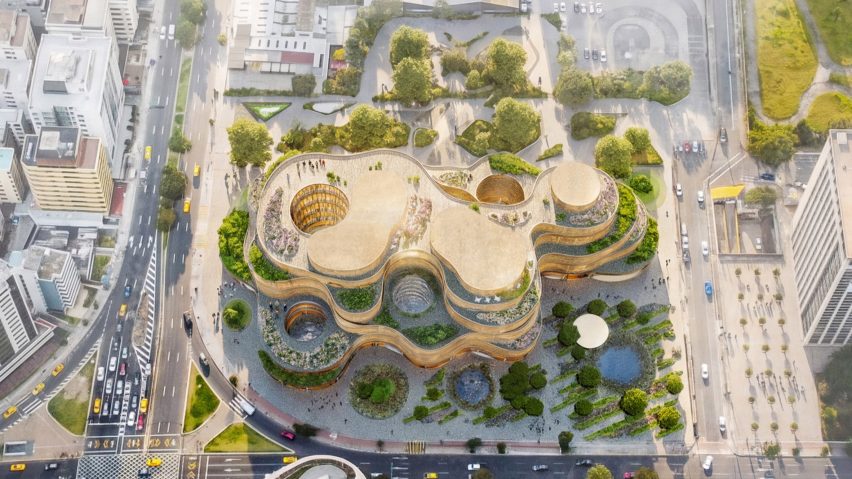
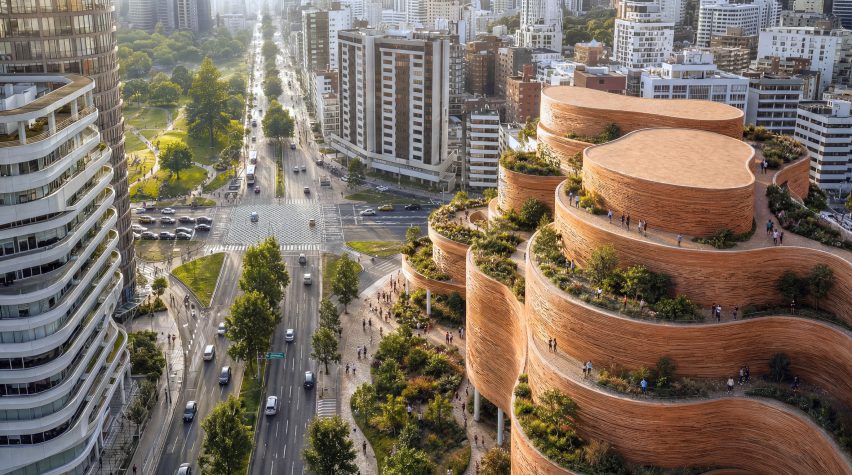
A curved brick structure by architecture studio SANAA has been selected as the new design for the National Museum of Ecuador in Quito, following reports that locals had criticised the original winning design.
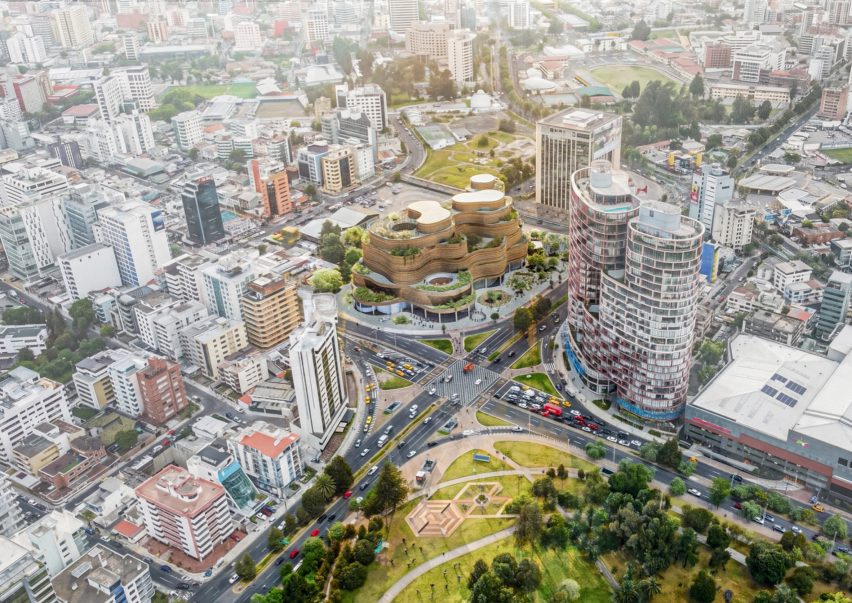
Set to be built along the border of La Carolina Park in Quito near projects by studios such as BIG, Kengo Kuma and Safdie Architects, the winning design for the Museo Nacional de Ecuador is imagined as "a system of interconnected vertical plazas" wrapped in terracotta brick.

The project team includes SANAA in collaboration with Caá Porá Arquitectura, Estudio A0, Jerome Haferd Studio and Taller Capital Landscape. It refers to itself as SANAA + A0-CPA-JHS.
Named Living Strata, its selection follows the Ecuadorian government's recall of a blocky design by Spanish practice Studio Alberto Campo Baeza and local studio MAODA earlier this month after an online petition criticising the design drew thousands of signatures by disgruntled citizens.

The new scheme originally came in third place in a competition for the project. After the original 10 finalists resubmitted designs following the public backlash, it was announced as the winner on 19 July, according to reports.
Its design draws on "pre-Columbian and post-Columbian cultures" and aims to "reflect all Ecuadorian people", according to the team.

The building will comprise nine storeys, including storage and parking floors below ground, and have several circular openings that bore through the main volume to create courtyards.
Circular pools and planting beds will also surround the building's plaza.
"Inspired by pre-Columbian and post-Columbian cultures, the project embraces the circle as an expression of collective memory, gathering, and connection with the cosmos," said the team.
"The project aims to reflect all Ecuadorian people and invites the international community to engage in the rich history."

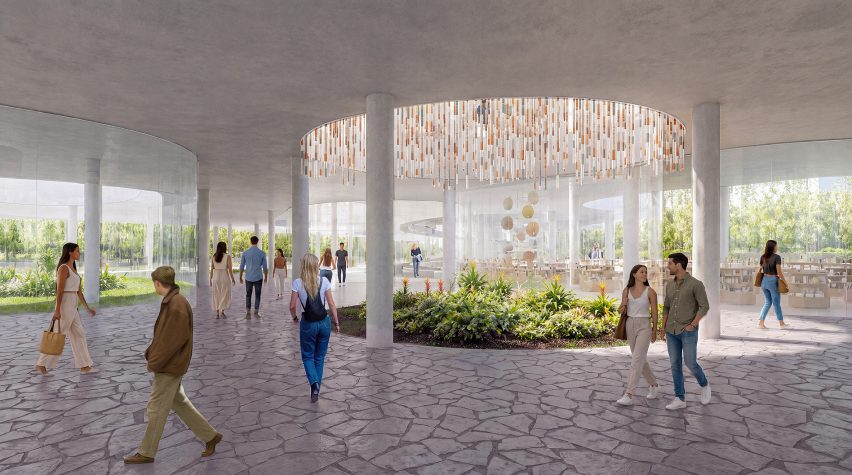
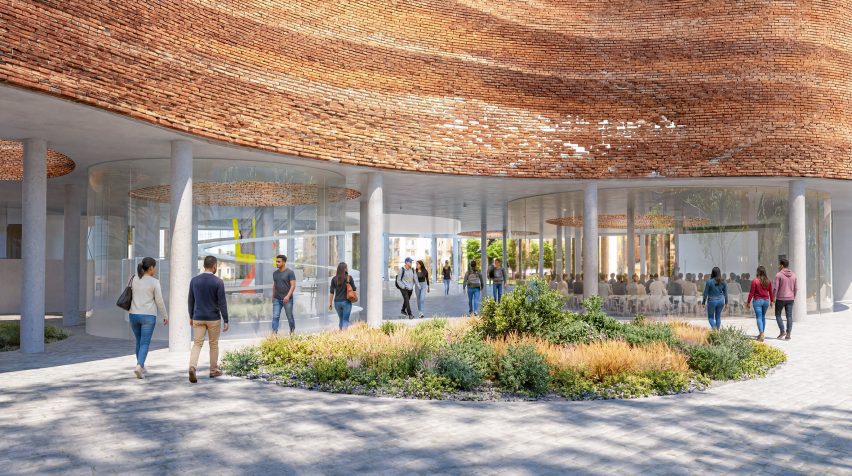
Galleries will be located on the upper floors, while the lower plaza level is designed to become an extension of La Carolina Park, according to the team.
The museum's curvilinear form will also aim to "establish a dialogue with the Pichincha volcano", which overlooks Quito.

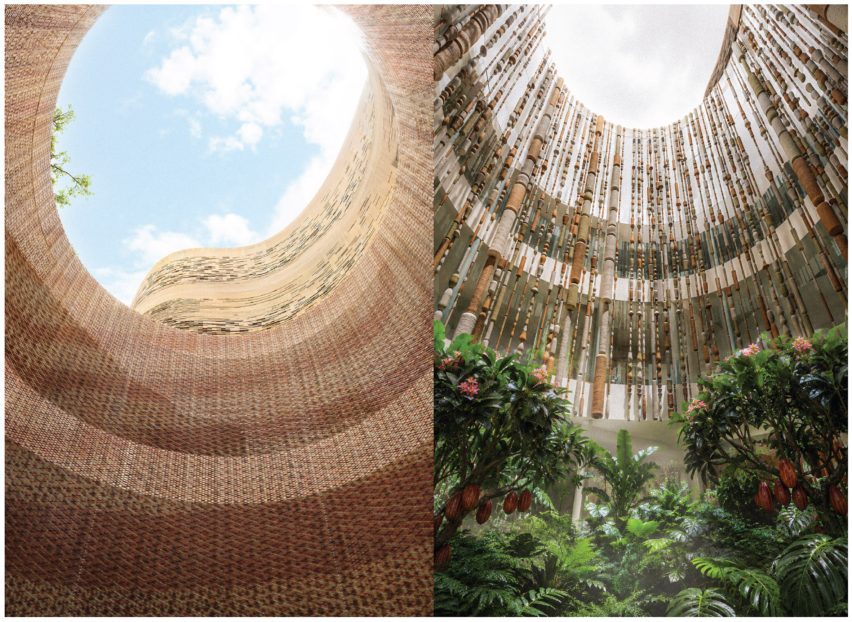
The National Museum of Ecuador's groundbreaking is anticipated for 2027.
The museum has gone through several iterations under different names since the late 1960s. This most recent project, catalysed under Ecuadorian president Daniel Noboa, aims to establish a new and permanent home for the museum, which is primarily programmed around local art and culture.

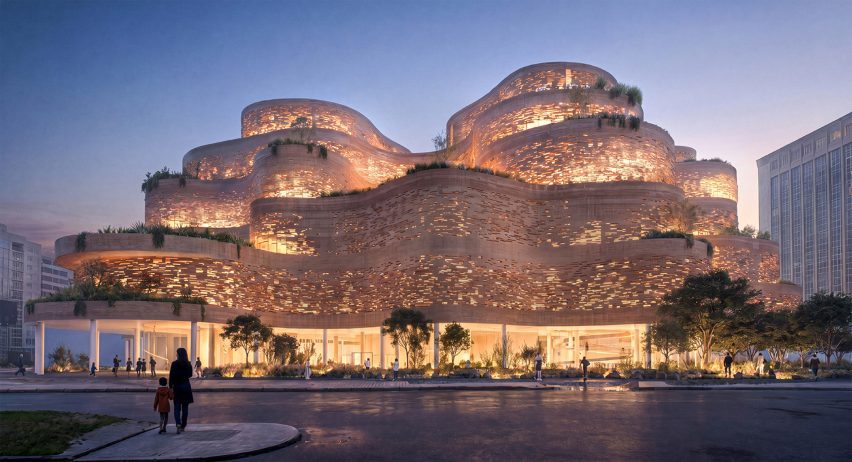
While the team acknowledged that the proposal was "ultimately selected as part of a finalist phase that included a jury assessment and a public Ecuadorian voting process", it told Dezeen it has no further comments on the competition's outcome at this time.
In response to the original design being recalled, its architects Campo Baeza and MAODA said they had been locked out of a public debate, citing how this process led to landmark projects such as Sydney Opera House and Guggenheim Museum in Bilbao.
"[Those projects] were enriched by this debate and are today part of the landscape and the immemorial heritage of those cities," read their statement.
Other projects recently completed around the broader area of La Carolina Park include the EPIQ tower by BIG and a skyscraper made of stacked units by Safdie Architects.
The images are courtesy of SANAA + A0-CPA-JHS.