Bugaboo makes pram from orange peel and old egg cartons

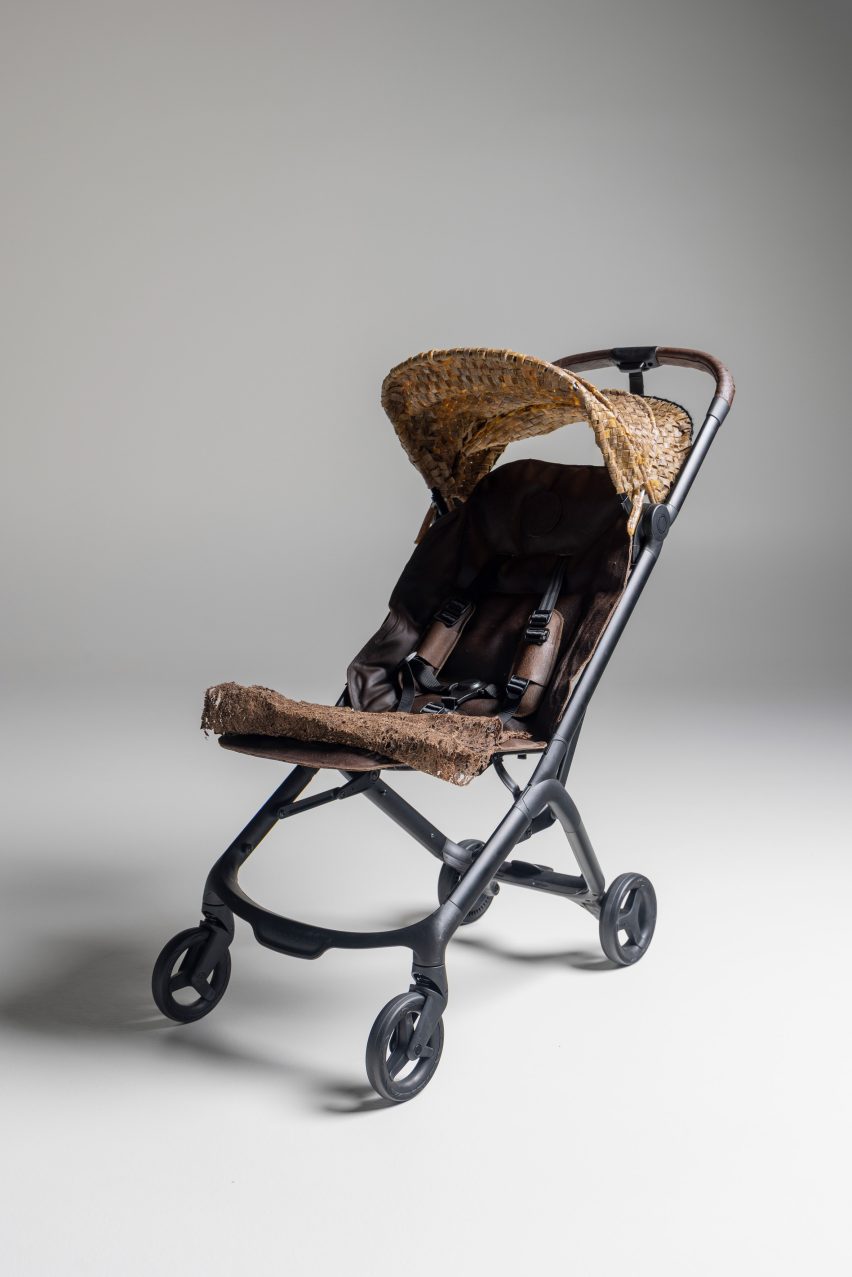
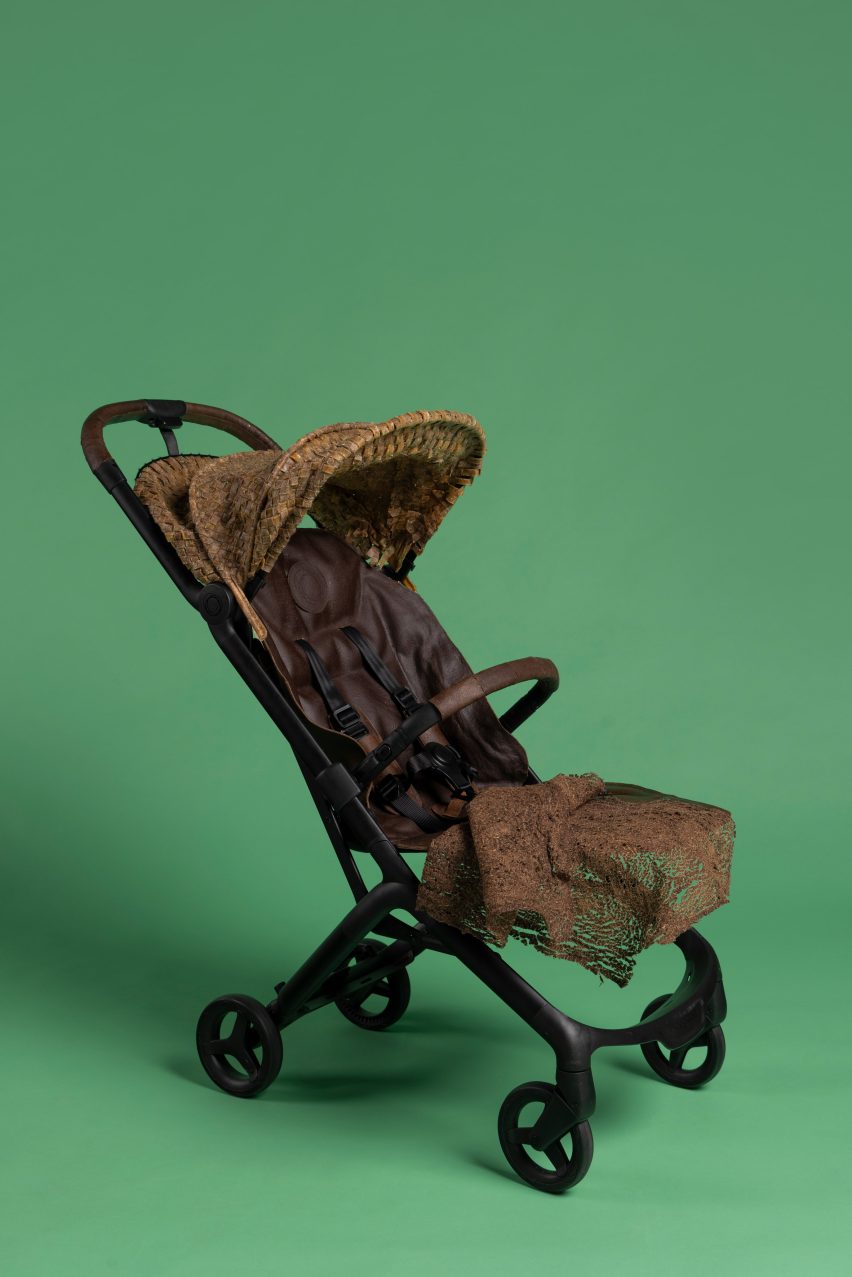
Students at Finland’s Aalto University have collaborated with Dutch pram brand Bugaboo to create a pushchair using bio-based and biodegradable materials.
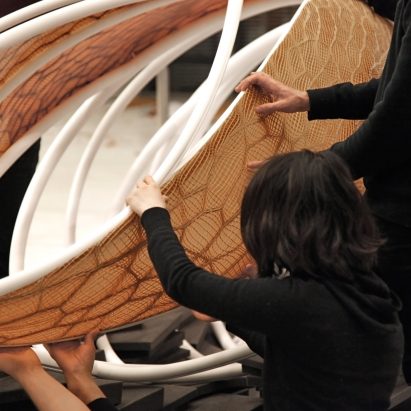
Amsterdam brand Bugaboo originally approached Aalto University during last year’s Dutch Design Week, where the school presented an exhibition of experimental biomaterials.
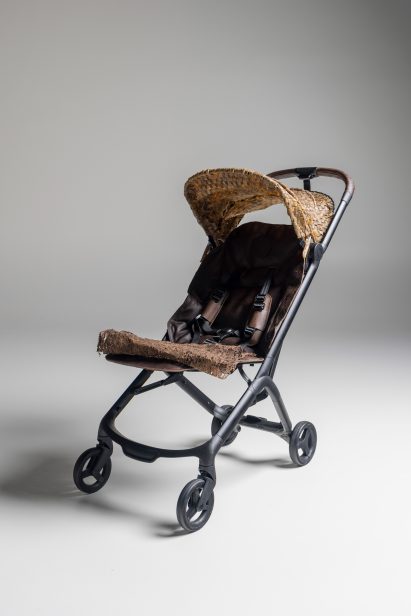
To translate some of this biomaterial innovation into a functioning product, students from the Espoo institution’s multidisciplinary chemarts course joined forces with the design team at Bugaboo.
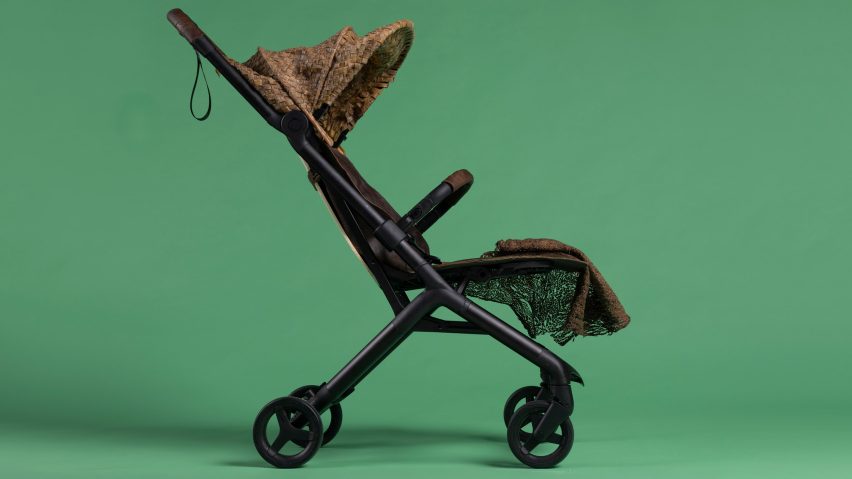
The result is a version of the brand’s stroller that’s decked out in biodegradable materials but retains Bugaboo’s classic black metal frame, including the wheels and seat belts.
“Sometimes, it’s the unexpected or seemingly crazy ideas that open up new possibilities and start important conversations,” Aalto University design lecturer Anna-Marie van der Lei told Dezeen.
“We need to imagine and experiment with what our future material world could look like, whether that means creating canopies from peels or foams from egg cartons.”
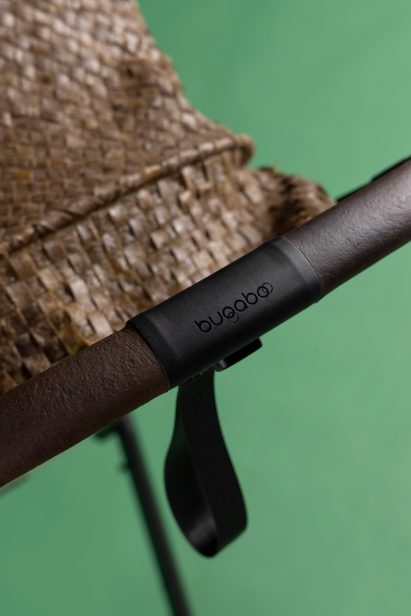
Chemical engineering student Nikolai Kurochkin developed a composite material of sawdust and methyl cellulose that forms a sandy-hued back panel for the pushchair. Methyl cellulose is a compound derived from plant cellulose that can be used as a thickener and emulsifier.
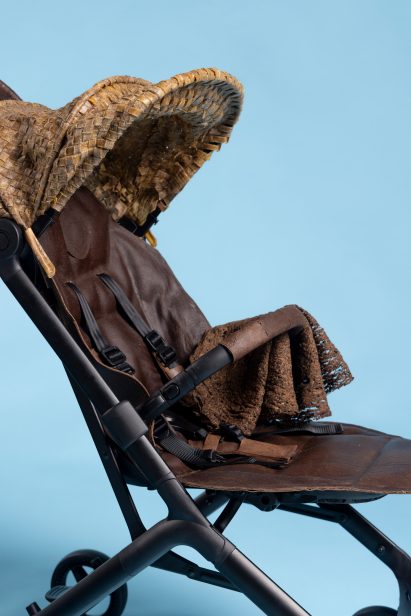
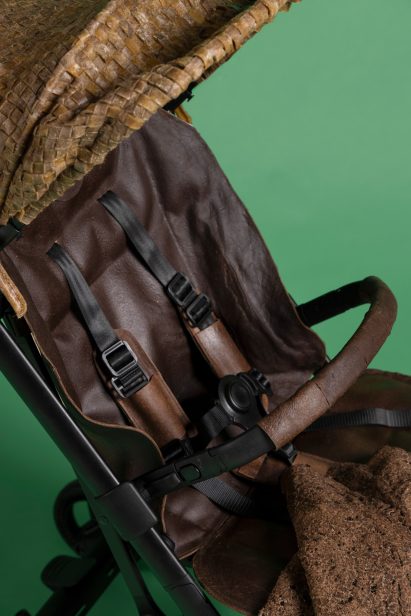
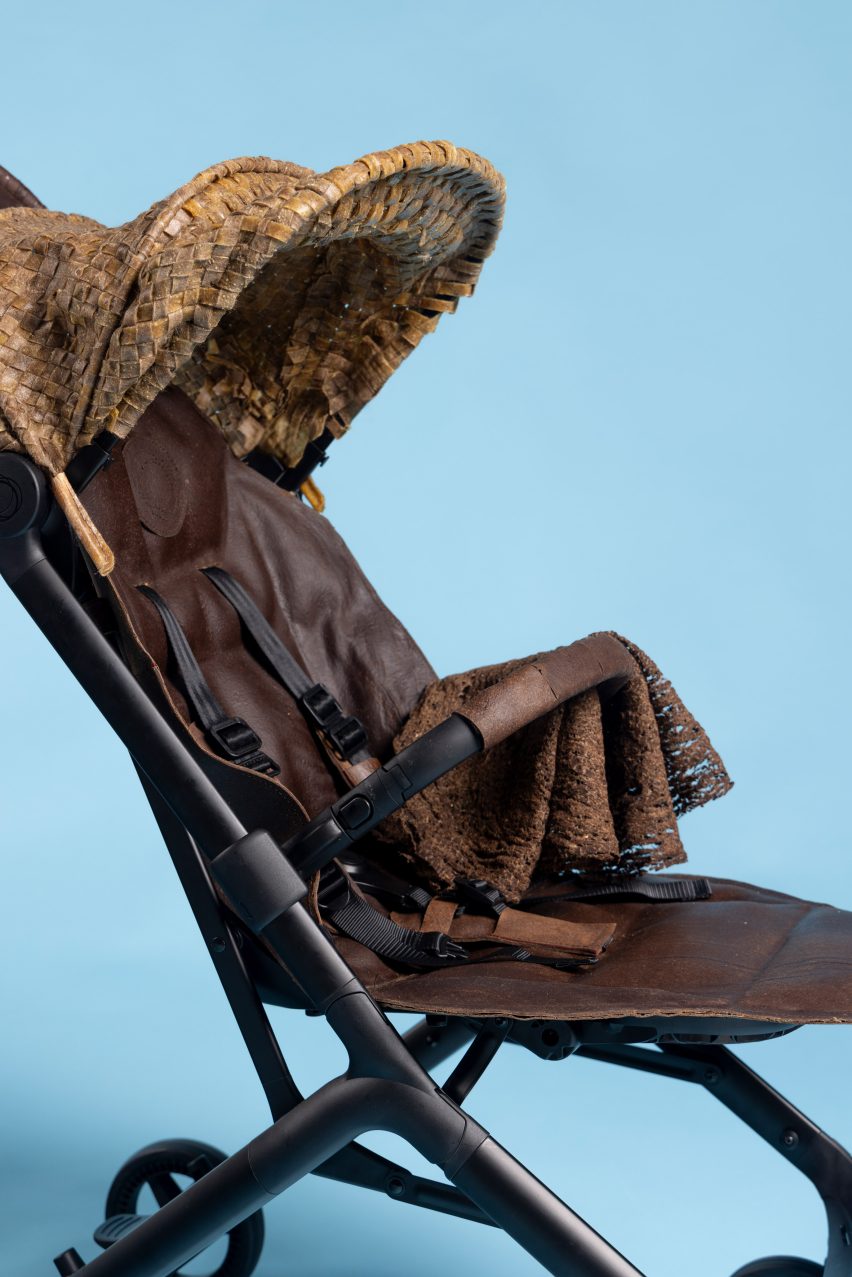
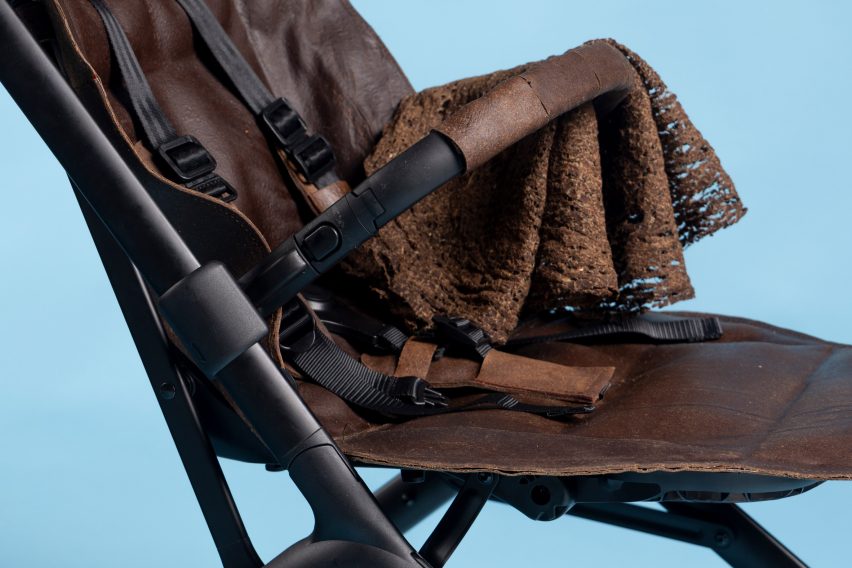
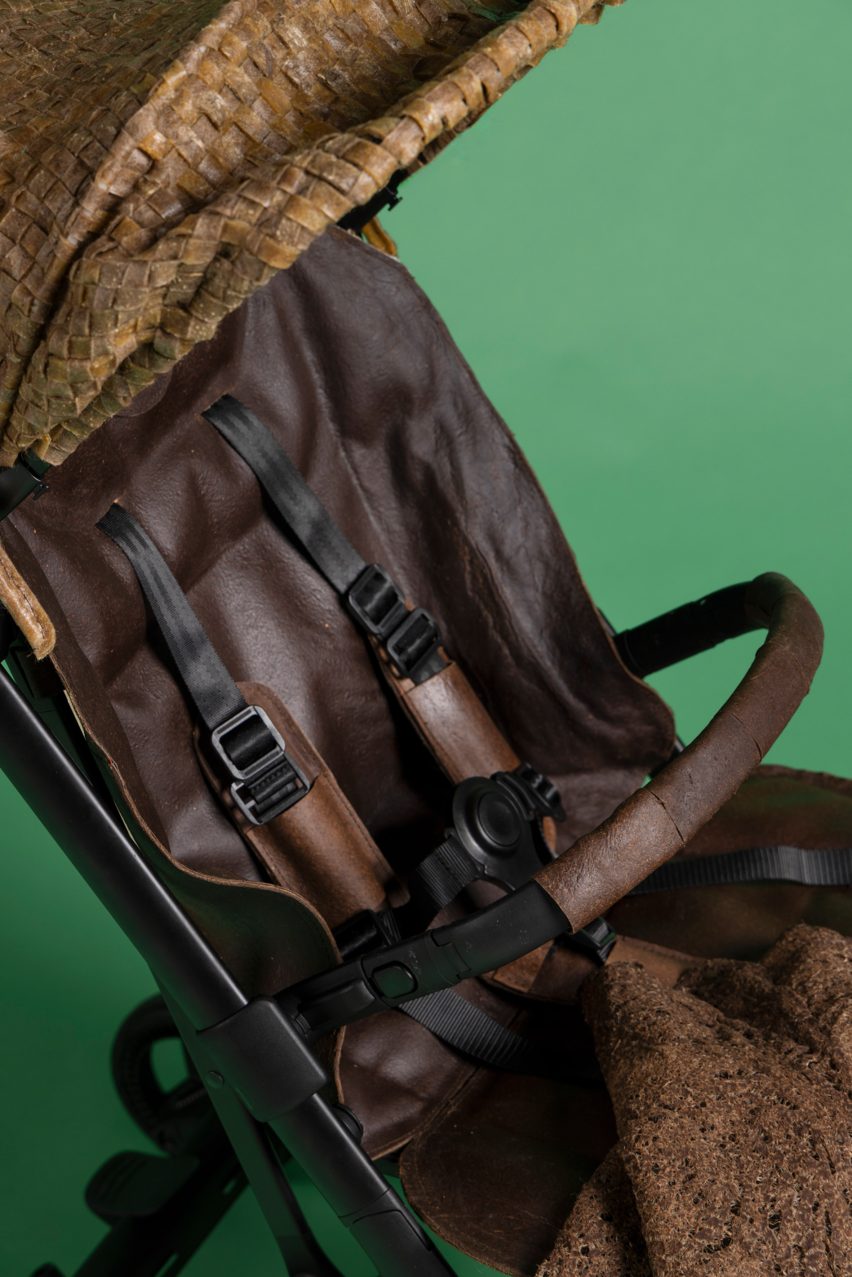
The brown-coloured, plant-based leather seat cover was created by Alois Auer and Renata Khayrutdinova, who coated the material in tar to make it as water-repellent as possible.
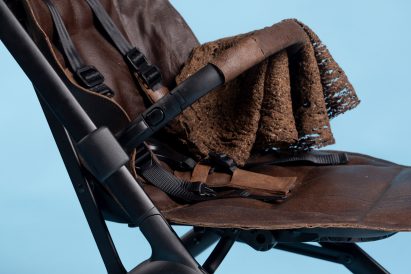
“The students developed the tar coating that gives the seat a pleasant scent as well as durability,” explained bio products professor Tiina Nypelö.
“With fully biodegradable materials, achieving water resistance is challenging,” added van der Lei, who conceded that a fully waterproof biomaterial pram is still a work in progress.
The seat cover was inlaid with a mixture of materials to provide cushioning. Starch-based foam by Nooa Laisalmi was combined with recycled fibre-foam stuffing created by Elisabeth Baidoo from egg cartons that would have otherwise been thrown away.
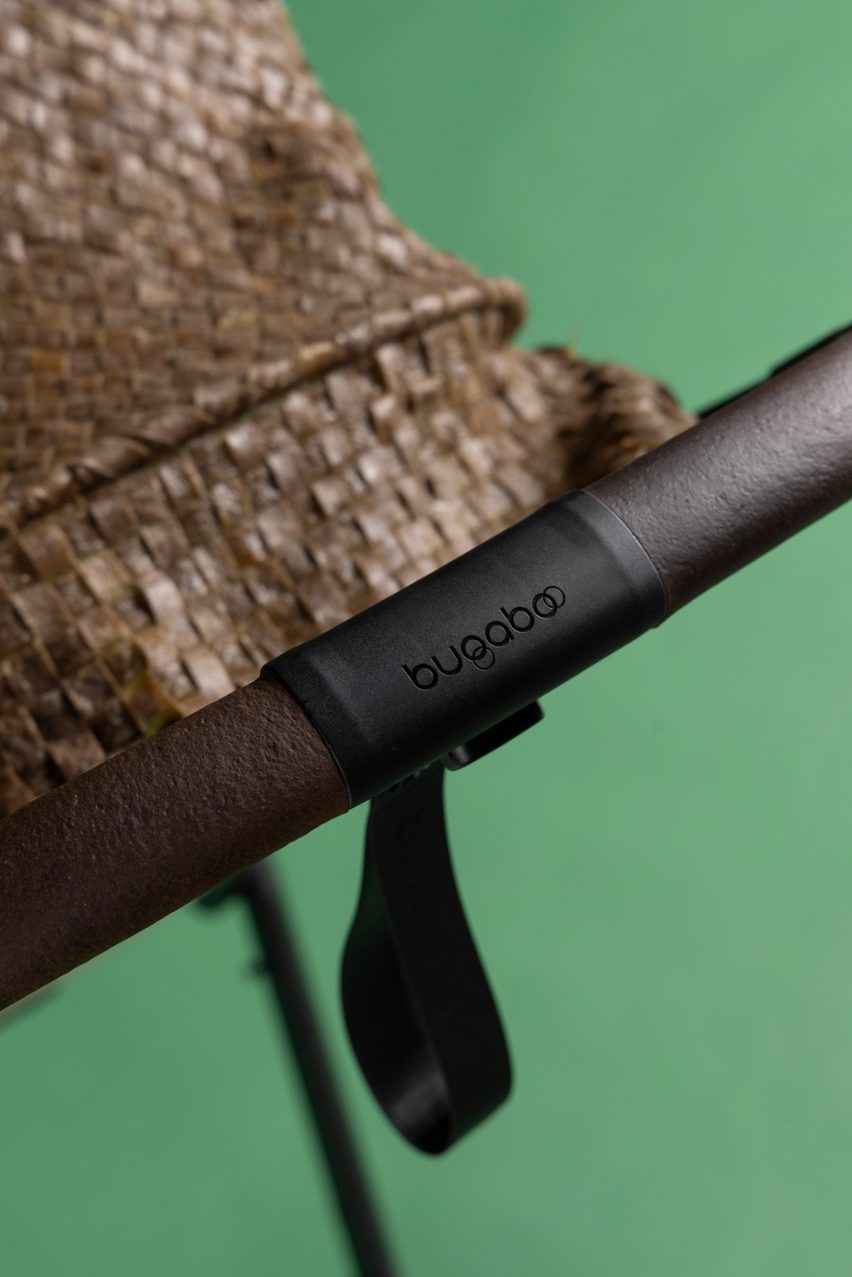
For the pram’s woven canopy, Serranur Zileli developed a light brown material made from waste orange peel, which emits a subtle citrusy smell.
Julia Särkkä designed a delicate, biolace blanket in the same colour using hemp and lignin – one of the key polymers that give strength and durability to plant cell walls.
The pushchair’s product labels are also cellulose-based, developed by Alessandra Fini, Bianca-Elena Galan and Cathrin Simbikangwa.
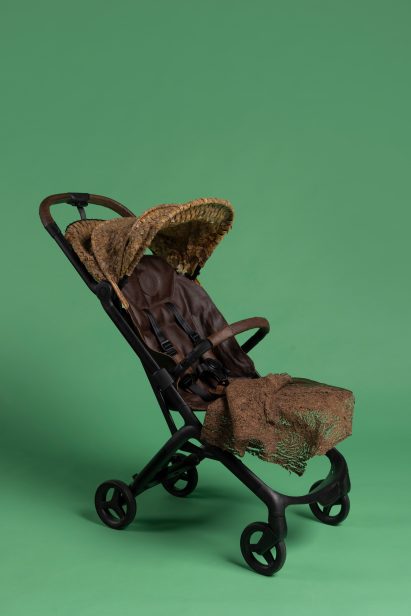
The pram was developed in Aalto University’s Chemarts laboratory, with each student using specific processes and equipment depending on the biomaterial they were conceiving.
While the pushchair is currently only a concept model, the professors said that working with Bugaboo offered students the chance to work in a real-world context.
“Students had opportunities to meet with Bugaboo’s design lead and engineer and discuss their experiments,” said Van der Lei.
“Bugaboo gave us a lot of freedom, and the final stroller was developed by students who chose to continue working on the project themselves.”
Known for championing biomaterials, researchers at Aalto University recently salvaged 300-year-old wood from the wreckage of a cargo ship in Oulu, which was transformed into yarn and knitted into a zero-waste dress.
A slew of other projects exploring the potential of cellulose have been showcased at the institution in previous years.
The photography is by Esa Kapila, courtesy of Aalto University.
Read more
Recommended stories
Ten eco-conscious products made from pioneering materials
Bugaboo expands beyond pushchairs with first luggage collection
Ombak chair consists of 2,000 plastic bags salvaged from Bali’s rivers
Eight furniture pieces and products made from sustainable materials
Prowl Studio develops “first injection-moulded chair that can be composted”
Ten innovative handbag designs from Dezeen’s Pinterest
Ten different and everyday uses for bioplastics