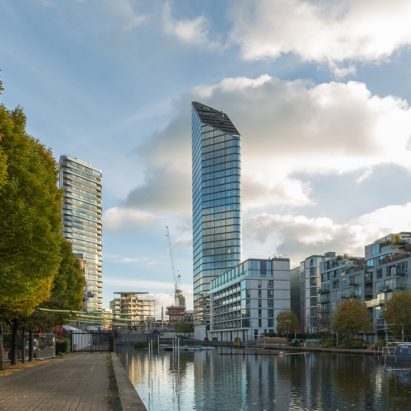
Orms plans to add rooftop swimming pool to London’s BT Tower

Architecture studio Orms has submitted a planning application to transform the BT Tower in London into a hotel with a rooftop swimming pool for American hotelier MCR.
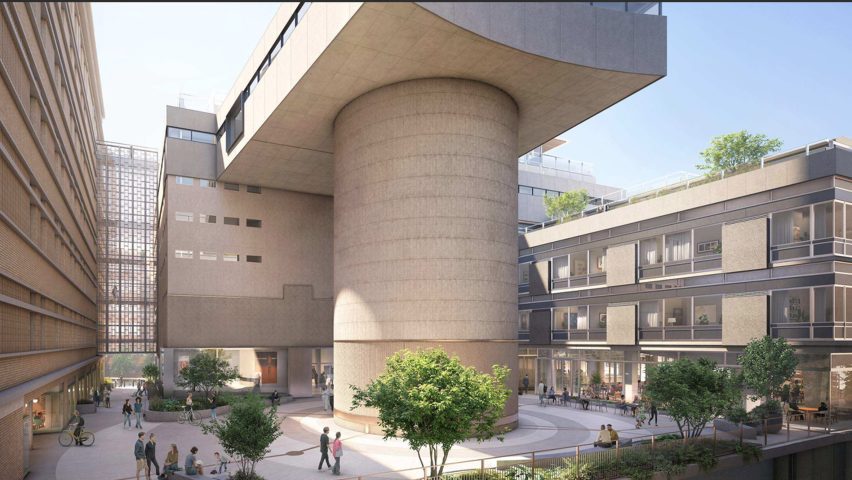
Orms will restore the Grade II-listed BT Tower, the adjacent podium and 1930s Howland Building, and convert the complex into a hotel with ground-floor shops, bars and restaurants, if the application is approved by the London Borough of Camden.
A publicly accessible swimming pool will be built on top of the podium, which will be overlooked by the iconic BT Tower structure.
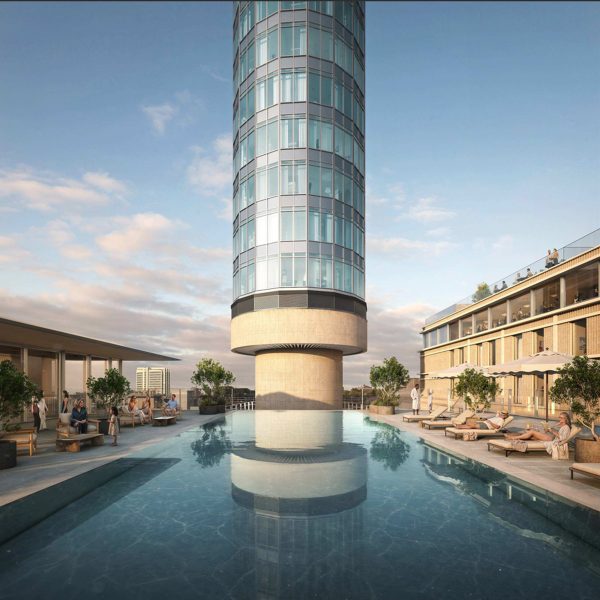
Plans also include improving the public space around the building and opening the upper portion of the 177-metre-tall tower to the public for the first time since 1981.
“Our vision has always been to honour the BT Tower’s remarkable history while reimagining its future,” said MCR CEO Tyler Morse.
“Submitting our planning application is an exciting step towards reopening this landmark after almost 50 years, revitalising the area with new jobs and open space for Camden.”
Originally designed by the Ministry of Public Building and Works, led by chief architects Eric Bedford and G R Yeats, the communications tower opened in 1964 as the Post Office Tower.
Designed to support microwave aerials, which were removed in 2011, the distinctive structure was topped by a revolving restaurant that closed in the early 1980s.
The BT Tower was the tallest building in London when it was built and retained the title until the NatWest Tower was built in 1980.
MCR first announced its acquisition of the tower in 2024. At the time, UK practice Heatherwick Studio was set to lead the transformation of the building into a hotel.
Orms took over the project earlier this year. Works are expected to commence in 2029, once the building has been fully vacated, and MCR plans for the transformation to be completed and open to the public by 2033.
Elsewhere in London, the seminal 22 Parkside house by Richard and Su Rogers was handed over from private ownership to the National Trust, and a group of 19th-century dinosaur sculptures at Crystal Palace Park were restored by HTA Design and Donald Insall Associates.
The images are by MCR, Orms and Secchi Smith.
Read more
Recommended stories
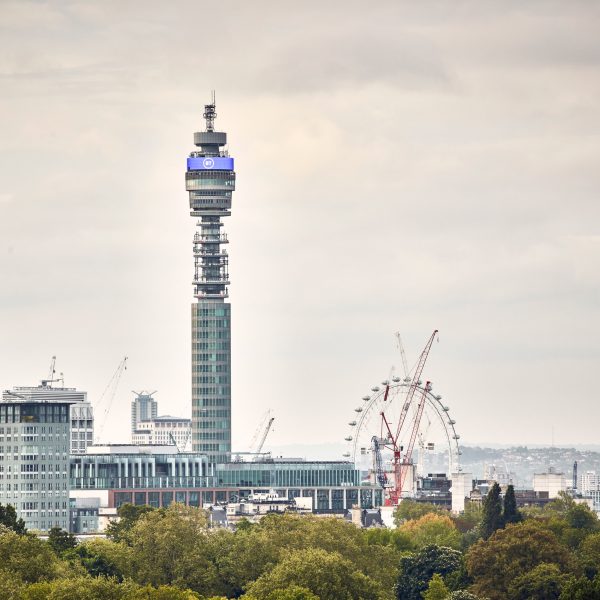
Heatherwick Studio set to turn “extraordinary” BT Tower into hotel
Foster + Partners showcases models of 14 skyscrapers that “challenge convention”
London’s first public suspended swimming pool planned for Croydon
Penoyre & Prasad reclads “ugly” London hospital tower with origami-like skin
Grid Architects designs women’s-only social housing tower for London
The 10 most controversial architecture projects of 2021
Birmingham’s tallest residential skyscraper to include rooftop running track and app-controlled lifts