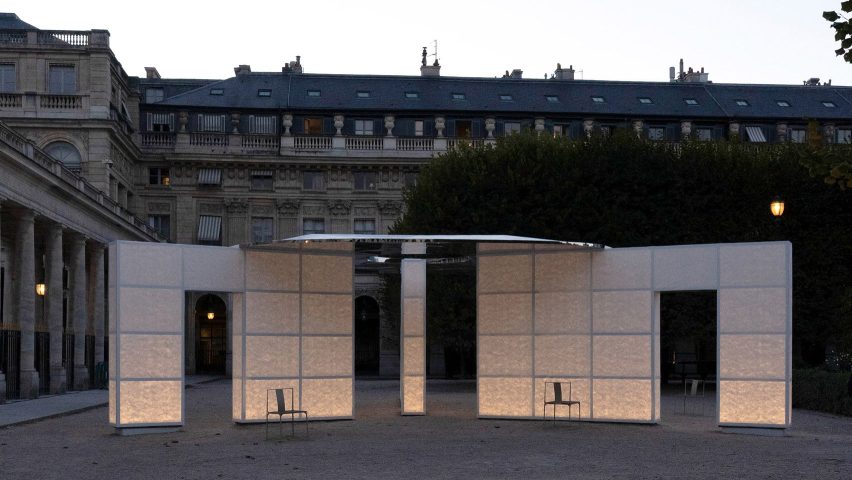
Bin Wu's mirror-topped Pavilion of Time aims to "make time tangible"
Chinese designer Bin Wu has unveiled the Pavilion of Time, which features timber screens topped by a circular mirror, in the courtyard of Domaine National du Palais-Royal for Paris Design Week.
Wu described the pavilion, which he created in response to the theme of this year's Paris Design Week, Pulse in Motion, as "making time tangible and walkable".
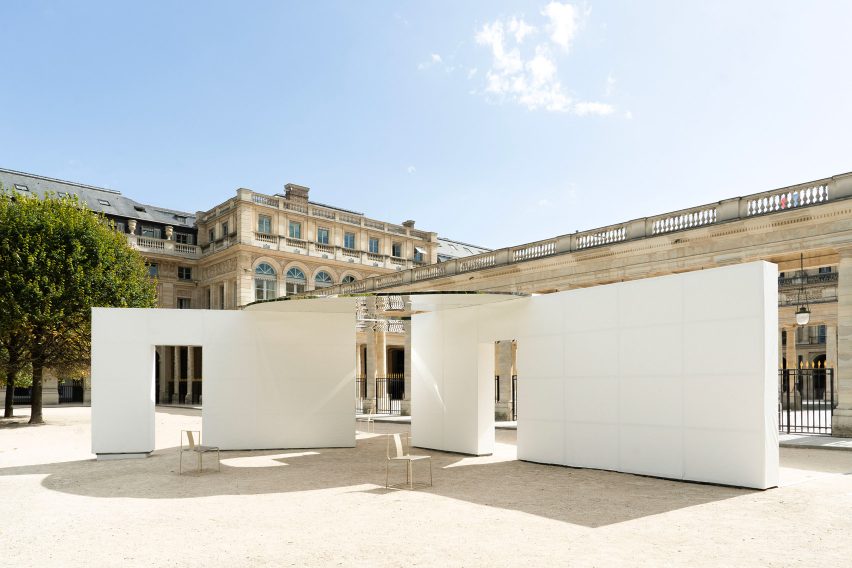
Beneath its circular roof, the pavilion is divided into three timber segments, each of which has an opening to allow visitors to walk through them in a circle.
Wu wrapped the timber structure in a translucent, paper‑like membrane to allow natural sunlight into the structure and let visitors perceive the movement of time through the shifting light.
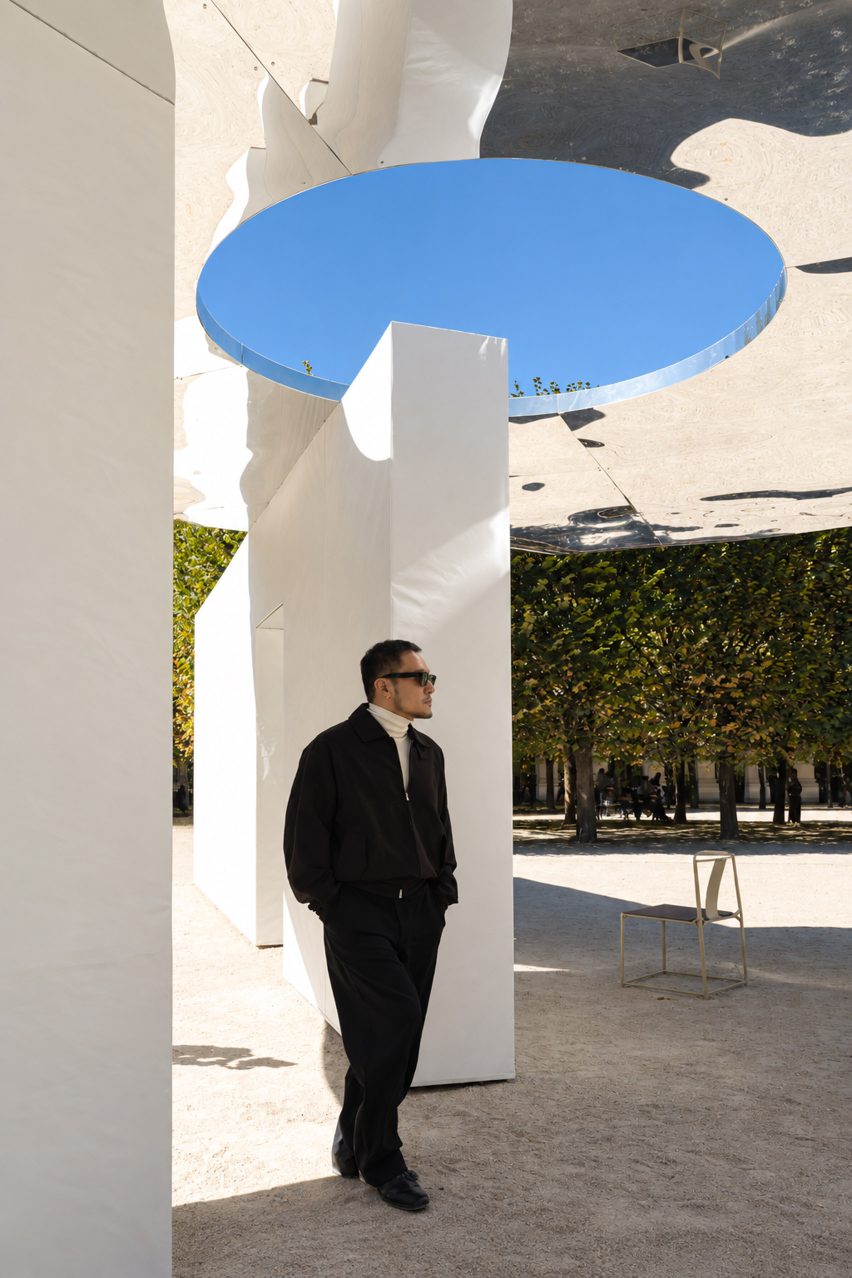
"We hope people move continuously – footsteps trace the arc, sunlight drifts through paper and mirror, wandering between ground and structure," Wu said.
"Light and shadow become intangible hands, inscribing time's trajectory. Here, time is measured not by clocks, but by light; not in numbers, but through the body's motion and repose."
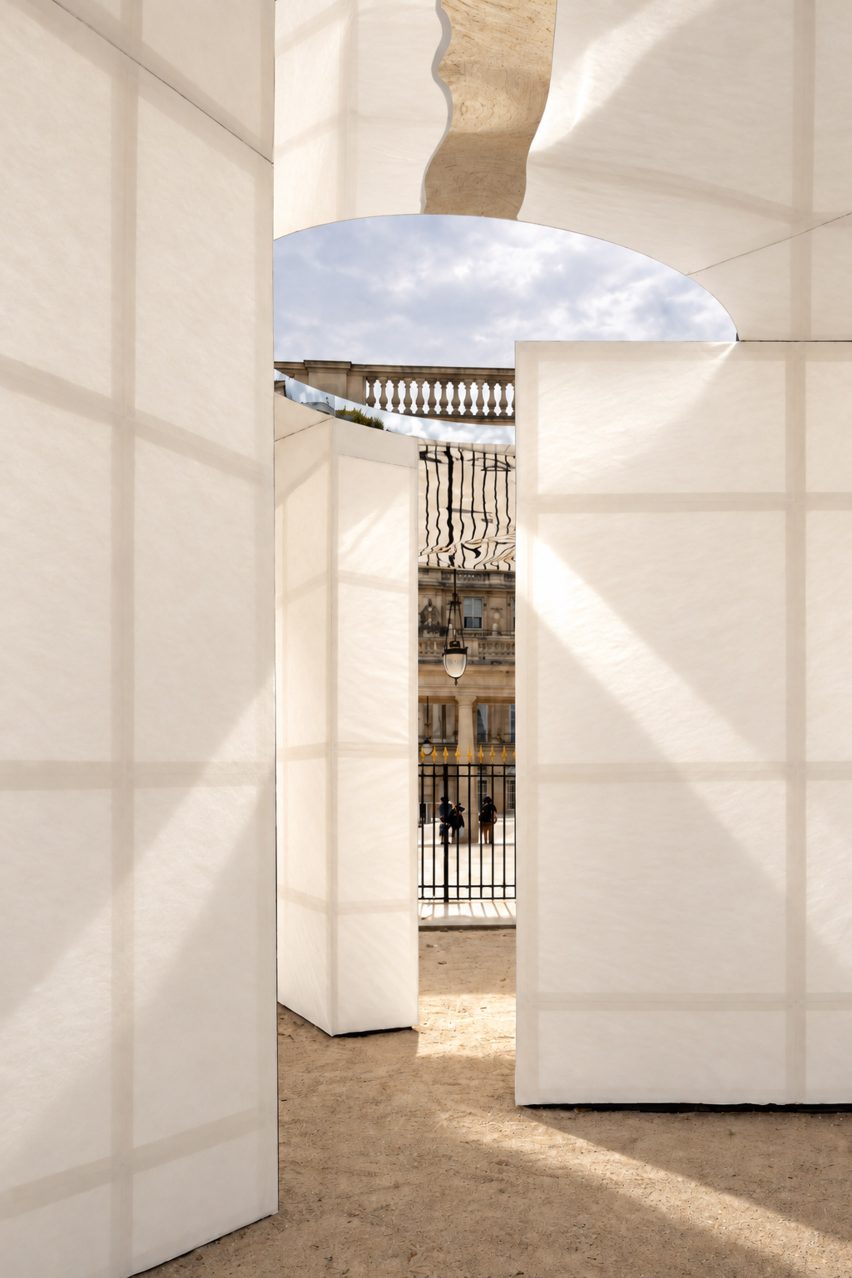
According to Wu, the circular form of the pavilion was designed to contrast the orthogonal classical architecture of the Domaine National du Palais-Royal, while also referencing the ancient Chinese concept of "a round heaven and a square earth".
Its light, translucent design was also deliberately created in juxtaposition to the perceived heaviness of the surrounding historical architecture.
The paper-like membrane that covers the pavilion is made of polyethylene, suitable for outdoor use and resembles the texture of traditional Chinese Xuan paper.
Wu used products from Chinese brands for the pavilion, including a lighting system developed by Chinese smart home brand Moorgen.
This casts a soft light through the translucent walls and allows the pavilion to be lit up at night.
Carbon fibre chairs from Chinese furniture brand Shang Xia were placed at the outer edges of the pavilion, inviting visitors to pause and rest.
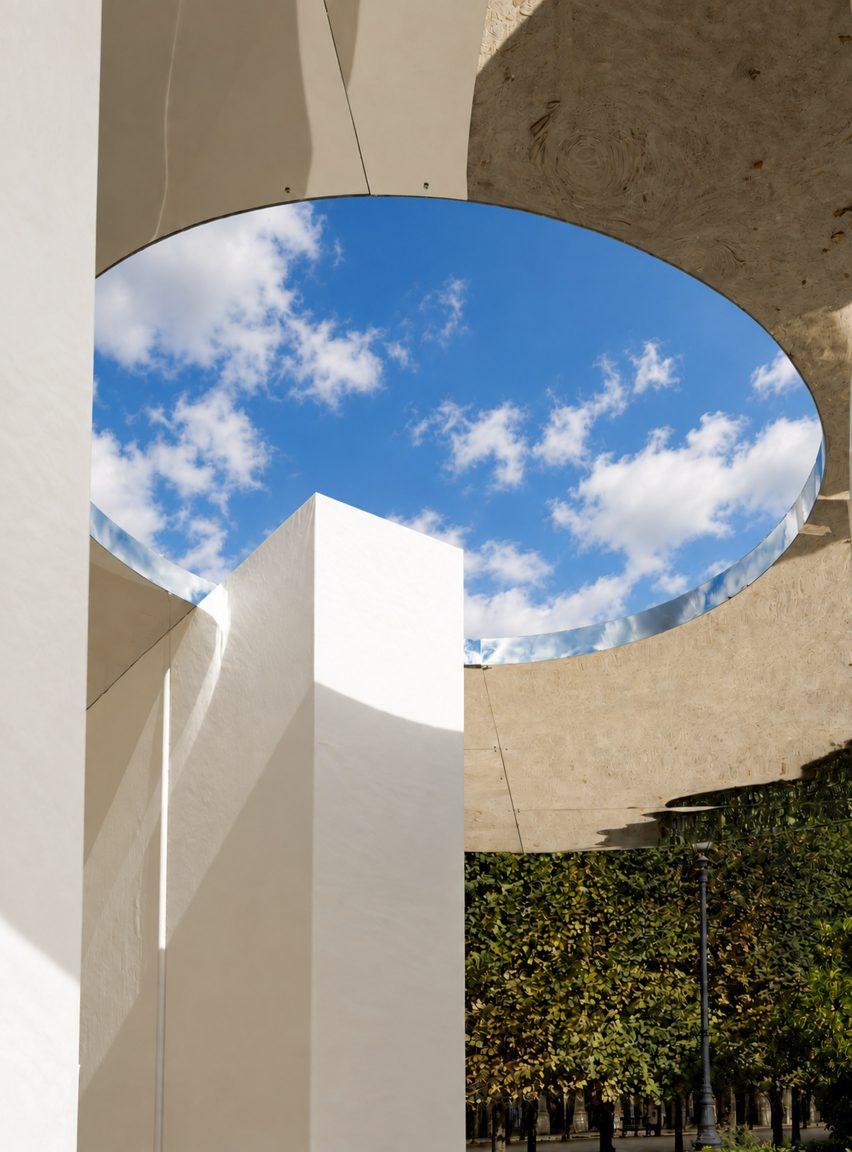
Overall, Wu aimed for the pavilion to give visitors an insight into an Eastern way of experiencing time.
"Eastern time is not a straight line, but a series of perceivable moments," Wu said.
"The Pavilion of Time takes this as its impetus, combining Chinese painting's shifting perspective and temporality to let the body perceive spatial and temporal change."
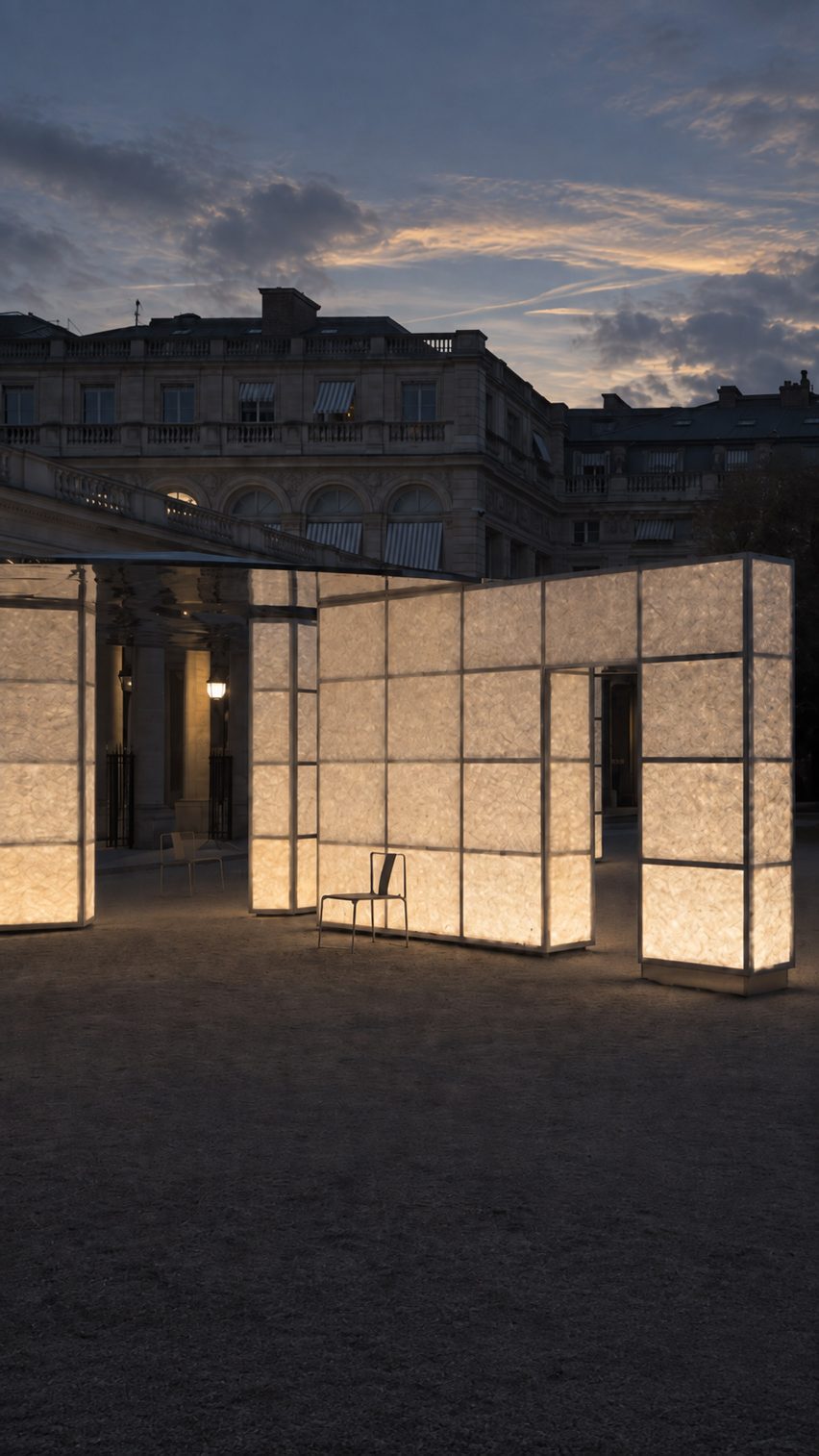
Wu is the founder of interior studio W Design, which was recognised as interior designer of the year at Dezeen Awards China 2024.
He recently published a book titled The Design Language of Timeless East, exploring the idea of a design language rooted in the philosophical context of the East.
Elsewhere at Paris Design Week, French design studio Uchronia designed a giant floral sculpture at Grand Palais museum.
The photography is by SHIDAI.
The Pavilion of Time is on show from 10 to 17 September at Domaine National du Palais-Royal, Paris. See Dezeen Events Guide for more design events, exhibitions and installations around the world.