Evan Edward designs “seductive” Miami Beach pied-à-terre

Photography by Ori Harpaz
Miami‘s nightlife scene in the 1990s informed the saturated colours and metallic accents used by local studio Evan Edward inside this apartment in the oceanside city, illustrating what the studio calls its “high-impact minimalism” approach.
Designed for an international family with “personal ties to the city’s storied nightlife era”, the Miami Beach pied-à-terre reflects the hedonistic era that left a distinct stylistic impression.
“Aesthetically, there was a rawness to the excess and glamour,” Evan Edward co-principal Josh Evan Goldfarb told Dezeen. It was a particularly exciting time for colour and design in general in the city.
“The city was in its early stages of redevelopment – the original art deco glamour and run-down beach patina were a sublime tropical combination.”
He and co-principal Michael Edward Moirano set about creating interiors that blend contemporary and vintage furniture and decor to reflect “a more seductive side of Miami”.
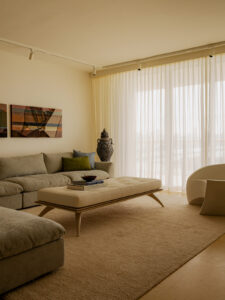
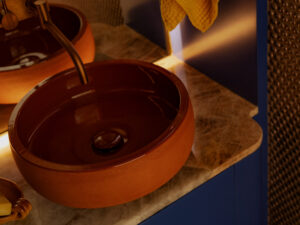
In place of a typical South Florida palette of white, beige and turquoise, spaces feature hues of terracotta, burnt orange, burgundy and ochre. These prevalent tones are complemented by flashes of chartreuse, mustard yellow and metallic finishes.
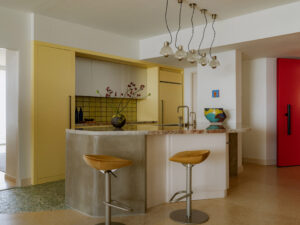
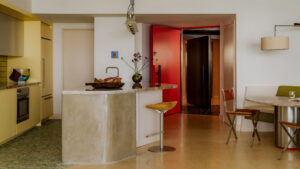
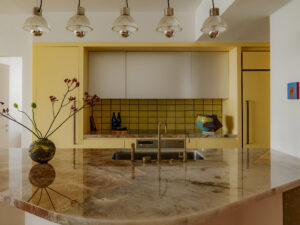
To create a more welcoming space for entertaining, the designers opened the kitchen to the living and dining spaces with the angular island as a central gathering point.
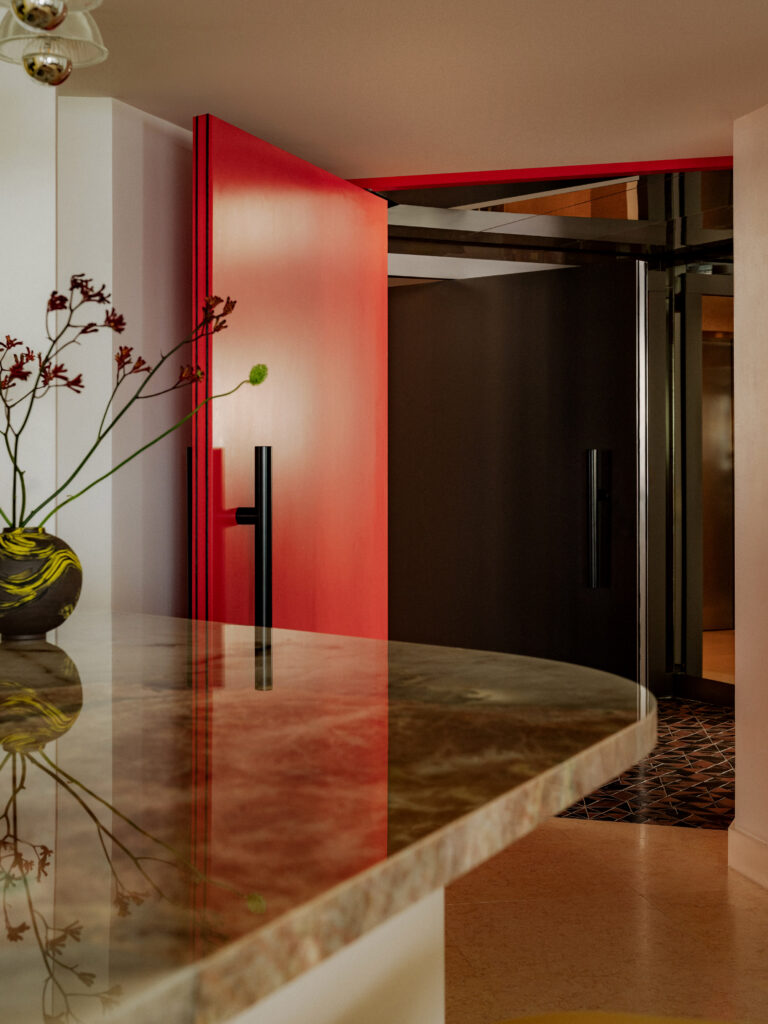
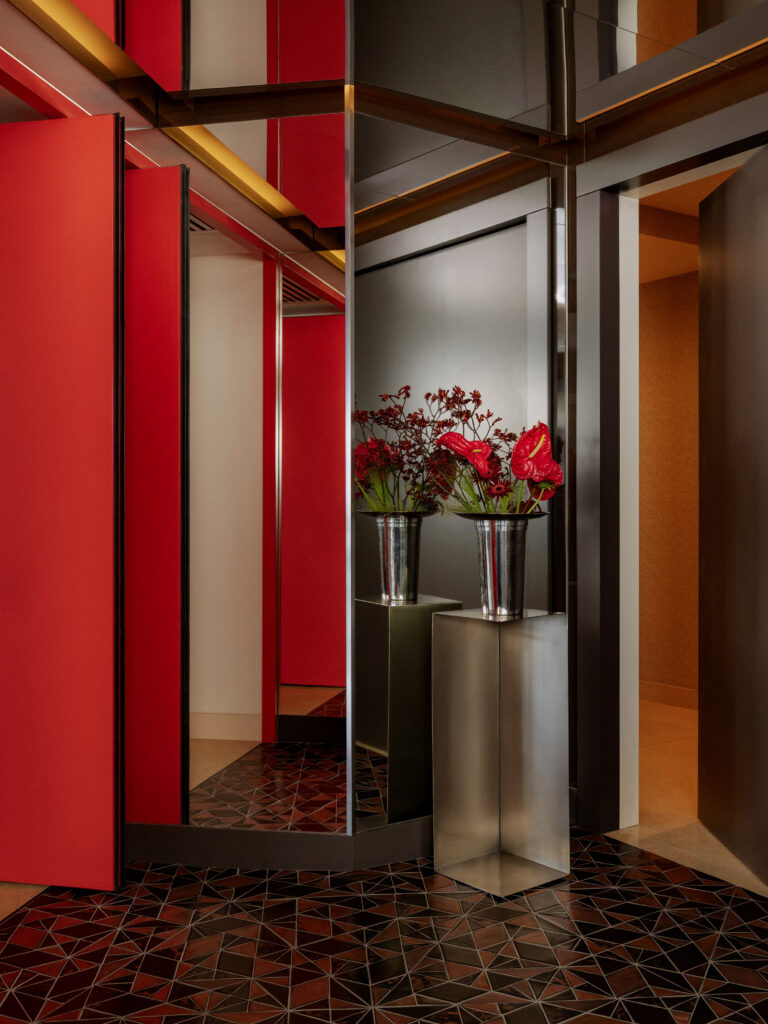
They also connected the foyer to an adjoining unit behind a series of oversized pivot doors.
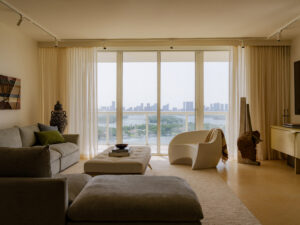
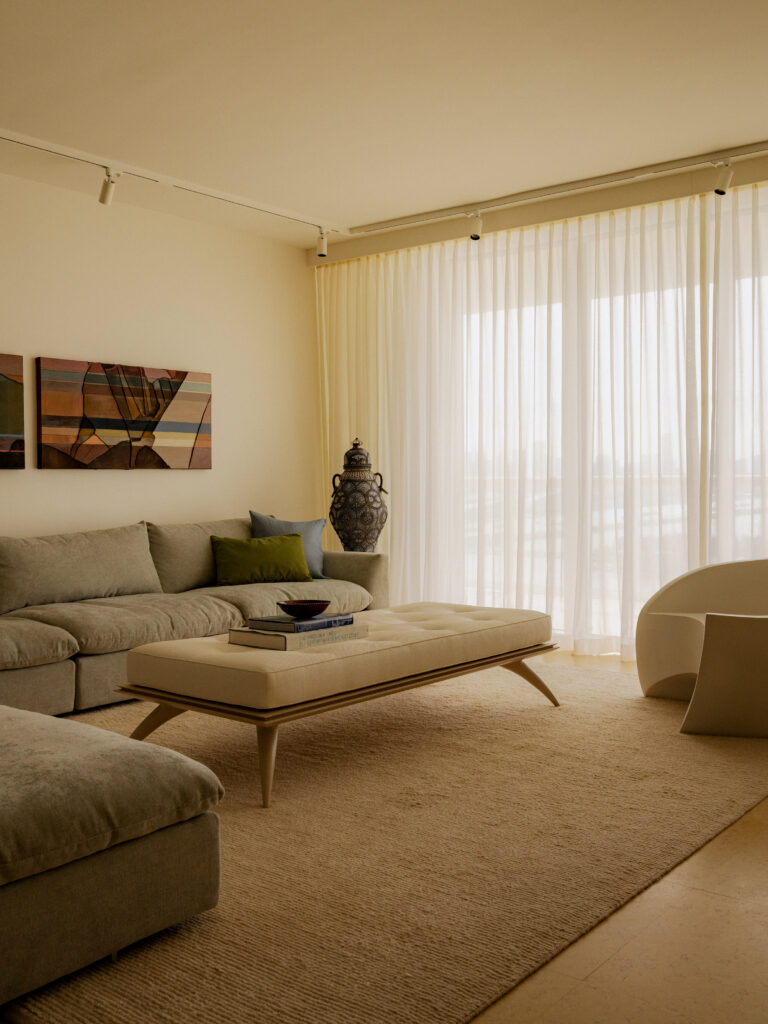
“The updated floor plan completely changed the experience for the clients,” Moirano told Dezeen. “The triangular island is the hub of the space, serving the kitchen and dining banquette area, while also exposing the living area featuring a dramatic view of Biscayne Bay and the Miami skyline.”
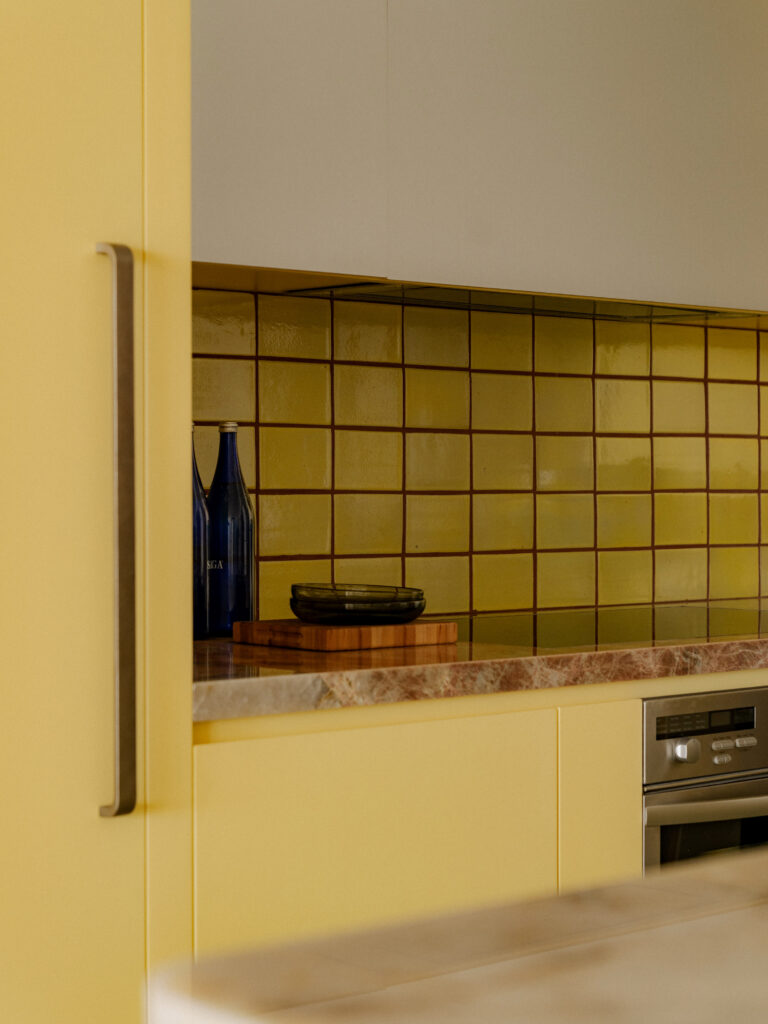
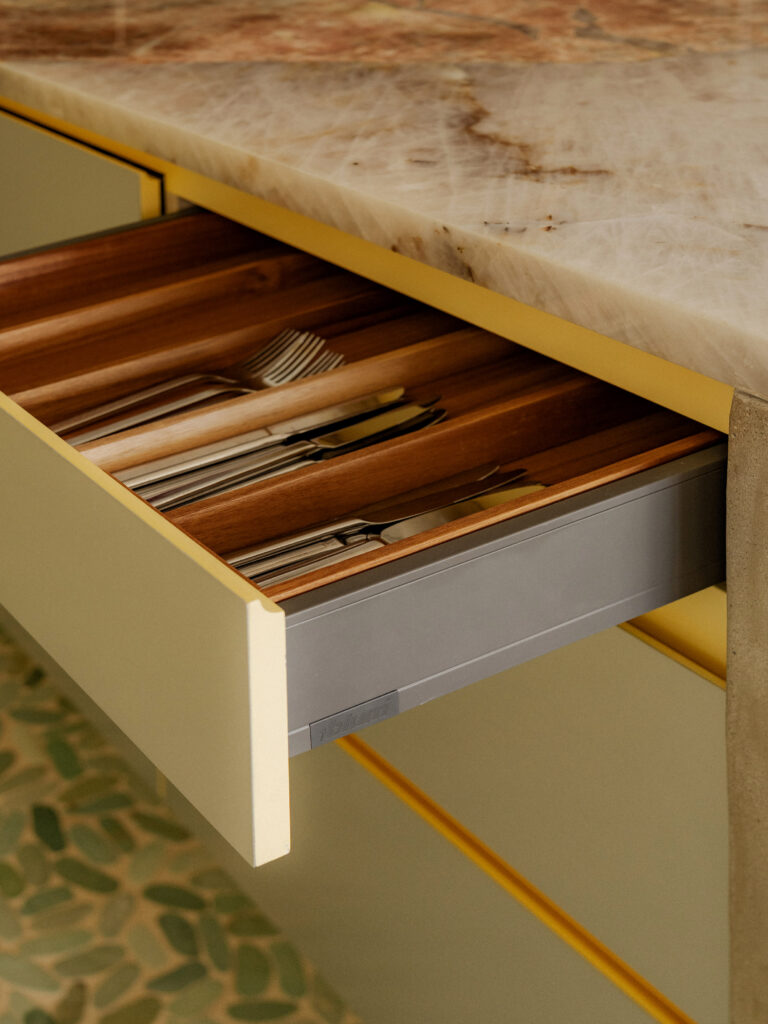
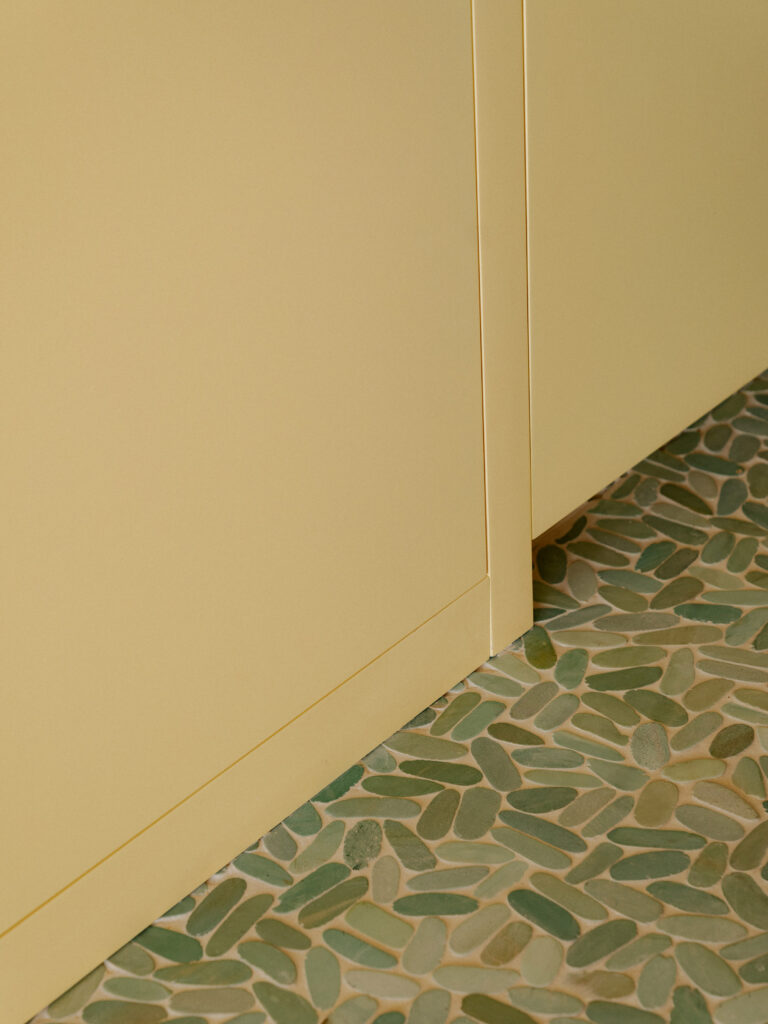
A butter yellow kitchen was paired with richly veined stone countertops that complement the polished-pebble flooring.
The generous island was illuminated by a 1960s five-pendant light feature above, and accompanied by mustard yellow Calligaris bar stools for casual dining and gathering.
Goldfarb was forthcoming about references to personal experiences and spaces.
“One of the references for the kitchen was an artist studio that I visited when growing up in Coconut Grove – the memory is ingrained in my mind’s eye,” said Goldfarb. “It was just so airy – up in the trees, open windows, patina on all surfaces and artwork and materials strewn about.”
“The sense of colour and mashup of materials – stone, tile, painted – it’s hard to forget,” he added.
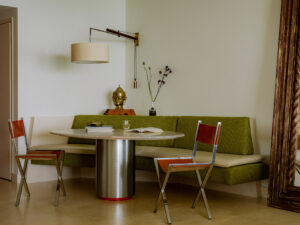
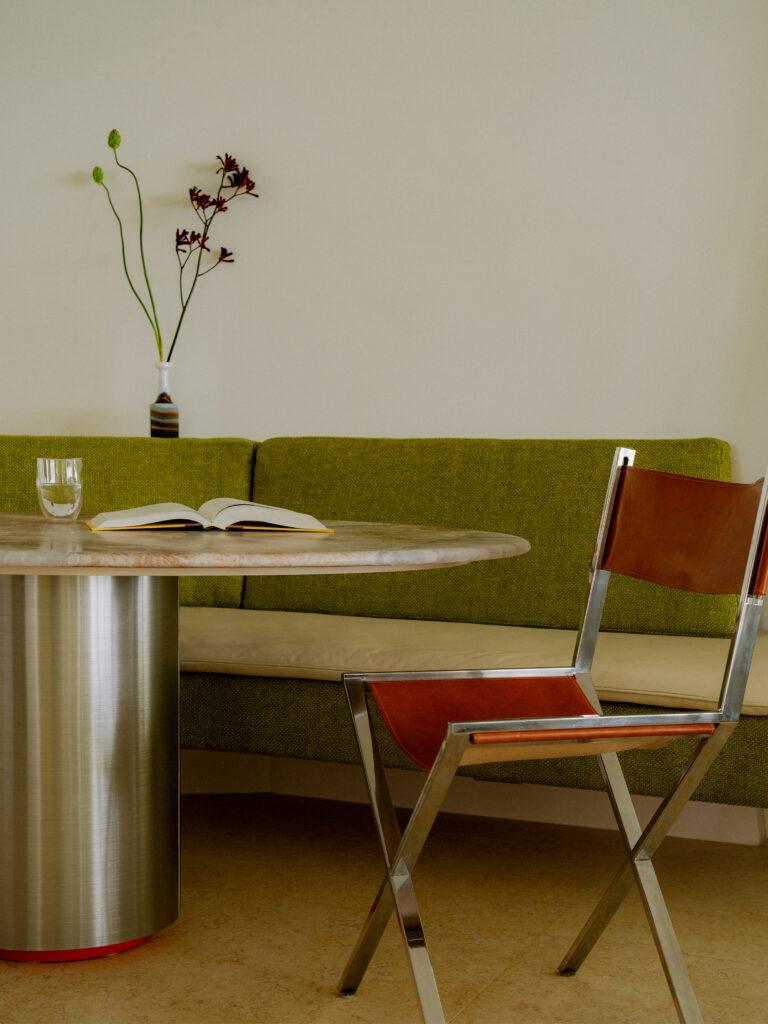
Nestled into a corner, a banquette with olive-toned Rubelli velvet upholstery wraps a circular stainless steel table, while a pair of 1970s folding chromed-steel and leather chairs provide additional seating.
An adjustable lamp by Tito Agnoli for Oluce with a custom shade extends from the wall to hang over the table.
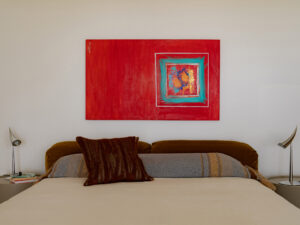
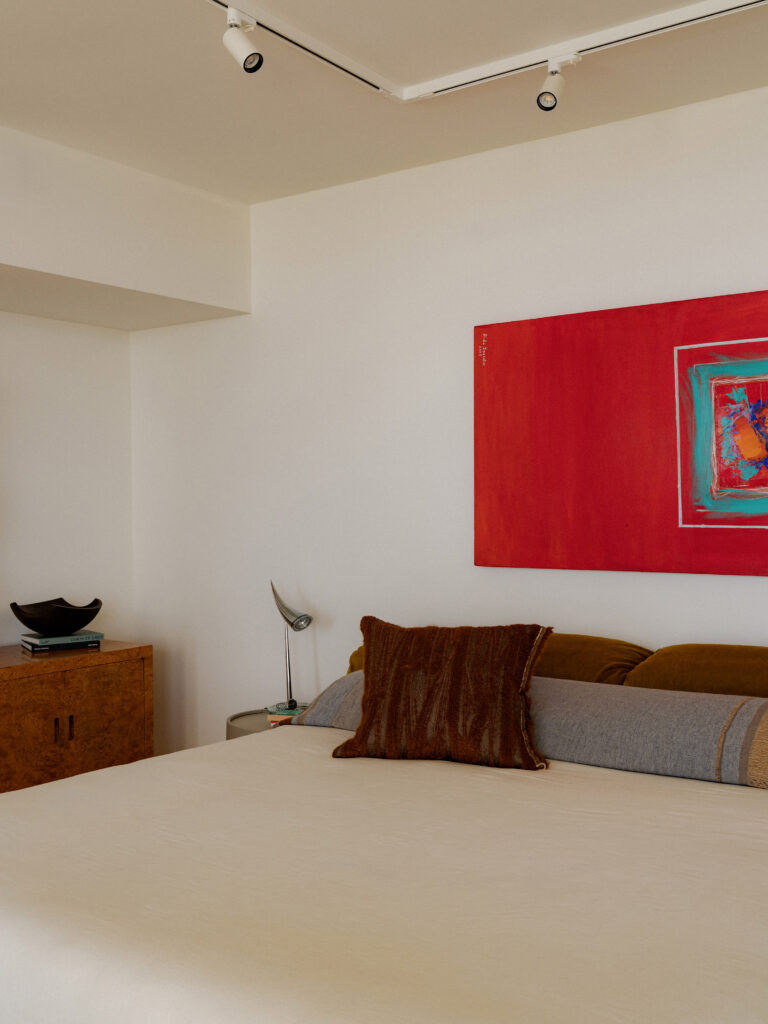
The mellow tones of the kitchen were contrasted by the fiery orange-red of the pivoting foyer doors – a hue that reappears in a bold artwork above the bed in the otherwise neutral-toned primary bedroom.
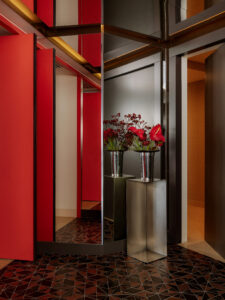
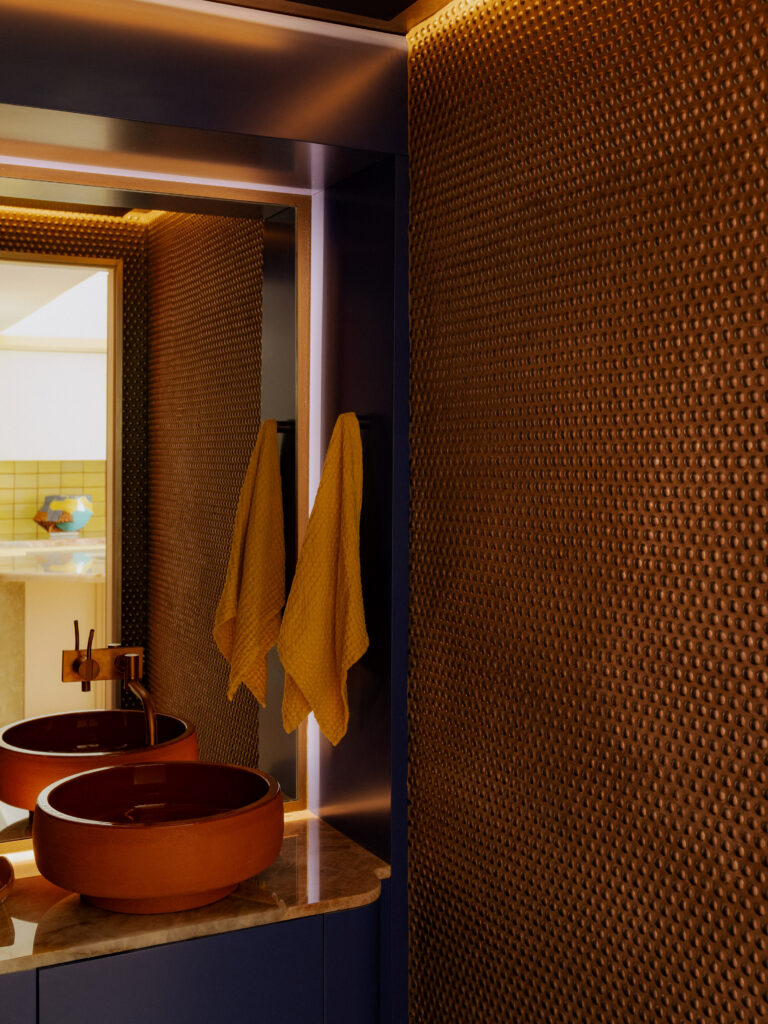
Metallic accents are dialled up in the powder room where a silver metal mosaic clads the walls and metallic zellige tiles cover the floor.
Moirano described it as a “very sexy disco-inspired discovery off the foyer”.
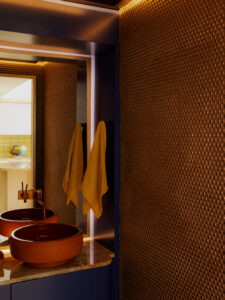
“The result is a small but impactful space that captures the project’s more theatrical influences through materiality rather than overt decoration,” the studio said.
The team describes the project as an example of its “high-impact minimalism, in which architectural restraint provides a framework for distinctive materials, collectible furnishings, and unexpected moments of visual interest.”
Located on a barrier island along South Florida’s Atlantic Coast, Miami Beach is renowned for its 1920s art deco architecture and more recent influx of luxury hotels.
Another apartment, on the city’s famous Ocean Drive, was renovated by MW Works to include tropical hardwood and sand-coloured plaster.
Photography by Ori Harpaz
Read more
Recommended stories
Marc Ange envelops LA restaurant Muse in earthy caramel tones
Ecru Studio designs Taipei patisserie as “convergence of East and West”
Islyn Studio combines raw and refined materials in Miami Beach restaurant
Sophie Goineau adds “wave-like” timber ceiling to Malibu beach house
Miami tattoo parlour by Chimera Design facilitates “quiet ritual”
Miami skyscraper by ODP Architects to be “beacon of opulence and exclusivity”
Smith Hanes Studio brings “a sense of calm” to Carmel restaurant in Atlanta