Nikken Sekkei and BIG's Toyota Woven City unveiled in Japan
Car brand Toyota has revealed the first phase of its Woven City project in Japan, which was designed by Japanese studio Nikken Sekkei as part of a masterplan by Danish studio BIG.
Woven City is currently being built near the base of Mount Fuji at the former site of Toyota Motor East Japan's (TMEJ) Higashi-Fuji Plant in Susono City, Shizuoka Prefecture.
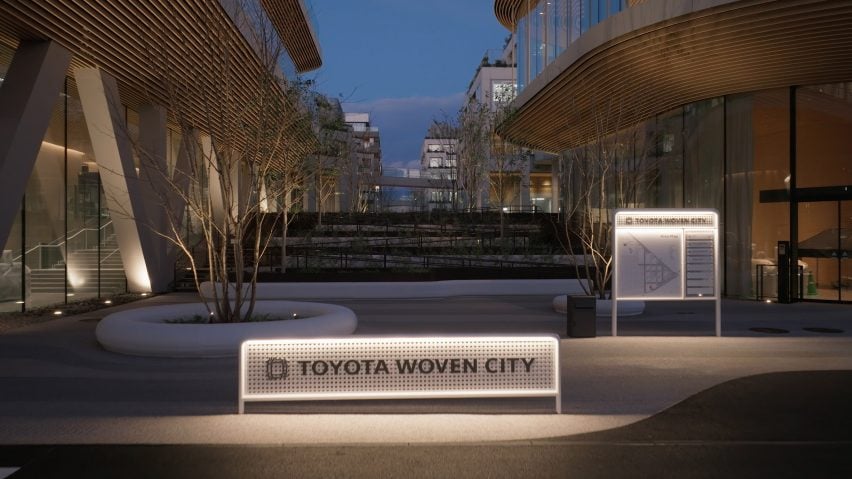
Buildings for the first phase have now been completed and approximately 100 residents are expected to move in around autumn 2025 or thereafter. Phase one will accommodate 360 people, Toyota said, with the official launch set for autumn.
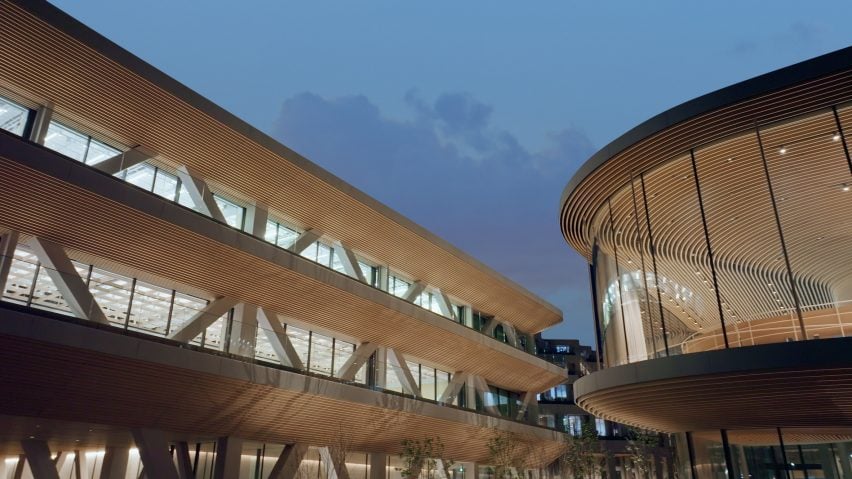
Projected to eventually house 2,000 people, the city features staggered wooden buildings flanking a central square and surrounded by a road. The masterplan, public realm and landscape for the project were developed by BIG with Nikken Sekkei carrying out the detailed design in collaboration with Obayashi Corporation.
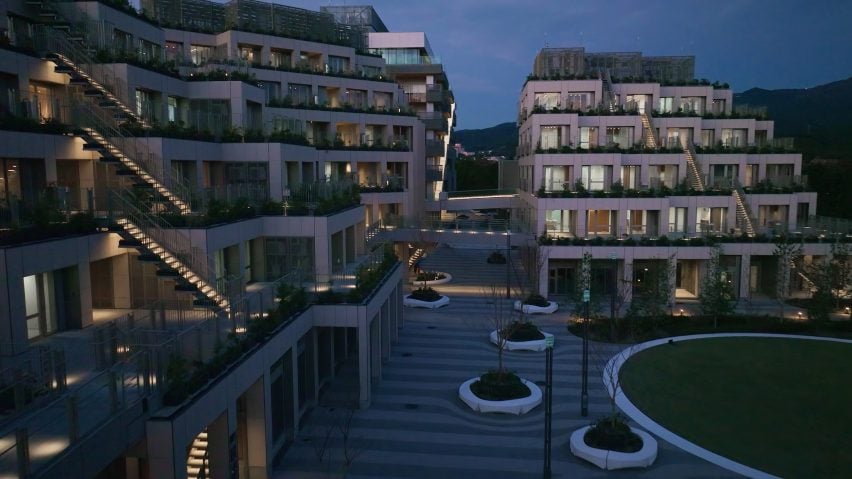
The houses, primarily built of wood, feature solar panels on their roof while the apartments have been designed so that residents have access to planted terraces.
Woven City sits on a 70-hectare site and will have a mix of housing, business and retail. It was designed to "demonstrate Toyota's long-term commitment to shaping the future of mobility".
Its residents will be testing vehicles and products from companies including Toyota and its Woven by Toyota (WbyT) brand.
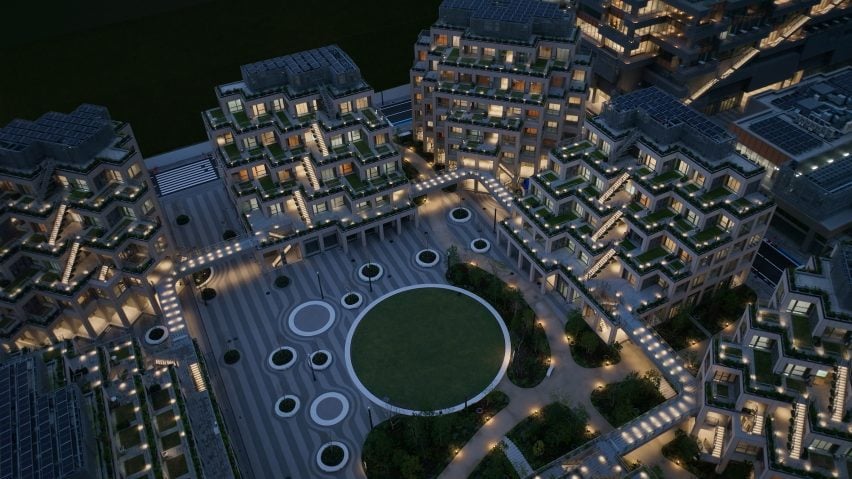
Other brands that have been confirmed for Woven City are Nissin Food Products, which will create "food environments to inspire new food cultures" and air conditioning company Daikin, which will test "pollen-free spaces" in Woven City.
BIG designed the city as a "woven grid" that is 150 metres wide. Streets will be used by vehicles, pedestrians and "other mobility types", the studio said.
Roads will be divided into three sections, with one – the primary street – occupied by autonomous vehicles including the Toyota e-Palette.
A secondary section will be used by bicycles, scooters and other personal modes of transport, while the third will be a "linear park" dedicated to pedestrians and plants.
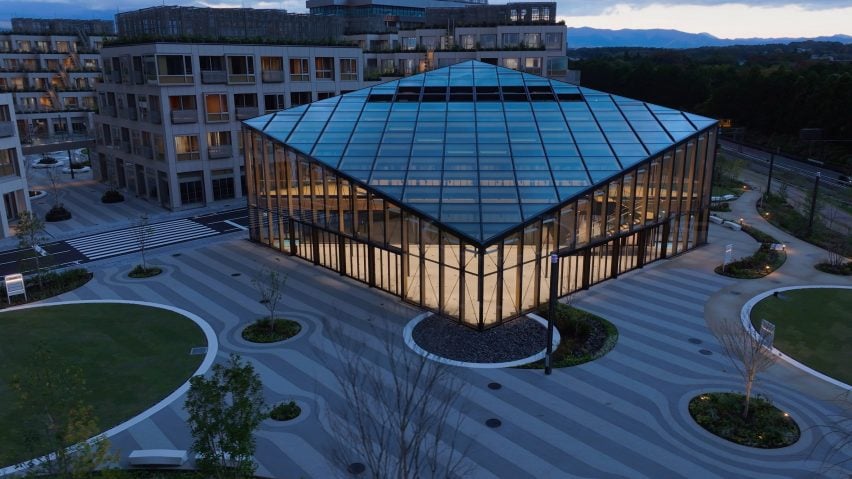
"Connected, autonomous, emission-free and shared mobility solutions are bound to unleash a world of opportunities for new forms of urban life," BIG founder Bjarke Ingels said when the project was first announced.
"With the breadth of technologies and industries that we have been able to access and collaborate with from the Toyota ecosystem of companies, we believe we have a unique opportunity to explore new forms of urbanity with the Woven City that could pave new paths for other cities to explore."
Work has begun on phase two and on the renovation of a former TMEJ Higashi-Fuji Plant facility into a manufacturing hub for Woven City.
Elsewhere, BIG is also currently working on luxury residences for Saadiyat Island in Abu Dhabi and the overhaul of a 1950s power plant in Connecticut.
The photography is courtesy of Toyota.