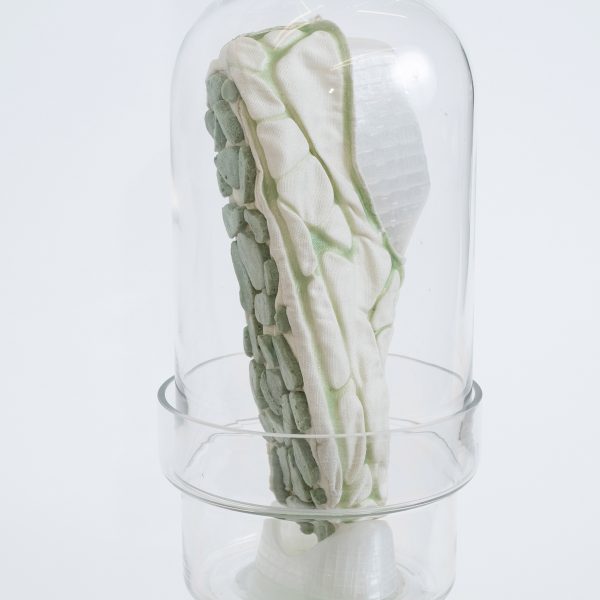
Student grows fuzzy fridge from bacteria to challenge norms around cooling
Designer Audrey Levy has reimagined a common household appliance with her project How to Grow a Refrigerator, applying sustainable insulating and cooling technologies that take advantage of the power of bacteria and the sun.
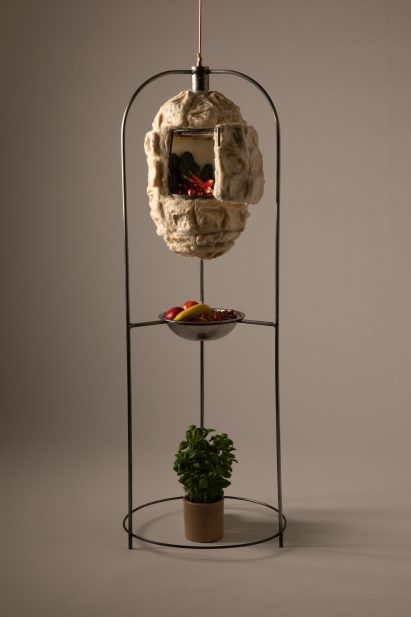
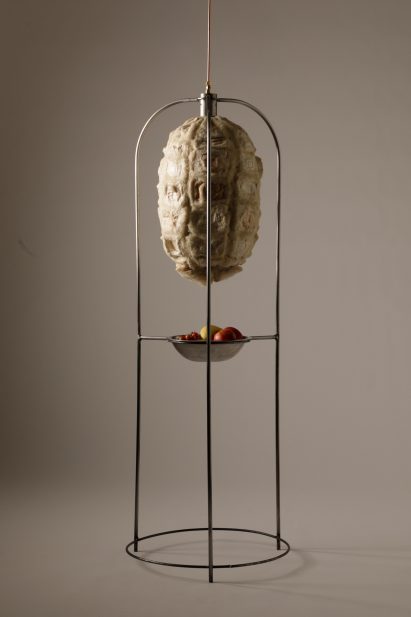
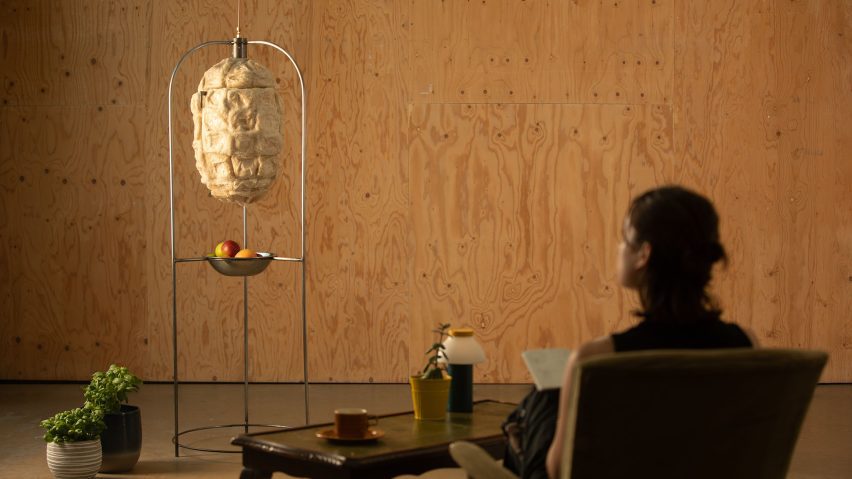
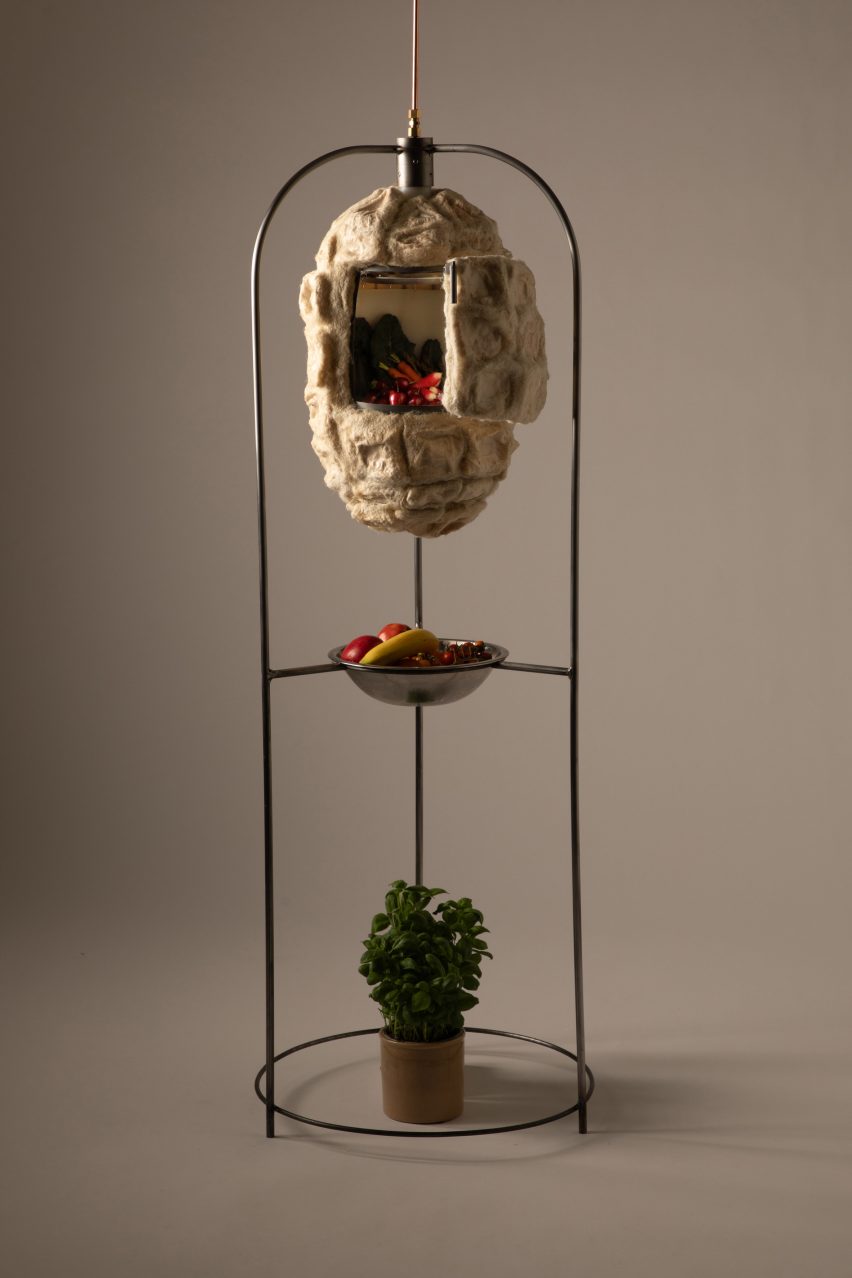
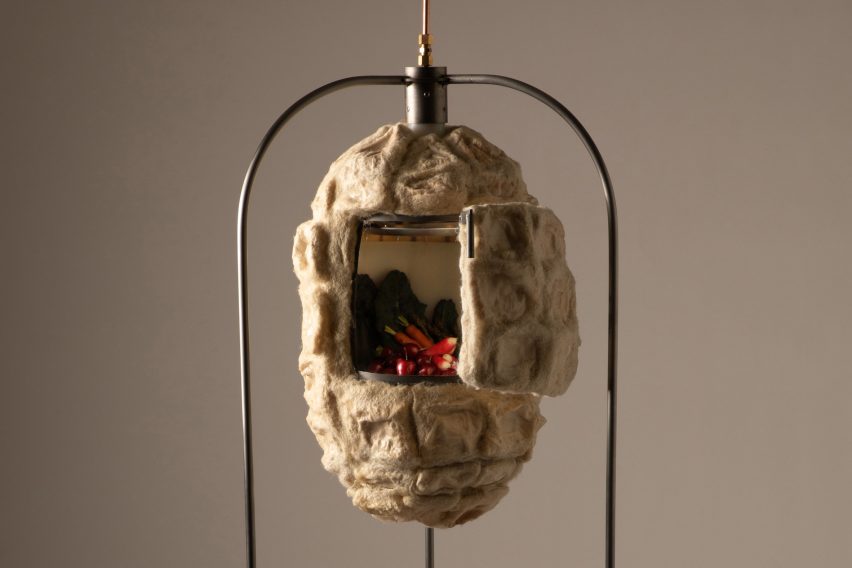
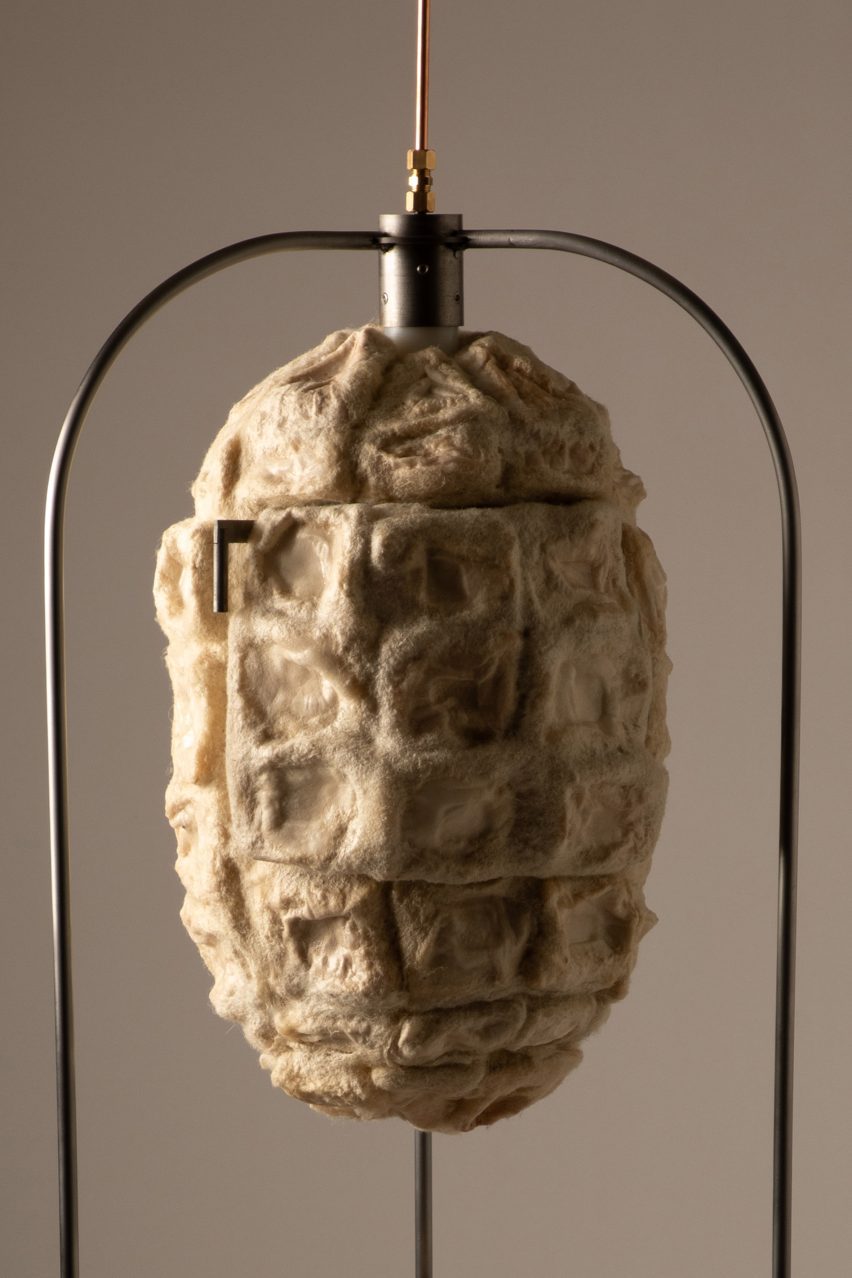
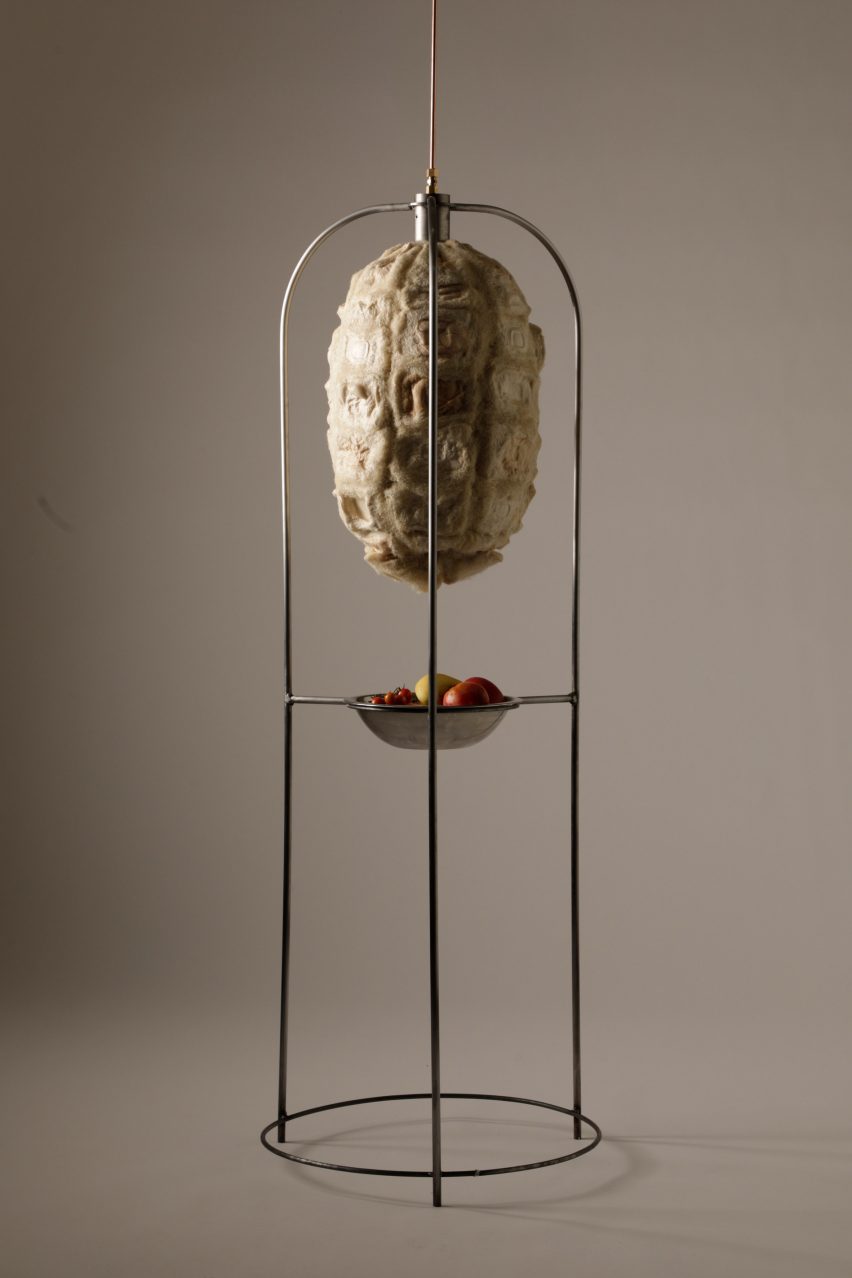
The refrigerator, alternatively titled Xero Cool, is a compact, soft capsule made out of bacterial cellulose xerogel – a light, highly insulating and naturally compostable alternative to the expanded plastic foams inside conventional fridges.
The Central Saint Martins (CSM) graduate imagines it being paired with an electricity-free cooling system based on solar thermal energy, where heat from the sun is captured via a rooftop solar collector and used to drive a cooling cycle.
This would drastically lower the greenhouse gas emissions that currently come from refrigeration’s large electricity demands and the leaking of cooling gases, Levy argued, while also challenging our relationship with technology and food.
“Researching refrigeration became a surprisingly radicalising experience,” Levy told Dezeen. “It felt like uncovering this seedy underbelly of civilisation connected to so many critical functions of modern society.”
“The domestic refrigerator is just the tip of a global network of continuous cold space that spans the globe, connecting production and consumption,” she continued. “Our overwhelming reliance on this technology presents a conceptually rich but terrifying paradox: as climate extremes intensify, so does our reliance on refrigeration.”
“At the same time, refrigeration technology is responsible for eight per cent of global emissions, roughly three times that of the entire aviation industry. So the way we manufacture cold actually makes the Earth hotter.”
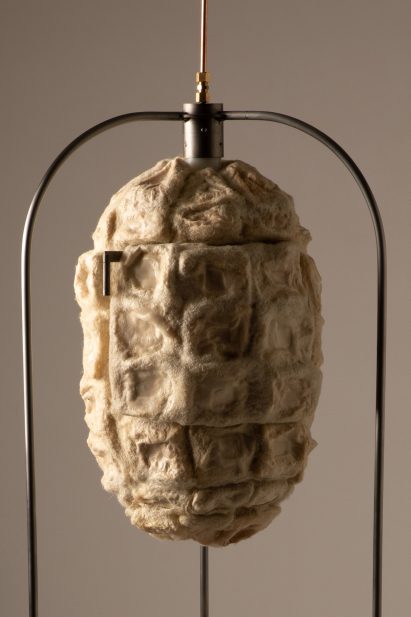
As she researched, Levy came to believe that transforming the technology behind refrigeration would also involve updating its “heavy, clunky” and “sterile” aesthetic, which she found has remained largely unchanged since the early 20th century, when the appliance was launched and marketed as a symbol of status and food safety to anxious mothers.
“The legacy of plastic whiteness as cleanliness lives on in many of today’s interiors,” the designer explained.
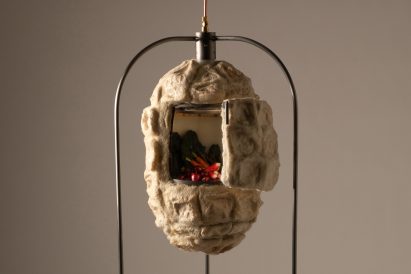
The look of Levy’s fridge instead communicates the nature of its material construction, which combines bacterial cellulose xerogel with further insulating felted wool.
It combines the softness of a domestic object with a hint of “solarpunk” – the social and artistic movement that imagines positive futures built on sustainable technologies.
Bacterial cellulose xerogel is, like other types of bacterial cellulose, a bacteria-grown biomaterial. But it has a rigid, low-density structure similar to the expanded plastic foams used for packaging and insulation.
Levy made hers to her own recipe in the CSM Grow Lab using only non-toxic materials, unlike the plastics and refrigerants in regular fridges.
Lining the inside of the fridge are macrofluidic panels that circulate cooled water to draw away heat while also protecting the absorbent wool and xerogel from direct contact with food.
Levy’s vision for her fridge of the future is that the fuzzy, insulating layers will be effective enough so that the fridge does not require constant electrically generated cooling.
Instead, it will use a solar-thermal absorption refrigeration system, which is triggered by the heat of the sun during the day, setting off a chain of passive state changes in an absorbent material and liquid refrigerant.
The next stage of the project will involve Levy realising this system by connecting the fridge to a dish-like outdoor solar collector as well as simple copper condenser and evaporator coils on top of the fridge.
Even though absorption refrigeration is typically seen as less efficient than the electrically powered compression systems in conventional fridges, it is Levy’s preferred method, because she sees power grids as being at risk from increasing demand and the transition to renewable energy as potentially being incomplete for a long time.
Absorption refrigeration also avoids the need for solar panels or battery storage, with their requirement for large amounts of mined minerals. It has no moving parts, cutting down on complexity and maintenance, and operates almost silently.
Based on recent scientific research, the designer believes the system can be made entirely with bio-based ingredients, with activated carbon and ethanol as the absorbent and refrigerant, making the process more non-toxic and safe than ever before.
Levy’s fridge is finished with a fruit bowl below the main unit, intended to invite external storage where appropriate. Currently, many items are commonly refrigerated though they do not require it, she says, while some – like tomatoes and bread – are actively damaged by the cooler temperatures.
“I would hope that the world in which this alternative refrigerator was adopted would be a reality in which we have re-evaluated relationships with the kitchen, food and material cultures,” said Levy. “Perhaps spatial constraints would prompt more intentional consumption.”
“A lower coefficient of performance and non-continuous cooling cycles would mean increased mindfulness of when the fridge is open and for how long,” she added. “Transitioning to less efficient technologies that eliminate reliance on ecologically damaging processes and build local resilience is a challenge to revisit how we evaluate the merits of efficiency.”
Levy created Xero Cool / How to Grow a Refrigerator as part of her graduate degree in Biodesign at CSM, from which she graduated in 2026. Other graduates in her cohort created projects including an audio player for listeners to co-compose music with artists and a low-tech communicator for Palestinian bus drivers.
Read more
Recommended stories
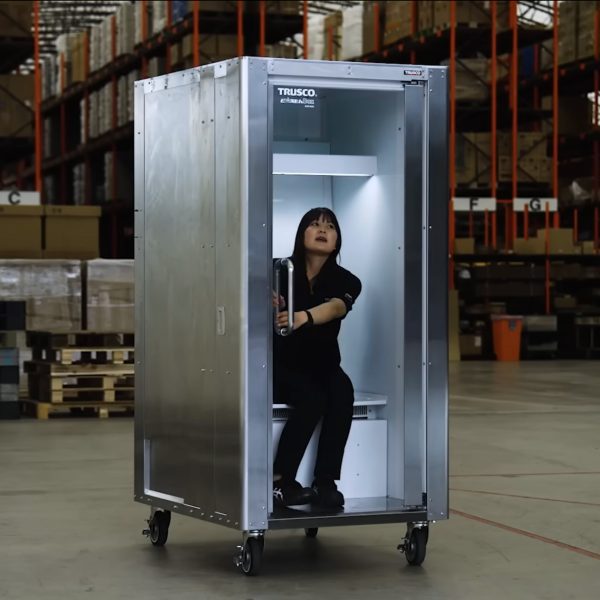
“Human refrigerator” provides escape from deadly heatwaves
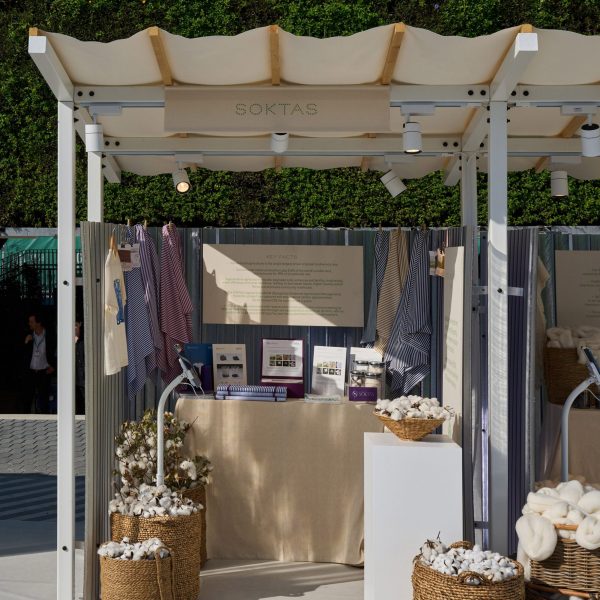
Stella McCartney presents Sustainable Market of material innovations at COP28
Can we quit our air-con addiction?
Carbon Cell makes plastic-free alternative to polystyrene

Kitchen Cosmo is a “playful and intentional” AI appliance that generates recipes based on leftovers
Ten different and everyday uses for bioplastics

“Ancient cooling techniques” allow 3D-printed partitions to regulate temperature