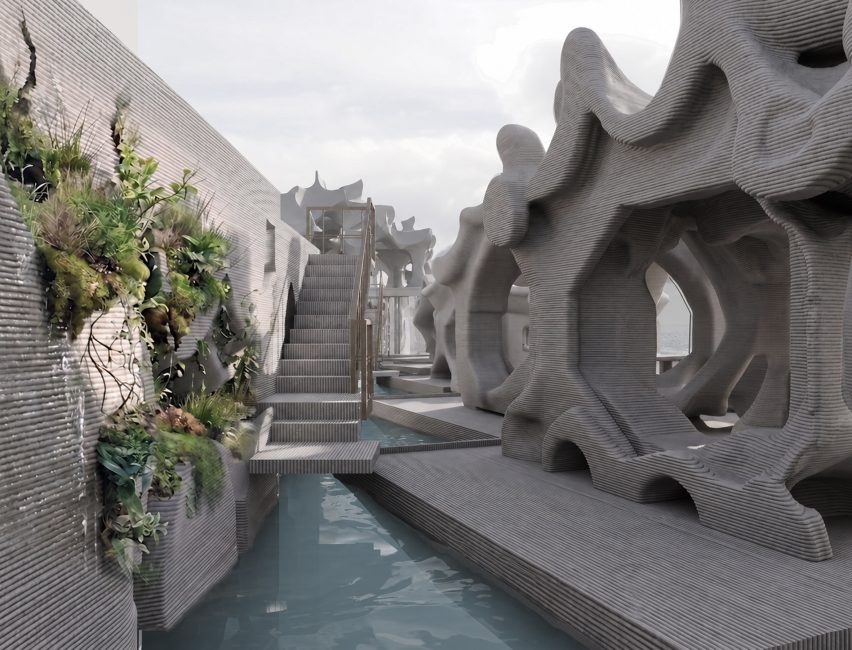
Japanese port town regeneration among projects from Singapore University of Technology and Design
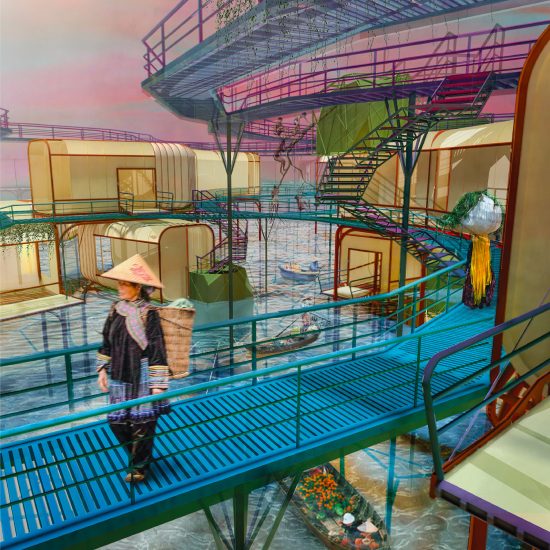
Dezeen School Shows: a proposal to reimagine the historic Japanese port town of Tomonoura is among the projects from the Singapore University of Technology and Design.
Also featured is a project exploring care infrastructure for residents living within Manila North Cemetery and an ecological masterplan for Singapore‘s coastline.
Singapore University of Technology and Design
Institution: Singapore University of Technology and Design
School: Architecture and Sustainable Design (ASD)
Course: Master of Architecture
Tutor: Frederick Peter Ortner
School statement:
“The Master of Architecture programme at the Architecture and Sustainable Design (ASD) pillar represents the deep investigation into the technology and research-infused design pursued by SUTD.
“This is an accelerated course held over three terms, principally comprising practice, studio and thesis elements.
“It is designed to orientate and focus students through a longer-term thesis-based design methodology and project; and to realise new visions of novel creative and social design futures.”
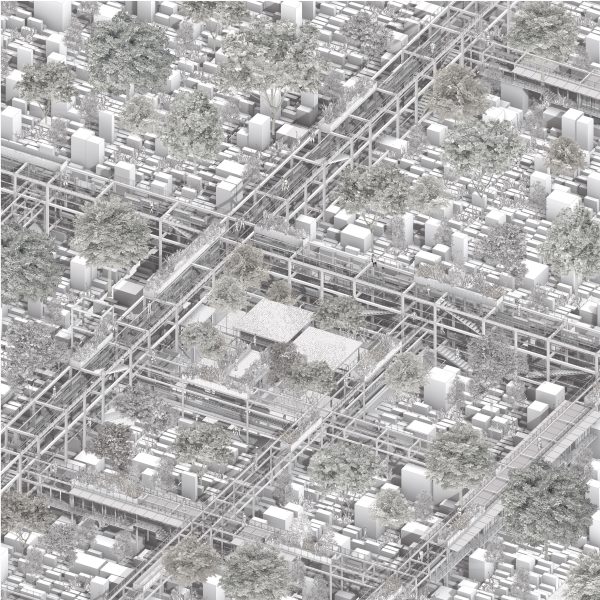
Caretaking: Care Infrastructures in the City of the Dead by Aceson Han
“Metro Manila’s fragmented urban landscape exposes the limits of formal planning in addressing inequality, access and environmental threats.
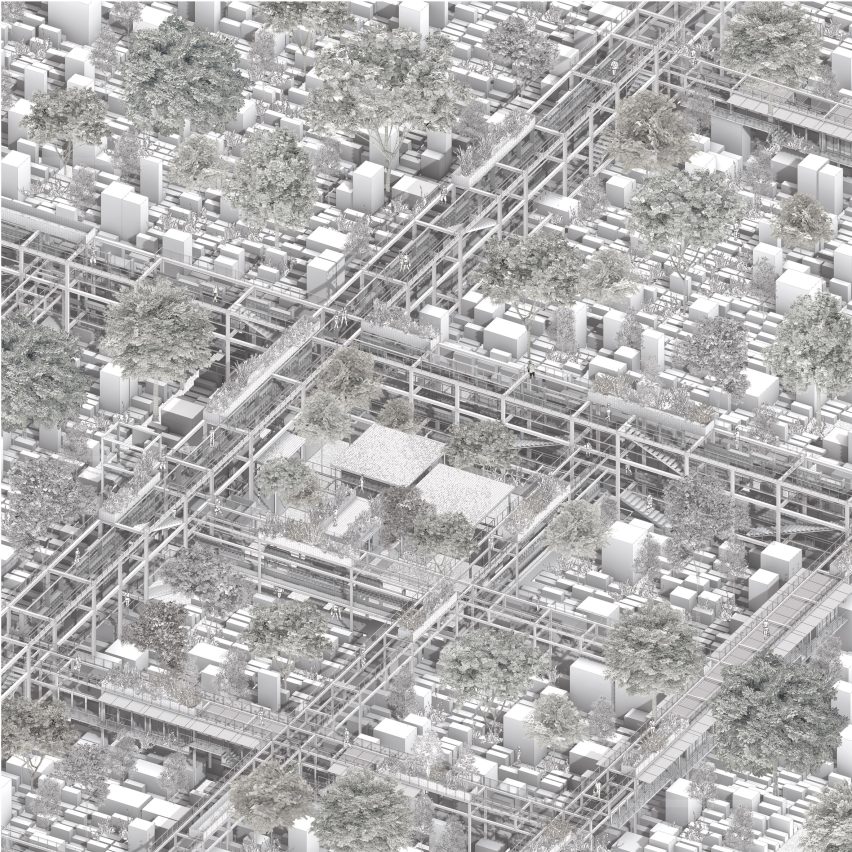
“Nowhere is this more visible than in Manila North Cemetery, one of the city’s last remaining plots of green space and home to generations of residents who sustain its daily operations as grave caretakers, builders and service providers.
“This thesis argues that the everyday practices of caretaking within the cemetery already function as a form of urban stewardship.
“Rather than treating informality as a condition to be removed, the project proposes spatial and infrastructural strategies that strengthen existing systems of care, labour and community organisation.”
Student: Aceson Han
Course: Thesis
Tutor: Calvin Chua
Email: aceson_han[at]mymail.sutd.edu.sg
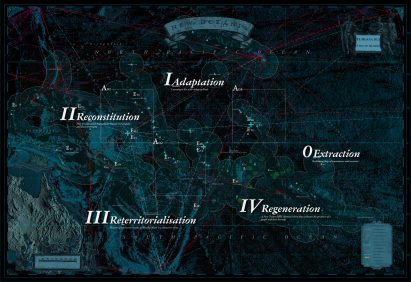
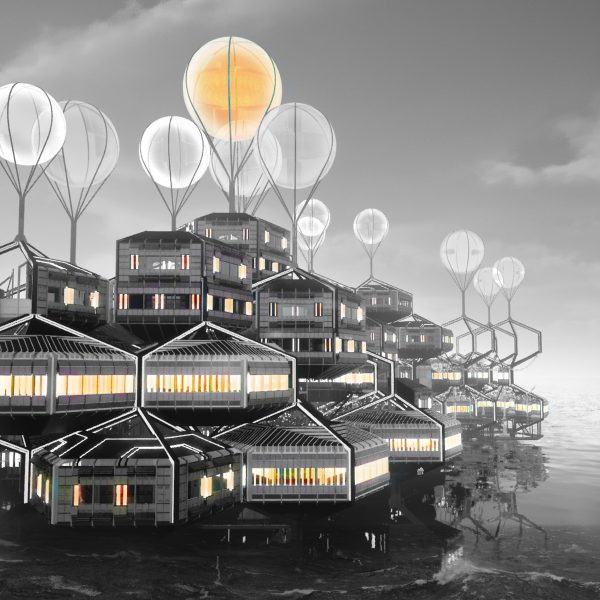
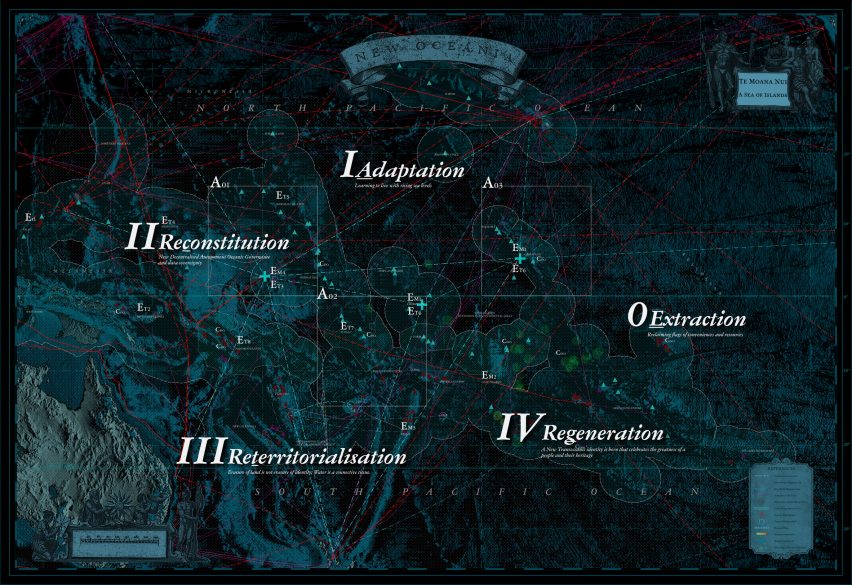
Towards a New Oceania: Manifestations of Extraction and Survival by Darius Chen
“To speak of the Pacific Islands is already to speak in a colonial tongue: small, scattered, peripheral to a Euro-American centre. This thesis rejects that cartography, aligning instead with Hau’ofa’s Our Sea of Islands.
“On Kiritimati, extraction and survival have long been told as one story, with phosphate, nuclear testing and rising sea levels rendering Pacific peoples as victims to be saved or resources to be tallied.
“The design response operates across scales – component, dwelling, settlement and atoll – facilitated by a digital twin built for planning under deep uncertainty.
“Through stochastic agglomeration, components and infrastructure emerge as relational assemblages, creating an architecture of vā through which Oceania authors its own futures.”
Student: Darius Chen
Course: Thesis
Tutor: Eva Maria Castro
Email: darius_chen[at]mymail.sutd.edu.sg

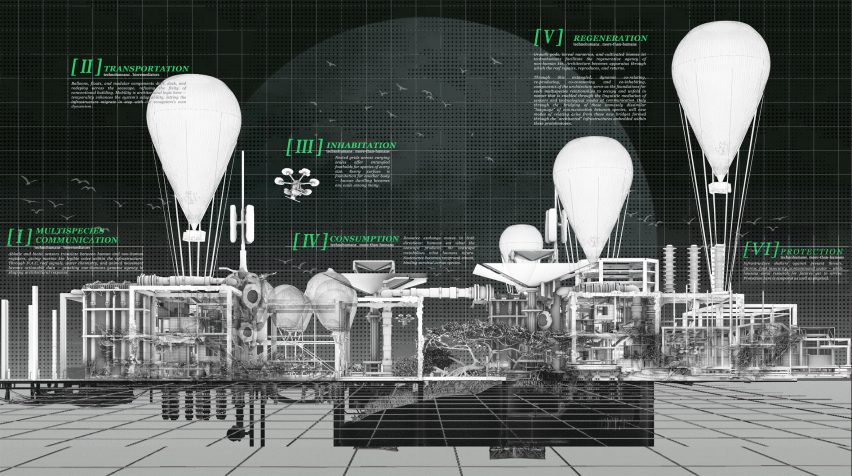
Chthulucene Manifesto by Adelin Johari
“Amidst the global environmental crisis, biodiversity stands as the final and most crucial planetary system at the brink of collapse.
“Environmental destruction remains rooted in a human-centric worldview, where human needs are prioritised over forms of life on the planet.
“This necessitates an urgent rethinking of how we relate to the environment, motivated by the concept of ‘decentring’ proposed in Donna Haraway’s Chthulucene.
“The thesis challenges existing global systems concerning ecological sustainability and conservation, and speculates on living within a damaged planet through designing multi-species, symbiotic relationships.
“Design is explored in spatialising alternate forms of communicating, co-producing, co-consuming and co-existing with ‘more-than-humans’.”
Student: Adelin Johari
Course: Thesis
Tutor: Eva Maria Castro
Email: adelin_johari[at]alumni.sutd.edu.sg
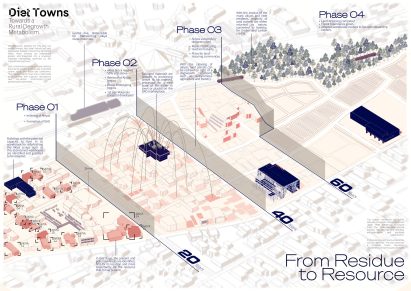
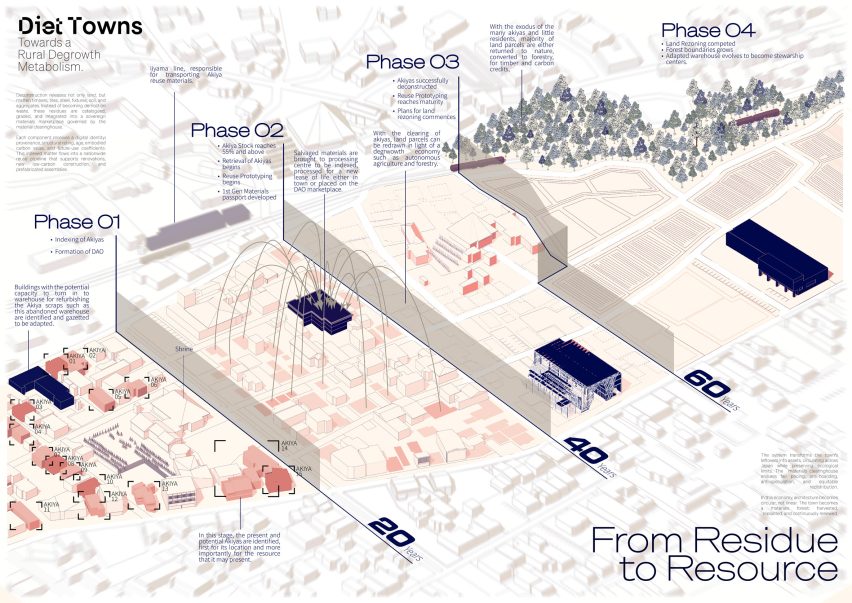
Diet Town: Towards a Rural Degrowth Metabolism by Jonathan Leong Zhen Cong
“Diet Towns proposes a rethinking of architecture’s role in rural Japan, shrinking faster than it can repair itself.
“Centred on the Shinetsu region – Japan’s deep-winter interior, where climate, culture and demographic decline converge – the thesis reframes decline not as a pathology to be reversed but as a material condition to be spatialised.
“Instead, Diet Towns advances a territorial theory of degrowth: the deliberate withdrawal of settlement footprint, the deconstruction of surplus buildings as a new form of material production, and the return of land to forest, water and low-maintenance ecologies.
“Iiyama is positioned as the prototype town where governance, material flows and commons-based land management can be reorganised through a Degrowth Co-Op.”
Student: Jonathan Leong Zhen Cong
Course: Thesis
Tutor: Calvin Chua
Email: jonathan_leong[at]mymail.sutd.edu.sg
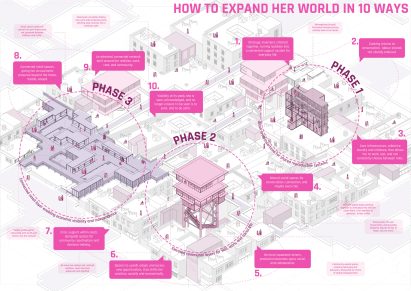
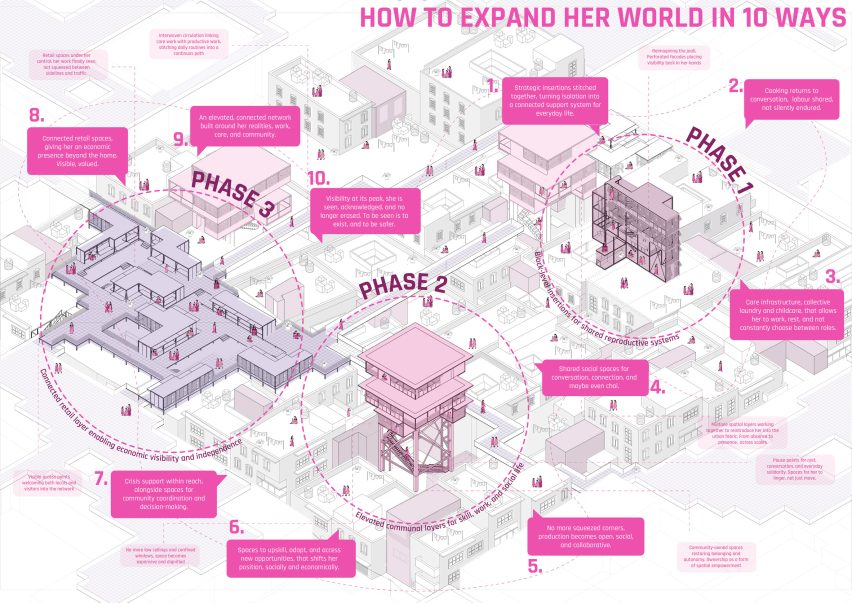
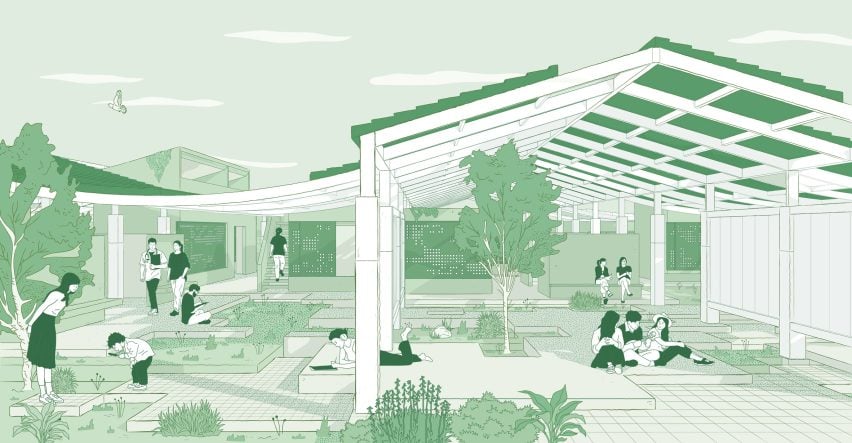
Where She Thrives by Paraaga Raghavendra
“Across India, women are systematically excluded from the spaces that shape everyday life. Confined behind thresholds and restricted by social and spatial barriers, many are left with limited access to work, safety, visibility and autonomy.
“Public streets remain hostile, workplaces distant, and homes rarely empowering.
“The thesis explores how architecture can reconfigure these conditions by working within the existing fabric of the city. Rather than singular interventions, it reconnects domestic, economic and social systems to support new forms of collective life.
“The project works across multiple layers. Thresholds are reconfigured to connect women through shared systems of care and labour.”
Student: Paraaga Raghavendra
Course: Thesis
Tutor: Calvin Chua
Email: paraaga_raghavendra[at]alumni.sutd.edu.sg
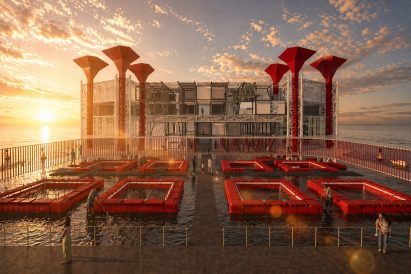
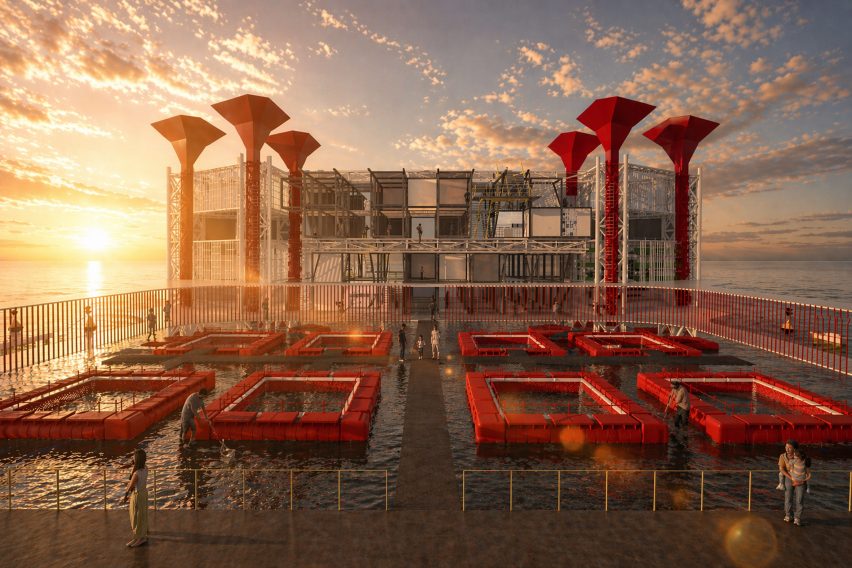
Pelagic Territories by Yiew Jae Tzen
“Sovereignty in the South China Sea, tethered to fossil fuels and military control, undermines itself as environmental degradation renders land-based authority untenable.
“As vanishing territories displace millions, governance must pivot from territorial enclosure towards decentralised maritime infrastructures, establishing regional commons sustained by collective labour that reframe political authority in an ocean that inherently resists enclosure.
“This fluid sovereignty integrates China’s decarbonisation goals with ASEAN’s labour capacities through green ammonia for energy and circular aquaculture for food security.”
Student: Yiew Jae Tzen
Course: Thesis
Tutor: Eva Maria Castro
Email: jaetzen_yiew[at]mymail.sutd.edu.sg
![[Home]eostasis by Austin Law](https://static-2026.dezeen.com/uploads/2026/07/japanese-port-town-regeneration-singapore-university-technology-design-schoolshows-1_dezeen_2364_col_1-411x194.jpg)
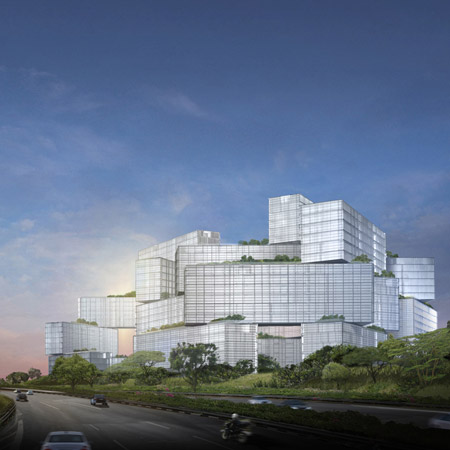
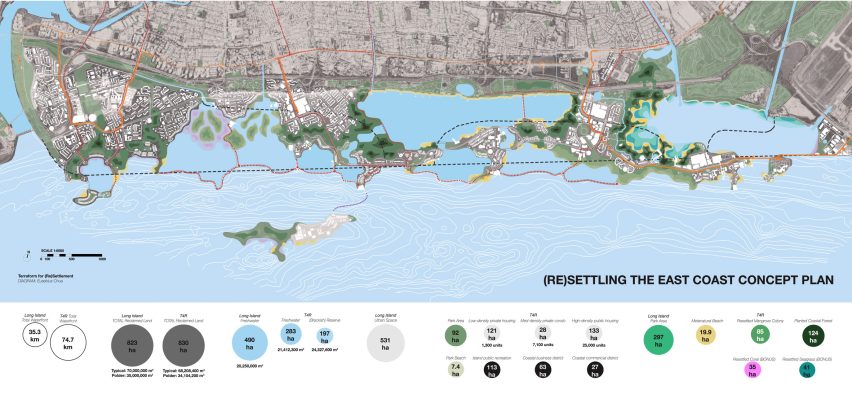
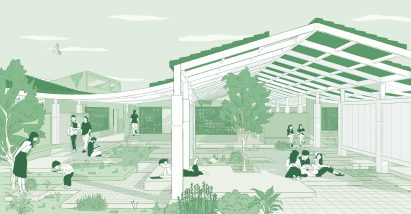
(Re)Settling the East Coast: A Bolder and Better Long Island Plan by Chua Shuei Ray Eusebius
“Singapore’s coastal developmental projects have historically prioritised monetary value, built functionality and shoreline security in their design, from its early colonial days to the present time. This has resulted in an engineered and ‘grey’ coastline that has destroyed and displaced shoreline ecology.
“As a result, Singapore is losing more and more of its marine coastal ecological heritage in the name of ‘progress’.
“Despite concerns for the environment only recently entering the design of built spaces, a surprising amount of Singapore’s flora and fauna have survived and resettled the ‘grey’ coastlines of Singapore.
“This project proposes that by centring the design of reclaimed land around the principle of ecological connectivity, coastal ecologies can be incorporated instead of displaced from the urban fabric.”
Student: Chua Shuei Ray Eusebius
Course: Thesis
Tutor: Stylianos Dritsas
Email: eusebius_chua[at]mymail.sutd.edu.sg
A Porous Belonging by James Tan Shi An
“Situated on Ōshima Island, a former Hansen’s disease sanatorium in Japan, this thesis investigates how architecture can transform landscapes of isolation into environments of belonging, care and renewal.
“Historically shaped by segregation, surveillance and social stigma, the island embodies spatio-temporal fractures that severed relationships between individuals, communities and everyday life.
“Rather than erasing this history, the project reinterprets it through the concept of porous belonging, positioning architecture as a mediator between autonomy and care.
“A regenerative mental wellness campus emerges through the adaptive reuse of former sanatorium structures and graduated conditions of ecological, social and sensory porosity.”
Student: James Tan Shi An
Course: Thesis
Tutor: Frederick Peter Ortner
Email: james_tanshian[at]mymail.sutd.edu.sg

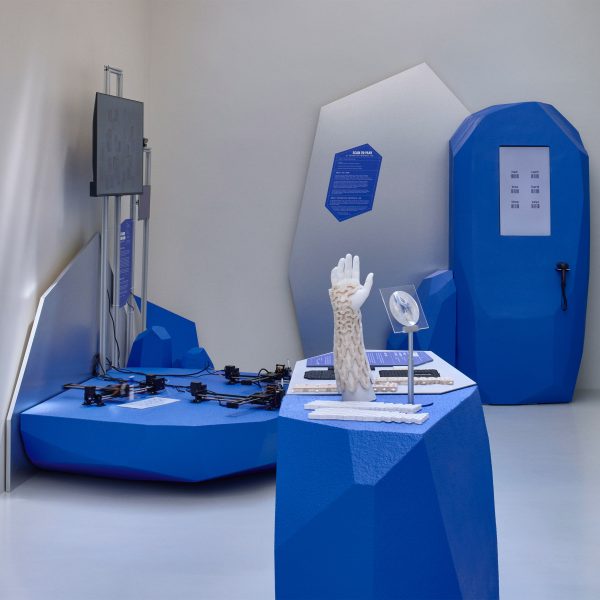
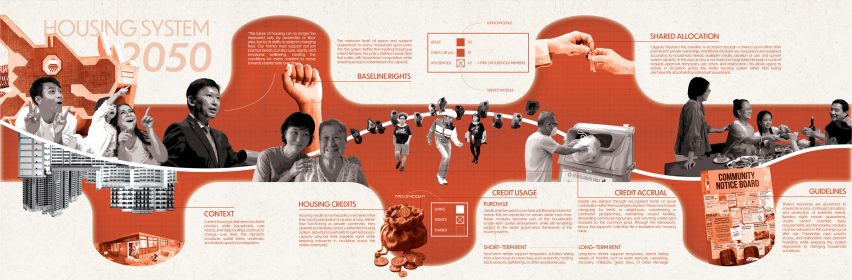
[Home]eostasis by Austin Law
“‘All Watch Over by Machines of Loving Grace.’ Written by Richard Brautigan in 1967, the poem imagines a future in which humans and machines coexist within a mutually supportive ecology, where technology quietly cares for and responds to human needs. Nearly six decades later, our homes remain far from this vision.
“[Home]eostasis is a speculative housing project that reimagines the home as a living system capable of continuously adapting to its occupants throughout their lives.
“The proposal envisions a feedback loop between occupants and their environment, supported by artificial intelligence.
“Spaces are able to transform in response to changing household requirements, while lighting, airflow, acoustics and access are continuously calibrated to support occupant wellbeing.”
Student: Austin Law
Course: Thesis
Tutor: Sam Conrad Joyce
Email: austin_law[at]alumni.sutd.edu.sg
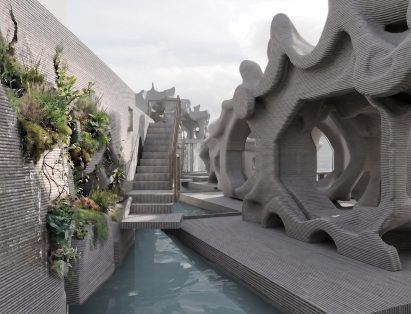
Memory Re-Formed by Aye Yu Mon
“Memory Re-Formed explores artificial intelligence as a creative design methodology for architectural regeneration.
“Rather than treating AI as an autonomous image generator, it positions AI as a collaborative design tool, guided through critical judgement, curated datasets and iterative experimentation, to reinterpret the collective memory embedded within historic places.
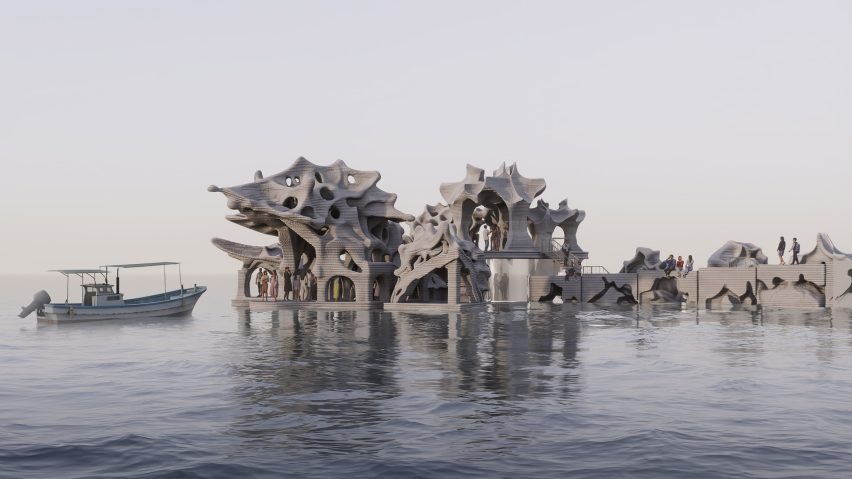
“Using the historic port town of Tomonoura, Japan, as a case study, the project develops an AI-assisted workflow that combines heritage analysis, diffusion models and computational modelling.
“The resulting proposal extends Tomonoura’s streetscape into the Seto Inland Sea through a series of floating and fixed structures that function simultaneously as public space, cultural infrastructure and marine habitat.”
Student: Aye Yu Mon
Course: Thesis
Tutors: Erwin Viray and Frederick Peter Ortner
Email: yumon_aye[at]mymail.sutd.edu.sg
Partnership content
This school show is a partnership between Dezeen and Singapore University of Technology and Design. Find out more about Dezeen partnership content here.