Shigeru Ban unveils coastal wellness retreat on Awaji Island
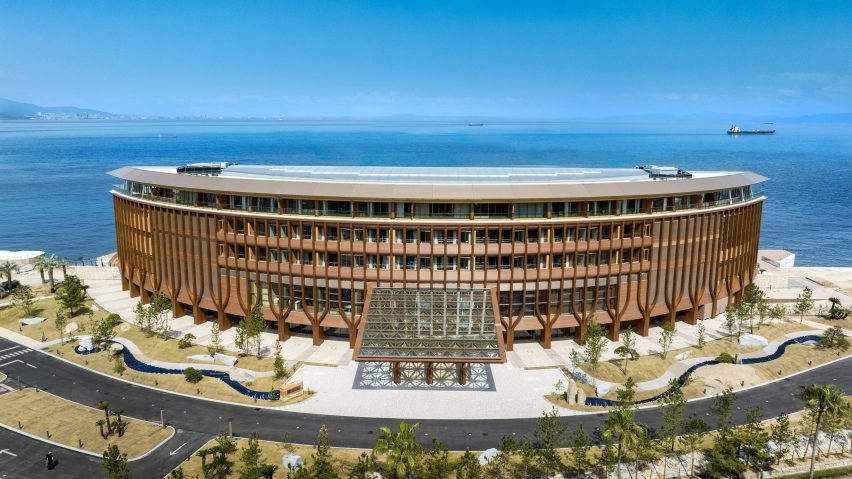
Pritzker Prize-winning architect Shigeru Ban has completed a wellness hotel on Awaji Island, Japan.
Named the Pasona Natureverse Retreat, the hotel at the tip of Awaji Island near Kobe was designed for long-term stays based on the ideal of Mibyo – an ideal of preventive wellness treatment that translates as "pre-illness".
The hotel is the third project designed by Ban for Japanese company Pasona Group on the island. It follows a thatch-topped restaurant and a wooden meditation retreat.
According to Ban, the hotel's D-shaped form was designed to take advantage of its location between the coast and a forest.
"To express the characteristics of a site defined by these two completely contrasting landscapes, distinct facades were designed for the east and west sides," said Ban.
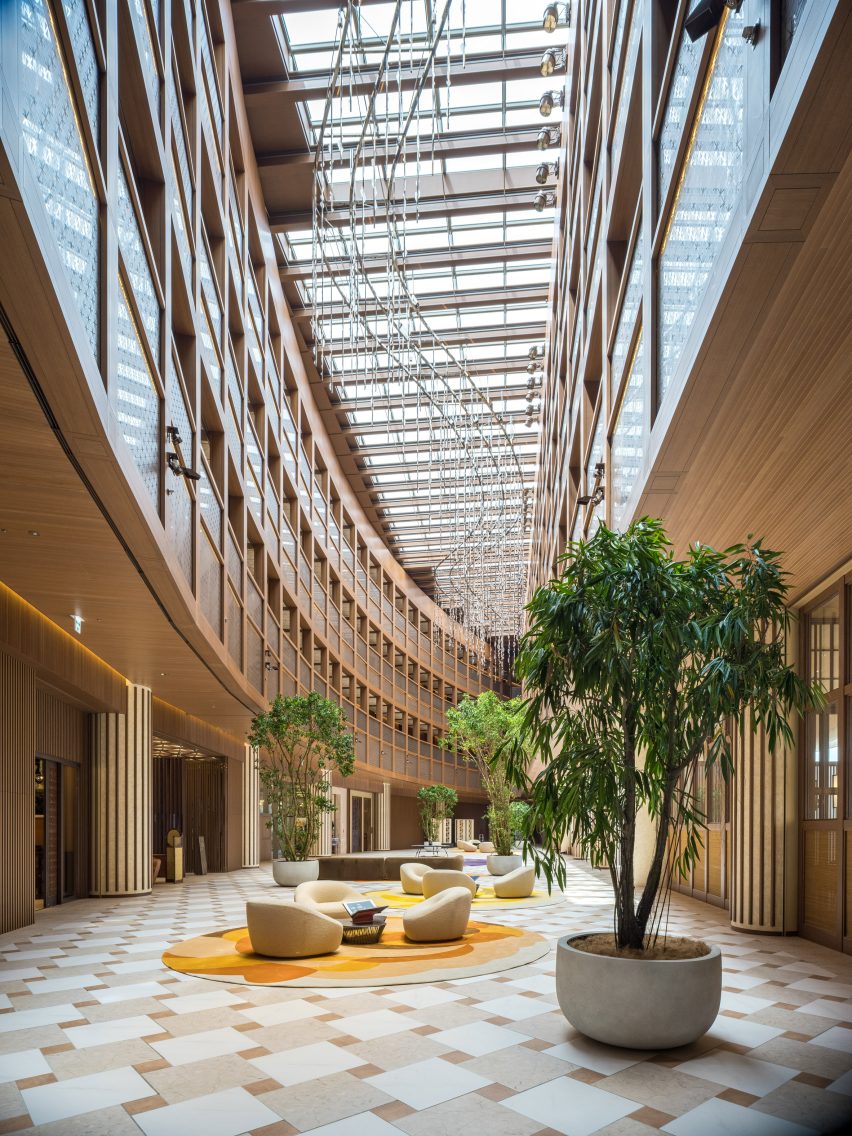
"Two linear structures with individual qualities are integrated into a single D-shaped plan, flanking a light-filled atrium."
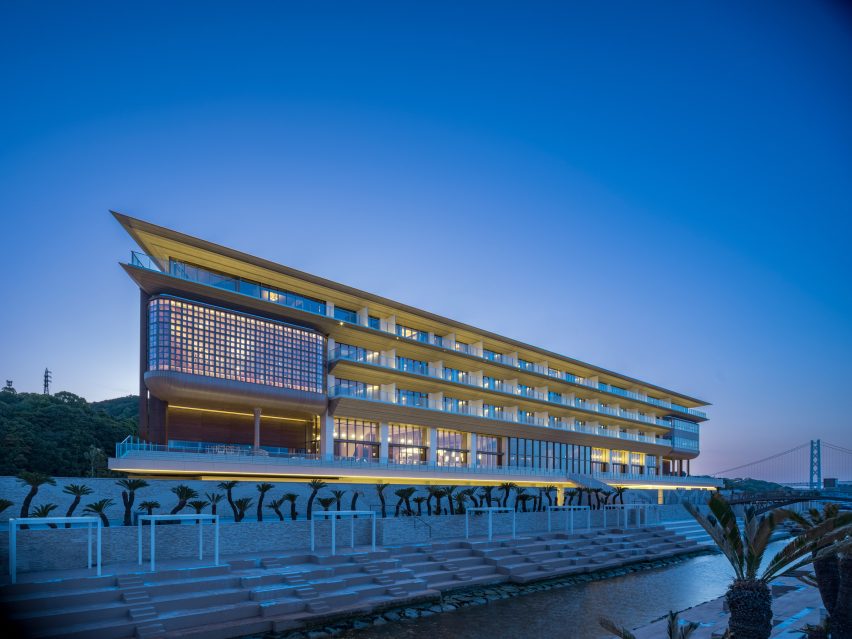
The five-storey hotel was designed primarily for long-term, 30-day-plus retreats, as well as offering shorter stays.
Its 57 rooms are arranged around a large, skylit central atrium with half overlooking the sea and half facing the forest.
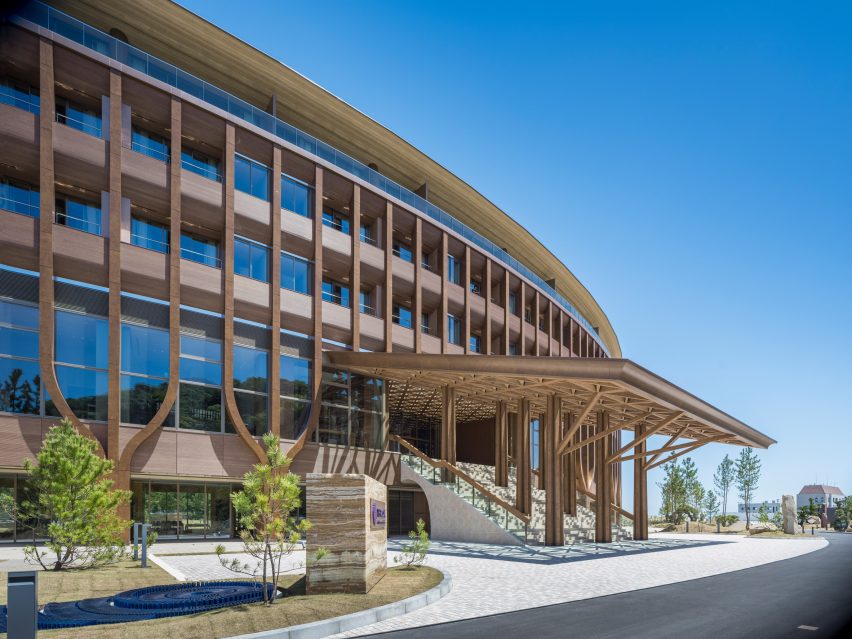
While the landward facade is adorned with stylised timber columns, the seaward side was designed to express horizontally, with balconies running the full width on all levels.
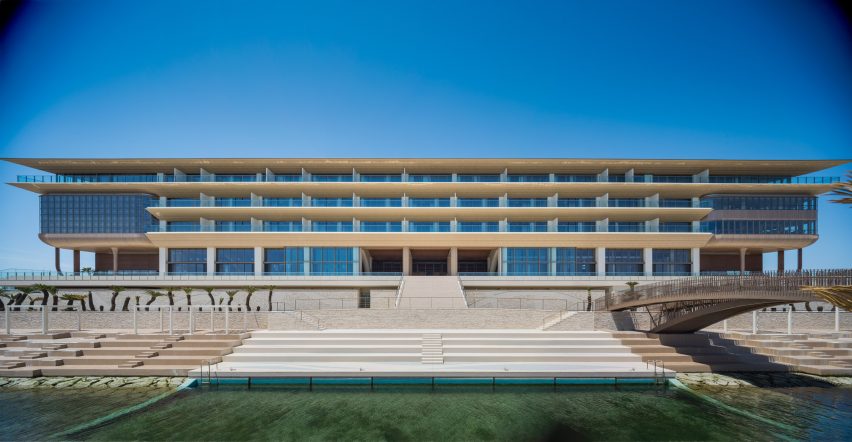
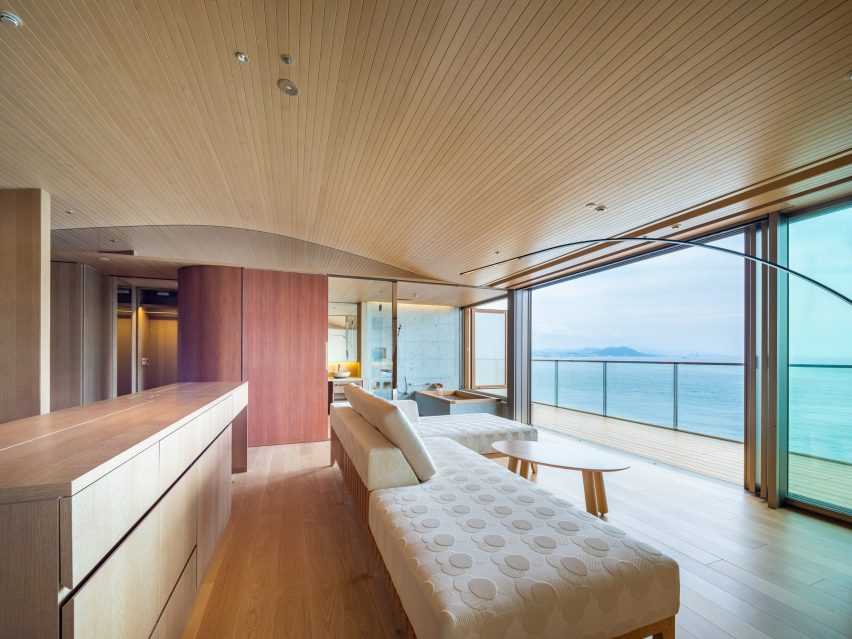
"On the seaside, using the seawall as a podium, the facade is highly transparent, featuring four levels of emphasised horizontal slabs that create a seamless continuity between the interior, exterior, and the surrounding scenery," said Ban.
"In contrast to the horizontal emphasis of the seaside, the mountain-side facade features a rhythmic arrangement of timber-clad columns that emphasize a symbolic, somewhat classical vertical structure," he continued.
"At the center, a massive timber canopy and a grand staircase welcome visitors."
Stays at the hotel are focused on preventive wellness treatments, with all guests receiving a personalised wellness program that may include thalassotherapy, hammam meditation, yoga, sound therapy and aromatherapy.
Every room in the hotel contains a private onsen – a natural hot spring bath – and several rooms have sensor-operated beds that monitor nighttime body movement and adjust automatically to encourage the best sleep.
Along with a wellness clinic and treatment room, the hotel includes a dedicated room for aerial yoga with suspended fabric hammocks and a gym.
An indoor swimming pool is fed with salt water from the Seto Inland Sea.
Alongside the wellness facilities, the hotel contains five restaurants, several run by Michelin-starred chefs, as well as several cafes.
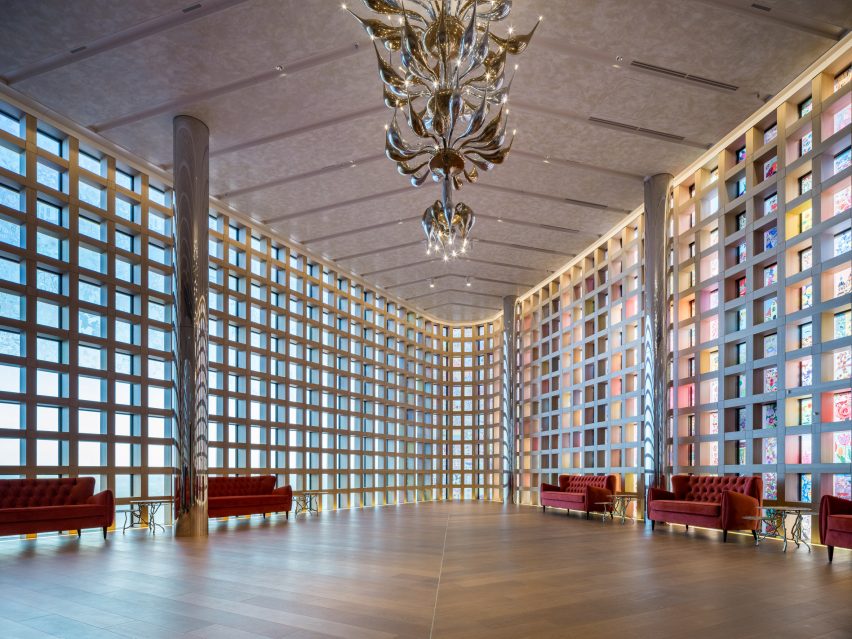
On the third floor, an event hall was designed for live musical performances and contains 500 window panes covered in artworks.
One of the world's most respected architects, Ban won the Pritzker Architecture Prize in 2014 and was recently awarded the 2026 AIA Gold Medal.
He is known for his innovative architecture that often uses cardboard and natural materials, with the Cardboard Cathedral in Christchurch one of his most influential buildings.
The photography is by Hiroyuki Hirai.