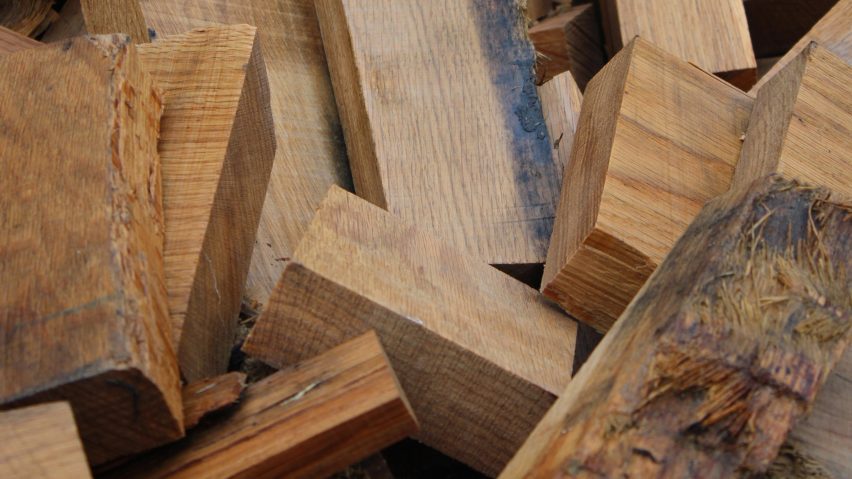
Seven savvy pieces from London Design Festival made of material offcuts
On the heels of London Design Festival, we have rounded up a selection of furniture and products presented during the city-wide event made of scraps that would otherwise have gone to waste.
London Design Festival (LDF) concluded on Sunday, after a week of product launches, exhibitions and installations that showed the best of the capital's design scene.
Throughout the event, a trend that stood out was the presence of designers using materials leftover from manufacturing, whether as an attempt to slash costs, preserve resources or simply experiment visually.
Here are seven examples of the technique spotted during London's main design week:
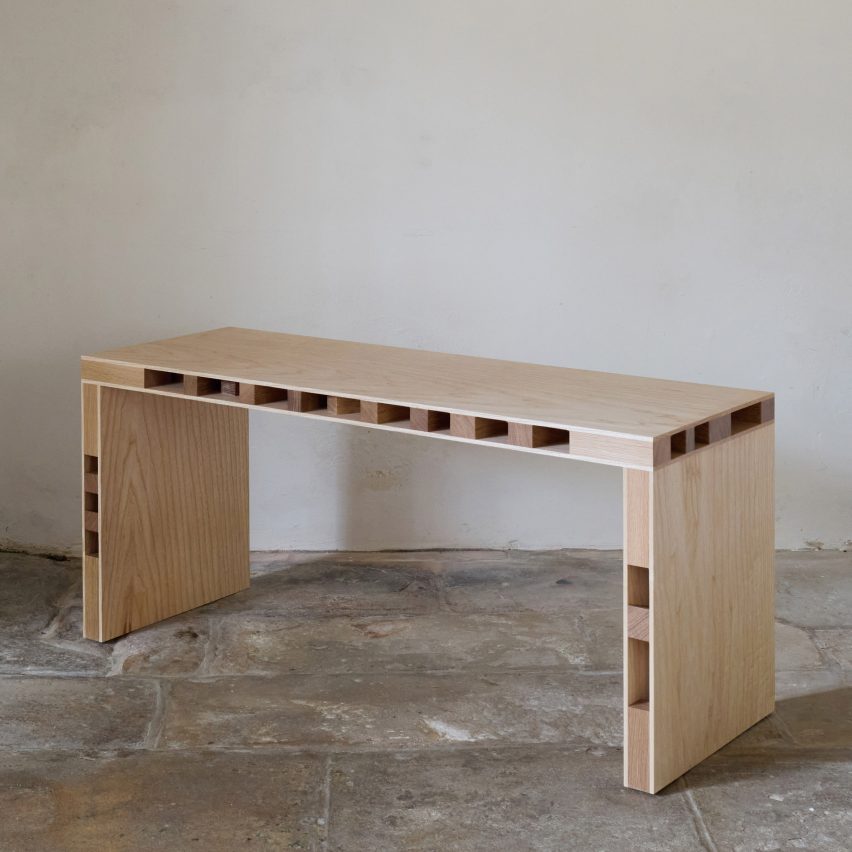
Dagwood Bench by Lewis Duckworth
Lewis Duckworth is one of London's many emerging talents. As the co-founder of guerrilla collective Design Everything, he is always looking for ways to create furniture with the inevitable limitations that come with being a young, independent designer.
Dagwood Bench is one such project, made from timber end pieces leftover from furniture production, which are often too narrow or short to be reused and would normally go to waste.
Duckworth created the bench from a single laminated plank, sandwiched between two timber faces. The designer explained that offcuts were arranged within these pieces of wood to create a form that "appears visually thick while remaining lightweight and structurally capable".
"This project explores ways to re-evaluate these 'un-usable' elements by incorporating them into a larger, cohesive material system," he said. "Given that they started as an industrial byproduct, it felt most appropriate to reprocess them in a standardised format".
Duckworth's Dagwood Bench is among the 34-strong shortlist of buildings, furniture and objects nominated for a 2026 Wood Award. A selection of these designs were on display at the Material Matters exhibition during LDF.
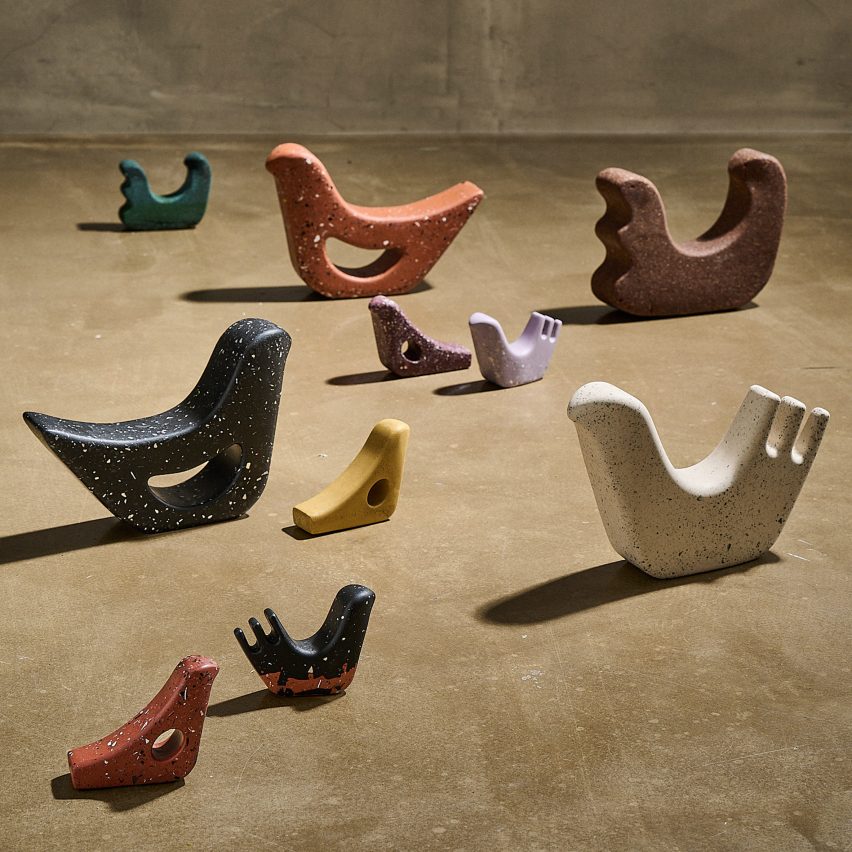
Second Song by Spared
Second Song is a selection of bird-shaped collectible objects by Brighton-based design studio Spared.
The studio is known for transforming waste generated from its own varied practice into furniture and products, such as tables made from old coffee grounds developed for the Corner cafe at London's Tate Modern museum.
Cast using a resin-free mineral binder, the collectible birds were made of offcuts ranging from shell and stone to workshop sawdust and thin scrapings from the surfaces of plastic chopping boards used in industrial kitchens.
Second Song was another project presented at Material Matters.
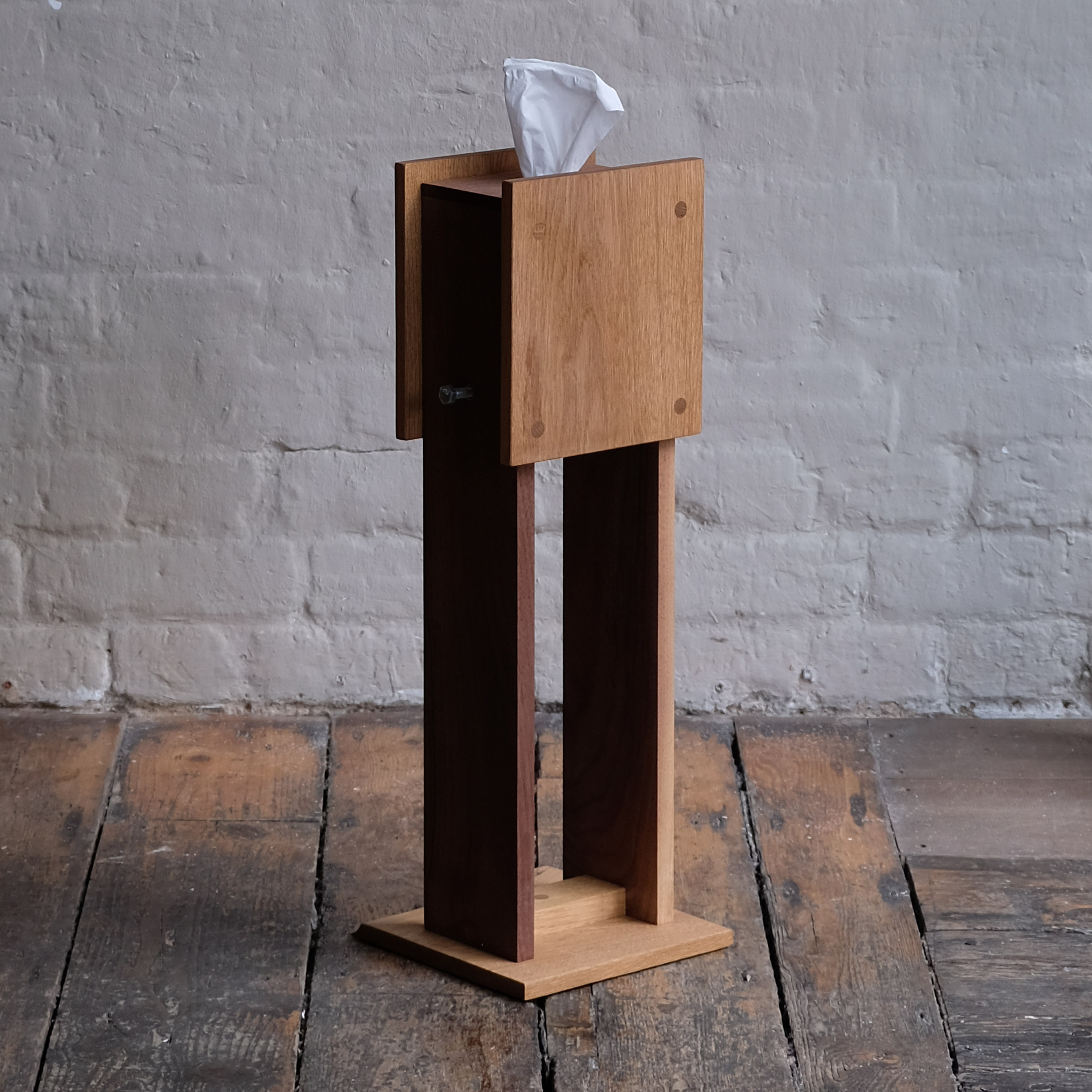
Tissue box by Tom Golland
This statement tissue box was part of Out of Worky, an exhibition of bespoke pieces made using scrap materials that the participants had collected over years of taking on myriad jobs as emerging designers.
Tom Golland combined offcuts of walnut and white oak to form the unusually tall tissue dispenser, which is held together with two zinc-plated steel bolts.
The show was presented by The Worky, a collective founded by Marley Wellings, Jake Robertson, Kieran Slater and Milo Tonry-Brown.
Chair by Oscar Warman
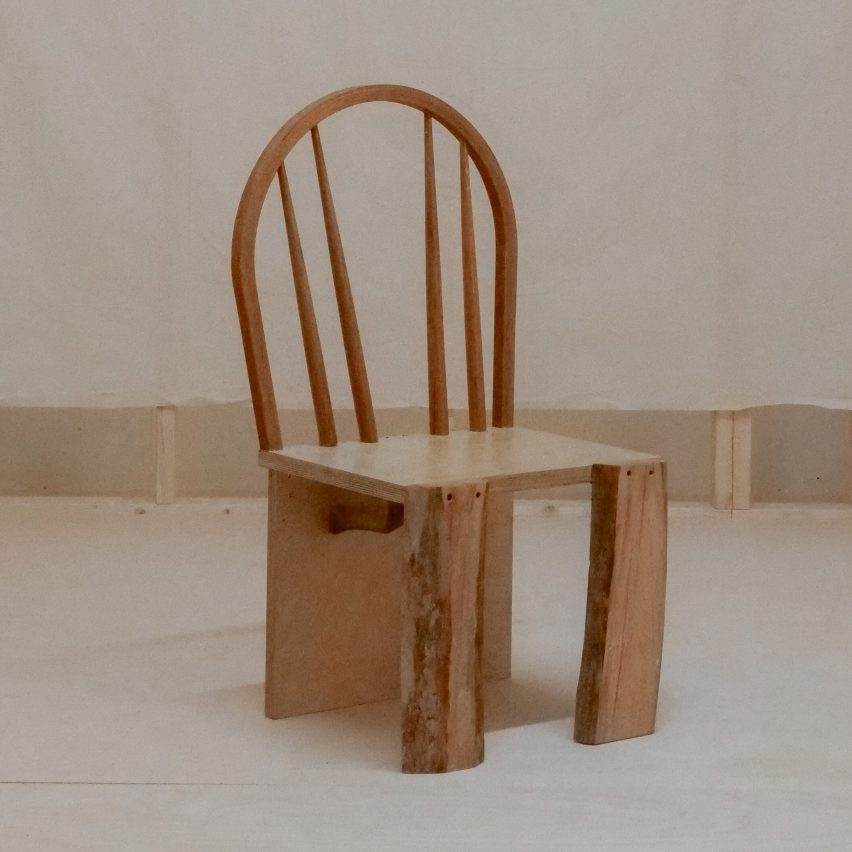
Dubbed "everything I could find in my shed", this timber chair by emerging designer Oscar Warman is a Frankenstein-like hodgepodge of old pieces of furniture that were partially damaged.
The chair features a duo of rotten and frayed front legs, which had to be cut and altered.
This meant that Warman needed to source a strong piece of timber for the back legs, which he found in the form of part of a shelf that he "cannibalised" by taking it off the wall and using it alongside its brackets.
"By designing in this way I spent time mocking up and offering each part to one another to try and resemble a chair shape," said Warman.
"I like how few processes were used in the making of this piece and the time was spent problem solving how to make them function as a chair."
The chair was on display as part of Design Everything's With Limitations show at Aram Gallery.
Fused by Audra Grays and Maxim Lester
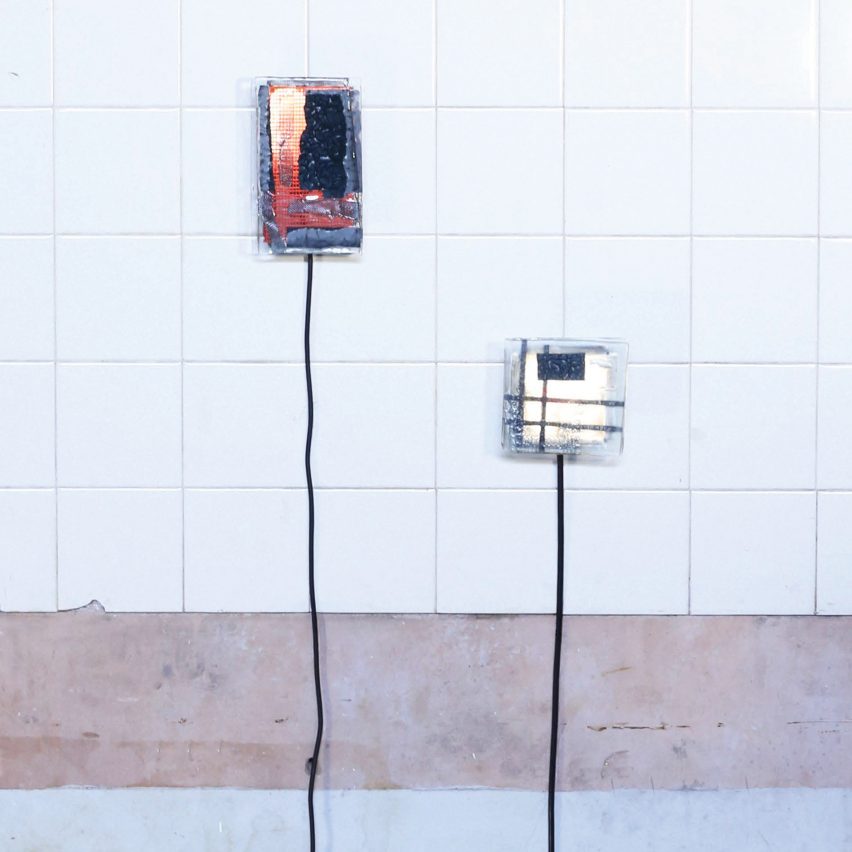
Fused is one of a handful of lamps made by emerging designers Audra Grays and Maxim Lester, who, quite literally, fused together different material offcuts from their respective practices to create lighting.
After Lester came across Grays's decorative glass experiments on Instagram, the designers combined the glass offcuts with scrap metal and electrical back boxes found in Lester's workshop. LED strips were pulled from old lamps to illuminate the pieces.
Also displayed at Aram Gallery, the rectilinear sconce lights are not the only pieces the duo made from offcuts that were on show during LDF. The pair also presented a chunky desk lamp as part of the Kiln Shift exhibition by Clink Street Ceramics.
Graywacke OffCut Chair by Carsten in der Elst
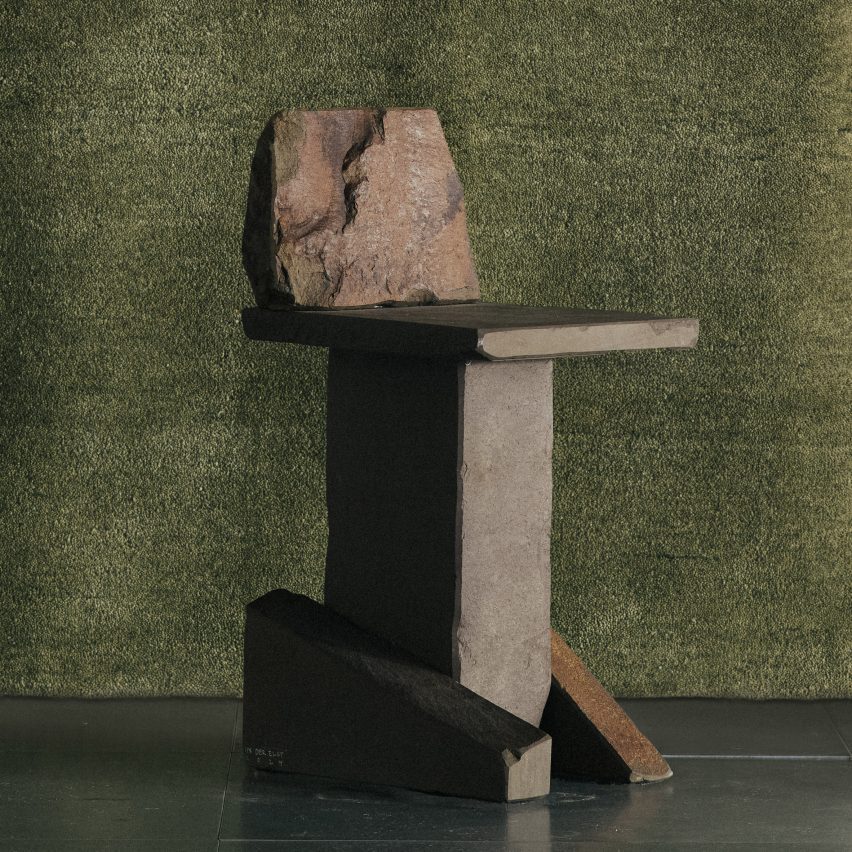
Based in Cologne, designer Carsten in der Elst has spent the last six years utilising "the full potential of industrial by-product material" when crafting pieces of furniture.
Central to In der Elst's portfolio is his Graywacke Offcut series – monolithic tables and chairs made from rough-hewn lumps of stone salvaged from a quarry in Lindlar, western Germany.
One of these ancient-looking chairs was presented as part of the Progressive Permanence exhibition by Max Radford Gallery at the Christopher Farr showroom in Shoreditch.
Coat rack by Duy Huynh
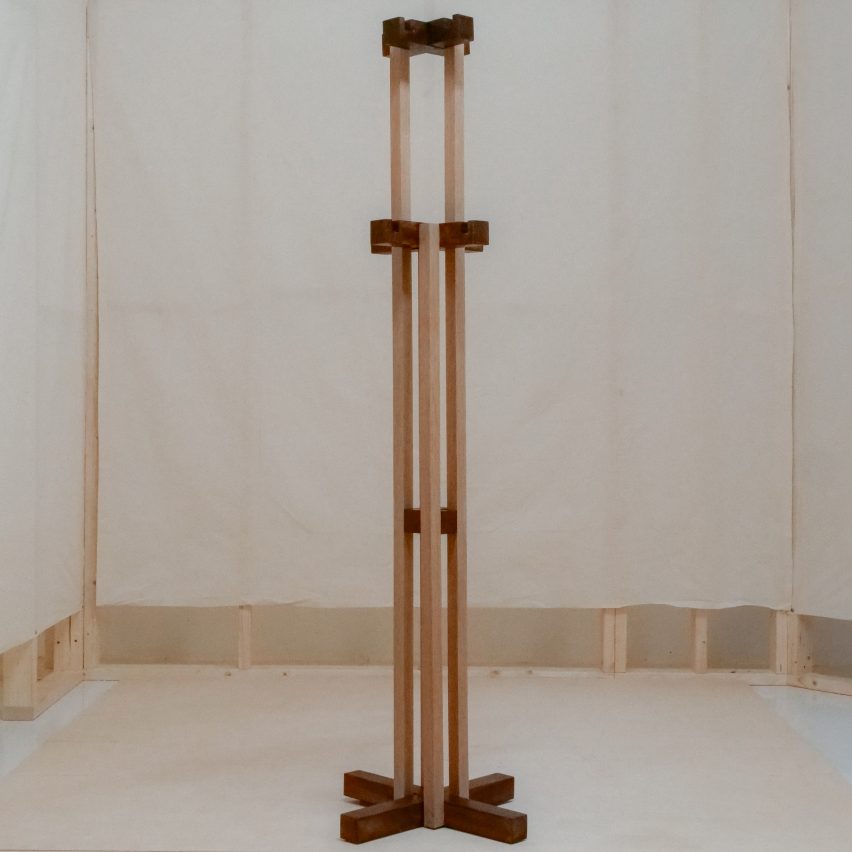
Emerging designer Duy Huynh was another exhibitor in With Limitations, who presented a timber coat rack made from offcuts salvaged from a stand he crafted to show work at his recent degree show.
The size of each piece of wood, reassembled by the designer, was determined by where the previous joints had been cut to create the stand.
"This piece is a bit smaller than a conventional coat rack, but I wanted to keep that acknowledgement of where it came from to show the idea that if we treat our materials right, they can serve us for a long time," said Huynh.
London Design Festival 2026 took place at various locations around the city from 12 to 20 September. See Dezeen Events Guide for more architecture and design events around the world.