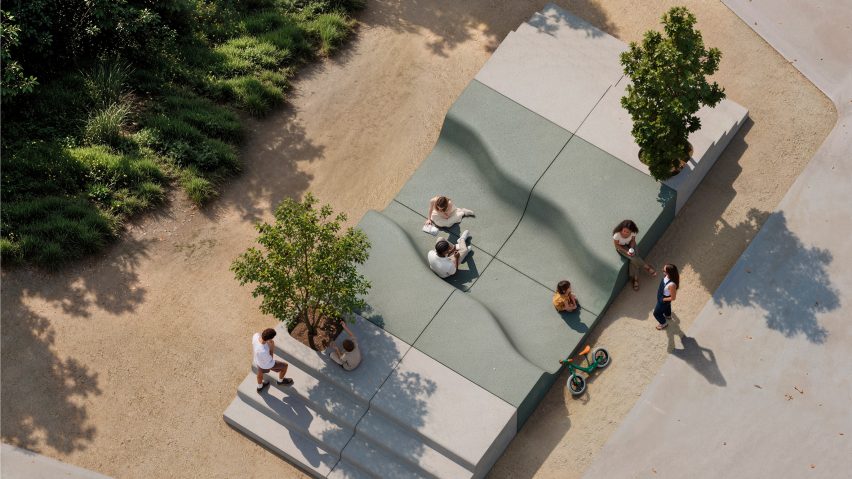
MVRDV designs modular concrete street furniture to be occupied in "unexpected ways"
Colourful concrete modules are combined to form impromptu hangout spots in the Barcode collection, designed by architecture studio MVRDV for Barcelona street furniture manufacturer Escofet.
The range consists of three basic building blocks – steps, slopes and a joint table and bench – that can be joined together to create an atlas of different topographies.
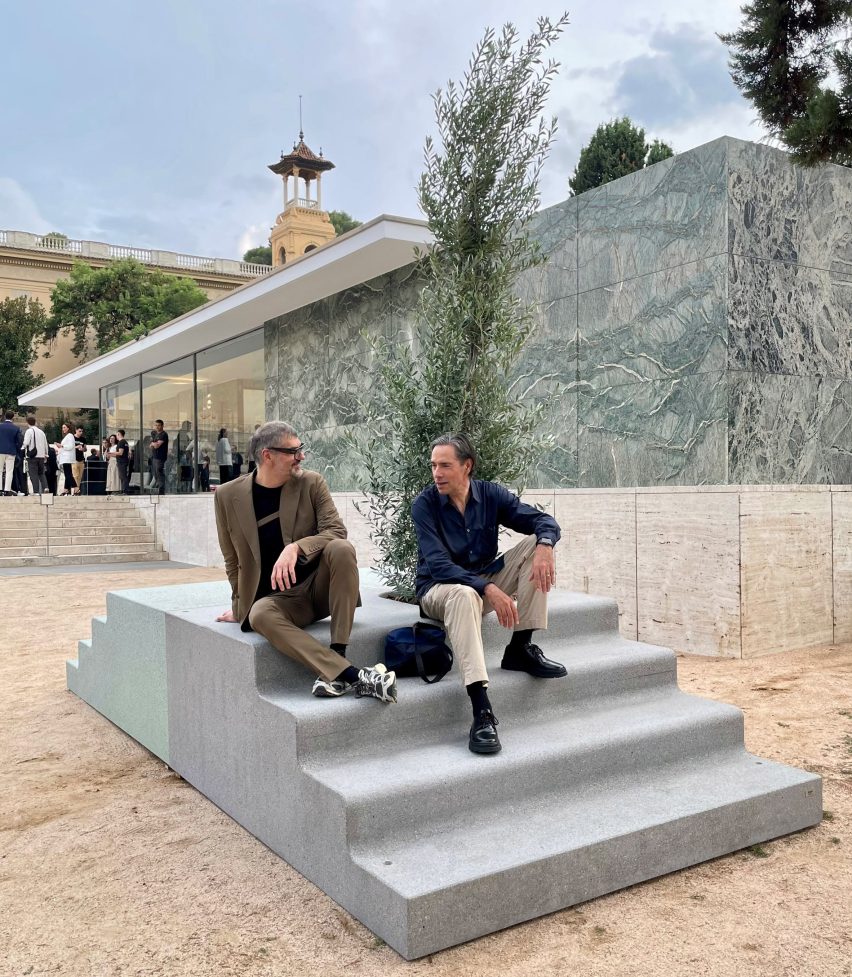
MVRDV founding partner Jacob van Rijs, who led the project, says he hopes the collection will encourage citizens to take ownership over their cities and appropriate urban infrastructure in a way that suits their needs.
"Too often, the design of urban spaces can feel formulaic – benches and other elements are selected from a catalogue and placed in the most predictable places," he says.
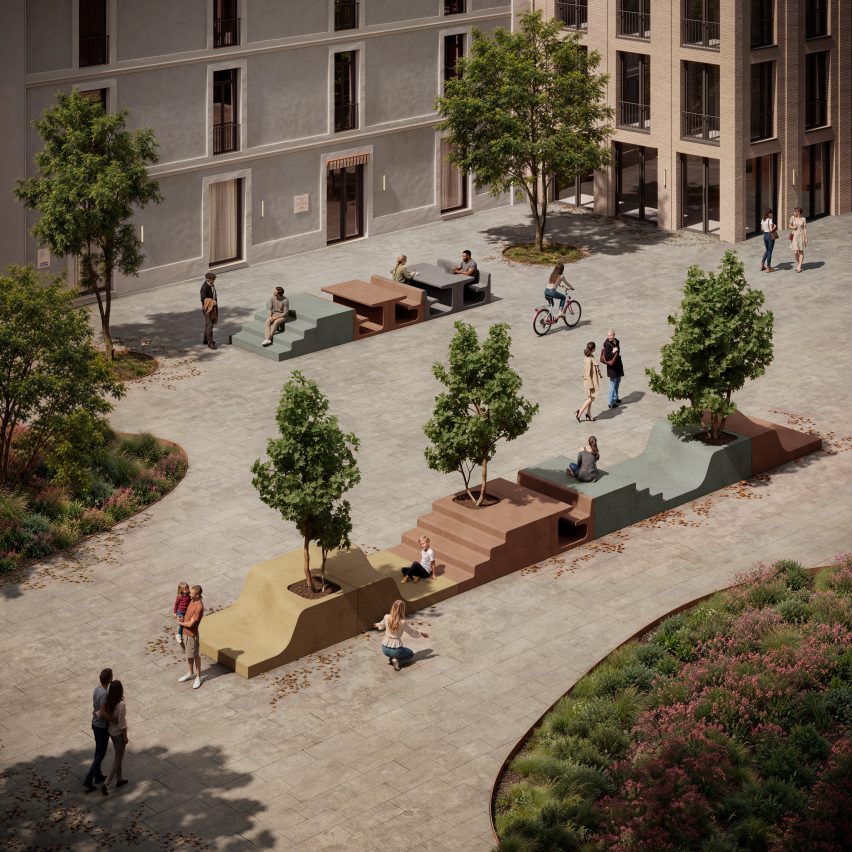
"This collection is built around a different approach: human occupation becomes the centrepiece of any design, with a creative collaboration between the individual elements, the arrangement made by an urban designer, and the unexpected ways that the public will occupy them," Van Rijs continued.
Barcode consists of three basic building blocks that can be adapted with add-ons like planters. They come in Escofet's eight different concrete colours, including red, green and yellow alongside more muted grey, white, beige and black.
The Tribune module consists of a set of broad steps for climbing and sitting, while the smooth slope of Dune invites lounging. Desk is a more traditional set-up of a table framed by two benches for al fresco eating or working.
All three modules have the same height and width, so they can be lined up to form a continuous surface. MVRDV envisions them being used in one long line – hence the name Barcode – or combined into more compact two-by-two "islands".
Considering all the different variations, MVRDV says the collection includes 72 different choices of elements that can be combined into nearly "infinite variations".
Previous adventures in street furniture from the studio, which was founded by Van Rijs alongside Winy Maas and Nathalie de Vries in 1991, include a giant woven floot mat that provided seating in Bangkok during the city's design week and bright-blue play areas for a 200-metre-long park beneath a Mumbai flyover.
All renders and photography courtesy of MVRDV.