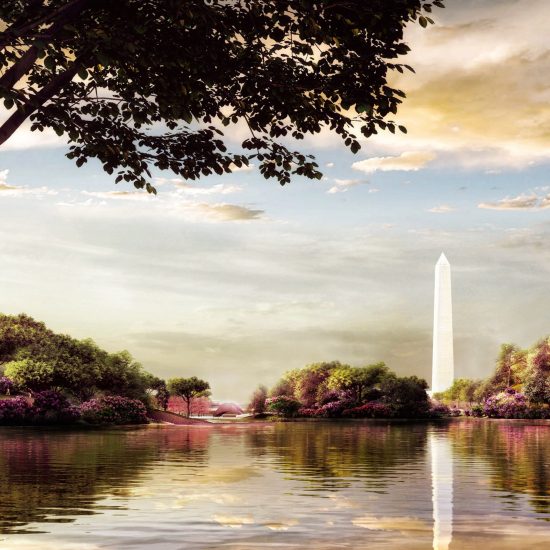
Harvard GSD students propose alternatives to Trump’s arch

Images by Jeremy Dvorak and Jake Geitner courtesy The Cultural Landscape Foundation
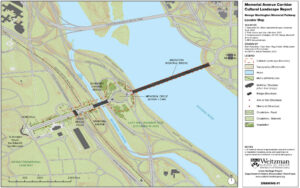
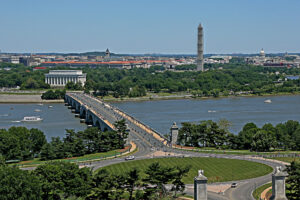
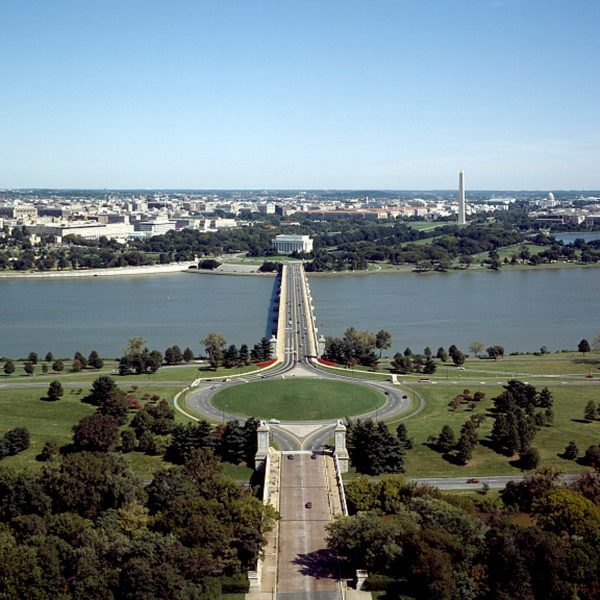
Landscape architecture students at Harvard’s Graduate School of Design have designed two proposals for Memorial Circle in Washington, DC, the site of US president Donald Trump‘s proposed triumphal arch.
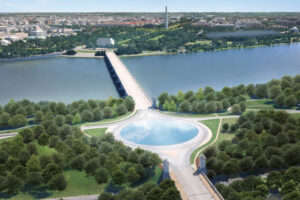
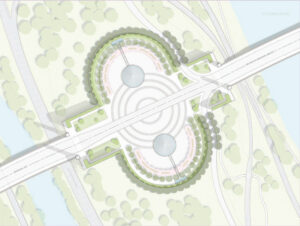
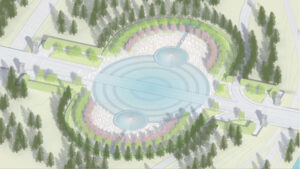
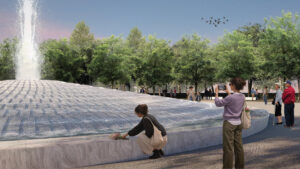
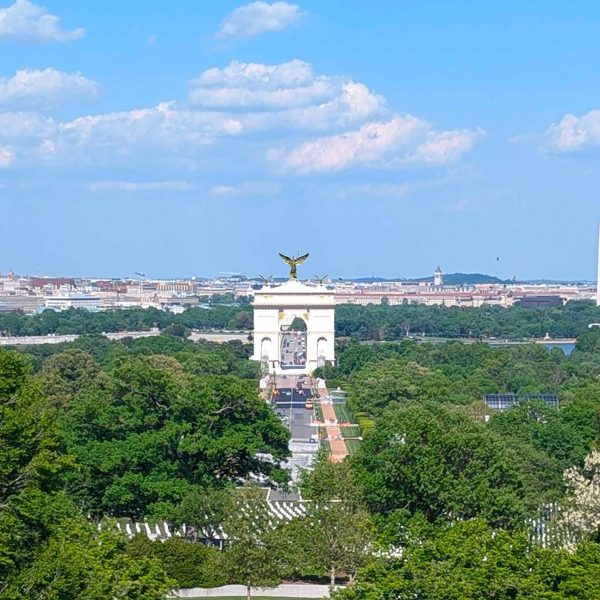
Both designs feature expansive pools of water that cover the current vehicular roundabout at Memorial Circle, and emphasise connectivity to the city’s historic processional axis and straight sightlines to the Lincoln Memorial and Arlington Cemetery.
The students, Jeremy Dvorak and Jake Geitner, worked with Washington DC non profit organisation The Cultural Landscape Foundation (TCLF) on the designs. The aim was to engage the public in the design process, as the team views the government did not properly open the arch up for review.
“By recognising Memorial Circle’s implicit expressions of monumentality, this pair of counter proposals asserts design’s capacity to critically engage history, accommodate public life, and advocate on behalf of our shared cultural landscape,” said Dvorak and Geitner.
The project began after Dvork and Geitner attended a seminar at the GSD taught by TCLF founding partner Charles A Birnbaum.
“As graduate students in landscape architecture, we took Birnbaum’s course to ground our emerging practices in critical historical inquiry and public participation,” they said.
“The current administration’s assertion of authority over national memory presented an opportunity to put these convictions into practice.”
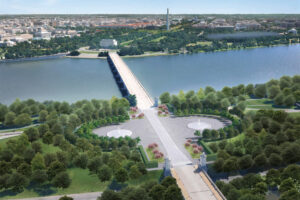
The first proposal treats Memorial Circle as “a void along the historic axis between Washington and Arlington”. The designers chose to fill the central roundabout circle, currently covered by grass, with a low-lying pool of water.
A natural stone perimeter surrounds the pool and is inscribed with words of “belonging and unity”.
It’s design is “restrained” according to the team, and primarily meant to be viewed from a vehicle while passing through the traffic circle.
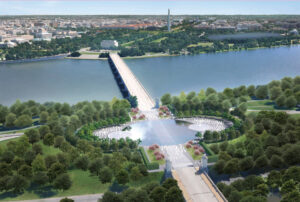
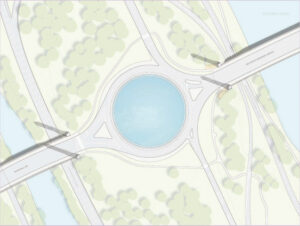
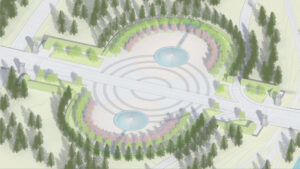
The second proposal does away with the traffic circle entirely and instead inserts a straight thoroughfare to Arlington Memorial Bridge.
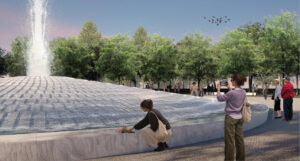
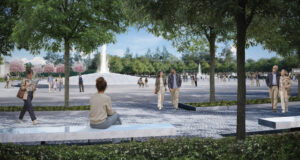
Two circular fountains would be located on either side of the road. Additionally, a large pool of water, mirroring the perimeter of the former traffic circle, would fill up the site during commemorative events when the bridge is closed.
It draws upon previous historical proposals for Memorial Circle and seeks to pay homage to the precedent of the site.
“[The fountain] geometries arise from the site’s historic proposals, combining concentric circles, intersecting alignments, and formal planting into a composition that acknowledges history whilst creating its own present identity,” said the designers.
“In this way the landscape becomes a physical record of its own change.”
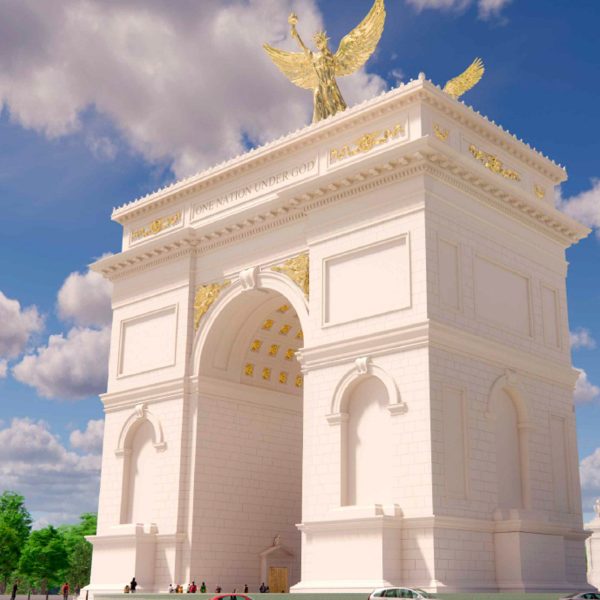
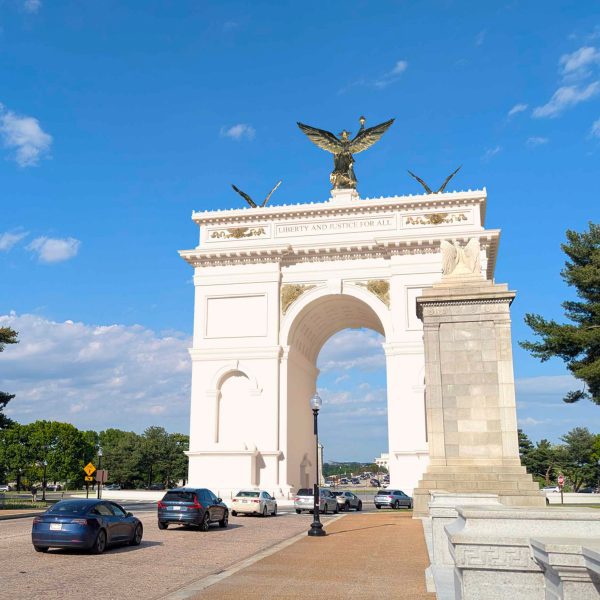
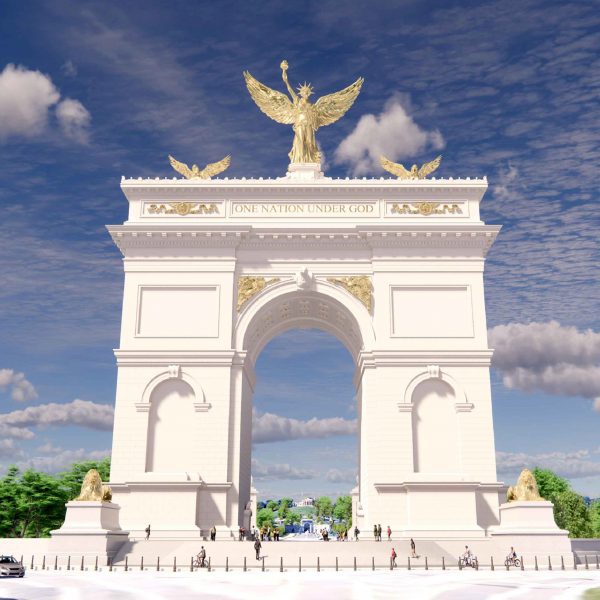
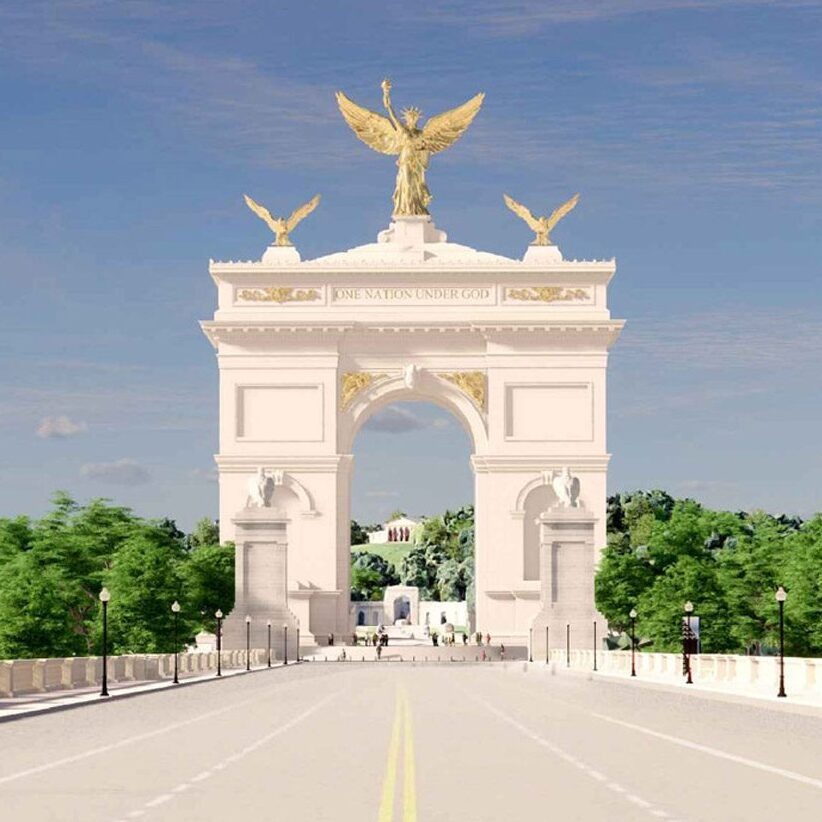
Trump’s proposed arch was announced late last year with renderings by US studio Harrison Design. It features gilded statues and a neoclassical design and has been dubbed the “Arc de Trump” – a play on the Arc de Triomphe in Paris.
Construction on the arch was set to begin in September with the government barreling ahead, but it was halted in early November by Judge Tanya S Chutkan.
Trump has claimed the arch will serve as a “military complex” with snipers in an attempt to use national security as a pretext for construction.
Many take issue with the arch blocking views to adjacent Arlington Cemetery, including members of the Kennedy family, who filed a lawsuit to block construction, claiming that the arch would cast shadows over the grave of president John F Kennedy.
The US Commission of Fine Arts (CFA), which reviews projects in the capital city, approved the project in May.
The proposals also follow recent efforts by the legislature to change Section 106 of the National Historic Preservation Act, which requires federal agencies to consider the impact of proposed projects on historic properties.
Earlier in November, protesters gathered in Washington DC in opposition of the administration’s proposed rewrite of these protections. They are couched within the Bipartisan American Affordability and Jobs Act (BAAJA) bill recently introduced to Congress.
Images by Jeremy Dvorak and Jake Geitner courtesy The Cultural Landscape Foundation
Read more
Recommended stories
Construction of “Arc de Trump” set to begin in next two weeks
“Arc de Trump” design approved for Washington DC
Trump triumphal arch to become “top grade military complex” for launching drones
Trump doubles down on classical capital with “Arc de Trump” proposal
Trump officials release designs of triumphal arch in Washington, DC
“More gold leaf needed” says commenter
Donald Trump to line Washington DC Reflecting Pool in “American flag blue”