Laura Lynn Jansen and Thomas Vailly
“grow” stone tableware
Milan 2014: Dutch designers Laura Lynn Jansen and Thomas Vailly have created a collection of tableware by “growing” stone over a structural skeleton using the same natural process that forms stalagmites and stalactites in caves (+ slideshow).
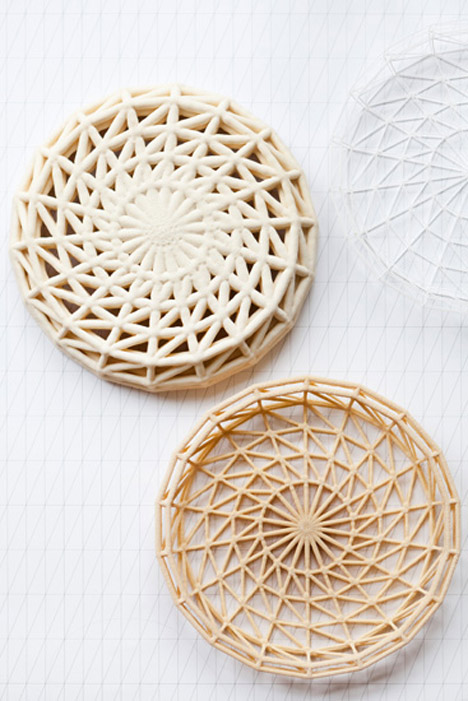
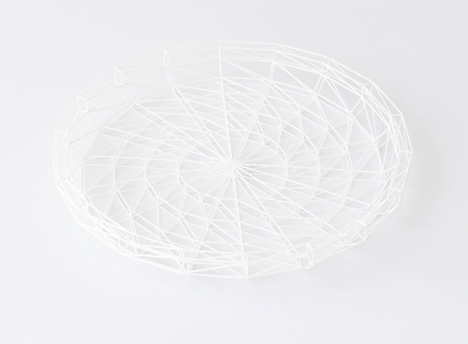
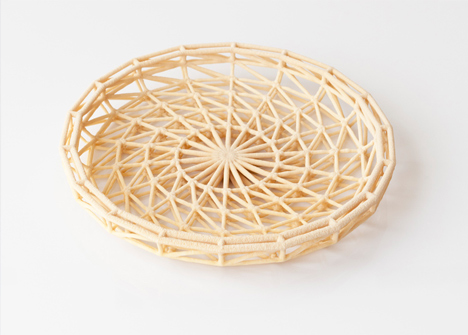
To create each piece in the collection, the designers placed a nylon 3D-printed skeleton into specially chosen thermo-mineral springs, where natural geological processes deposit calcium carbonate – also known as CaCO3, limestone or calc – onto the structure, reinforcing and thickening it to create a product with characteristics similar to terracotta or porcelain.
Jansen and Vailly came up with the idea while visiting caves the Auvergne mountains in France as part of their research into natural processes they could incorporate into their work.
“We got more and more amazed by the forms, textures and colours produced by nature,” Vailly told Dezeen. “Could we create our own stalactite? Stone is usually extracted from the earth, carved, cut and assembled to fit a purpose. It is usually processed in a subtractive way rather than an additive way. So could we grow stone?”
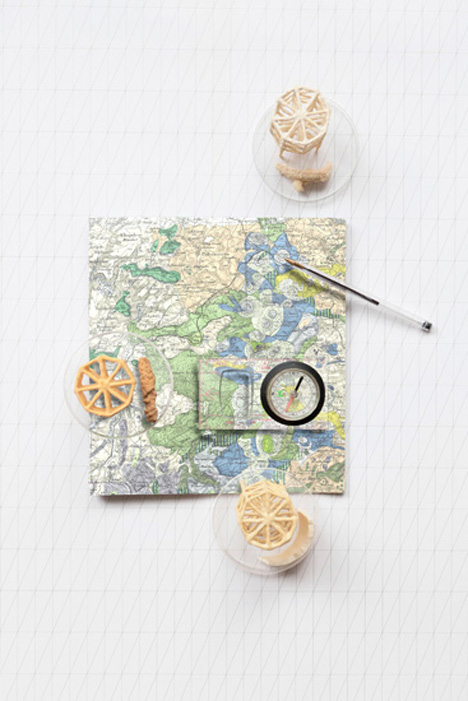
In this part of France, water travels along a volcanic fissure, heats up and becomes loaded with CO2 and minerals. When it surfaces, the CO2 bubbles away and the minerals are deposited, resulting in thermo-mineral springs.
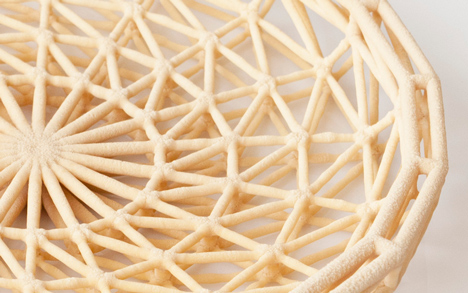
“Working with scientists, geologists and craftsmen, we targeted the thermo-mineral springs where this process happens very quickly due to the high concentrations of the minerals,” said Vailly. “To put it into context, if a leaf falls into one of these springs, it will turn into stone within a few months.”
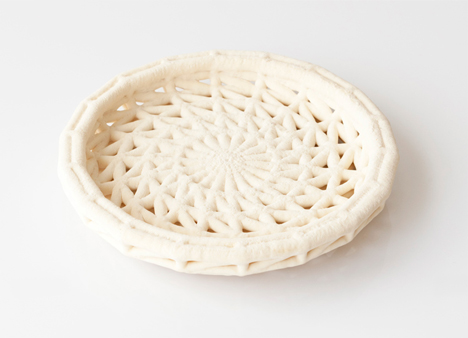
Jansen and Vailly create skeletal forms using 3D-printing and place them into the thermo-mineral springs they’ve selected for set periods of time.
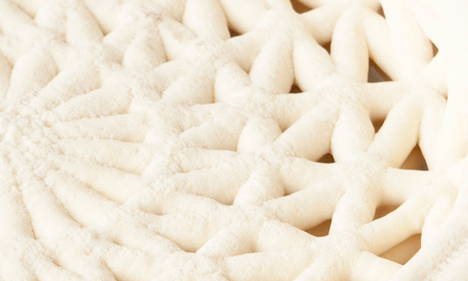
“We did not approach this project with the idea of having full control of the end product,” said Vailly. “What interested us was the idea of designing the embryo of a stone object and then letting a natural process take over. We designed shapes that would best express best the quality of the material, the technique and the intriguing randomness of the process.”
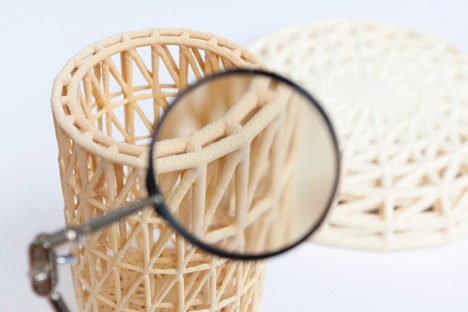
“We control the initial form and the time it’s left in the spring but the shape, textures and colours are a complete surprise. Some pieces have even came out shiny and glittery.”
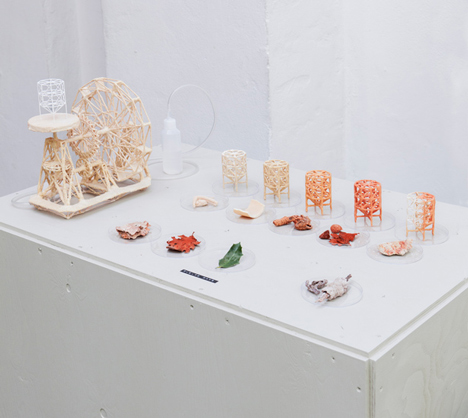
The strength of the products depends on the amount of CaCO3 deposited, but once a thickness of approximately one centimetre is achieved, the pieces are as strong as terracotta or porcelain. “We were really afraid the stone would crumble away, but the objects are really dense,” said Vailly.
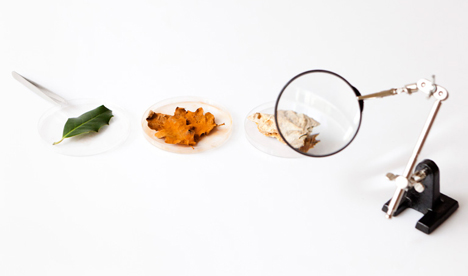
The duo presented the CaCO3 collection as part of the Dutch Invertuals exhibition during Milan design week.
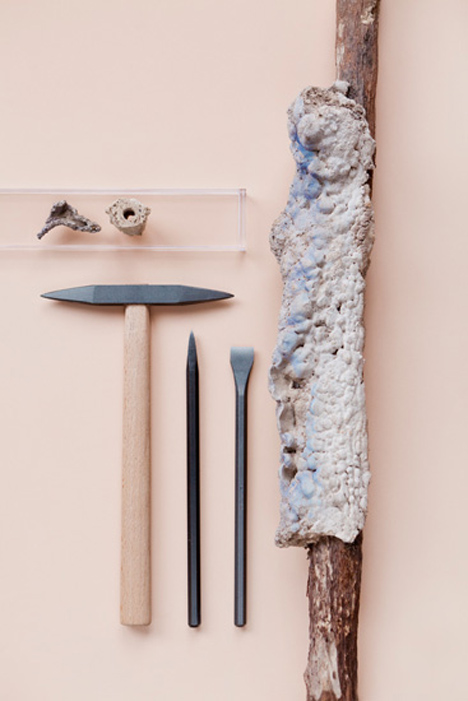
Photography is by Floor Knaapen unless otherwise stated.
Read more
Recommended stories
Harvest Moon table fabricated with materials and tools from within a 40 mile radius
Artefact uses bricks made from “unloved” stone to craft temporary shelter in Clerkenwell
Eight products and furnishings informed by the natural properties of stone
Researchers develop artificial sand for concrete that can sequester CO2
Alper Derinboğaz releases Neogene digital art collection based on prehistoric minerals for TAEX

Architects “can develop a new language” with structural stone says Aurore Baulier
Natural Material Studio develops Shellware ceramics from leftover seashells