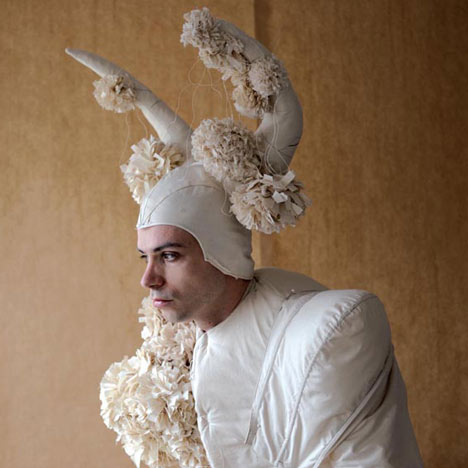
Music: director Alan Del Rio Ortiz transports musician Petite Noir into patterned digital environments for his La Vie Est Belle music video.

Petite Noir – AKA Yannick Ilunga – was on a tight schedule to create the video, so Ortiz decided to use green screen to give the team an opportunity to develop the project further after filming.
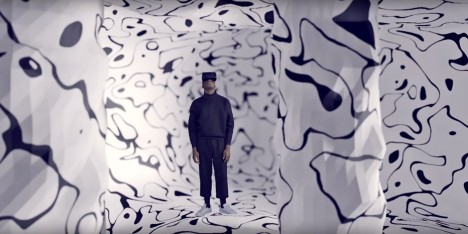
“For the live action sequences we shot on a green screen in a studio using the Alexa Mini camera on a Ronin rig,” Ortiz told Dezeen. “This allowed us to do some fluid camera moves on a lightweight rig. We wanted to keep everything smooth.”
The film moves from live action sequences, showing close-ups of the South African musician singing, to overhead shots of virtual environments.
“The music influenced the slow motion, the lighting and the mood of the video,” said Ortiz. “It needed to match.”
At some points the viewer appears to be flying over a digitally-created city or desert, and at others travelling through an apparently infinite tunnel surrounded by columns.
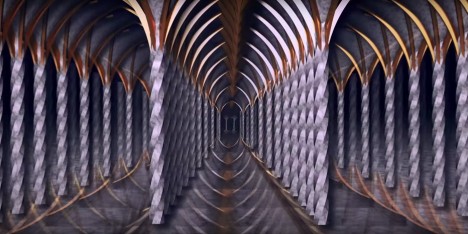
“There is a loose narrative about getting lost inside a virtual world,” said Ortiz.
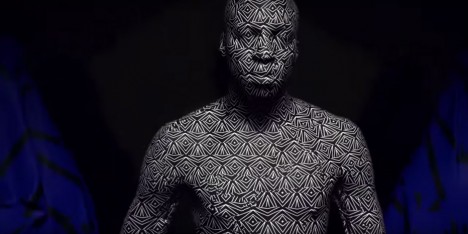
For much of the video, Yannick is shown wearing patterned garments that often match the background.
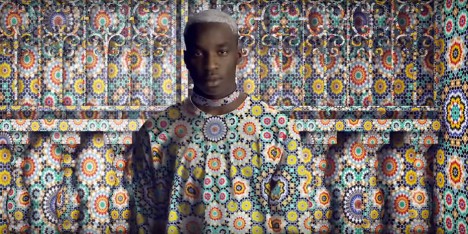
“These were a group effort between me, our lead CGI artist Pete Puskas and Rochelle Nembhard – who is a frequent collaborator with Yannick on his artwork,” Ortiz explained.
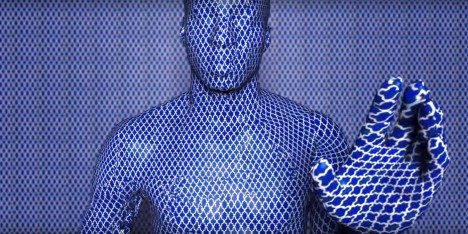
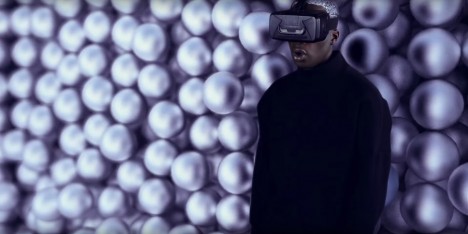
The film continuously blends real footage and digitally-generated imagery, emphasised by showing the musician wearing an Oculus Rift headset while standing in a black and white-patterned virtual room.
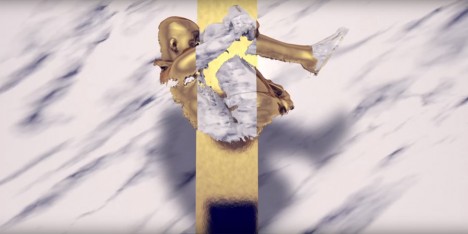
As well as designing digital environments, the filmmaker transformed the musician into virtual versions of himself – recreated in computer-generated marble or gold.
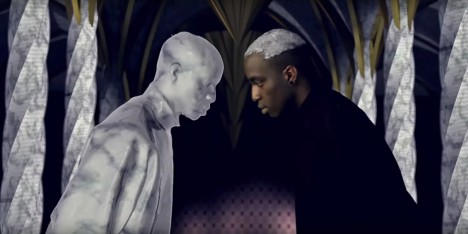
“We took a 3D scanner and scanned Yannick in various positions,” said Ortiz. “Then, in post production, Pete Puskas and his team were able to add textures to the scans to make them look like clay, marble, cloth etc. We even added joints to give the 3D scans some subtle movements.”
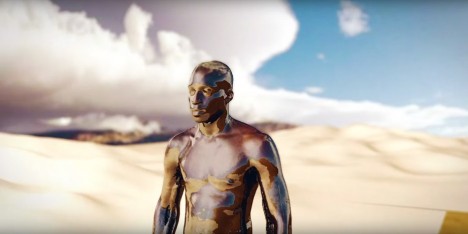
As the film continues, the musician’s form continues to duplicate until a room is full of statuesque virtual versions of himself.
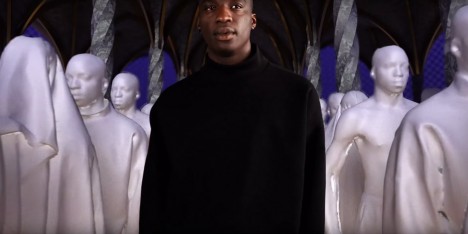
By cutting between the real and virtual musician, the film blurs the lines between what’s real and what isn’t.
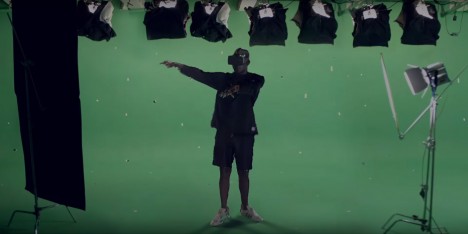
As the film draws to a close the real Petite Noir and the virtual statues appear to confront each other. The musician shown bows to a marble version of himself, walks through a room full of Petite Noir figurines, and finally returns to show him standing in front of a green screen.
Read more
Recommended stories
Fernando Lazzari’s music video for Reid Willis combines natural and “supernatural” imagery
Nine student projects that are represented by intricate 3D models
Guillaume Panariello slows five seconds of footage for Siska music video
Psychedelic imagery twists and warps in Delorean’s 3D-mapped Crystal music video
Marie Larrivé and Lucas Malbrun animate an acrylic landscape for Tropicool music video
Felicita Gāga designs digital dress “made of social media noise”
Interactive fashion films at POST exhibition respond to movement of gallery visitors