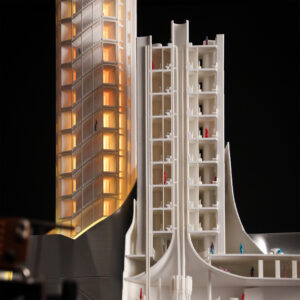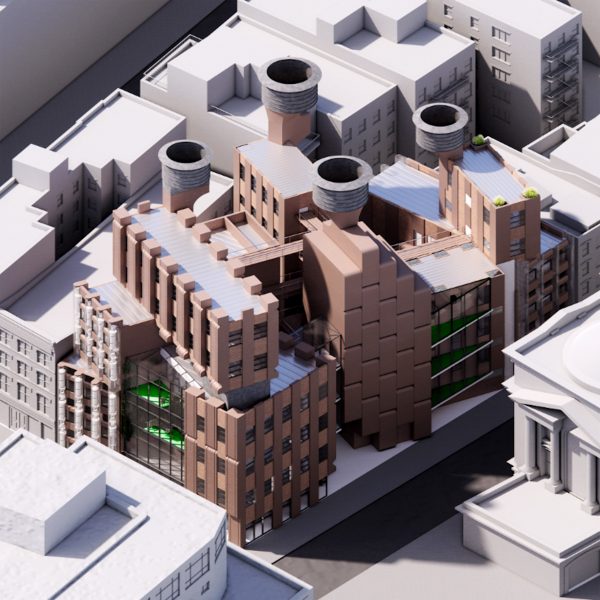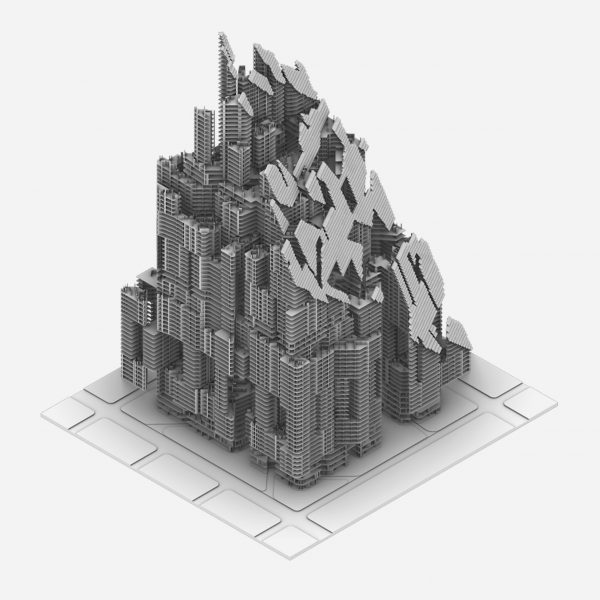
MS Architecture at Pratt Institute
The MS Architecture course at Pratt Institute explores how to navigate architectural practices in New York City, with insights and feedback from local architects and developers.
Course details
School: Pratt Institute
Course: MS Architecture
Type: Postgraduate
Location: Brooklyn, USA
Course dates: August 2027 to August 2028
Application deadline: 5 January 2027
Course overview
Invent your practice in the city of New York. Pratt’s Master of Science in Architecture teaches architecture as a practice, focusing on how work – from the invented to the inherited, the expected to the novel – gets proposed, financed, and built in New York.
In the current climate, the fundamentals of architectural practice are changing – from programming to procurement to delivery – and the profession needs practitioners who can navigate that shifting landscape.
Our program is built around direct, sustained contact with local architects, developers and public servants, from large corporate offices to small, nimble studios, who will teach workshops, review work and provide feedback throughout the year as a part of the curriculum.
We emphasise pairing advanced design research with experimental methodologies to prepare architects to engage with the social, environmental and material realities shaping the built world.
Open to students with a background in architecture, the one-year program runs during fall, spring and summer semesters, fostering both critical inquiry and design experimentation.
Within Pratt’s Graduate Architecture, Landscape Architecture and Urban Design department, students work in an interdisciplinary setting where architecture, landscape and urban design operate in dialogue, expanding the possibilities of architectural thinking and practice.
Drawing on the creative resources of an art and design school, the MS in Architecture curriculum integrates diverse tools and techniques – from material research and digital fabrication to spatial and visual experimentation.
What will I learn during this course?
- critically question and redefine architectural practice as a means through which to address social, environmental and material challenges in the built environment
- engage in advanced design research and develop experimental methodologies to expand architectural thinking and practice
- work interdisciplinarily across architecture, landscape and urban design, understanding how these fields inform and enrich one another
- use diverse tools and techniques, including material research, digital fabrication and spatial and visual experimentation
- develop the ability to design for adaptive and sustainable futures, positioning architecture as an active agent of change
- integrate creative approaches from art and design disciplines, leveraging Pratt’s broader artistic context to inform architectural innovation
What are the requirements?
Applicants must have earned a Bachelor of Architecture (five-year BArch) or a Master of Architecture (MArch) from an accredited school of architecture or the international equivalent.
What facilities and resources are available?
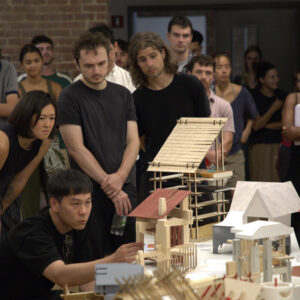
- Pratt’s School of Architecture is located in Higgins Hall, a blend of historic architecture and a contemporary addition by Steven Holl
- spacious design studios, critique spaces, a lecture hall and the Hazel and Robert H Siegel Gallery all foster collaboration and public engagement
- computer labs featuring the latest modelling, visualisation and simulation software
- Pi-FAB, the architecture shop, is designed for precision model making and material experimentation, including CNC, lasercutting and a robotic arm for digital fabrication exploration
- the Higgins Hall Reading Room supports research with extensive print and digital resources in architecture and urbanism
- the Spatial Analysis and Visualisation Initiative (SAVI) is an interdisciplinary research, consulting and education centre focusing on spatial data and visual storytelling
- the 3D-printing centre offers a comprehensive suite of additive manufacturing technologies, including FDM, resin and wax printers and high-resolution 3D scanners
- extensive connections to New York City through a network of faculty, alumni and institutional partnerships make the city itself an immediate resource
What career prospects can I expect upon graduating?
MS Arch graduates are well-prepared for careers that bridge advanced design, research and technology.
Many go on to work in architecture and urban design firms, sustainability and building performance consultancies or design-technology roles focusing on computation, visualisation or digital fabrication.
Others pursue teaching, research or public-sector positions addressing environmental and social challenges.
Who teaches this course?
- Jeffrey Anderson, adjunct associate professor
- Clelia Pozzi, adjunct assistant professor
- Erich Shoenenberger, adjunct associate professor, CCE
- Alex Tahinos, adjunct assistant professor
- Alexandra Barker, adjunct associate professor, CCE
- Jaffer Kolb, visiting assistant professor, academic coordinator of MS programmes