Board game that reflects issues in gynaecological care system among projects by University of the Arts Berlin
A board game that explores care issues in Germany‘s gynaecological healthcare is among these projects by University of the Arts Berlin students.
Also featured is a furniture and accessories collection made from Tetra Paks’ packaging and biodegradable wool coffins.
University of the Arts Berlin
School: Institute for Product and Process Design
Course: Masters 2026
Tutors: Ineke Hans and Mathias Hahn
School statement:
“Product design doesn’t always start with an object. Sometimes it begins with a question, an observation or the desire to think differently. It’s about questioning the familiar, opening up new perspectives and designing possibilities for a better future.
“The final projects from the master’s programme in Product Design at the Berlin University of the Arts (UdK) explore these very questions.
“The 11 graduates featured here address a wide range of topics: from materials research, craftsmanship and new technologies to social and feminist perspectives, as well as climate, mobility and new forms of coexistence.
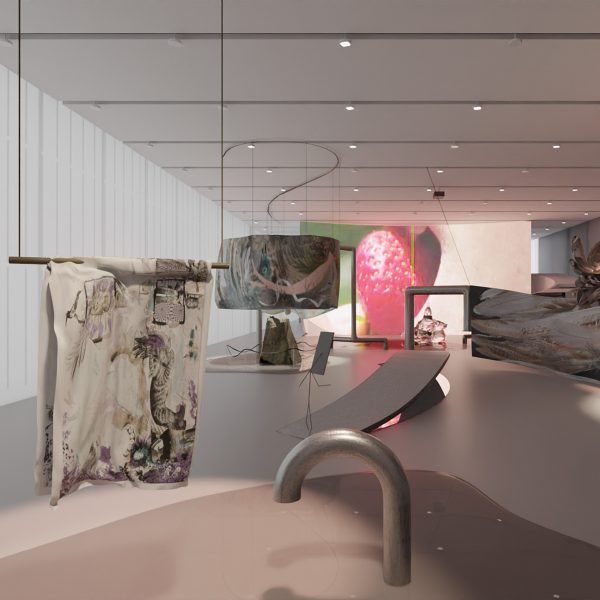
“Their projects emerge from research, experimentation and personal engagement with the challenges of our time. Under the title Fokus Fest, these diverse perspectives came together in a joint exhibition.
“Rather than a silent showcase of works, it was conceived as a lively forum and complemented by workshops and talks. What unites them is not so much a shared answer as a willingness to shift perspectives and understand design as an open-ended process.”
Ausmuell… by Katharina Matejcek
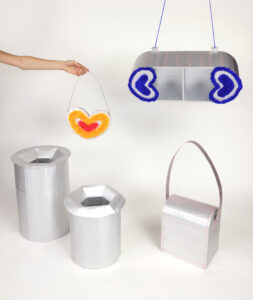
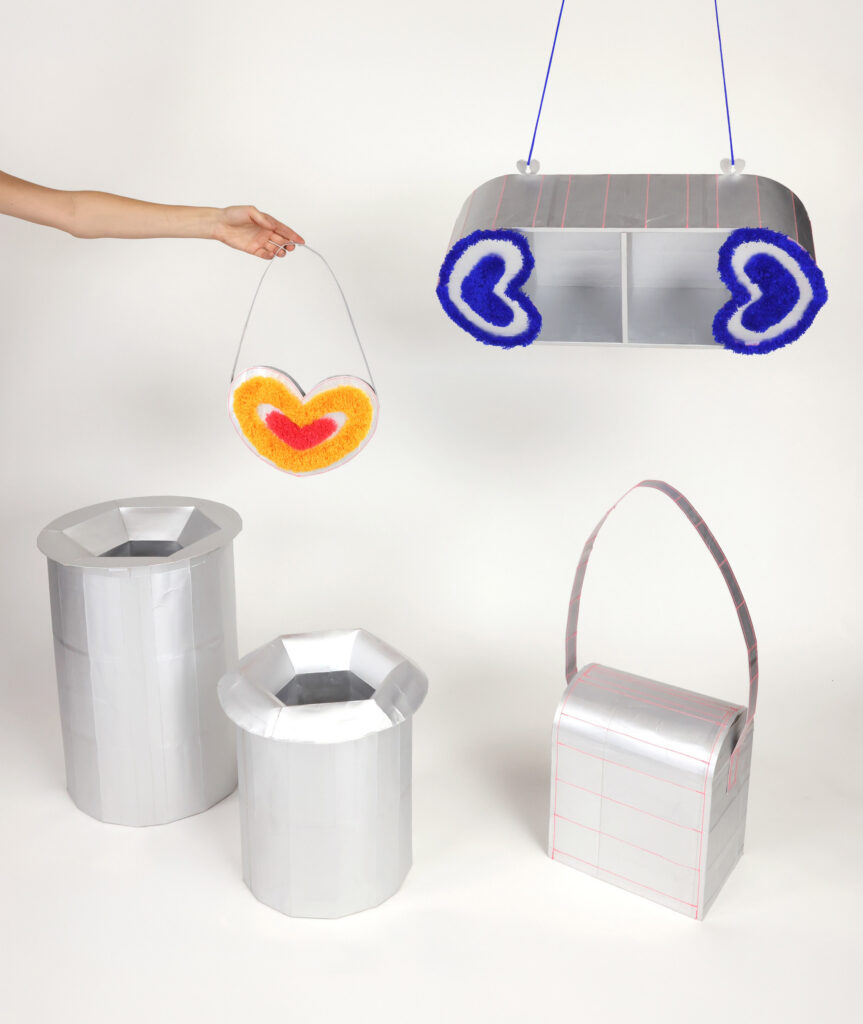
“Waste is everywhere. When we throw something away, our personal engagement with that object ends. What remains is a stream of materials. Ausmuell… makes the invisible visible.
“Discarded beverage cartons are transformed into a new, aesthetically pleasing material for furniture and everyday objects. The packaging is joined into sheets using ultrasonic welding or pressed into panels with a contact grill.
“Five objects, ranging from a small cabinet to a clutch, a cooler and two trash cans, demonstrate the material’s diverse potential. In the process, 445 Tetra Paks were repurposed, and the use of new materials was kept to a minimum.”
Student: Katharina Matejcek
Course: Master UdK Berlin
Email: info[at]katimatejcek.com
Ratio by Anna-Maria Argmann
“Ratio explores the relationship between industrial manufacturing and traditional craft. Endangered craft techniques, such as forging and woodturning, are intended to become economically viable for the future through a hybrid manufacturing system.
“Across three product typologies, different techniques are combined functionally. CNC-milled wooden furniture is held together by turned wooden nails.
“In the floor lamp, spun aluminium bodies meet a turned wooden handle for controlling the light intensity. The reversible bowl combines an industrially spun base form with hand-hammered indentations. In this way, efficiency, functionality and craftsmanship come together.”
Student: Anna-Maria Argmann
Course: Master UdK Berlin
Email: info[at]argmann.com
Designing Air by Tobias Decker
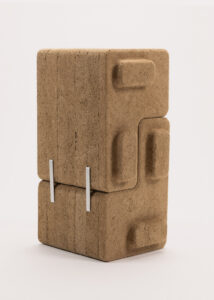
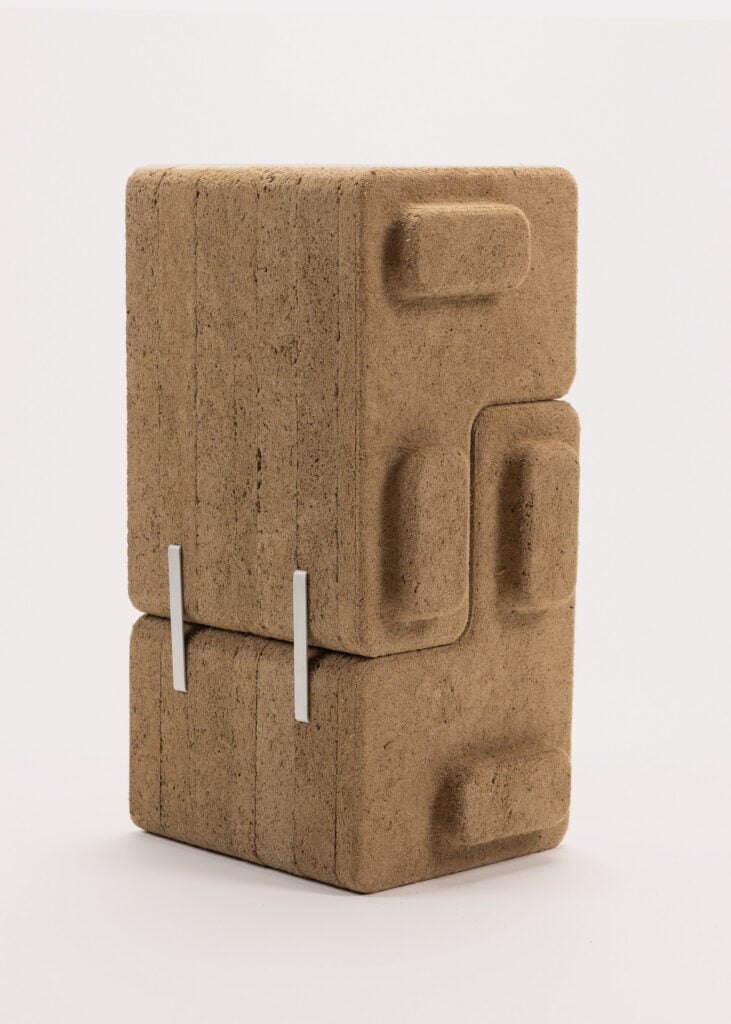
“Designing Air begins with a simple question: how can we create the same volume using less material? This question forms the starting point of the project, which engages with a novel, bio-based material, wood foam.
“Wood foam is made from 100 per cent renewable, lignin-containing raw materials and requires no synthetic binders. Like other foams, it achieves high compressive strength at extremely low density, a principle with great potential for saving resources without compromising stability.
“Temporary exhibition design was chosen as the field of application, since museums produce short-lived furniture.
“Wood foam offers low weight, sound absorption, odour neutrality and circularity, resulting in a modular furniture system dried directly inside moulds.”
Student: Tobias Decker
Course: Master UdK Berlin
Email: hello[at]tobiasdecker.com
Counting Sheep by Esmée Willemsen
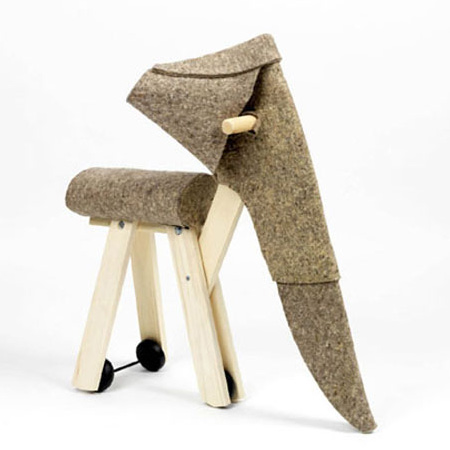
“Counting Sheep transforms discarded wool from sheep grazing a Dutch natural cemetery into a soft, felted coffin. Designed by Esmée Willemsen, the project connects care for the deceased with the landscape they return to.
“Different felt densities create a supportive base and a soft covering, while personal motifs and plant-dyed wool offer space for remembrance.
“A proposed regional production network brings together shepherds, wool processors and craftspeople, giving value to an overlooked material and the work behind it. The wool can gradually biodegrade under suitable soil conditions, returning nutrients to the earth.”
Student: Esmée Willemsen
Course: Master UdK Berlin
Email: hello.esmeewillemsen[at]gmail.com
P(l)ay to Become a Designer by Kilian Beckers
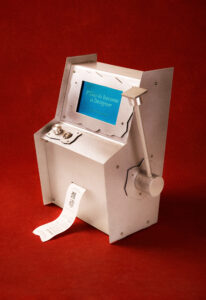
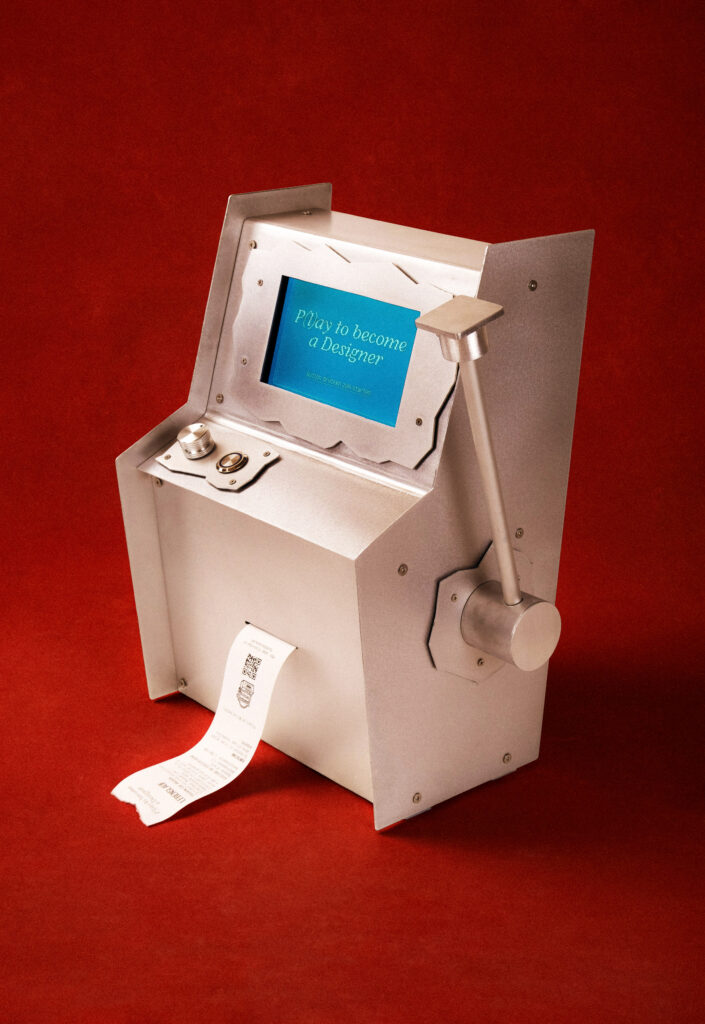
“P(l)ay to Become a Designer is a didactic tool disguised as a slot machine, exposing the illusion of equal opportunity in design schools. The interactive object translates social inequalities into a tangible experience designed to force a perspective change.
“The choice between two personas symbolically illustrates how unequal life realities can be. Players either encounter invisible barriers or have freedom of choice regarding their academic career.
“The lack of cultural, social and financial capital is physically felt by players as they navigate a rigged system. In the end, these structural barriers are ultimately manifested and printed on an unforgiving resume.”
Student: Kilian Beckers
Course: Master UdK Berlin
Email: hello[at]kilianbeckers.de
Fragment by Jón Martel
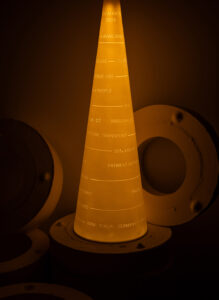
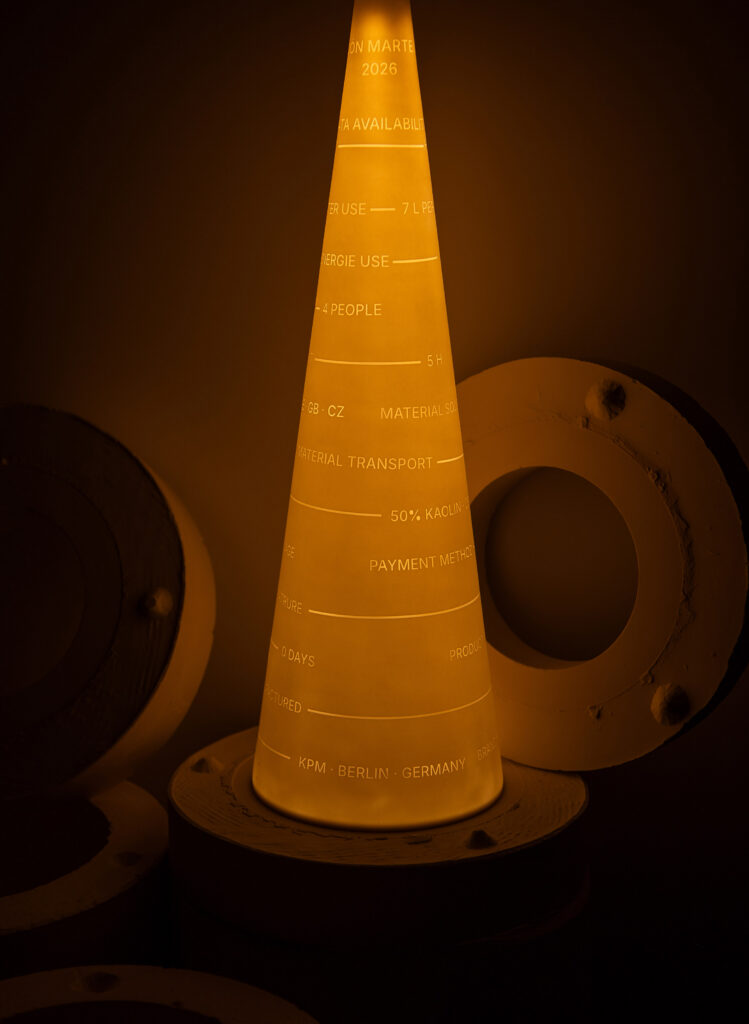
“Fragment explores how product and production transparency can be communicated directly through the product itself.
“The porcelain lamps serve as physical product passports, communicating information about the product’s life cycle while highlighting gaps in transparency across production contexts in Germany, Portugal and China.
“By working with companies to establish transparency, designers can contribute to strengthening the appreciation and perceived value of a product, enabling consumers to develop a more sustainable and lasting relationship with it.
“Fragment encourages a broader understanding of ecological and economic responsibility and proposes transparency as an ethical foundation for trustworthy economic practices.”
Student: Jón Martel
Course: Master UdK Berlin
Email: hello[at]jonmartel.com
Sharing Shade by Gustav Friebel
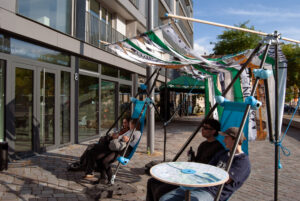
“Sharing Shade is an approach that embeds climate communication in shade-giving solutions rather than lectures. This structure explores what mobile urban infrastructure could look like to ease everyday city life during heat waves.
“Sharing Shade aims to provide shade and cooling while inviting dialogue. The goal is to foster exchange around the insight that shade is an essential communal resource, helping viewers recognise that urban heat is a problem we can address.”
Student: Gustav Friebel
Course: Master UdK Berlin
Email: gustav.friebel[at]gmail.com
Changing Positions by Philine Luettel
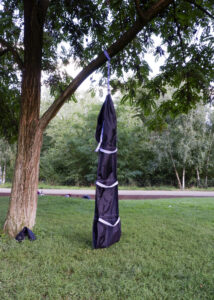
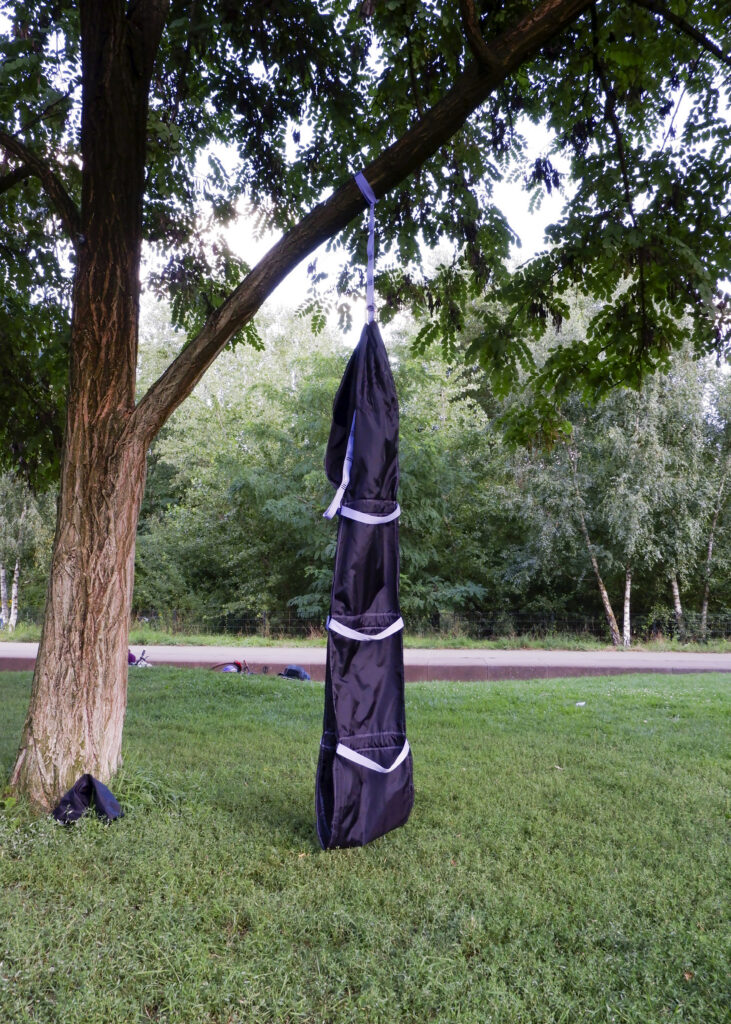
“Changing Positions explores the power of design in the birthing room, focusing on the supine position. Although upright and freely chosen birthing positions can offer physiological benefits, lying positions continue to dominate birth practices in many places.
“Their prevalence is historically linked to the development of a male-dominated Western medical system. In response, Loop was developed as a mobile textile support system for upright and self-chosen birthing positions.
“It can be explored at home before birth and brought into the birthing room. Through adaptable loops and suspension heights, Loop encourages body awareness, supports autonomy and expands possibilities during birth.
“Sharing Loop also passes on experiences and embodied knowledge.”
Student: Philine Luettel
Course: Master UdK Berlin
Email: hello[at]philineluettel.com
Coevo by Johannes Lutz
“Coevo seeks ways for bikes to co-evolve alongside people’s mobility biographies, so that changing needs, such as a move, increasing care responsibilities or a new job, don’t mean the end of a cycling routine.
“By using steel as frame material, fillet brazing as a manufacturing process, and a modular, convertible frame system, coevo becomes durable, customisable and extendable as those needs evolve.
“The aim is to encourage people to continue cycling throughout their life and to ensure that a cycling routine is not disrupted in the first place.”
Student: Johannes Lutz
Course: Master UdK Berlin
Email: johanneslutzlutz[at]gmail.com
Ornaments Forever! by Iva Coskun
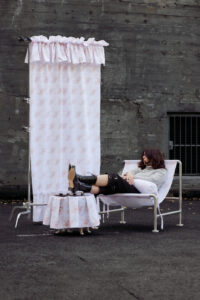
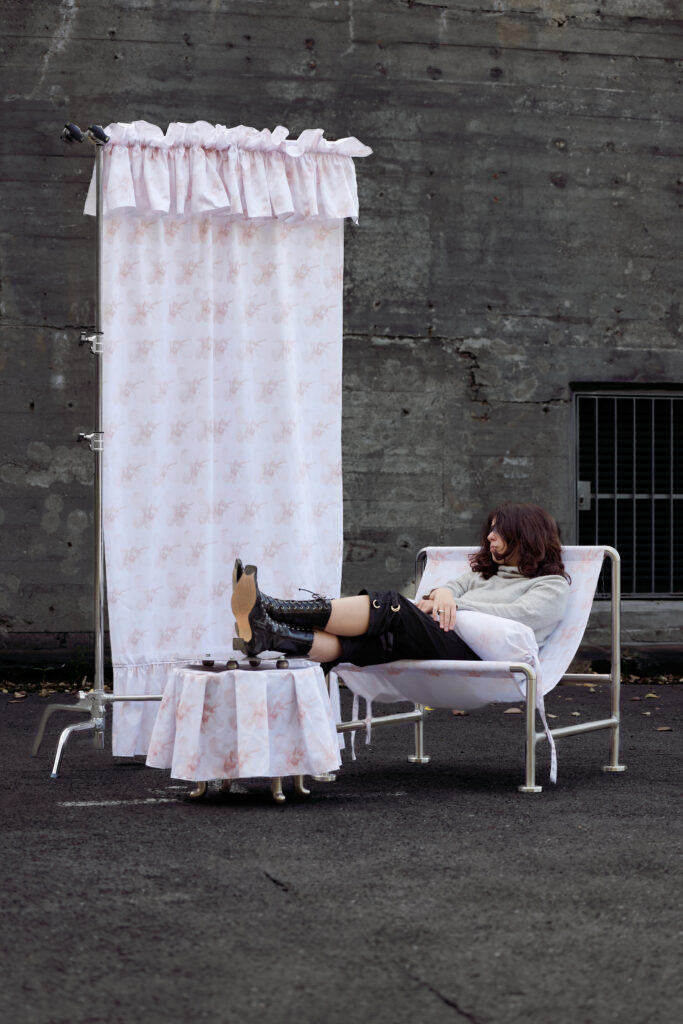
“Floral symbols and ornaments have always carried religious, magical and legendary meaning. Modernist design later dismissed ornament and symbolism as ‘kitsch’, yet floral patterns and textiles still shape our everyday lives and the visual landscape of our homes.
“Ornaments Forever! links the marginalisation of floral ornamentation with the ongoing loss of local flora and seeks to assign a new meaning to ornaments through neo-ornamentation.
“Extinct flowers are collected in a web archive and tied to their places of origin. An integrated image-processing generator abstracts the documented plants into neo-ornaments using rule-based algorithms.
“In keeping with the principle of digital ephemerality, each download changes the grid and cell size until the pattern disintegrates completely. The generated pattern becomes a gradually vanishing floral print for a series of furniture.”
Student: Iva Coskun
Course: Master UdK Berlin
Email: iva.coskun[at]hotmail.com
Freimachen, bitte! by Kim Bujak
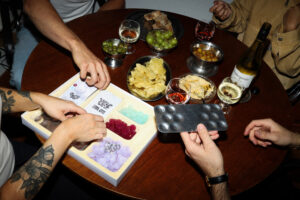
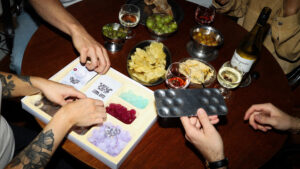
“The critical tabletop game Freimachen, bitte! makes the unnameable playable: the ambivalent experience of German gynaecological care, the associated silence and the longing to talk about it.
“Through procedural rhetoric, the rules convey the system’s patriarchal ambivalence: powerlessness, agency options and collective harm become reenactable.
“Players balance red (hopelessness) and blue (illusion of flawlessness) pills – while reason lies in between – striving for equilibrium, meaning holding sanity and success.
“Asymmetrical starting conditions and labelled cards reflect intersectional discrimination. Statements from studies, myths and news are debated side by side, leaving room for learning, sharing and gallows humour, while blank cards invite you to play with your own experiences.”
Student: Kim Bujak
Course: Master UdK Berlin
Email: hello[at]kim-bujak.de