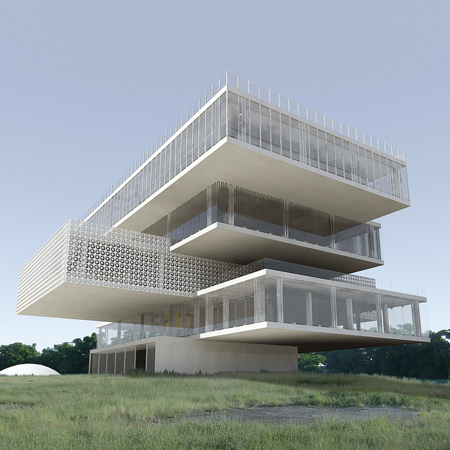
Biotechnological Park Building by Tatiana Bilbao

| 36 comments

Mexican architecture firm Tatiana Bilbao have designed a university building for Sinaloa, Mexico, inspired by a tree.
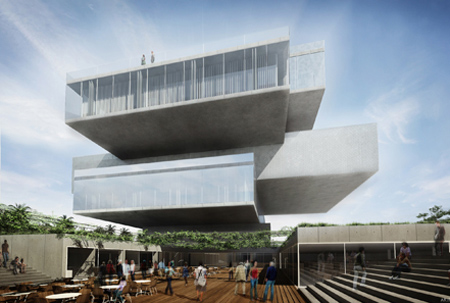
Called Biotechnological Park Building, the six-storey sructure will house academic study and research into new technologies in the field of agriculture.
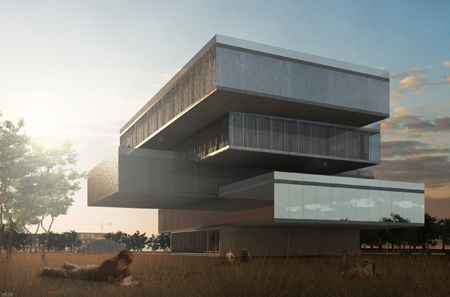
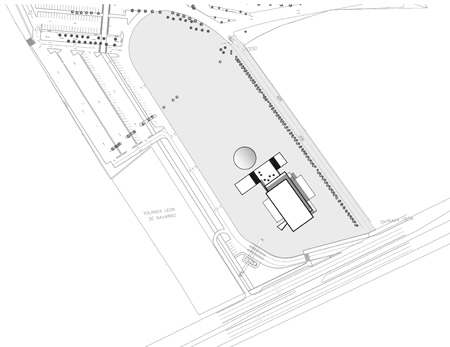
The project will cover 8000 square metres of the Culiacán campus of the Tecnológico de Monterrey, the largest private university in Mexico.
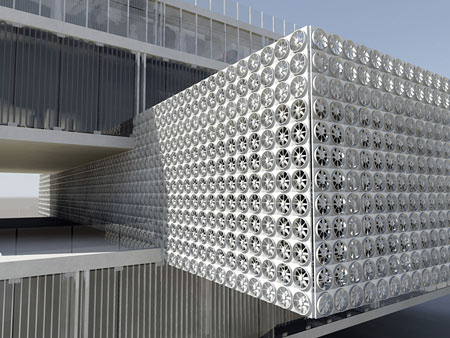
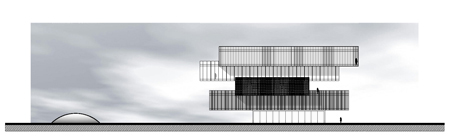
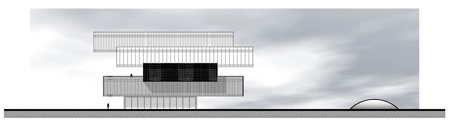
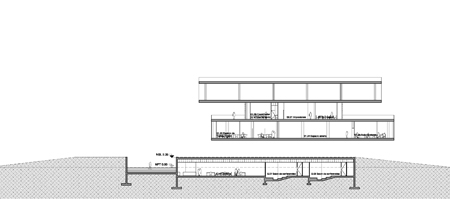
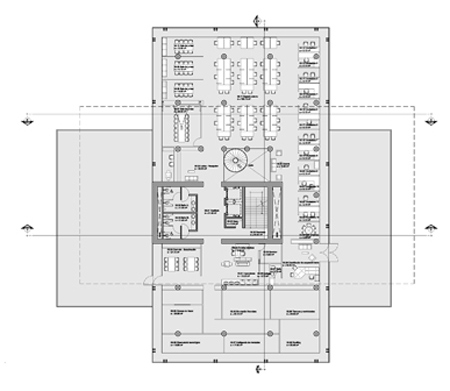
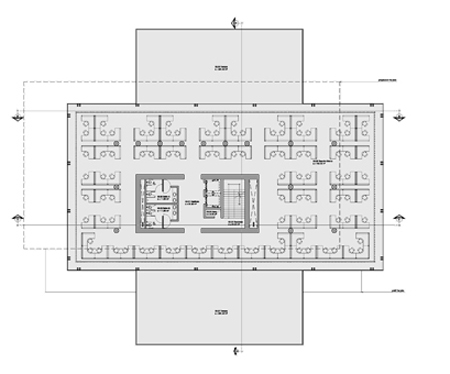
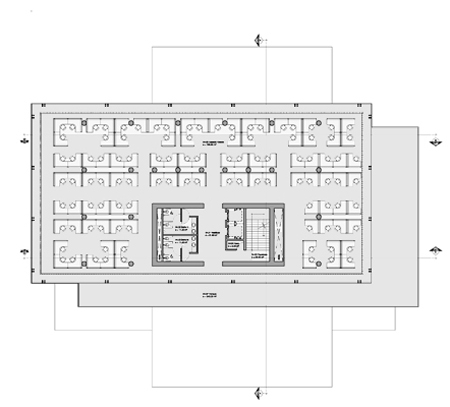
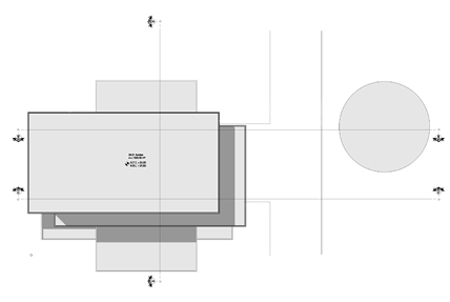
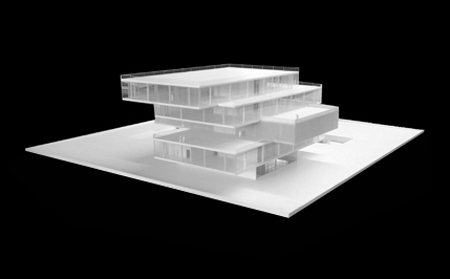
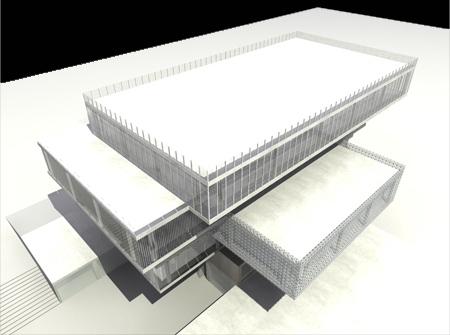
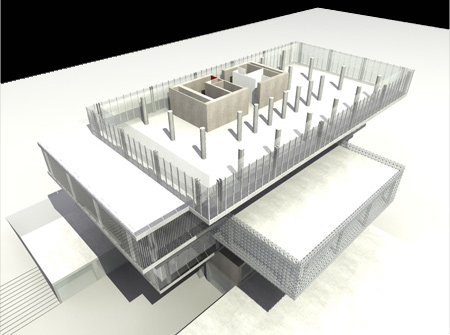
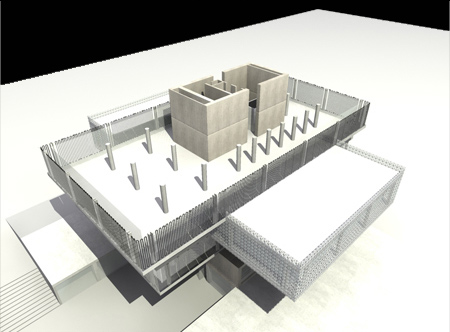
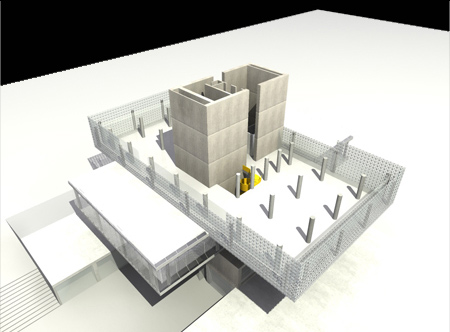
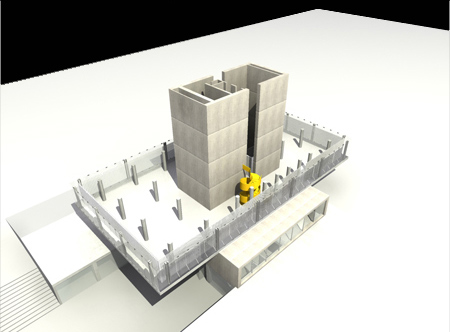
Utilising glass walls and patterned mesh, the design features intersecting rectangles that appear to be stacked on top of one another.
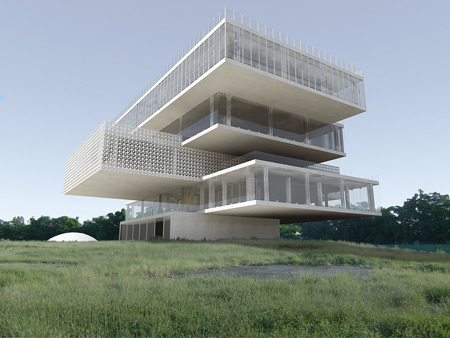
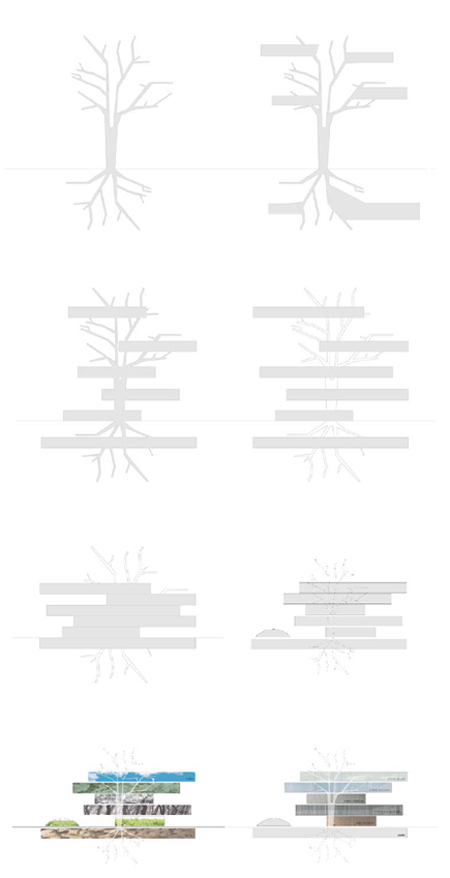
The architects conceived the building as a growing tree.
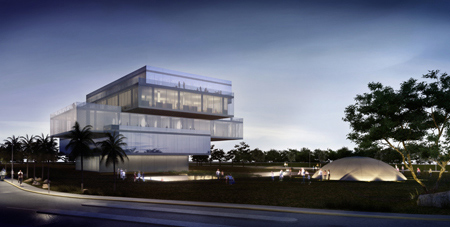
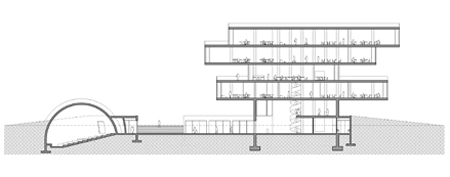
University teaching will take place in the lower floors of the building (the 'roots') while the business programs will be contained in the upper floors (the 'branches').
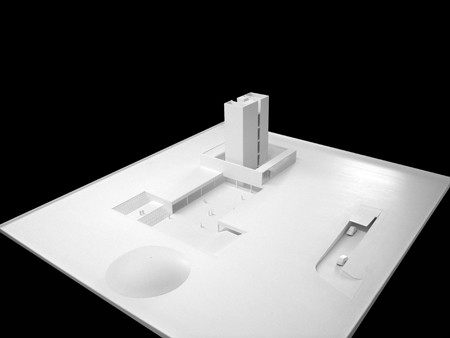
More from the architects:

--

BIOTECHNOLOGICAL PARK BUILDING
Culiacán, Sinaloa, México

Tecnológico de Monterrey Campus Culiacán, one of the campus of the largest national private university system in Mexico, commissioned us to design a new biotechnological park building, that could work as link between academic and business environments in the state of Sinaloa.
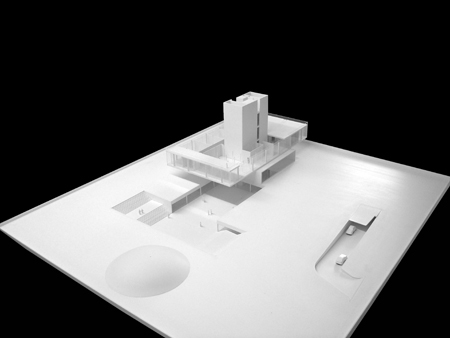
This mexican state stands out for its agricultural production, because of this, the university wanted a building that could bring together academic research and student work with the development of new technologies in professional life, giving space to corporations.
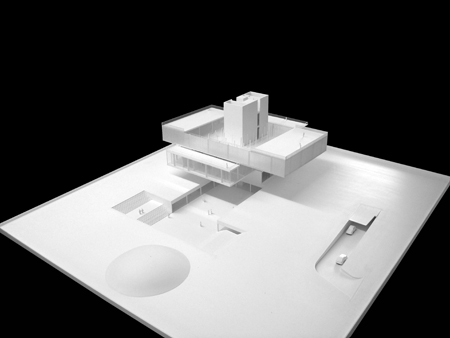
Tatiana Bilbao S.C. designed this building considering both academic and professional life as a growing tree.
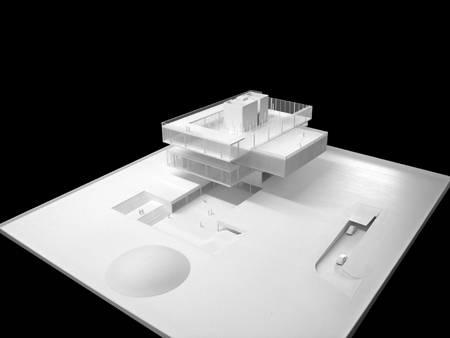
All the program related to the university is located in the building “roots” while professional program grows on the top of it.
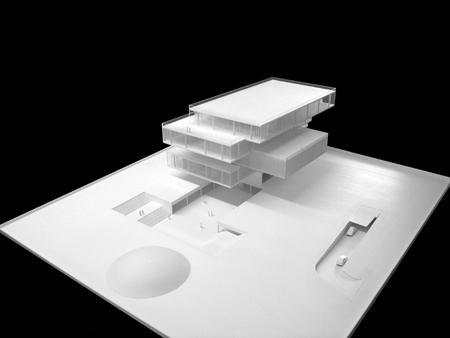
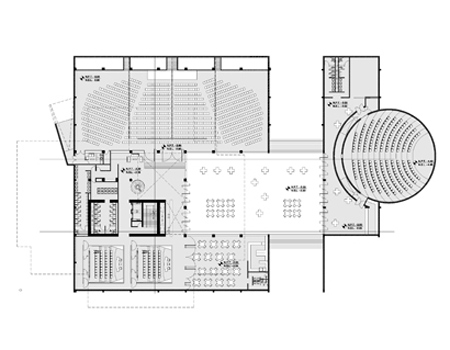
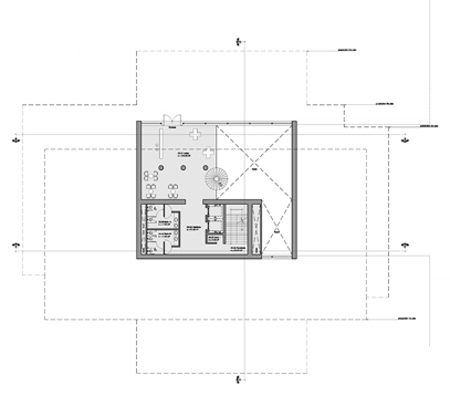
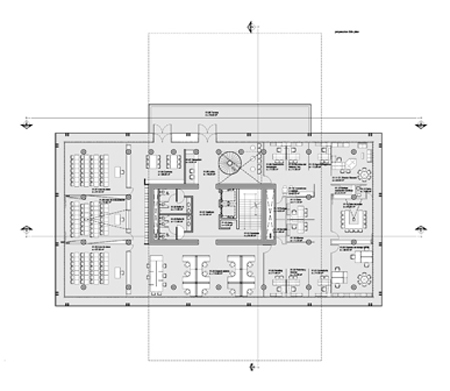
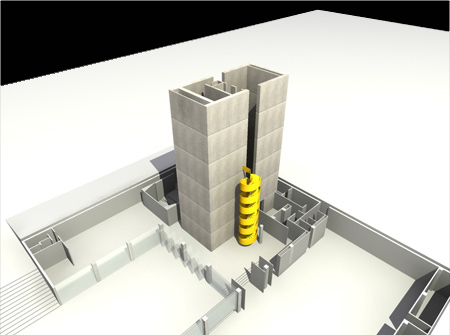
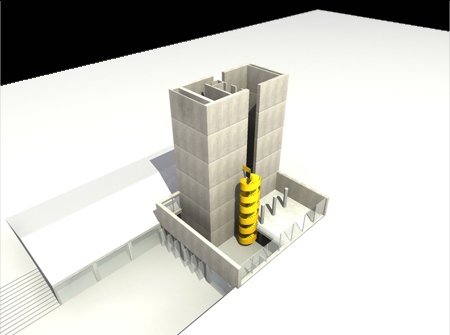
Following the requirements of such a facility, we translated the program into open geometric spaces.
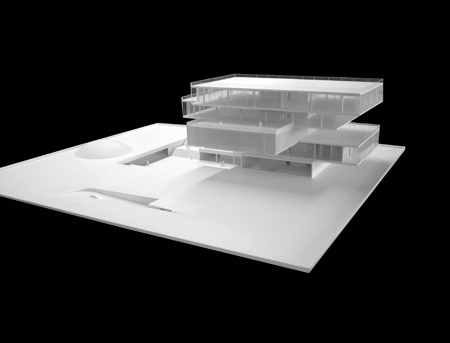
Each of the levels works itself technological and aesthetically with an specific sustainable system.
In the end each part “produces” something to keep the building working by itself.
CONSTRUCTION 8000 sq.meters
CLIENT ITESM-Sinaloa
DESIGN YEAR 2008-2009
ARCHITECTURAL PROJECT TATIANA BILBAO SC
PRICIPAL IN CHARGE TATIANA BILBAO SPAMER
PROJECT LEADERS LUDWIG GODEFROY, FRANCISCO SOLORZANO
PROJECT TEAM LUIS SOL, JUAN PABLO BENLLIURE
3D MASSING AR3D (MIGUEL ANGEL FLORES)
LANDSCAPE TOA (EMILIANO GARCIA, CLAUDIA RODRIGUEZ)
RENDERINGS AR3D, JUAN PABLO BENLLIURE
MODEL JUAN PABLO BENLLIURE, FRANCISCO SOLORZANO
STRUCTURAL ENGINEER IEESA, JAVIER RIBE
LEED AP EA, JORGE LOPEZ DE OBESO
TATIANA BILBAO S.C.

Tatiana Bilbao S.C. was founded in 2004 by mexican architect Tatiana Bilbao Spamer.
This multidisciplinary studio has architecture as its main practice with projects in Mexico and various countries around the world.
In addition, the office constantly organizes different exhibitions and programs, therefore promoting contemporary culture.
The office develops architecture covering a wide range of typologies, being the main examples: a house for the artist Gabriel Orozco in the pacific ocean, a 1388 m2 gated community house in Ordos (China), a Botanical Garden in Culiacan or the Tangassi funeral home in San Luis Potosi, an Exhibition Room in Jinhua Architectural Park and the Mexican Pavilion for the Expo Zaragoza 2008.
In 1999 Tatiana Bilbao co-founds the Office Laboratorio de la Ciudad de Mexico S.C.(LCM).
Since 2004 she has been a visiting professor in Universities such as Universidad Iberoamericana in Mexico City and Universidad Andres Bello in Santiago de Chile.
In 2007 Tatiana Bilbao was recognized by Design Vanguard Prize for being one of the 10 more influential young practices of the world.


One Response to Biotechnological Park Building by Tatiana Bilbao

  1. gaque says:

    “Each of the levels works itself technological and aesthetically with an specific sustainable system.”….

    A techno tour de force, haven’t we seen enough of this? As long as architects think mimicking trees and using “technological…sustainable systems” are enough to be truly sustainable (read “productive”), we won’t get anywhere. What a gimmick.

    As for the design itself, why did they translate and rotate the floors anyway? Besides the terraces (which aren’t accessible at each floor?), the floor plans are as conventional as it gets. The concrete underside of the floor slabs are so wimpy and unpleasant. I do really find the sunken square quite nice, but the lack of sun shading and the generally standoffish relationship with trees, plants, water, etc. is lacking.

  2. Michael says:

    Structure looks less then desirable…

  3. Jeroen says:

    Cool building! And after it has been built, all that tree-nonsense will be forgotten.

    BTW, can those boxes really work without any bracing in the facade?

  4. nomad says:

    saying the building is inspired by the growth of a tree is pushing it. the building seems very static and predictable while the growth of the tree involves complex mathematics on a cellular level that assign a set of rules that from those rules diversity follows.

  5. booh says:

    Beautiful design, awesome renders. But as I always say: if your concept is tree- you should really start over. I think concept super bad arse layer-ness makes more sense to me :D

  6. dha says:

    nice, I like it..

  7. Hank says:

    I feel like I’ve seen alot of this lately?

  8. schumi says:

    thoughts….

    my tree house has more branches than this nonsense!

    i like the building, are those fans generating electricity …hemm well they should be.

    it is a little too residential looking for my liking.

  9. ste says:

    find some similarities to nature (which nobody ever finds in your design without a strange discription)… use the word sustainable for at least 5 times (and prove the people that you’re sure that sustainability can be achieved by technical gimmicks really) et voila… your project is up-to-date

  10. Peter says:

    I love it.. like Jenga ultimate game… ^^

  11. roman kralya says:

    I see only 5 blocks of concrete. It`s too boring, too usual and not associated with tree.

  12. PP says:

    To say that the design was inspired by a tree is a kind of no go stament, specially because the building resembles nothing of a tree. In my opinion, it is not necesary at all to force and try to establish architecture-nature relations where there are not, that makes nothing better, the project says everything by itself.
    Though it is a good project. :D

  13. testek says:

    i like the diagram of the tree.. which is not at all visible anymore in the actual design. but at least it’s kinda ‘bio’

  14. Enceladus says:

    i just think the design concept and the structural concept don’t go together. someone would expect each slab being supported on the central core through trusses (like a tree…) …. not just a regular office structural grid.

    seriously, too much big talk for quite an average project.

  15. spielberg says:

    A kind of MVRDV with a little Niemeyer circle….

  16. Alexandros says:

    Last time I saw a tree it did not anything like this.

  17. Ghost says:

    kinda weird say the same strategy was copied like 5 times?

  18. jw says:

    a story of terrible proportions !!

  19. R says:

    Inspired by a tree? Are they using that reference to try to distract the attention from the fact that it most clearly is a copy of many other designs of stacked floors? The diagrams with the tree in it are so ridiculous that you even hope that they are not serious about it. Furthermore I have the idea that the 3D floor drawings make no sense at all structural wise: columns above voids?

  20. h says:

    like a year one student project. the concept of a growing tree is overly abstracted and simplified. such a naive interpretation of it. and definitely the form can be much moreeeeee imaginative. please. not ANOTHER glass box or boxes for that matter.

  21. ios says:

    what a deep concept..

  22. andy says:

    this couldnt look more different from a tree! why bother post rationalizing

  23. guy incognito says:

    mvrdv has done exactly this scheme before. Not built though.

  24. Patrick says:

    Inspired by tree or by Koolhaas?

  25. LOW says:

    LeCo, meet Mies, no a boring day

  26. larp says:

    Wow. The real thing looks like it’s made out of foam core.

  27. arbol says:

    This architect has something to do with Herzog & de Meuron. Aside from that, her designs are nothing more interesting than pretty.

  28. OV says:

    This tree concept is nothing new or innovative. William Pereira explored this idea back in the 60′s with the UCSD Library. Here is an image: http://en.wikipedia.org/wiki/File:Geisel_Library,_UCSD.jpg

    I actually like Ms. Bilbao’s scheme. I guess I am just a sucker for cantilevered boxes. The tree diagram I feel is a weak representation of the idea, though.

  29. diego says:

    el proyecto hace agua por todos lados. no tiene mucha coherencia que digamos.

  30. bentply says:

    OMA’s Copenhagen project reads very similar to this project.

  31. ALEJANDRO says:

    THE WAY GIVES CONCEPTUALIZING IS A SUBJECTIVE THOUGHT FOR ALL. TATIANA IS SOMETHING THAT HAS DEVELOPED, THE FORM PROGESIVA, CONCEPTUAL OF HIS WORK. ….

    /FORMALLY AND SPATIALLY IT IS VERY RICH THE DESIGN./

  32. Jimmy Leo says:

    Done a million times. Give us real trees instead!

  33. Mario Furcic says:

    just a correction of a comment

    a tree doesn’t grow by principles of complex mathematics, rather by very simple fractal equation that has a loop, that is recursive

  34. stud2851 says:

    similar and more tree-ish stacking effort by behnisch:
    http://www.skyscrapercity.com/showthread.php?t=591325

  35. quinton rampage jackson says:

    I think the design has to be taken in context before being overly critical especially considering the drawings above are nothing more than base conceptuals. Let me elaborate:

    For Mexico, this is a nice design and largely progressive as the culture gradually undegoes a shift in attitude toward greener, more sustainable design. for the USA or for the UK, sure – this concept is no longer a show-stopper, but in Mexico – different story.

    As for structure – yes a cantilevered structure such as the Bio is possible without the requirement for diagonal cross-bracing though the beams need to be in the region of 1m throughout. In order the keep a slim profile you can find buildings with diagonals, normally visible through the facade. Those columns visible in the cavity are secondary structure and so are not linked back to core directly.

    Knowing something about the project I can say its more than average in comparison to dozens I have worked on. I cannot speak for the designers mind but sustainability is first on the agenda and with any sustainable project the headliners are energy, water and reduced HVAC requirements. Having not designed the concept – I can’t really comment on the aesthetics or the tree idea.

    Another unusual aspect for a Mexican project such is the abundance of hi-spec materials and a willingness to try materials not routinely used in Mexico. This is important given the environment in which it will be built – the idea being to form a building that will withstand the high heat and humidity with minimal maintenance.

    Technically, this building stacks up well against any European counter-part [pardon the pun!] and it’s only my opinion but I rate the building as up there both aesthetically and technically.

    Hope this was of some help in explaining the building a little more, feel free to continue the critique!

  36. rmsnmz says:

    The form itself had been used several times before, every time with a different post-rationalization. This is not to say that the form isn't nice, it is just that the form is too specific to be re-invented and re-used several times.

    And guys, what are those columns on the upper volumes? What is it that supports them, I wonder? This really looks like a second year student project. Nothing is really well thought out, there is just some flashy-wanna-be renderings with some ridiculous structure to make it look legit yet miserably fails at that. Sorry to be harsh but I get annoyed when I see projects that pretends to be something that it is not.

Leave a Reply

Your email address will not be published. Required fields are marked *

*

You may use these HTML tags and attributes: <a href="" title=""> <abbr title=""> <acronym title=""> <b> <blockquote cite=""> <cite> <code> <del datetime=""> <em> <i> <q cite=""> <strike> <strong>