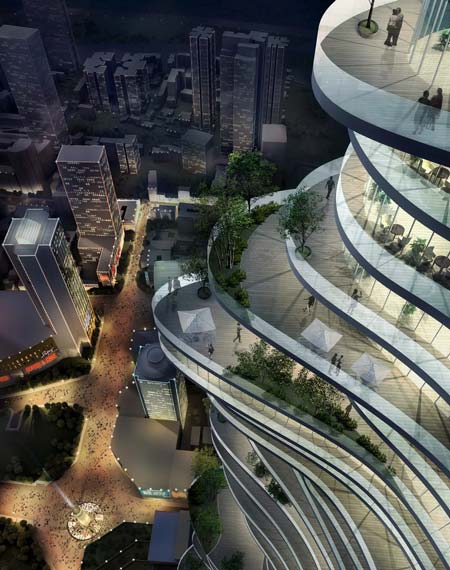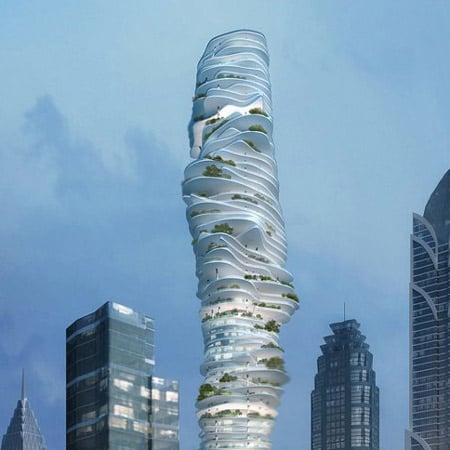
Beijing architects MAD have designed a skyscraper for Chongqing, China, with gardens at each level.
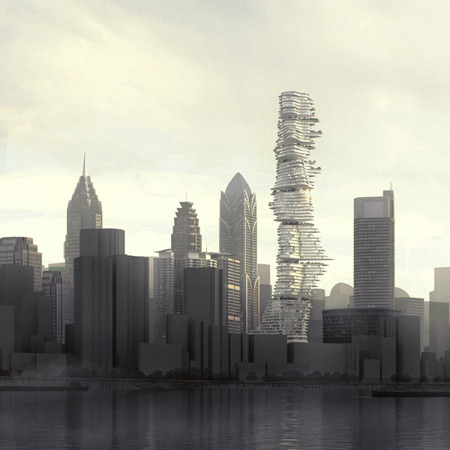
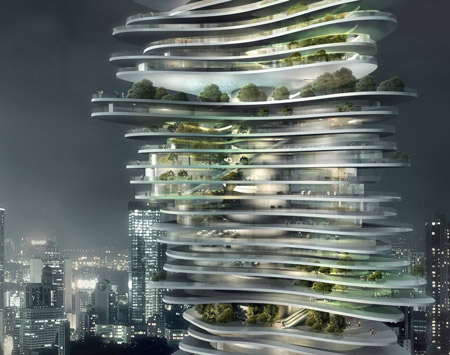
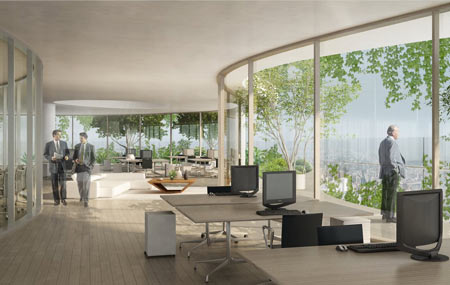
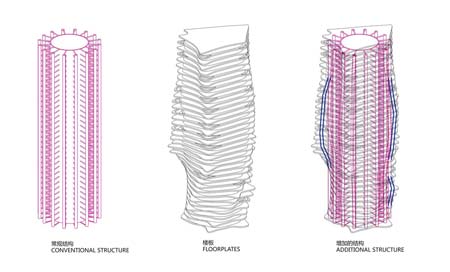
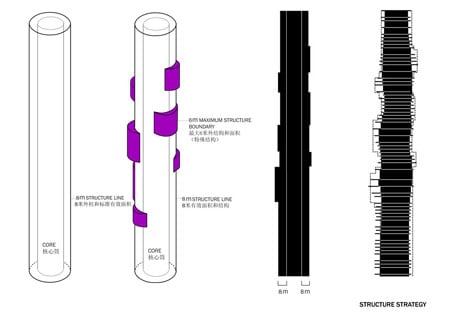
Rather than consider the project vertically, the architects envisage a stack of floors, each slice shifted horizontally to create spaces for gardens and patios.
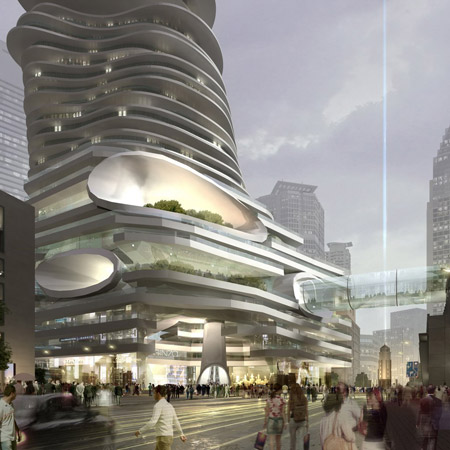
The 385 metre-high building will be called Urban Forest.
Here’s some text from MAD:
–
Urban Forest
By the end of 2009, MAD has completed the concept design of a 385 meter high metropolitan cultural complex in the city center of Chongqing – The Urban Forest.

This is the third skyscraper designed by MAD following the Absolute Towers in Toronto and the Sinosteel International Plaza in Tianjin, China.
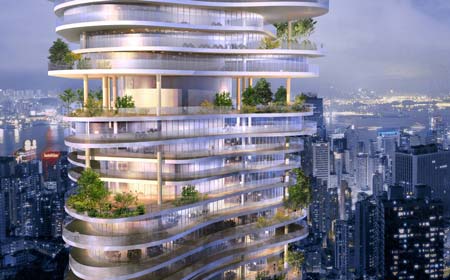
MAD proposes a new architectural concept for the course of Chinese urban development – to actualize a sustainable multidimensional high-rise within China’s youngest municipality, where nature reincorporates into the high-density urban environment in the near future, to evoke the affection for nature once lost in the oriental ancient world and bring to the modern city dwellers.
In the year of 1997, Chongqing became the fourth direct municipality in China.
As an important pole of the growing economy in western China, the city area of Chongqing is more than twice of those of Beijing, Shanghai and Tianjin combined.
Such macro-scale urbanization should not only pushes economic growth and material prosperity, but also foster the evolution of the city’s cultural essence. Chinese cities have gone through the process of once starting from nothing, to following contemporary Western civilization urban pattern. Now, the overall economic infrastructure has oriented the direction of future development towards inland China.
What lies in the future of cities? How should one grasp the concept of emerging high-density cities of China in the context of a scenic town such as Chongqing? How does one discuss the future of architecture in Chinese cities on the base of Eastern Naturalist perspective and in the new context of China’s unique economic, social environment and globalization background? How to engage the city dwellers with an experience of nature when its presence of steadily diminishes in the face of the ever intensifying concrete jungle.
Throughout the process of contemporary Western urbanization, skyscrapers were the symbol of technological competitions, prime capitals and the formal enslavement of the powerful and the rich. Sustainable ecology became more of a demand for comfort; while the yearning of a return to nature was left ignored. The Urban Forest draws inspiration from the perspective of nature and the man-made in Eastern Philosophy, and ties the urban city life with the natural outdoor experiences.
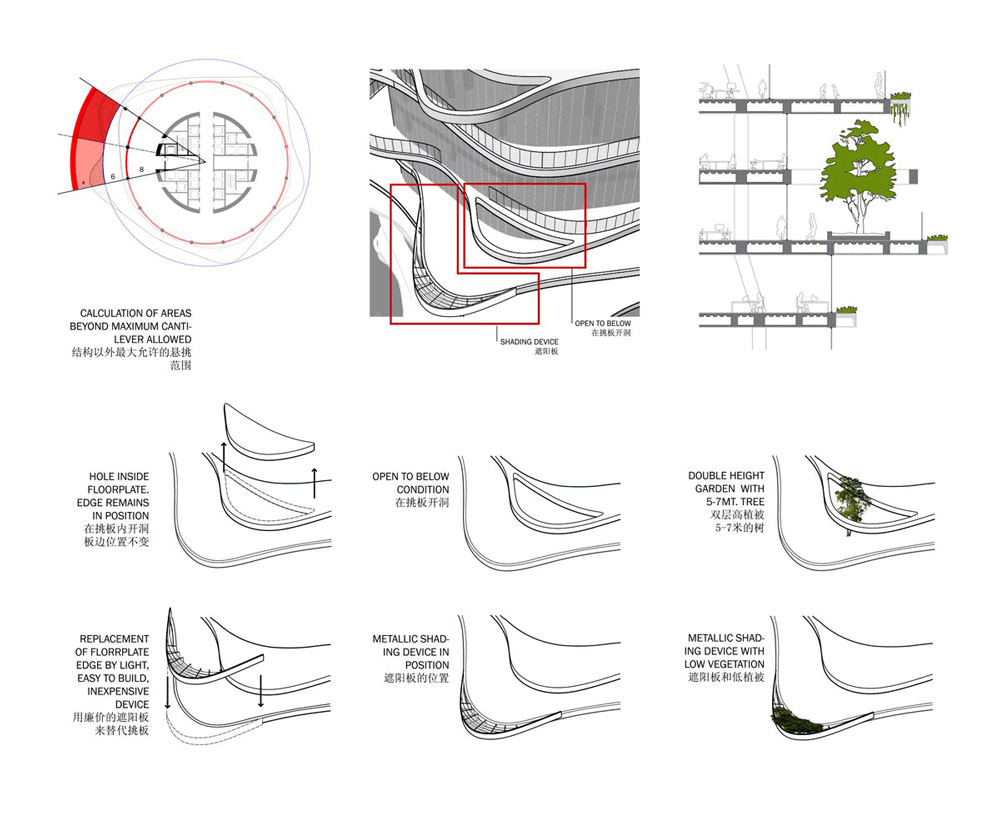
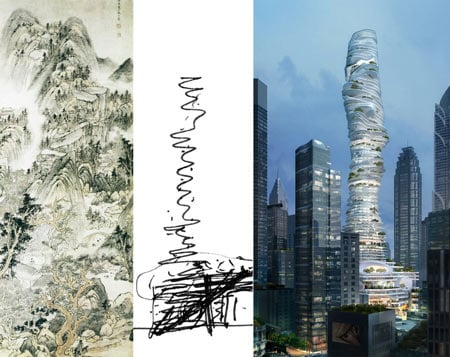
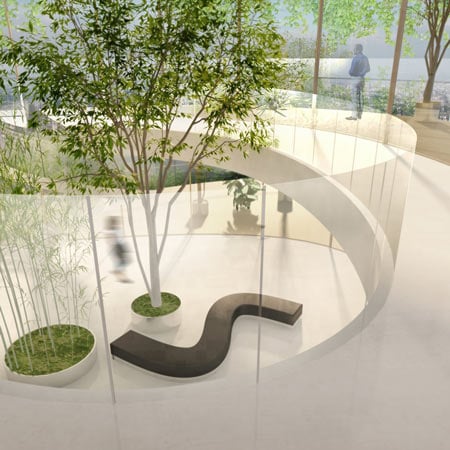
The shape of the architecture mimics mountain range, shifting in a dynamic and yet holistic rhythm, and becomes a continuation of nature. Unlike its preceding counterparts, The Urban Forest no longer emphasizes on vertical force, instead it concentrates on the multidimensional relationships within complex anthropomorphic spaces: multilayer sky gardens, floating patios and minimal and yet well lit nesting spaces, the architectural form dissolves into the fluid spatial movements between air, wind, and light. In this environment, people encounter nature filled with unexpected surprises.
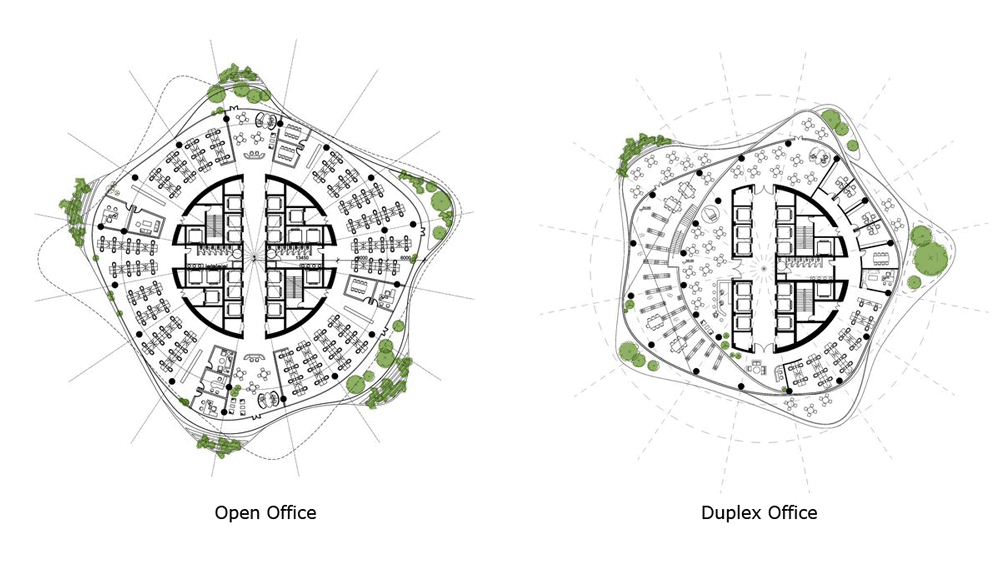
The fusion between Eastern humanism spirit and urban public spaces pioneers in the making of a sustainable multidimensional city – The Urban Forest will not be a piece of mediocre urban machinery, but an artificial organ that lives and breathes new life in the steel-and-concrete-filled city center.
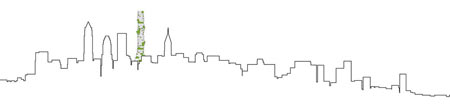
Chongqing, the youngest municipality in China, holds great potential in its urban planning and construction and has the capability to be built into a most livable city, a city of pleasant environments, a traffic-jam-free city, even into a city that runs into a complete urban forest. A city with aspiration and vitality shall be courageous in envisioning and designing its great future. – Bo Xilai (Mayor of Chongqing)

In October 2009, The Urban Forest from MAD debuted in the Heart-Made, Europalia exhibition at the 2009 Europalia China. It represents the most challenging dream of the contemporary Chinese architecture — a type of urban landmark that rises from the affection for nature. It is no longer a static icon but an organic form that changes all the time with people’s perception.
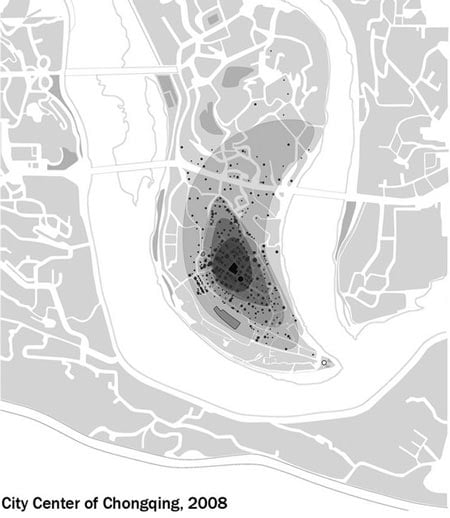
Director in Charge: Ma Yansong, Dang Qun
Design Team: Yu Kui, Diego Perez, Zhao Wei, Chie Fuyuki, Fu Changrui, Jtravis B Russett, Dai Pu, Irmgard Reiter, Rasmus Palmqvist, Qin Lichao, Xie Xinyu
Location: Chongqing, China
Typology: Commercial, Office, Hotel
Site Area: 7,700 sqm
Building Area: 216,000 sqm
Building Height: 385 m
Architectural Design: MAD Ltd
Structural Design: ARUP Group Ltd


December 10th, 2009 at 1:50 am
..it’s look like hams piled together…uhh..so hungry :)
December 10th, 2009 at 1:54 am
amazing in China!
December 10th, 2009 at 1:54 am
wonderful idea, and very poetic. green building without fancy technology. I hope ARUP can help them realize it.
December 10th, 2009 at 2:16 am
really mad. I have high phobia
December 10th, 2009 at 2:54 am
I saw this coming after MAD’s Taichung Convention Center. It mimics topographical lines, love it
December 10th, 2009 at 5:03 am
compared this with a wall that plants grow on top, I think this is more sustainable. The plants are easier to manage and maintain in a good shape.
BUT
I don’t really fancy with the tower design.
December 10th, 2009 at 5:04 am
woww……its cool skyscrapers….
i like mad design…..its more fluid….
hopefully i can work with ma yansong after i graduate…..
i want to learn from him
December 10th, 2009 at 7:35 am
That is REALLY sexy. I love the direction Architecture is going with the implementation of greenery as a main feature.
December 10th, 2009 at 7:44 am
great design for multiple choices, bravo !!!
December 10th, 2009 at 8:32 am
Ok the the skyscraper looks nice.
But … do we have some missing info here? Or is a skyscraper with some garden areas a sustainable building? Come on guys … that must be a joke, right?
December 10th, 2009 at 8:45 am
Renderings are spectacular but I question the design. The form is too easy, meaning that I can almost immediately see how it resulted out of a contour cut from a model in Rhino that was then extruded down to make floor plates; the contour lines were then offset and extruded up to make guard rails. Formally [and spacial] it gains a lot from the rolling and floor plate subtractions made on the viewing terraces near the base, but overall, I believe the design lacks rigor.
December 10th, 2009 at 9:00 am
the smallest core ratio ever designed
no way anybody can pay for such an uneffective tower
December 10th, 2009 at 9:17 am
how much soil volume does a tree need again?
December 10th, 2009 at 9:53 am
a little dissapointing for mad but i still am a massive fan!
December 10th, 2009 at 10:28 am
it will be built?
December 10th, 2009 at 10:33 am
well, Foster did it 15 years ago already without the “urban bla bla”
December 10th, 2009 at 10:40 am
i’m seriously bored of this kind of architecture
it feels very cheap
December 10th, 2009 at 11:27 am
their 3rd skyscraper project and the first i would really love to see built!
December 10th, 2009 at 11:34 am
Re: Chongqing washing up tower
It looks like a pile of dirty plates from a distance but I still rather like it.
December 10th, 2009 at 11:40 am
Love looking at it, but would like to talk to the General Contractor about the small things, like cost!
December 10th, 2009 at 11:46 am
urban cam shaft
December 10th, 2009 at 11:47 am
As seen on Wipeout HD Modesto track!
http://farm4.static.flickr.com/3507/3755475532_271696bf6c_o.jpg
December 10th, 2009 at 11:48 am
That looks really cool, almost like an ants sand house.
If it will be built I hope the white color façade will stay white with all the car pollution around.
Hopefully it will be built.
December 10th, 2009 at 11:55 am
I agree with the comment above, why is it sustainable simply because it has some gardens – well can you call balconies with plants on gardens? I also seriously doubt the capability of these structures to support the sort of trees hinted at in the renderings, for tress this size the floor depths would be too large to make it commercially viable. And ‘Urban Forest’ cmon…
December 10th, 2009 at 11:58 am
it looks like a stack of plate to me than a skyscraper
December 10th, 2009 at 11:59 am
it seems like mad continues picking up and re-rendering concepts and designs that have been out there (and failed) since many many years;
besides..by now everybodyshould know, that, due to windloads, it is not possible to use or even build these ‘gardens’ in that height.
December 10th, 2009 at 1:22 pm
lol
Aerodynamic drag is going over 9000 I think.
I love the idea of skyscrapers with trees in them, But I don’t the think the idea of external gardens like that is remotely practical.
Too windy, too heavy, too little load bearing support.
Better to have 3 or 4 floor atrium spaces that have trees/gardens/parks in them.
December 10th, 2009 at 1:40 pm
@ creature
Why does it always have to be so complex? In all honesty, I sometimes find the ridiculous ways in which a design is reached where it’s on such a personal level to the architect/s to be quite… well, ridiculous. Now, I’m not saying this is the case all the time, but so what if it’s easy to understand? Why should it be so difficult? The general public barely has a clue what’s going on half the time. And I’m not having a go here, I’m just simply curious as to why you think it’s a problem :)
December 10th, 2009 at 1:46 pm
Derek, please open your mind, i’v never seen designs like this. Dont fool yourself, otherwise those Chinese wont let you in the Noah ship in 2012…
Besides, everyone knows Chongqing is a basin area without strong wind, also its rock hard foundation is perfect for super tall structure…
December 10th, 2009 at 3:18 pm
Freaky building but beautiful, I doubt this would be very stable! but love it, a work of art, thanks for sharing. From a distance it looks more like a pancake stack.
December 10th, 2009 at 3:23 pm
@ Aura, what should a skyscraper look like?
December 10th, 2009 at 4:56 pm
Studio Gang’s Aqua Tower without a reason for form…
Arup will no doubt be banging their heads into the wall, they are a pretty straight forward group when it comes to structural rationale. This looks like a super heavy post-tensioned NIGHTMARE.
December 10th, 2009 at 5:42 pm
@artist
http://www.aiany.org/eOCULUS/newsletter/wp-content/uploads/2007/04/eddittower.jpg
type ken yeang into google image search.. and there is 100s more
December 10th, 2009 at 6:04 pm
looks like a termite invasion..lol
December 11th, 2009 at 3:51 am
I think it’s a MAD idea to do a sructure like that, does it serve any purpose ?
December 11th, 2009 at 10:49 am
This is very nice, and a beautiful idea, but how is it suposed to work in a country with almost as much CO2 as Oxigen?! Those gardens will never work due to the environment surrounding the building…good effort though!
“Why sould we put water in the desert if you know it’s going to dry?!”
December 11th, 2009 at 12:32 pm
serious maintenance issues…
December 11th, 2009 at 12:51 pm
go irmi go – you even brought john lautner back to live
December 11th, 2009 at 11:46 pm
I think anything that isn’t the typical flat sided building is usually greeted with suspicion by the narrow minded. I love it, cities would be so much more interesting with this type of thinking.
December 13th, 2009 at 12:52 am
mvrdv?
December 13th, 2009 at 9:02 pm
China´s economy is overheating and will severely contract during 2010. We´ll see how that will affect its boiling real estate market. We´ve already seen what´s happened in Dubai.
December 13th, 2009 at 10:39 pm
Well if it ends up being actual, then bravo…one in the bag for great ideas away from the mundane dogma that blights the world we inhabit… just don’t let that value engineering ‘cut any corners’…or would it be curves with this form? Just another thing, following on from other comments, a good cad modeller could produce this from with various software, given the right direction and tools, just a matter of days…
December 14th, 2009 at 3:04 pm
Awesome!!!!
December 16th, 2009 at 11:41 am
verry good…out of minde
December 16th, 2009 at 12:12 pm
come on….double floor or triple floor volume but with a big cover above doesn’t mean that trees can grow under shade…
December 16th, 2009 at 1:14 pm
I am amazed by the structure needed to set the tower up. Besides, I enjoyed the shape.
December 16th, 2009 at 5:29 pm
Cool design, bad on the structural aspects, and really poor on the green part. The amount of pollution that a concrete plant will produce will not be offset by the minimal plantings as shown. Need to incorporate also some sort of energy production into the building as well as the ability to grow and harvest food for the occupants.
December 17th, 2009 at 9:06 am
Really Cool and Interesting concept..i hope one day this will be realized.
December 17th, 2009 at 1:46 pm
hm…. looks like the Marco Polo Tower by Behnisch Architects in Hamburg….
December 17th, 2009 at 2:35 pm
this is really boring and been done one hundred times over. in fact, MVRDV did this with their year 2000 pavilion, or the hanging gardens at the trump tower, or the proposals of Paolo Soleri, or in babylon itself! i’m not against urban gardening. i think it’s a good idea to supplement your diet with food you grow in season, but there is a certain efficiency and practicality in land based farms that can be quickly harvested by machines or rows of people. can you imagine living in this tower when people are spraying pesticides and manure (cow poop) in the planting beds?
December 17th, 2009 at 3:50 pm
Ken Yeang from TR Hamzah & Yeang did something very similar with the Tokio Nara Tower in 1994.
December 17th, 2009 at 5:34 pm
A messy stack of CD’s. A bit reminiscent of Gaudi.
Esthetically more interesting than four flat sides, realistically attainable?
I don’t think weather is an issue, they control it now.
I agree with flytoget, but progress and innovation has to start somewhere, someone has to take those risks.
The 13-storey buiding that toppled over in Shanghai all of a sudden comes to mind…
December 18th, 2009 at 12:13 am
this is the project that marks where MAD jumped the shark.
December 18th, 2009 at 11:15 am
Well there are trees in Australia that grow on very little soil coverage over the top of sandstone rock shelves and they maintain a life. This can be done and bloody well should be done. We must strive to build things like this. We have to find a way to integrate nature in this way and many more if we are to live a cleaner life. Who cares how long it would take to 3d model it. The most simple forms are often the best. How long does it take to pull up a box in sketchup and how many boxes do you see around you. This is irrelevant. I hope more people design with nature in mind.
December 31st, 2009 at 7:31 am
the form lacks the proportional elegance that natural terrain has as claimed as an inspiration or did I miss out something I do not see? is an unelegant form an icon in our times or we are just losing our sculpting senses? plse do not let this be part of the history of our next generation.
January 9th, 2010 at 11:20 pm
Love the idea, but I think it messes up the city skyline…individually, the units are stunning and beautifully organic in nature.
January 18th, 2010 at 2:08 am
very interesting and organic… it let people experience space beyond what is already known. i am looking forward for this project… its form really says it is from china that it holds an interpretation of what is the place is all about… it tells how the history contribute much to come with this design solution…i see a part of daniel libeskind principle here, and it really makes sense for a growing country and architecture. well, not to mention- it is one of my design concept and philosophy, having an urban forest which leads to a new height of vertical solutions and interesting experience to spaces.
January 25th, 2010 at 1:46 pm
that’s a wonderful idea, fricking great
February 15th, 2010 at 2:02 am
i dont see why this should be a sustainable building, but the old chinese reference image is quiet nice.