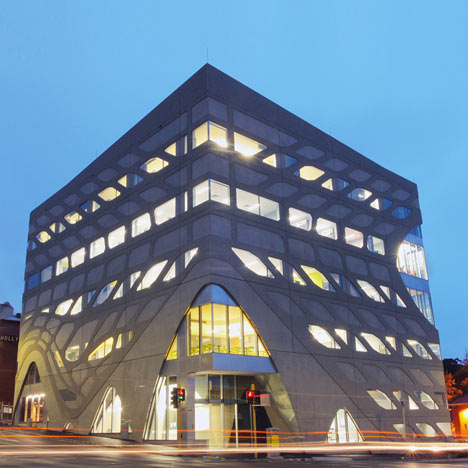
Menzies Research Building by Lyons
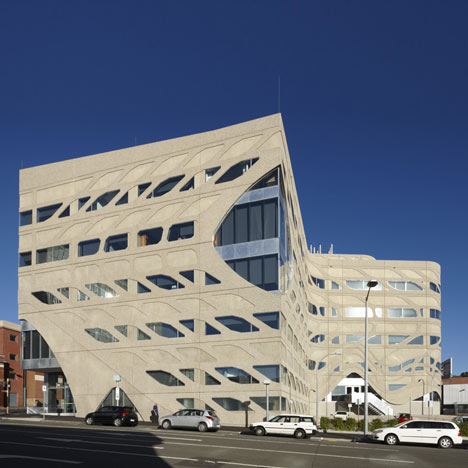
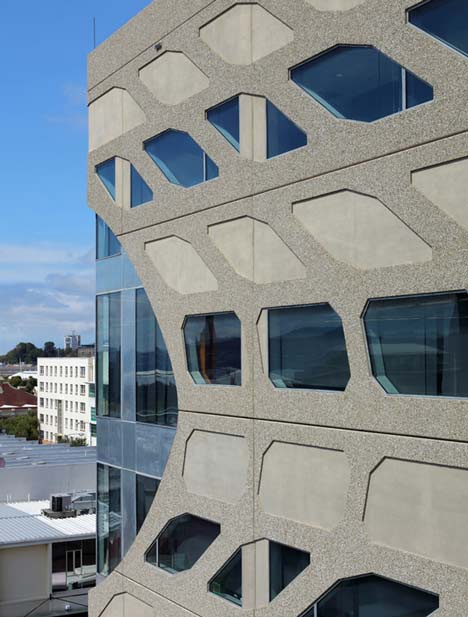
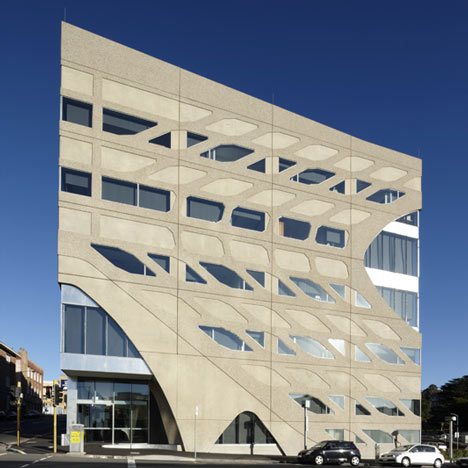
Melbourne architects Lyon have completed this medical school for the University of Tasmania with a concrete façade punctuated by flowing arches and slanted windows.
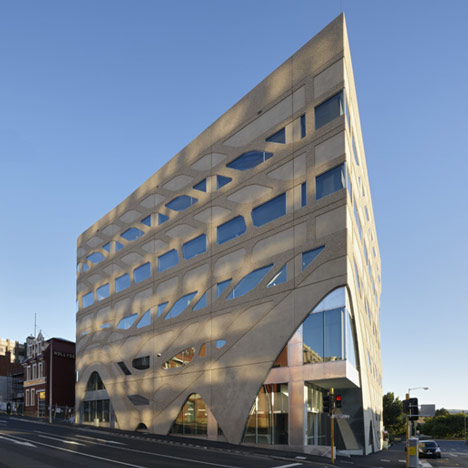
The Menzies Institute houses a range of laboratories, accommodation and medical facilities.
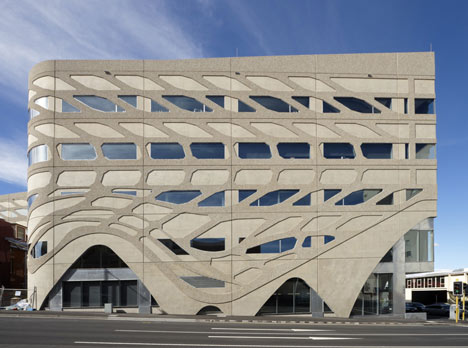
The building is entered through a formal archway on the street corner that leads into a glazed atrium.
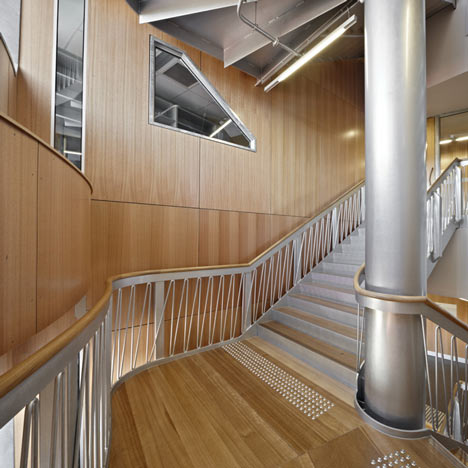
A steel stairwell at the heart of the building connects all the main spaces and acts as communal meeting area for staff and students.
Here's some more from the architects:
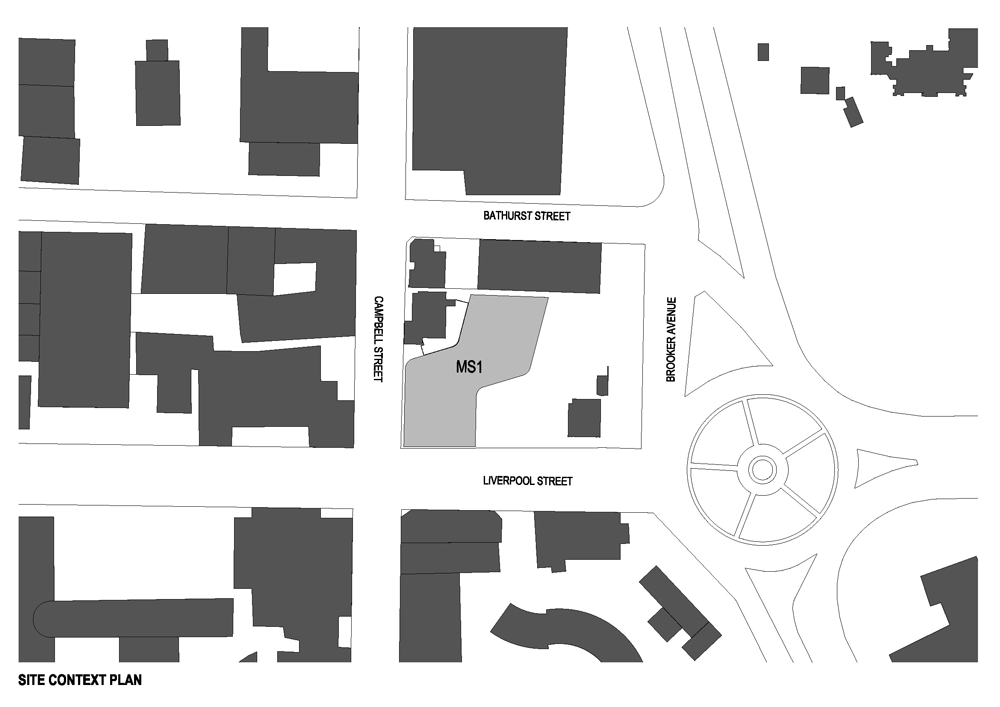
University of Tasmania - Medical Science 1 (Menzies Institute & UTas School of Medicine) Corner Liverpool and Campbell Streets, Hobart, Tasmania
The University of Tasmania’s School of Medicine and the Menzies Research Institute bring together, in Medical Science 1 (MS1), the aspiration to deliver leading edge world-class laboratories, clinical research and medical training facilities.
Initially called the ‘Co-location project’, the conceptual basis for the project was to create a synergistic environment for these once separated facets of the University.
At the core of the concept is the creation of a ‘new culture’, reinforced in the building’s image and its social and functional planning.
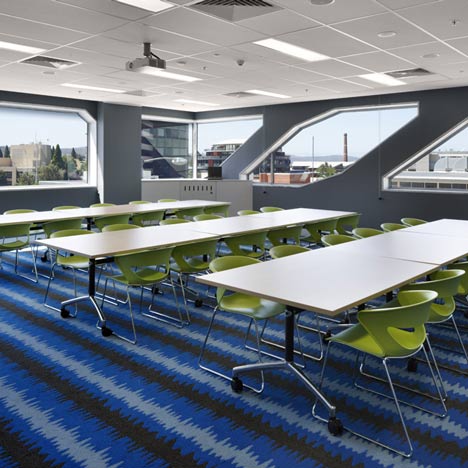
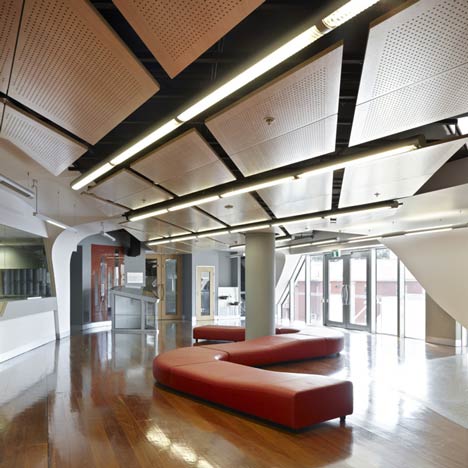
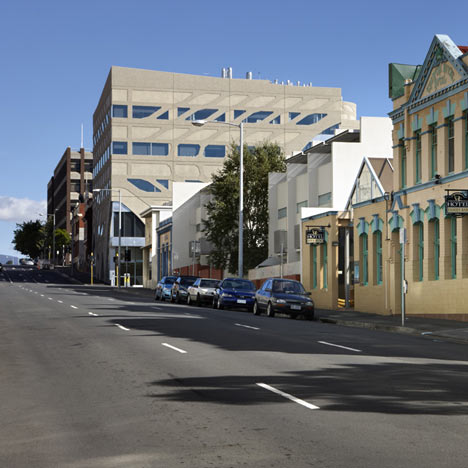
As a public building of the city, it invites the public participation of the street through its corner entry; large transparent steel windows and glazed atrium space which is shaped by an organic steel formed structure separating MS1 and the existing heritage building (Hollydene House).
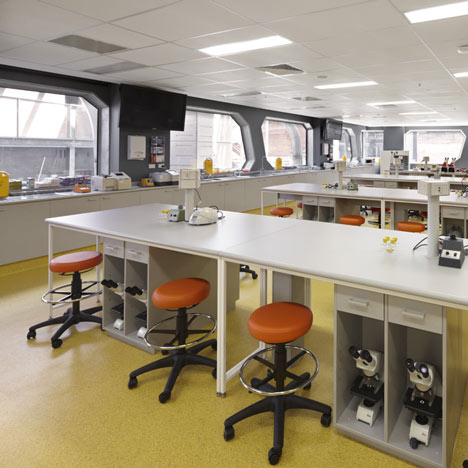
The building recognises its role, as a city landmark.
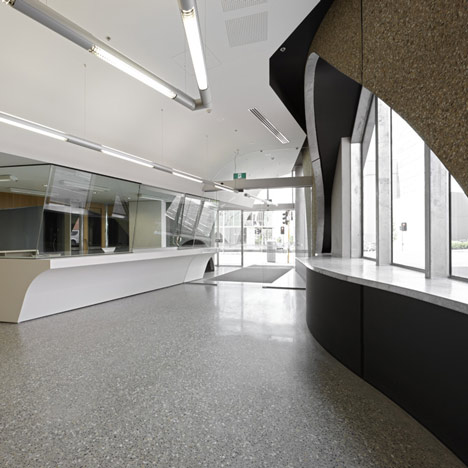
On one corner marking Liverpool and Campbell Streets, whilst, on the opposite side, creating a dialogue with the landscape of the Domain and the vehicular movement of the Brooker Highway.
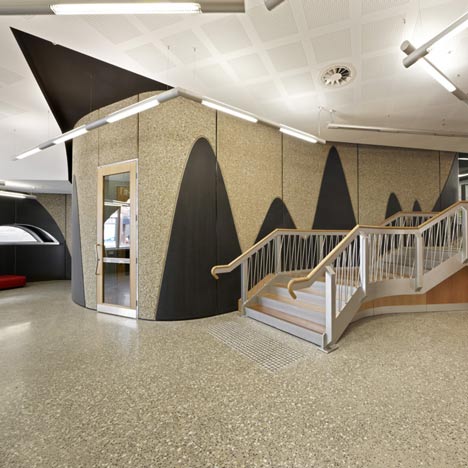
Feature corner windows formed in steel punctuate this relationship and imply a layered façade comprising of steel and concrete.
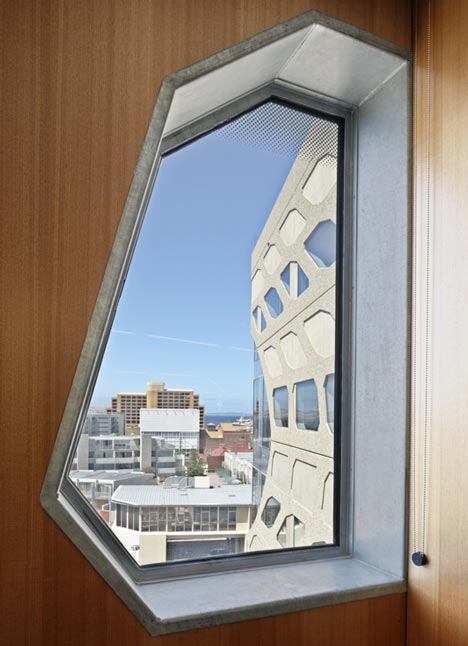
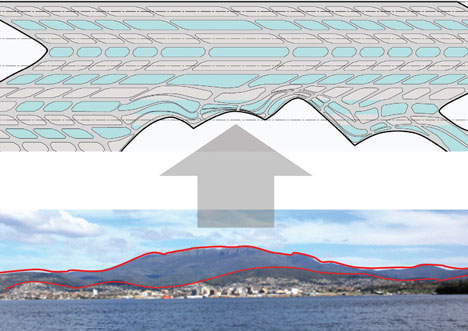
The image of the building, expressed through its steel framed fenestration, is derived, abstractly from the surrounding mountain ranges and Derwent River.

The curvilinear form of the building is a reference to the nonexistent Park Rivulet which was influential in shaping the edge of the city grid, upon which MS1 is tied.
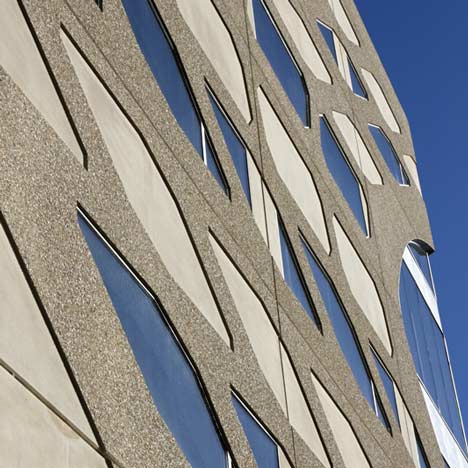
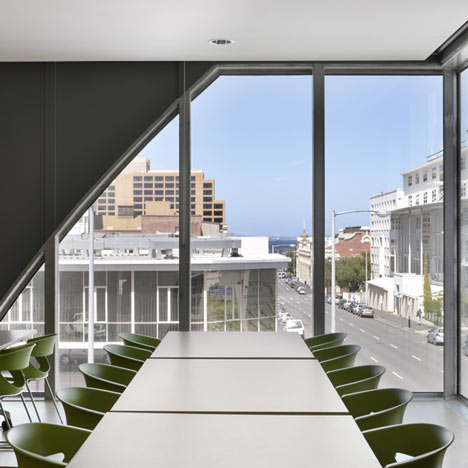
The shaped steel windows of the upper levels provide the occupants with a means to see the spectacular landscape with new emphasis.
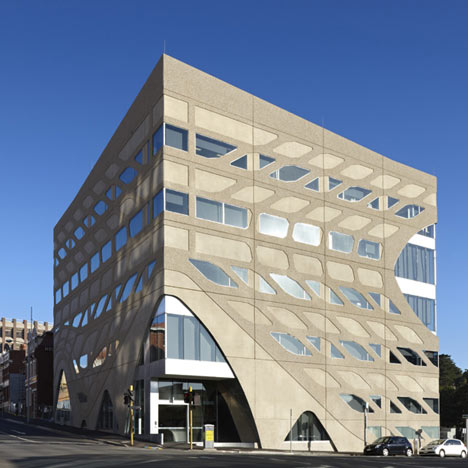
On the street, the steel lined window ‘arch’ forms reference an already established local typology whilst abstractly symbolising the mountains that background Hobart city.
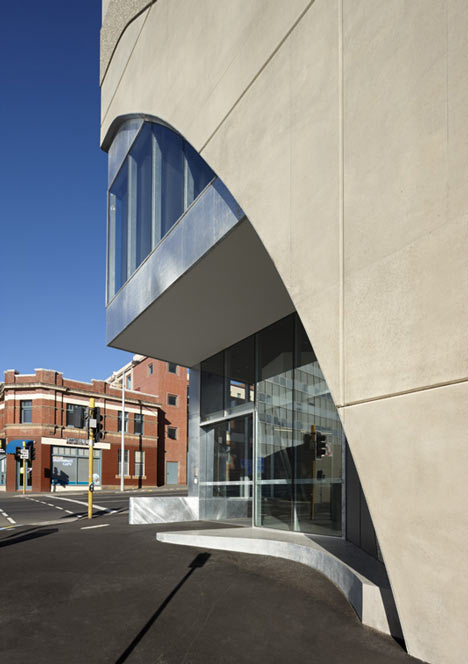
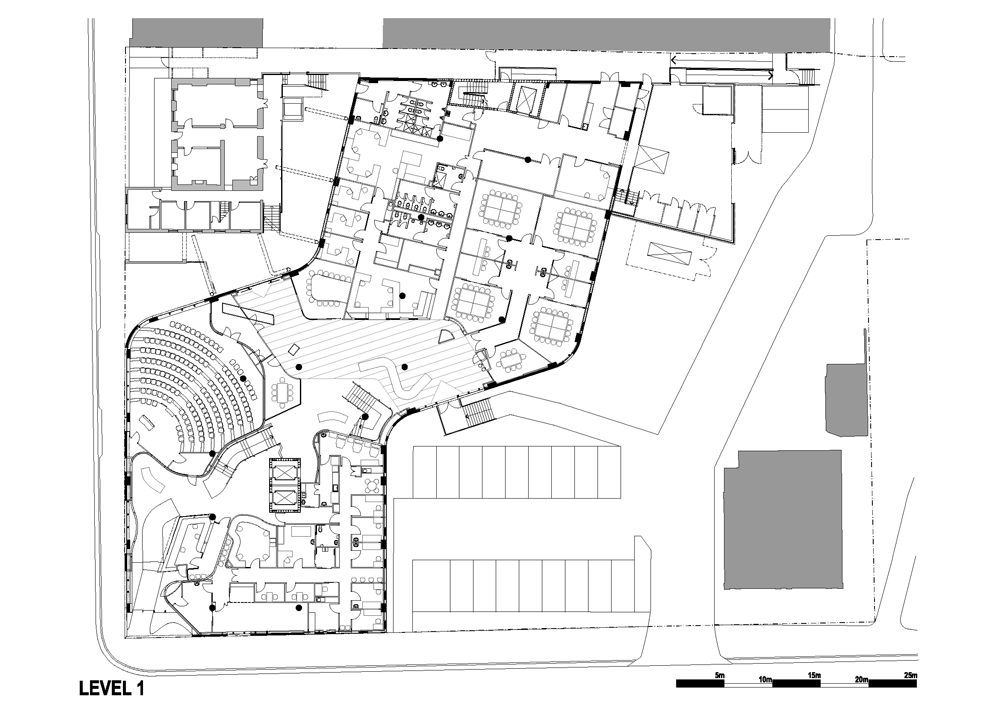
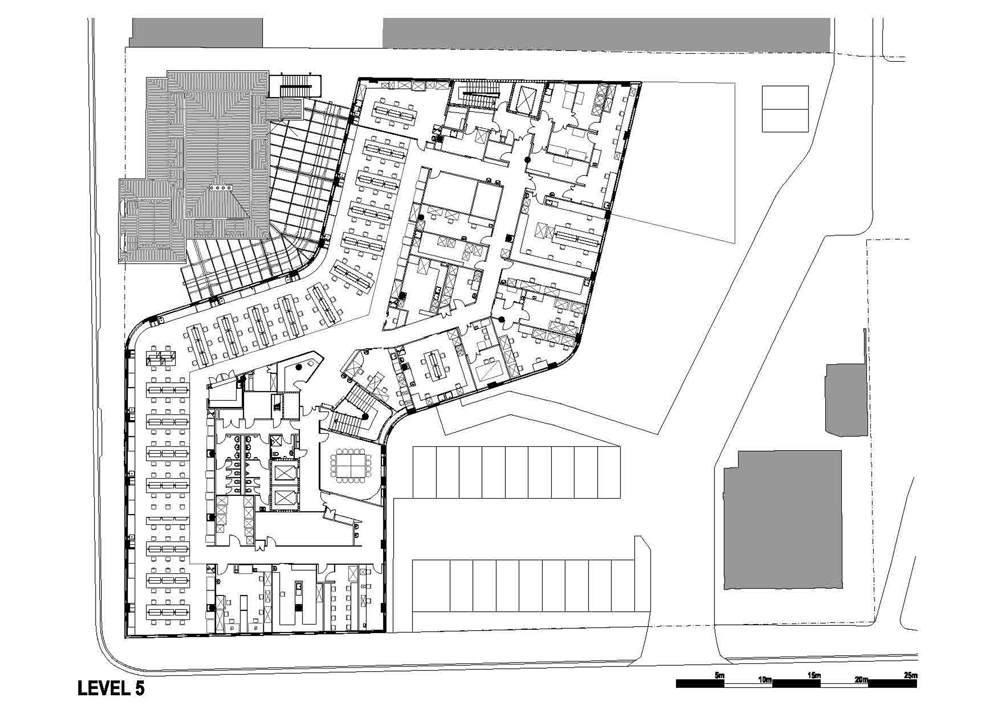
The resolution of functional planning was determined by the differing needs of the PC2 laboratory and teaching facilities.
The PC2 Laboratory, with its intensive reliance on services including fume exhausts, was best suited at the top of the building (Level 5), where as the teaching facilities were more suited to the lower levels (Levels 1&2), due to circulation loads on lifts and stairs.
Staff accommodation was located between, on Levels 3 & 4. Connecting these spaces together, the central steel stair is designed as the feature and the heart of the building, offering the possibility for social interaction to staff, students and researchers.
Click above for larger image
Click above for larger image
Click above for larger image

Click above for larger image
See also:
.
 |
 |
 |
| Rolex Learning Centre by SANAA |
Nestlé Building by Rojkind Arquitectos |
Villa Vauban extension by Philippe Schmit |