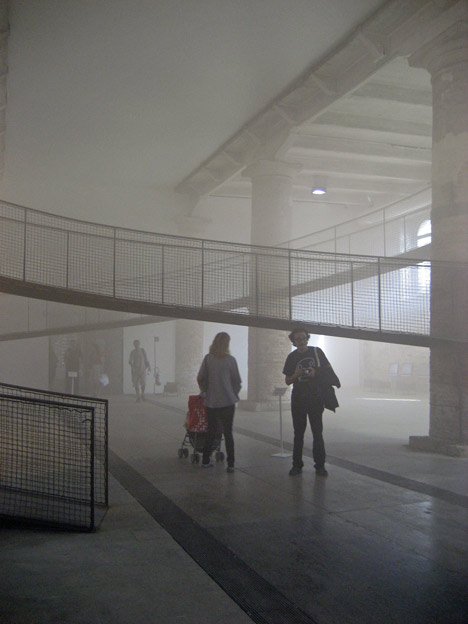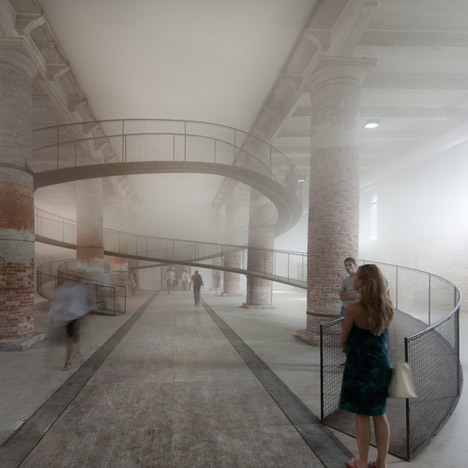
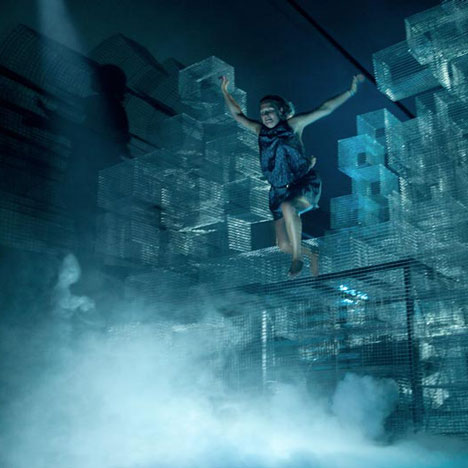
Venice Architecture Biennale 2010: Japanese studio Tetsuo Kondo Architects and environmental engineering firm Transsolar have suspended a cloud inside the Arsenale exhibition space at the Venice Architecture Biennale.
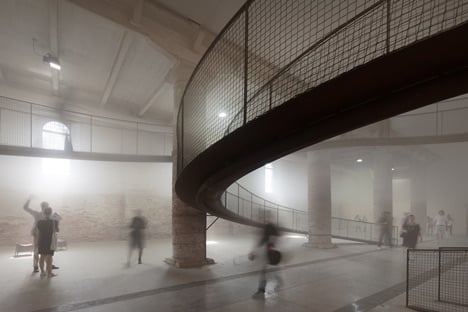
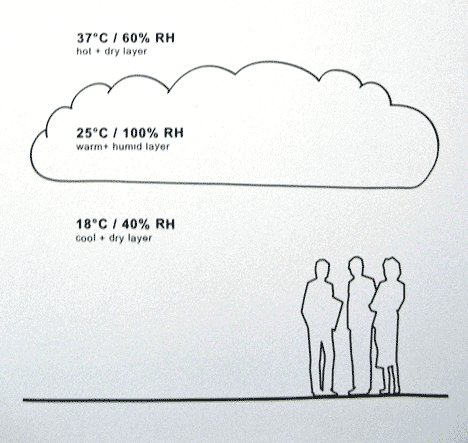
Called Cloudscapes, the installation is created by pumping three layers of air into the space: cold dry air at the bottom, hot humid air in the middle and hot dry air at the top.
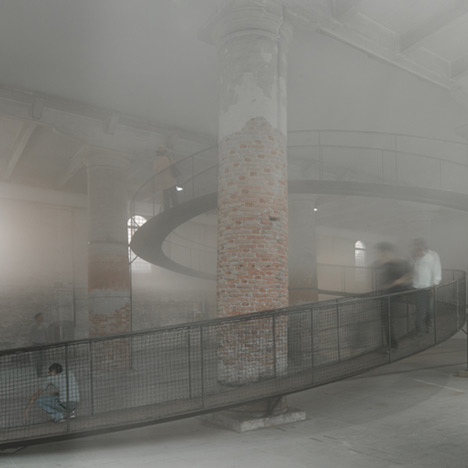
Above photographs are copyright Marco Zanta.
A spiral walkway guides visitors up through the layers to emerge above the cloud, before they descend back down through the vapour to the floor.
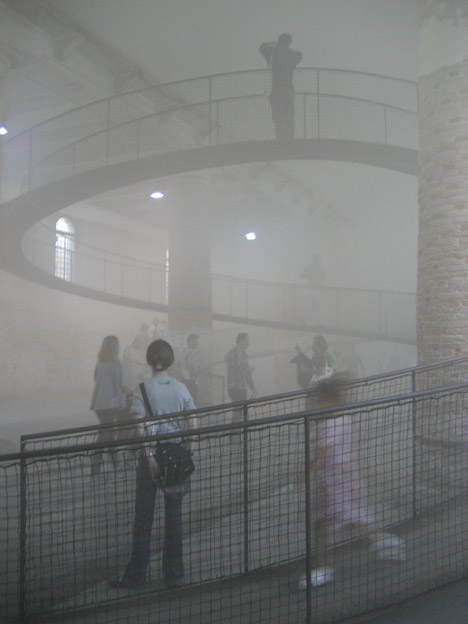
The installation forms part of the exhibition People Meet in Architecture, directed by Kazuyo Sejima of SANAA (see our earlier Dezeenwire story).
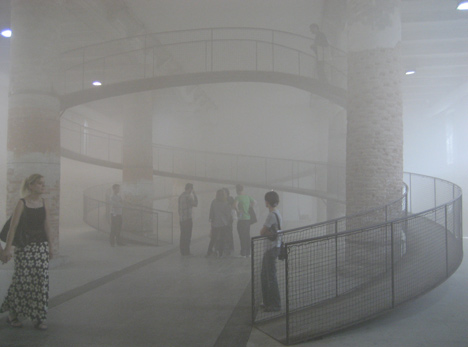
The Venice Architecture Biennale continues until 21 November. See all our stories about it in our special event category.

The information that follows is from Tetsuo Kondo Architects:
Cloudscapes
Creating clouds indoors is only possible through climate engineering, by applying physical principles at the building scale.
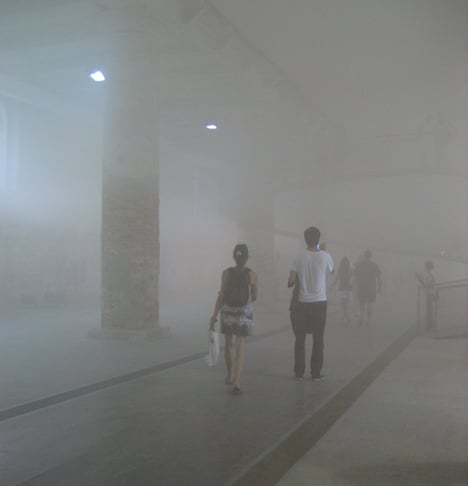
By replacing pressure differences an temperature gradients in the atmosphere with mechanically controlled heat and humidity, the air in Cloudscapes is divided into three distinct layers.
See also:
.
![]() |
![]() |
![]() |
| More clouds at Venice 2010 |
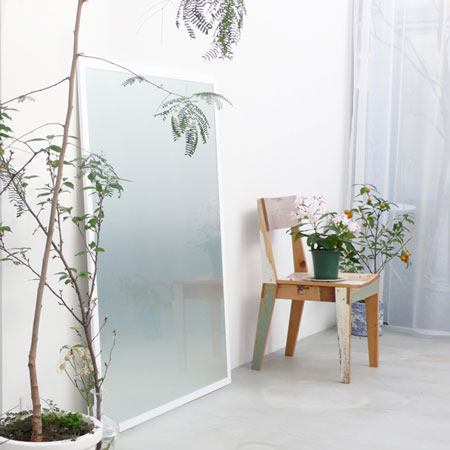
Mirror by Tetsuo Kondo |
All our stories about Venice 2010 |


diller and scofidio did something like this before- and theirs broke down after a short time. architecture is not about gimmicks…
D+S 'the blur building' anyone?
Actually, the design was done by London based architects Patalab ( http://www.patalab.com/ ). Tetsuo Kondo was only the local documentation architect.
If you take a look at the Petalab website showcasing some concept images and the built reality shown here, it really looks quite pitiful. I agree Mike, this is a real gimmick, and its completely lost in execution if there was any substance to the idea… which I struggle to find. The only time this has been successfully done was by Anthony Gormley in London at the Haywad Gallery a few years back where they employed an immense amount of technical wizardry in a confined small space to achieve a real mist.
At the Biennale we really have a poor imitation of the D&S installation without any rigor or strength of concept.
Hi NorthStudio, if you check out their website it looks quite nice I must say, though I havent been there myself yet …
http://www.cloudscap.es/category/blog-tags/clouds…
Commonly found in saunas in a gym near you
The D&S installation took the water out of the lake and vaporized it to hide the building behind a cloud. This one is more about showing then hiding. Buildings are usually visible, but all installations inside are hidden. Transsolar is a climate engineering company and their intention was to reveal what usually remains unseen inside the buildings. While architects put together layers of material, they created layers of air to imitate the natural process of cloud building, therefore it's not all about engineering, but in the end you get a nice result as well.
It is of course hard to keep these layers in place while lots of people are walking through it and the outside temperature is very high in an 800 sq room. Please check out the blog for cloudscap.es to find more info about the whole experiments, physics and pictures, then decide if it's still like the sauna from the gym.
It was amazing on the site. Looks great!
If this website is about MEP, I can understand and even appreciate this effect, independently of the reasons that may be explained in their website. But quite frankly, shifting discussion away from Architecture with some special effects, then, I question whether this should actually be the core, or goal, of the debate. All in all, I agree with Mike. Gimmicky might complement Architecture but it is not Architecture in itself. It's a nice special effect, however, that I believe difficult to maintain in that space but I don't have anything else to say about it.
If the intention was to create a cloud, and it ends up just being misty, it's not very successful is it?
People walking through… Outside temperature and whatever excuse you can come up with for this failed piece of technology/engineering- are constraints that should have been identified. D&S, Gormley made it work.
Am I supposed to walk into an installation thinking about physics? No, I'm supposed to marvel at the experience!
I’m not sure if you have been to the Biennale… but I can tell, if it would be exclusively about Architecture, then it would be kinda boring. If you just go through the installations in the Arsenale, very few projects are strictly architectural, there are many little pieces of puzzle that form together the main concept. Please keep in mind that before judging. Also, I would argue if we should draw a clear line between engineering and architecture, aren’t they all part of the same thing?
I haven’t seen personally the Blur Building, maybe that one works perfectly 24/7, if it’s so, then congratulations for all who made that possible. But, as I said before, it’s a totally different intention and way of realization, so they shouldn’t be compared. This one also has the wow effect, believe me, and no raincoat is needed for that. The physics are for those who fail to see that.
"It is of course hard to keep these layers in place while lots of people are walking through it"……says it all really about the level of thought gone into this