Fővám tér by Spora Architects
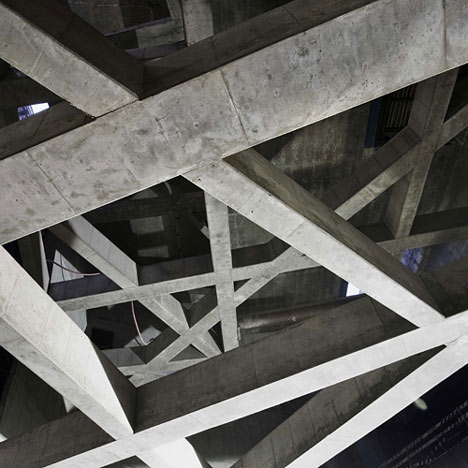
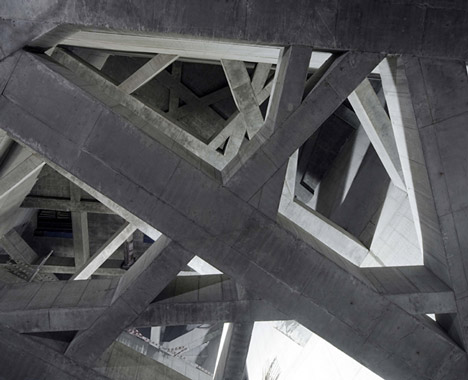
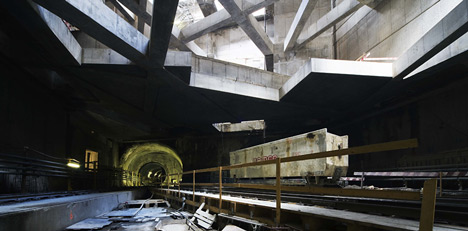
This underground railway station with criss-crossing concrete beams is by Hungarian firm Spora Architects and currently under construction in Budapest.
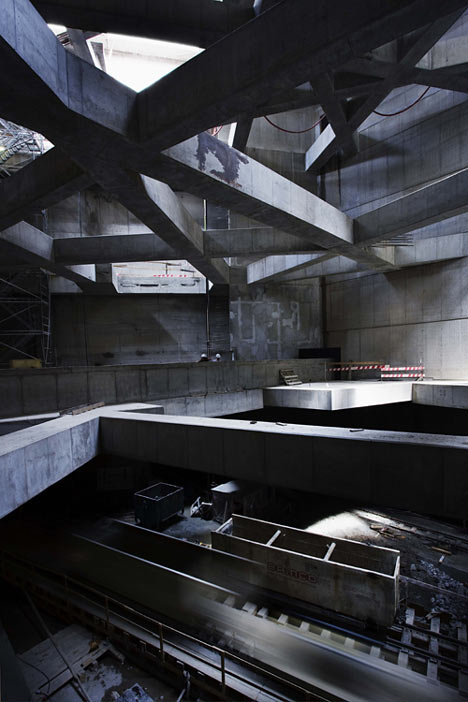
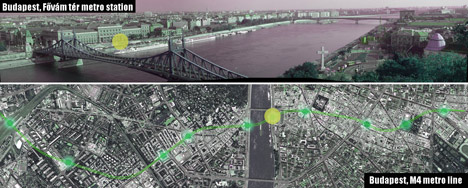
Fővám tér forms part of a new metro line, comprising 10 stations, that will connect south Buda with the city centre.

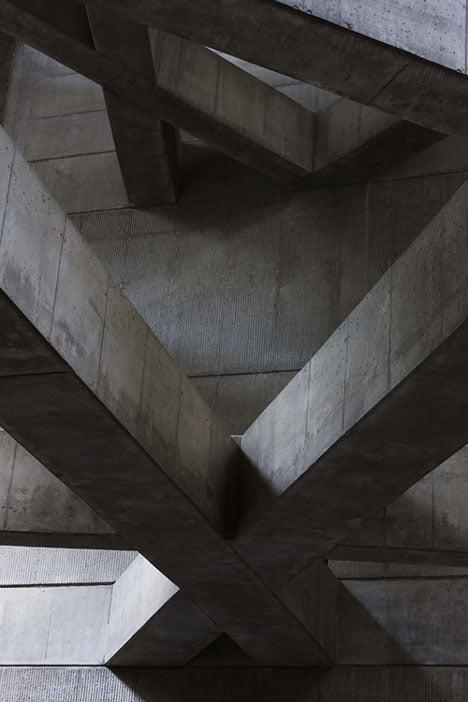
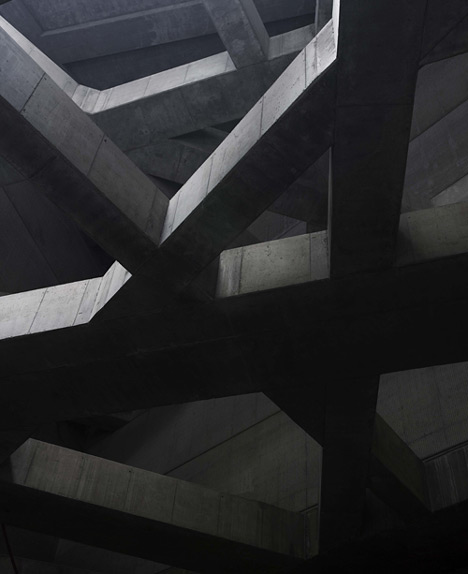
Three levels of reinforced concrete beams rise up through a void above the platforms.
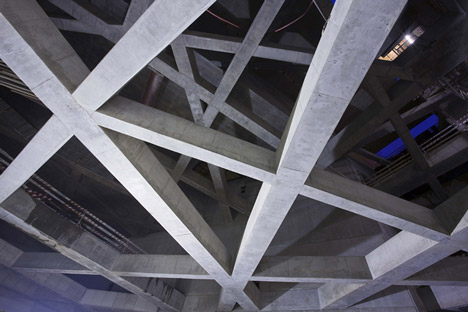
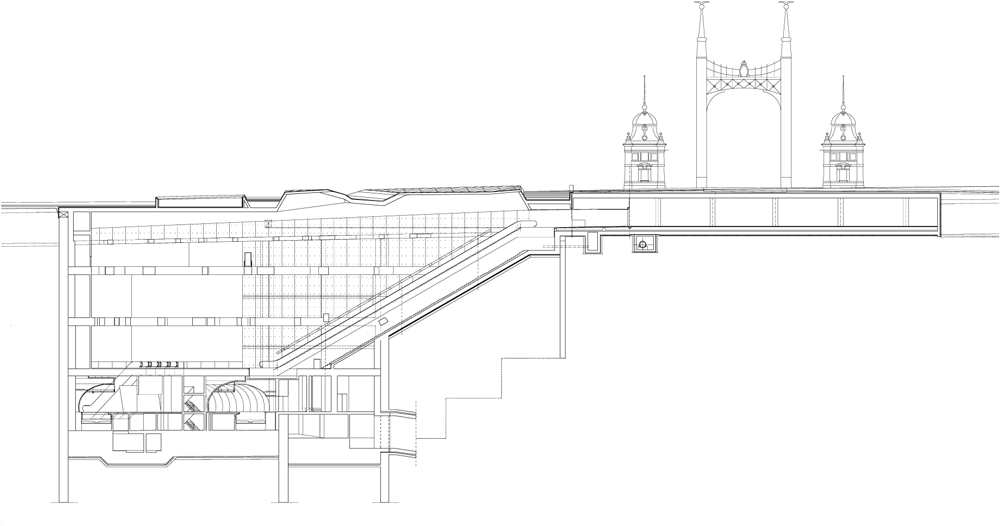
At ground level a new square will be created with large glazed areas to admit natural light down into the station.
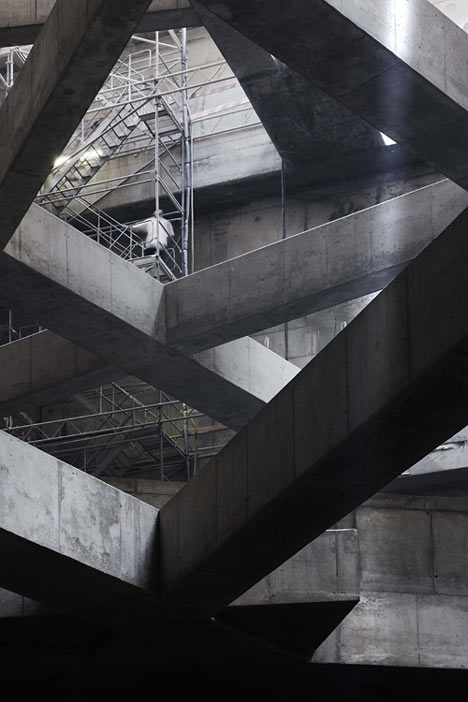
All photographs are by Tamás Bujnovszky.
Here's some more from the architects:
“Fővám tér” - UNDERGROUND STATION BUDAPEST, HUNGARY
The new metro line planned in Budapest is to connect South-Buda with the city center. 10 stations will be constructed in the first step. Fővám tér station is on the left side of the Danube river.
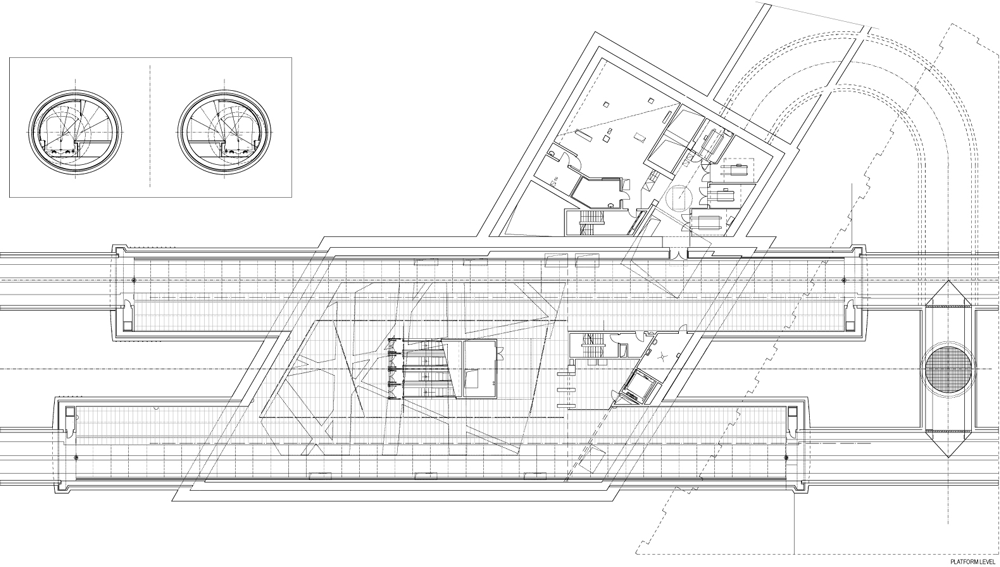
"Fővám tér" station is a twin station of the Szent Gellért tér, similarily with a complex stucture composed of a cut-and-cover box and tunnels.
The complexity of the structure is even greater, since here a new tunnel for the tramline and a new pedestrian subway has to be constructed, as well. Having the new underground station, Fővám tér will become a new gateway of the historic downtown of Pest.
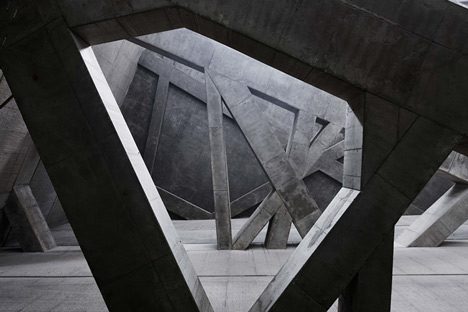
The boxes are supported by three levels of reinforced concrete beams, the structure of which will be similar to a net.

There are three layers of this network, which keep the walls of the box like a bone-structure.The design of the box is determined by this sight of concrete net-structure.
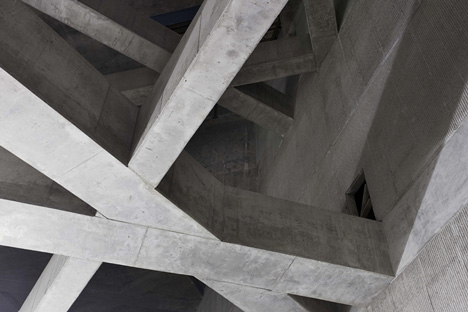
Due to the construction technology, huge rooms have been created in the inner spaces of the stations. The section of the space is proportional to cross section of average street in Pest , built in the eclectic period in the 19th century, so the station can be interpreted as a inverse street or square under the surface.
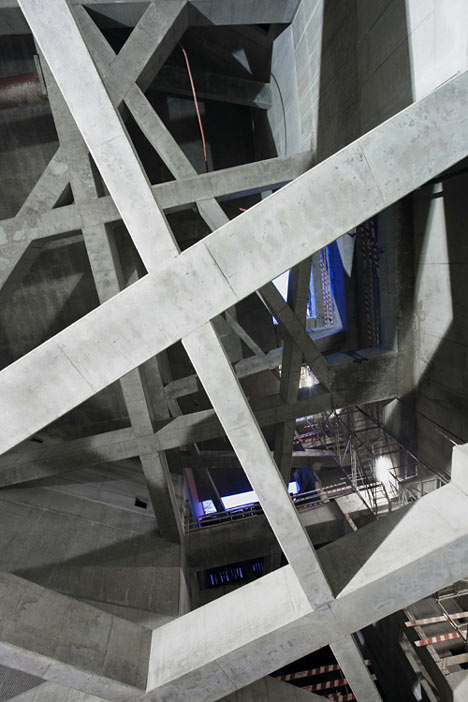
Playing on natural light has been an important aspect in the architectural formation of the entire line.
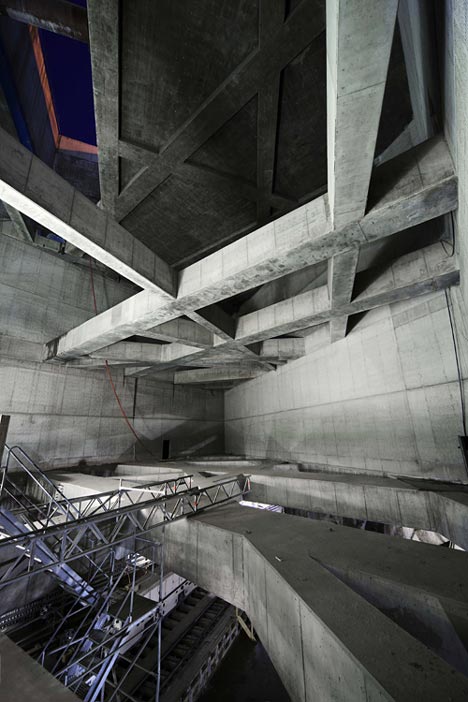
The main goal is –apart from giving enough light of course- to attend on the interior design and show the architectural forming as much as possible. On the surface of Fővám tér a huge square will be created without traffic.
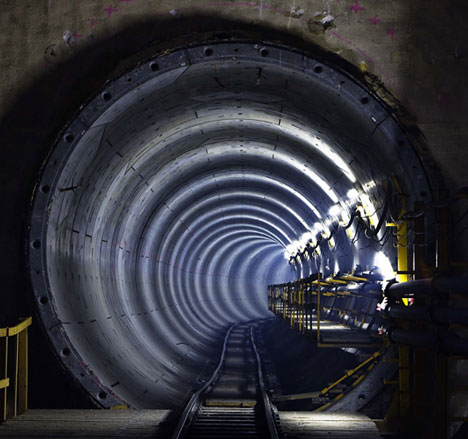
This will allow of locating glassy, crystalloid skylights, which will let the sunlight reach the platform level, emphasizing the unique character of the beam network.
Project credits:
Project: M4 metro line SZT.GELLÉRT TÉR, FŐVÁM TÉR UNDERGROUND STATIONS, BUDAPEST
Location: center of Budapest, Quay of River Danube, Hungary
Client: BKV Rt. DBR Metró Projekt Igazgatóság (Budapest Transport Ltd. DBR Metro Project Directory)
Year designed: 2005
Year built: 2007-2011
Status: under construction
Budget: cca. 20 million Euro/ stationvolume: 7100m2/
Stationdesign: sporaarchitects Ltd. – Tibor Dékány, Sándor Finta, Ádám Hatvani, Orsolya Vadászteam: Zsuzsa Balogh, Attilla Korompay, Bence Várhidi
General design: Palatium Stúdió Kft. -Zoltán Erő, Balázs Csapó
Construction, installations: consortium of Főmterv, Uvaterv, Mott-Macdonald
Aplied art: Tamás Komoróczky
Photo: Tamás Bujnovszky
Click above for larger image
Click above for larger image
See also:
.
 |
 |
 |
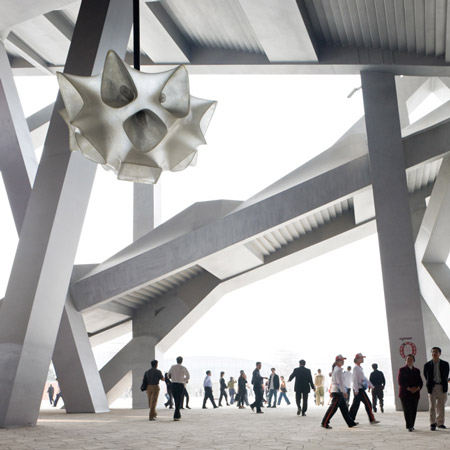
| National Stadium, Beijing by Herzog & de Meuron |
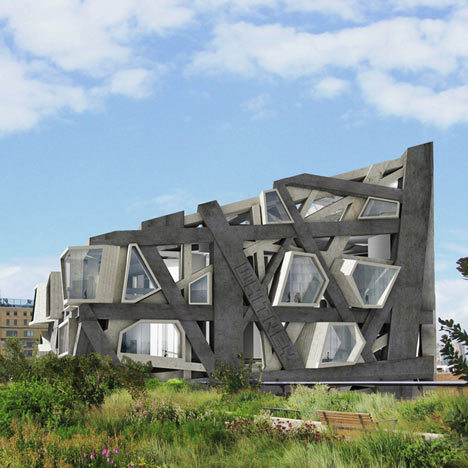
Conceptual extension by Axis Mundi |
More architecture stories |