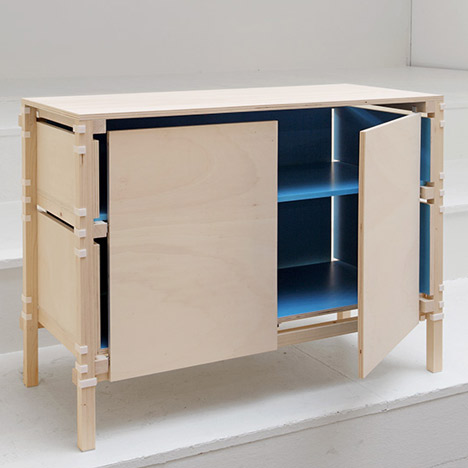
Inside Out Furniture by Minale-Maeda
Dutch Design Week 2011: components for this furniture by Rotterdam designers Minale-Maeda can be downloaded, 3D-printed and assembled locally.
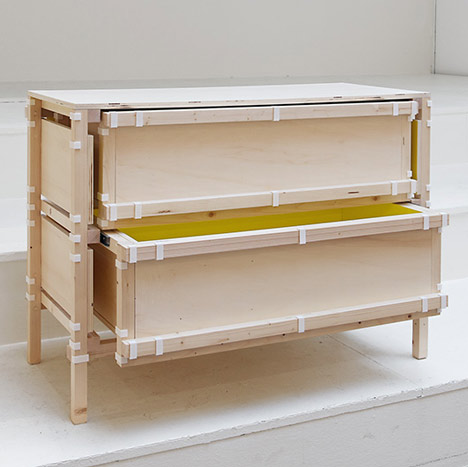
Consumers can download the blueprints for each piece and alter the dimensions to suit.
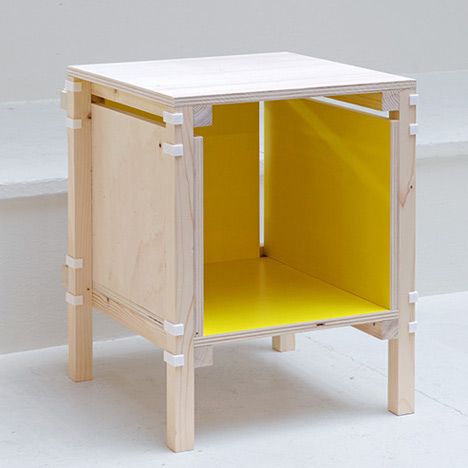
The required connecting components could be 3D-printed locally and the sheet materials cut to size at a hardware store.
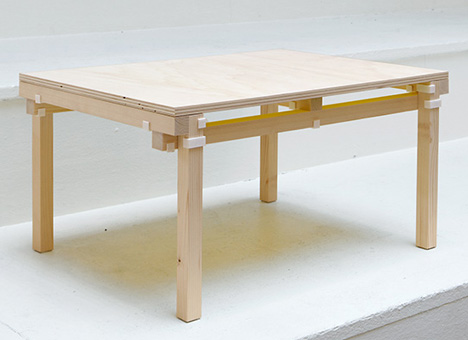
Each piece is designed for simple assembly and to explicitly display its construction.
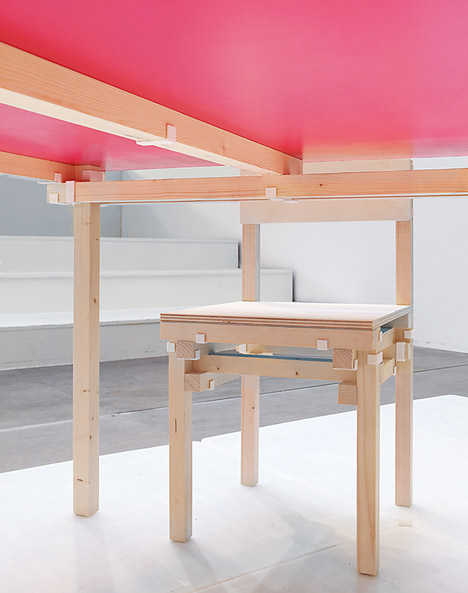
Minale-Maeda aim to give consumers more control and reduce energy expended in transporting whole items of furniture.

The project is on show at After the Bit-rush: Design in a Post Digital Age curated by Eindhoven cultural institute MU, who also commissioned the Temporary Trees in our earlier story.
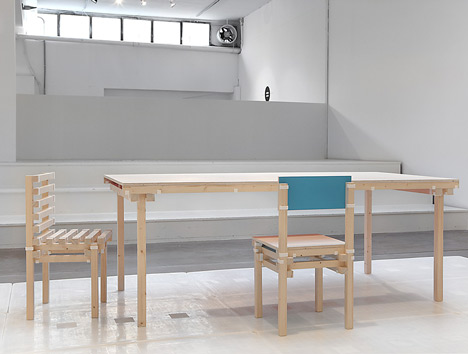
Dutch Design Week continues until 30 October. See all our stories about the event in our special category.
Here are some more details from the designers:
Designed specifically to be downloadable in order to reduce environmental issues related to transport, costs of stock keeping and explore collaborative design and distribution, this furniture can be edited in size and materials, is made on location or can be self-made by downloading the blueprints. The concept was to turn the pieces inside out to make construction simple, while brackets and structural details become distinctive and attractive features. The connections are 3d printed to suit various sizes of wood, and the crafting is minimal requiring only cutting to length and drilling.
Material: wood, polyamide