Sainthood puts Gaudí “in too small a box” says God’s Architect author

Canonising Antoni Gaudí as a saint would disregard his internal struggles in pursuit of divine perfection, argues author Peter Stanford in this interview as part of our Gaudí Centenary series.
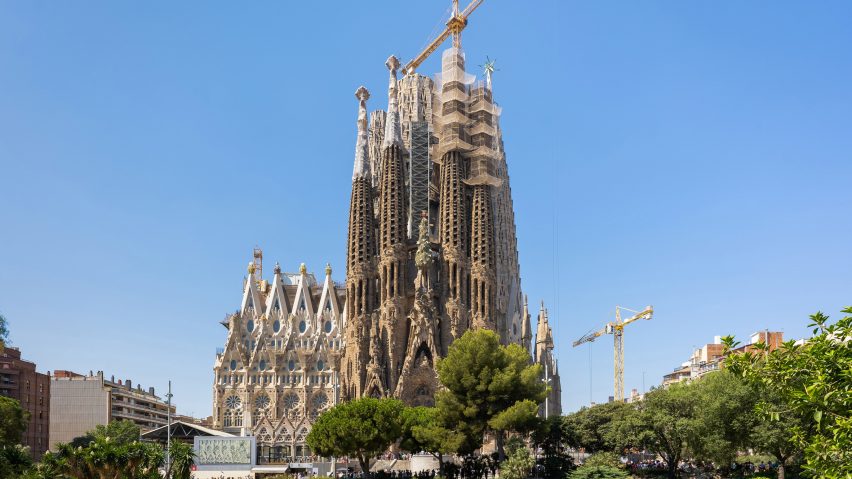
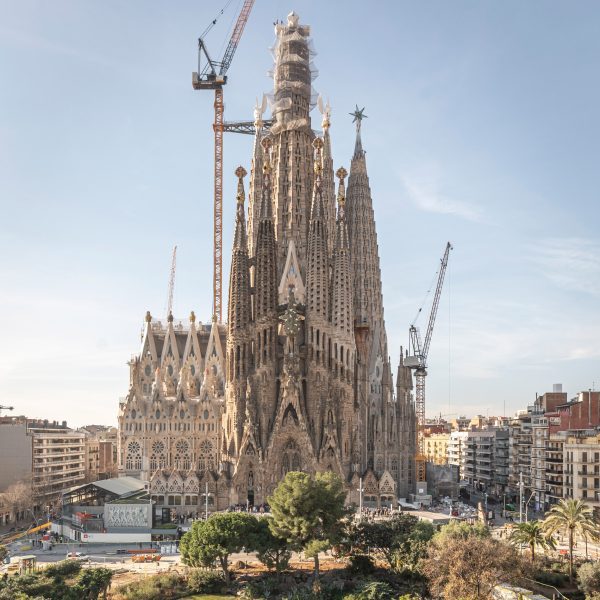
This week, to mark the centenary of Gaudí’s death, Pope Leo XIV will visit Barcelona to inaugurate the central tower of the architect’s masterpiece – the Sagrada Família. It is also suspected that the Pope will announce the beatification of Gaudí, the next step towards sainthood after he was declared Venerable last year.
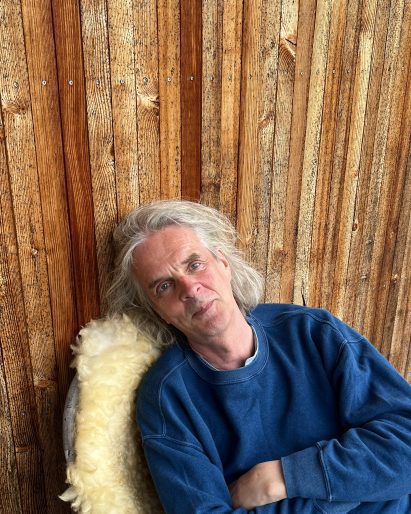
“There’s an abundance of people who say they prayed to Gaudí to get God to intervene to make their hips stop hurting, or something like that,” said Stanford, author of the biography Gaudí: God’s Architect, who worked with the Gaudí beatification committee for three months.
“The Vatican says it’s checked out one of these and they can think of no other explanation other than divine intervention, so they’ve now got a miracle in place,” he told Dezeen.
“The Pope could declare him by the church’s own rules as blessed, so beatifying him, which is one step short of canonisation, but the Pope also has the power to chuck the rules out the window and just call him a saint.”
Many people would regard sainthood as appropriate for Gaudí, who strove to please God with his now legendary architectural work. He was a devout Christian throughout his life, so much so that caricaturists in the early 20th century depicted him as a monk.
But Stanford argues that sainthood gives a one-dimensional impression of Gaudí, and would lead some to assume he was wholly good his whole life, leaving out the grittier parts of his character that made him an interesting architect.
“I worry that the move towards making him a saint reduces him slightly – it goes for a very narrow focus on him,” he said.
“[Sainthood] reflects an extraordinary life of religious devotion, and that clearly was a very important part of him, but it puts him in too small a box. In terms of people who could be in the biggest box possible or no box at all, Gaudí seems to me to be a very good example, because his imagination knew no boundaries,” Stanford continued.
“I don’t mean that Gaudí was in any way a kind of bad man or unsaintly. But there were other sides of his character – he was bad-tempered, he was stubborn, he was litigious. He was a difficult character, probably like lots of people who live on their own.”
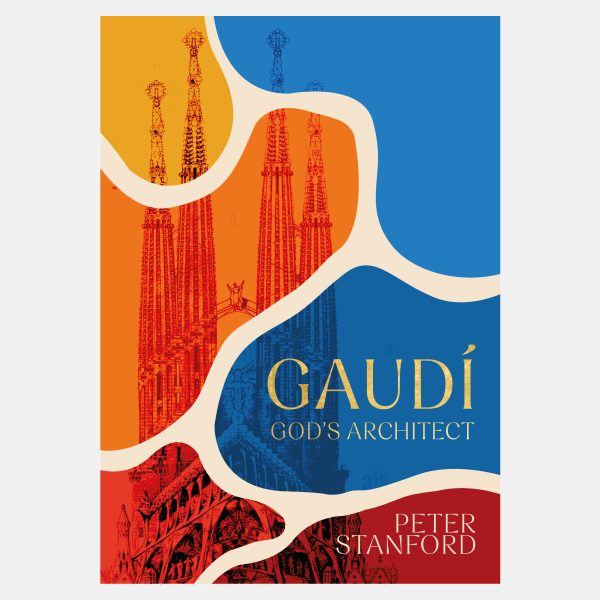
In his latest book, Stanford aims to bring together the two sides of Gaudí’s legacy that are often looked at separately – his faith and his architecture.
“There are two sorts of coverage of Gaudí – the ultra-religious who print material through the lens of his saintliness, and then there is this whole other literature written by architects or architectural historians that, in the crudest of senses, try to understand how he fits in the canon of architecture,” Stanford said.
“It felt to me there was space in between and neither side was listening to the other.”
“The starchitect would not have appealed to him”
The book title and the nickname attributed to Gaudí, “God’s architect”, stems from when people would ask the architect when the slowly progressing Sagrada Família would be finished – Gaudí’s response being, “my client is in no hurry” while looking up at God.
Gaudí strove to achieve divine perfection in his buildings, especially in the later part of his life, which Stanford said ultimately left him depressed for failing to achieve it.
“I don’t think he felt any formal vocation to priesthood, but there was a sense in which he regarded his work as a vocation,” said Stanford.
“He was depressed because there was a feeling that he was failing to match up to God’s perfection – he was driven by something other than commercial gain or fame. The starchitect would not have appealed to him.”
The influence of Gaudí’s unusual, organically shaped and intricately detailed buildings is felt far and wide, within the architecture field and beyond.
Stanford recalled a conversation he had with British architect Norman Foster, when he revealed he “borrowed [Gaudí’s] snake bench from the Park Güell for the JPMorganChase headquarters”.
“Frank Gehry has absolutely acknowledged a debt to him, Le Corbusier came to see all of the buildings and the one he liked best of all was Casa Milà,” said Stanford.
“You have people like Salvador Dalí, Joan Miró, all these people who have admired Gaudí and you can see his influence.”
Gaudí’s architecture “doesn’t look like anything else you’ve ever seen”
His impact may be far-reaching, but Gaudí’s work is not definable as part of an architectural movement – his existence outside of any box is what makes him all the more interesting to Stanford.
“His architecture stands outside the canon,” said Stanford. “It doesn’t look like anything else you’ve ever seen, and it doesn’t look like anything else he’d ever seen. So you ask, where did it come from?”
“Presuming an artist’s or architect’s creativity comes from tensions within, if you make someone a saint, you’re negating the tensions and saying it was all lovely and gorgeous – it wasn’t lovely and gorgeous for him, we know he was deeply depressed.”
“We’ve got to stop looking in a very literal way at religion or looking at an architectural canon way,” he argued. “He’s bigger than that.”
“He has that timelessness – the Colònia Güell is both Neanderthal and a spaceship at the same time. He wasn’t bound by his own era, so I think [his legacy will] last better than other people.”
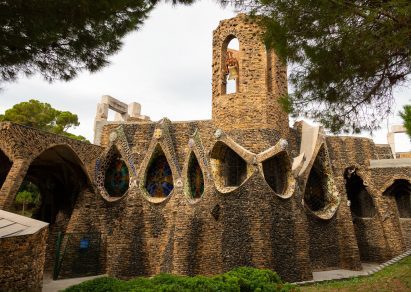
All of Gaudí’s buildings are located in Spain, with the majority in Barcelona and the Catalonia region. He had a love of Catalan Gothic architecture, inspired by the Basílica de Santa Maria del Mar, which he lived next to when he first came to Barcelona.
Gaudí didn’t travel much, but according to Stanford, a trip he made to southern France – in a region Gaudí would have considered to be medieval Catalonia – to see churches restored by Eugène Viollet-le-Duc made an impression on him.
Stanford also said that Gaudi drew ideas from the modernisme movement, or art nouveau, and orientalist art and design, as well as the works of William Morris and John Ruskin. But ultimately, architecturally, “he had very little interest in anyone else’s work”.
All these influences do not add up to the sum of Gaudí’s creative output, Stanford argues. The missing piece is his religious imagination.
“He did take influences, and there are links that you can see, but put them all together, and they’re still not enough to explain what he built, and it would seem to me that this is where the religion comes in,” said Stanford.
“What was also informing him was the religious imagination, the religious ritual, his religious upbringing and being suffused by it all of his life,” he continued.
“Gaudí was obsessed with nature, so in terms of his other influences, he would say the great book of nature, but, of course, he thought the great book of nature had been written by God.”
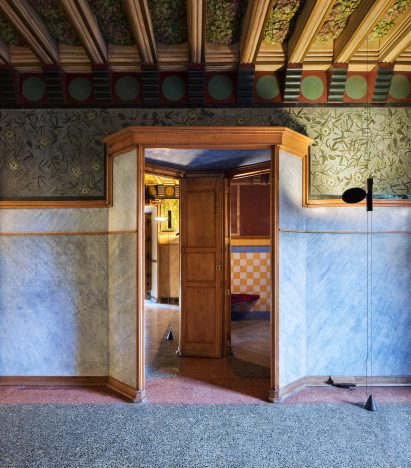
Gaudí introduced religious imagery into all of his architecture, even buildings for clients with little religious interest.
Stanford described the walls of Gaudí’s Casa Vicens being adorned with passion flowers to symbolising Jesus’s crucifixion, cupboard-like chapels built at Palau Güell and Casa Batlló, and the image of people standing on each others shoulders inspiring the towers at the Sagrada Família.
“He got the shape [of the Sagrada Família towers] from castells, a sort of country dance in the Catalan countryside on feast days, where people would stand on each other’s shoulders,” said Stanford.
“He saw the church as human beings climbing up towards God – if you think of Jacob’s ladder in the Old Testament, the angels going up and down the ladder, it’s kind of that shape that he’s building. He’s drawing on those influences all the time.”
“The Sagrada Família gives you too narrow a picture” of Gaudí’s work
It is not only his remarkable architecture, but also the mystery of Gaudí as a person that has captivated people around the world. He famously lived a solitary life and died aged 73 after he was hit by a tram.
Although the lengthy construction of the Sagrada Família is what he is most known for, Stanford hopes that in the next hundred years, more attention is paid to his lesser-known works, particularly the Colònia Güell crypt and Colegio Teresiano de Barcelona.
“People flocked to the Sagrada Família when there was only a gate house to go and see, and here they are now where they’ve got the whole building, but the mystery and romance of Gaudí remains,” said Stanford.
“There’s a lot of Gaudí’s work that hasn’t been properly explored yet,” he continued. “The Sagrada Família gives you too narrow a picture. Get the broad picture of his architecture. He’s fantastic.”
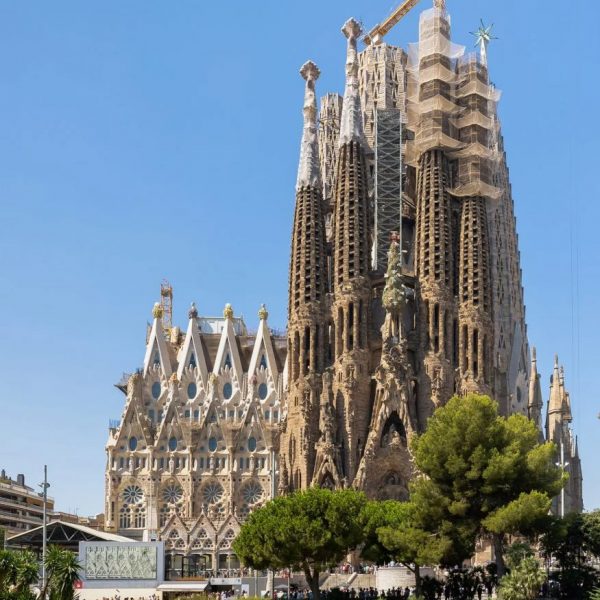
The top photo of the Sagrada Família is by Maksim Sokolov.
Gaudí Centenary
This article is part of Gaudí Centenary, our editorial series profiling the Catalan architect and designer Antoni Gaudí, marking 100 years since his death.
Read more
Recommended stories
Pope moves “God’s architect” Antoni Gaudí one step closer to sainthood
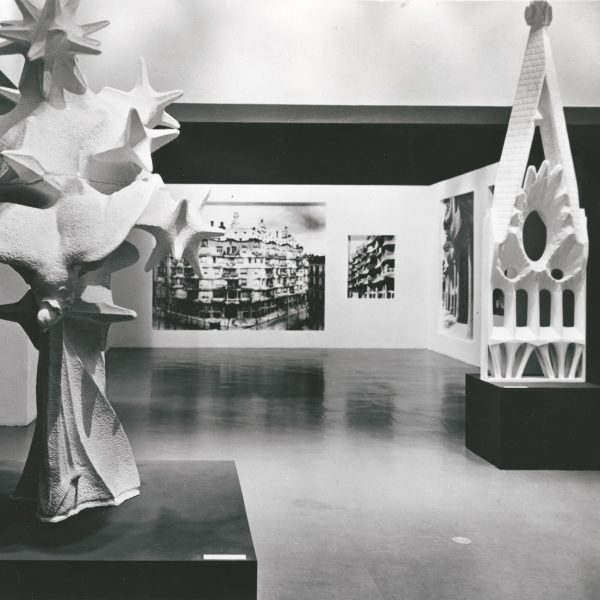
Why did Gaudí not have more of an impact on global architecture?
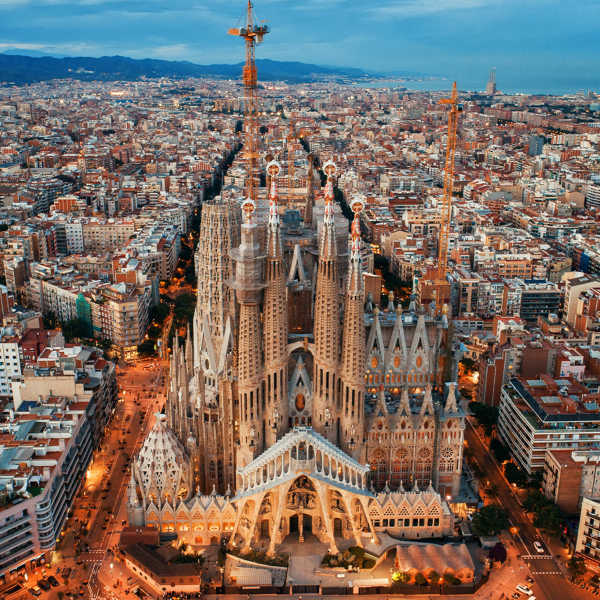
What makes Gaudí’s style so unique?
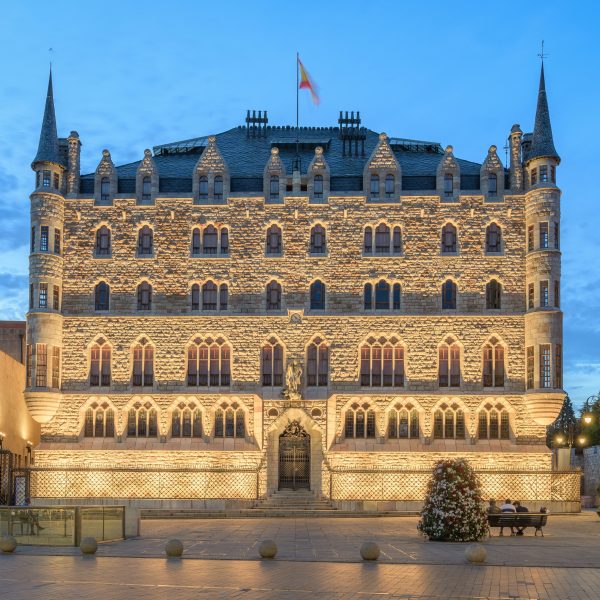
Gaudí’s lesser-known gothic buildings
Gaudí Centenary celebrates the legacy of an architect like no other
This week we celebrated the work of Antoni Gaudí
The Sagrada Familia was so ahead of its time it was “almost clairvoyant”