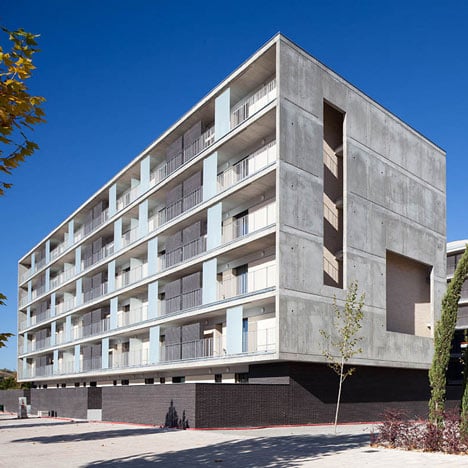
Protected Collective Houses in Toledo by TASH
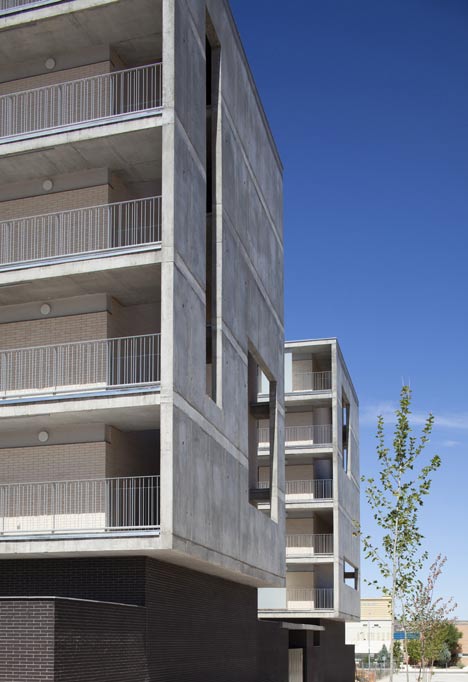
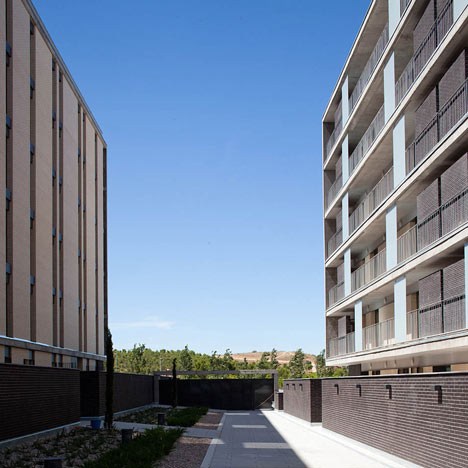
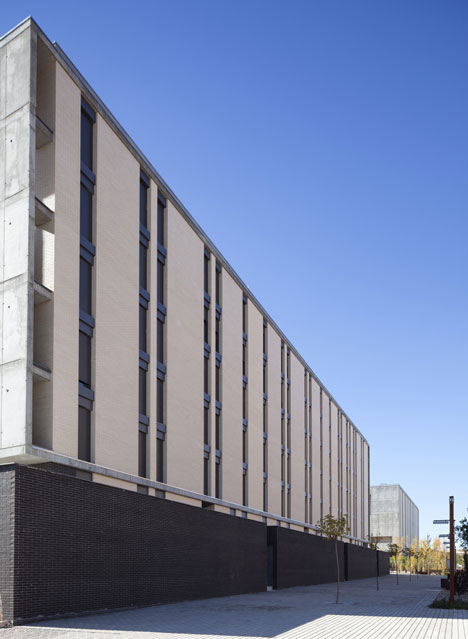
These four concrete apartment blocks by Spanish architects TASH were only completed last year, but they already look strangely abandoned in these photographs.
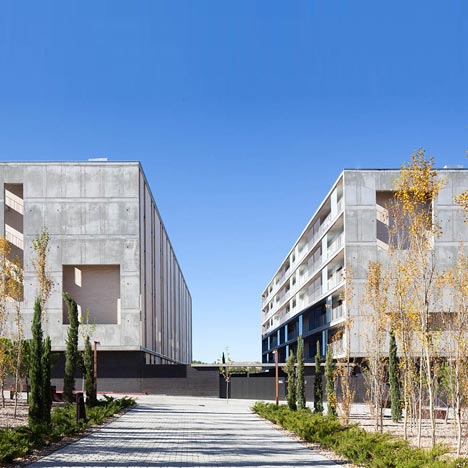
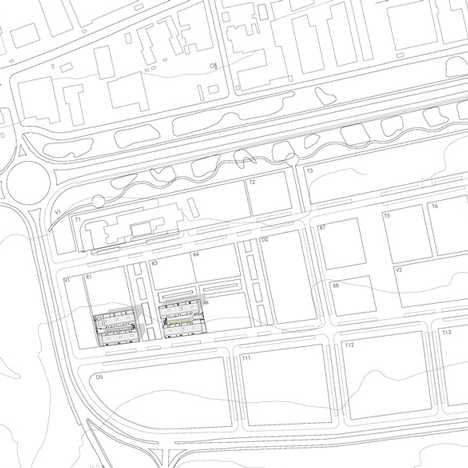
The buildings are located in Toledo, central Spain, halfway between the historic city and the new town.
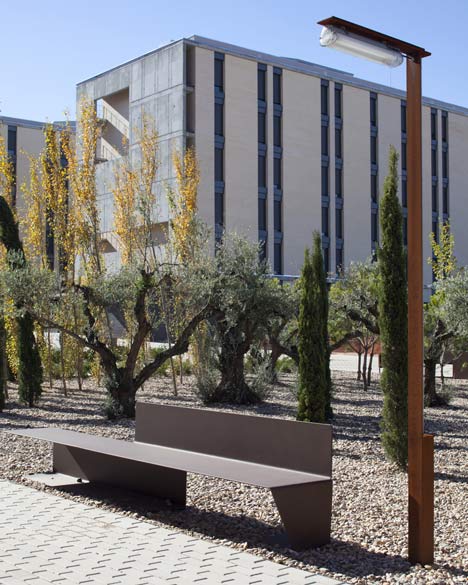
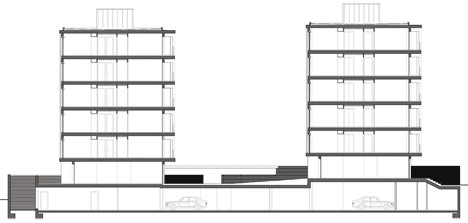
The six-storey buildings sit above two brick-clad car parks, which are almost entirely buried underground.
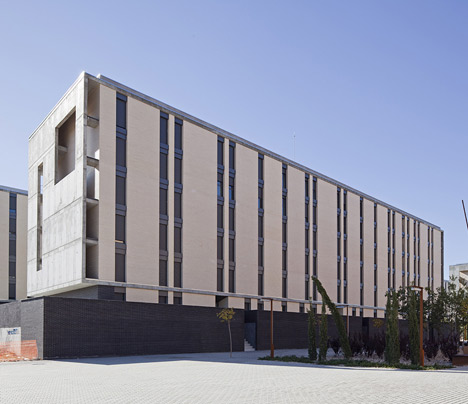
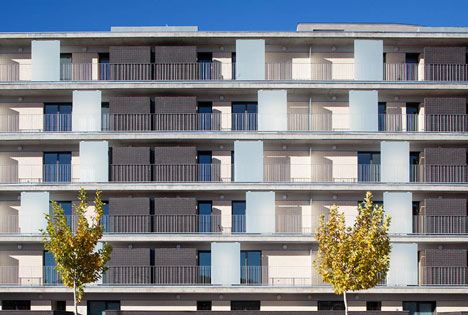
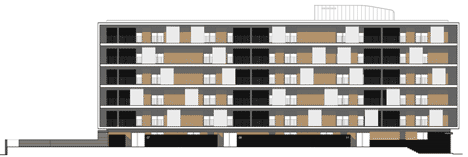
Balconies line the south elevations of each block, where walls of differently coloured brickwork walls create a pattern of vertical stripes.
Some otherinteresting Spanish projects we've featured include a raised viewing platform around a Roman temple and a social housing tower - see more stories about Spain here.
Photography is by Miguel de Guzmán.
The following text came from TASH:
144 Protected Collective Houses in Toledo, Spain.
Description:
The collective housing complex is located in the Ecobarrio, an ambitious project located in a very important area for the future development of Toledo because is called to become an union nexus between the old town and modern town of Toledo.
Sustainability and optimal bioclimatic behaviour of the building are principles pursued all through the project design process and became, along with the public protection housing derived factors, such as areas optimization and minimal resources and a tight budget, the main criteria followed throughout the project development.
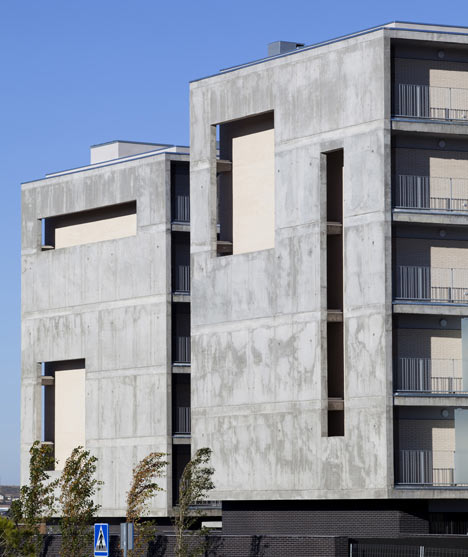
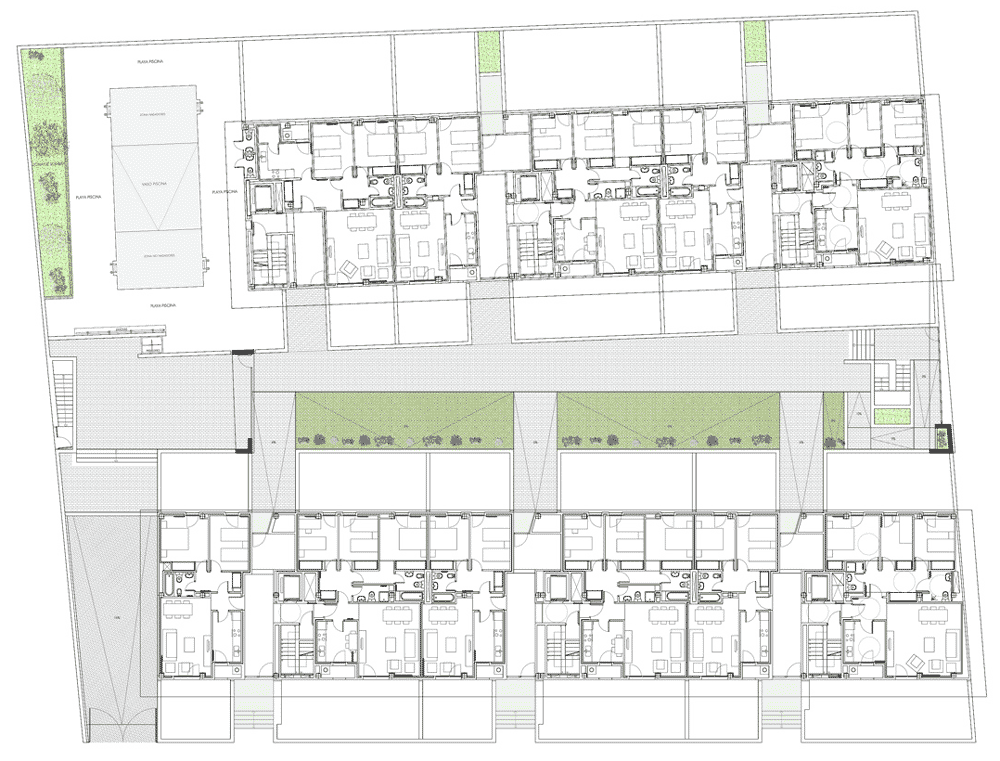
According to the previously established criteria the dwellings are grouped in compact blocks whose shape favours a good bioclimatic behaviour. These blocks are placed following a North-South orientation, allowing to free as much surface in ground floor as possible for common and entertaining areas.
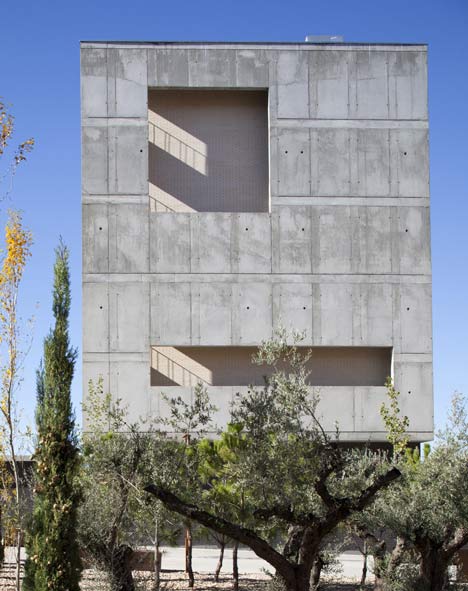
The volumetric compacity and sobriety of the buildings makes a search for formal expressivity necessary by other means as different materials combinations or different scale-textures oppositions.
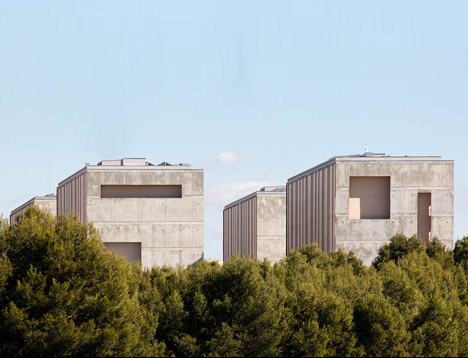
The material combinations does not only mean great variety on their application but a careful study in other topics as constructive details and encounters between different materials for a better final result.
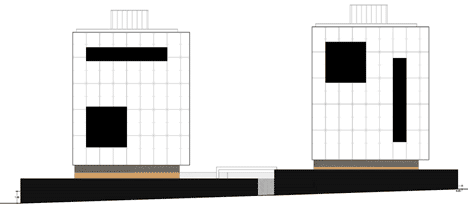
As for the opposition of different scales-textures, it happens all over the different façades, confronting concepts as mass and simpicity of the concrete slabs on the East-West façades, as other concepts such as dynamism, lightness and complexity of the South façade, perceived as a continuous balcony front with mobile sliding elements that allow sunshade to the housings.
Click above for larger image
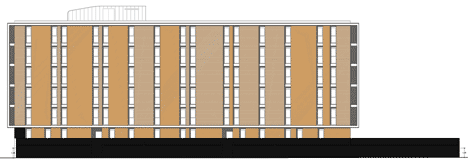
In the North façade a more plain and enclosed composition prevails, following a rythm of vertical walls made of different kind of bricks.
Data sheet:
Architects: TASH (Taller de Arquitectura Sánchez-Horneros)
Location: Toledo, Spain
Team: Emilio Sánchez-Horneros, Antonio Sánchez-Horneros.
Collaborators: Javier Rodríguez, Emilio Gómez, Alberto Di Nunzio.
Structural Engineering: Antonio García de Blas
Technical Engineering: Alberto de la Cal, Francisco Ruiz Guadamillas
Client: Servicaman
Construction: FCC Fomento de Construcciones y contratas
Project Area: 21.484,95 m2
Project year: 2008-2010