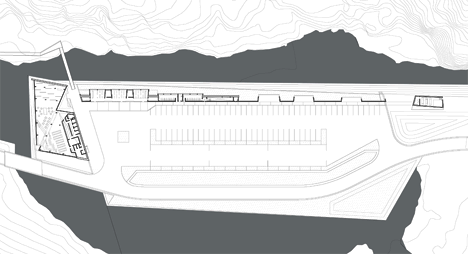
Trollstigen Tourist Route Project by Reiulf Ramstad Architects
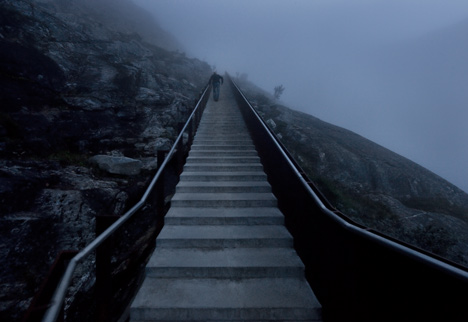
Zig-zagging pathways lead to viewing platforms perched high in the Norwegian mountains in this visitor facility designed by Reiulf Ramstad Architects (+ slideshow).
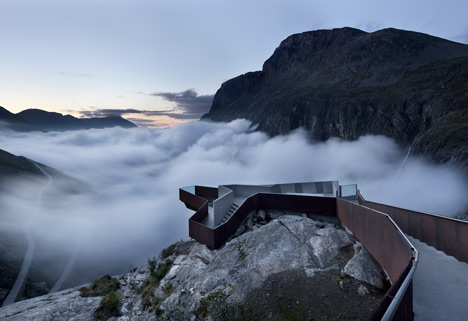
Above: photograph is by diephotodesigner
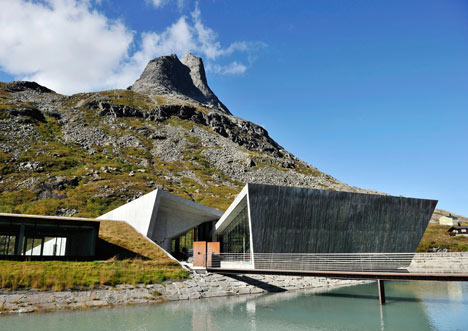
An angled concrete block at the entrance to the site contains waterside restaurant and gallery, while Corten steel pavilions are set in the ground alongside.
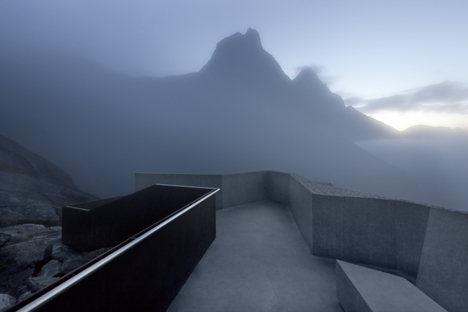
Above: photograph is by diephotodesigner
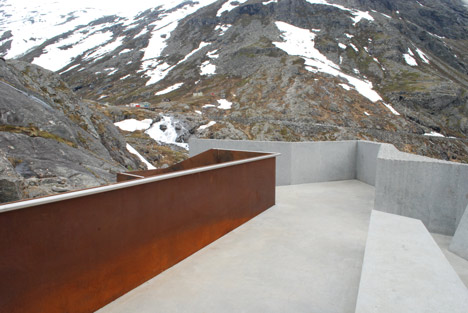
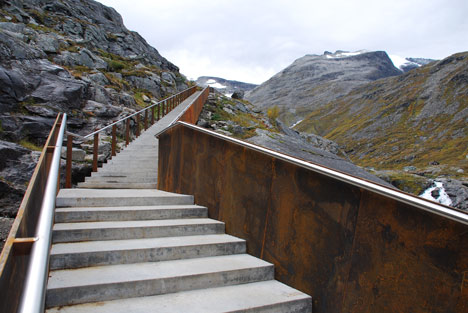
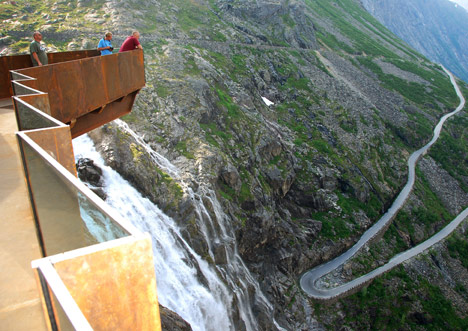
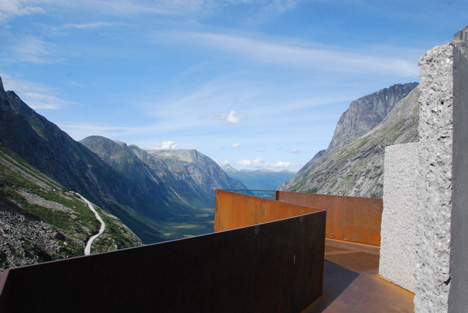
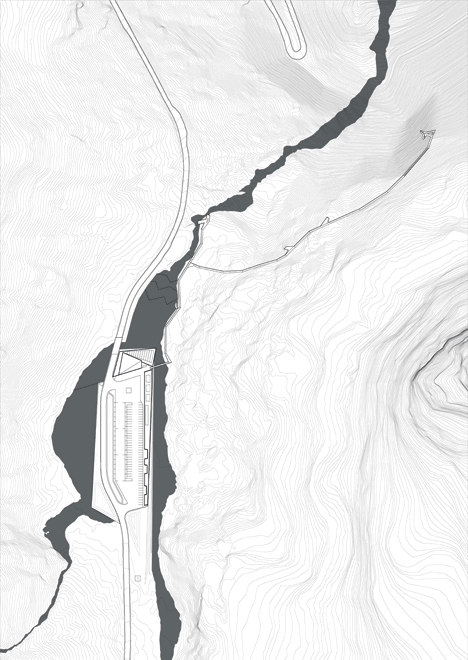
From here a footpath crosses the mountain river and leads to the lookout points, which are made of concrete, steel and glass.
The facility, which opened last month, is one of five architectural projects along the Geiranger-Trollstigen tourist route, a 66-mile scenic road across the Trollstigen Mountain Plateau in western Norway.
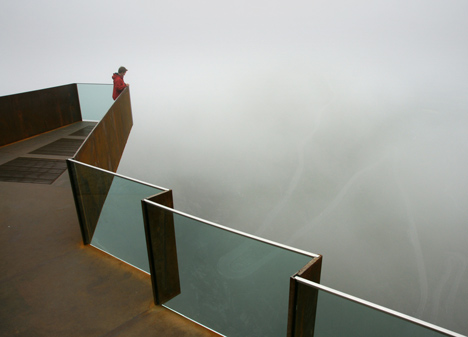
Trollstigen - or "troll's ladder" - is regarded as one of Norway's most spectacularly beautiful areas and the tourist route across it is one of the country's most popular attractions.
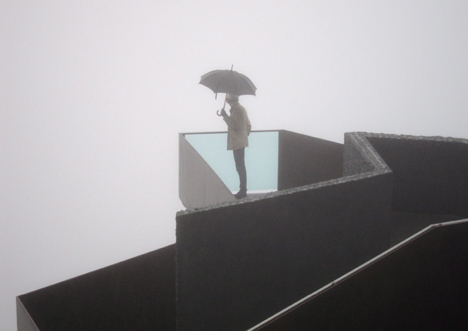
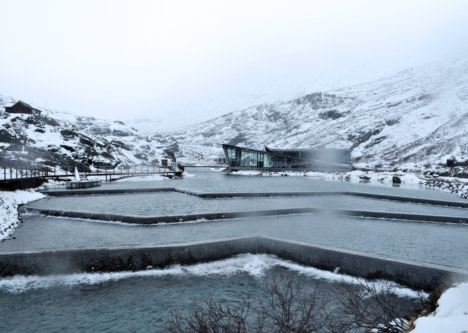
At the foot of the wall is a jagged glass restaurant, which Reiulf Ramstad Architects completed last summer.
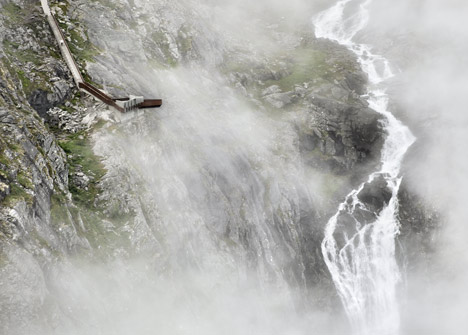
Above: photograph is by diephotodesigner
See also our recent story about the architects' beachside walkway on the Havøysund trail, which is another of the 18 national tourist routes in Norway.
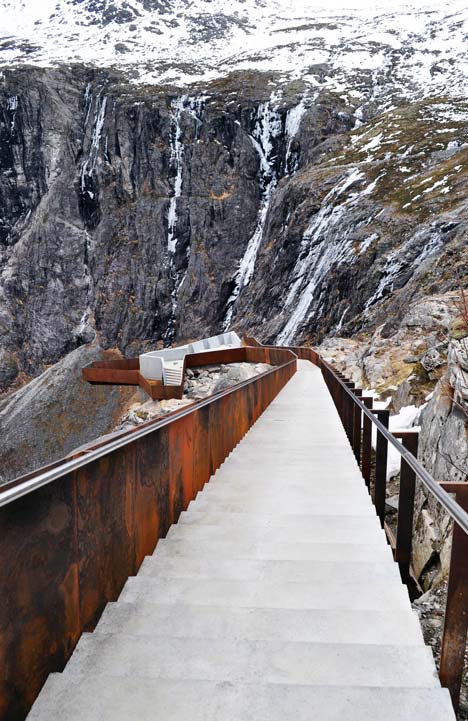
Stops on some of the other tourist routes that we've written about include public toilets in a rusty steel cabin and a memorial commemorating suspected witches.
See all our stories about the Norwegian National Tourist Routes »
Photography is by the architects, apart from where otherwise stated.
Here's some text from Reiulf Ramstad Architects:
Trollstigen National Tourist Route Project
Located on Norway’s west coast, Trollstigen is perched within a dramatic pass between the deep fjords that characterize the region.
This panoramic site can only be visited and constructed in summer, due to severe winter weather.
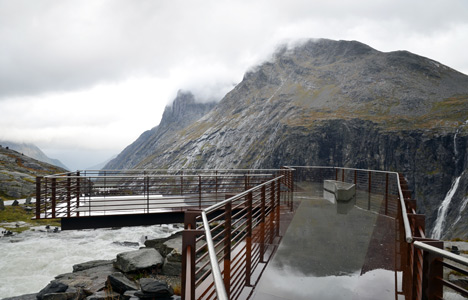
Despite—or perhaps because of—the inaccessible nature of the site, the project entails designing an entire visitor environment ranging from a mountain lodge with restaurant and gallery to flood barriers, water cascades, bridges, and paths to outdoor furniture and pavilions and platforms meant for viewing the scenery.
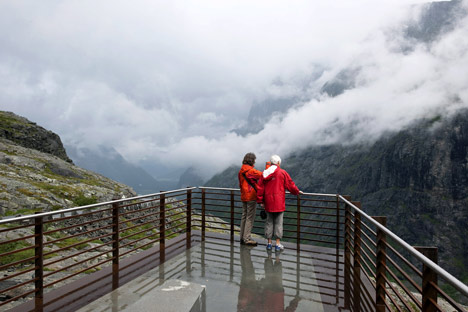
All of these elements are molded into the landscape so that the visitor’s experience of place seems even more intimate.
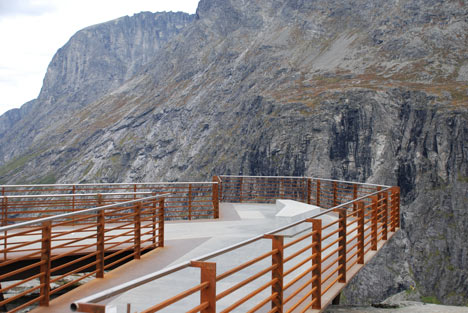
The architectural intervention is respectfully delicate, and was conceived as a thin thread that guides visitors from one stunning overlook to another.
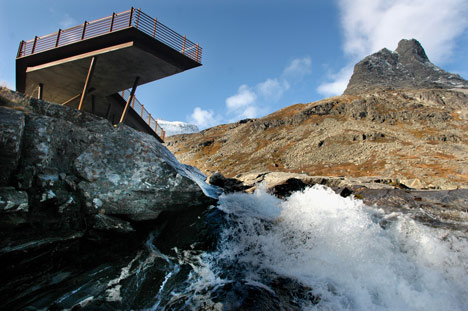
The RRA project will enhance the experience of the Trollstigen plateau’s location and nature.
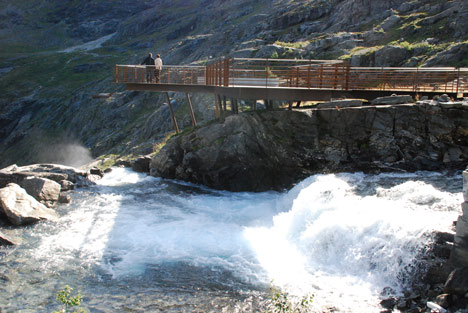
Thoughtfulness regarding features and materials will underscore the site’s temper and character, and well-adapted, functional facilities will augment the visitor’s experience.
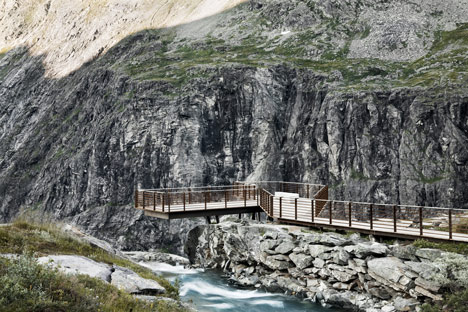
Above: photograph is by diephotodesigner
The architecture is to be characterised by clear and precise transitions between planned zones and the natural landscape.
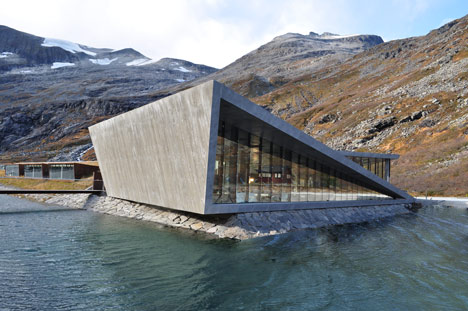
Through the notion of water as a dynamic element – from snow, to running and then falling water- and rock as a static element, the project creates a series of prepositional relations that describe and magnify the unique spatiality of the site.
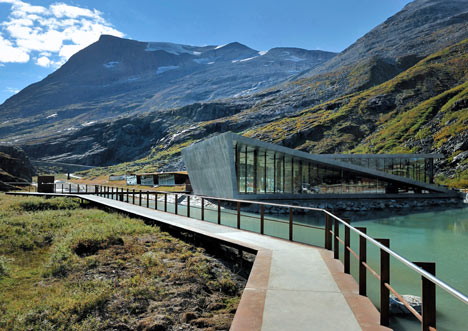
Location: Romsdalen - Geiranger Fjord, Norway
Program: National tourist routes project
Client: The Norwegian public roads administration
Commision type: Invited Competition 1st prize in cooperation with Multiconsult 13.3 landscaping (2004)
Architects: Reiulf Ramstad Architects, Oslo Norway (RRA)
Reiulf Ramstad, Christian Skram Fuglset, Espen Surnevik, Anja Strandskogen, Nok Nimakorn,
Atle Leira, (Christian Dahle, Lasse Halvorsen, Helge Lunder, Karen Selmer, Tia Ginard Adover)
Civil Engineer: Structural Engineer: Dr Techn. Kristoffer Apeland AS, Oslo Norway
Design year: 2004-2011
Construction year: 2005-2012/ Official Opening 2012
Building area: 800 m2 (Mountain Lodge with restaurant and gallery), 950 m2 (Flood Barrier House)
Site: Building Site 600,000 m2
Time to build: 6 years
Type of construction: Corten steel and poured-in-place concrete