Greenhouse at Grüningen Botanical Garden by Buehrer Wuest Architekten
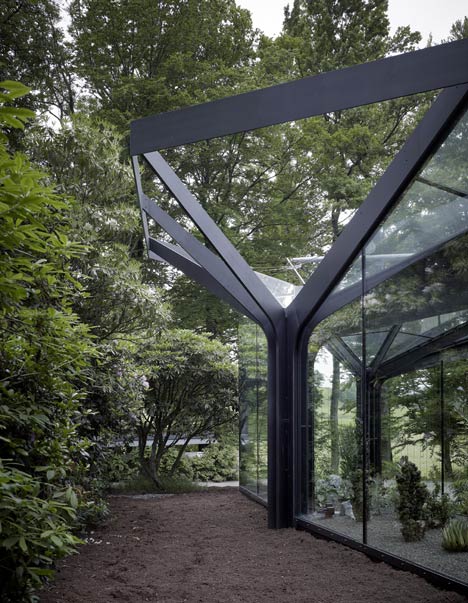
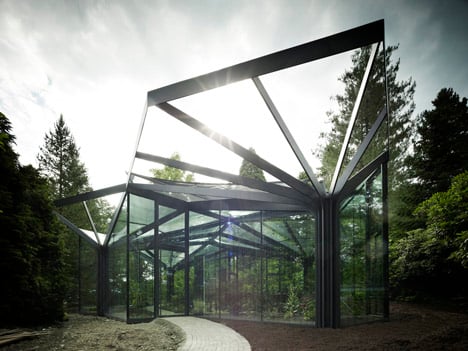
Steel trees with sprawling branches support the glass roof of this greenhouse in Switzerland by Buehrer Wuest Architekten (+ slideshow).
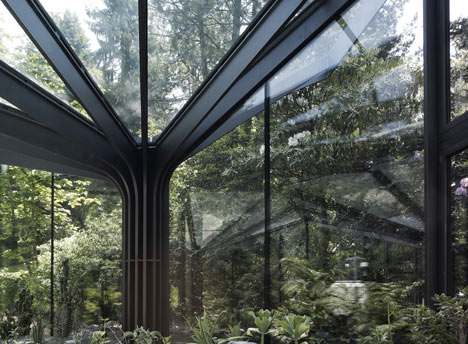
Located in a botanical garden outside the village of Grüningen, the greenhouse is used for growing subtropical plants such as banana and papaya.

The architects borrowed structural patterns found in nature, like the membranes of a leaf, to create the geometric structure of the roof.
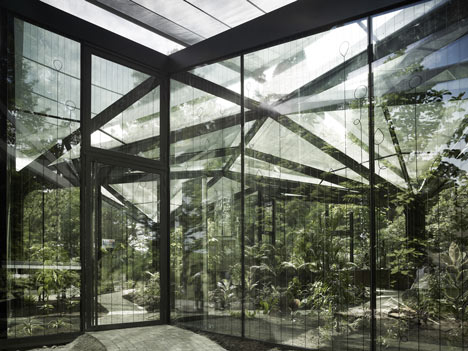
Glass screens subdivide the space to create different planting areas.
Other greenhouses we've featured include one made from Lego and another with a temporary restaurant inside.
Photography is by Markus Bertschi.
Here are a few words from the architects:
The new pavilion at the botanical garden at Grueningen relates strongly to its context. The design was inspired by the surrounding forest, not the built environment.
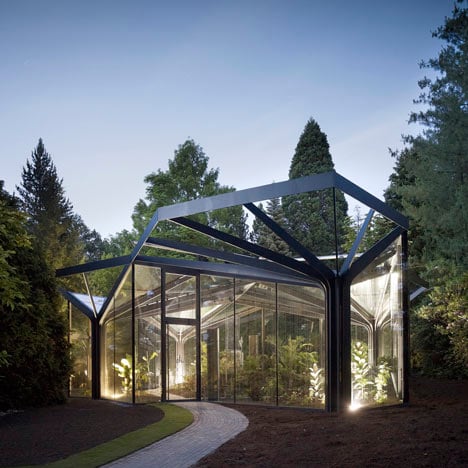
Both the formal vocabulary and the structural concept derive from nature. The pavilion is conceived to harmonize with and expand the forest.

Site plan - click above for larger image
The form was developed using Voronoi tessellation, also known as natural neighbor interpolation. Analogous to cell division in nature, the geometry of the roof as surrounding membrane was determined by the position of the old and new trunks.
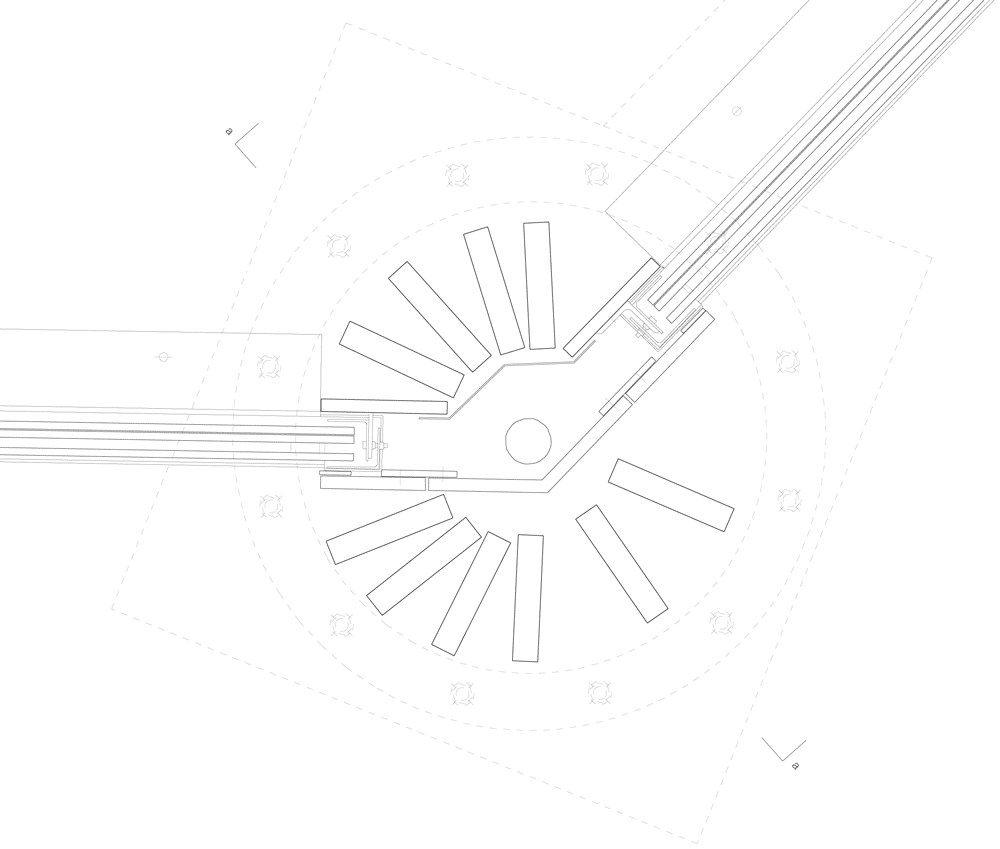
Column plan detail - click above for larger image
The forest was augmented by four steel trees that form the primary structural system of the pavilion.
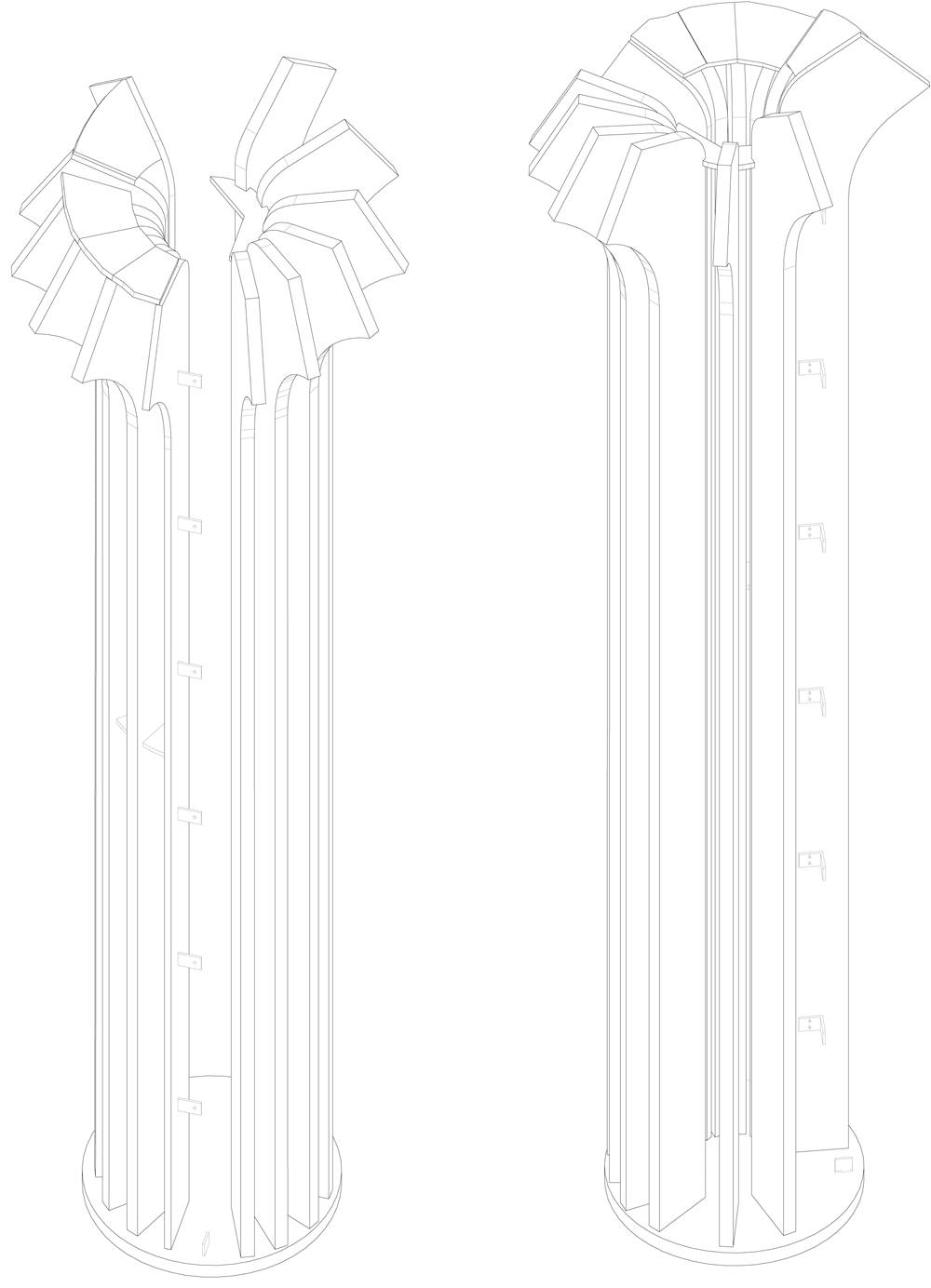
Column detail - click above for larger image
At about five meters, the trunks branch toward the treetop, which forms the natural roof. A secondary glass construction, suspended from the steel branches, encloses the inner space of the greenhouse.