Bouroullec Collection by Ronan and Erwan Bouroullec for Hay
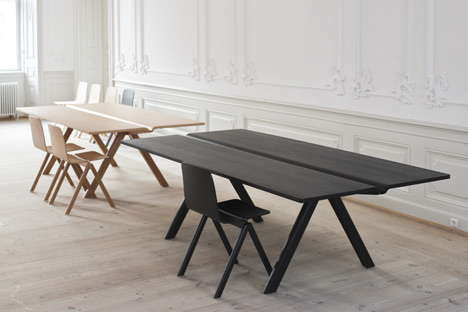
French designers Ronan and Erwan Bouroullec have designed all the furniture for the remodelled Faculty of Humanities at Københavns Universitet in Copenhagen, which is due to reopen in January.
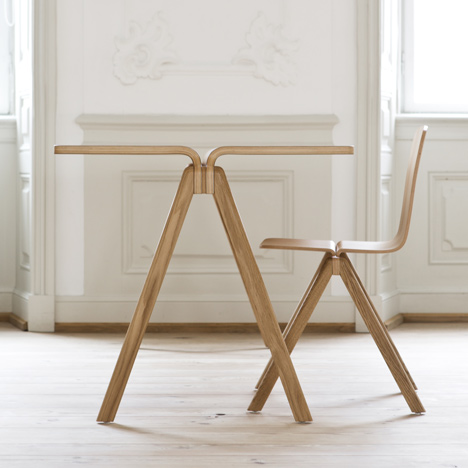
"This is quite an interesting situation historically," Ronan Bouroullec told Dezeen. "Since the last century, whenever they build a school or university in Denmark they ask a designer to design the chairs for that space."
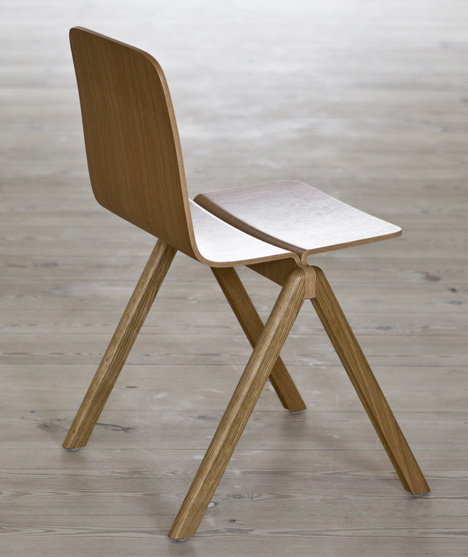
The brief specified a wooden chair in the hope of creating a more homely environment to tackle the number of students who leave before completing their studies. "There is a big problem in universities that there are a lot of students that do not stay at school, it's quite problematic in Europe," Bouroullec explained. "The general aim of the project is to try to keep students in school so the idea was to do a chair which could be maybe more domestic than a contract chair."
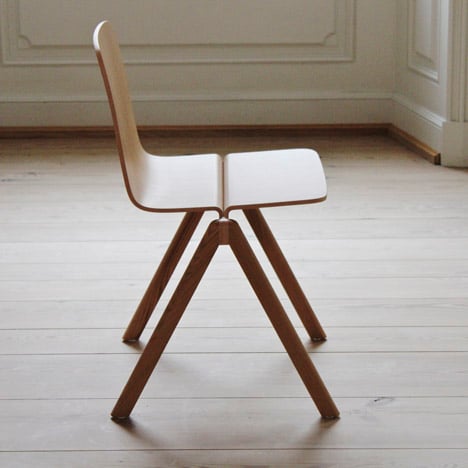
The chairs needed to be low-cost, strong, "sensual", stackable, and quick to develop and produce. "Very quickly we had this intuition that for both reasons - comfort and probably price - we could cut the shell in two parts," recounts Bouroullec.
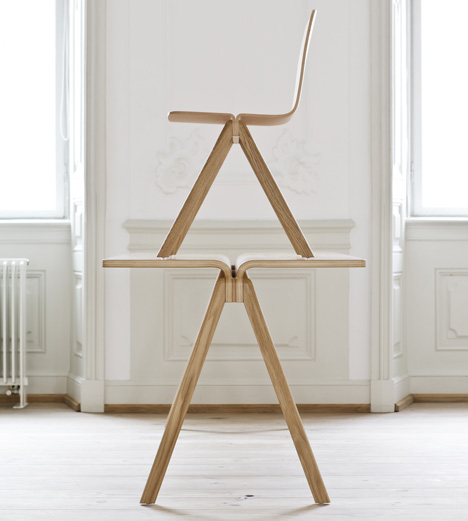
"This would create a very interesting aesthetic because it will create a bridge, so we do not have to fix the shell on a structure." Instead, four legs are attached directly to the ridge under the seat where the two sides of the shell join.
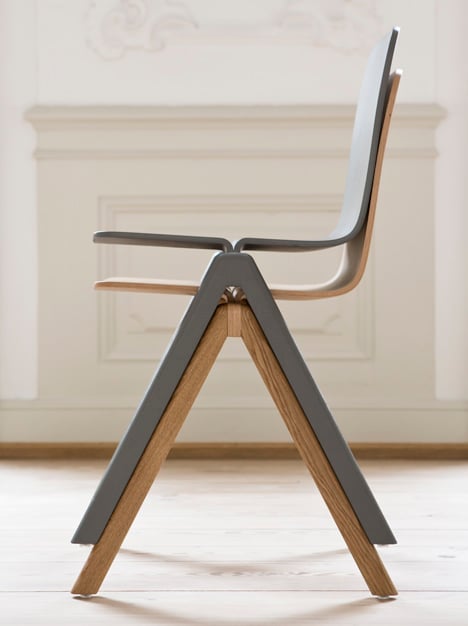
The resulting seat is more flexible than a shell made in one piece. The A-shaped legs mean the chairs stack neatly in high piles and the cost was kept down. "The chair is priced to be around 150 euros so almost the same as a plastic chair," he says.
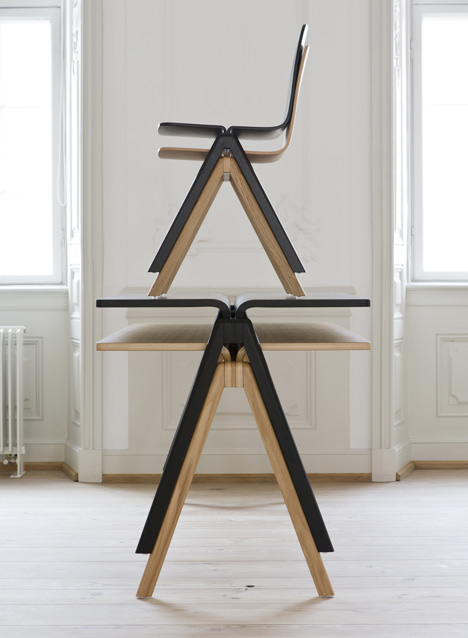
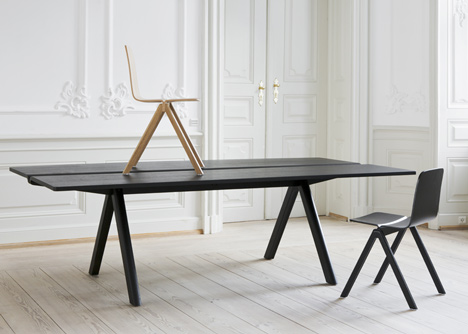
The range was expanded from there to include around 15 typologies in oak and beech for the department's meeting rooms, offices, libraries and classrooms.
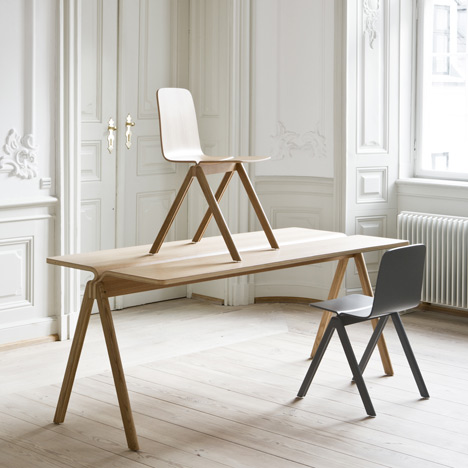
It'll also be available from Danish design brand Hay, which is showing the collection at design fair Orgatec in Cologne this week.
This is not the prolific designers' first wooden chair - they launched two seats for Magis in Milan this year alongside one with a shell divided into four pieces for Mattiazzi, and their celebrated Steelwood chair can often be spotted in the photos of interior projects on Dezeen. See all our stories about Ronan and Erwan Bouroullec.
Dezeen filmed two interviews with Ronan Bouroullec at Clerkenwell Design Week this summer - one about the use of colour in their Pico tiles and another on their new monograph.
Orgatec continues at Koelnmesse in Cologne until 27 October.