Manhattan-based firm SHoP Architects has sent us a movie and more images illustrating its masterplan for Konza Techno City, a new "silicon" city 40 miles from Kenya's capital Nairobi (+ movie).
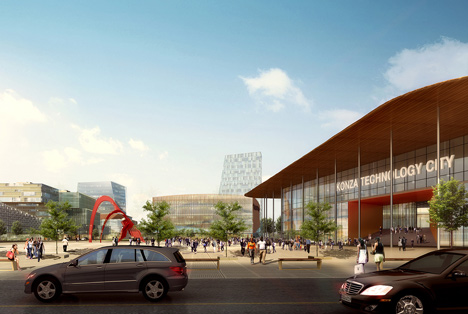
Above: entry plaza
Work is already underway on the pavilion that forms part of the first phase of SHoP Architects' masterplan for Konza Techno City, a business and technology hub that's been dubbed Kenya's "silicon savannah", as we reported last week.
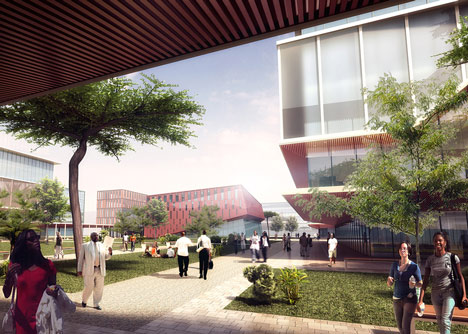
Above: university campus
The $14.5 billion project will transform an area of grassland into a city of 250,000 residents. The city is expected to generate up to 200,000 jobs by the time its final phase is completed in 2030.
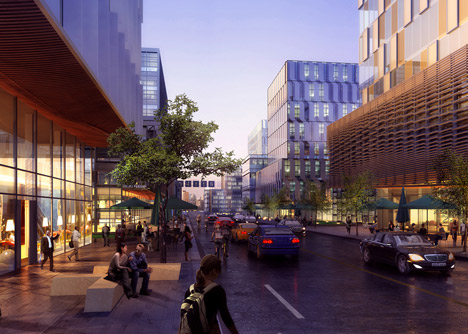
Above: business district
The first phase, to be built over five years, will house 30,000 residents and be shaped like a row of "stitches" in the overall masterplan, the architects told Dezeen.
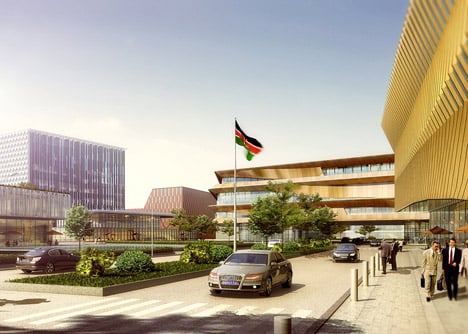
Above: technology and life sciences district
The east-west axis of the first phase includes a boulevard of green spaces with bridges over the wide motorway leading to Nairobi.
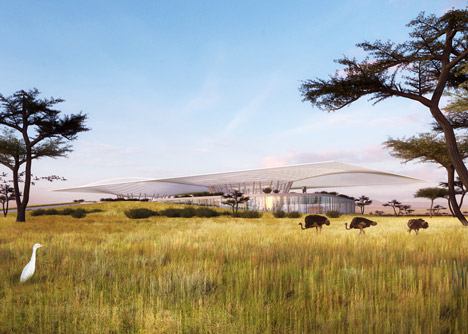
Above: Konza Techno City pavilion
The four initial north-south axes will comprise, from west to east, a university, a residential area, a technology and life sciences district and a business district.
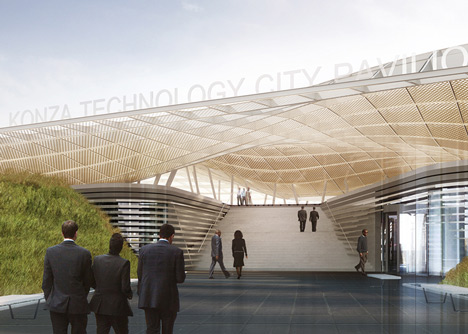
Above: Konza Techno City pavilion entrance
The stitch pattern is designed as a framework for the later growth of the city, which will be made up of criss-crossing horizontal and vertical bands.
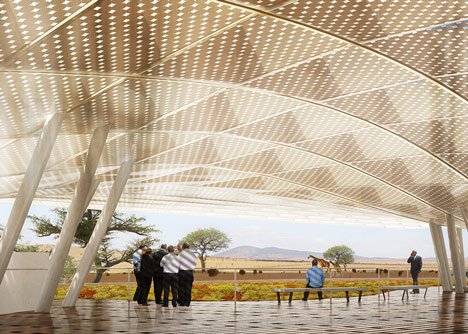
Above: Konza Techno City pavilion entrance
The areas between bands are less specifically planned and are designed to allow for market-driven growth.
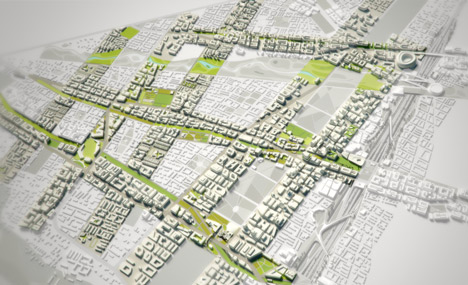
Above: masterplan structure
SHoP Architects took over the masterplan after the Kenyan government rejected an earlier proposal by UK-based firm Pell Frischmann, some images from which we included in the launch of Konza Techno City last week.
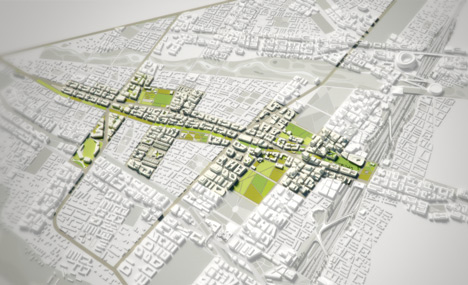
Above: phase one
SHoP Architects is the firm behind the Atlantic Yards development in Brooklyn, New York, which includes a 32-storey residential tower set to be the world's tallest modular building and the Barclays Center, a 19,000-seat indoor sports arena that opened last year.
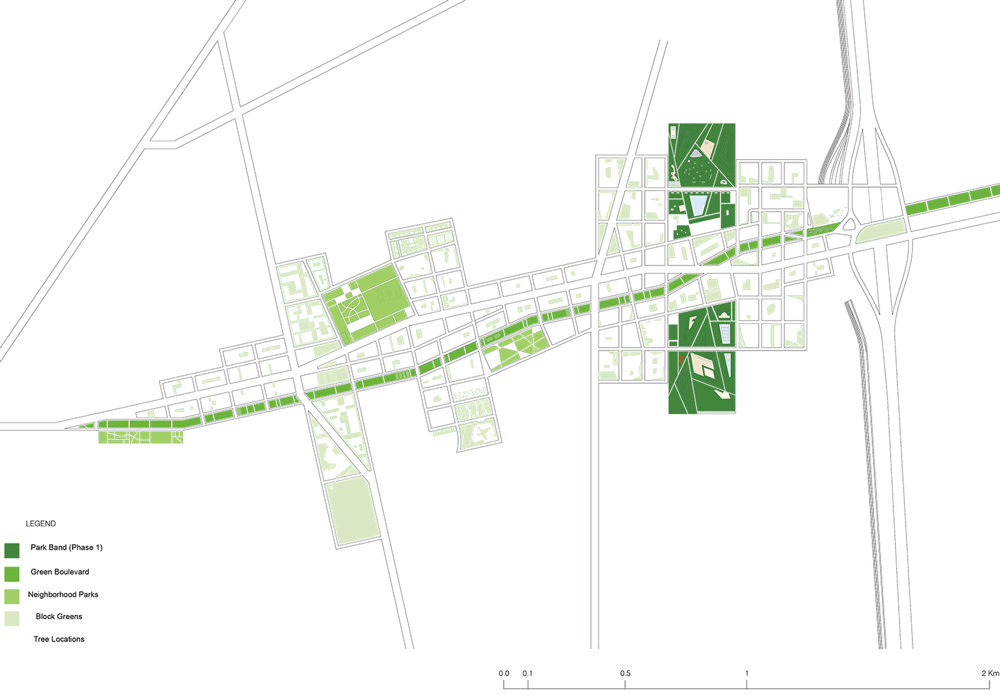
Above: green spaces in phase one – click above for larger image
Other masterplans we've reported on recently include the redevelopment of Darling Harbour in Sydney by architecture firms OMA, Hassell and Populous and a plan to redesign Futian District in Shenzhen, China, as a "garden city".
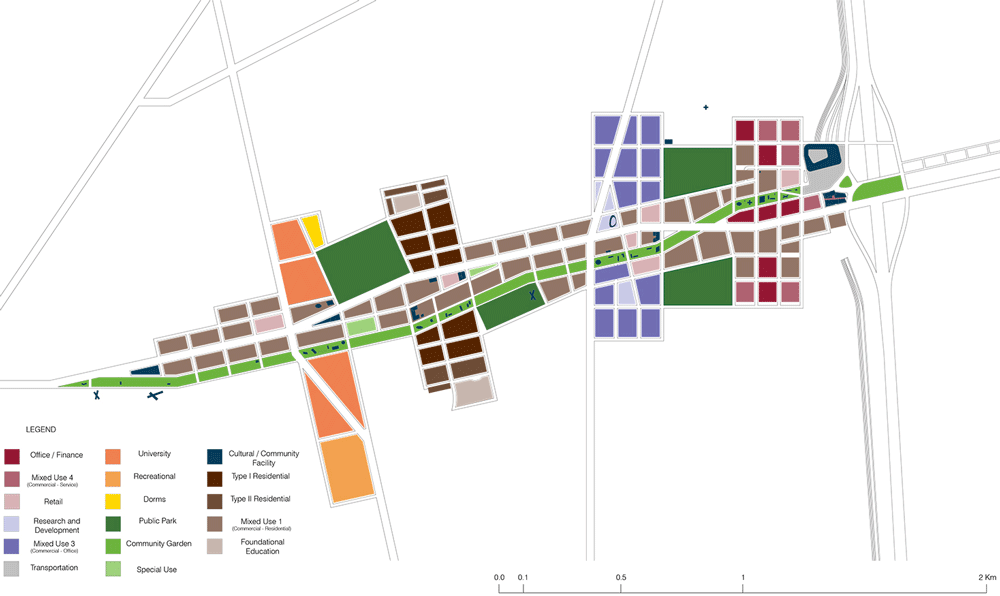
Above: phase one programme – click above for larger image
See all masterplans »
See all architecture by SHoP Architects »
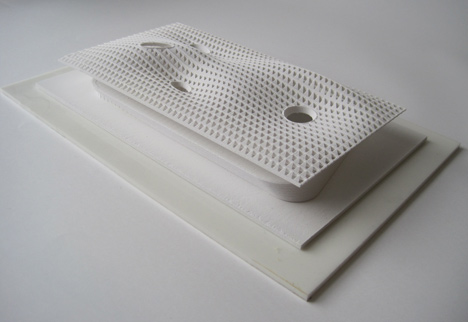
Above: Konza Techno City pavilion model


The concept of the Konza Techno City pavilion stands out! It really inspires me!
Street scenes look like proposals for new European cities: all very flashy. It’s a pity the designers have not tried to create an urban environment that responds to the climate of Kenya. I get no sense of being in the African savannah, apart from the pavilion building which I think gets it right.
It’s not the winning entry.
Where are all the ravers?
That is the worst animation I have ever seen.
“The areas between the bands are expected to grow organically without specific planning”. I think it will give rise to a slum.
Gridlock, car-scaled, to be a slum in no time.
Lest we forget we live in Africa? Please, we can appreciate “flashy” over here as well! And how can you begin to tell from these external rendeings that the buildings don’t respond to climate? Shall we that live in Africa always only gather under a tree?
The point that critics of this project are making, Kez, is that Kenya and other African countries should be careful in the kind of architectural buildings they approve. “Flashy” is not always good, and is by no means a harbinger of “development”.
In the “developed” world there are thousands of “flashy” buildings that are just downright hideous and built with unsustainable methods. London, New York, Chicago and Hong Kong all have significant examples of “flashy” monstrosities created by “big” architects but with little architectural value. We are just saying that Konza City should be careful not to tread this path.
The business district looks like Vancouver with the wet streets and green Starbucks umbrellas.
Great animation. An African country with no oil trying to build a new city from scratch is in itself commendable. Keep the updates coming and don’t mind the haters.
Kez, I also live in Africa! There is so much in Africa to draw inspiration from and be proud of, so why look at reproducing trendy international stereotypes? At least Masdar City has an architecture unique to it’s culture and climate.
I applaud the design; however, I really hate seeing the wild nature of Africa in the same photograph as a modern flashy city. I do not see how SHOP have taken into account the needs of the wildlife and natural ecosystem, its more of a NYC type of here is what you want, not what you need. How will the wildlife traverse the savannahs if cities like this are built across the continent? Architects and designers should complement the natural environment, not combat it.
Initially, by design, man, wildlife and the entire ecosystem used to live in the same environment called Eden. We need more savannah cities build across Africa with wildlife from all walks of life traversing within the streets: Zebra, Chameleon, you name it. Oops! What a décor in the streets of Malili!