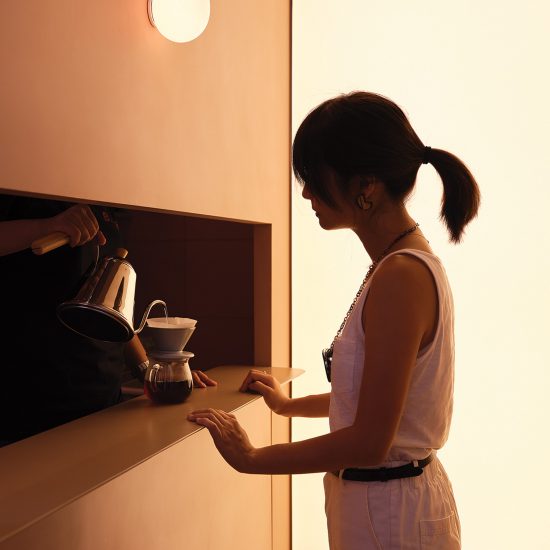
Teki Design creates Kyoto cafe as hub to “learn about the future of coffee”

2050 Coffee is a minimalist self-service coffee shop in Kyoto designed to raise awareness about sustainability issues surrounding the future of the drink.
According to architecture and interiors firm Teki Design, the coffee shop aims to interrogate “the 2050 coffee problem” – the fact that there could be a global scarcity of coffee the year 2050.
“Climate change might lead to a decrease in areas suitable for coffee cultivation,” Teki Design founder Tatsuya Nishinaga told Dezeen.
“The current practice of enjoying the drink at coffee shops may become more of a luxury,” added the designer.
In response, Teki Design wanted to create a stripped-back interior for the cafe, where customers come and “learn about the future of coffee”.
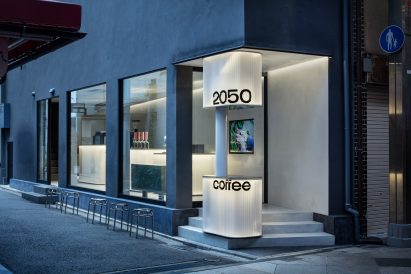
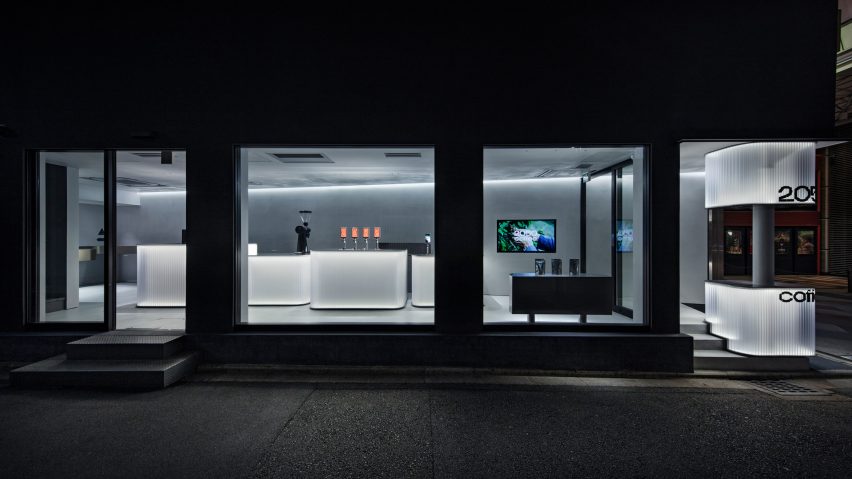
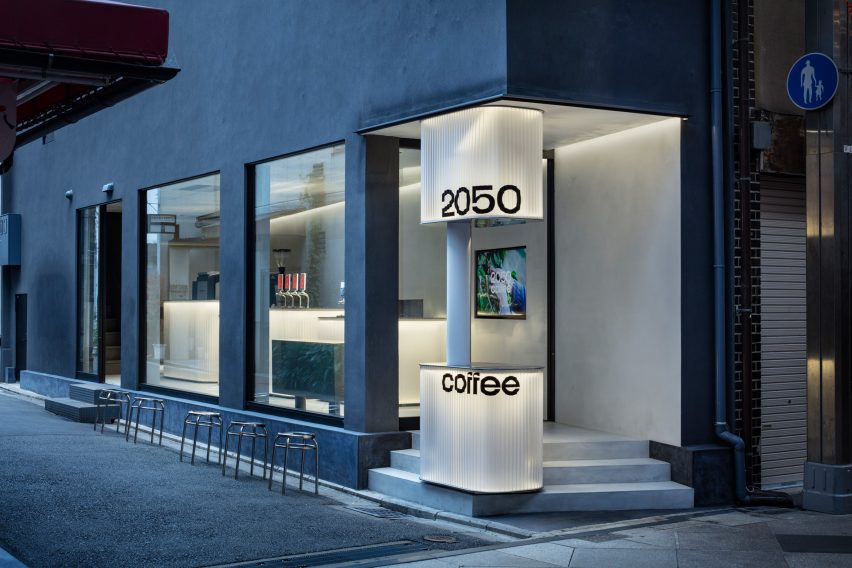
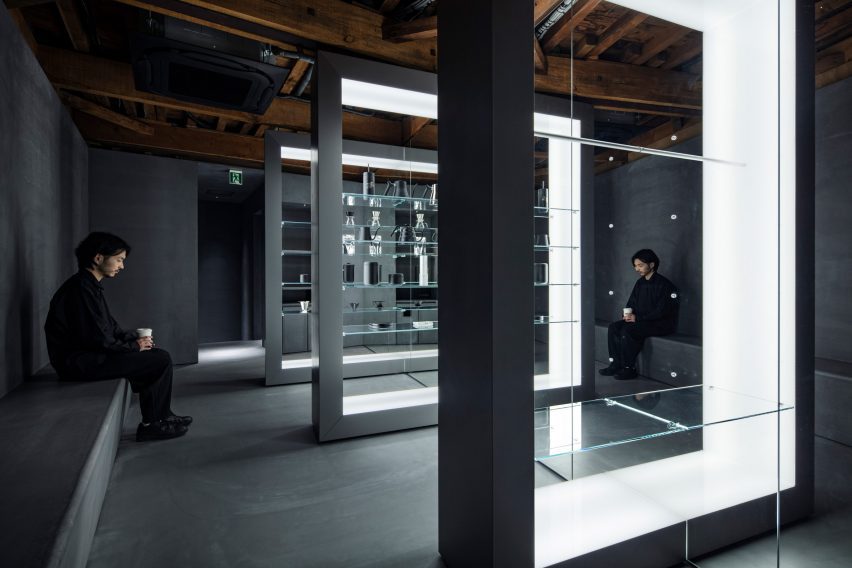
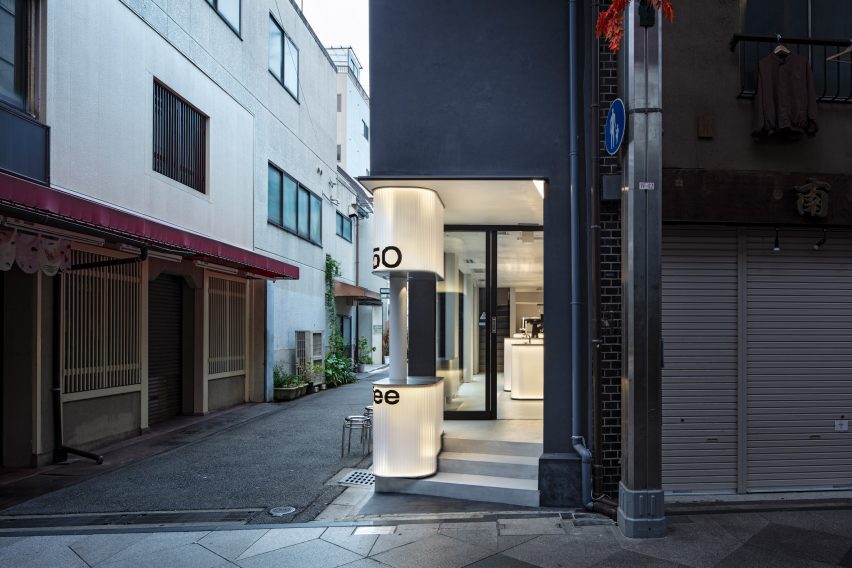
2050 Coffee is spread over two open-plan levels and features large rectilinear windows on its facade, which reveal a monochrome interior.
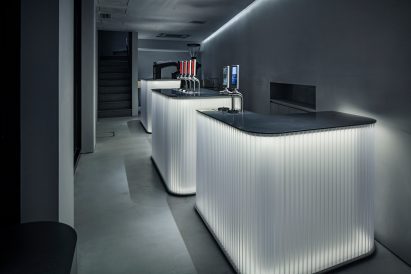
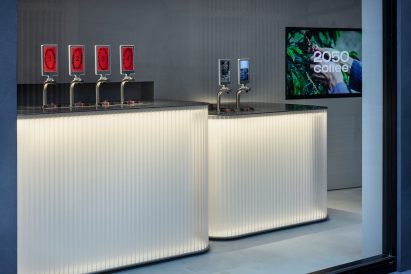
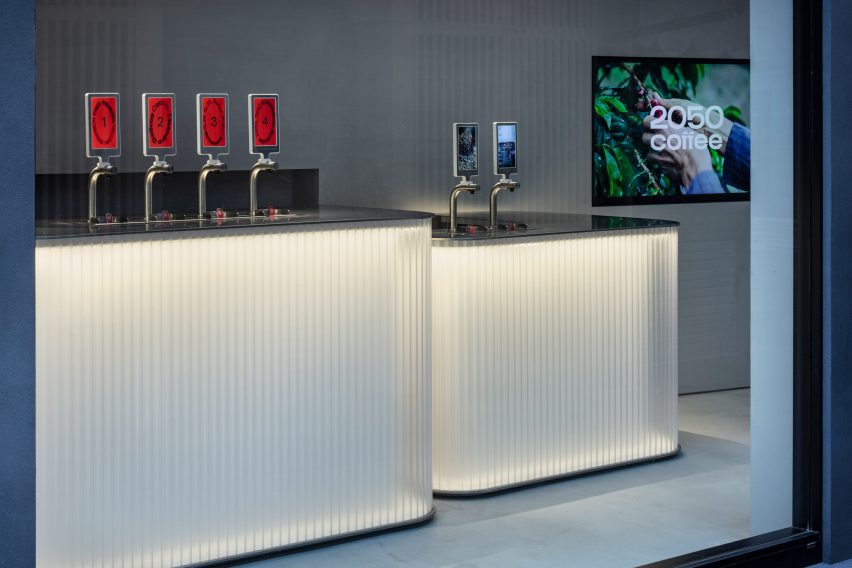
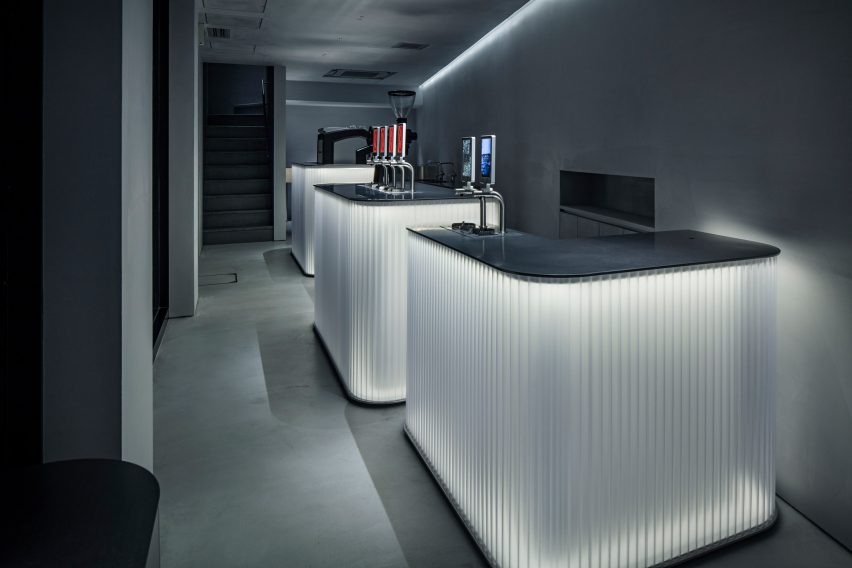
Inside, smooth grey walls create a backdrop for curved and illuminated counters made from corrugated polycarbonate sheets, chosen for their “inexpensive and familiar” qualities.
“While this material is often used for shed roofs due to its low cost and accessibility, it reflects light beautifully,” said Tatsuya.
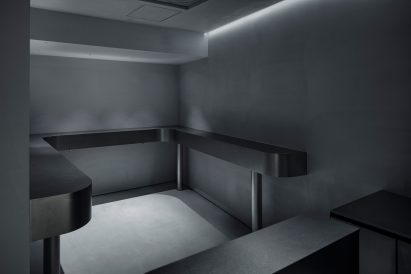
The counters display brightly lit self-service screens connected to sleek silver taps that produce five types of “sustainable” drip coffee in around 10 seconds.
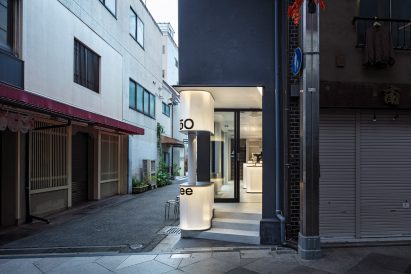
Polycarbonate was also applied to the cafe entrance to create a large, rounded sign emblazoned with the 2050 Coffee logo, which acts as a beacon when seen from afar.
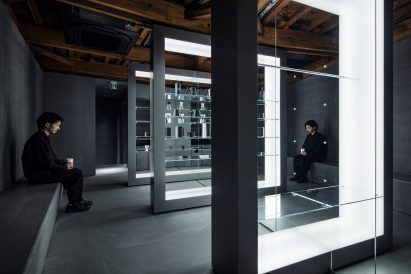
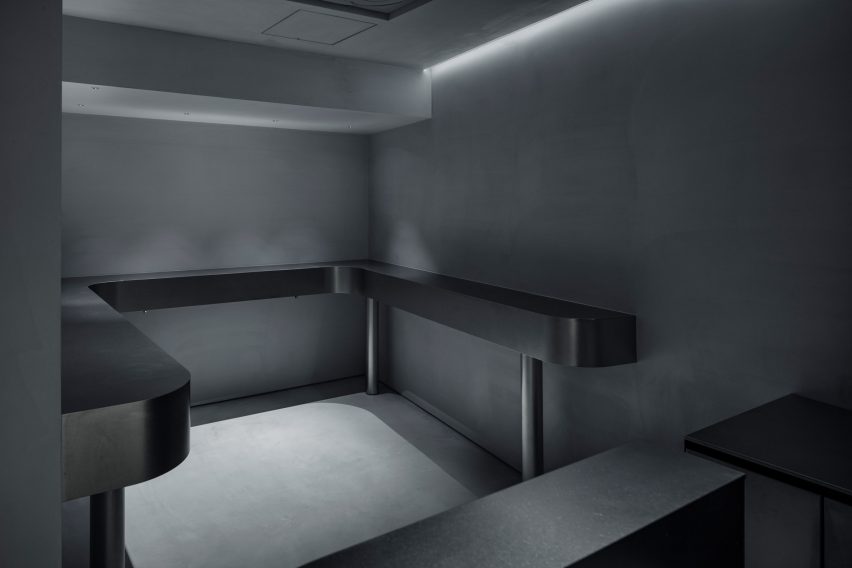
A small seating area at one end of the ground floor was formed from understated black benches.
Upstairs, more dark-hued seating was arranged next to a series of low-lit, chunky frame-shaped shelves displaying various coffee paraphernalia.
The shelves are reflected in floor-to-ceiling mirrors, selected to add to the coffee shop’s futuristic feel.
As well as a cafe, 2050 Coffee is used as a space for various pop-up events that investigate coffee and sustainability.
Tatsuya warned that despite these issues, drinking coffee is becoming more popular worldwide, adding to the problem.
“As coffee consumption increases, particularly in Asian countries where tea has been the traditional choice, the balance between demand and supply may become disrupted,” he explained.
“Creating a place where people can first learn and then think together is what we consider our approach to problem-solving.”
Previously completed coffee shops in Japan include a Tokyo cafe in a former warehouse and another in Kyoto clad in rapidly oxidised copper.
The photography is by Kenta Hasegawa.
Read more
Recommended stories
Schemata Architects turns ironworks on former “garbage island” into cafe and brewery
Challe cafe in Kyoto fuses Mexican and Japanese design
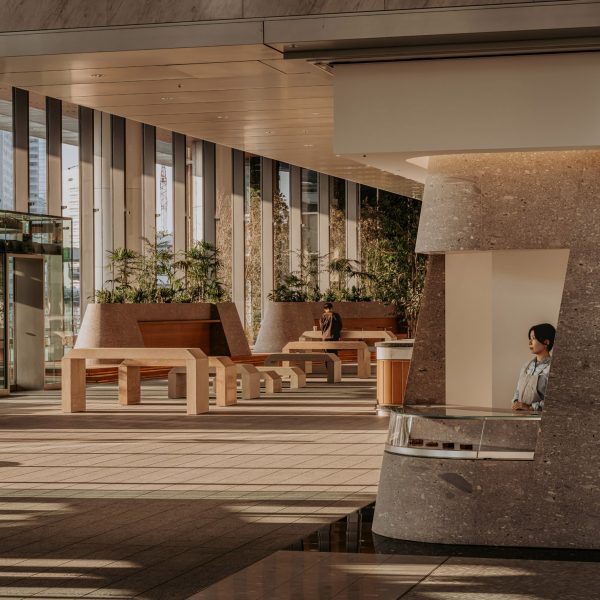
I IN designs Blue Bottle Coffee in Takanawa to carry “the essence of history into the present”
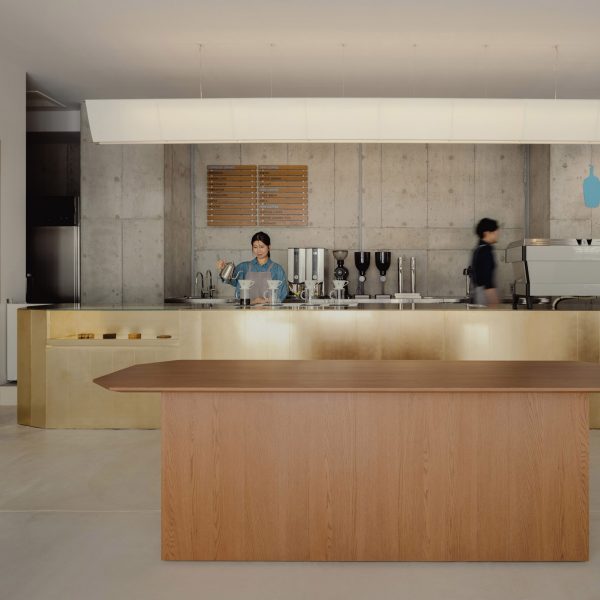
Osaka Castle’s Golden Tea Room informs interiors of Blue Bottle Coffee Shinsaibashi
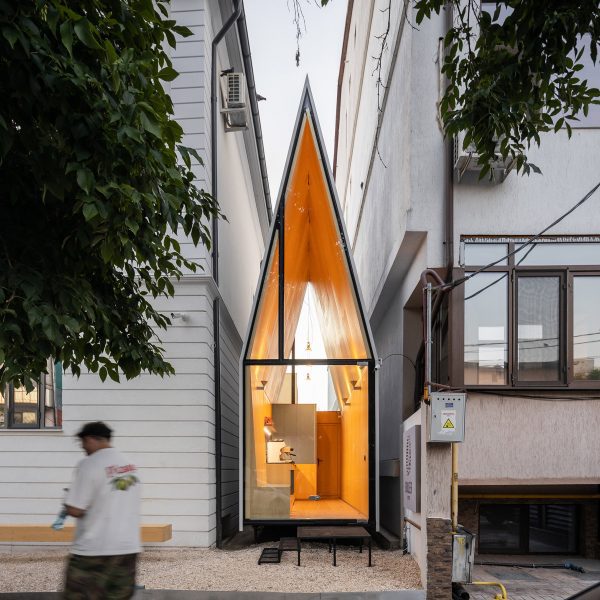
Vinklu squeezes tiny cafe between buildings in Bucharest
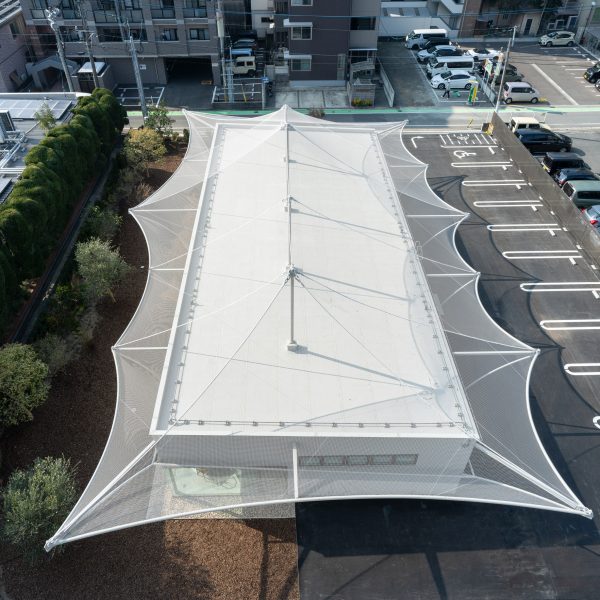
Kengo Kuma cloaks “ethereal cafe” in Fukuoka with mesh canopy
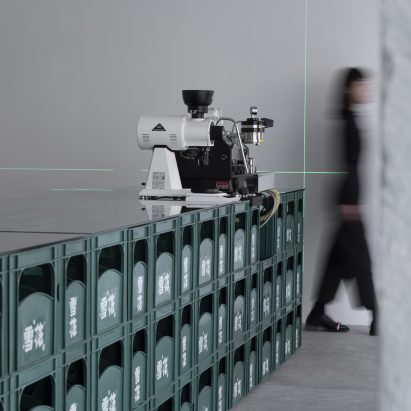
Three hundred beer crates form furnishings of Shenyang’s Fatface Coffee shop