Felipe Caboclo Arquitectura creates "sublime path" at undulating private chapel in São Paulo
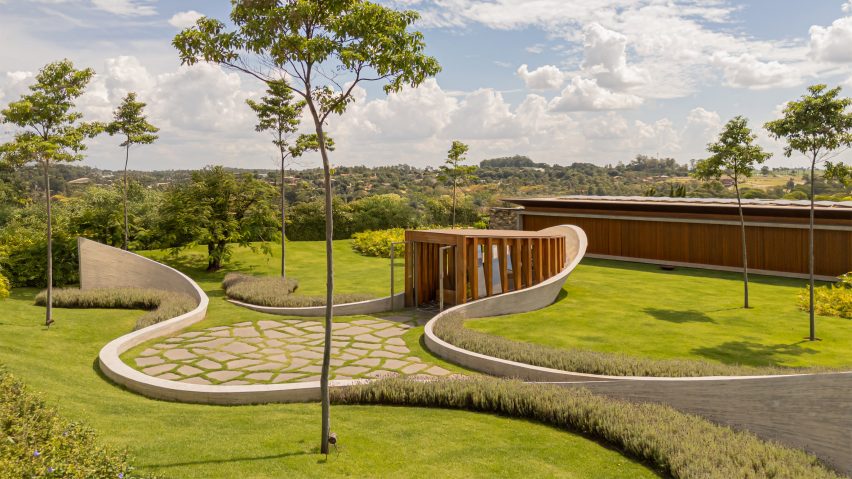
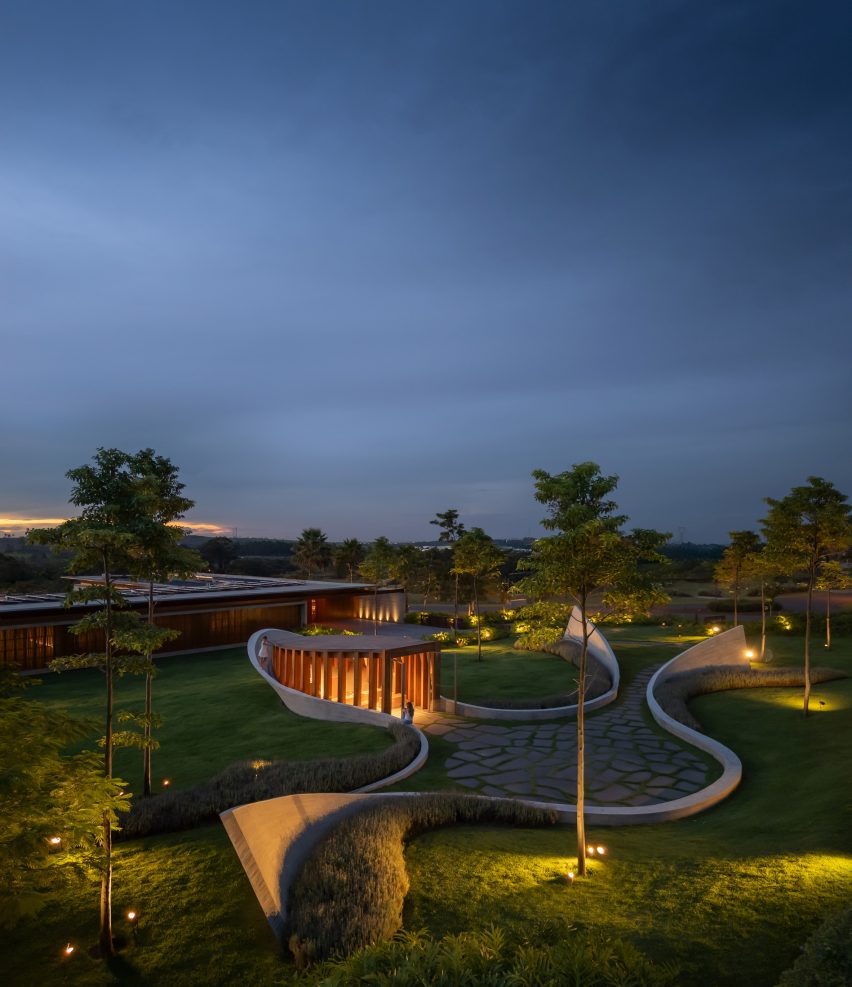
Local studio Felipe Caboclo Arquitectura has completed a small, oblong chapel out of wood and glass, flanking it with sinuous concrete walls on a residential property in São Paulo, Brazil.
Known as Nest Chapel, the 10-square-metre (107-square foot) religious space draws on influences from Le Corbusier, Japanese architect Tadao Ando's concrete chapels and American artist Richard Serra's metal landscape sculpture, using rising materials to transcend function and move visitors emotionally.
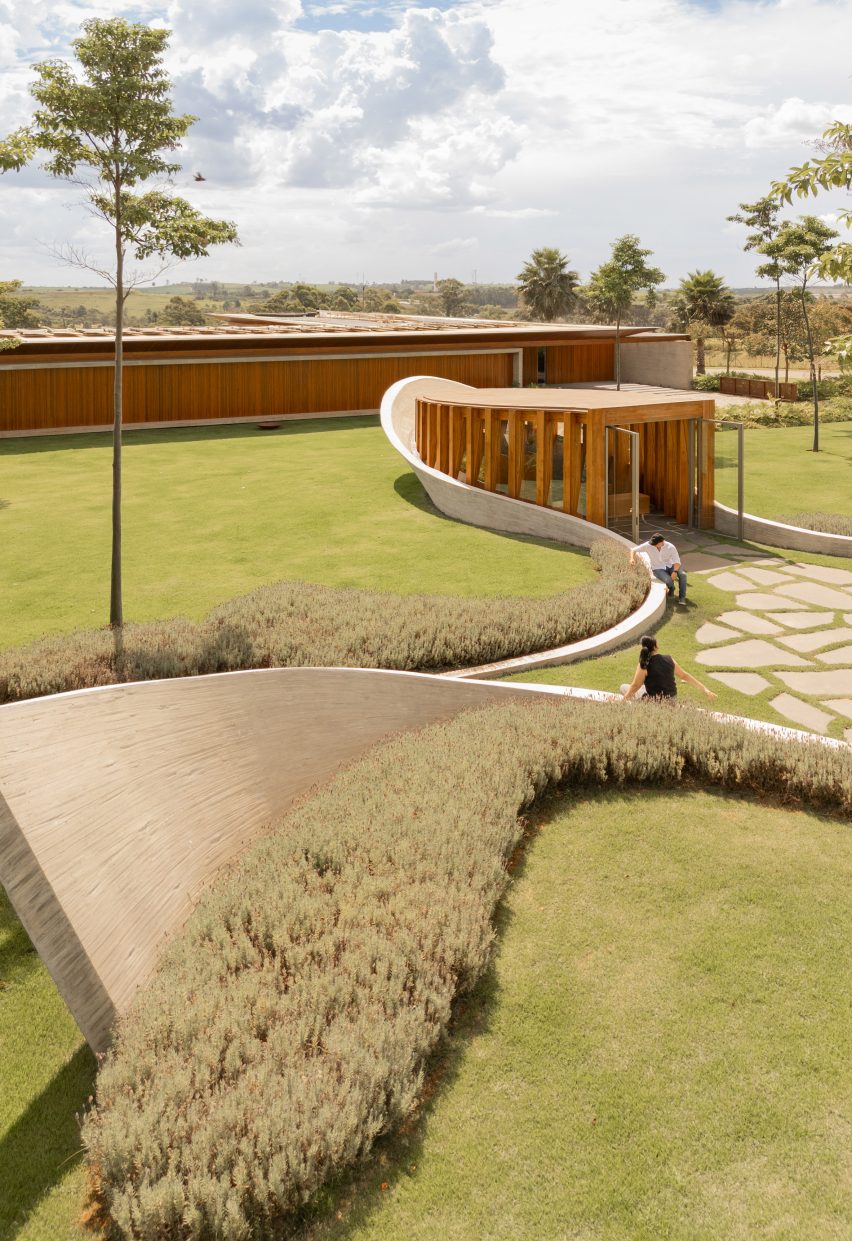
The chapel was completed in 2024 on a lot adjacent to the client's home, which was built in 2022. The 2,000-square metre lot was initially left unused, but became a place for contemplation and faith.
"The religious space was conceived as a theme in our lives; the journey is as important as the destination," lead architect Felipe Caboclo told Dezeen. "The idea was to create, through a single gesture, elements that guide us along a winding yet sublime path."
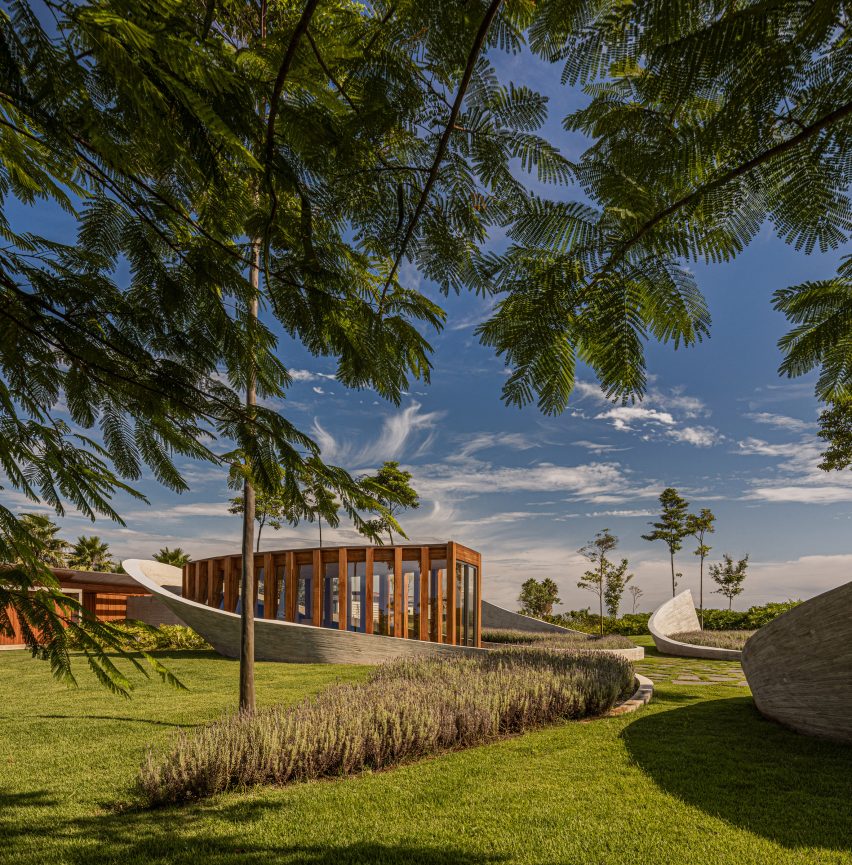
Two concrete walls rise out of the ground, undulating across the lawn with striations formed by the wooden formwork.
The concrete texture was used to evoke varvito, a sedimentary rock native to the Itu region, and show hand craftsmanship, the passage of time and the beauty of imperfections, the studio said.
Rows of lavender follow the outside of the concrete walls as they rise and fall, completing the sensory experience with fragrance, texture and movement in the wind.
The enclosed prayer space lies at the centre of the promenade, where the wall stretches out like the bow of a ship.
Laminated timber elements rise up from curving concrete walls to form an oval chapel, while glazing opens views of the garden in every direction and two operable windows allow for cross ventilation.
"The weight and brutality of concrete were softened by light and delicate forms and textures," Caboclo explained.
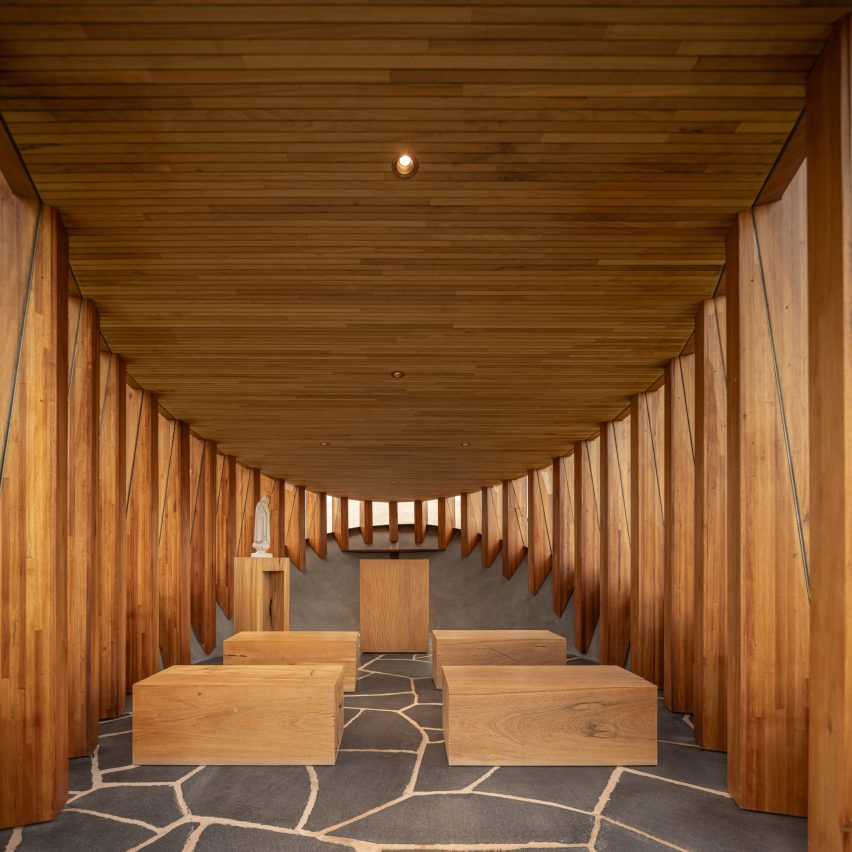
The slightly inclined roof is lined with Freijó wooden slats that contrast with the brushed São Gabriel black granite flooring that extends in a broken-stone pattern from the exterior.
"True to Le Corbusier's spirit, the chapel reveals its voice through the same triad of materials that shapes the adjacent residence: concrete, wood and stone – while metaphorically aspiring upward, toward the divine," the studio said.
The team remarked that the creation of the chapel became a journey of learning that explored both technique and sensitivity.
Other recent chapels designed for impact rather than scale include a tiny, aluminium-clad building in Christchurch, New Zealand by Bull O'Sullivan Architecture, a round, medieval-inspired chapel in Brno, Czech Republic by RCNKSK and a fish-shaped space in Hillershausen, Germany by Christoph Hesse.
The photography is by Fernando Guerra.
Project credits:
Architecture: Felipe Caboclo Arquitetura
Design team: Felipe Caboclo, Oswaldo Pessano, Bianca Monti, Amana Roveri, Sylvia Pinheiro
Timber structure: Rewood
Concrete structure: Leão e Associados Engenharia de Estrutura
Structural concrete consulting: Gabriel Regino, Topseal
Construction company: Seripierri Engenharia
Lighting design: Lightworks
Window frames: Lumisystem
Stonework: Bellas Artes
Furniture: Atelier Pedro Petry
Communications: Matheus Pereira Comunicação