
T.ark architects cloaks Laugarás Lagoon in Iceland with "grass tent"
Icelandic studio T.ark Architects has completed Laugarás Lagoon, a geothermal spa topped by a grass-covered roof with large parabolic archways that reference the region's ancient cave dwellings.
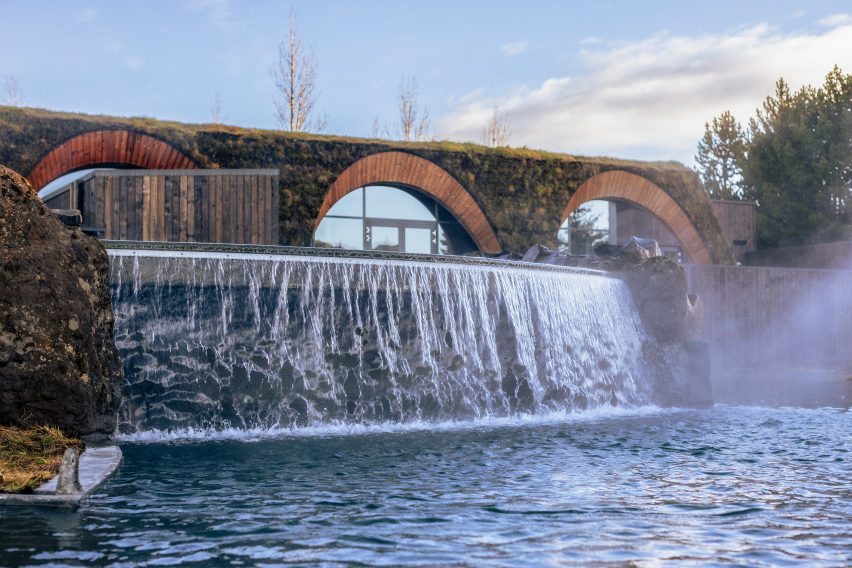
Located in Laugarás, a 90-minute drive east of Iceland's capital Reykjavik, the two-storey, 3,000-square-metre wellness centre contains restaurant and spa facilities overlooking two stepped geothermal pools linked by a small waterfall.
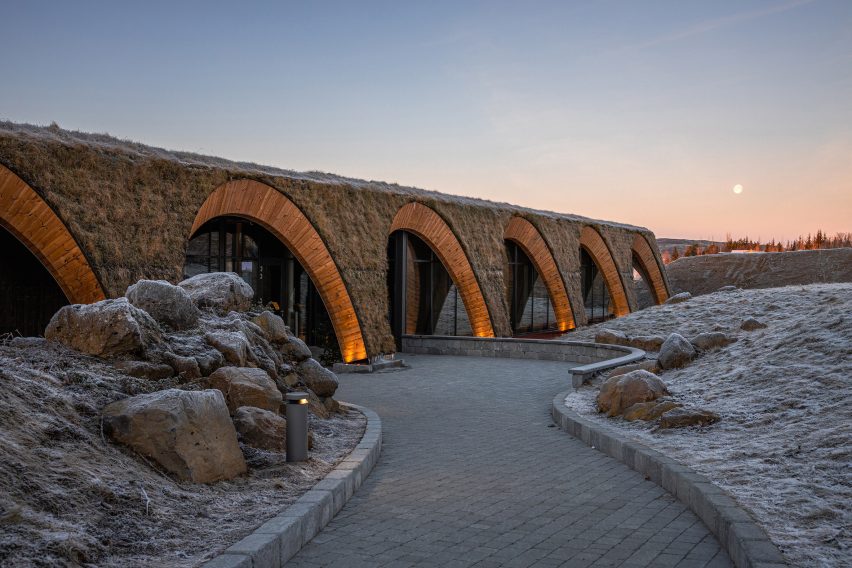
Instead of drawing on Iceland's dramatic sands and glaciers, T.ark Architects looked to the country's southern landscapes of rolling meadows and woodlands, and in particular the region's famous hand-carved caverns.
These caves informed the glue-laminated timber roof that shelters Laugarás Lagoon, which the studio described as a "grass tent" and that is punctured by large, parabolic-arched openings that frame the landscape and water.
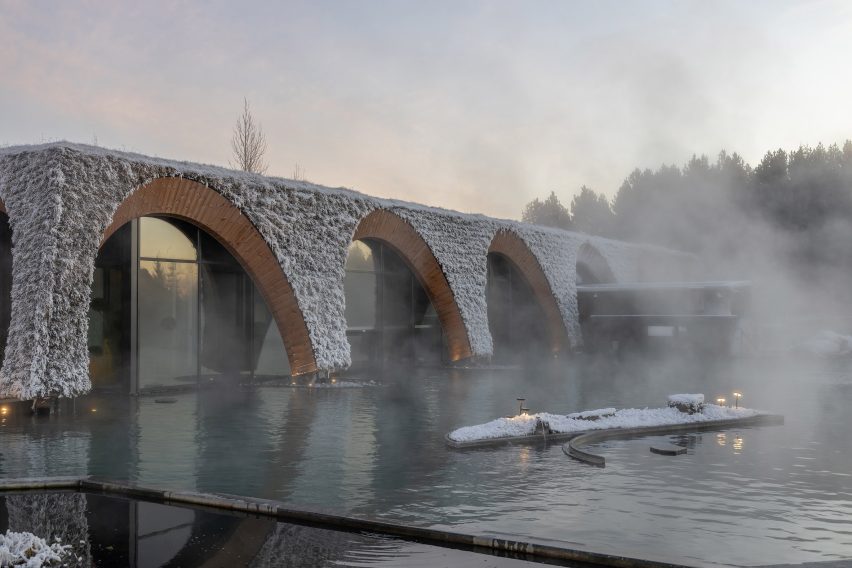
"Rooted in this quieter identity, the project draws from a man-made yet deeply organic terrain shaped over centuries through settlement and cultivation," T.ark Architects partner Halldór Eiríksson told Dezeen.
"The core concept became the farm mound, penetrated with cave openings. This landscape becomes both the spatial generator and the architectural language of the lagoon," he added.
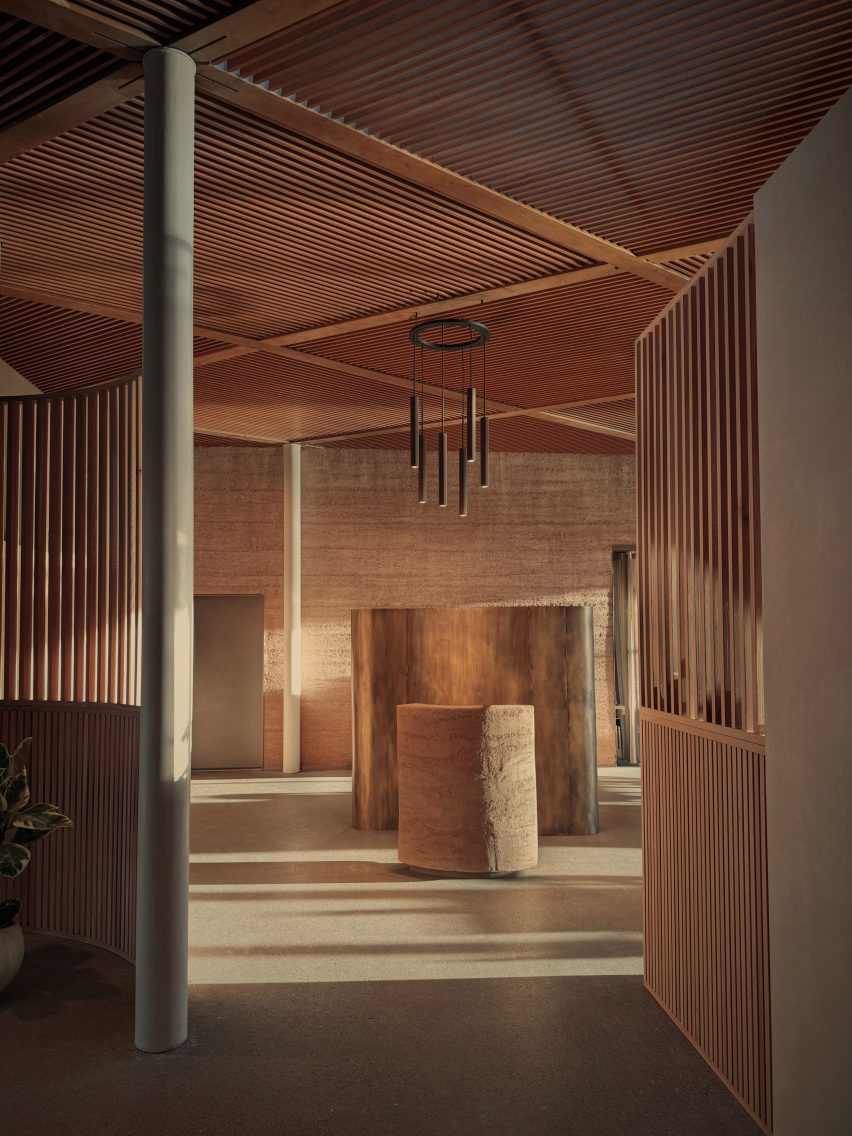
Laugarás Lagoon's entrance is on its northern side and leads into a large, open reception and restaurant space. Here, partition walls stop short of the timber-lined ceilings to evoke the feeling of a "covered plaza" rather than an enclosed internal space.
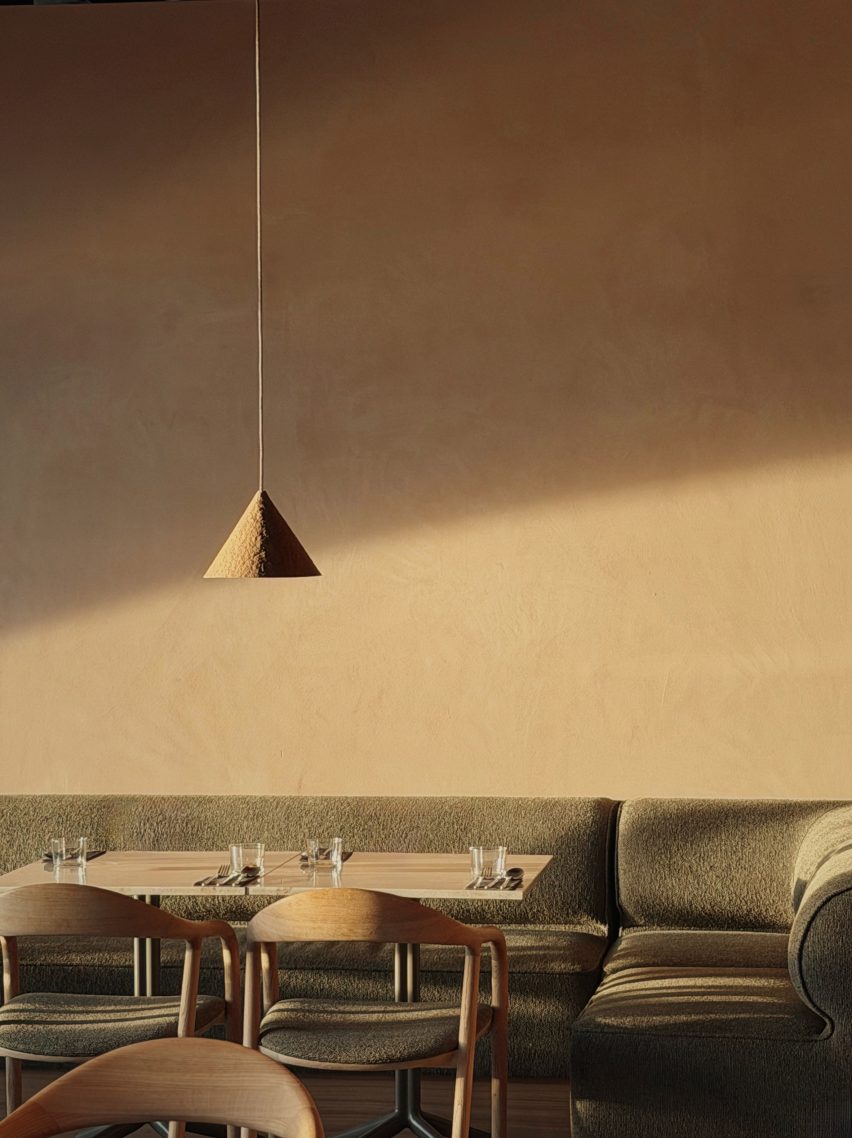
The restaurant was designed in collaboration with interior designer Anthony Bacigalupo and is finished in pink-hued travertine and clay-plaster walls made with local red gravel.
Set back from the sloping arches that surround the building are fully glazed walls that give the lagoon's changing rooms views across the upper pool, which was designed to frame a nearby river, bridge and mountains.
By contrast, the lower pool was intended to feel more secluded, set against the backdrop of nearby trees and rough stone walls. These two pools incorporate swim-up bars and a cold-water plunge, while two dry saunas are housed within cubic volumes to the east.
Beneath the Laugarás Lagoon building, a large basement level contains the spa's plant area, alongside its service and staff zones.
"Black wood-clad boxes are tucked under the roof from the sides, for functions like changing rooms, kitchen and lagoon bar," Eiríksson said.
"A dialogue of overlapping spaces is developed, with the boxes defining the agora space, while the overlapping grass tent creates corridor access to and from the locker rooms on the sides," he continued. "This contrast of being protected and exposed then becomes the basis of a journey of discovery into coves, saunas and the forest pool."
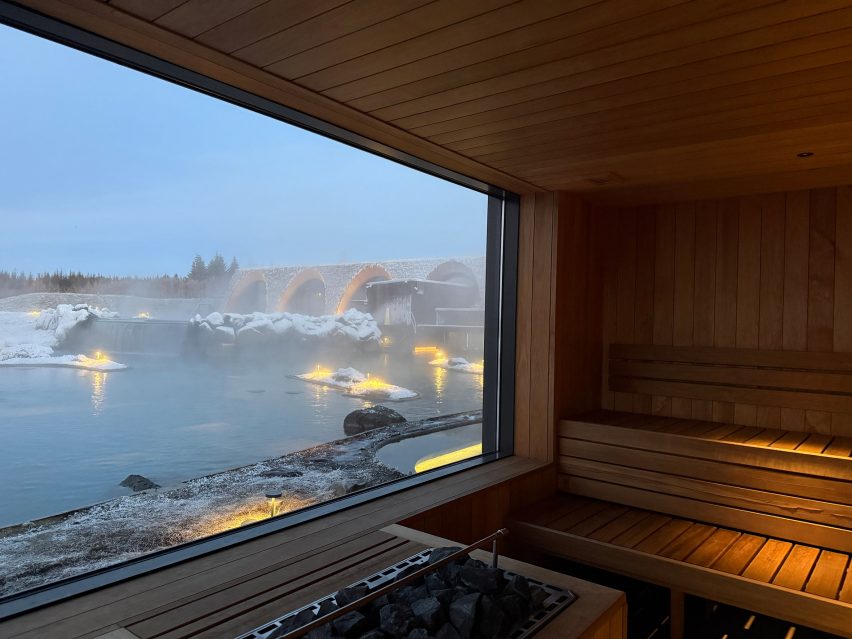
The wood used both internally and externally was all sourced from nearby woodlands, as was the grassy turf used to cover the roof and archways.
Textiles and decorative works for the interiors were created by textile artist Sigmundur FP, and olfactory art lab Nordic Angan created a series of scents distilled from the site's local vegetation that were used in the lagoon's soaps.
Other spa projects recently featured on Dezeen include YUSPA in Beijing, which has a tactile palette intended to create a multi-sensory experience, and the Wulingshan Eye Stone Spring spa in Aranya, which was designed to resemble hot spring "apparatus".
Elsewhere in Iceland, Basalt Architects nestled a hotel into lava formations at the Blue Lagoon resort, where guests can look out onto the turquoise water from their suites.
The photography is by Hlín Arngrímsdóttir unless stated otherwise.