Creative hub built in unused car park among projects from Birmingham City University
Dezeen School Shows: a community makers hub providing opportunities for creative workshops, built in an unused car park, is among the projects from Birmingham City University.
Also featured is a proposal for Birmingham to become a zero-car city by 2050 and a wire factory that recycles its discarded materials to make new energy.
Birmingham City University
Institution: Birmingham City University
Course: BA (Hons) Architecture
Tutors: Robert Annable, Hocine Bougdah, Mike Dring, Konstantina Georgiadou, Helen Iball, Olympia Katsarou, Yazid Khemri, Sana Malik, Paul Beatty-Pownall, Senem Zeybekoglu Sadri, Ian Shepherd, Max Wisotsky and Jieling Xiao
School statement:
“The BA Architecture programme at Birmingham City University continues to build upon the storied history of the Birmingham School of Architecture and Design, established in 1908.
“We are strongly engaged and embedded within our city and region, working with and for the city and its communities – imagining the future of our local places, empowering positive change from above and below.
“We are honoured to be creating ethical, entrepreneurial and forward-thinking designers capable of stepping into practice, ready to rise to 21st-century challenges.
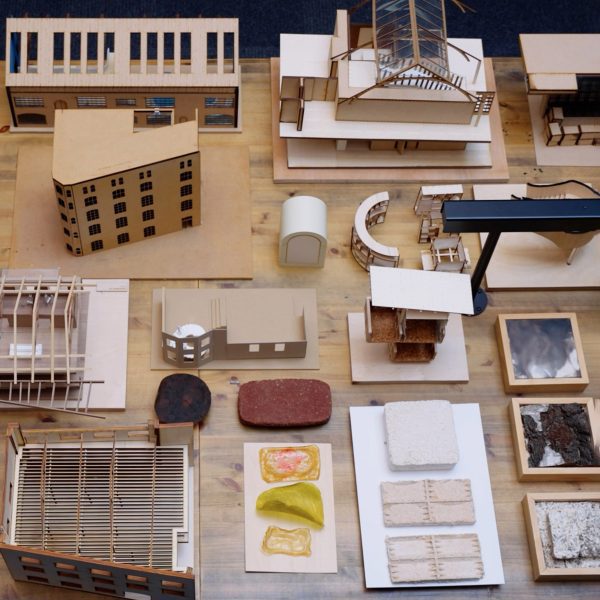
“Each of our final year studios’ approach encouraged students to investigate the urban context of one of Birmingham’s neighbourhoods through a different methodological and conceptual lens: Making Other Spaces explores how spaces of making can shape social life, culture and everyday urban experience.
“Set in Stirchely and informed by the Maker movement and Foucault’s idea of Heterotopia, the studio reimagines Urban Making as ‘other spaces’; an alternative urban condition where architecture challenges convention and opens new ways of living, working, and gathering.
“PRAXXIS is interested in how our students can challenge and explore inequalities and inequities through the principles of care and repair using a feminist lens.
“Considering the often-heard feminist slogan, ‘the personal is political’, individually driven projects link an individual personal lived experience and wider social or political structures. Projects are situated in 2050 in the now-abandoned Birmingham Rag Market.
“Ghost Stories repositions architecture as an act of storytelling and embodies the ideas of architecture as a carrier bag. Building off individual explorations of “site-writing” to imagine a Bearwood of 30 years in the future, students’ design responses that formalise the move from what is, to what if – and writes the next chapter of your story.”
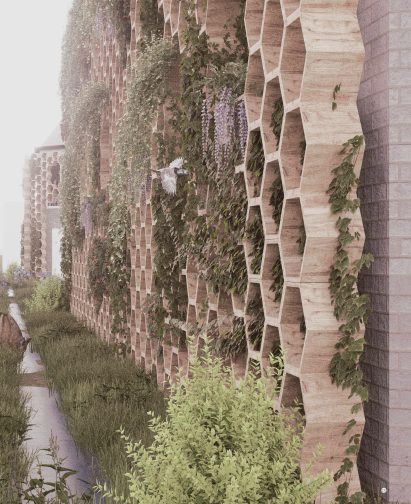
Stirchley’s Urban Regeneration Hub by Daria Matei
“My project is an Urban Regeneration Hub in Stirchley, Birmingham, designed to bring together sustainability, cycling culture and community wellbeing.
“The idea developed from observing the contrast between the busy high street and the surrounding green spaces, leading to a design that reconnects people with nature while encouraging active travel and healthier lifestyles.
“The building includes a bike display and hire centre, repair workshop, gallery, gym, cafeteria and flexible community spaces.
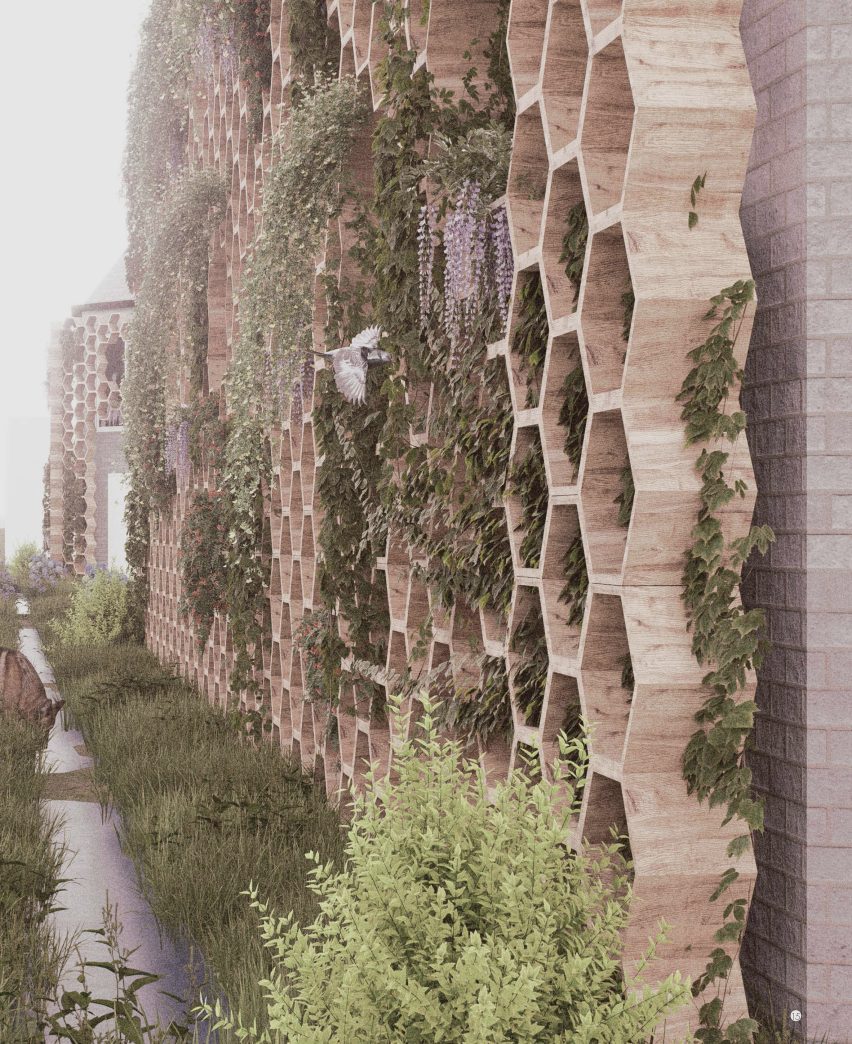
“A timber pollinator facade inspired by bicycle wheel geometry wraps the building, creating shade, supporting biodiversity and giving the project a strong identity.
“Sustainability is integrated throughout the design through natural ventilation, low carbon materials, rainwater harvesting, solar energy and kinetic energy generated from gym bikes and kinetic flooring systems.”
Student: Daria Matei
Course: BA (Hons) Architecture
Tutors: Yazid Khemri and Rob Annable
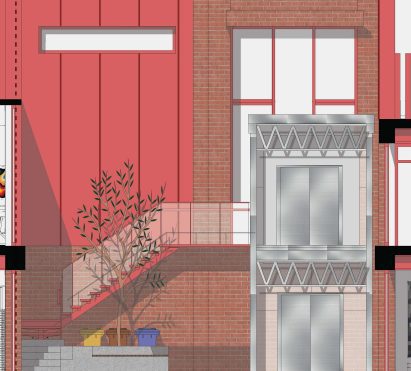
Thread and Timber by Efe Tabunor
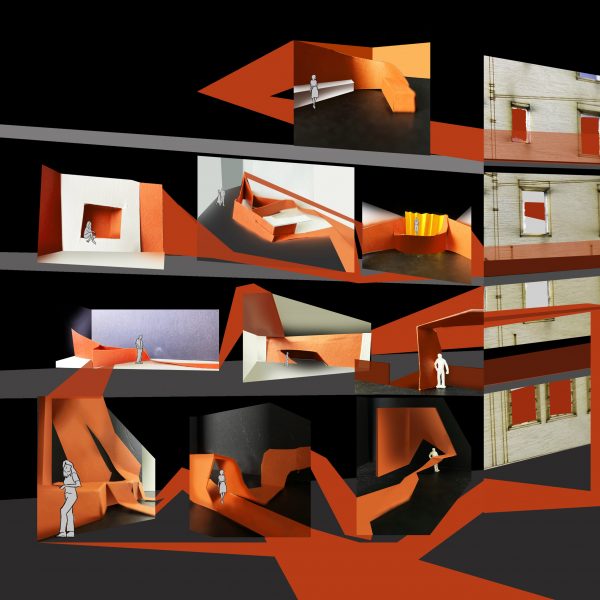
“Thread and Timber explores how underutilised urban voids can be reactivated to support community life through adaptive reuse.
“Located on the Stirchley High Street, the project occupies a gap above two existing shops and uses their shared relationship of making and textiles as a unifying concept.
“The ground floor is reconfigured into a more open, cohesive retail environment, improving circulation, visibility and customer experience while above, a roof extension introduces a hybrid programme of lounge, reading areas and a tufting workshop, transforming the building from purely transactional to a more social and educational environment.”
Student: Efe Tabunor
Course: BA (Hons) Architecture
Tutors: Yazid Khemri and Rob Annable
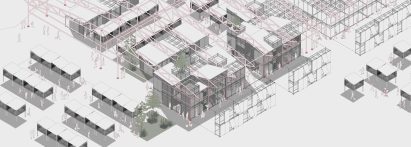
Feminist Library of Cultural Skills by Nikitaben Patel
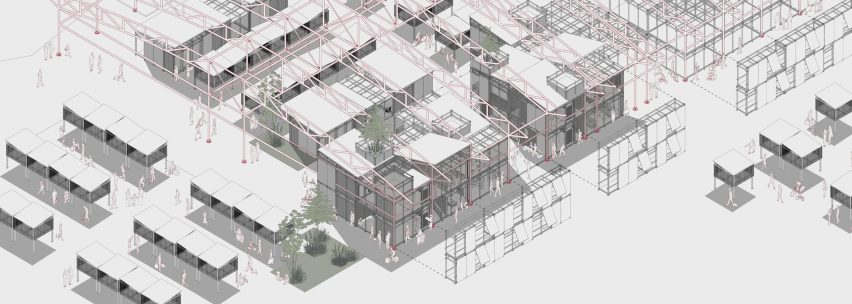
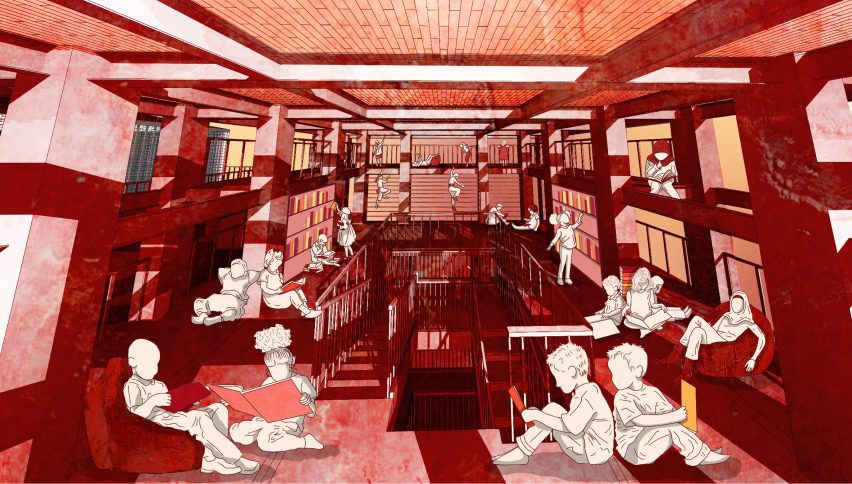
“This project reimagines the Bullring’s Rag Market as a central hub for cultural skills; a place where people can teach and learn new skills, with the opportunity to open market stalls to sell their craft.
“The skills focused on are staples around the different areas of Birmingham: the creative arts from Digbeth, the mechanical and auto repairs in Aston, the cultural richness of foods represented in the city centre and more.
“The project is primarily made out of a scaffolding frame to attach to the existing steel frame of the Rag Market, allowing for customisability and easy assembly on site.
“This also allows for the project to grow deeper into the site and along the streets, as the scaffolding frame can be easily replicated to allow for more workshop areas.”
Student: Nikitaben Patel
Course: BA (Hons) Architecture
Tutors: Helen Iball, Senem Zeybekoglu Sadri and Hocine Bougdah
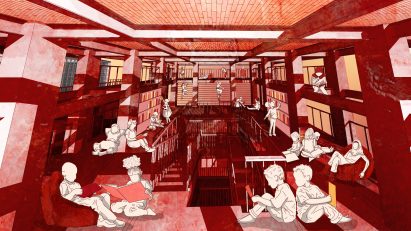
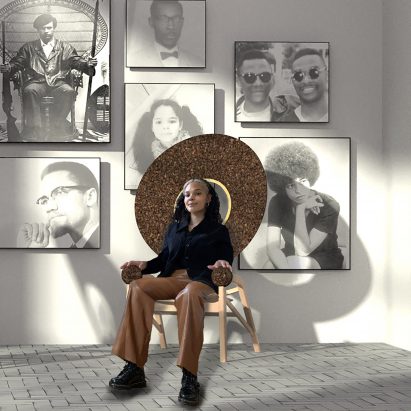
Imprinted by De-Andrea Cameron
“With reference to the theory by CIAM, ‘The Heart of the City’, the key elements that make up the heart of the city can be broken down into three key actors.
“The heart of continuity, relationship and urban design and innovation.In relation to my project, I applied these key actors to my structure in a functional sense.
“For continuity, it will be through understanding the historic natural fabric dying process and learning to do that with plants.
“For relationship, aquatic gardens, rainwater harvesting and biodiversity are used to repair the relationship between humans and nature, allowing them to learn how to care for one another.
“For innovation, I collaborated with one of my classmates in giving them my dyed thread so that it can be used for her tapestries and involving the public or creatives in the construction process through designing on bricks to give a sense of ownership to the space.”
Student: De-Andrea Cameron
Course: BA (Hons) Architecture
Tutors: Helen Iball, Dr Senem Zeybekoglu Sadri and Dr Yazid Khemri
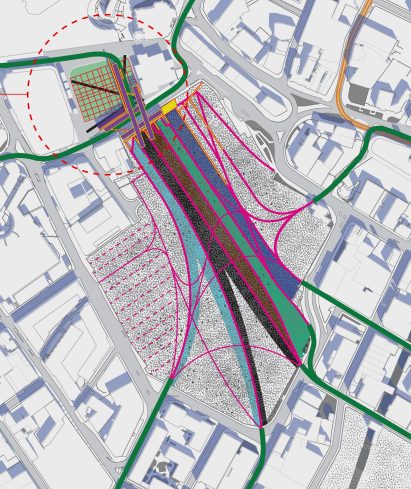
Hedgerow Terminus by Charlie Suzuki
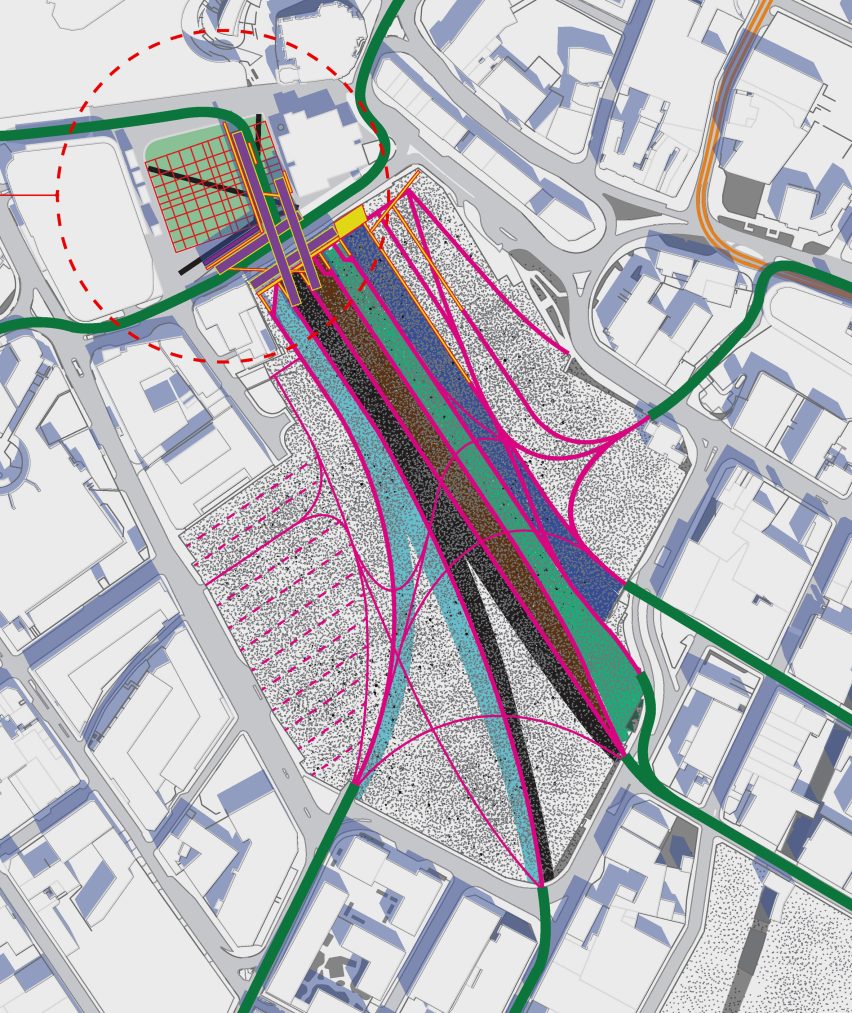
“Hedgerow Terminus focusses on the propagation and development of hedgerows, alongside wild plants to respond to empty spaces, climate change, economic deprivation due to city bankruptcy and reduced culture and arts in Birmingham in 2050.
“In response to this, the city is to be converted into a zero-car city to reduce the cost of maintenance and provide an extensive public transit network and cycling routes, all providing avenues for hedgerows to replace sections of road that are no longer required, such as wide motorways or main roads, removing the sounds of motorised vehicles and tyres.
“At the centre of this will be the Rag Market and Smithfield sites, where the hedgerows propagate from, following primary transit routes before expanding out of the city.
“Provision of hedgerows allows wildlife to use a ‘grade-separate’ infrastructure to travel into the city, and repopulate the city with semi-natural habitats and the sounds of wildlife.”
Student: Charlie Suzuki
Course: BA (Hons) Architecture
Tutors: Helen Iball, Senem Zeybekoglu Sadri and Hocine Bougdah
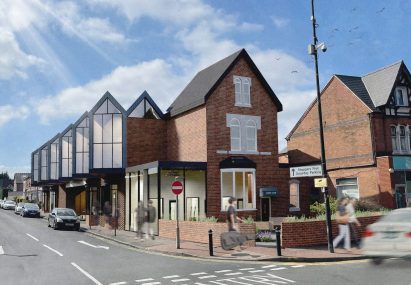
The Blue Pearl by Rohan Paul
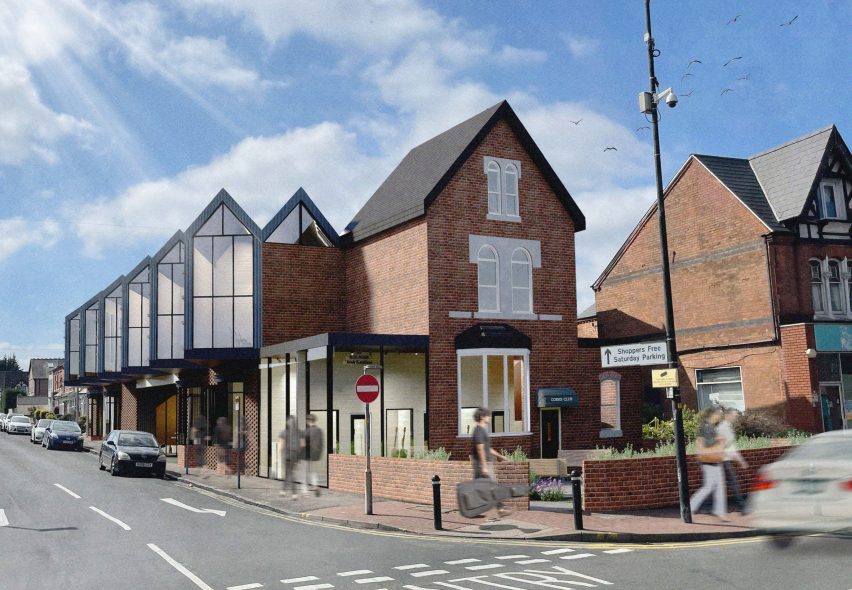
“An adaptive reuse project that aims to bring back jazz to the Bearwood High Street, the Blue Pearl is inspired by a legendary jazz artist, Andy Hamilton, who used to perform within the building.
“The building’s exterior stays true to its original Victorian façade, however, behind lays foundation to a collection of musical spaces.
“The spaces aim to allow children to learn and be inspired by music to become future musicians. Practice and Theatre spaces coexist together to provide a musical ecosystem within the building.
“Form aims to allow for the program to be visible from Bearwood High Street to allow passers to acknowledge the music that is being played within.
“The Blue Pearl allows a child to learn about music and then become a great musician who performs on the big stage one day.”
Student: Rohan Paul
Course: BA (Hons) Architecture
Tutors: Max Wisotsky, Olympia Katsarou and Ian Shepherd
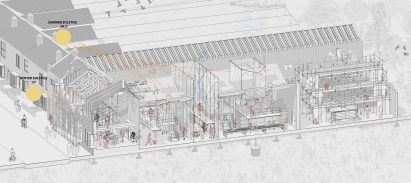
Rise Amongst the Ruins by Sofia Shaheen
“Emerging from my Semester One proposal, this project continues the radical language of scaffolding as an architecture of resistance and care.
“Where temporary Corten steel and polycarbonate panels once offered privacy, shelter and autonomy to homeless communities, the project now inhabits an abandoned laundromat transformed into a recycling facility and material bank.
“The ruin is not erased or sanitised; instead, its decay is occupied and reworked as a living headquarters for collective action.
“Here, discarded materials are salvaged, stored and redistributed, enabling homeless people to construct the next wave of scaffold structures across the city.
“The architecture operates outside conventional systems, resisting dispossession through acts of reuse, repair and occupation.
“Humble interventions become deeply poetic fragments of industry turned into instruments of dignity and survival.
“The project imagines care not as charity, but as radical self-organisation, where architecture becomes mobile, adaptable and collectively owned by those most often excluded from the city.”
Student: Sofia Shaheen
Course: BA (Hons) Architecture
Tutors: Max Wisotsky, Olympia Katsarou and Mike Dring
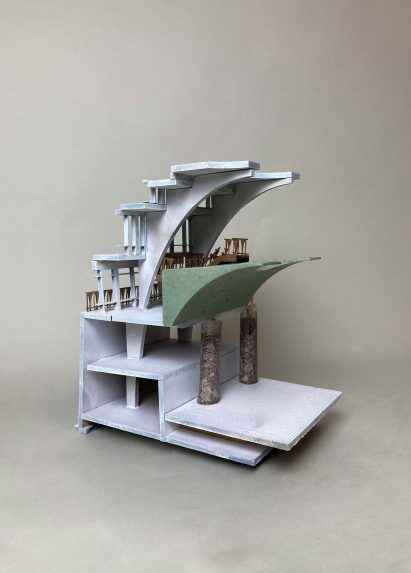
The Gods of Bearwood: Volume 2 by Vyshnavi Bharidasan
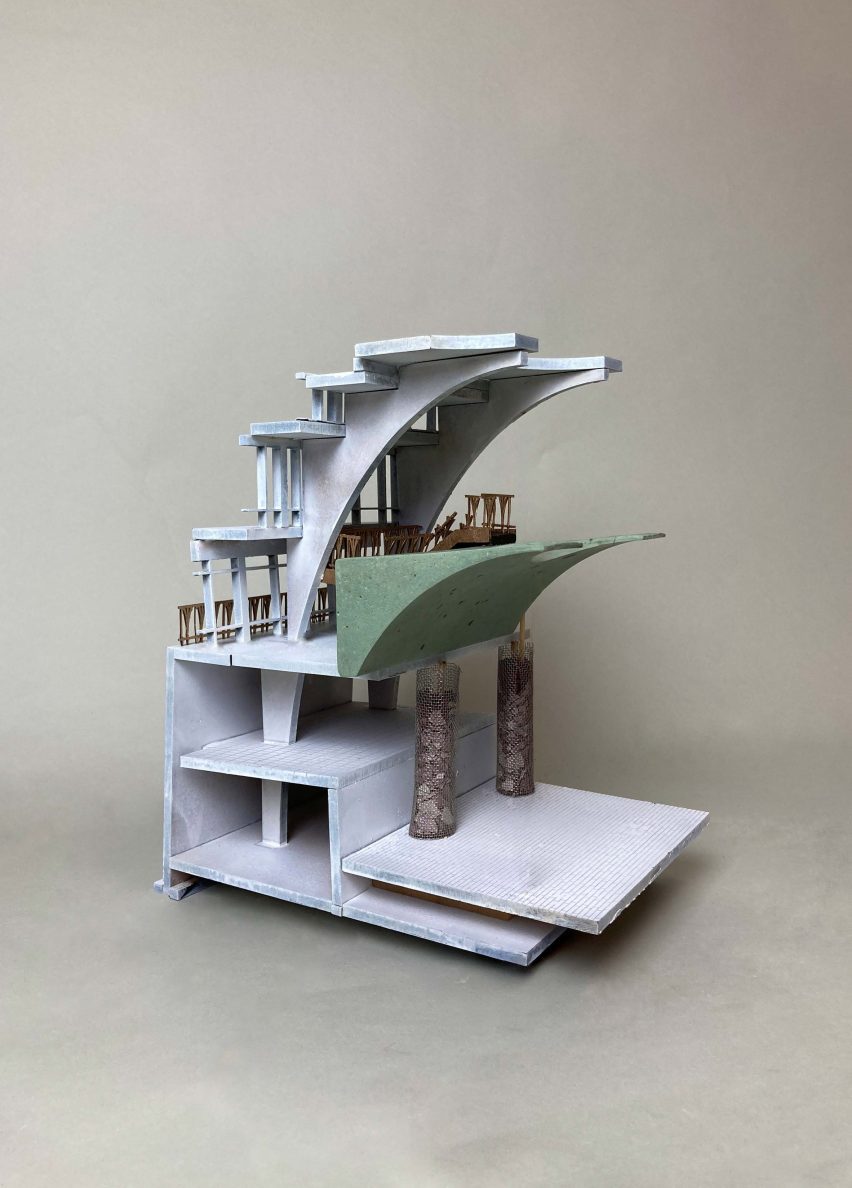
“This project, The Gods of Bearwood: Volume 2, explores how overlooked urban ‘remnants’ can shape community identity and spatial experience.
“Inspired by Jane Bennett’s idea of ‘thing-power’, it reimagines dormant remnants in Bearwood like plants, independent shops and social interactions as symbolic deities influencing Bearwood’s atmosphere.
“The design centres on three gods: Paintricia (community and independent commerce), Barry (plants), and Gaby (conversation). Through rituals and communal labour, the project encourages community engagement and collective ownership.
“Architecturally, it proposes the adaptive reuse of the derelict Smethwick Baths (a grade II listed building) into a temple, monastery and workshop.
“Sustainable strategies include material reuse, rainwater harvesting and low-carbon construction.
“Overall, the project blends narrative, heritage conservation and community-led design to revitalise Bearwood, transforming abandoned spaces into active sites of cultural, social and environmental regeneration.”
Student: Vyshnavi Bharidasan
Course: BA (Hons) Architecture
Tutors: Max Wisotsky, Olympia Katsarou and Yazid Khemri
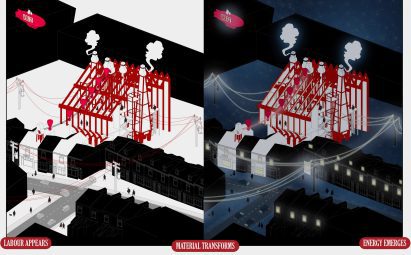
Bearwood Alchemy by Oise Ahimie
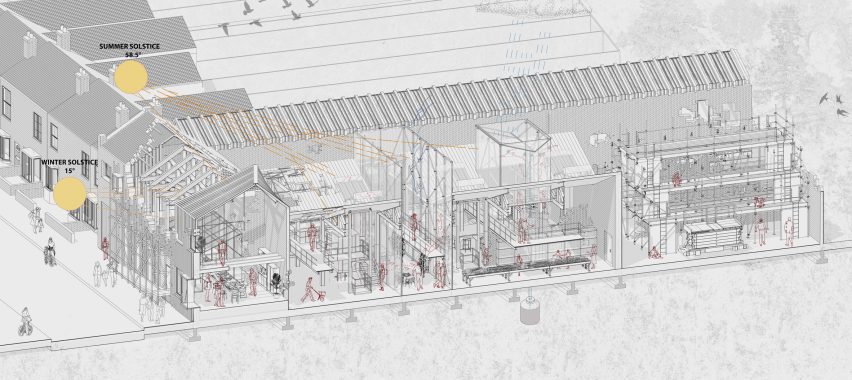
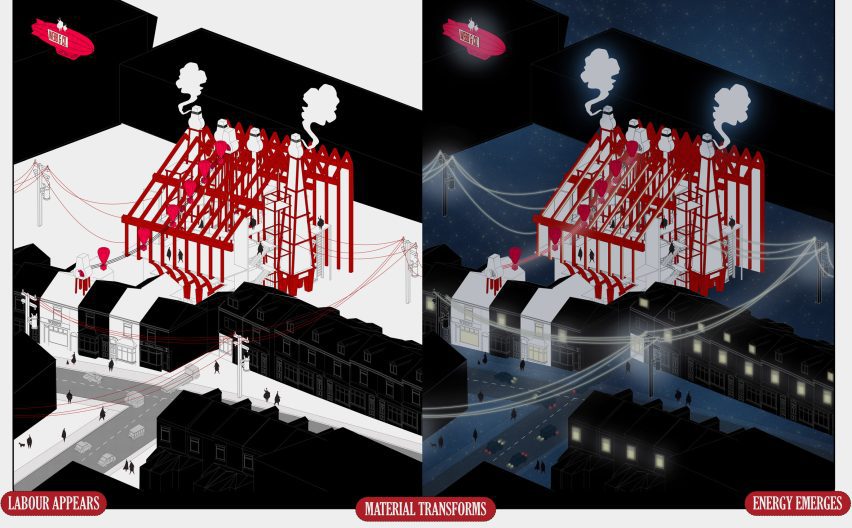
“Bearwood Alchemy is a communal wire-making factory and distributed energy network that transforms labour into visible civic infrastructure.
“Through salvaging, smelting, moulding and wire drawing, discarded material becomes conductive wire capable of generating and distributing power back into the town.
“Rooted in the myth of Emily Webb and the Great Moth, the project reimagines Bearwood as a living electrical organism, where hidden labour, lost spaces and communal energy are stitched back together through architecture.
“At its centre stands CORE-00, the first rewiring hub, feeding a growing network of satellite generators across the town and restoring power, visibility and collective agency back into the community.”
Student: Oise Ahimie
Course: BA (Hons) Architecture
Tutors: Max Wisotsky, Olympia Katsarou and Mike Dring
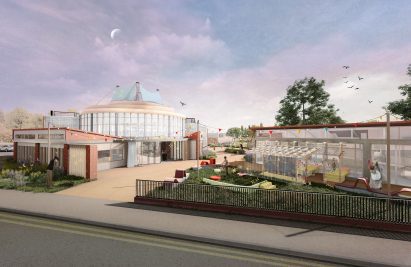
PlayPark – a makers hub for play by Rejaul Karim
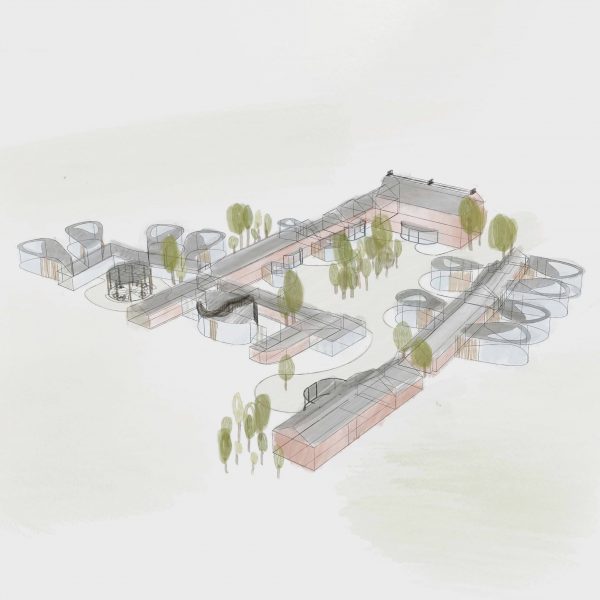
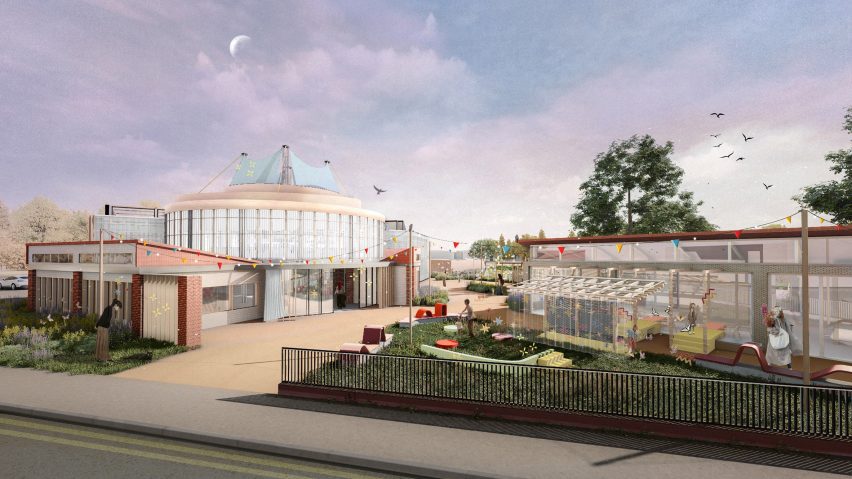
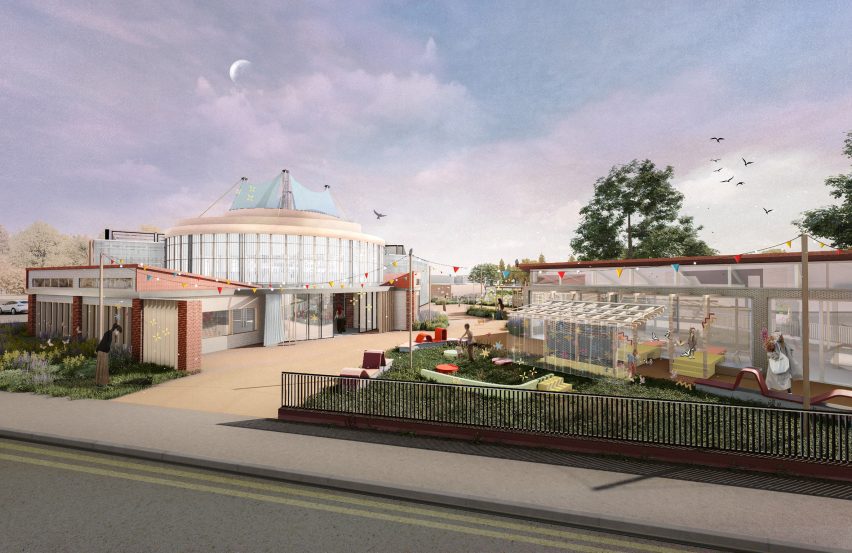
“PlayPark reclaims an underused edge of Morrisons car park and turns it into a park-facing makers hub where play becomes a reason to move, meet and stay.
“The project is built around a simple idea: everyday making shouldn’t be hidden. It should be visible, shared and part of the public life of Stirchley.
“Inside, the building supports hands-on production and public workshops. People can prototype and assemble small parts, while a dedicated skin-making studio produces textile ‘skins’ that wrap the play and rest structures.
“These skins act like community identity layers, something local people can contribute to and recognise over time.
“The site itself becomes a connected sequence: an arrival space at the park edge, a place to test new structures and a playful route that stitches into Stirchley Park.
“Through a bold, readable form and soft, light-filled materials, PlayPark becomes a civic landmark shaped by creativity and collective ownership.”
Student: Rejaul Karim
Course: BA (Hons) Architecture
Tutors: Yazid Khemri, Rob Annable and Mike Dring
Partnership content
This school show is a partnership between Dezeen and Birmingham City University. Find out more about Dezeen partnership content here.