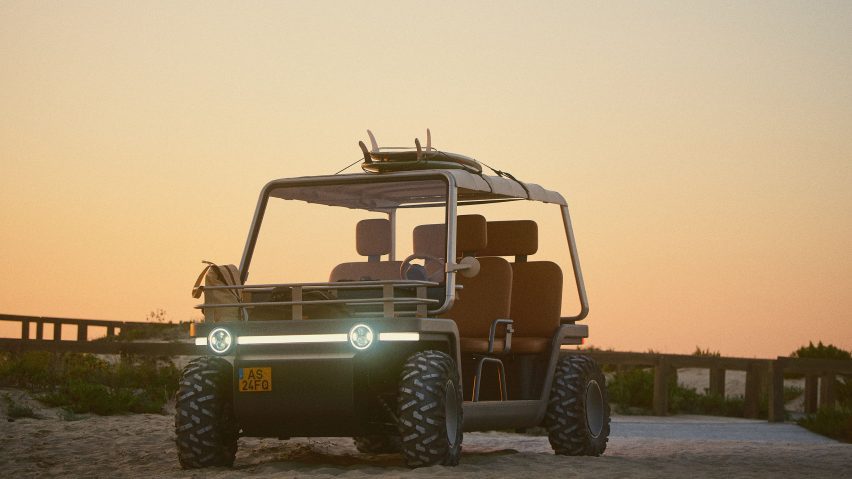
Golf cart, small car and moon buggy meet in electric vehicle Amble One
Former Apple designer Julian Hoenig and Forpeople founder Michael Tropper have teamed up to enter the mobility space with Amble One – a doorless electric buggy that they hope will become a lightweight alternative to cars for short trips.
Amble One is the first vehicle from Portugal-based start-up Amble, which Hoenig and Tropper founded with entrepreneurs José António Uva and Adrien Roose to take on short-range mobility.
Their immediate primary market for Amble One is hotels with the kind of large estates normally traversed via golf cart.
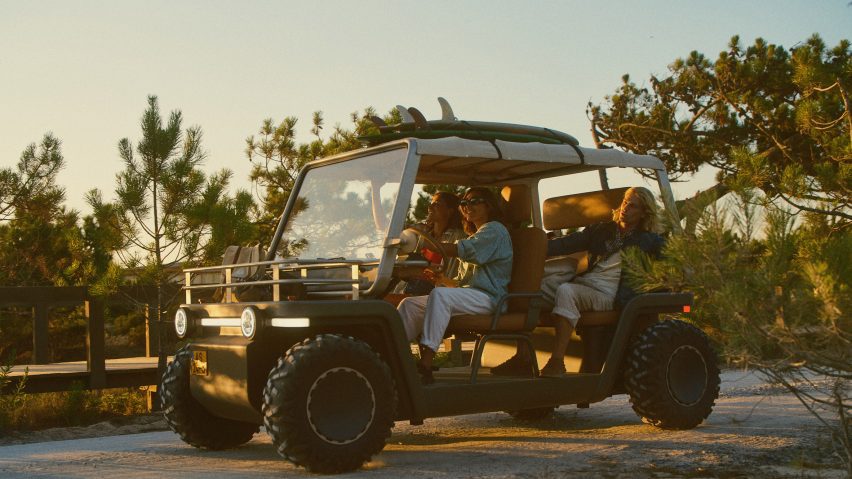
However, the company believes the street-legal vehicle also makes sense for school drop-offs, neighbourhood errands, sightseeing tours and everyday travel within small communities, with a top speed of 65 kilometres per hour and a range of 100 kilometres.
The first seeds of Amble were planted during a casual conversation between Hoenig, an Austrian designer who had worked at Audi and Lamborghini before spending 10 years at Apple in Jony Ive's design team, and Uva, a hotelier whose properties include the 780-acre retreat São Lourenço do Barrocal.
Uva was seeking a fleet of nice golf carts for his new hotel, and not being able to think of a single desirable brand, Hoenig set out "for fun" to design a solution for him.
He thought perhaps he could do for the golf cart what Nest had done for the thermostat, bringing considered design and modern technology to an overlooked product category.
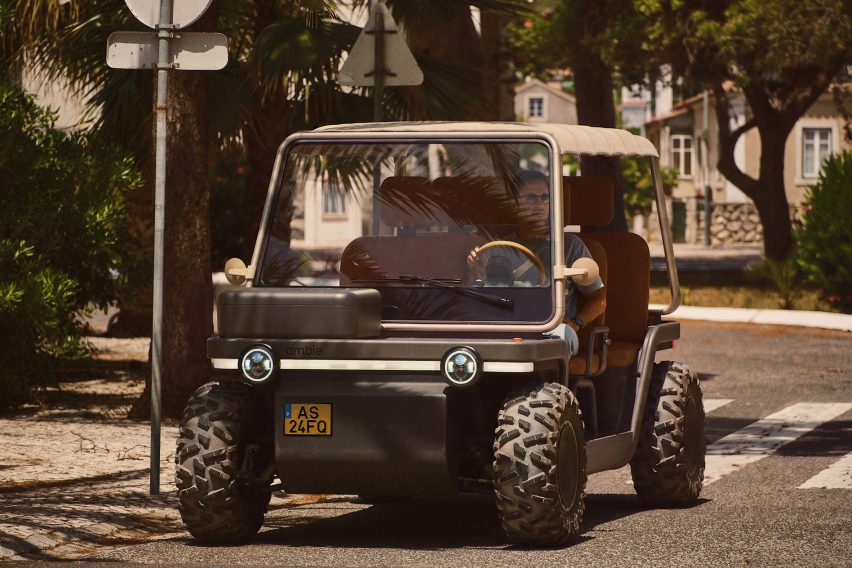
It was after involving Tropper, an old friend from his university days at Austria's FH Joanneum, that the idea to sell to other hotels and explore other use cases developed.
"The big turning point where we said this is actually a company that we both would like to work on is if we do it street legal, like a fully homologated version that you can drive on any road except on the highway," Hoenig told Dezeen. "This would really make a new vehicle category."
"We believe that for the past 40 years, there hasn't been a vehicle that has served this short-range mobility," he continued. "What we're doing today is building this platform as a first step in that direction."
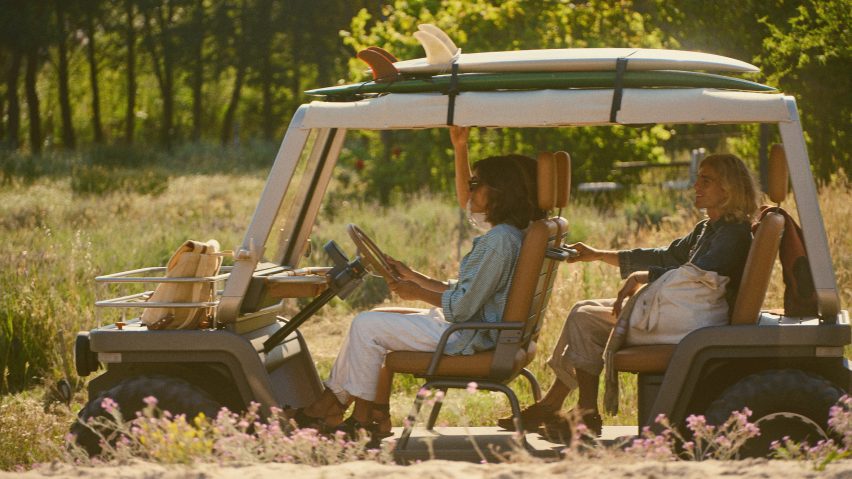
According to Hoenig and Tropper, they approached the design of the Amble One like a small electric car rather than a golf cart, taking the battery out from under the seat and embedding it in a skateboard-type base structure, as is common with electric vehicles.
They also gave Amble One a car-style independent suspension, making it a smoother ride. At the same time, they aimed to strip out what they saw as non-essentials, working with Tropper's design team at forpeople.
"Cars are amazing machines – and I've worked in cars for automotive design for many years, and so has Julian – but they are overengineered," said Tropper. "For short journeys, you don't need all these features."
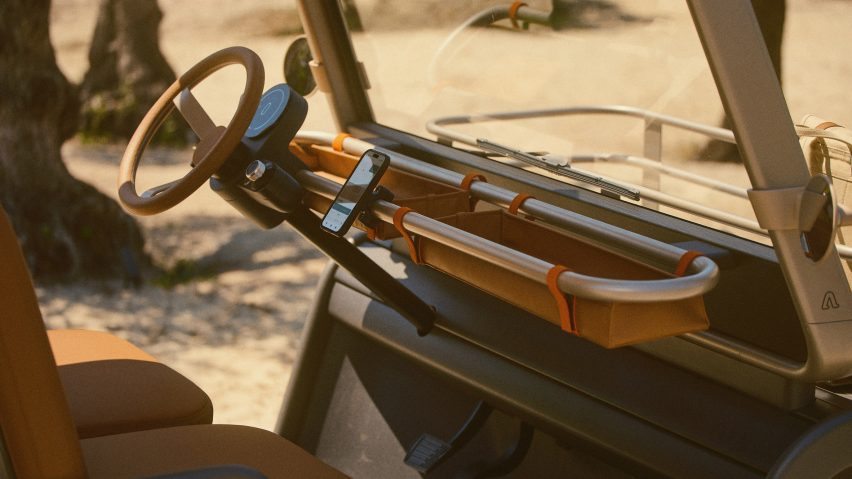
"Amble is really an exercise in removing as much as possible," he continued.
One of the first things to go was the doors. Intended to allow for a feeling of connection to the world outside, particularly in lush hotel settings, this move also meant there was no use for air conditioning, freeing up space at the front of the car for the add-ons of a storage basket or box.
Their design inspirations were the 1971 Lunar Rover – both for its looks and modularity – and electric bicycles with their exposed structures, which influenced the way the Amble One frame runs around and wraps under the vehicle.
The finished design is rugged yet refined, with a resemblance to the 1960s and 70s Mini Moke – still a popular beach buggy in some areas.
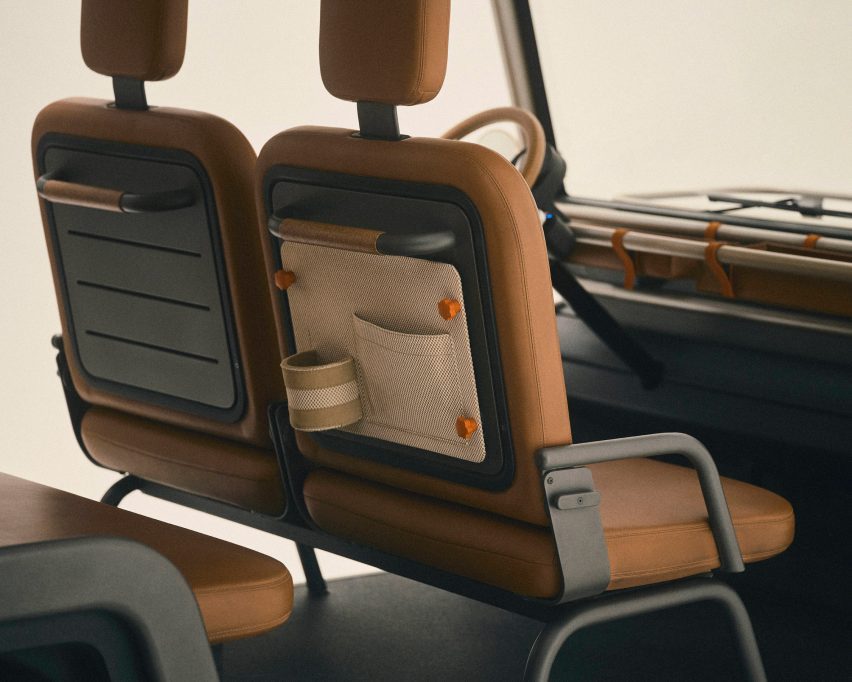
Many of the materials come from outdoor furniture and yachting, rather than the automotive industries, and were chosen for their ability to withstand the elements but age well.
A canvas roof and cork steering wheel are among the features that contribute to both the vehicle's nature-attuned look and its lightness.
At 450 kilograms, it is about a quarter of the weight of an electric Mini Cooper and includes an 11-kilowatt-hour battery.
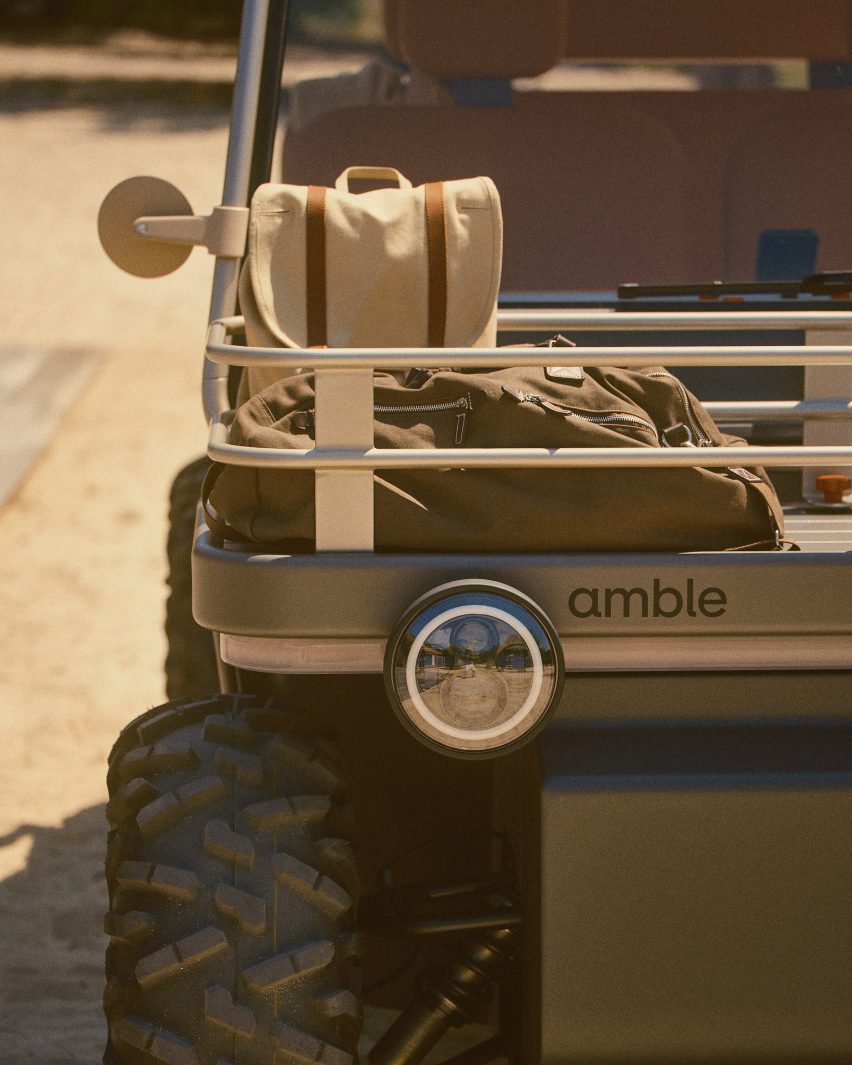
Amble intends to design other light utility vehicles, all built on top of the same modular base platform as the Amble One.
Other alternative vehicle designs for everyday driving have come from the start-up Komma, which envisioned a two-seater with the width a motorcycle, designed to take up less space on the roads.