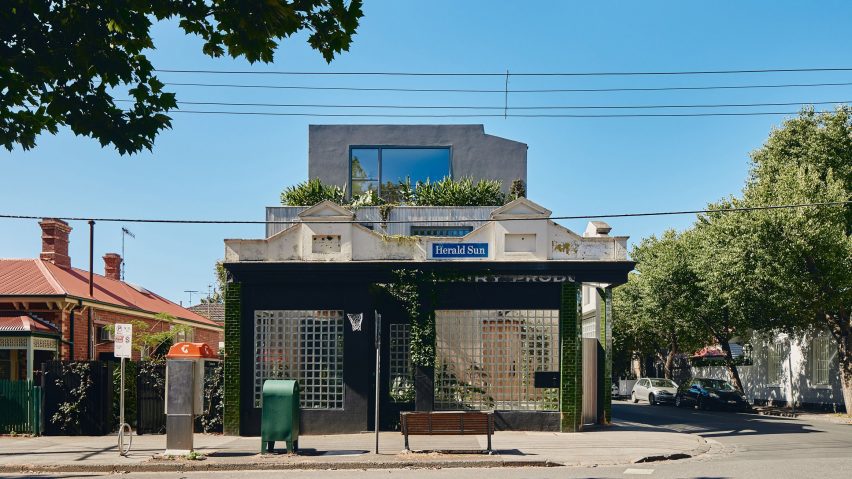
Century-old Melbourne corner shop transformed into family home
Local studio Kister Architects has turned a former 1910 corner shop in Melbourne into a family home with a lush internal courtyard entrance designed to bring greenery to the urban site.
Aptly named The Corner Shop, Kister Architects adapted a "milk bar" that served the local community for over a century before closing in 2016, later reopening as a series of cafe's.
Located at the corner of Murray and York streets in Melbourne's Prahran suburb, the original 287-square-metre corner shop plot was combined with a 90-square-metre site adjacent, which became available during construction, making space for a garden that was integrated into the plan.
Renovated by the studio's founder Ilana Kister for herself and her daughters, the three-storey home was designed to introduce elements of nature and greenery to inner-city living.
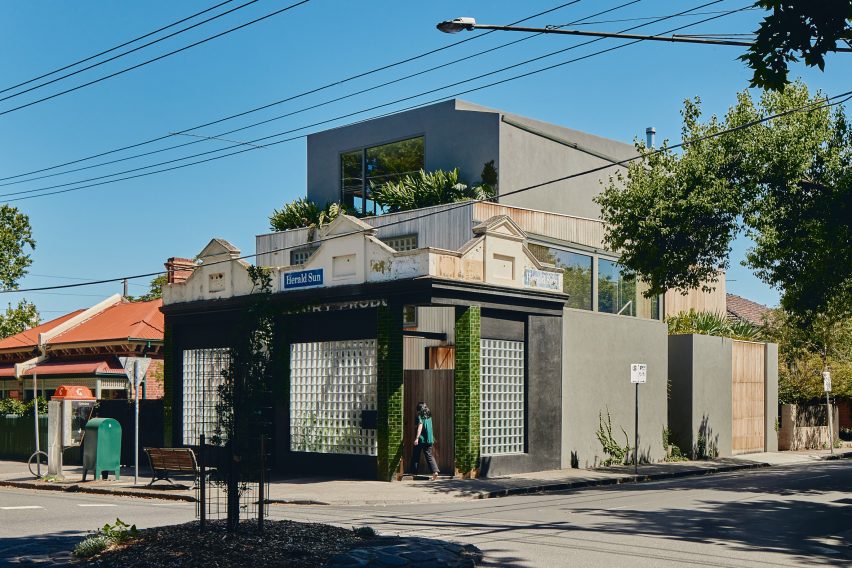
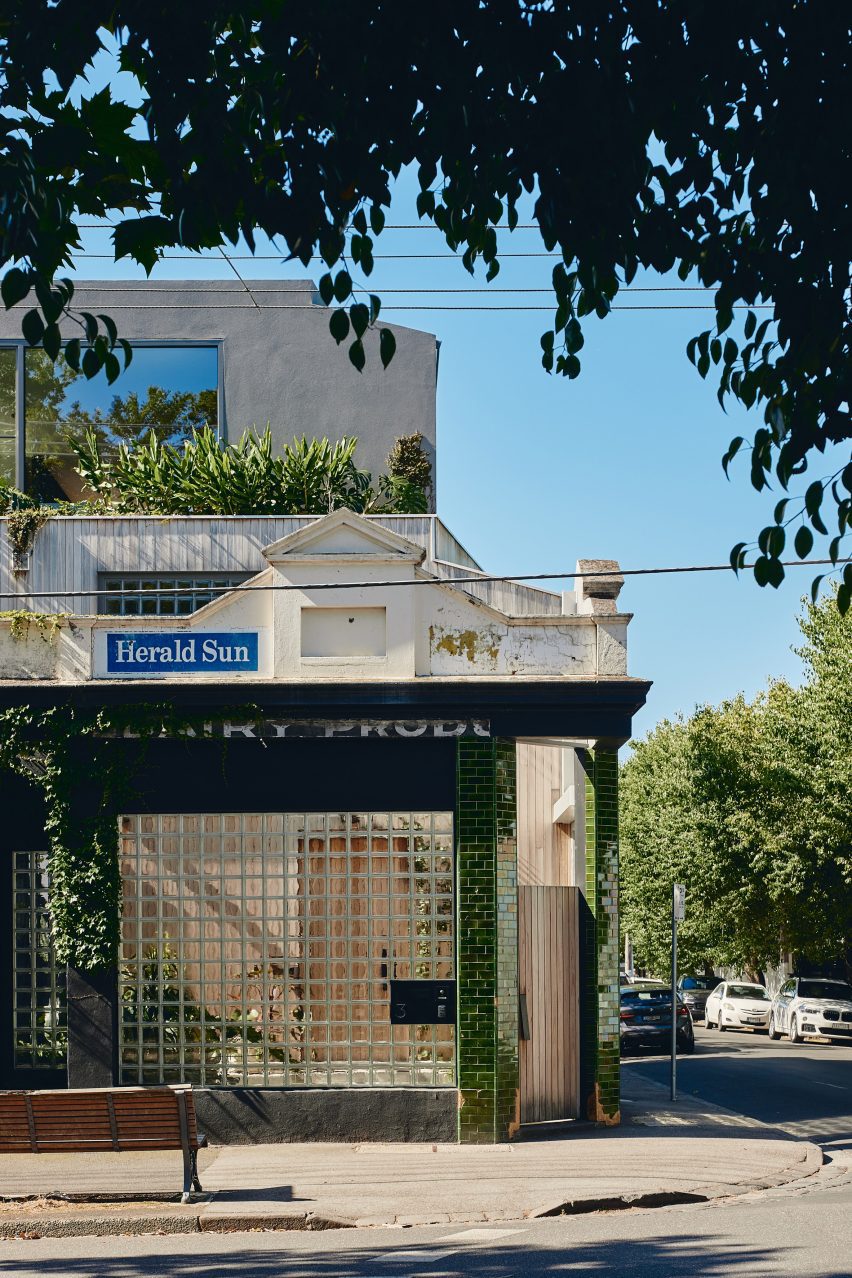
In a bid to preserve the character and street presence of the original shop, Kister retained the shopfront facade and bottle-green tiles while replacing street-facing windows with glass bricks.
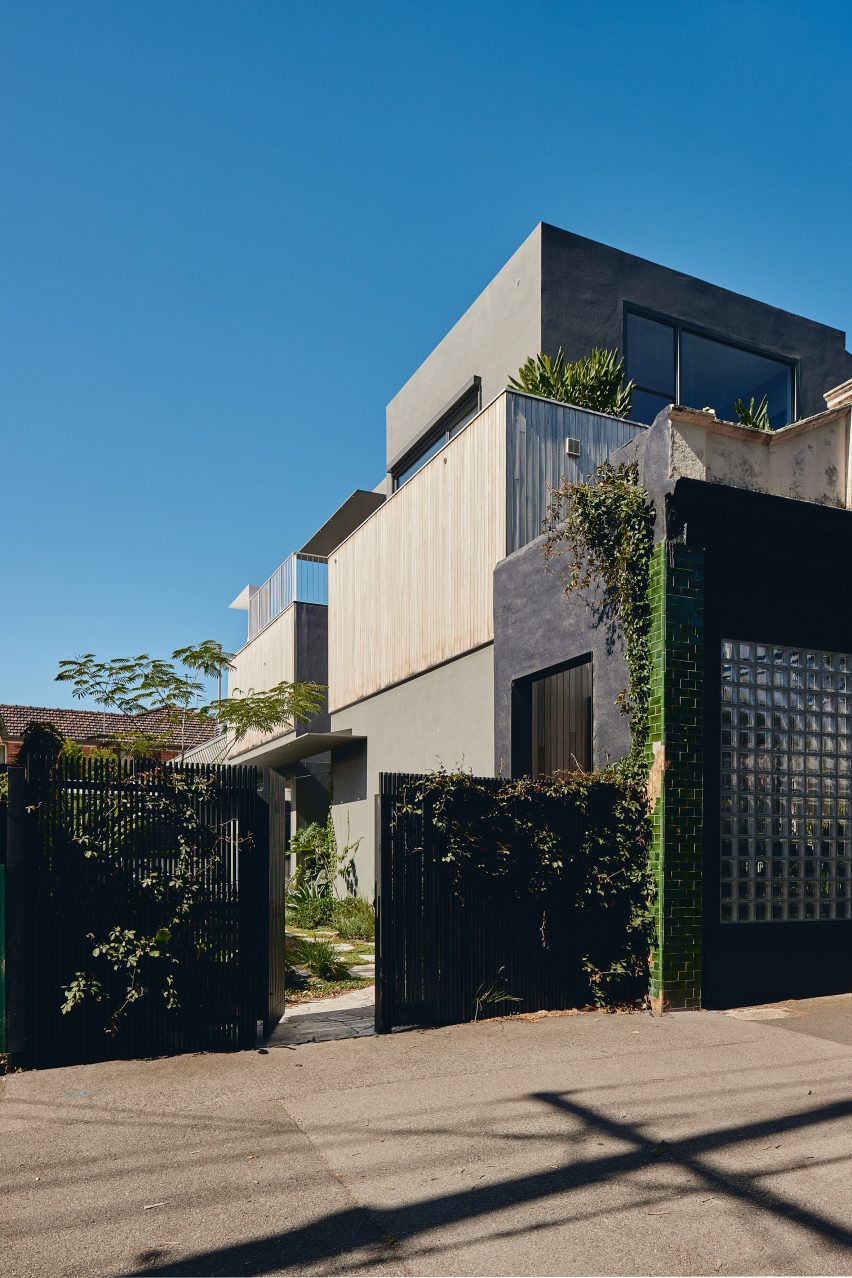
Elsewhere, the external palette combines grey and black render alongside silvertop ash timber cladding, interspersed with climbing vegetation and rooftop planting.
"Glass bricks preserve the facade rhythm while completely changing how the openings function," Kister told Dezeen.
"From the street, the building still reads as a corner shop – from inside, the space fills with diffused dappled light while maintaining privacy."
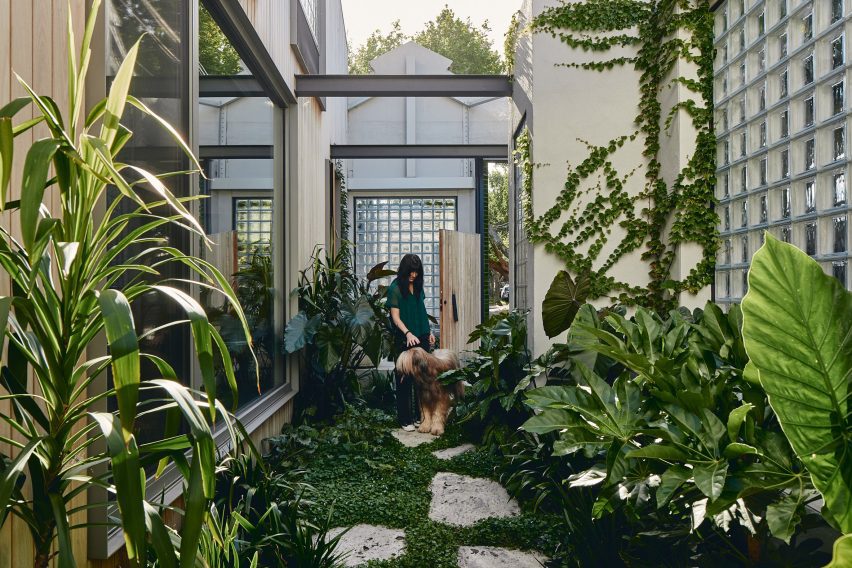
The original corner shop entrance leads directly onto a lush internal courtyard filled with an array of plants.
"Making the entry a courtyard was the single most important decision in the project," said Kister.
"Entering through the original milk bar door, you land in the garden, not a hallway or foyer," she continued.
"By the time you reach the interior – you've already been outside – that sequence sets the tone for the whole house."
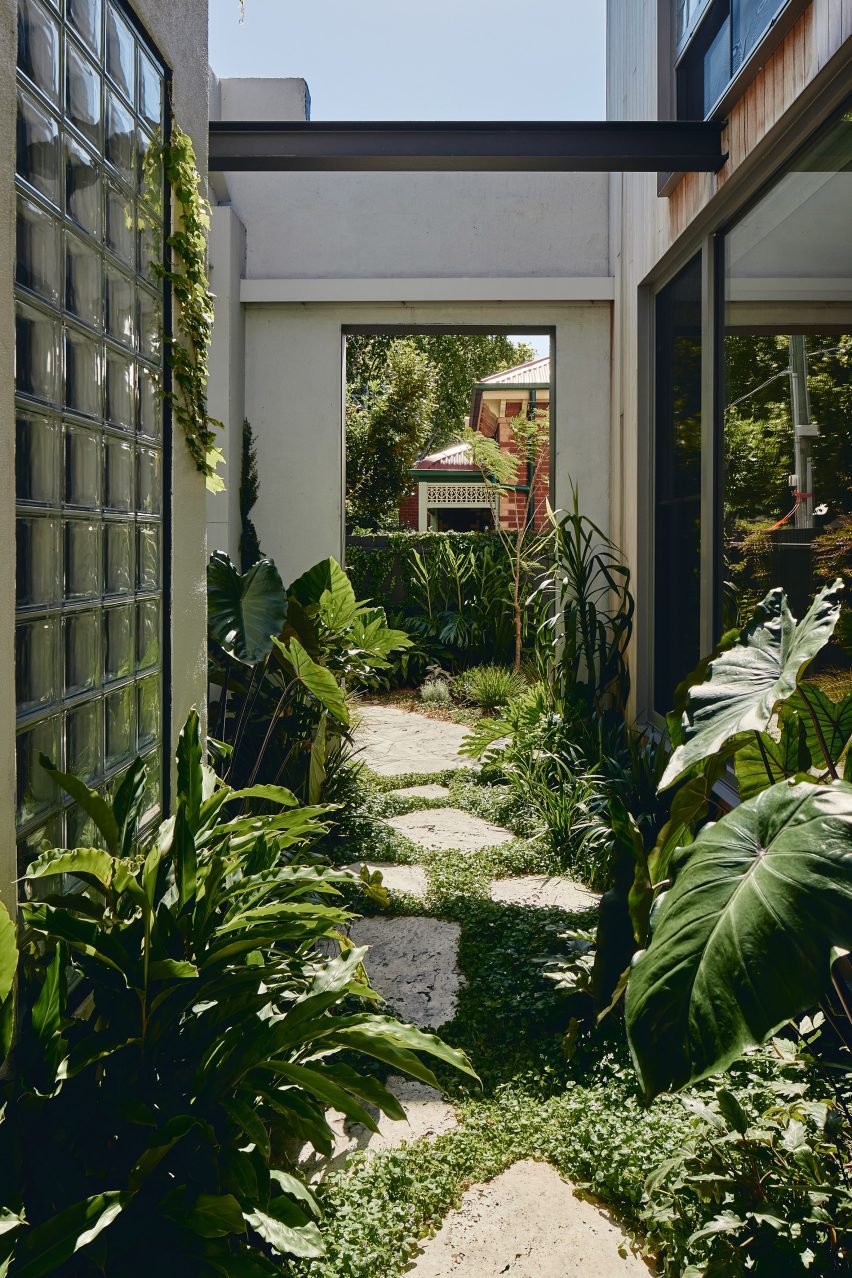
The front of the house is set back from the street, with the courtyard serving as a buffer between the home's ground-floor bedroom and the footpath.
In addition to the courtyard, Kister incorporated green roofs, vertical gardens and planted internal screens into the design, with the idea that "wherever you stand in the house you can see something growing".
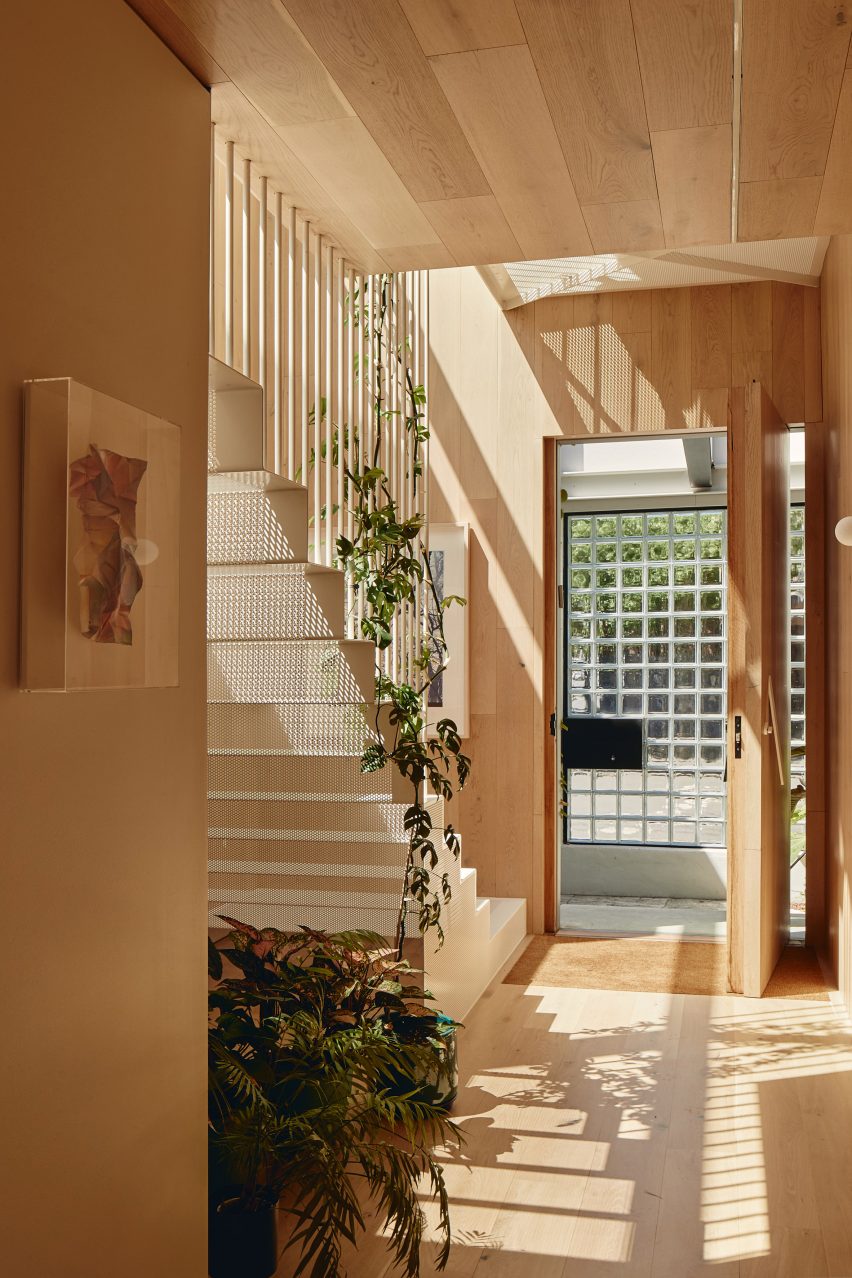
Inside, a white perforated steel staircase connects the home's three-storeys, illuminated by a series of triangular skylights.
Oak lines the floors, walls and ceilings, bringing warmth and texture to the interior.
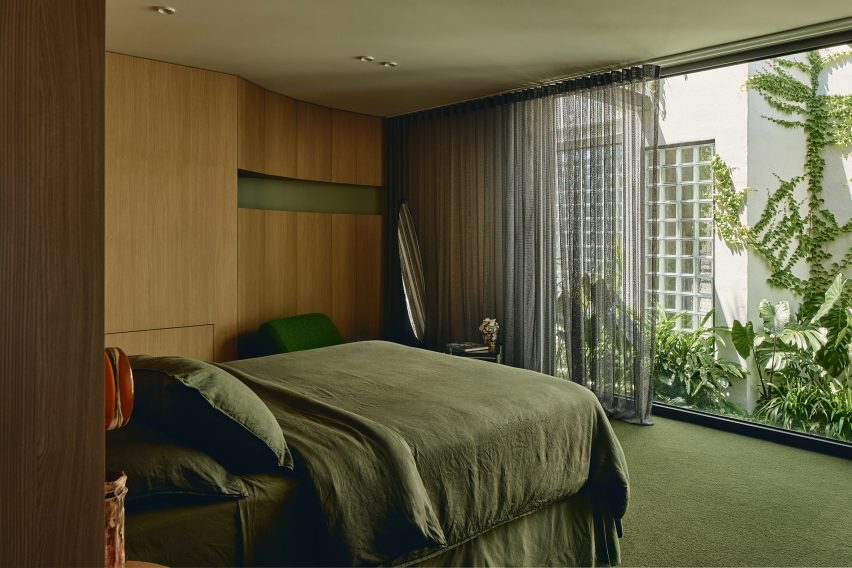
On the second floor, there are three bedrooms, an en-suite, a family bathroom and a living space.
Timber panelling is paired with mossy-green carpets, while floor-to-ceiling windows strengthening the connection between indoor and outdoor space.
According to the studio, the colour palette was deliberately restrained in order to emphasise natural elements.
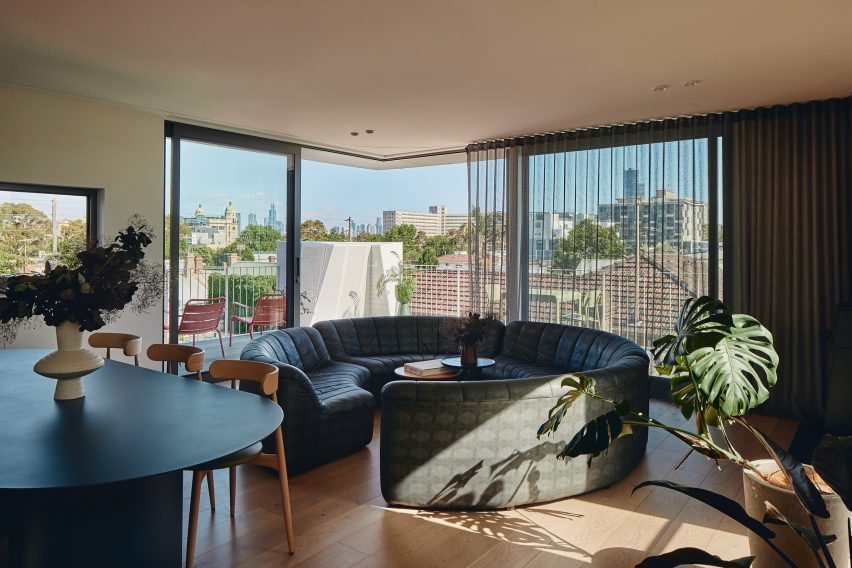
On the third floor, an open-plan kitchen, dining and living area opens onto a silvertop ash deck overlooking Melbourne's treetops and city skyline.
The home also has a large back garden complete with an outdoor seating area, decking and a swimming pool.
Other Melbourne homes recently featured on Dezeen include a compact home with pale-brick walls by Jos Tan and a house wrapped with metal mesh screens for climbing plants by Studio Bright.
The photography is by Peter Bennetts.