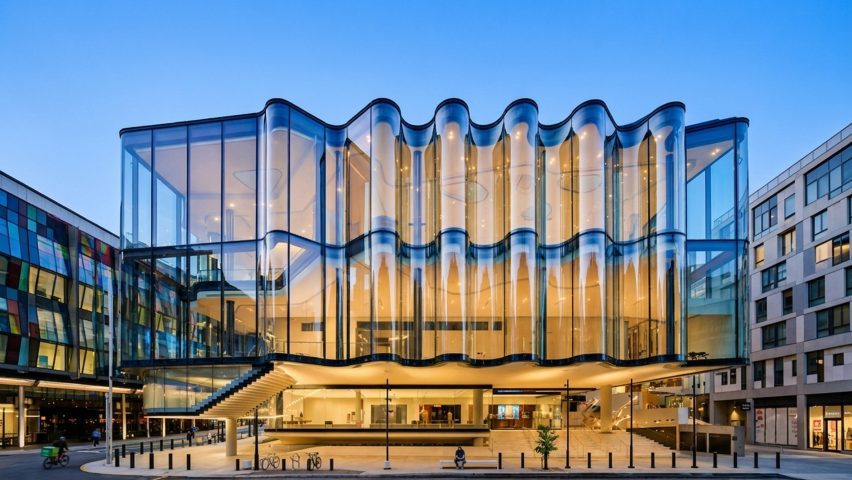
NorthGlass curved glass technology creates Glasshouse Theatre's rippling facade
Promotion: Chinese glass manufacturer NorthGlass has developed a curved glass technology to create the rippling glass facade of the Glasshouse Theatre in Brisbane, Australia.
Designed by Australian studio Blight Rayner Architecture with international firm Snøhetta, the theatre was built as an extension of the brutalist Queensland Performing Arts Centre (QPAC) in Brisbane, which makes QPAC "the largest performing arts centre under one roof" in Australia.
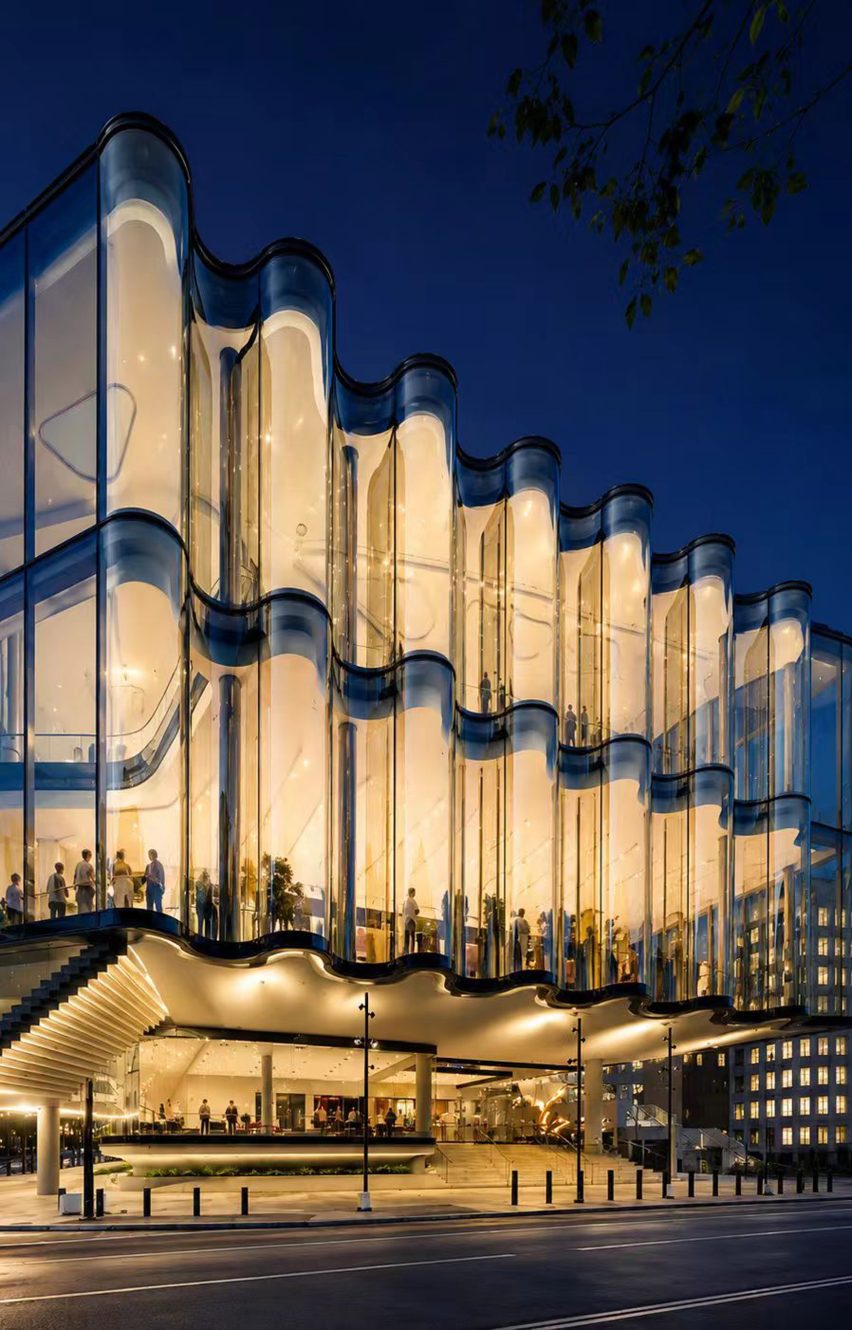
The defining feature of the project is the undulating glass facade that encloses the cantilevered first floor.
The building's transparent "flowing glass skin" allows the foyer to be visible from the street, creating an open and inviting public space.
According to the studios, the facade's design was influenced by a prose poem by Murri artist Lilla Watson, which refers to the rippling water of the Brisbane River with fish swimming beneath its surface.
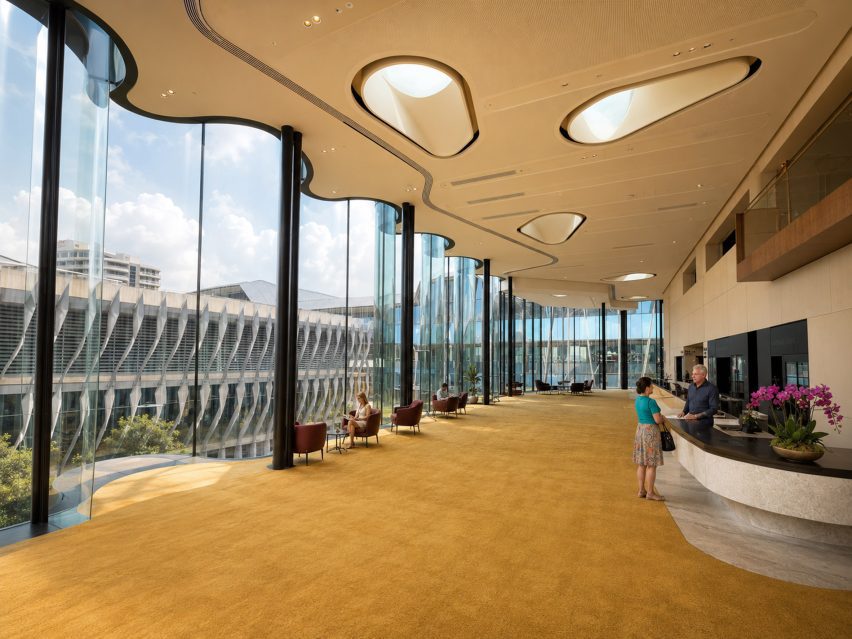
Across the glass facade, NorthGlass' single-curvature tempered glass enabled a continuous transition between each "wave movement" at nearly seven metres in height.
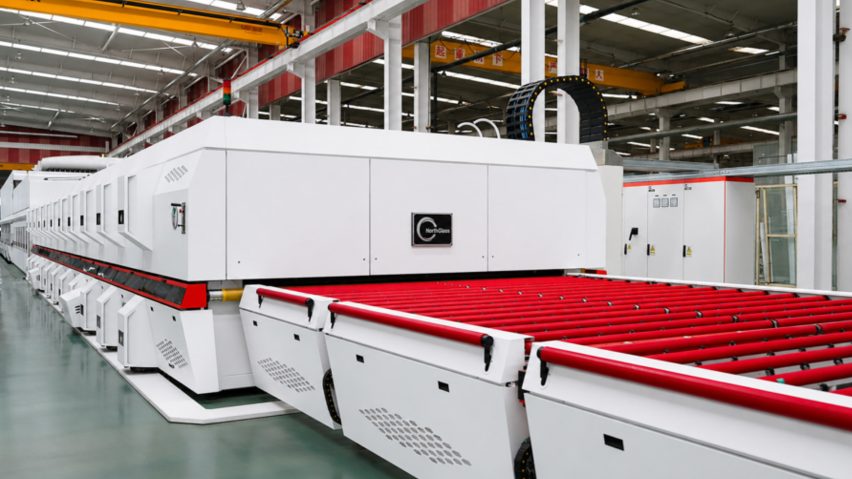
Developed at Tianjin NorthGlass (TNG) factory, the company explained that its latest curved tempering technology makes it possible to bend large glass panels while maintaining optical quality and minimising "roller wave, bowing and visible stress pattern".
This technology enabled the Glasshouse Theatre's curved glass panels to be consistent in radius, curvature and edge accuracy – adding a "sense of flow" while enhancing the material's visual quality.
A laminated insulating glass configuration was also adopted to meet the requirements for the final spatial effect.
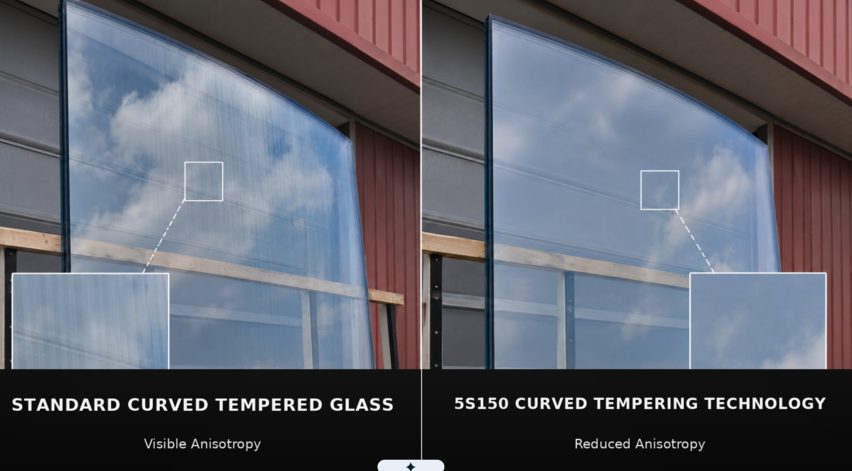
According to NorthGlass, its 5S150 curved tempering technology was developed to control anisotropy and optical distortion during heating, forming and quenching.
NorthGlass explained that as a world-leading manufacturer of glass tempering equipment, it has also developed the engineering capability to craft customised tempering furnaces for oversized panels, complex curved geometries, and demanding architectural glass applications.
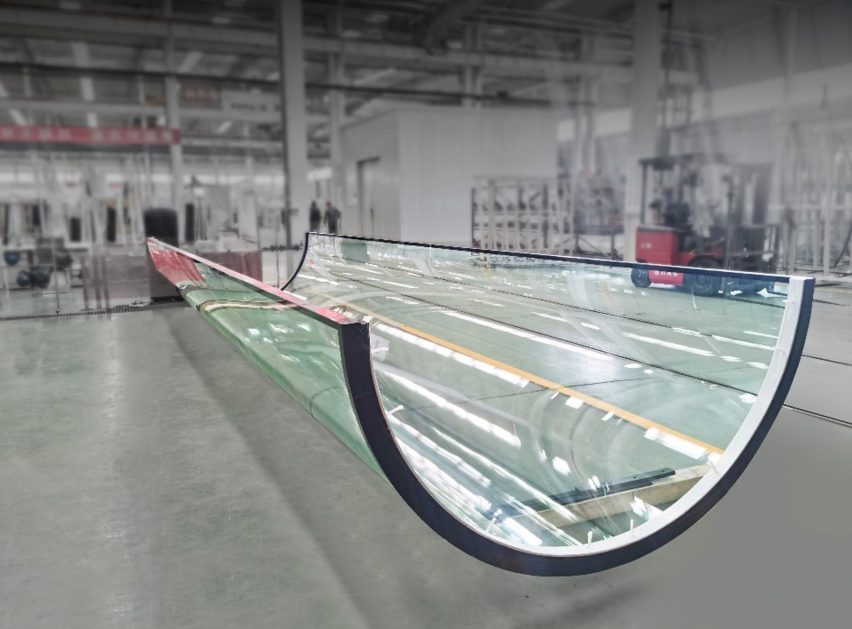
By reducing visible stress patterns and improving reflection clarity, the process allows the environment outside – the sky, street life and movement – to "read more continuously" across the theatre's wave-like glass facade.
According to the company, this results in a seamless effect where the technical work is deliberately hard to see.
"The glass facade of Glasshouse Theatre is not only the visual focus of the building, but also a reflection of where contemporary architectural glass manufacturing is heading: from flat surfaces to curved forms, and from a single radius to continuous concave and convex geometries," said NorthGlass.
"Glass is no longer merely a transparent building envelope; it can become an important medium for shaping space, expressing culture, and connecting the city with art," it continued.
In addition to the Glasshouse Theatre, NorthGlass has also developed a series of bespoke curved glass facades to support the design across high-profile architecture projects.
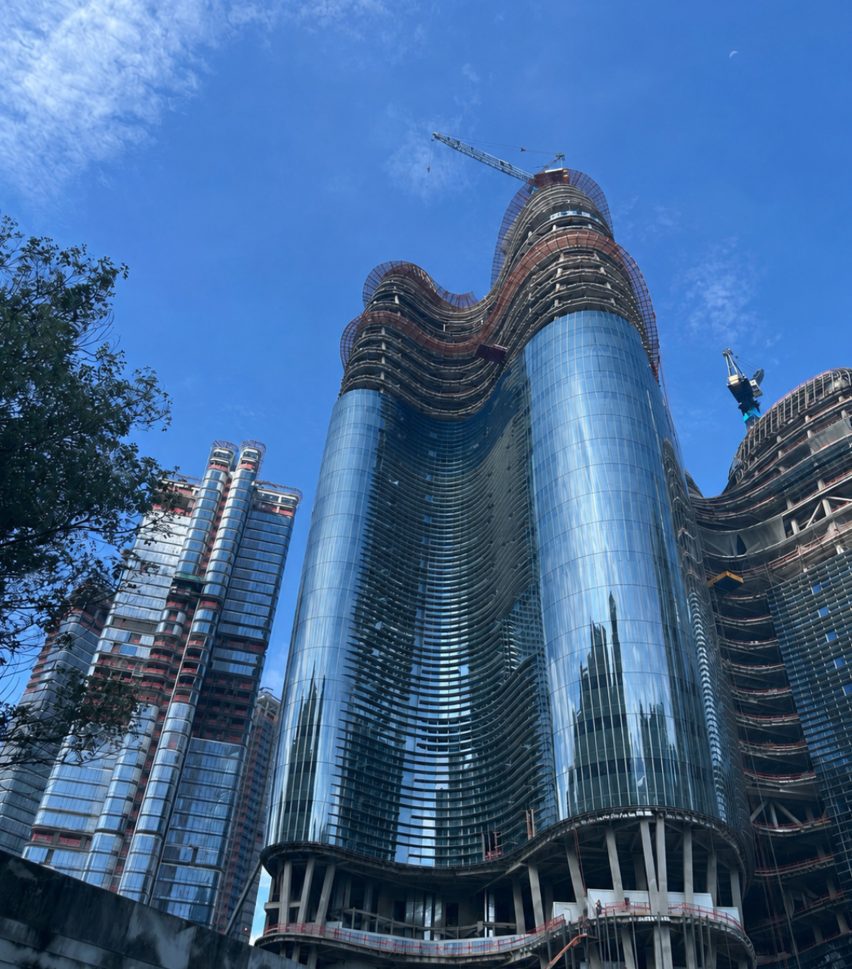
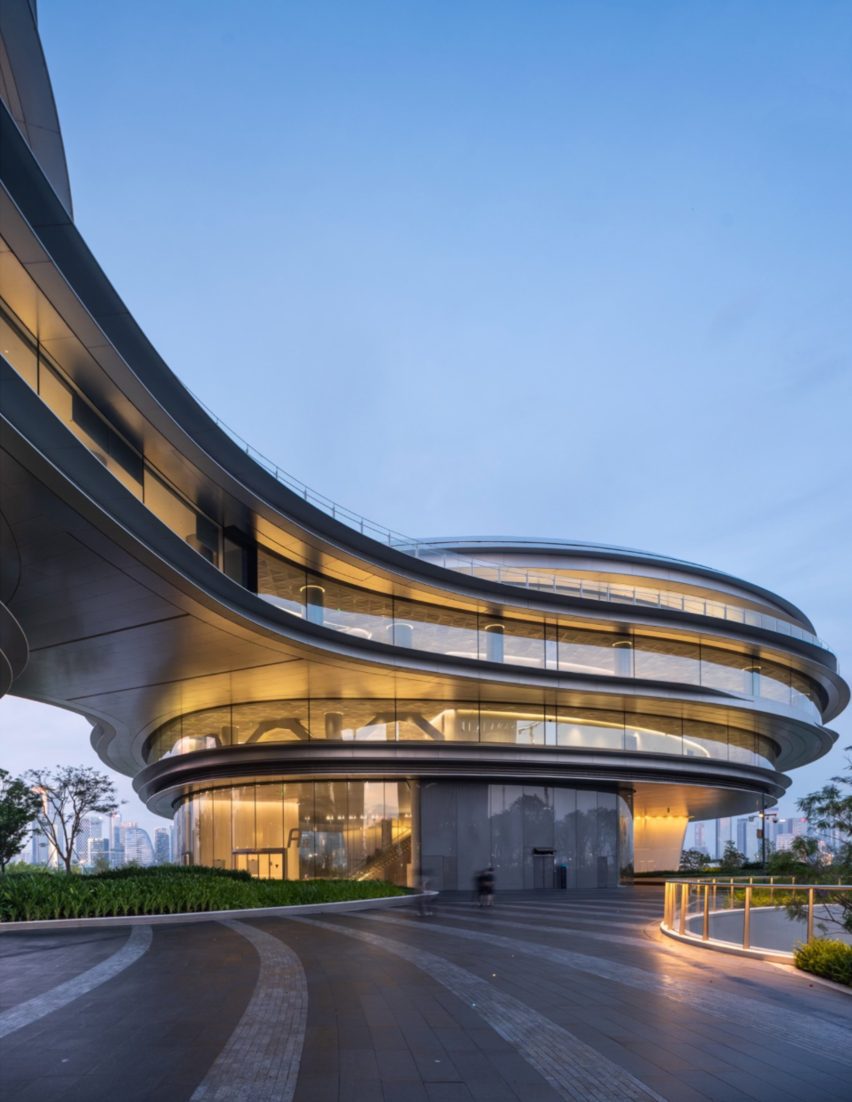
An example is the amorphous headquarters for OPPO, China's leading smartphone manufacturer, which comprises four interconnected towers unified by sinuous glass forms.
Designed by British architecture studio Zaha Hadid Architects, the headquarters in Shenzhen used over 20,000 glass panels across the facade, covering an area of more than 60,000 square meters.
Size, curvature, and spatial geometry vary on each panel, leading to a highly complex curved glass system, which was the result of NorthGlass’ 3D multi-curved glass and large-scale customised processing.
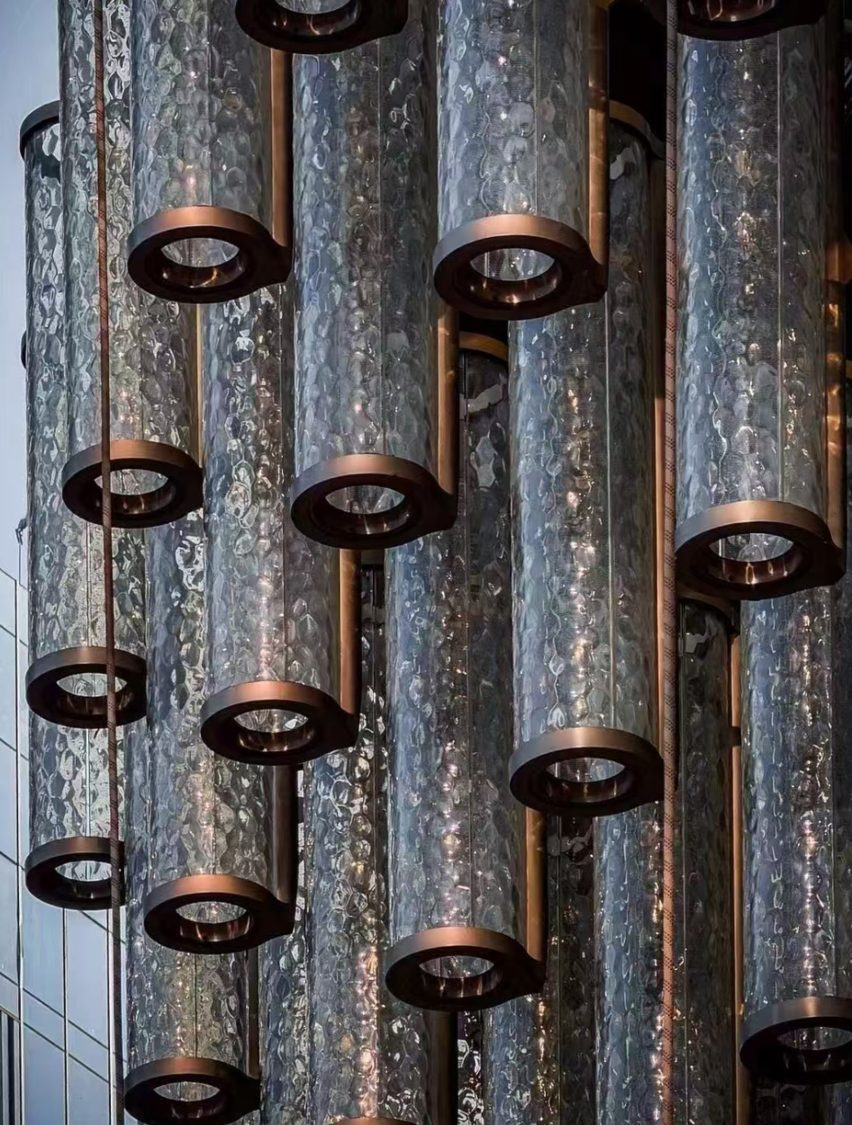
Also in Shenzhen, NorthGlass has worked on Büro Ole Scheeren's Róng Museum of Art, which is due to open next year.
The museum's curved facades will be wrapped in hundreds of hanging, "parametrically-engineered" glass tubes made possible via semi-circular curved tempered glass with an extremely small radius.
To learn more about NorthGlass, visit its website.
Partnership content
This article was written by Dezeen as part of a partnership with NorthGlass. Find out more about Dezeen partnership content here.