


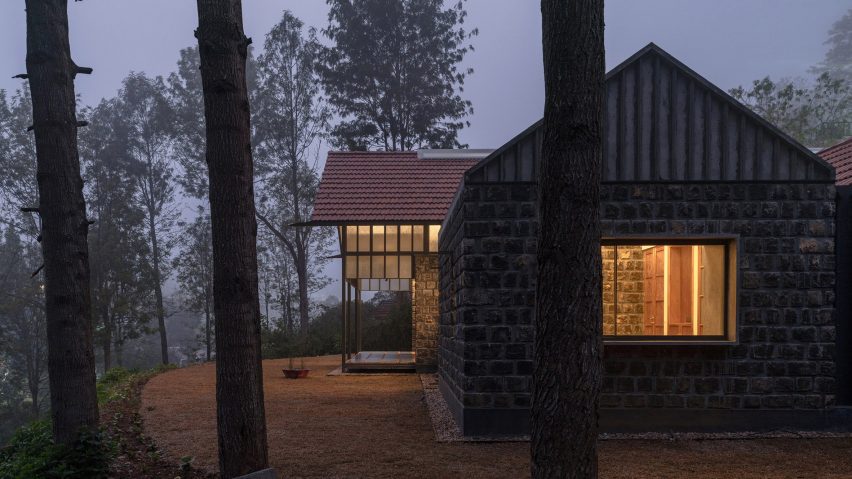
Indian studio Meister Varma Architects has completed Shilaya, a home in Tamil Nadu built using stone salvaged from a ruined cottage that once stood on its site.
Named after the Sanskrit word śilā, meaning stone, Shilaya is located in Kotagiri, a town in the Nigiri Mountains that was formerly a colonial hill station and is defined by its European-style stone architecture.

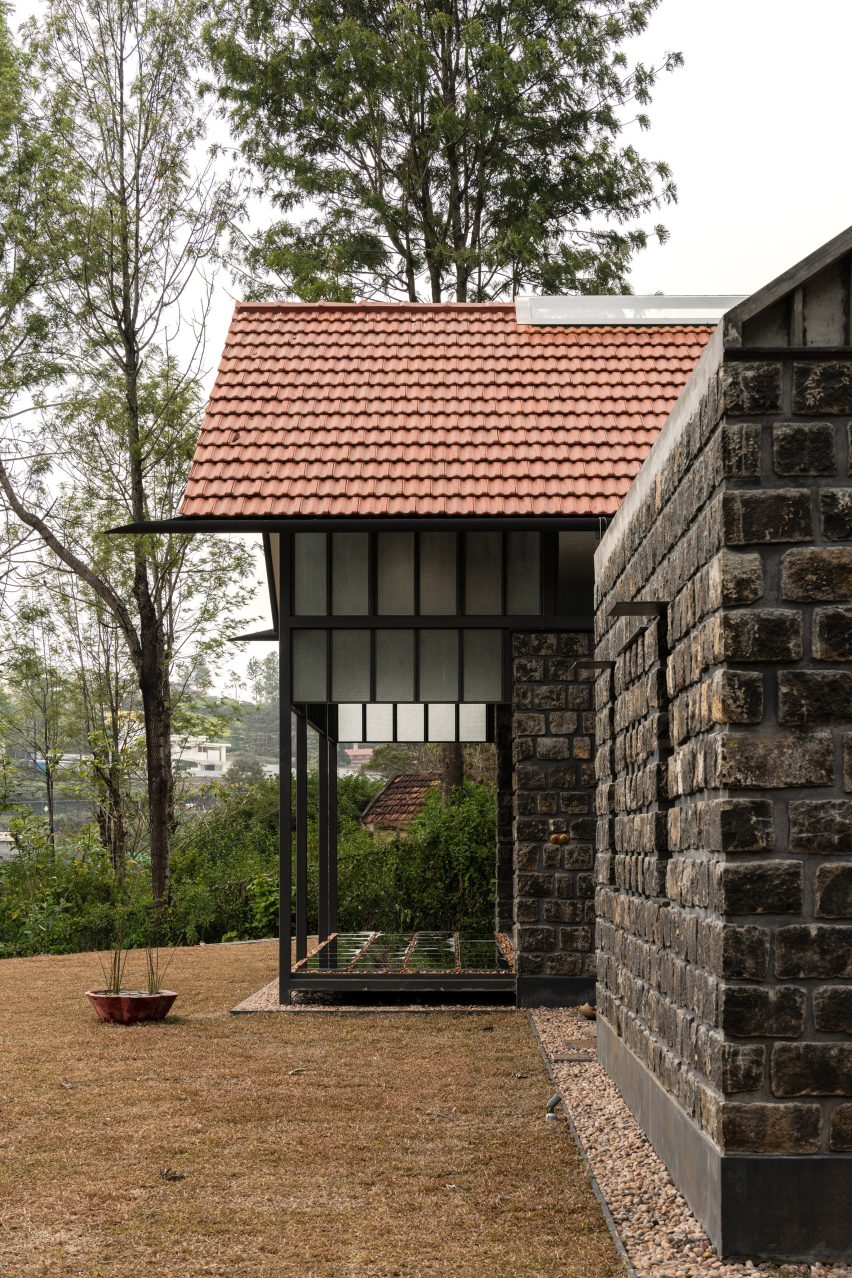
The ruins of one of these colonial-era cottages near an abandoned quarry were the starting point for Meister Varma Architects' design. The studio used stones salvaged from the old structure to create the house's walls, contrasting them with a lightweight steel roof.
"The design evolved from the memory of the old cottage and went through a series of iterations to reach its final form," principal architect Krishnan Varma told Dezeen.

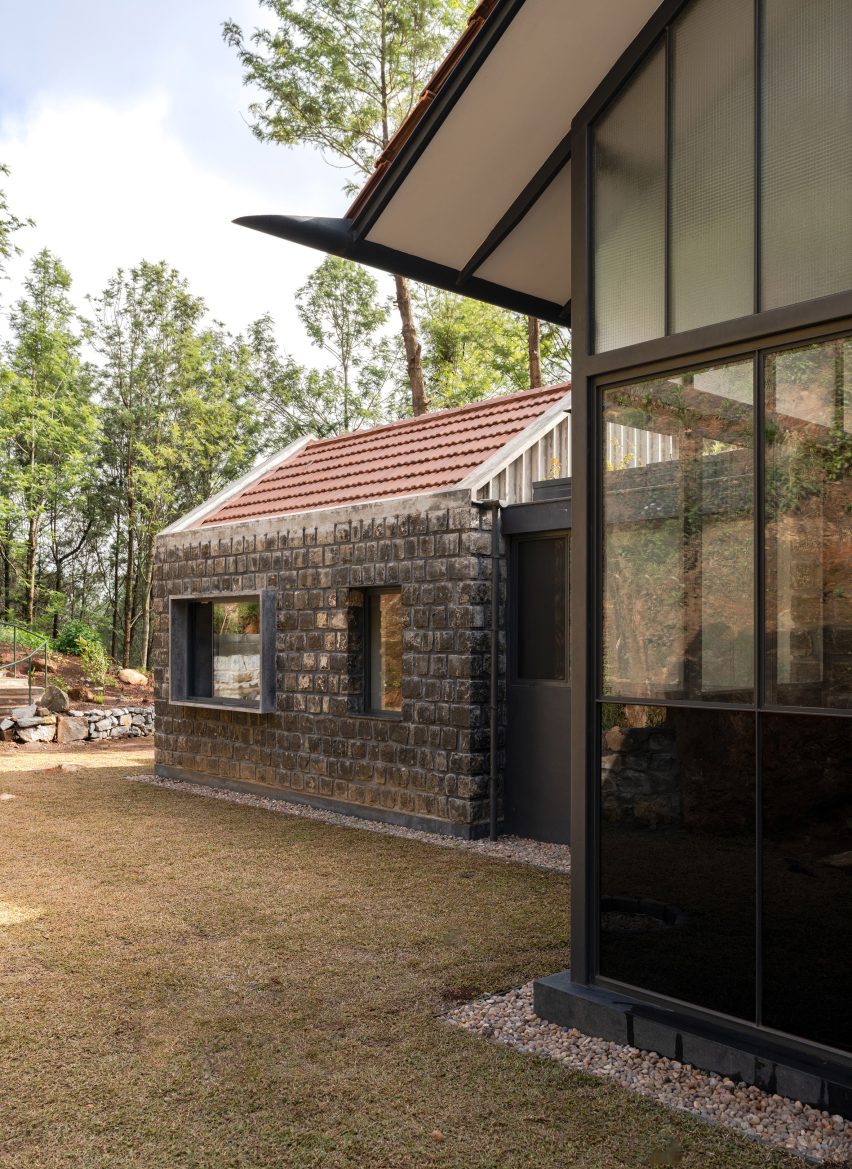
"Extraction and production of all building materials is prohibited in this ecologically sensitive region," Varma continued.
"This meant that other than the stone walls, most of superstructure, including the roof, was made of lightweight steel and brought largely prefabricated from the plains," he added.
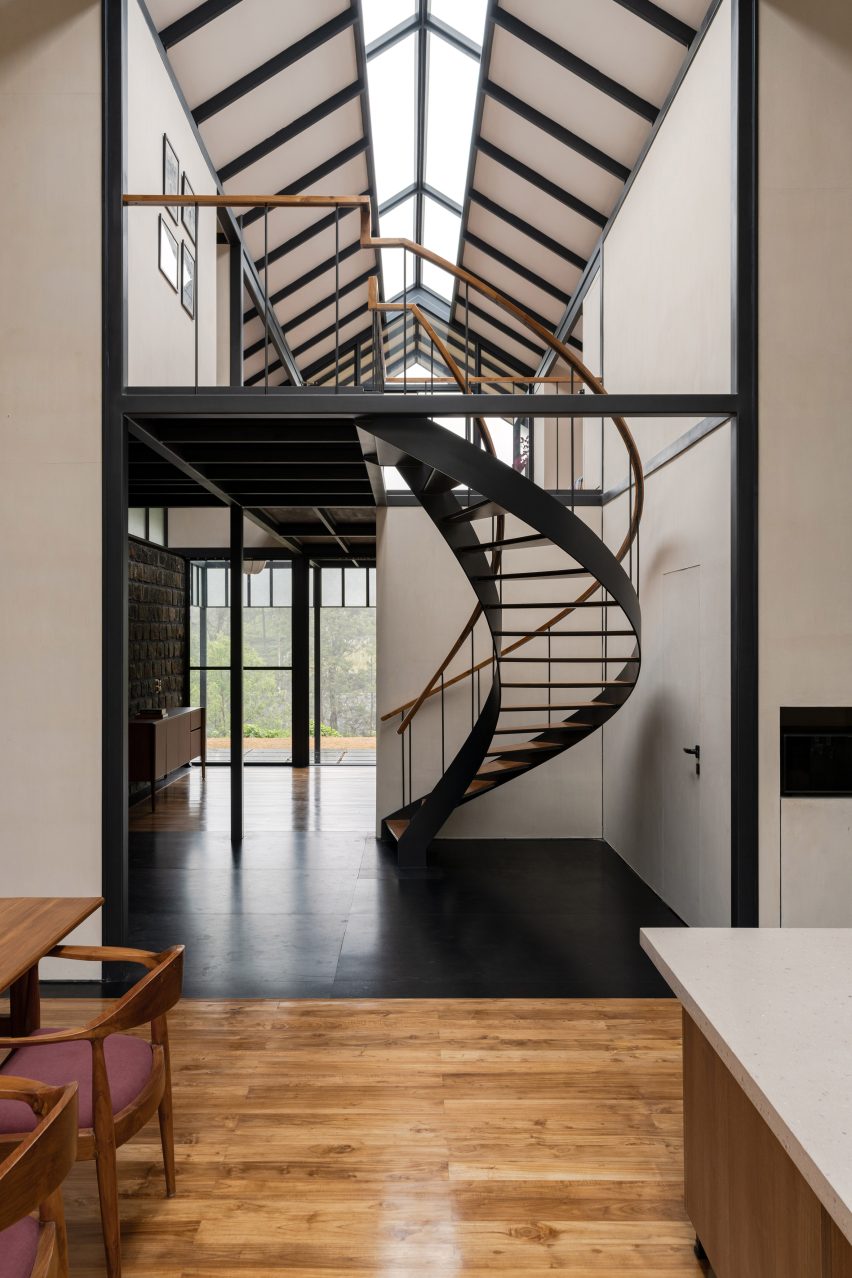
Shilaya comprises three volumes, with the focal point being a double-height living, dining and kitchen block at its centre, which sits beneath a gabled roof split by a long skylight at its apex.
This double-height space emphasises the contrast between the stone base of the home – left exposed in areas of the ground floor – and the lightweight steel-and-glass structure used for the first floor, roof and partition walls.
A spiral steel stair leads up to a study mezzanine tucked beneath the gabled roof, which opens out onto a sun deck atop the flat roof of the adjacent bathroom block.
A dark, skylit passage lined with black timber storage leads through the bathroom block into a twin-gabled volume containing Shilaya's two bedrooms, separated by a partition of built-in storage and enveloped by thick stone walls.

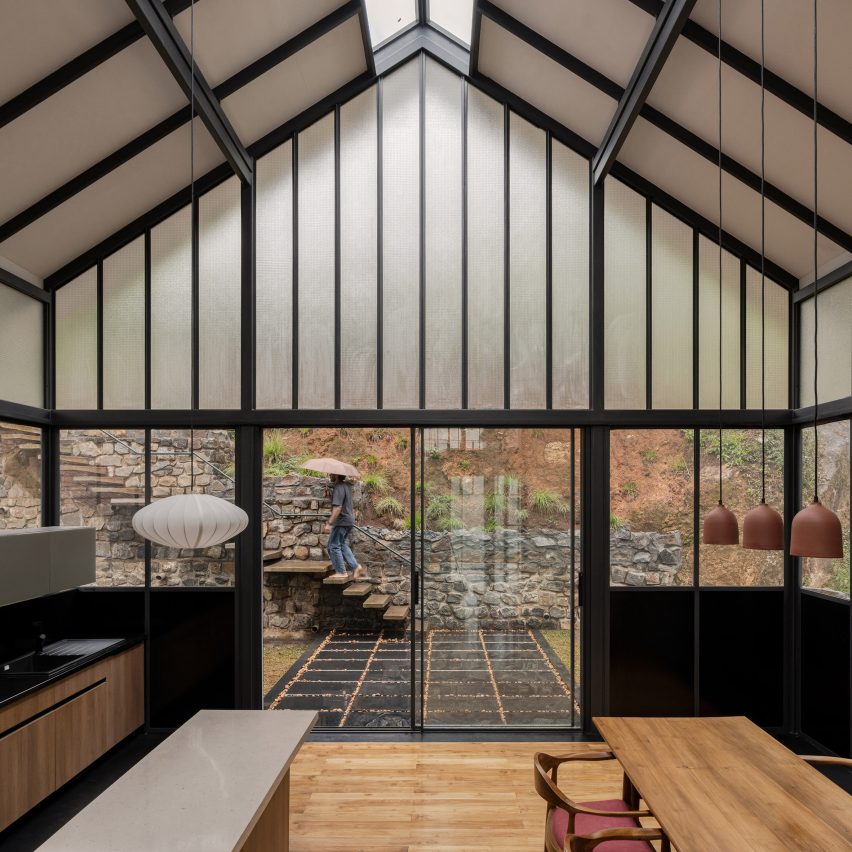
"The transition from the living spaces to the bedrooms is through a relatively narrow passage lit by a single skylight. It provides a moment of pause and anticipation while also reinforcing the quality of light between the two spaces," Varma explained.
"Traditional twin-leaf stone walls, half a metre thick, keep the house warm with their high thermal mass during cold winters common to this region," he added.

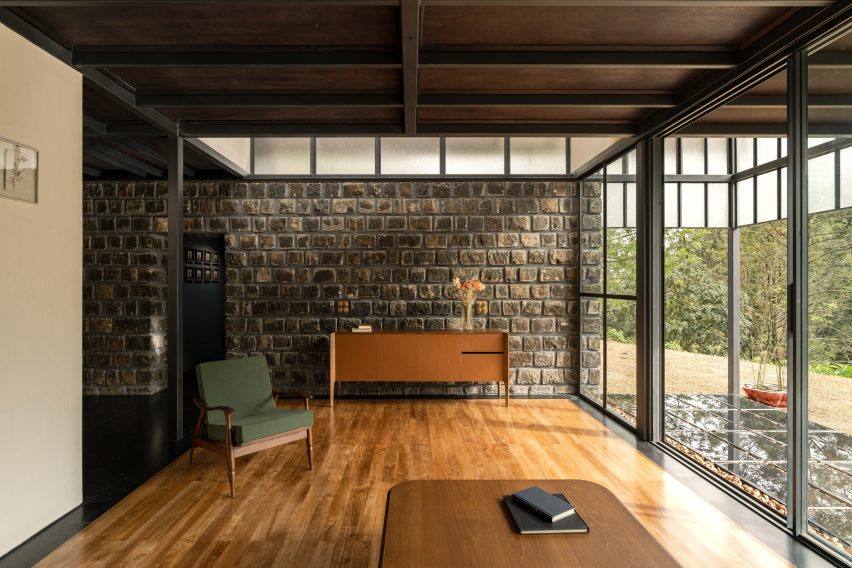
The home overlooks a large garden to the south that is planned to be developed with additional cottages in the future. To the west, the home's staff quarters sit alongside a paved access path that steps down to the nearby road.
Elsewhere in Tamil Nadu, Madras Studio recently completed a farmhouse using "only what was necessary", and while Wallmakers used mud-coated shipping containers to form the Petti restaurant.
The photography is by Syam Sreesylam.